James Rowland: Piece of Work

08/03/25

Traverse Theatre, Edinburgh

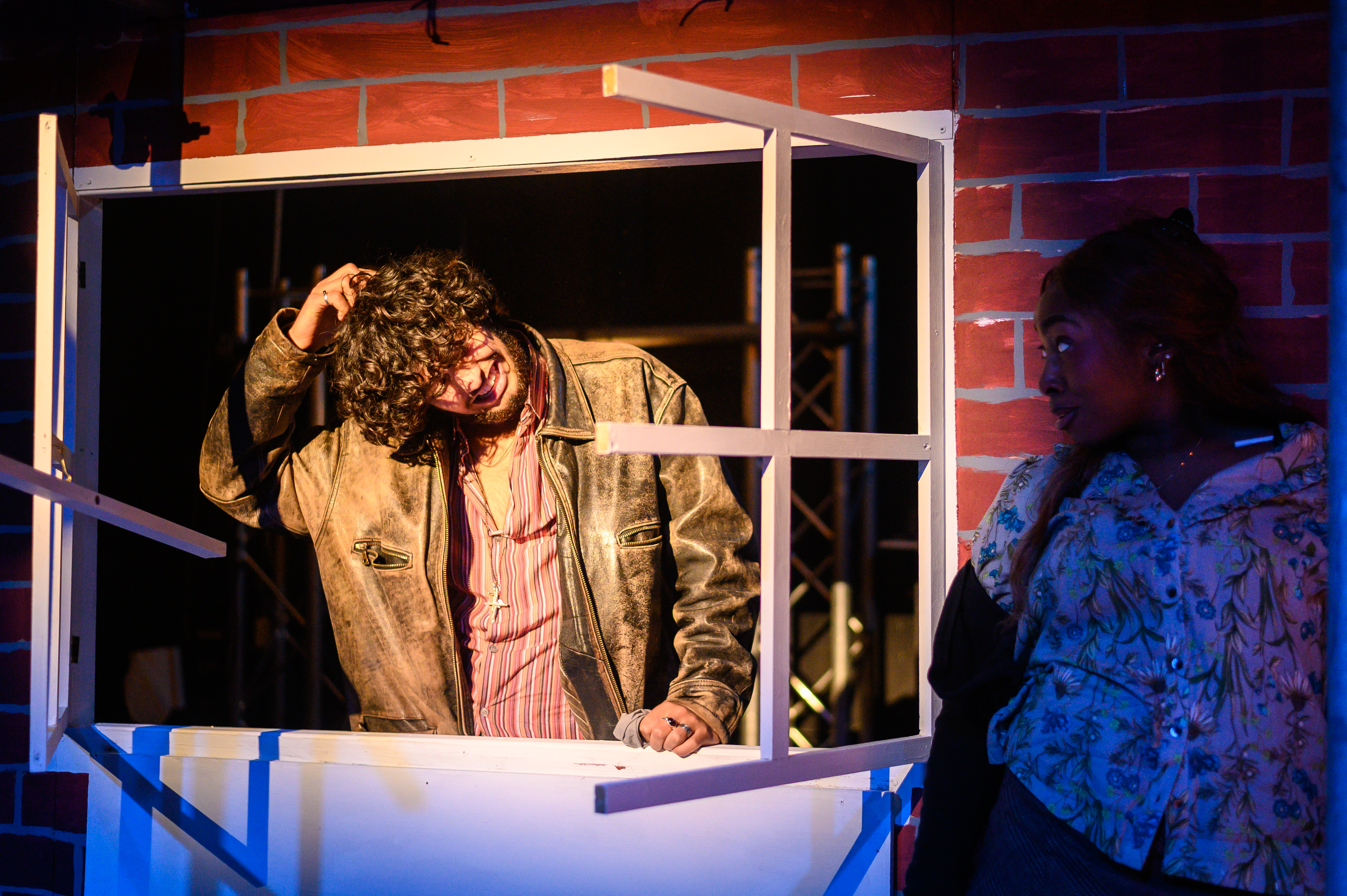
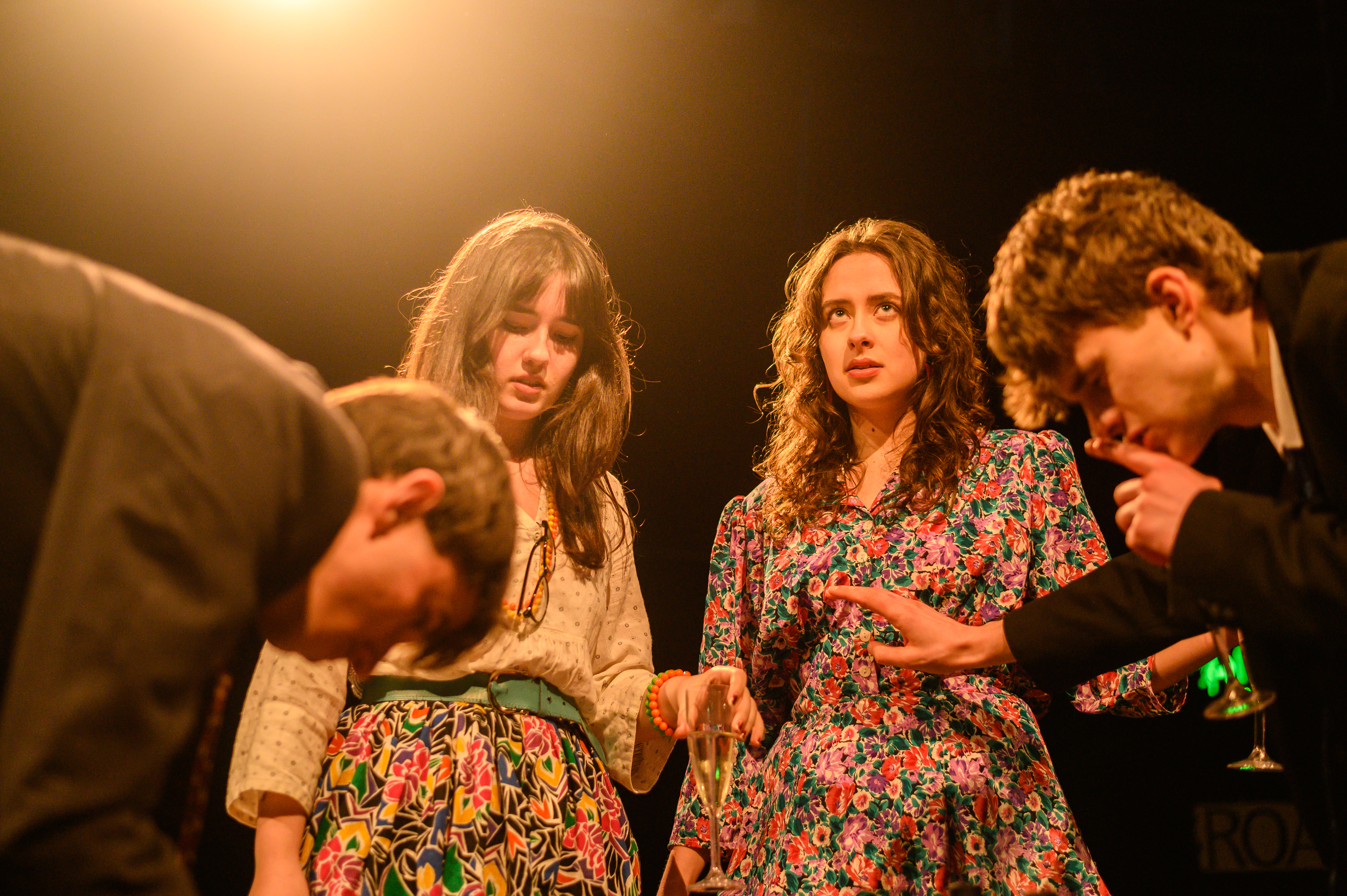
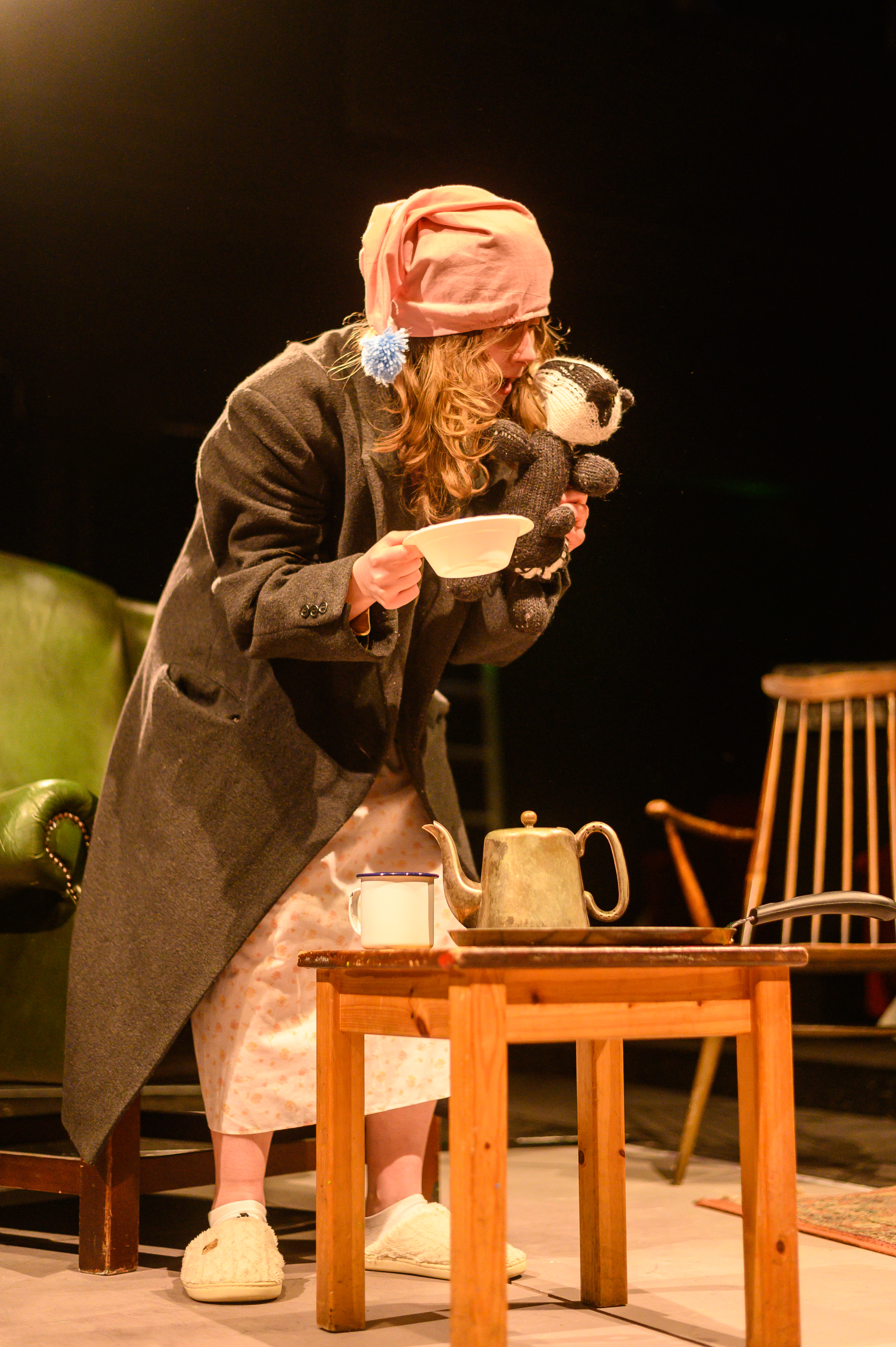
Piece of Work is the second in James Rowland’s Songs of the Heart trilogy. We saw the first, Learning to Fly, back in November 2023, and we’ve yet to catch the third, James Rowland Dies at the End of the Show. We’re here tonight with a friend and we’ve warned her about Rowland’s propensity for undressing, so none of us is particularly surprised when the show starts with him removing his T shirt and trackies and replacing them with plaid pyjamas. We’re just relieved he’s kept his undies on this time – and also a little confused by the costume choice. What do PJs have to do with anything? There’s nothing about him being in bed or even much about him being indoors…

Instead, this is a story about fathers and sons: about Rowland coming to terms with his old man’s death; about his ersatz brother, Chris, whose dad rejected him; and about The Prince of Denmark and Old Hamlet. The three narratives are interwoven, shining a (literal) light on the complexities of paternal relationships and their potentially devastating impact. Rowland, Chris, Hamlet – all abandoned, one way or another. All railing at their absent fathers for leaving them to deal with a scary, fucked-up world.

It’s also a story about suicide, and Hamlet’s ideation in the “to be or not to be” soliloquy is rendered very explicit here. It’s heavy stuff, but Rowland has a light touch, and knows just when to pull us back from the brink. His openness and affability make it easy to trust him with weighty topics without feeling overwhelmed.

It’s a great concept and Rowland has a charmingly vulnerable stage persona, but there are elements of the story that feel under-explored, especially the climactic confrontation between Chris and Dick, which feels almost thrown away. There’s surely more to explore in the tale of Rowland’s performance at the Royal College of Music too; for such a frank actor, it really seems like he’s holding back.

Nonetheless, I’m drawn into the story, and I find myself wanting to know where Rowland goes in the final part of this trilogy.

3.2 stars

Susan SIngfield

The Testament of Gideon Mack

06/03/25

Traverse Theatre, Edinburgh

Gideon Mack (Kevin Lennon) has a wee problem, one that has plagued him since his childhood. He an atheist, a belief instilled in him after growing up under the watchful eyes of his hard-bitten father, James (Matthew Zajac) , a God-fearing minister for the Church of Scotland. So why, you might ask has Gideon gone into the same profession?

Well, he’s a keen jogger and he loves nothing better than raising money for charity. Being in the church gives him the opportunity to ensure that the funds he raises go to worthwhile causes. For a long time, it seems to work, but then, out running one day, Gideon stumbles and falls into the water of a nearby gorge, a place that figures highly in the local myths and superstitions. During a mysterious absence of three days, he becomes acquainted with this fellow who is… well, to put it mildly, rather devilish.

Based on the novel by James Robertson (long-listed for the Booker prize in 2006 and itself inspired by James Hogg’s The Private Memoirs of a Justified Sinner), The Testament of Gideon Mack is an intriguing, picaresque tale that follows its protagonist from childhood to manhood, exploring the juxtaposition (and in many cases similarities) between God and Satan.

Mack is a fascinating character, never entirely evil but always open to the powers of persuasion. He’s perfectly willing to follow the advice of his wife, Jenny (Blythe Jandoo), who persuades him to go into religion in the first place – and, after her tragic death, he’s all-too willing to plunge headlong into a passionate affair with Elsie (Rebecca Wilkie) one of his parishioners, the wife of his best friend. But we know, don’t we, that such transgressions will inevitably come at a price…

Lennon is eminently watchable in the title role, nailing Gideon’s haplessness as he blunders helplessly from one complication to the next, while the true stroke of genius here is that Zajac (who also wrote this sprightly adaptation) gets to play both Gideon’s priggish father and that devilish acquaintance I mentioned earlier, thus reinforcing all their similarities. Aidan O’ Rourke contributes an immersive soundtrack, Sasha Harrington provides distinctive movement sequences for the eight-strong cast and Meghan de Chastelain directs all the various elements with considerable skill to create an effective and compelling night at the theatre.

4 stars

Philip Caveney

Driftwood

05/03/25

Traverse Theatre, Edinburgh

The opening moments of Driftwood are intense. To say this co-production by ThickSkin and Pentabus thrusts us straight into the action would be an understatement. One moment we’re in a brightly lit auditorium, muted chatter all around us, eyes drawn to the hypnotic rippling of the backdrop’s projected seascape. The next – without warning – there’s a blackout, paired with the thunderous roaring of crashing waves, and two boys, Mark and Tiny, in danger of drowning, are yelling each other’s names, desperately scrabbling to make it to shore.

That’s the past. And then, suddenly, we’re in the present. The boys are now men. Tiny (Jerome Yates) isn’t so tiny any more, and he hasn’t seen his older brother, Mark (James Westphal) in years. Not only is Tiny still in County Durham, he’s still in Seaton Carew, still living with their dad. He feels connected to the area – to its shoreline, its myths and to his family history. Anyway, he couldn’t leave if he wanted to. His dad needs a full-time carer and Tiny has filled that role for the past four years.

But now he finds himself on shifting sands. Dad is about to die. Mark – gay, estranged from his homophobic father – has come back from Manchester to say goodbye. The brothers love each other but they resent each other too. Tiny’s angry that he’s been left alone to cope, while Mark can’t quite forgive Tiny for sticking with the old man, nor for parroting his father’s homophobic slurs when he was young.

Tim Foley’s sprightly script keeps the story moving forward, even though most of the real drama happens offstage, the focus instead on the brothers’ relationship and their attempts to reconcile their differences. So we don’t get to meet Dad, nor to attend his funeral; we don’t see the arguments that led to Mark leaving; we’re told about but never shown the environmental protests dividing the town. It doesn’t matter. The piece feels very immersive nonetheless, thanks in no small part to Sarah Readman’s videos and Lee Affen’s rousing sound design. The ever-present image of the closed steelworks looming over the bay is affecting, reminding us throughout how bleak Tiny’s life is, his stubborn attachment to his home equal parts understandable and heartbreaking.

Yates and Westphal imbue both brothers with a likeable vulnerability: Mark’s obscured by a brittle carapace of self-protection; Tiny’s writ large in his wide-eyed naïvety. Co-directors Neil Bettles and Elle While strike an impressive balance between stillness and dynamism, Mark’s quiet rationalism contrasting effectively with Tiny’s chimerical obsessions. I especially like the funereal pace of the scene where the brothers dress for their father’s burial, the conceit conveying the emotions of the funeral without explicitly placing us there.

On tour until 31st March, Driftwood has – ahem – drifted on from Edinburgh now, but you can still catch it in Coventry, Ipswich, Leeds and Salford. It’s well worth an evening of your time.

4.2 stars

Susan Singfield

The Last Showgirl

02/03/25

Cineworld, Edinburgh

I haven’t seen any of Pamela Anderson’s previous work (Baywatch never appealed) so my knowledge of her is limited to three headline facts: red swimsuit, sex tapes and – recently – no make-up. I’m not surprised that this reductive list doesn’t do the woman justice, but I am impressed by her nuanced performance in Gia Coppola’s latest film.

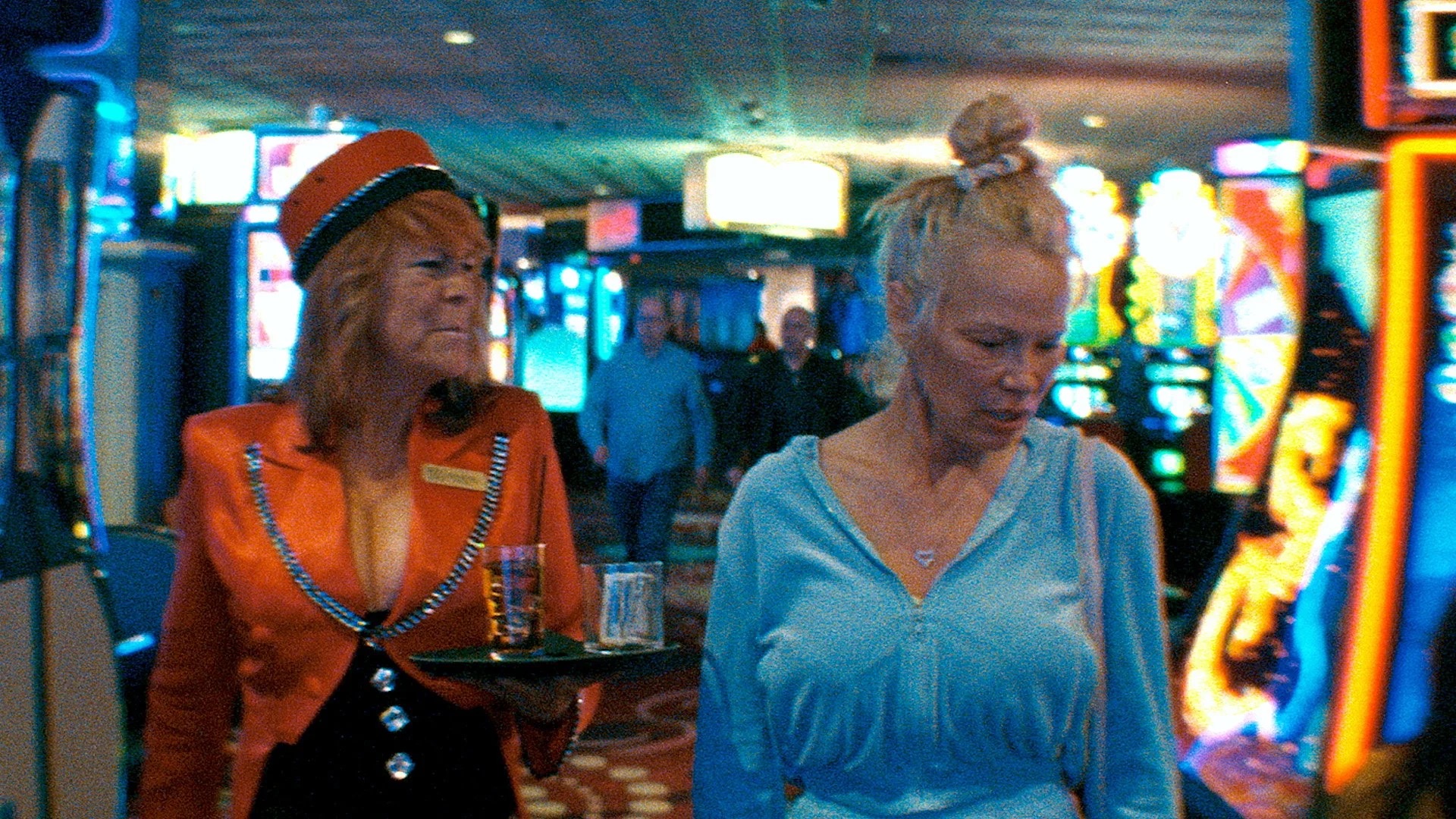
Anderson is Shelly, the titular last showgirl, still strutting her stuff in a Vegas casino. The clock is ticking, both for Shelly and the show itself. They’re both past their sell-by dates, and they’re being pushed aside for newer, brighter, fresher fare. But the fifty-seven-year-old has devoted her whole life to Le Razzle Dazzle and she doesn’t know who she is without it. News of the show’s impending closure is utterly devastating.

The sacrifices Shelly has made are huge. For more than thirty years, she has placed this job before her marriage, her security, even before her daughter, Hannah (Billie Lourd). But it turns out her bosses owe her nothing in return: no pension, no severance pay, no training for a different job. And, this being the USA, she won’t even have any health insurance when the curtain falls for the final time. What has it all been for?

Kate Gersten’s screenplay is deceptively simple, a layering of vignettes that slowly build to something quite profound. We already know how vampiric the industry is, sucking the last drop of blood from its initially willing victims before callously discarding them and calling, “Next!” Here, we see what happens to the husks it leaves behind.

At its heart, The Last Showgirl is a film about delusion, about the myths we tell ourselves to justify our lives. Shelly clings to the idea that Le Razzle Dazzle is a cut above, a Parisian-style extravaganza of glamour and elegance. But when Hannah sees the show, she bursts her mom’s balloon. “I’d hoped it would be worth it,” she says, before eviscerating Shelly’s dream, denouncing it as tawdry and outmoded, a nude show like any other – nothing special at all.

And Shelly’s not the only one. Her old friend Annette (Jamie Lee Curtis) gave up dancing long ago, and claims to be happy working as a hostess on a casino floor. But she is sent home whenever the place is quiet, her boss favouring her younger colleagues. No wonder she drinks; no wonder she gambles. Jodie (Kiernan Shipka) is only nineteen, but she’s already starting to realise the costs of pursuing her art, as her family disown her. Meanwhile, Eddie (Dave Bautista) is immune to the devastation. He’s a nice guy, seemingly quiet and kind, but he’s not at the mercy of a sexist world. He’ll be kept on to do the lighting for the next batch of sexy young women who come to the venue to perform.

The Last Showgirl is – ironically – an unshowy film. The social commentary is sharp but it’s cleverly-cloaked; the characters bold but the performances restrained. There’s a lot going on beneath the rhinestones and feathers.

4 stars

Susan Singfield

I’m Still Here

01/03/25

Cineworld, Edinburgh

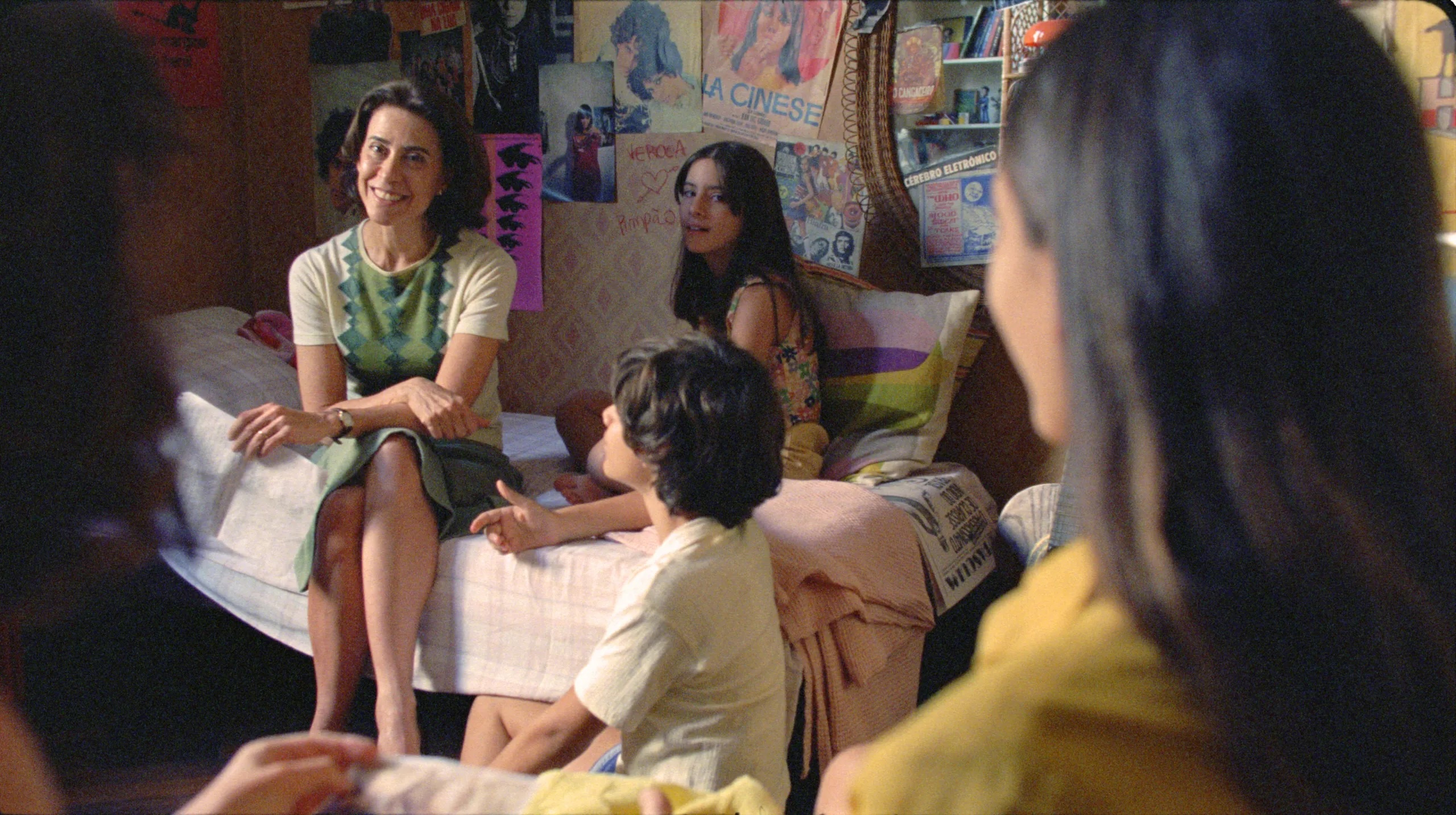
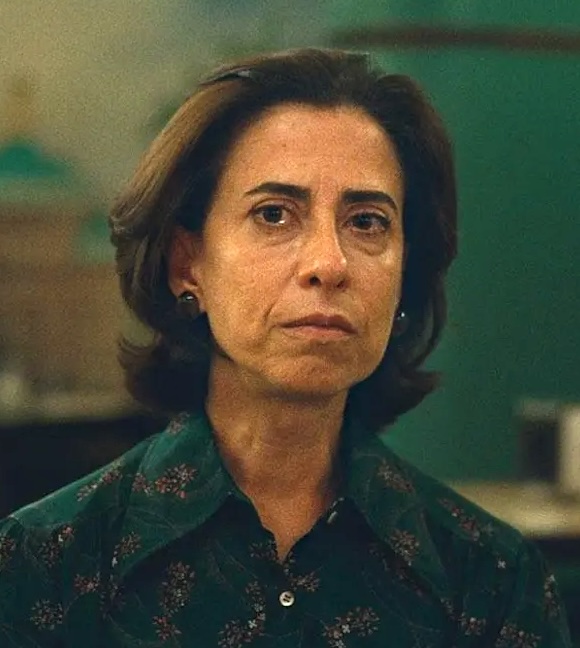
Directed by Walter Salles and based on the true story of lawyer and activist, Eunice Paiva – brilliantly played by Fernanda Torres – I’m Still Here is the deeply affecting story of a mother, who, after her husband’s sudden disappearance, is obliged to pick up the pieces of her shattered life and forge a new one for herself and her family. Torres’ performance has already won her a Golden Globe for Best Actress and she could well figure in this year’s Oscars.

The story begins in Rio Di Janeiro in 1971, where a military dictatorship has been in power for seven years and where citizens can be stopped and searched, even arrested without warning. Eunice lives a comfortable existence in the affluent sea-side Leblon neighbourhood with her husband, Rubens (Selton Mello), a civil engineer and former politician. The couple have five children – four daughters and a son – and they are planning to build a spacious new home on a plot of land close by. Life is eventful and fulfilling and features a lot of parties, where Eunice’s soufflé figures prominently.

But all the family’s long-cherished ambitions come crashing down one night when six men, claiming to belong to the Brazilian military, enter the house and take Rubens to some unspecified location for ‘questioning’. Some time later, Eunice and one of her daughters, Eliana (Luiza Kosovski), are also arrested. Forced to put on blindfolds, they are taken to the same unknown destination and interrogated for twelve days. When they are eventually released there’s still no word of Rubens and it begins to dawn on Eunice that her husband has become one of ‘the Disappeared’ – those luckless individuals lost to the ruthless machinations of the state. The family is going to have to rethink its plans and start over…

I’m Still Here is a powerfully affecting (and, given recent developments in the USA, utterly terrifying) story of what can happen when a far-right government is given free rein to act as it pleases. Salles cannily uses the framing device of a series of staged photographs, marking different occasions across the family’s history. The sense of passing time is beautifully captured in both Adrian Tejido’s sun-kissed cinematography and Warren Ellis’s nostalgic soundtrack. As the years pass we see the hope that Rubens might one day return gradually diminish.

The script by Murilo Hauser and Heita Lorega – based on the autobiography of Eunice’s son, Marcelo Rubens Paiva – captures the unfolding narrative with absolute authority. A heartbreaking coda towards the film’s poignant conclusion has me in floods of helpless tears. This film is both an accomplished recollection of a piece of recent history and a stark warning about where the world could so easily be heading.

This might not be the most showy of this year’s Oscar nominations, but it may just be the most powerful – and Torres’ performance is truly extraordinary.

5 stars

Philip Caveney

Road

27/02/25

Bedlam Theatre, Edinburgh

We enter the auditorium to the strains of Jarvis Cocker warning a rich girl of what it’s really like to be common, to “watch your life slide out of view / and dance and drink and screw / because there’s nothing else to do.” Okay, so tonight’s play – Jim Cartwright’s Road – is set in the mid-80s, a whole decade before Pulp’s song was released, but the lyrics couldn’t be more apt. It’s a fitting anthem to what is essentially a series of bleak vignettes: snapshots of the residents of a Lancashire road as they navigate their way through another grim weekend, trying to find some glimmers of joy in Thatcher’s broken Britain.

This is a sprawling, kaleidoscopic play, but EUTC’s students do an impressive job of wrangling it into shape, creating a vibrant, cohesive show. I especially enjoy their commitment to world-building, with actors in character as the audience files in, as well as throughout the interval, when some chat to people in the toilet queue, while others invite us to join them on stage to dance at Bisto’s Beatoven Disco with DJ Ronan Lenane. (There’s also a pre-show in the bar, but there’s not a lot of room in there, so we don’t get to experience what that’s like.)

I have mixed feelings about Cartwright’s script. Groundbreaking when it premiered in 1986, there’s no denying its continued relevance, as the UK struggles with a cost-of-living crisis and a hollowed-out job market. It’s an elegy for the working-class, and I like its bold spirit and the stylised way the characters voice their despair, saying all the things that usually remain unspoken, masked by politeness and a “chin-up” mentality. However, while the issues sadly haven’t aged, the writing style has: it seems heavy-handed compared to more recent polemics, hitting the audience repeatedly over the head with a message we understand from early on.

Nonetheless, this is an impressive production, and the array of talent in the room is undeniable. Under Moses Brzeski-Reilly and Dan Bryant’s inventive direction, Bedlam’s performance space is almost unrecognisable. Instead of the usual end-on stage, we have a thrust, the audience positioned around three sides. The fourth side sports a door, a big window and some scaffolding, and the gallery above is also pressed into use. The square performance space is divided into four distinct areas, the road, a ginnel, a living room and a bedroom, the latter pair representing the interiors of several different homes. Miki Ivan’s complex lighting design is crucial in guiding the audience to the various locations.

The sound design – by Millie Franchi – is admirably detailed, the ambience convincing and evocative. However, thanks to a combination of the thrust staging and the venue’s vaulted ceiling, there are moments when I find myself struggling to hear what some of the characters are saying, especially those who are facing away from me on the far side of the room.

It’s hard to single out individual performers in an ensemble piece like this, but there are a few standouts. Ava Godfrey, Amelia Duda, Will Grice and Sam Gearing absolutely nail the climactic scene where Louise and Carol’s double date with Brink and Eddie transforms from a nihilistic drinking session into an almost spiritual attempt to conjure up some happiness. Ava Vaccari is compelling as Molly, an elderly woman suffering from Alzheimers, while Noah Sarvesvaran provides the centre point as Scullery, the drunken vagrant who guides the audience through proceedings.

Once again, EUTC have succeeded in putting their own inimitable stamp on a classic production. There are just two more chances to see this before it closes, so why not head on down to Bedlam and join in the mayhem.

4 stars

Susan Singfield

The Monkey

23/02/25

Cineworld, Edinburgh

Director Osgood Perkins scored a palpable hit last year with Longlegs, a slow-burn horror that simmered with an overpowering sense of dread. So the news that he is helming an adaptation of Stephen King’s The Monkey (itself inspired by WW Jacobs’ classic short story, The Monkey’s Paw) leads me to expect that this will deliver more of the same. So I’m taken somewhat off-balance when the film promptly reveals itself as an absurd black comedy with lashings of gore. The result is never particularly scary, but it does prompt a surprising amount of incredulous laughter.

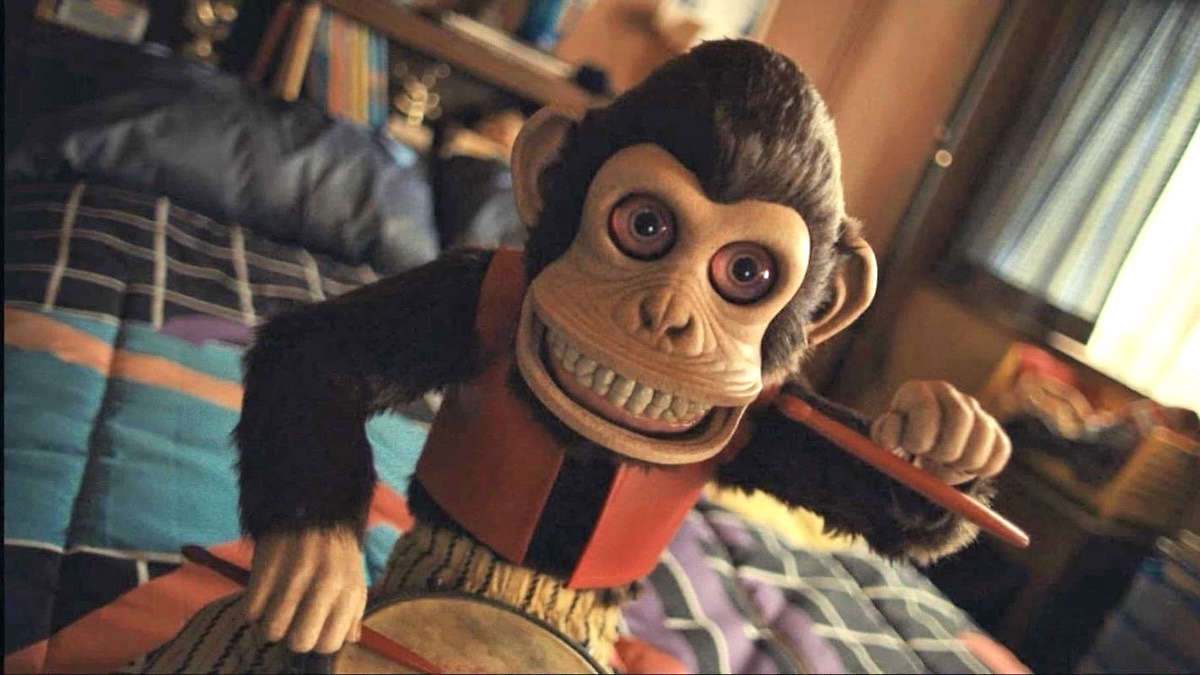
It begins in flashback, as the father of twin boys, Hal and Bill (both played by Christian Convery), attempts to gift an unwanted ‘toy’ to a thrift store, with unexpectedly gruesome results. The toy in question is the titular simian, a wind-up automaton that plays a drum to the tune of ‘I Do Like To Be Beside the Seaside.’ Once activated (by turning the key in its back), it has a nasty habit of ensuring that somebody in the immediate vicinity will get horrifically mangled, for no apparent reason other than it’s a nasty little pest who enjoys doing that kind of thing.

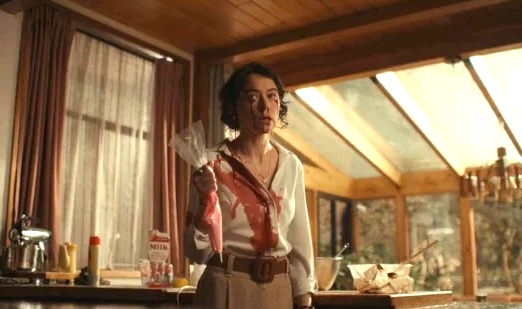
After their father ‘goes out for cigarettes and never returns,’ Hal and Bill grow up under the care of their understandably disturbed mum, Lois (Tatiana Maslany). One night, when searching through their absent father’s belongings, the boys discover the monkey in its box. Probably not a good idea to wind the key, you might think, but hey, kids will be kids…

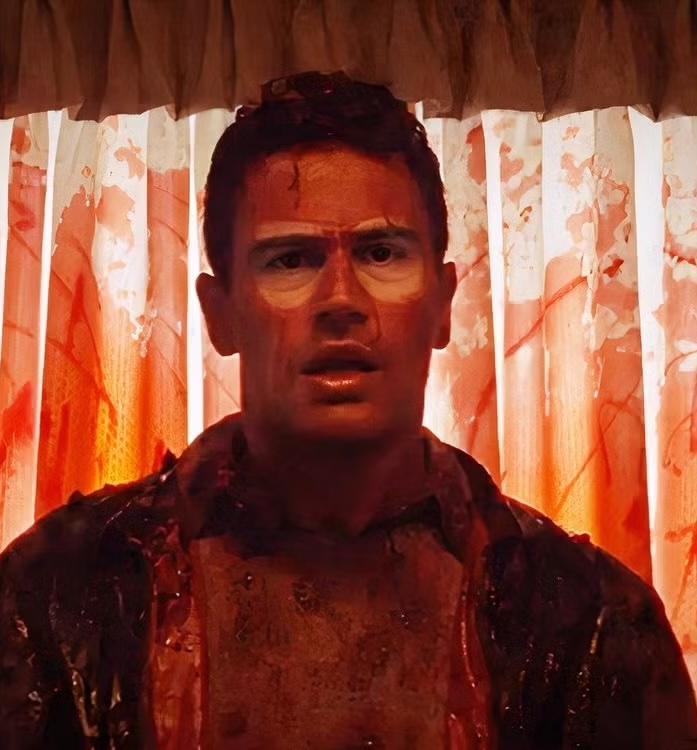
By adulthood, the two brothers (now played by Theo James) have drifted apart. Hal is the father of a teenage boy, but after his marriage break-up, only gets to spend one night a year with Petey (Colin O’Brian) and – wouldn’t you know it – that one night is when the malevolent monkey chooses to make its timely reappearance…

There’s much I like about this film: Nico Aguilar’s dark, brooding cinematography is suitably eye-catching and the gnarly splatter effects – created by no less than sixteen people in the arts department – take a wonderfully Heath Robinson approach to the task of dissembling human bodies. Much of the resulting mayhem is entertaining. The monkey itself is an engaging creation, positively oozing menace in every shot. But not everything in the production is quite so positive.

While a host of interesting characters manage to pop up to deliver Perkins’ sparky dialogue, no sooner have they appeared than they’re being messily spread across the screen and the effect is that this feels like a film that’s almost entirely peopled by bit players (or players in bits?). Perkins himself cameos as ‘Uncle Chip’ but gifts with only one line of dialogue before he gets turned to mush, while Elijah Wood doesn’t fare much better as Petey’s stepfather, Ted, though – to be fair – he’s one of the few characters who actually survives. Furthermore, a sub-plot featuring a man called Thrasher (Rohan Campbell) is so clumsily inserted into the action that for a while it only serves to confuse me, particularly when the actor is also obliged to play two characters.

I’m clearly not the only one with misgivings. Half an hour into the screening, three viewers get up and march determinedly out of the auditorium. Those with a predilection for comedy in a deep shade of anthracite may (like me) laugh out loud at what they’re watching and will possibly revel in the WTF final scenes.

But The Monkey is a tricky little beast and one thing is for sure: it won’t be for everyone.

3.7 stars

Philip Caveney

Bridget Jones: Mad About the Boy

22/02/25

Cineworld, Edinburgh

Watching a Bridget Jones movie is like catching up with an old schoolmate – not necessarily someone you were especially close to back in the day, but with whom there’s enough shared history to make these meet-ups fun. No doubt this is particularly true for “women of a certain age” – Bridget’s age; my age – who’ve grown older with her as part of our cultural landscape.

Thankfully, Bridget (Renée Zellwegger) has finally grown wiser; I found her ditsy-fuck-up persona a wee bit irritating when I last saw her (in 2016’s Bridget Jones’s Baby). What was endearing in a woman barely into her thirties, contemplating the fact that she’s somehow suddenly supposed to be an adult, was just irksome in a pregnant forty-something with a kick-ass job. Now in her fifties, Bridget has settled into success: she’s proud of the skills that make her such an excellent TV producer, and she’s even prouder of Billy and Mabel (Casper Knopf and Mila Jankovic), her two delightful kids.

But this iteration of Bridget is a lot sadder too: she’s a widow. Her husband, Mark Darcy (Colin Firth), was killed a couple of years ago on a peace-keeping mission in the Sudan. The issue of mourning is nicely handled, staying just the right side of mawkish. We see Bridget and her kids slowly moving forward, acknowledging their grief while also trying to find joy. The new levels of emotional depth work well, but this is still essentially a rom-com, so there’s a raft of unsuitable guys for Bridget to dally with.

First up is her old flame, Daniel Cleaver (Hugh Grant). Bridget has him firmly in the friend-zone nowadays, and I like this development. He’s as much of a player as he ever was – his language inappropriate; his attitude to women still neanderthal – but he’s rendered (more or less) palatable thanks to his kindness to Bridget and his rueful acknowledgement of his own failings. Also, of course, Grant imbues him with a rogue-ish charm, so it’s hard to hate him as much as I might in real life.

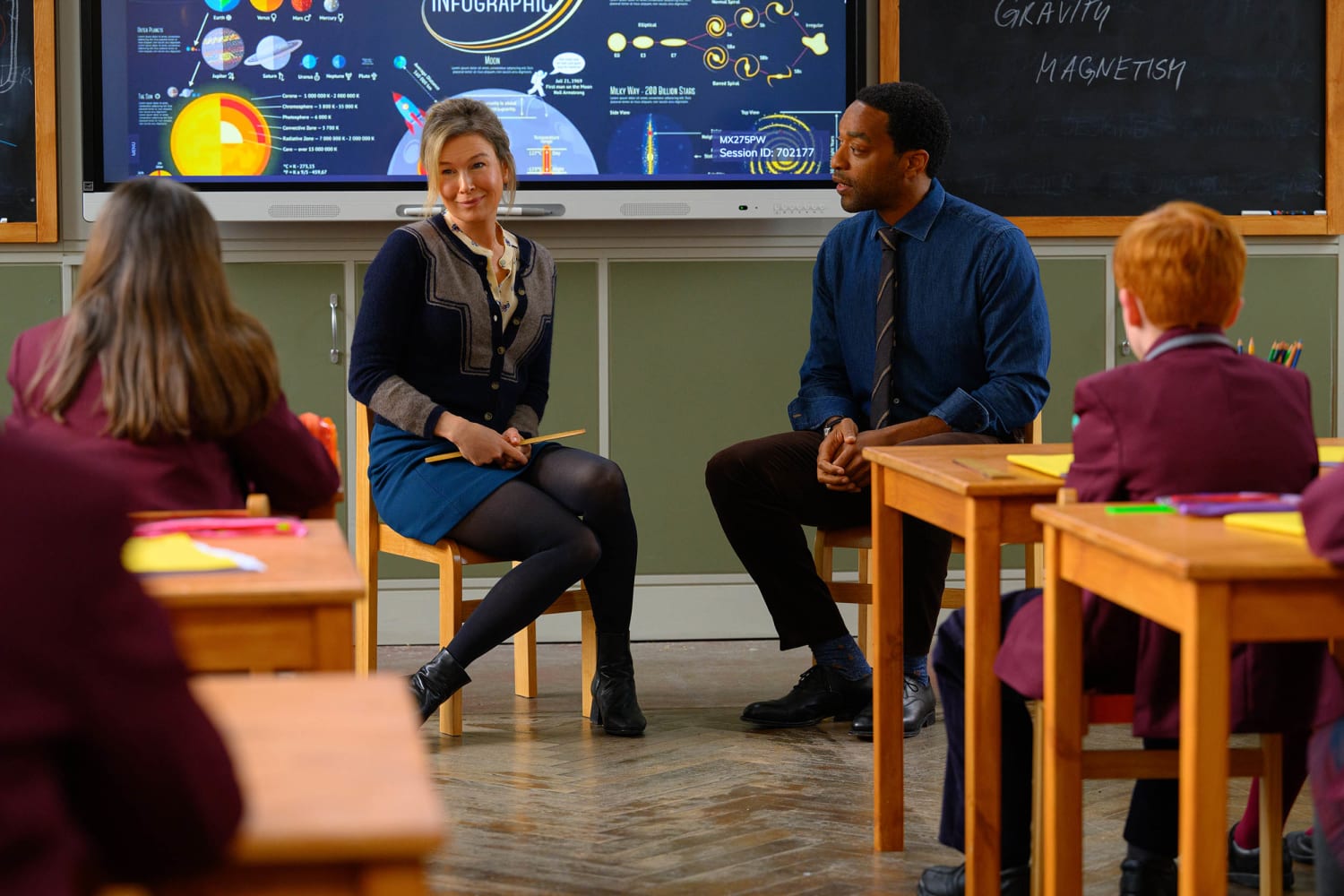
So, if Cleaver’s not a contender for a new relationship, who is? Enter Roxster (Leo Woodall) and Mr Wallaker (Chiwetel Ejiofor). The former is a twenty-nine-year-old PhD student, all rippling muscles and boyish smile; the latter is Billy’s uptight primary school teacher, a stickler for rules and punctuality – although he does turn out to have a decent set of abs as well. It’s no surprise that Bridget finds herself drawn to Roxster – nor that Mr W reveals a softer side, which makes her like him too. Which one will Bridget end up with? (Things might have moved on – at least Bridget doesn’t seem to hate her body any more – but the story hasn’t strayed so far from its ‘happy ending’ cliché that she might conceivably choose to be alone.)

Zellwegger is as likeable as ever, and I have tears in my eyes as I see Bridget emerging from her misery to recover some of her ebullience – dancing and laughing and being silly. It’s great to see her old friends and adversaries pop up as well: director Michael Morris and scriptwriters Helen Fielding, Dan Mazer and Abi Morgan successfully present a parade of ‘greatest hits’ shout-outs without ever making them seem shoe-horned into place. Big knickers? Check. Penguin pyjamas? Check. Falling over? Check. Check. Check. Running after a lover in the snow? Big check.

In short, I like this film a whole lot more than I’m expecting to. Bridget will never be my bestie, but I’d love to check in with her when we’re both in our sixties, and see what scrapes she’s getting up to then…

4 stars

Susan Singfield

The Importance of Being Earnest: NT Live

20/02/25

Dominion Cinema, Edinburgh

Despite having lived a mere thirty-minute walk from Morningside’s Dominion Cinema for the past decade, we’ve somehow failed to set foot inside – and we dare to call ourselves cinephiles! So tonight’s NT Live screening of The Importance of Being Earnest is extra exciting for us, as it’s also an opportunity to explore a new venue.

So let’s begin with that. The Dominion is undeniably boojie; indeed, it’s the fanciest cinema either of us has ever graced. The design is art deco (think flocked wallpaper, geometric shapes and a colour palette of gold, red and black); our seat is a super-comfy reclining sofa, with privacy screens and side tables. We pour our drinks (sparkling water and alcohol-free lager, since you ask) and sit back, feet up, more than ready to enjoy ourselves in these opulent surroundings.

I’ve seen, read and taught this play so many times that I know it almost by heart, but that’s not to its detriment. After all, the script is so packed with recognisable aphorisms that few in the audience are likely to be surprised by what is said; with Earnest, it’s all in the delivery.

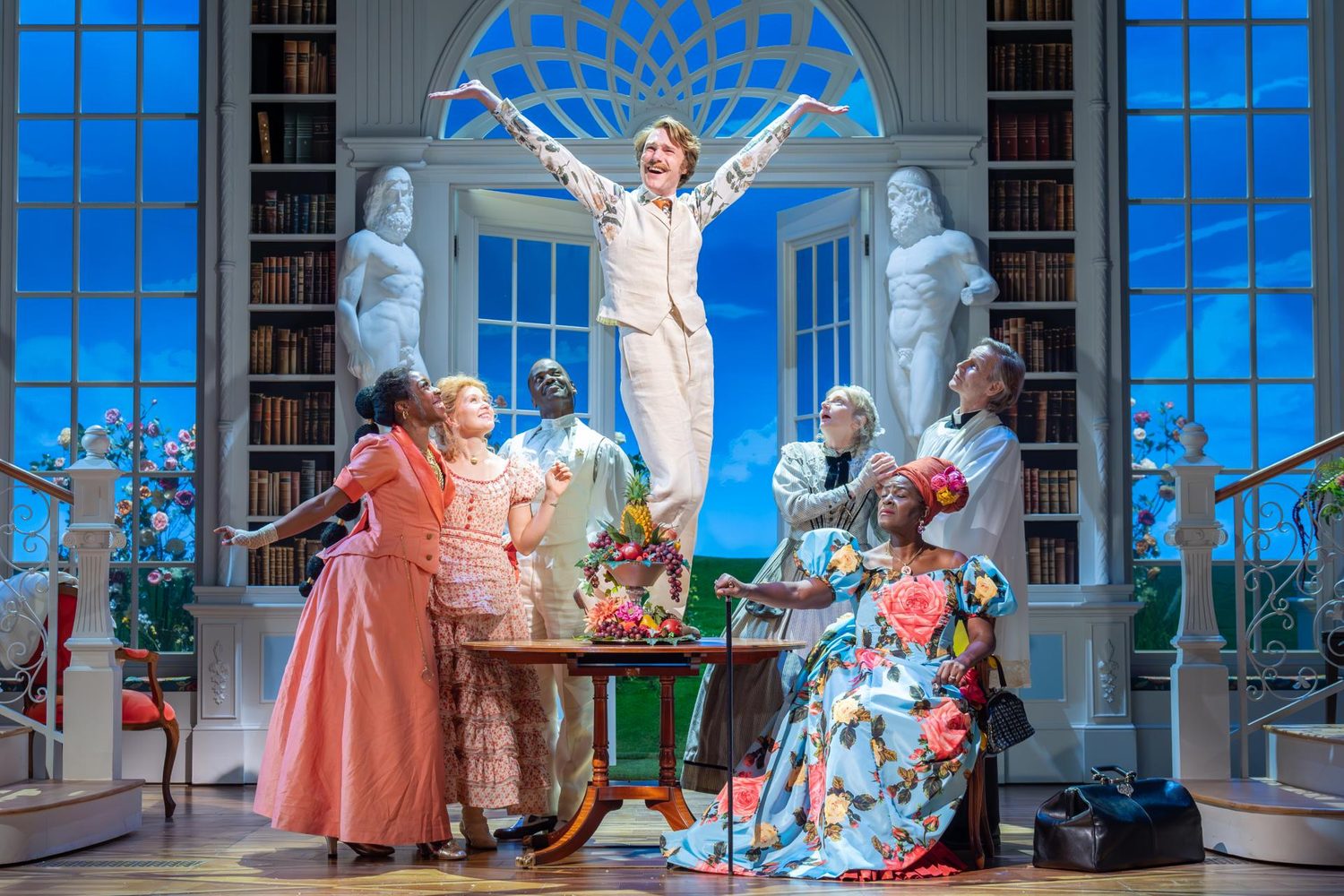
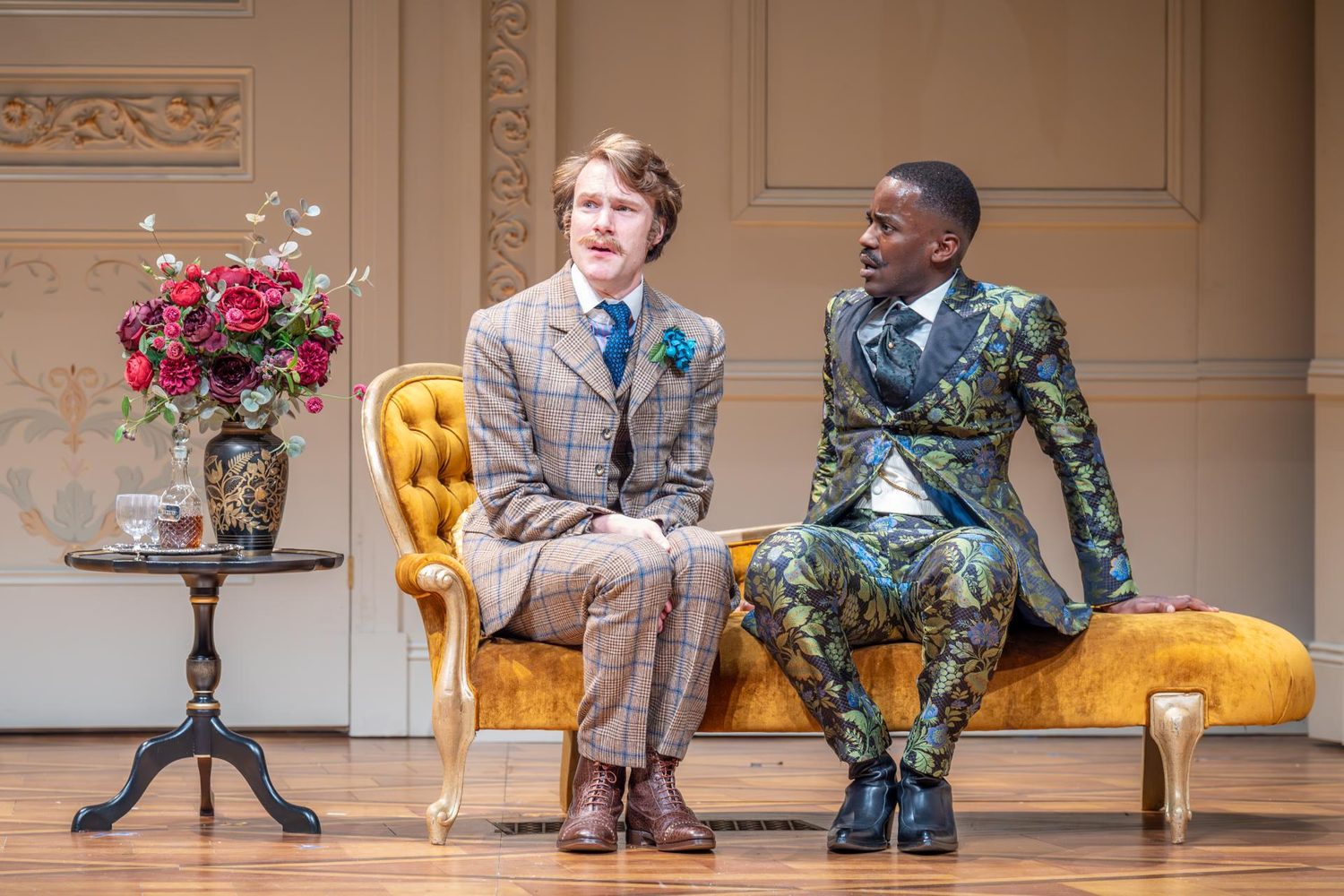
And what delivery it is! Directed by Max Webster, this is an overt celebration of queerness, Wilde’s subtext amplified to the nth degree. From the opening number, where Algernon (Ncuti Gatwa) shimmers in pink-sequinned drag, to the exuberant Mardi Gras-style finale, the closet door is flung wide open, making for a fabulously unsubtle show. To quote the wild wit himself, “moderation is a fatal thing; nothing succeeds like excess.” Webster has certainly taken this to heart.

The plot – for those who need a reminder – is at once frivolous and deadly serious. On the surface, it’s a frothy farce, all mistaken identity and foolish foppery. Underneath, it’s about repression – about the lengths people are forced to go to when their very natures are outlawed. Unbeknownst to each other, both Algernon and his best friend, Jack (Hugh Skinner), have found inventive ways to circumvent society’s disapproval of their predilections. Algernon has a pretend-friend, Bunbury, whose ill health Algy uses to excuse himself from dreary social events, while Jack has an alter-ego – an imaginary older brother called Ernest – who gets into mischief whenever he visits the city.

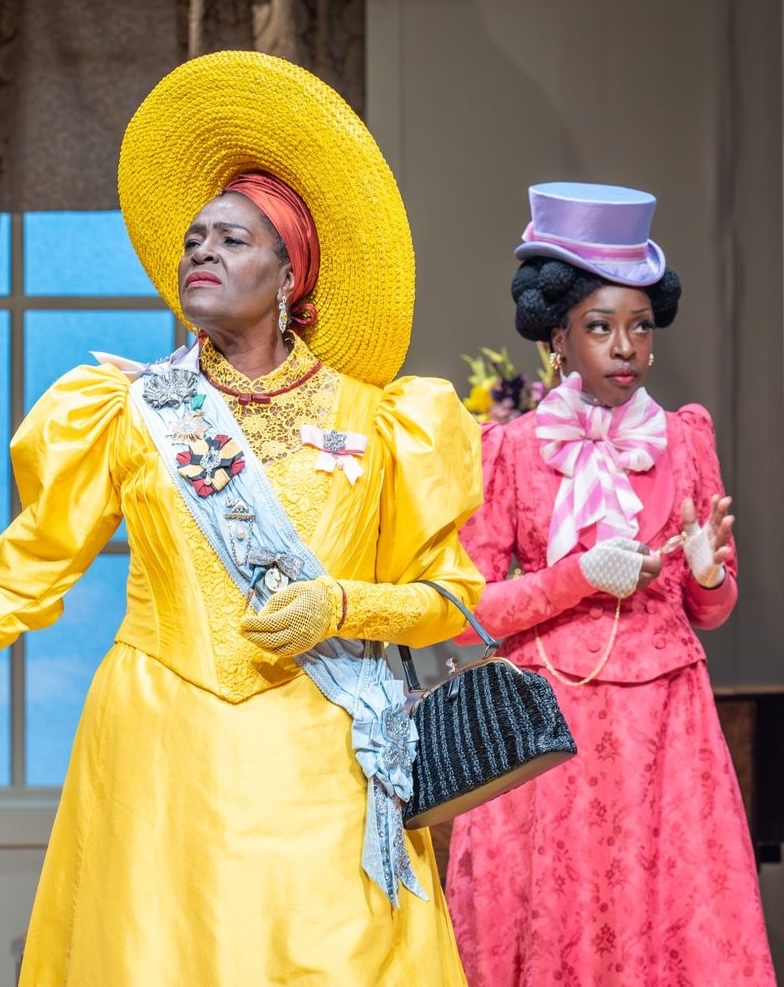
But things become complicated when Jack falls in love with Algy’s cousin, Gwendolen (Ronke Adekoluejo), whose mother, Lady Bracknell (Sharon D Clark), is far from pleased about the match. In desperation, Jack confesses his lies to Algy – who, true to form, responds by assuming Ernest’s identity for himself, and heading off to Jack’s country house to woo his pretty young ward, Cecily (Eliza Scanlen). Throw in a conflicted clergyman (Richard Cant), a dithering governess (Amanda Lawrence) and a couple of manservants (both played by Julian Bleach), and the scene is set for some merry mayhem.

The multi-racial casting within a period drama (courtesy of Alastair Coomer and Chloe Blake) gives the piece a contemporary edge, as do the occasional strains of recent-ish pop music and a cheeky allusion to one of London’s gay hotspots. Gatwa’s newfound fame as Dr Who also helps this production to appeal to a hip young audience, as does the sexual fluidity of the characters.

Clark’s depiction of Lady Bracknell is inspired: she brings a whole new dimension to the part, dispelling all my preconceptions of the character. Here, those oh-so-familiar lines are imbued with a haughty charm to create a formidable British-Jamaican matriarch without so much of a hint of Dench. Adekoluejo’s Gwendolen is a chip off the old block, saved from monstrousness by her cleverness and humour. In contrast, Scanlen’s Cecily is deliciously weird, a mix of doe-eyed intensity, sweetness and steel. But there are no weak links here: even Bleach, in the minor roles of Lane and Merriman, makes his mark, creating two distinct but equally absurd personae, evoking laughter with the simplest of smirks or stumbles.

More than anything, though, this is Skinner and Gatwa’s show, the focus firmly on the men’s friendship and their journey towards coming out. Their performances are jubilant and euphoric, and yet deceptively weighty, carrying with them real emotional heft. I can’t help thinking about Wilde, condemned to hard labour for his homosexuality, and wondering what he’d make of this? Surely, it would gladden his heart to see his characters finally set free.

5 stars

Susan Singfield

Captain America: Brave New World

18/02/25

Cineworld, Edinburgh

Heading to the screening for this, I have a wistful recollection of earlier times, when going to see the latest Marvel movie was actually something to look forward to. You know, Avengers Assemble, Guardians of the Galaxy, that kind of thing. It wasn’t so very long ago and yet it already feels like a distant memory. These days, the best I can hope for is, ‘Maybe it won’t be terrible.’

Marvel Studios are victims of their own success. Too many sequels, too many prequels, too much product. But as long as the crowds keep coming, they’ll continue, right?

There are maybe eight people in the huge IMAX auditorium this afternoon, which makes me suspect that I’m not the only one who’s bored with the MCU’s recent output. And okay, Deadpool & Wolverine did make an almost indecent amount of money – largely, I think, by daring to opt for a 15 certificate instead of the more usual 12A, but it was no masterpiece. It makes me wonder how much longer the studio can survive offering insipid releases like Captain America: Brave New World.

Mind you, on paper, it sounds surprisingly promising. Get this: recently elected American president, Thaddeus Grant (Harrison Ford) is showing signs of instability. (Given the current situation in the USA, this could have played out like a clever satire, but all too predictably, it doesn’t.) Grant sends Sam ‘Cap’ Wilson (Anthony Mackie) and Joaquin ‘Falcon’ Torres (Danny Ramirez) to Mexico to combat sneering villain, Sidewinder (Giancarlo Esposito), who has stolen some… er… classified items. A massive punch-up duly ensues. Lots of people die in polite 12A fashion – there’s no blood to speak of and the cameras never really register the impact that big explosions have on the human anatomy.

When Sam and Joaquin return victorious, exhibiting a kind of smug self-satisfaction that’s hard to endure, they discover that President Grant is acting very strangely indeed. He appears to have become fixated on the discovery of a new metal called adamantium, which can only be found on the mysterious ‘Celestial Island,’ and which he’s desperately keen to get his mitts on. On a trip to the White House, Sam and Joaquin witness an assassination attempt on the president, which is initiated by their old friend, super soldier Isaiah Bradley (Carl Lumbly). Afterwards, he has no explanation for his behaviour…

But look, I don’t know why I’m bothering to go into the alleged ‘plot’, which took no less than five screenwriters to create, since it’s mostly an excuse to throw together a series of action set-pieces, leading up to the penultimate scene where Grant mutates into… well, if I say it here, there will doubtless be indignant cries of, ‘Plot spoiler!’ – even though what happens has been blatantly revealed in all the film’s trailers and even features on the poster. I hope they paid Ford a lot of money to converted into pixels and I also hope that ace actor Tim Blake Nelson was paid a shit-ton of the stuff to wander about sporting a head like a rotting cauliflower and muttering dark threats in the role of evil genius Samuel Sterns.

I’m left with the inevitable questions. Why does Torres talk and act like a hyperactive teenager when he’s clearly in his 30s? What were those ‘classified items’ anyway? And how come, when a man turns into a Hulk, he still has a pair of pants that fit him?

At least this one comes in at just under two hours, for which relief much thanks, but if ever proof were needed that Marvel have squeezed this franchise as thin as it will go, surely here it is. But no, as the inevitable post-credit sequence grimly intones, Captain America will return…

Which sounds more like a threat than a promise.

2. 3 stars

Philip Caveney