Night, Idiot

12/04/25

Traverse Theatre, Edinburgh

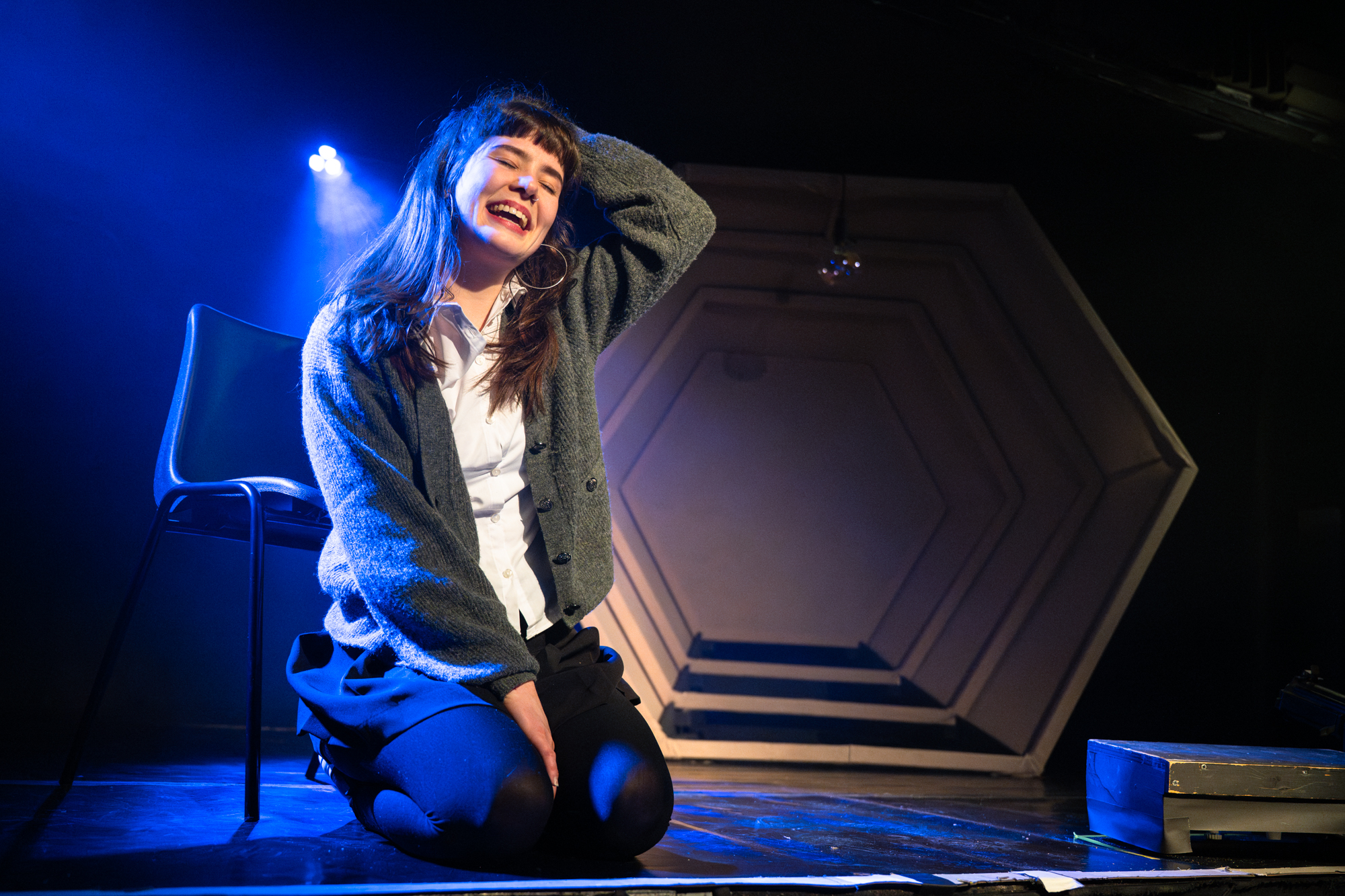
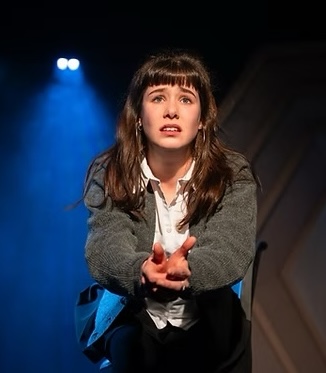
Night, Idiot promises to be a breezy comedy of manners, with a strong focus on inter-generational differences. Dani (Zoë Bullock) and her boyfriend, Paul (Andrew Barrett), have just moved into a new flat, and they’ve barely started unpacking when Paul’s mum, Ruth (Pauline Lynch), announces a visit. Zoë’s nervous: she’s only met Ruth once before and that didn’t go well. After all, it’s hardly Zoë’s fault that Paul is still working in a coffee shop, or that his great novel remains a concept rather than anything as concrete as a finished manuscript. So it’s Zoë’s job as a paralegal that pays the rent and bills; so what? That’s up to her and Paul. But Ruth has other ideas: she wants her son to fulfil his potential. And, more importantly, she wants grandchildren. Soon.

The first third is very funny, if sometimes a little far-fetched (surely no one is ever as blunt as Ruth in their criticism of their child’s partner?). But something is clearly troubling Dani…

And then things take a darker turn…

Directed by Shilpa T-Hyland, Night, Idiot is a dynamic piece of theatre: poignant, engaging and full of twists and turns. The script – by Bullock – is clever, offering clear insight into Dani’s mental anguish as she obsessively replays events, dwelling on every Sliding-Doors moment and pondering what might have been. These glimpses into the hypothetical are slick, and I like the fact that Bullock doesn’t offer any easy answers for us or Dani, and nor does she shy away from difficult themes.

Bullock and Lynch make an appealingly-fiery central duo, while Barrett ensures Paul is a sympathetic character, despite his uncommunicative nature and ultimate cowardice. Bullock in particular gets to show off her acting chops: watch out for her so-heavily-signposted-this-isn’t-a-spoiler rendition of Shrek and you’ll see exactly what I mean.

Night, Idiot is an ideal piece for A Play, A Pie and A Pint, with lots packed into the short running time. There’s emotional heft here and I find myself really rooting for the characters. Zoë Bullock is clearly one to watch.

4.3 stars

Susan Singfield
Mr Burton

11/05/25

Cameo Cinema, Edinburgh

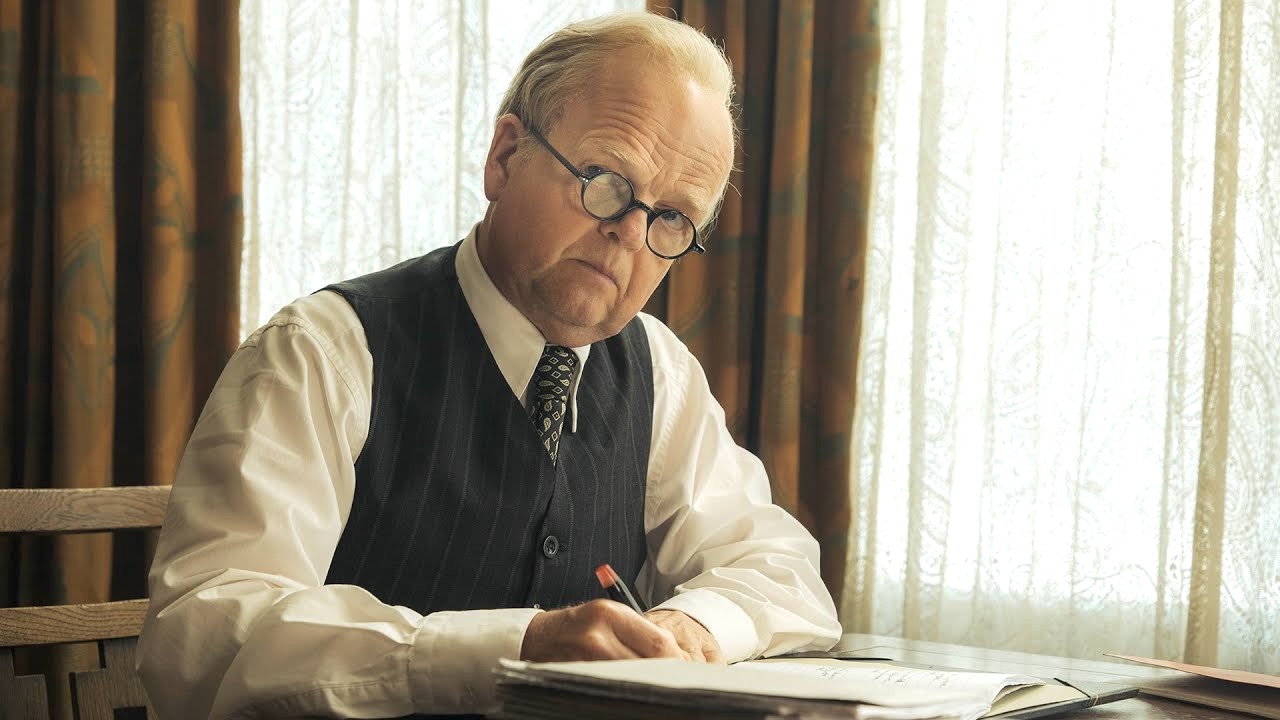
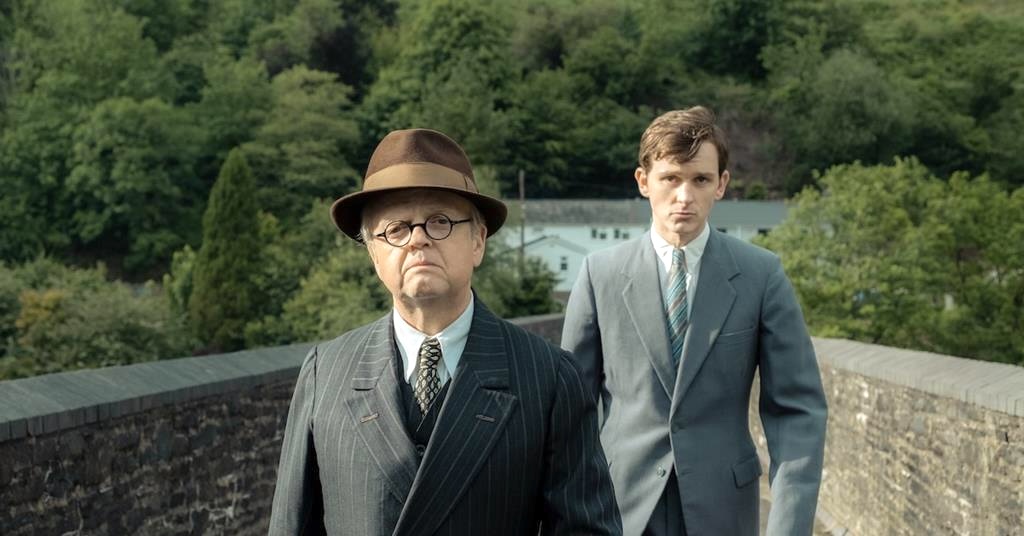
The theme of the ‘inspirational teacher’ is a well-worn cinematic device but, in the case of Mr Burton, it does have the advantage of being true. The titular Mr B (impeccably played by Toby Jones) is a quiet, but authoritarian teacher in a little school in Port Talbot, a man nursing his own thwarted ambitions as a playwright.

We join the story in 1942, when Mr Burton is doing his level best to instil a love of Shakespeare into his students, despite the glowering presence of the coal mines that threaten to claim those young men who are not thrown into the maelstrom of the Second World War. Burton is somewhat bemused to discover that the pupil who has the strongest response to his English literature lessons is Richard Jenkins (Harry Lawtey), a boy all-but abandoned by his coal miner father, Dic (Steffan Rhodri). Richard is obliged to live in the overcrowded home of his sister (Aimee Ffion-Edwards) and her resentful husband, Elfed (Anuerin Barnard).

When Richard shows considerable promise in a amateur production set up by Burton, the teacher is prompted to take the boy under his wing, giving him lessons in elocution in an attempt to erase his local accent, even finding him (and paying for) accommodation with his landlady, Ma Smith (Lesley Manville). Inevitably, tongues begin to wag as suspicious observers cast doubt on Mr Burton’s intentions.

When he takes the step of adopting the boy and lending him his surname, in the hope of getting him a scholarship at Oxford, the gossip intensifies…

Written by Tom Bullough and Josh Hyams and directed by Marc Evans, Mr Burton is an atmospheric period piece that captures the hardscrabble era in which it’s set. Jones is as assured as ever in a role that allows him to give little away, while Leslie Manville is a perfect foil for him – and makes a very decent fist of the Welsh accent. But it’s Lawtey’s star-making turn as Richard Jenkins/Burton that provides the heart and soul of this film. He’s utterly convincing as a shy, vulnerable teenager in the first half and then, when the action skips onward several years, convincingly nails Richard Burton’s sonorous tones and lithe sexuality, as he struggles to come to grips with his breakthrough role as Prince Hal in Stratford.

Lawtey’s astonishing transformation – and the astute comparison with the way that Hal shrugs off his former mentor, Falstaff in Henry IV – ensures that Mr Burton is a riveting piece about the importance of nurture and the many ways in which teaching can provide that all-important first step on the path to greatness.

4.4 stars

Philip Caveney

Alas! Poor Yorick

08/04/25

Studio Theatre, Edinburgh

As the name suggests, Alas! Poor Yorick is a reimagining of Hamlet, which centres on the minor characters of the gravediggers, those fellows of infinite jest who seem to revel in making the simplest actions long and needlessly complicated. John Gorick (as well as rhyming nicely with Yorick) doubles as the first gravedigger and a recalcitrant donkey, forever chasing an elusive carrot. Jon Haynes plays his assistant and (at one point) Hamlet himself, eager to orate over the burial place of the long-deceased jester, even if he does keep picking a soliloquy from the wrong blooming play.

Ridiculusmus enact their long-established brand of clowning, a Godot-like exploration of repetition, occasionally punctuated by absurd observations and deliberately naff jokes, though it must be said that tonight’s performance isn’t as sprightly as I would like, the extended riffs on the futility of existence feeling a little too creaky for comfort.

In the latter stages of the narrative, the arrival of players from the Lung Ha Theatre Company do lend the piece a splash of vigour and a startling change of pace. Emma McCaffrey plays a priest with an unGodly liking for the bottle, while Gavin Yule offers an interesting spin on Laertes. We’ve seen these performers in several very different productions over the years and their versatility is impressive.

If there’s a sticking point here, it’s that the clowning is a little muted and reserved and I’m not convinced that it quite comes off – and the vivacity of the final section only serves to highlight this.

Still, it’s always interesting to explore the possible backstories of Hamlet’s minor characters, and those particular Shakespearean fools/gravediggers will never seem the same again.

3 stars

Philip Caveney

Kanpai

06/04/25

Grindlay Street, Edinburgh

We’ve lived in Edinburgh for around a decade, yet for a variety of reasons, have never eaten at Kanpai – only a few steps away from where we live – until a couple of friends suggest meeting there for dinner. First impressions are certainly promising. Behind that modest, unassuming doorway, there’s a relaxed and convivial dining room that exudes good vibes. Kanpai means ‘cheers’ and the name seems a good fit, even if we are still on the wagon. There’s an initially bewildering array of dishes to choose from but the friendly staff are more than happy to offer advice.

The recent boom in sushi restaurants around the city means that there are now plenty of venues offering this kind of cuisine, but it’s clear from the word go that Kanpai’s offerings are a step up from the low-budget eateries we’ve previously visited. There are four of us to dine so we opt to share everything, which means that a riot of dishes, each more colourful than the last, keeps arriving at short intervals before being promptly despatched.

Everything is perfect: the California and Tokyo hand rolls faultlessly assembled; the tuna and avocado maki melt-in-the-mouth delicious. ‘Pace yourself,’ I keep thinking, but then the next platter arrives and I can’t quite hold myself back. Amidst a plethora of excellence, a few dishes stand out from the rest, but I have to say, it’s a pretty high bar.

There’s a delicious plate of pan-fried chicken and vegetable dumplings, perfect when dunked in the bowl of accompanying sauce, and there’s a portion of Tappoyaki octopus fish cakes that are absolutely bursting with flavour. A mizo-glazed aubergine cooked in its skin is as soft and caramelised as you could possibly wish for – indeed, it’s impossible to resist scraping out the skin with a spoon to get those last flecks of goodness into your mouth.

There’s a platter of tempora king prawns, and though tempora can sometimes be my sticking point – the crispy batter tending towards greasiness – this is exactly as it should be: light, dry and crunchy, an object lesson in the fine art of deep frying. A teppan terriyaki salmon is the final course to arrive, perfectly cooked and wonderfully aromatic, the skin finished to an exquisite crisp, the flesh beneath soft.

Would we care to finish off by trying one of Kanpai’s ice creams? Hell, yes! I opt for white sesame flavour (black sesame is also available), while Susan tries the soba, which has a delicate nutty texture. It’s the perfect way to finish off a note-perfect meal and we leave Kanpai feeling that this is up there with the best Japanese food we’ve eaten in the city. One thing’s for certain, we’ll be back.

5 stars

Philip Caveney

Restless

05/04/25

Cineworld, Edinburgh

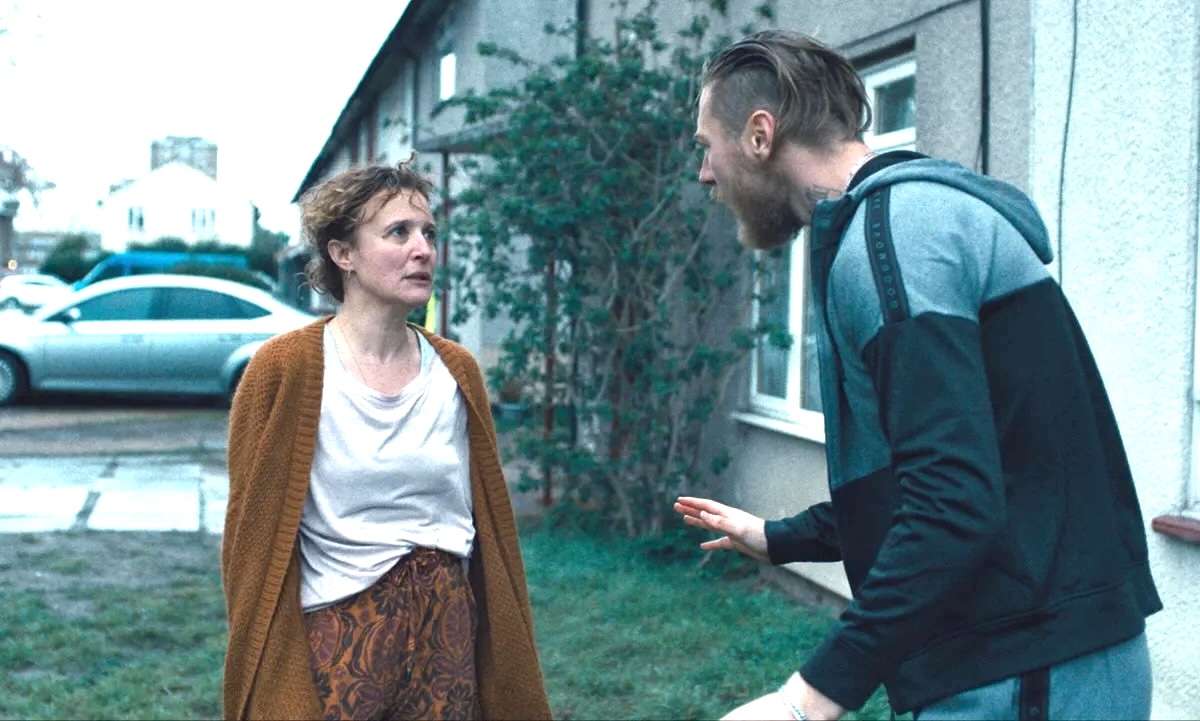
Writer/director Jed Hart’s debut feature uses the tropes of a psychological thriller to tell the mundane tale of a woman driven to distraction by her noisy neighbours. It’s a clever conceit and the resulting film is funny, tense and very engaging.

Nicky (Lyndsey Marshal) is lonely. First her mum died and then her dad; since then, their house – adjoined to hers – has lain empty. She puts on a brave face for her son when he calls from uni, and bats away her sister’s concern. She’s fine. After all, she’s got plenty to keep her occupied: her job (she’s a carer in a home for the elderly), her hobbies (baking and listening to classical music), and, of course, her beloved cat, Reggie. 

But then Deano (Aston McAuley) moves in next door, and Nicky’s fragile peace is shattered. He’s a sociable guy – way too sociable for Nicky’s liking. It’s an affront to her parents’ memory to have this loutish brute living in their house, playing loud dance music all night long. She needs to sleep…

At first, Nicky tries to be friendly, politely asking if he can keep it down. Sadly, Deano does not take well to criticism, and things soon escalate out of control. But, as Nicky starts to fight back, we find ourselves wondering: who’s the real nightmare neighbour here?

Hart’s script is well balanced, with moments of laugh-out-loud humour undercutting the tension just as it becomes unbearable. Marshal is utterly convincing as the put-upon Nicky, struggling to cope with her empty nest, while McAuley is deliciously boorish without ever straying into caricature. Barry Ward provides the comic relief as Kev, Nicky’s traffic warden pal and potential love interest. Again, despite the heightened characteristics, Kev is never a cartoonish figure; he’s a flawed but sweetly-charming bloke. 

With its moody gloominess, David Bird’s cinematography borrows horror motifs to excellent effect, ramping up the fear factor and turning a domestic dispute into something much more elemental. 

At its core, this is a story of learning to cope with grief – of digging deep to find the strength required for letting go and moving on.

But don’t overlook the fearsome battleaxe, Jackie (Kate Robbins), whose intervention is the final straw… 

4 stars

Susan Singfield

Dancing Shoes

01/04/25

Traverse Theatre, Edinburgh

01/04/25

Traverse Theatre, Edinburgh

Lunchtime theatre generally comes with built-in limitations – small casts, modest sets, humble props. But sometimes a production is so chock-full of joy that it effortlessly transcends all barriers. Dancing Shoes, written by Stephen Christopher and Graeme Smith and directed by Brian Logan, is a perfect example: a ‘little’ play that has a lot to say about male friendship and the pressures of trying to escape the stigma of addiction.

We are at a meeting of a support group somewhere in Edinburgh, where recovering drug addicts Craig (Ross Allan) and Jay (Craig Mclean) are eager to introduce themselves and tell us all about their friend, Donny (Stephen Docherty). He’s an older man, something of a loner, who – left to his own devices for far too long – eventually succumbed to the powerful lure of alcohol. Since his mother’s death, he’s been drinking several bottles of wine a night and has become enveloped by an overpowering sense of shame. 

But after visiting the group, he’s managed to step away from temptation and is determined not to slip back into his former habits. At one meeting, the three men discuss the things that really fire them up. Donny makes a surprising admission: he loves to dance. And when Jay gets out his phone and innocently films Donny, leaping around his apartment to one of his favourite tunes, none of them is quite prepared for what happens next…

From this simple premise, a delightful story emerges – an uplifting and heartwarming tale about the pursuit of personal happiness. The script is fast-paced and acerbic, the men’s conversation often laugh-out-loud-funny, yet utterly authentic.

The story is anchored by three delightful performances. Docherty reveals Donny’s inner self, forever peeking cautiously out from behind a veneer of respectability, but simultaneously compelled to reach for new horizons. Allan is terrific as the deadpan, fatalistic Craig, all too aware of how lives can sometimes go awry. And McLean is wonderfully enthusiastic as Jay, constantly looking for ways to turn the latest events to his own advantage. These are not caricatures but fully-fleshed human beings, who carry the scars of their respective addictions deep within them.

The packed audience at this A Play, A Pie and A Pint event reward the performers with a heartfelt ovation and I’m in total agreement with them. Anybody in search of an uplifting afternoon of theatre should slip on their spangly dancing shoes and quickstep their way to the Traverse.

5 stars

Philip Caveney

The End

30/03/25

The Cameo, Edinburgh

Joshua Oppenheimer might not be the most prolific of directors, but he’s certainly one of the most original. The documentary-maker’s first foray into fiction is a case in point: who else would offer us an unsettling post-apocalyptic… musical?

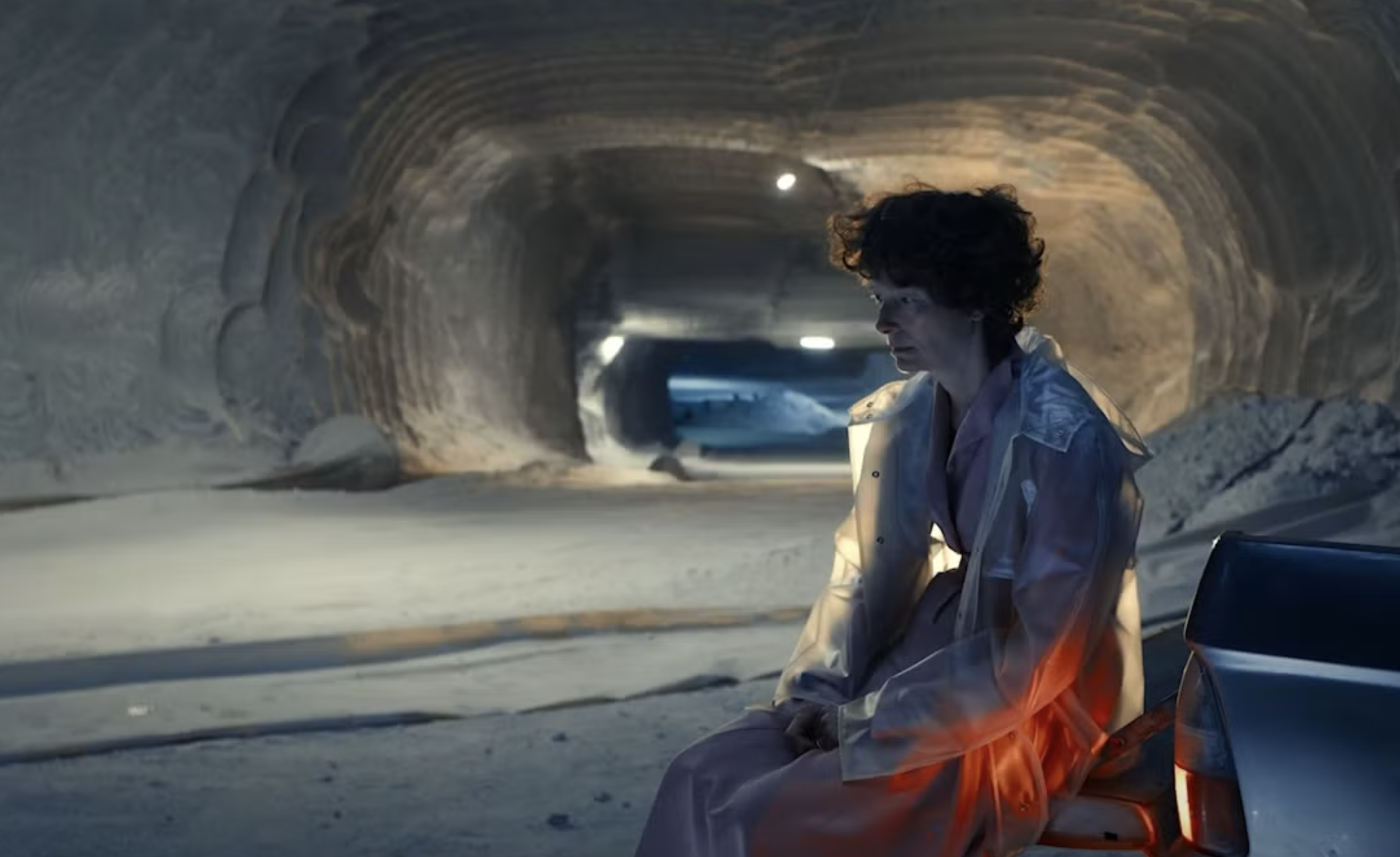
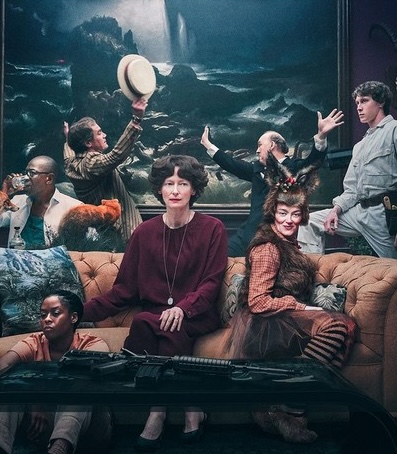
The setting is an oligarch’s nuclear bunker. There’s been some kind of climate disaster, precipitated by the billionaire’s fossil fuel company. Most of humanity is dead, but – decades after the fallout, far below the earth – a chosen few still live in luxury, albeit in the confines of some eerie salt mines.

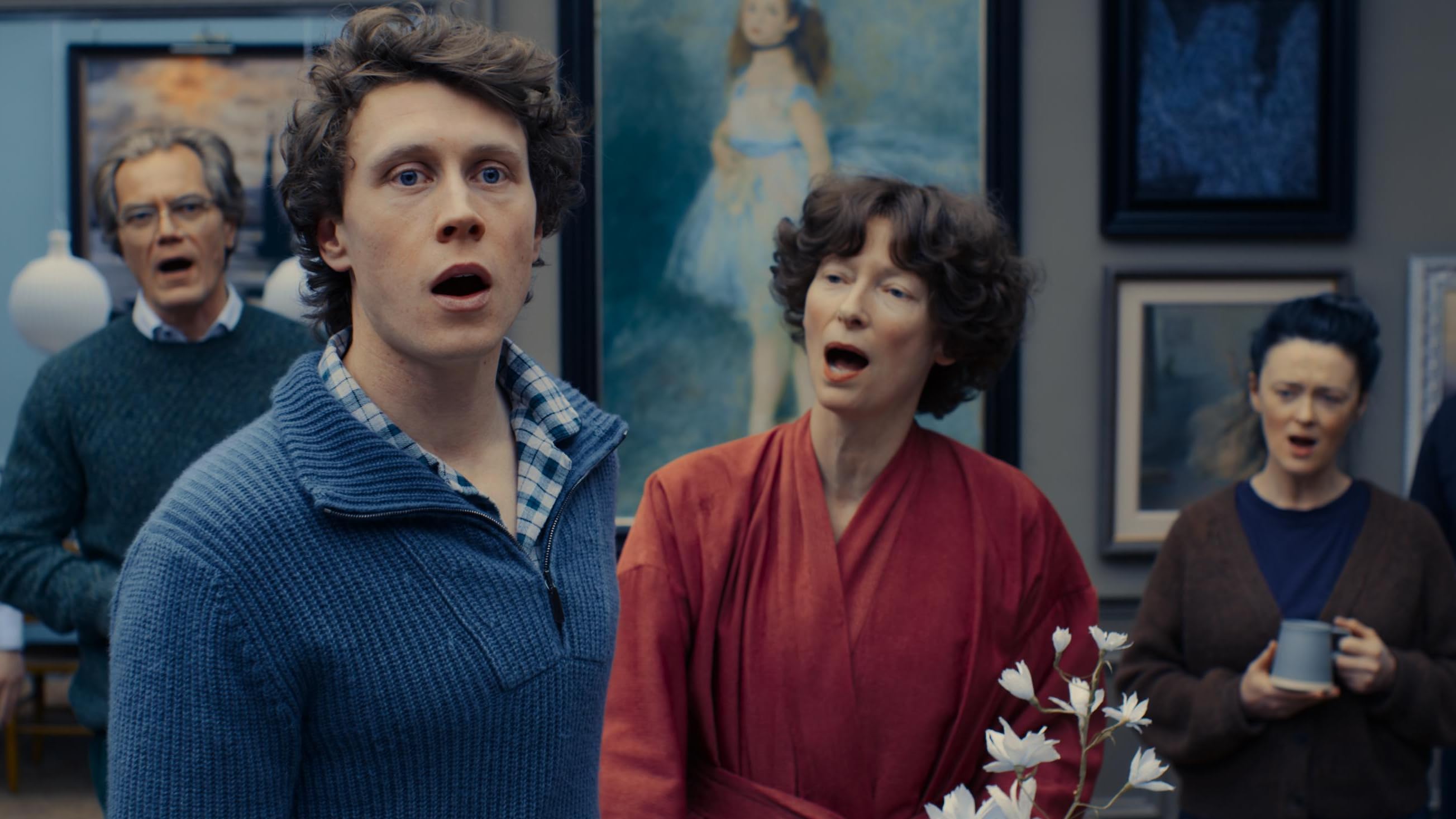
Father (Michael Shannon) is the oligarch, Mother (Tilda Swinton) his wife and Son (George McKay) their twenty-year-old child, born underground. He has never seen the sky, never met anyone outwith their small circle – and never questioned his parents’ tales about their former lives. Instead, he immerses himself in building an intricate model of all the outside places he’s only ever heard about.

The bunker has three more occupants: Friend (Bronagh Gallagher), Butler (Tim McInnerny) and Doctor (Lennie James). The trio are touted as “part of the family” but it’s pretty clear they’re here to serve, to take care of the cooking, the cleaning and the rich people’s health. Father spends his time working on a self-aggrandising autobiography, resisting Son’s attempts to offer editorial advice, while Mother fusses endlessly over the exact positioning of the priceless artworks on the walls. Life ticks by, one day much like another, an opulence-clad monotony that fulfils none of them.

And then Girl (Moses Ingram) turns up. She’s the first outsider Son has ever met, and he’s smitten. But she’s had to leave her family behind, and her survivor’s guilt opens up new avenues of thought for Son. Why has his family been chosen, out of everyone, to inhabit this haven? And why, when the place is vast, are there so few of them? Once he starts to ask questions, everything changes…

Mikhail Krichman’s cinematography is sumptuous: the scenes in the salt mines are particularly beautiful, but every shot is a work of art, as meticulously framed as the Renoirs and Monets decorating the bunker.

The film is billed as a musical but, despite the lengthy spoken sections, it feels more like an opera, with its formality of tone and portentousness. The music by Marius De Vries and Josh Schmidt amplifies the heightened emotions, but the vocal parts are sensibly kept simple, which suits the non-singers in the cast (such as Swinton). Ingram, Gallagher and McKay are more accomplished, and they are given the most to do.

Despite its bloated running time, The End is a thought-provoking and startlingly unconventional movie, quite unlike anything else on the big screen. It’s not one you’ll find at a multiplex, but it’s definitely worth the price of a ticket at your local indie (or Picturehouse) cinema.

4.3 stars

Susan Singfield

Dr Strangelove: National Theatre Live

29/03/25

Cineworld, Edinburgh

In 1964, I watched Stanley Kubrick’s dark satire, Dr Strangelove, in an RAF cinema somewhere in darkest Lincolnshire. I was thirteen years old, arguably a bit too young to fully appreciate its biting satire, but I remember being absolutely terrified by the apocalyptic ending, which left me feeling decidedly nervous about the world’s future.

Fast forward to the early 1980s, where I attend a stand-up gig at the Old Grey Mare pub in Didsbury, Greater Manchester. Friends have encouraged me to go along and catch a gifted young impressionist called Steve Coogan, who they predict ‘has a promising future ahead of him.’ It costs me fifty pence to get in and the funniest routine is the one where Coogan adopts the persona of a BBC reporter, commentating on a live tragedy unfolding in… er… Camberwick Green.

What I could never have predicted is that in 2025, Coogan would be starring in an adaptation of Kubrick’s film, adapted by Armando Iannucci from the original screenplay co-written by Kubrick and Terry Southern – and, perhaps more pertinently, that a story that played like an outrageous spoof in the 1960s feels suspiciously like a cautionary warning in the present day.

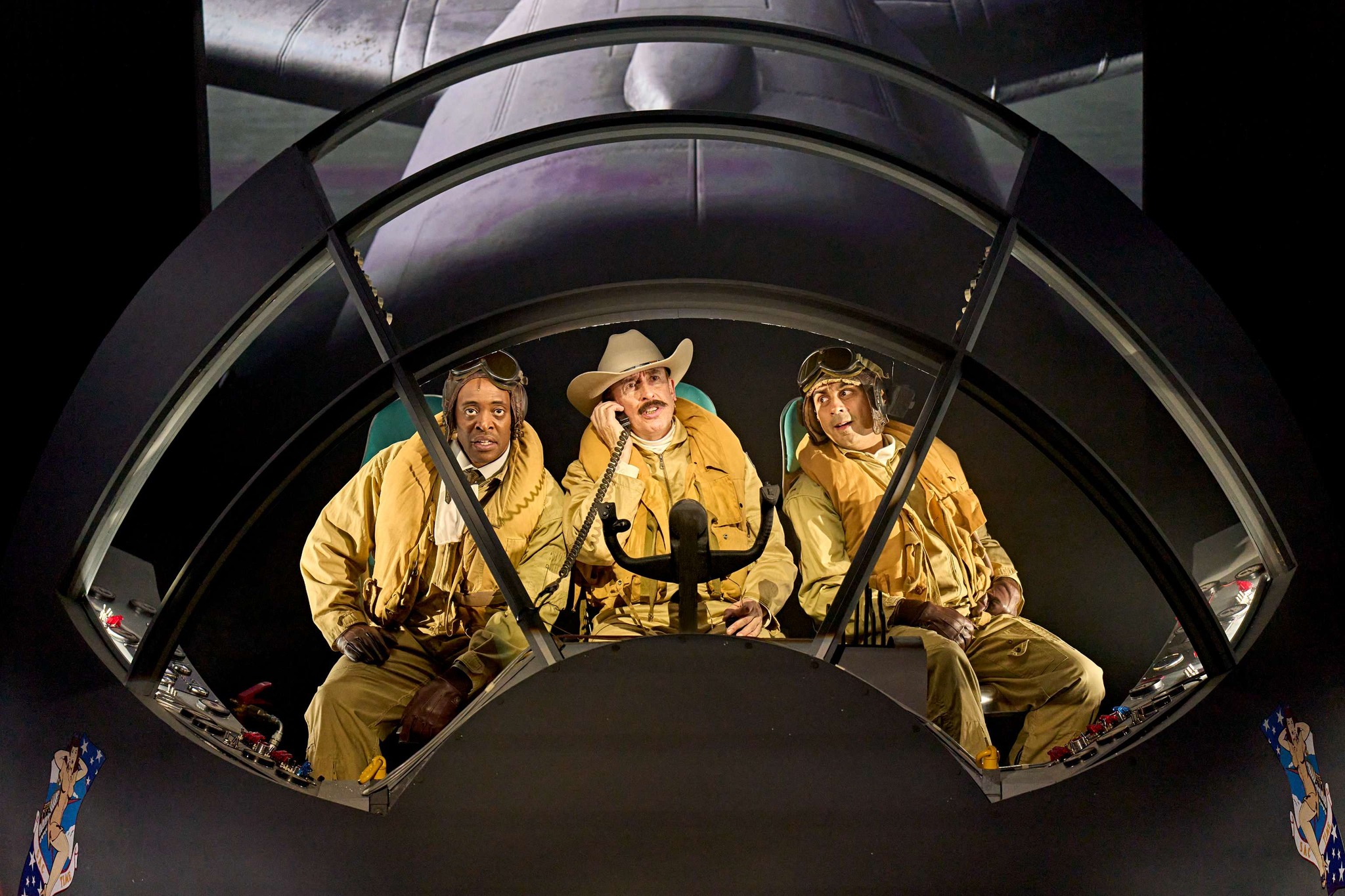
Brigadier General Jack D Ripper (John Hopkins) has a paranoid breakdown and orders a B52 bomber, piloted by Major TJ ‘King’ Kong (Coogan, in one of four roles) to drop a nuclear device on a target in the Soviet Union. President Merkin Muffley (also Coogan), after being briefed by General Buck Turgidson (Giles Terrera), finds himself presented with the tricky task of contacting the Russian President to warn him of the incoming attack. The Russian premier is understandably not too happy about the situation, especially when he learns that the aircraft is maintaining complete radio silence, and that the attack can therefore not be called off.

A whole series of disastrous events ensue…

This brilliantly-staged production is a weird hybrid – part play, part film – and at times it is astonishing in its sheer invention. Coogan is extraordinary. Like Peter Sellars before him, he also takes on the role of RAF officer Group Captain Lionel Mandrake and, of course, the titular Dr S, a man who can’t seem to stop himself from making involuntary Nazi salutes… (Now where have I seen that recently?) Some of the lightning-fast costume changes he’s obliged to undergo are so slickly done that I’m left gasping.

But it’s not just Coogan who excels here. Hopkins plays the cigar-chomping, alpha male, Jack D Ripper with panache, while Terrera milks plenty of laughs as the scheming, self-serving Turgidson. There’s a huge cast at work here and every one of them is drilled to perfection.

Hildegard Bechtler’s set design is accomplished, opening and closing to disclose a wild variety of settings, even managing to convincingly place the audience in the cockpit of a B52 bomber, flying over mountainous terrain. Iannucci handles the adaptation with a light touch, capturing the original film perfectly and only occasionally tweaking the script to accommodate more recent references.

You don’t have to have seen the original to appreciate this superb production, but it might prompt many to investigate it on streaming. Kubrick made many great films over his long career and was famously pernickety about his work. But I have no doubt that he would be absolutely delighted by what director Sean Foley and his team have done with what could be the filmmaker’s greatest achievement.

5 stars

Philip Caveney

Ghost Stories

26/03/25

Festival Theatre, Edinburgh

What a strange thing, the passing of time. Taking my seat in the Festival Theatre, I can’t help being transported back to thirteen years ago, when Susan and I travelled from Manchester to London, with the express purpose of catching Ghost Stories as it neared the end of its first run. We’d heard great things about the show, created by Jeremy Dyson and Andy Nyman – and we were not disappointed.

Fast-forward to 2018 and now we’re in the cinema, watching the big-screen adaptation of the story, which has been skilfully retooled for a different medium, but still delivers a feast of creepy moments and heart-stopping jump-scares. 

And now, here’s the original production, out on tour and taking its twisty-turny narrative to a series of new locations. Over the intervening years, the show’s creators have somehow managed to compel audiences not to reveal too much about what actually happens in that intense hour-and-a-half and they continue to implore us to keep its secrets. Of course, this makes a reviewer’s job harder, but hey, those are the breaks. 

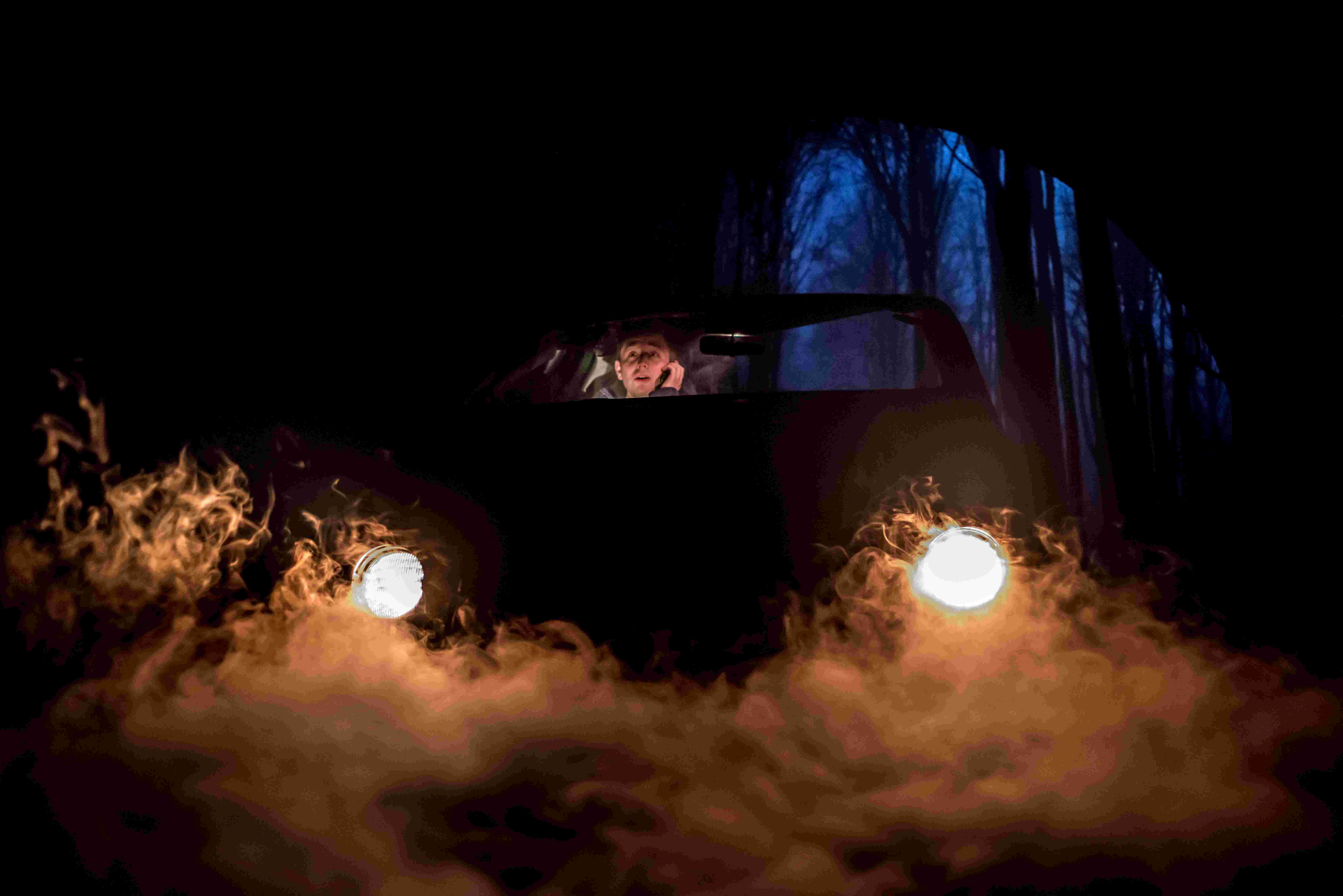
Suffice to say that Ghost Stories is a deliciously old-fashioned portmanteau, which incorporates three quite dissimilar stories and links them all together with an intriguing framing device. We are greeted by Professor Goodman (Dan Tetsell), a staunch disbeliever in all things supernatural, but he does have some puzzling cases to share with us. There’s the one about the chatty, chirpy nightwatchman, Tony Matthews (David Cardy), who has a particularly troubling evening at work; the cautionary tale of nervy Simon Rifkind  (Lucas Albion), who really should never have been put behind the steering wheel of an automobile; and let’s not forget the recollections of snarky businessman, Mike Priddle (Clive Mantle), who has a sobering memory to recount for anyone thinking of becoming a parent…

And that is about as much as I’m willing to share, other than to say that if you’ve never seen Ghost Stories in the theatre, this is your chance to rectify that situation. And if you have seen it, go back and admire the details. You may even spot the clues that have been artfully scattered throughout. You’ll relish Jon Bauser’s extraordinary set, forever opening up like a puzzle box to reveal its hidden depths. James Farncombe’s lighting design amps up the intense atmosphere of dread, which is also amplified by Nick Manning’s nerve-shredding sound design. Scott Penrose’s special effects will have you flinching in your seat at several key moments, while director Sean Holmes brings all the elements together and ties them up with a great big blood-curdling bow.

And if you’re of a nervous disposition, then my advice is to go along and see it anyway, because you’ll be so relieved to step out of the theatre to find that the real world is a whole lot less scary…

4.6 stars

Philip Caveney

Wasps

25/03/25

Traverse Theatre, Edinburgh

Cameron Forbes’ Wasps, the latest offering from A Play, A Pie and A Pint, buzzes along busily, like its  hymenoptera lookalike. Anchored by a gutsy performance from Yolanda Mitchell, this tragic coming-of-age monologue has quite a sting in its tail (sorry, not sorry).

Teenager Rianne (Mitchell) just wants to fit in. At school, she’s perfected the art of invisibility: if she dresses right, wears her make-up exactly so, earns just enough detentions, she can move through the corridors without attracting any attention at all. But there are downsides to never being seen. For one thing, her crush, Oran, doesn’t seem to realise she exists. And for another, not even her best friend notices when her life implodes…

I’m not usually a fan of so-called inspirational quotations but “what doesn’t kill you makes you stronger” serves as a pretty decent précis of Wasps‘ central message. And I mean that in a good way. Rianne faces some really serious problems – including a confrontation with her spheksophobia -which she has to dig deep to face up to. And yes, she emerges battle-scarred, but at least she’s no longer desperate to disappear. She’s bolder, braver and ready to take up space. A bit more… wasp-like.

Director Lesley Hart ensures that the pace never flags, so that the play has a convincingly propulsive teenage energy, and Mitchell does a wonderful job of conveying both Rianne’s turbulent emotions and her evident disdain for many of the people in her life, evinced by her scathing impressions of them.

Gillian Argo’s set is visually arresting. I like the hexagonal construction, suggestive of a wasp’s nest, and the flickering projections of the worker wasps . However, I’m not always fully convinced by the wasp analogy; the comparison is perhaps stretched a little too thin. I’m also left with a couple of nagging questions about the plausibility of some of what occurs. (I can’t elucidate without spoilers but let’s just say that, though social care in the UK is undoubtedly in dire straits, Rianne is a vulnerable child and her situation would surely be flagged up; she wouldn’t be left to deal with it entirely alone.)

Nonetheless, this is a sprightly, engaging piece of drama, with some lively writing and a spirited delivery – a worthy addition to the PPP canon.

4 stars

Susan Singfield