His House

05/11/20

Netflix

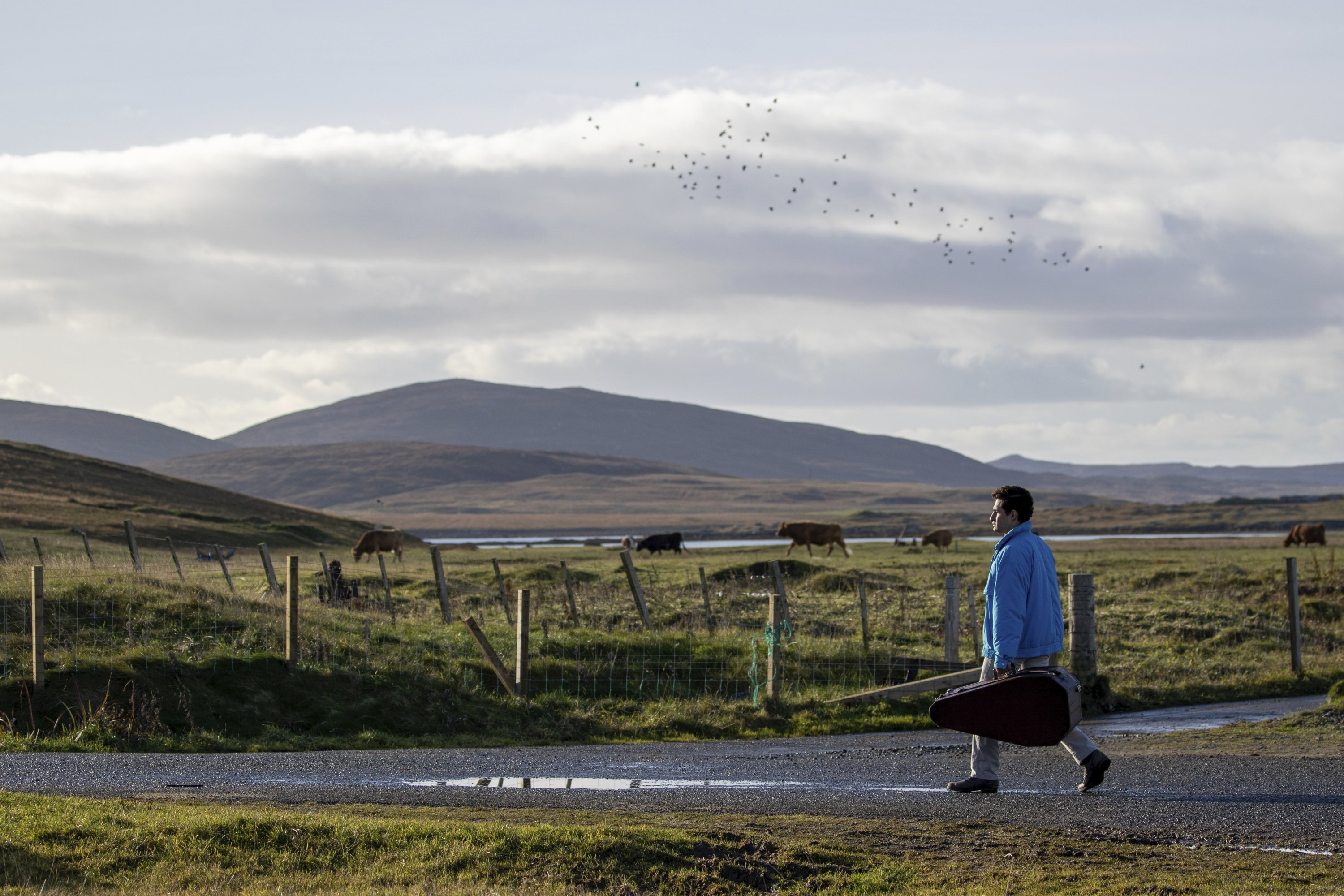
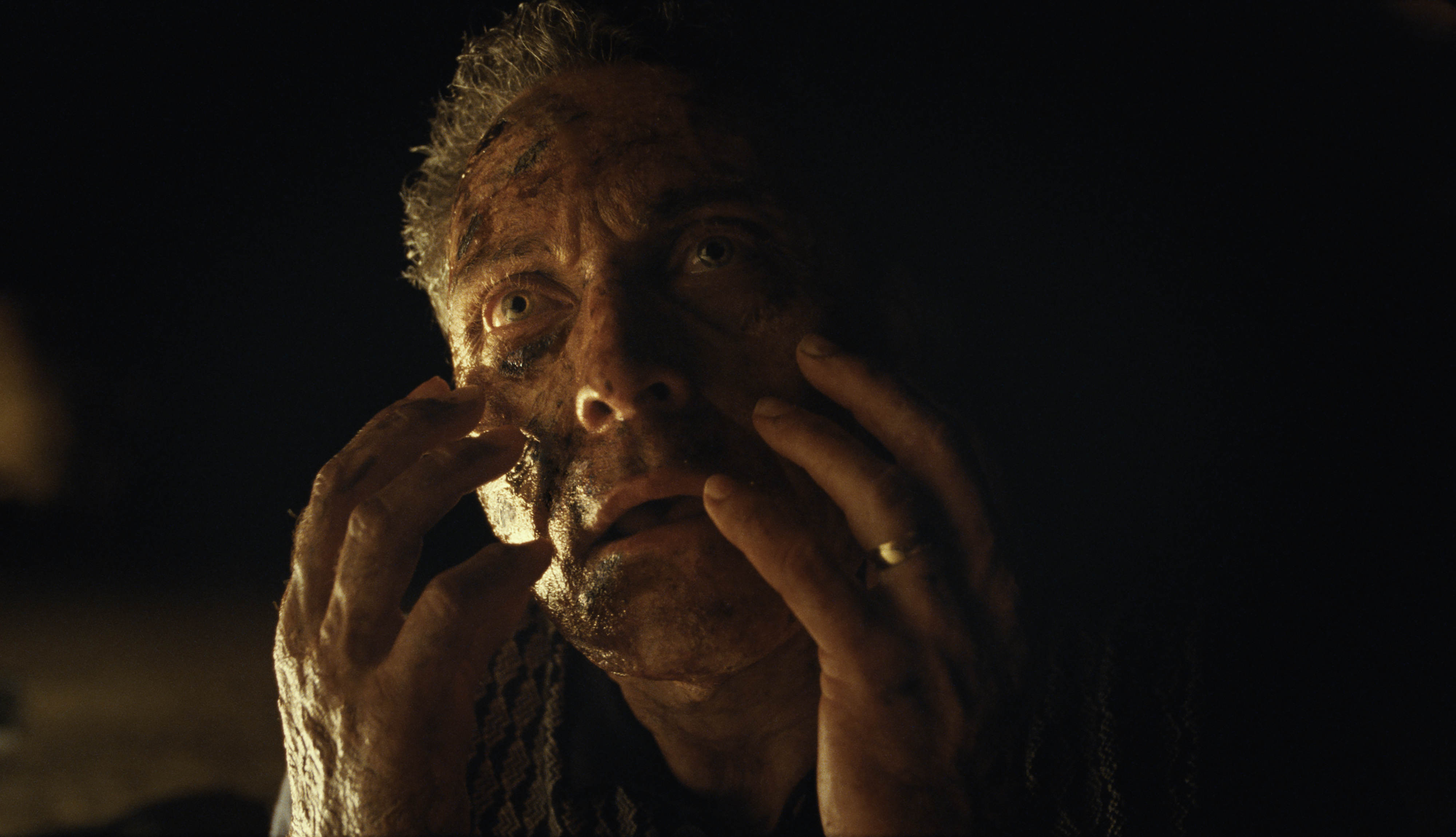
The ghosts and demons that regularly haunt people in supernatural stories are rarely as terrifying as those that are generated by their victims’ own bad experiences. That’s the central theme of Remi Weekes’ assured ‘ghost’ story, His House, newly arrived on Netflix. It relates a powerful – sometimes terrifying – tale that uses all the familiar tropes of the classic ghost story, yet offers us something more than the average scare-fest.

Bol (Sope Dirisu) and Rial (Wummi Mosaku) are asylum seekers, newly arrived in Britain after a nightmarish experience in their native South Sudan. They have managed to survive a perilous sea crossing, suffering a terrible loss along the way. They now reside in a detention centre that is, to all intents and purposes, a prison. But fresh hope arrives in the offer of a home of their own, a place where they can live while they wait to see if they will be granted sanctuary.

They are met at the property by housing officer, Mark Essworth (Matt Smith), a man so ground down by the drudgery of his work that he seems barely capable of summoning the energy to answer their questions. But he does remind them that they are not, under any circumstances, allowed to live anywhere else until their case is closed. Which wouldn’t be a problem… but, as the couple soon discover, something malevolent is living behind the mouldering walls that enclose them… something that is rapidly marshalling its powers.

This is a lean and compelling narrative, which somehow manages to find fresh strengths in familiar techniques, and there’s a major surprise waiting in the wings, that – once revealed – leads viewers to reassess what they think they already know. Jo Willems’ cinematography offers memorable imagery and some of the dream landscapes he creates linger in the mind long after the closing credits.

His House not only provides a cracking thrill ride, packed with cleverly executed jump scares, it also makes you think deeply about the plight of people obliged to run from real life terrors, and the weight of the baggage that inevitably accompanies such circumstances.

4.7 stars

Philip Caveney

Crave

04/11/20

Chichester Festival Theatre (Live Streaming)

The title feels apt, because we have been craving live theatre. And this production of Sarah Kane’s bleakly poetic play, directed by Tinuke Craig, is the closest we can get. It’s actually playing as we speak, not recorded live and then shown again. It’s real! And somehow, with the lights turned low, some of that theatrical magic makes it through our computer monitor and we’re transfixed.

Our sense of immersion owes a lot to Alex Lowde’s set design. It’s stark and minimalistic: just four conveyer belts driving the characters onwards, enlarged footage of their faces projected onto the screen behind. The stage revolves too, adding to the sense that none of these characters has any control over what happens to them. They’re stuck on their individual treadmills, too consumed by the inexorable motion to look around or make any real connections.

Kane’s play famously has no stage directions; nor are there any character names or notes; nor does the text make clear who is speaking to whom at any point. Here, they mostly speak into the void, four disparate figures, each desperate to be heard. When they do make contact with one another, it’s fleeting, and ultimately unhelpful. At first, it’s confusing: a cacophony of sound and imagery. But, in the end, it’s like an incomplete jigsaw. Yes, there are gaps; no, we don’t have all the pieces and there are no easy answers. But a compelling picture has emerged, and we are utterly engaged.

Erin Docherty (C) and Jonathan Slinger (A) have the showiest of the parts: as an abused child and a self-pitying paedophile. They’re both terrific. Wendy Kweh (M) and Alfred Enoch (B) are great too, but their roles are more understated and so less memorable.

In the end, it just feels wonderful to experience challenging theatre again. As lockdowns – either full or partial – look set to continue for some time yet, I hope we can at least look forward to more of this.

4.1 stars

Susan Singfield

Hotel Du Vin

04/11/20

Bristo Place, Edinburgh

It hardly seems possible, but a quick glance back through the diary confirms it: we haven’t visited a proper restaurant since March.

Yes, that’s right. March.

Oh, yes, we’ve been in socially-distanced cafes and we’ve had swanky restaurants deliver food to our door to be heated up and consumed at home, but really, enough is enough. Another lockdown’s looming and we’re determined that it’s high time we dined out, so we cast around for places where we can possibly eat al fresco in November. In Scotland. Then we remember that the Hotel Du Vin does have a very pleasant courtyard and, what’s more, it is even equipped with patio heaters should the weather prove too brisk.

So here we are, at a table in said courtyard, nibbling at warm bread dipped in olive oil and balsamic vinegar and discussing the unfolding horror story that is the American presidential election. Meanwhile, we lament the fact that today our discussion cannot be lubricated with something containing alcohol, but hey, them’s the rules – and you can’t have everything. The staff are friendly and attentive, and ensure that they observe social distancing at all times. We feel very relaxed.

For my starter, I choose sautéed mushrooms on toasted sourdough and it turns out to be a good choice. The generously sized mushrooms are soaked in a rich Madeira sauce and virtually melt in the mouth, while the crispy toast provides a perfect contrast. Susan has a baked St Marcellin cheese fondue which is rich and creamy and is accompanied by new potatoes, cornichons and croutons. It only takes a mouthful of our respective starters to make us appreciate how much we’ve missed doing this and, happily, we’ve chosen a good place to break our fast because both meals are pretty much note perfect.

Next up for me is haddock and king prawn gratin, baked in a cream sauce and glazed under breadcrumbs with thick, stringy layers of Gruyère. It’s a gooey, aromatic treat, generously stuffed with chunky prawns and accompanied by sides of frites and cauliflower cheese. Susan opts for mussels frites, a big bowl of moules marinère steamed in white wine, cream, shallots and garlic. Despite me selflessly helping her to eat it, the portion is too generous to finish.

After this, we’re feeling pretty full but we’re not ready to leave, so we have coffee and more chat, just to ensure that we’re absolutely certain there’s definitely no room for pudding.

And of course, in the fullness of time, it turns out there is room, and who knows when we’ll have this opportunity again? So I order an apple and blackberry crumble, the fruit still with a little bite left in it and served with an indulgent hot custard. Susan finishes off with a perfectly executed crème brûlée, the top scorched just enough that it breaks with a satisfying snap when tapped with a spoon. Voila!

By the time we head for home, the evening is already descending and we find ourselves thinking of all the incredible meals we’ve enjoyed since we first moved to Edinburgh. For now, we can only cross our fingers and hope that one day soon, those happy times will return, and that visits to places like Hotel Du Vin will once again be commonplace.

But right now, this was really just what we needed.

4.2 stars

Philip Caveney

The Bike Project: Jokes and Spokes

03/11/20

It’s my brother who tells us that The Bike Project’s Jokes and Spokes annual charity comedy night is streaming live. Like many others, our family is spread out around the country and, with Scotland, England and Wales all following different lockdown timetables, who knows how long it’ll be before we can see each other again? So he suggests we ‘attend’ this event together, and we (and my parents) are more than happy to comply.

We know it’s bound to a be a little odd. Stand ups need their live audiences more than other performers (theatre link-ups aren’t as good as the real thing, but they can still be wonderful); as an audience member, I need the buzz of shared laughter too, the sense of complicity that comes from sitting in a darkened room, ideally being challenged and surprised. But still. That’s not available, and we all have to adapt.

And The Bike Project is a very worthwhile cause: all money raised goes towards refurbishing old bicycles and giving them to refugees. I love this: ethical, environmental, achievable and genuinely useful.

Jen Brister compères, and she’s good at it: briskly funny, with a warm and generous manner. She puts us at our ease, and we settle in.

It’s a bit of a mixed bag, quality wise. To be fair, not only are the comedians dealing with an unfriendly format, they’re also out of practice, and haven’t had much chance to hone their work.

Still, Suzi Ruffell gets us off to a good start. She’s so twinkly and charming, it almost doesn’t matter if she’s telling jokes or not, but she is, and they’re funny – so that’s good. True, we’ve all seem some of this material before, but that’s inevitable to some extent, and there’s new stuff in there too.

I’m a little disappointed with Andy Zaltzman – whose comedy I usually like – because he’s reading from a script, so there’s no eye contact at all. Also, he reads so quickly that I miss a lot of it. If we were in the same room, he’d be able to gauge that better, I guess, and slow himself down. I can’t really review the content, because I didn’t catch it. A real shame.

Next up is Evelyn Mok. I haven’t seen her before and I want to cut her some slack because lockdown is hard on all of us, and I know she’s appearing for free (like all the comics here). But she doesn’t seem to have any material at all, not even a basic bit of WIP, and she’s just chatting to the ‘front row’ audience members who are visible on our screens. ‘This is like being at somebody else’s family get together,’ my brother messages our group. There are some rare raconteurs who can just shoot the breeze and keep us entertained. But Evelyn Mok doesn’t do it for me tonight. If I get the chance to see her live, I’ll take it; I’d like to know what she’s like in a more natural environment.

Although I’ve never seen Athena Kugblenu, I’m primed to like her because I listen to The Guilty Feminist and I know her well from that. She doesn’t disappoint. Yes, it’s a low energy performance, but she’s cheery and engaged, and she makes us laugh. Oddly, it’s her stuff about how difficult it is to do comedy online that really hits the mark. It’s a relief to mock the elephant in the Zoom.

We’re all big fans of Richard Herring in our family, and he’s his usual cheeky, ramshackle self. But, although he’s set himself the laudable challenge of not performing any of his pre-lockdown material again, we’ve still all heard this set before. It’s not his fault, though, that we listen to all of his podcasts and read his blog; we’re bound to encounter his ideas along the way. Things pick up when he introduces his ventriloquist dummy, Ally, and embarks on a ridiculous improvisation.

Kemah Bob gives us the most honed performance of the night. She seems very comfortable performing online, and she establishes an easy intimacy. This is clearly well practised material, but it’s new to us, and we’re laughing out loud most of the time.

Last but not least is headliner Frankie Boyle. He’s great: his tone is very natural, and he’s as acerbic and cantankerous as you’d expect. This is classic Frankie, albeit with the invective dialled down a notch.

The show ends and our group call begins. It’s been great, we all agree: three households ‘meeting’ remotely to share an experience. Not as good, nowhere near as good, as going out together would be. But a fair compromise in a compromised world. And charitable to boot.

3.8 stars

Susan Singfield

Rocks

30/10/20

Netlix

In one of those weird examples of synchronicity, I’ve just finished writing a monologue about a fifteen-year-old girl whose mum takes off, leaving her home alone and frantically trying to avoid the prying eyes of social workers. And then we come across Rocks on Netflix, and decide to give it a go.

Ah. It’s about a teenage girl whose mum takes off, leaving her home alone, etc.

Bucky Bakray plays Shola, known to her friends as Rocks. When her mum, Funke (Layo-Christina Akinlude), takes off ‘to clear her head,’ Rocks knows the score. It’s not the first time it’s happened. Funke has mental health problems; it’s not that she doesn’t care. She leaves Rocks some money, after all.

But there’s Rocks’ little brother, Emmanuel (D’angelou Osei Kissiedu), to consider too. He’s still at primary school, and he takes a lot of looking after. It’s too much for Rocks, and she starts to lose her way, falling out with her best friend, Sumaya (Kosar Ali), and taking up with loose-cannon new girl, Roshé (Shaneigha-Monik Greyson). Things soon get out of hand, and Rocks’ world comes crashing down.

Rocks is a lovely, heartfelt movie. It’s tragic, yes, but it’s also warm and life-affirming. It’s great to see a film set in London’s sprawling council estates that recognises inner-city poverty without wallowing in it, and that depicts the city’s working-class residents as rounded human beings. It’s beautifully performed by this troupe of teenage actors, and is utterly believable. I’m especially moved by the realistic depiction of friendship here: the girls quarrel, they tell each other unwelcome truths; they cry, they laugh, they are frequently out of their depth – but, ultimately, they care, and that’s enough.

Directed by Sarah Gavron and written by Theresa Ikoko, Rocks is a wonderful coming-of-age story, and well worth your attention.

4.5 stars

Susan Singfield
Rebecca

23/10/20

Netflix

Ben Wheatley is certainly a versatile director. Over a relatively short career, he’s given us surreal dark comedy in Sightseers, dystopian sci fi in High-Rise and a bloated snore-fest in the endlessly protracted action movie Free Fire. Now he plunges himself headlong into a remake of Rebecca, clearly undeterred by the fact that many cinephiles regard the 1940 version as Alfred Hitchock’s finest hour.

Daphne Du Maurier’s source novel is well-regarded but there’s little doubt that it’s a bit of a potboiler – albeit a brilliantly executed one. Essentially a contemporary riff on Jane Eyre, it has been memorably described as a ghost story without a ghost, which seems about right.

The unnamed protagonist of the story, played here by Lily James, is suffering through the thankless task of being a ‘lady’s companion’ to the extremely unpleasant Mrs Van Hopper (Ann Dowd, being effortlessly loathsome). Mind you, the suffering takes place on the French Riviera, so I can’t help feeling that things really could be a lot worse.

When she encounters eligible widower Maxim De Winter (Armie Hammer), she thinks herself to be completely out of his league, but a whirlwind romance duly ensues and it isn’t long before she’s whisked back to Manderley, his stately home in Cornwall, complete with battalions of servants and a baleful housekeeper, Mrs Danvers (Kristen Scott Thomas). The latter is clearly devoted to her employer but more particularly to the memory of his late wife. The newly married Mrs De Winter soon discovers that Rebecca is a tough act to follow – and that there’s something decidedly fishy about her death…

Jane Goldman’s screenplay gets quite a few things right and redresses omissions left out of the earlier film, mainly due to pressure from the Hayes Code. This version adheres to Du Maurier’s downbeat conclusion, which is a typically reckless move on Wheatley’s part, but it pays off.

Lily James nails the heroine’s awkward vulnerability, while Hammer gives us a much more likeable De Winter than Laurence Oliver’s rather saturnine performance. Furthermore, Scott Thomas is a perfect Mrs Danvers: cool, calculating – and with a prowling sexuality.

There are other good things too. In his sumptuous location photography, Laurie Rose opts for vivid colours rather than the usual muted tones and somehow captures the era perfectly. I also enjoy the inclusion of several traditional folk songs, which really shouldn’t work, but do, giving certain sequences a kind of Wicker Man vibe, helping to accentuate the lead character’s sense of alienation.

If I’ve a major criticism, it’s that this Rebecca is somewhat lacking in suspense – a quality that Mr Hitchcock knew all about. In the film’s latter stretches, where Mrs De Winter has to turn detective in order to save her husband’s reputation – and life – she seems to achieve her objective without breaking a sweat. Of course, the fact that she even wants to help him is itself a matter of some controversy.

Du Maurier’s story is ultimately nihilistic, as though her primary concern is to give the subject of romance a thoroughly good kicking. Wheatley colludes in this endeavour, and the result is well worth viewing.

4 stars

Philip Caveney

The Trial of the Chicago 7

16/10/20

Netflix

Those people who despair about the current state of the judicial system in America should take a long, hard look at The Trial of the Chicago 7 – if only to remind themselves that it was just as rotten in the late 60s.

The titular trial is, of course, one of the most outrageous miscarriages of justice in relatively recent history, and here it is in all its shocking detail. Presented as fiction, this would inevitably raise eyebrows. The fact that it’s all true only intensifies the sense of shame the story generates. This is a damning narrative in the truest sense of the word.

It’s the story of a bunch of radicals who, in 1968, organised a peaceful protest against the Vietnam War. On the night of the protest, a large contingent of the protesters were cornered by the police and subjected to a brutal physical assault. Many of the officers removed their identification before striking out with their batons.

The upshot should surely have been that the Chicago police were the ones on trial, but no such luck. Tom Hayden (Eddie Redmayne), Abbie Hoffman (Sacha Baron Cohen), Jerry Rubin (Jeremy Strong) and four of their friends find themselves up before Judge Julius Hoffman (Frank Langella), a rampant hardliner who clearly deems them guilty on the length of their hair alone. Their crime? Hard to say, really. Obstructing police batons with their faces?

Just to complicate matters, Black Panther member Bobby Seale (Yahya Abdul-Mateen II) is on trial alongside them, for no apparent reason other than he happened to be in Chicago on the same night. He has no legal representation in the court and, when he tries to speak for himself, he’s escorted outside, beaten, shackled and brought back in wearing a gag.

Think about that for a moment…

Writer/Director Aaron Sorkin has been working on this film for several years and it’s clearly a passion project. At first glance, some of the casting seems questionable but, as it turns out, Redmayne is perfectly convincing as Hayden, and Baron Cohen – hardly the go-to person for a credible acting performance – really captures the spirit of Abbie Hoffman, delivering what just might be his best film performance so far.

There are plenty of other sterling actors in smaller roles – Mark Rylance, Joseph Gordon-Levitt and Michael Keaton to name but three – and the era is reproduced in almost forensic detail. It’s evident that Sorkin has designed this as a salutary lesson, a plea for the USA to ditch the kind of values exhibited here.

Some of that will be decided in the upcoming Presidential election but, in the meantime, here’s a chilling testament to the iniquities of the law and a stark warning of what happens when the judiciary isn’t held to proper account.

Hard-hitting stuff.

4.3 stars

Philip Caveney

Eternal Beauty

09/10/20

Curzon Home Cinema

Films that tackle the subject of mental illness are difficult to get right and the ones that do are few and far between. Eternal Beauty, written and directed by Craig Roberts, is more successful than most at capturing the confused and sometimes terrifying world of a schizophrenic.

It does seem odd, though, that a film set in South Wales and financed by the Welsh Film Board should feature such a paucity of Welsh actors in its cast. Robert Pugh, the only cast member with a noticeably Welsh accent, ironically spends the entire film in almost total silence.

Go figure.

Sally Hawkins is Jane, who, since being left at the altar by her fiancé many years ago, has increasingly drifted into a chaotic world of delusion, much to the bewilderment of her family. (In flashbacks, she’s played by Morfydd Clark, who is great, although she looks nothing like Hawkins.) Jane dwells in a place where ‘reality’ is in very short supply and where the aforementioned fiancé phones her at random times throughout the day and night, to whisper sweet nothings down the line.

Jane’s singularly unsympathetic mother, Vivian (Penelope Wilton) treats her condition with utter disdain, while her father, Dennis (Pugh), can’t even seem to voice an opinion. Jane’s two sisters, the likeable Alice (Alice Lowe) and the frankly unpleasant Nicola (Billie Piper), each deal with her condition in their own way.

Jane’s fragile existence receives a sudden boost when she reconnects with a friend from childhood. Mike (David Thewlis) styles himself as a musician – though the brief performance we’re treated to suggests that this may not be his true forte. However, his sparky presence revitalises Jane and it begins to look as though he may be just the man to lead her out of the dark labyrinth in which she’s become ensnared. But this is no fairy tale…

As ever, Hawkins submits a brilliantly nuanced performance in the lead role and she’s ably supported by a whole host of excellent performers. Kit Fraser’s cinematography cleverly uses colour palettes to define the different characters and there’s a suitably quirky soundtrack of vintage songs to supplement the action. Niggles aside, Eternal Beauty is well worth a watch, if only to marvel at Hawkins’ ability to take the most demanding roles in her stride – and to wonder how Roberts has somehow managed to make this bleak tale curiously life-affirming.

4.2 stars

Philip Caveney

Enola Holmes

28/09/20

Netflix

Let’s get one thing straight, shall we? Enola Holmes is an invention of American author Nancy Springer. The character does not appear in any of Sir Arthur Conan Doyle’s original stories. Furthermore, news that the Conan Doyle estate is in the process of suing Netflix for having the temerity to feature a ‘likeable’ version of the great detective strikes me as faintly absurd. Still, here is the aforementioned Enola, as portrayed by the immensely likeable Millie Bobby Brown, (better known as ’11’ in Stranger Things) in the first of what is intended to be a series of six films – and you know what? It’s really rather good.

Enola is the estranged little sister of Sherlock (Henry Cavill) and Mycroft (Sam Claflin), though she hasn’t seen either of them since she was a toddler. Brought up by her reclusive mother, Eudoria (Helena Bonham Carter) she’s been home-schooled in a whole series of unusual subjects, all designed to develop her mind and (importantly) her martial arts skills.

When Eudoria suddenly disappears without explanation, Enola’s care passes to her humourless guardian, Mycroft, who decides to put her in a finishing school run by the dreaded Miss Harrison (Fiona Shaw being suitably repellent). But instead, Enola opts to go in search of her mother, using a series of disguises and the kind of detection skills that Sherlock would be proud of. Along the way, she encounters another runaway, Lord Tewkesbury (Louis Partridge) and it isn’t long before sparks begin to fly between them. But first, there’s a complicated mystery in need of unravelling…

Handsomely mounted and featuring a whole battalion of revered character actors, there’s much here to enjoy, though it really is Millie Bobby Brown who keeps everything bubbling along, maintaining a jovial conversation with the audience as she goes. This is witty, inventive and – unusually for a Holmes project – has a nicely handled feminist subtext at its heart.

Legal actions not withstanding, there’s every reason to believe that Enola Holmes could go on to be an engaging series, but – should it turn out to be a standalone – it’s still an enjoyable way to pass a couple of hours.

4.2 stars

Philip Caveney

The Devil All the Time

23/09/20

Netflix

Imagine the vibrant Americana of the Coen Brothers, twisted into a seething vat of venomous corruption and you’ll pretty much have the measure of The Devil All the Time. Directed and co-written by Antonio Campos and based on a novel by Donald Ray Pollock (who serves as our narrator), this is a multi-layered, labyrinthine slow-burner of a film, where a whole string of characters are linked by a series of weird coincidences. In Pollock’s bleak world view, the blame for most of the evil that plagues humanity can be laid squarely at the door of organised religion.

The central character, Arvon Russell (Tom Holland), is one of the few sympathetic human beings in this narrative, and even he is someone given to Old Testament levels of brutality towards anyone who wrongs his much-loved step sister, Lenora (Eliza Scanlen). Arvon’s violent tendencies stem from the treatment he received from his God-fearing Dad, Willard (Bill Skarsgard), who very much believed in the eye-for-an-eye approach and whose treatment of the family pet is particularly hard to stomach. Lassie Come Home, this really isn’t.  

Elsewhere, we encounter the Reverend Preston Teagarden (Robert Pattinson), a sleazy preacher with a predilection for seducing young girls: crooked cop Lee Bodecker (Sebastian Stan) who’ll do whatever is necessary to further his ambitions, and a particularly vile couple, played by Jason Clarke and Riley Keough, who get their kicks from picking up young male hitchhikers…

On paper, it all sounds rather relentless but, unfolded as it is in a slow, measured narrative, it’s a surprisingly powerful brew. As Arvon is led inexorably deeper and deeper along the path to retribution, I find myself gripped right up to the final credits. It helps that a whole menagerie of talented actors submit nuanced performances here, particularly Holland who proves beyond a shadow of a doubt that there’s a lot more to him than slinging webs.

This may not be to everybody’s taste. As a vision of the United States, there’s little here resembling any kind of hope for the country’s collective soul. Indeed, it is a tale so excoriating, so morally bankrupt, that you can only feel a nagging worry for the society that spawned it. 

The Devil All the Time is a Netflix original, ready to watch whenever you have the time, or the nerve, to take it on.

4.2 stars

Philip Caveney