Uncategorized

Disciples

06/10/23

Traverse Theatre, Edinburgh

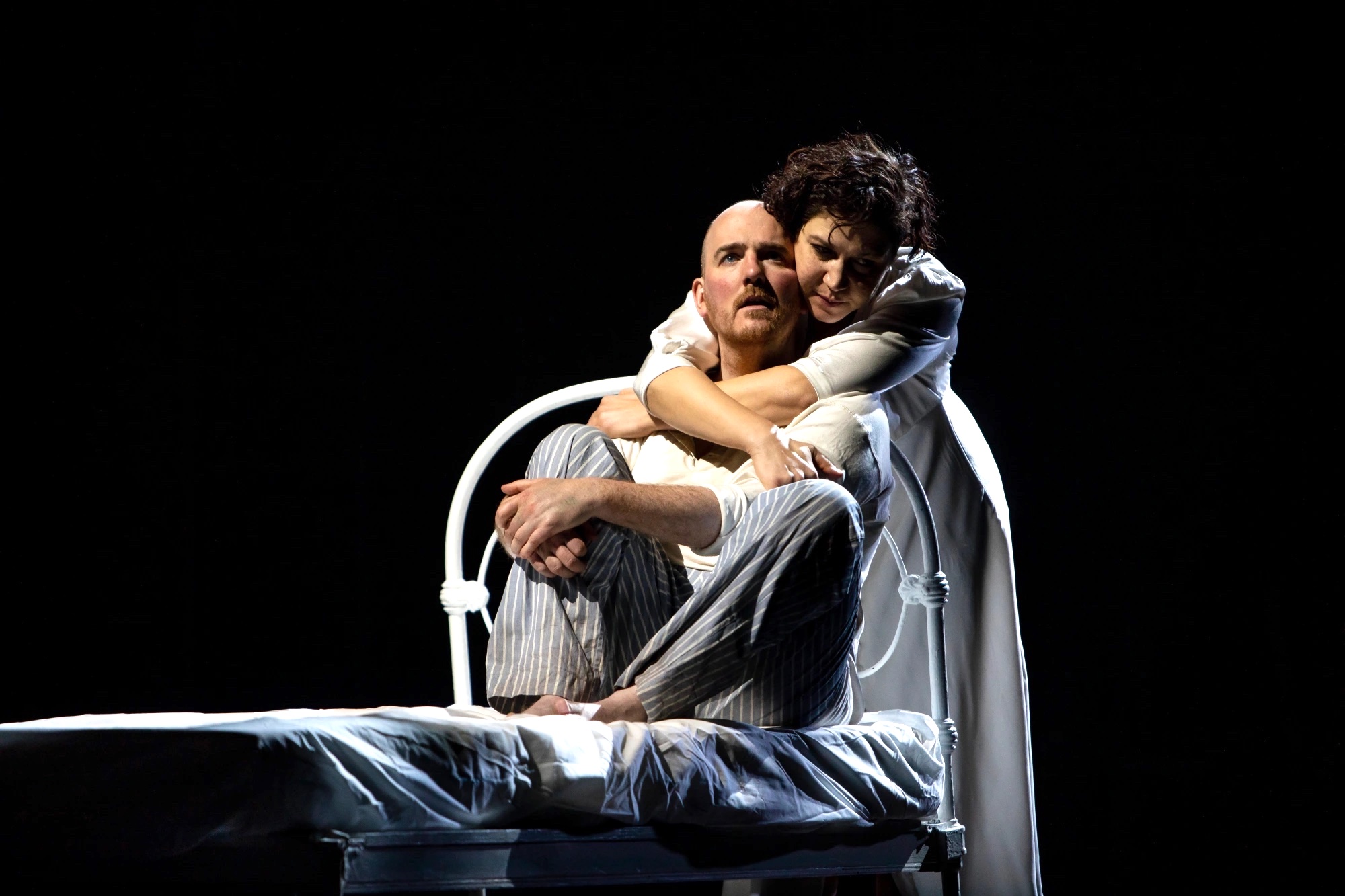
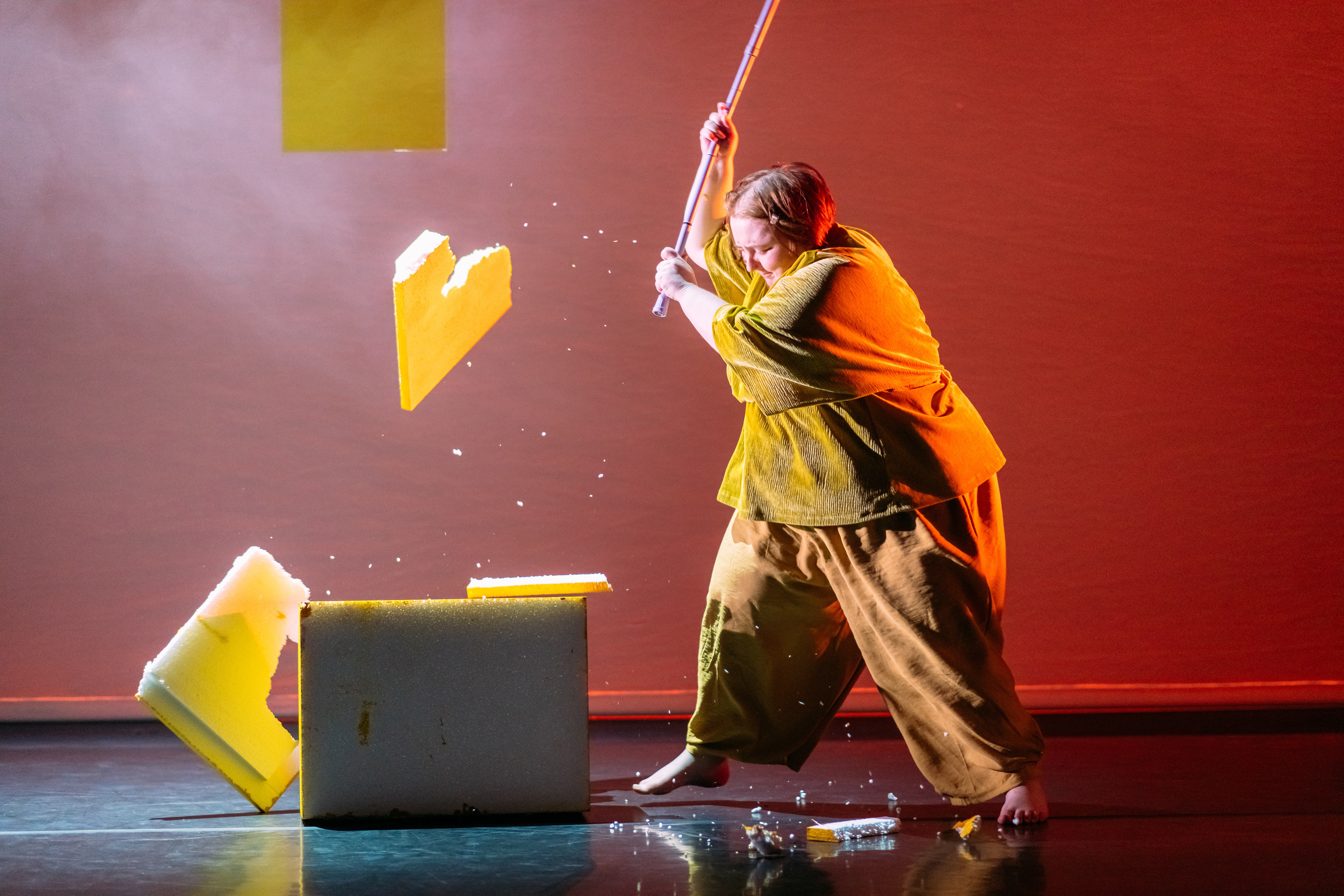
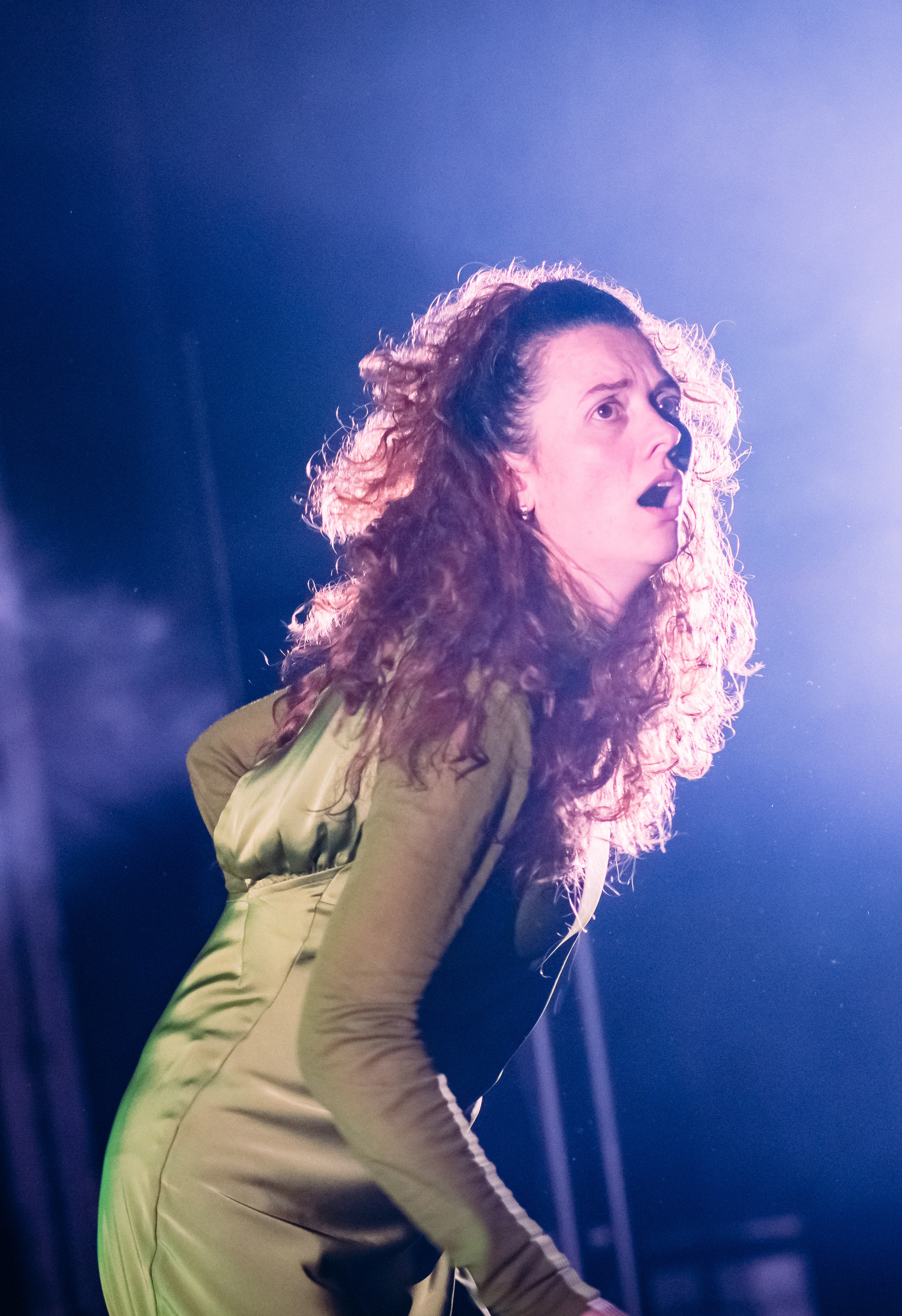
Disciples is a compelling piece of performance art, combining poetry, music, movement and visual imagery. Conceived and directed by Rachel Drazek and written by Ellen Renton, it’s about belonging and expectations, interdependence and joy. It’s also about giving people the chance to take up space – especially those who are often denied that opportunity.

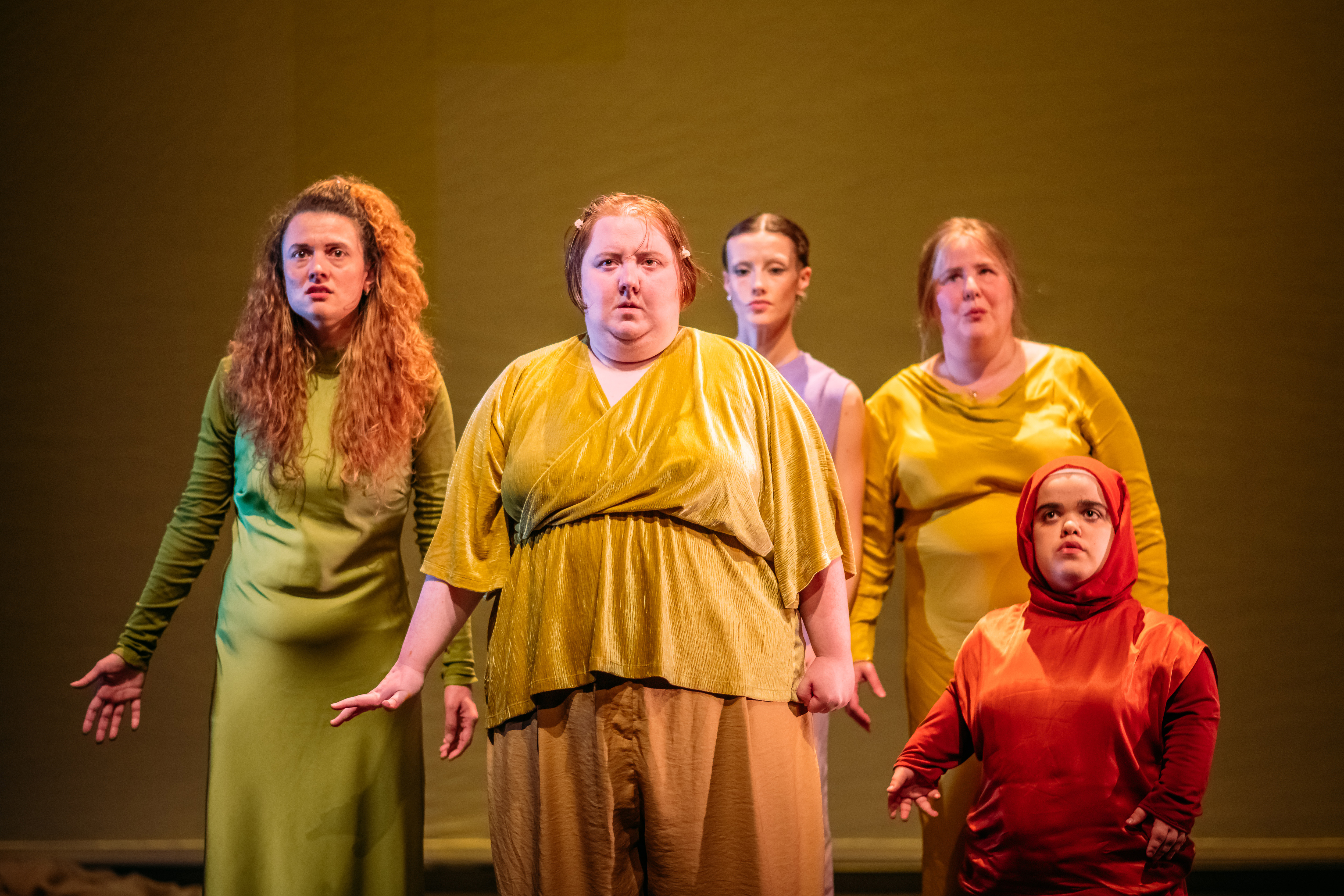
The five-strong cast of disabled women and non-binary people bring Drazek’s vision to life: this is the “bold and beautiful new piece of dance theatre” she aspired to make. The creative process, we learn in an illuminating after-show discussion, was a collaborative one, the piece devised in rehearsal before being shaped by Renton. It shows: the performers’ agency is palpable. The resulting production is nuanced and doesn’t shy away from difficult emotions, but the layering of ideas ultimately adds up to something joyful and positive, reinforcing the idea that we are all connected and inter-dependent.

The costumes, by Zephyr Lidell, are simple but striking, each performer clad in a single, shimmering colour. Visually impaired musician Sally Clay (yellow) is all optimism; her singing voice is ethereal and she plays the harp and ukulele with aplomb. But she’s more excited about the dancing: post-show, she reveals that this is a long way from her comfort zone, and that she’s delighted to have been challenged in this way. Indeed, this point is echoed by Rana Bader (red), who seems to embody passion and strength; she is bursting with energy and exuberance, making a gazillion press-ups look easy. She’s not used to demands being made of her, she says; in rehearsal rooms, she sees her non-disabled peers being given detailed notes, while she is patted on the head just for turning up. She prefers being pushed.

Laura Fisher (lavender) is a dancer, so graceful and elegant that they take my breath away, while Irina Vartopeanu (green), uses BSL in a way I’ve never seen before, incorporated into the piece, not as a straight interpretation of what others are saying but as an expression in itself. She’s vivacious and somehow diaphanous.

Emma McCaffrey (orange), last seen by B&B in the excellent Castle Lennox, explores the idea of inner rage; they are an engaging performer with a bold stage presence and bring the humour needed to balance this play.

Disciples is a thought-provoking, sensory piece, and well worth catching if you can.

3.6 stars

Susan Singfield

The Old Oak

28/09/23

The Cameo, Edinburgh

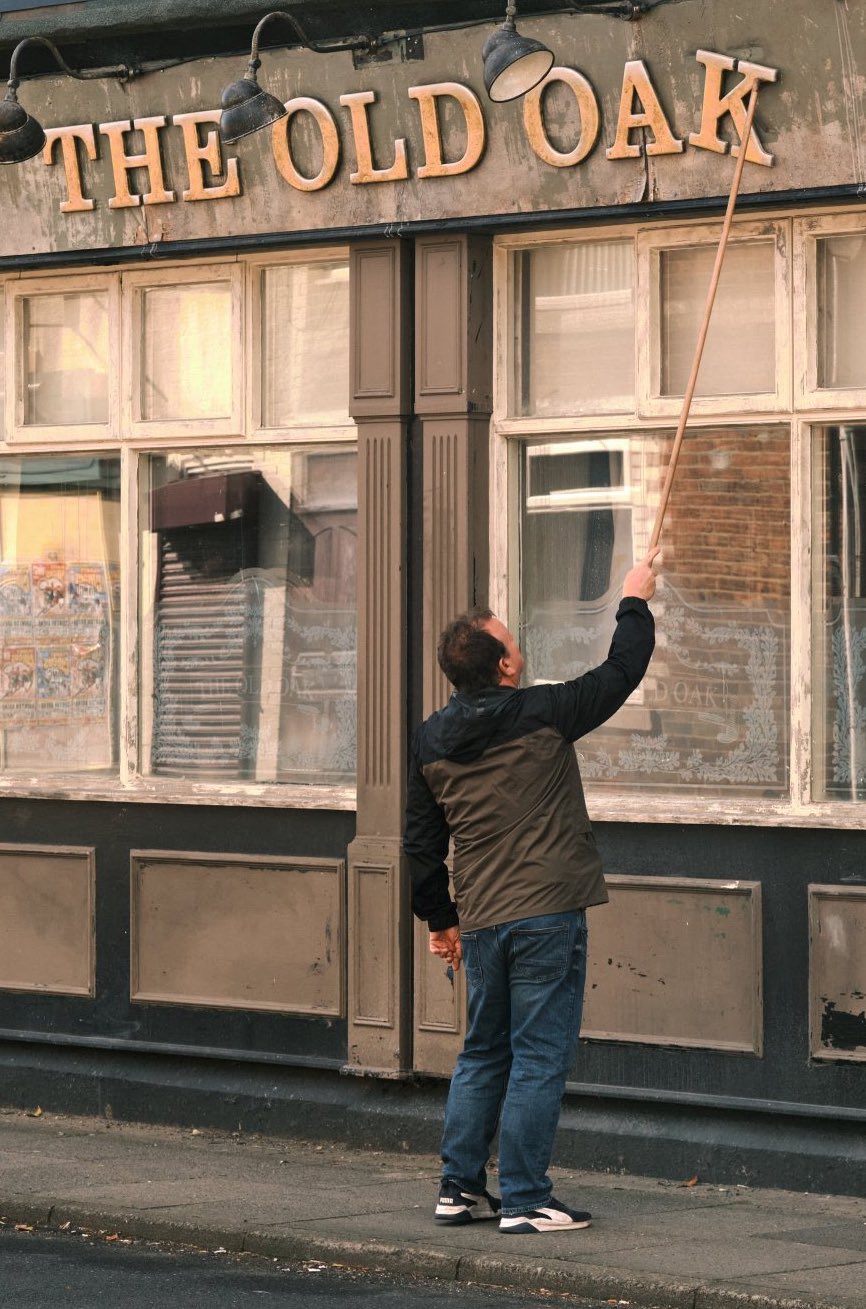
It feels like the end of an era. The Old Oak is the fourteenth feature film directed by Ken Loach and written by Paul Laverty. Their partnership began with Carla’s Song in 1986 but Loach, of course, has been around a lot longer than that (he directed his first feature, Poor Cow in 1967!). Now in his eighties, he’s decreed that this film will be his swan song.

From the opening scenes, we know we’re watching a Ken Loach film. All the familiar tropes are there: a cast of largely non-professional actors; the everyday struggles of working-class characters; the indifference of the powers that be; utterly realistic settings – and a socialist polemic that demonstrates how completely the people of Britain have been betrayed since the rise of Margaret Thatcher.

This story is set in a village just outside of Durham, a once vibrant community ravaged by the closing of the coal mines and now a crumbling vestige of its former self. When Syrian refugees are unceremoniously unloaded into the villages’s vacant properties, it’s hardly surprising that some of the people who’ve lived here all their lives react with suspicion and sometimes outright hostility to their new neighbours. Resources are already in short supply; there’s nothing left to share.

TJ Ballantyne (Dave Turner) is the landlord of the titular pub, which is now the one place where the local community can congregate, but even that is a shadow of what it once was. In a closed-down back room, photographs from the days of the miners’ strike, taken by TJ’s late father, decorate the walls. He shows them to Yara (Ebla Mari), a young Syrian woman, who is herself a keen amateur photographer. Her precious camera was broken by a local yob when she was stepping off the bus that brought her here and TJ helps her to get it repaired.

And when she comes up with the idea of reopening that back room and using it as a community space to offer free meals to everyone that needs one, TJ steps up to the challenge. But he has underestimated the jealousy and anger this will trigger from his neighbours…

While The Old Oak may not be Loach and Laverty’s finest achievement, these two cinema stalwarts have nonetheless created an entirely credible and sometimes heartbreaking story, one that serves as a fitting tribute to everything they’ve achieved over the years. It’s particularly satisfying to have Laverty himself onstage after the screening to answer questions about the film and the process of writing the screenplay.

If this really is to be a final collaboration, then The Old Oak provides a rousing sendoff. And I love the uncompromising way in which the film ends, with no pat solution to the problems – just a village slowly learning to become a community.

4.2 stars

Philip Caveney

Dumb Money

23/09/23

Cineworld, Edinburgh

How soon is too soon? The real life tale of the GameStop share crisis happened during lockdown, when most of us were more concerned about where we were going to get toilet paper from than in following the details of a story about share dealings, and – while it might have been a big deal across the water – it didn’t warrant much more than a passing mention in the British press.

Pitched as a sort of David and Goliath story, Dumb Money relates the tale of Keith Gill (the ever likeable Paul Dano), a small time, blue-collar share dealer, who advertises himself as ‘Roaring Kitty’ and who has a predilection for wearing T-shirts with pictures of cute cats on them. Gill has a regular spot on Reddit, where he recommends likely investments to a group of followers. He has recently decided that struggling bricks and mortar computer outlet GameStop is worth saving – so much so, he’s willing to gamble his life savings on it and to encourage his viewers to take a punt.

These include hospital worker, Jenny (America Ferrara), and actual GameStop employee Markus (Anthony Ramos). But as the company’s share price begins to rise, a lot of others decide they want to get in on the action and throw in everything they can spare. What was at first a steady rise suddenly goes up like a rocket. But several hedge fund companies – including Melvin Capital, led by Gabe Plotkin (Seth Rogan) – have already invested millions into GameStop, in the confident belief that they will trigger a ‘short squeeze’ scenario. They fully expect the company to go bust and their hedge funds to make millions from its demise. Now, thanks to Gill, they stand to lose everything.

Director Craig Gillespie, who previously gave us the brilliant I, Tonya, does his best to make all this work, but to somebody like me, who has no knowledge (or indeed interest) in the subject of stocks and shares, it’s sometimes hard to understand exactly what’s going on here, or more importantly, why I should care. Perhaps Dumb Money ties in to the American infatuation with the idea of making something from nothing, of taking on the big players and equating money with success.

Every character that appears onscreen is accompanied by a credit informing viewers of their net worth, and the loveable maverick quality that Gill exhibits feels somewhat overstated when we learn that, as a result of all these shenanigans, he himself is now a millionaire.

Though it’s fitfully amusing and occasionally generates some genuine laughs, Dumb Money never really settles into its stride. When the big players rig the game so that small investors can no longer participate, we’re probably supposed to be angry at the fact that there’s no such thing as a level playing field – but the whole story takes place in a world that seems light years away from our experience.

Consequently, it’s hard to feel involved. And therein lies the problem. Those with an interest in such matters may have a much better time with Dumb Money than I do.

2.8 stars

Philip Caveney

The Blackening

02/09/23

Cineworld, Edinburgh

Spoof horror movies have been around for a very long time – so any new contender in this crowded field, has to offer something radically different. The Blackening manages it. For starters, almost all the characters in this story are Black. Furthermore, they are cine-literate enough to know what generally happens to Black people in such movies. Hence the film’s strap line: ‘We can’t all die first.’

Morgan (Yvonne Orji) and Shawn (Jay Pharoah) have booked a remote cabin in the woods (what could possibly go wrong?) where they plan to host a ten-year reunion with some old school friends. But when said friends turn up, their hosts are nowhere to be found. So they settle down to wait for them.

The guests include promiscuous Lisa (Antoinette Robertson) and – rather awkwardly – her old flame Nmandi (Sinqua Walls). There’s the resourceful Alison (Grace Byers), sassy Shanika (X Mayo), super-snarky King (Melvin Gregg) and nervous Dewayne (Dewayne Perkins, who co-wrote the screenplay with Tracy Oliver.) Dewayne is Black and gay, and has seen enough horror movies to know he is especially at risk. There’s also geeky Clifton (Jermaine Fowler), who the others remember from school – but none will admit to inviting him to this gathering.

In the ‘Games Room,’ the guests are compelled to play the titular board game, which features a really racist-looking mechanical face that asks a lot of difficult questions. How many Black characters appeared in Friends, for example? Tricky… and the stakes are high. Get an answer wrong and one of the hosts will be kaput.

So far, so generic, but what makes The Blackening rise above most of the competition is the fact that, though it’s occasionally quite bloody, it’s the wisecracking dialogue that keeps up the momentum, as the various players snipe, bicker and squabble their way through the ensuing chaos, never losing sight of wanting to be the coolest person in the room. The story heads off in a whole variety of different directions, some of which come as genuine surprises. However, the film is uneven, sometimes propulsive enough to keep me hooked in, but too often slowing right down for long conversations.

There’s a much lower body count than I’m used to seeing in a film like this – and I have to say, it loses a couple of points when a late ‘reveal’ comes as no surprise to me whatsoever… but maybe I simply see too many films. Overall I enjoy The Blackening – and in several scenes, it has be laughing out loud.

3.7 stars

Philip Caveney

Theater Camp

31/08/23

Cineworld, Edinburgh

Joan Rubinski (Amy Sedaris) is a bit of a theatrical legend. She has been running her summer theatre camp for young performers for many years. But, when she suffers a debilitating fit (caused by exposure to strobe lights), her outfit is left without a leader. So it falls to her son, Troy (Jimmy Tatro), to step up to the plate and fill her tap shoes, despite having no experience of drama whatsoever. Troy is an ‘influencer’, who thinks he has what it takes to overhaul the business.

Unfortunately, he has to try to deal with a whole horde of regular teachers, who have been doing this for donkeys years and who clearly view him as an unwelcome addition to the ranks. They include drama coach, Amos (Ben Platt), and his soulmate, music tutor Rebecca-Diane (Molly Gordon). The duo actually met at the camp as students and fell in love – but, since Amos came out, their co-dependency can perhaps best be described as ‘complicated’. There’s Rita Cohen (Caroline Aaron), Joan’s no-nonsense right-hand woman, who seems to have a talent for always saying the wrong thing and there’s new recruit, Janet (Eyo Edebiri), who has as much experience in drama as Troy, but is determined to bluff her way through…

This charming and sometimes very funny mockumentary comes from a team of people who clearly know their subject well. Depicted in a series of short, snappy scenes (but for once eschewing the straight-to-camera interviews that are so often utilised in fake docs), we are witness to the three weeks of frantic work it takes to put together a summer show, a tribute to their beloved leader, entitled Joan, Still. We witness the trials and tribulations of creating a musical from not very much by a cohort of bright, eager students, all of whom have their eyes set on their own individual goals. (I particularly enjoy the diminutive boy who has decided he’s born to be… an agent.)

When Troy is romanced by the villainous Caroline (Patti Harrison), who works with a neighbouring, more upwardly-mobile youth theatre group, bankruptcy hovers in the wings and it’s going to take considerable wheeling and dealing on his part if he’s to save his mother’s camp. Can the team forget their various differences and work towards a solution?

Anyone who enjoyed Summer Heights High, back in the day, will get a kick out of Theater Camp, which shares some DNA with the legendary Mr G. It’s sprightly, silly and a lot of fun. Now, if only there were a rousing singalong to finish it all off… oh, wait a minute, turns out they’ve actually written one!

4 stars

Philip Caveney

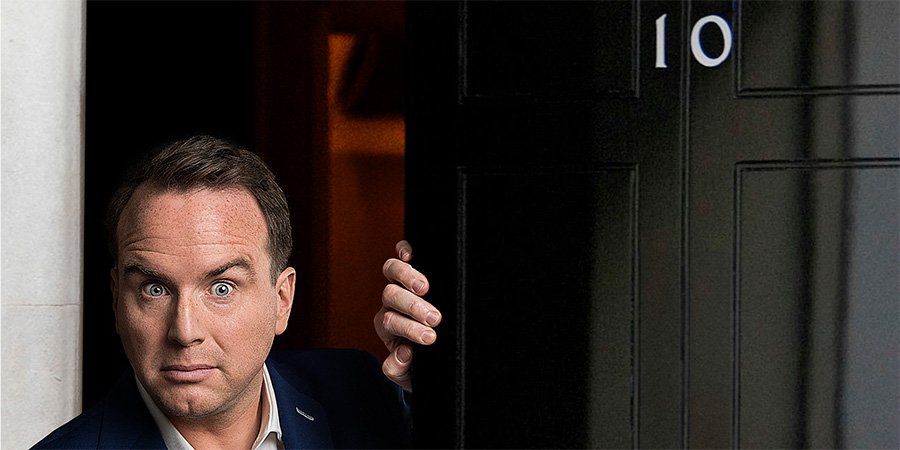
Matt Forde: Inside No. 10

26/08/23

Pleasance Courtyard (Pleasance Beyond), Edinburgh

Matt Forde has built his reputation on a canny combination of political commentary interspersed with impersonations of the people in power. He’s a seasoned, confident performer and, pretty much from the get go, Inside No. 10 has the sizeable audience at the Pleasance Beyond laughing it up. The over-riding message is that the country is being led by the biggest bunch of buffoons in history and our only hope is to giggle about it. No arguments there. I’ve always thought that Rishi Sunak would be a hard man to impersonate but Forde manages it with ease, highlighting his ability to sound inappropriately effusive, even when he’s delivering horrible news.

And it’s not just the Tories. There’s a brilliantly observed Keir Starmer in there too, austere and seemingly obsessed with tearfully mentioning his late father at every opportunity and, since we’re in Scotland, the recent woes of the SNP are duffed up too, even if Forde wisely keeps his Nicola Sturgeon down to a few one-liners.

Ironically, it’s when he steps outside of British politics that the show really takes flight. His impersonation of Donald Trump is, as ever, spot on, nailing the man’s petulance and his childlike habit of blaming everybody else for his misfortunes. It’s easily the funniest part of Inside No. 10, (especially after being handed the gift of that mugshot) but, unfortunately, it has the effect of making the remainder of the show feel slightly anticlimactic. The piece doesn’t conclude so much as peter out.

Perhaps a little restructuring would help, holding back Trump (if only such a thing were possible) and finishing the exercise on a high point. Or maybe having him as a guide, observing our political system from his jaundiced POV?

Mind you, it’s bit late in the day to be suggesting changes, when the Fringe has almost run its course; besides, if the object of the exercise is to make an audience laugh, Forde certainly succeeds in that respect, big time.

3.8 stars

Philip Caveney

Mrs President

24/08/23

C Venues (Aquila Temple), Johnston Terrace, Edinburgh

Sometimes at the Fringe, one show can lead to another. A brief mention of Abraham Lincoln’s wife, Mary, in Mystery House, alerts me to the poster for Mrs President – and I’m compelled to know more about her. 

When I enter the performance space at C Venues’ Aquila Temple, I find a tableau awaiting me: two figures frozen in position as the audience files in. They are photographer Mathew B Brady (Christopher Kelly) and Mary Lincoln (Leeanne Hutchison) – or rather, when they first speak, they are a camera and a 300-year-old chair. It’s that kind of play.

This earnest and thought-provoking duologue, written by John Random Phillips, is all about the iconography of the photograph, the way in which a talented photographer can somehow imbue a subject with a certain gravitas, turning them into living legends. Abe Lincoln always maintained that Brady’s photographs ‘made him the President’ – and it was Brady’s image of Lincoln that ended up on the five-dollar bill. Furthermore, his eerie final image of Mary, with the ‘ghost’ of her assassinated husband standing behind her, has endured over the centuries.

But right now, Honest Abe is still alive and Mary is seeking out Brady for another sitting, feeling that her image needs a little bolstering. The fact is that the American public are rather less enamoured with her than they are with her saintly husband. Mary has issues. She is perceived as a spendthrift and her delicate mental health has been the source of some speculation…

Mrs President is an intense, haunting play and both Hutchinson and Kelly submit powerful performances. I’m particularly impressed by Stefan Azizi’s simple but effective staging, and Kristine Koury’s ingenious costume design. I like too the parallels with the celebrated wildlife photographer, Audubon (who also makes a brief appearance here), a man who thought nothing of breaking the wings of his subjects in order to ensure that they didn’t move as he drew them.

As the Fringe rumbles inexorably to its conclusion, those looking for a change of pace from bright lights and brash comedy might like to seek out this quietly assured and authoritative production. 

4 stars

Philip Caveney

JM Coetzee’s Life and Times of Michael K

24/08/23

Assembly (Main Hall), Edinburgh

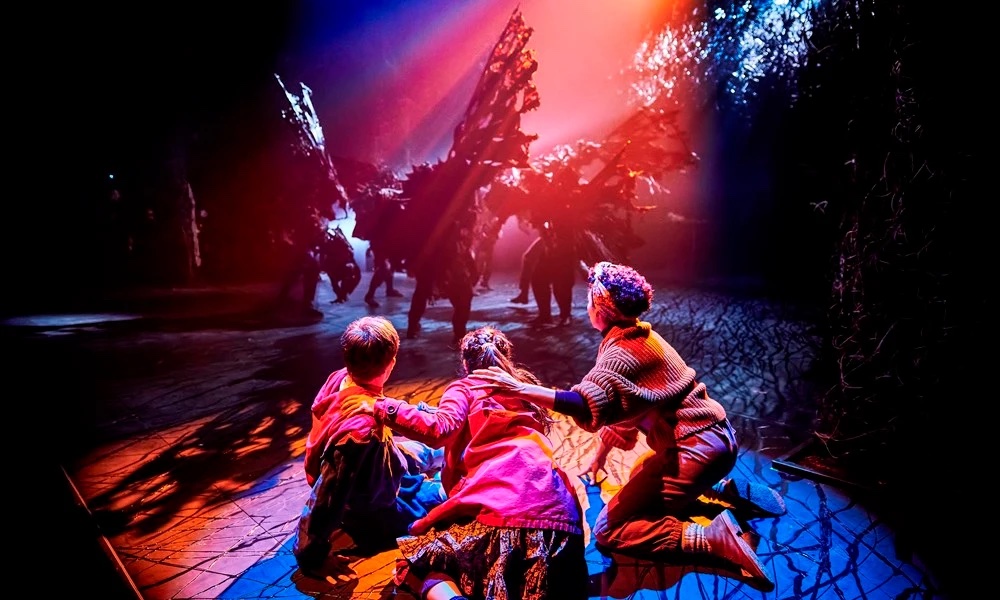
Based on JM Coetzee’s 1983 Booker Prize winner and adapted by Lara Foot, Life and Times of Michael K is a bleak and occasionally heartbreaking narrative, brought eerily to life by South African company, Baxter Theatre. While a nine-strong group of performers hurtle around the massive stage enabling the action, Michael K himself is portrayed by a puppet – though that’s rather underselling what’s delivered here. Devised by the Handspring Puppet Company, perhaps best known for War Horse, Michael is a character you’ll totally believe in from the moment he takes his first hesitant steps.

We see him as he emerges from the womb of his mother, Anna (another puppet), into a harsh world, where his cleft lip serves to alienate him from just about everybody he encounters. We watch him grow, share his early encounters with others and see how he eventually finds happiness working as a gardener in Cape Town. But when a violent civil war threatens to engulf the neighbourhood, Michael decides to take his ailing mother back to the family home she so often talks about, a place she knows only as Prince Albert.

They have no money for fares so Michael constructs a rickety handcart, piles Anna and her belongings into it and the two of them set off on the long and arduous journey to a place he isn’t really sure exists…

Their resulting experiences are hard and unrelenting, but the performers work their socks off to ensure that, despite a running time of two hours, the momentum never falters. There’s some exciting physical theatre to relish and sometimes the huge backdrop illuminates with location photography, into which the marionettes are convincingly incorporated.

Michael’s devotion to his mother – who actually does very little to deserve it – is humbling and the overarching themes of the value of human life and the evils of privilege are starkly written.

This is a gentle but powerful production that has the crowd up on its feet at its conclusion. If spectacle is what you’re looking for at the Fringe, this is definitely one to seek out. But you’ll need to move quickly: there are only a few more performances left.

4.4 stars

Philip Caveney

Upstart! Shakespeare’s Rebel Daughter

23/08/23

Gilded Balloon Patter House (Big Yin), Chambers Street, Edinburgh

The story of Shakespeare’s younger daughter, Judith, is one that I know very little about, so Upstart! seems the perfect opportunity to learn more – though I have to say this is much more entertaining than your average history lesson. It’s a sprightly and engaging piece about a woman who is constantly denied the opportunity to be her true self, never allowed to explore her own creativity.

When we first meet her, she’s elderly Judith (Susannah May), who has long outlived her famous father, her husband and even her three children. She now delights in spreading mischievous falsehoods of Shakespeare’s final days to his over-persistent fans, but still finds time to tell us her story.

In flashback we meet the younger Judith (Rachel Kitts), her long-suffering mother, Anne (Aisling Groves-McKeown), her older sister, Susanna (Becky Sanneh), and of course, Will himself (Luke Millard), the successful young playwright spending far too much time in that London, and carrying on with the lady he will later write sonnets about. We learn too of young Judith’s ill-fated relationship with Tom Quiney (Angus Battycharya), her first love, whom she eventually marries against her father’s wishes.

Written by Mary Jane Schaefer, this intriguing tale illustrates how Judith is denied pretty much everything she ever wants – she never even learns to write – and how she always feels that she exists in the shadow of her twin brother, Hamnet, who died of a fever when the pair were only little. Judith cannot rid herself of the powerful conviction that her father would have preferred it if she had died in her brother’s place.

This is a complicated tale and the eight-strong cast are compelled to inhabit a variety of roles, which they do admirably, switching costumes and handling the many scene changes with considerable skill, especially impressive on such a small stage. The dialogue feels authentic to the era and there are some short musical interludes, songs of the ‘hey nonny no’ persuasion, which are pleasant distractions as tables and stools are rearranged. Director Alexandra Spence-Jones keeps everything moving along at a brisk pace, right up to the play’s ironic conclusion.

I leave the venue feeling I’ve been informed and entertained. Result.

4 stars

Philip Caveney
Concerned Others

13/08/23

Summerhall, (Demonstration Room), Edinburgh

Concerned Others is a meditation on addiction – a vast, sometimes overwhelming subject for which there really are no ready answers. Tortoise In a Nutshell approaches the subject from a different perspective – using an intimate table-top performance, above which spoken verbatim dialogue is also displayed on a series of screens, while immersive music plays.

A miniature camera glides cinematically past rows of tiny houses and intricately detailed miniature figures as the words spill onto the screens. The effect, curiously, is to focus my attention on what’s actually being said and while it’s not saying much that I haven’t heard before, it does have the effect of making me concentrate. No easy matter when I’m sitting in the Demonstration Room, arguably the most uncomfortable venue of the Fringe.

Now the scene shifts to a character whose face is a video screen, a vapid smile interspersed with mixed-up advertising videos extolling the virtues of various beers, and I’m reminded of my youth, when television adverts like these ones made me long to look old enough to go into a pub and buy a drink.

Again, we’re back to the little camera, which now glides through a series of empty rooms, emphasising the loneliness and desolation of addiction, the fact that so many people are obliged to face it alone…

By the conclusion – which somehow manages to end on a rising note of optimism about the future – I leave thinking about the ubiquity of addiction, it’s prevalence and it’s many different forms. We’re all of us addicted to something, aren’t we?

You could argue that perhaps Concerned Others could delve a little deeper into its chosen subject but there’s no mistaking the superb and affecting style in which this story is told.

4 stars

Philip Caveney