Theatre

Hamlet

Unknown-2

Royal Exchange, Manchester

29/09/14

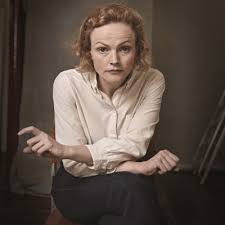
Of all Shakespeare’s tragedies, Hamlet is surely the most daunting for any actor. The Royal Exchange’s version runs for a bum-numbing three and a half hours and incorporates so many famous soliloquies and one-liners, that even the most accomplished actor must work overtime to maintain concentration. Thankfully, that’s not a problem here, because this is one of the most compelling and satisfying Shakespearian adaptations I’ve ever seen. It might seem a novelty featuring a female actor in the lead role but it’s by no means a new idea. Sarah Siddons was the first to do it in 1777 (in Manchester, appropriately enough, though its reported that she had to drape herself in a long dark shawl to ‘preserve her modesty.’) and there have been a whole string of female actors who have followed in her footsteps over the years though, interestingly, nobody has attempted it since Frances De La Tour in 1979.

Sarah Frankom’s gutsy modern day retelling of the story features some brilliant touches. I loved the fact that Claudius and The Ghost were played by the same actor (the ever brilliant John Shrapnel) and I loved that Polonius had become Polonia – Gillian Bevan’s assured performance turning the character into an overreaching Mother. Her constant attempts to wheel and deal a marriage for her shy daughter, Ophelia (Katie West) provided the biggest laughs of the evening. And best of all, finally – FINALLY, here was a production that made good use of those two perennial encumbrances, Rosencrantz and Guildenstern, characters that many modern productions skip completely. Here they were portrayed as two punky slackers from Hamlet’s youth, always ready with a quip and a packet of crack cocaine, their cheery natures only making their ultimate betrayal all the more affecting.

But of course no production of Hamlet can succeed without a charismatic lead player and I’m happy to report that Maxine Peake is simply astonishing in the role, by turns melancholic, sarcastic, brash and (why not say it?) macho. Make no mistake, this is an ensemble production in every sense of the word, yet pity the poor actor that must compete for the audience’s attention whenever she swaggers onto the stage. Even the climactic sword fight (an element on which many a production has foundered) is fast, furious and nail-biting right up to the final moment. The final applause threatened to take the roof off the building.

Due to its unprecedented popularity, the Exchange has added another week to the run. Get hold of a ticket by any means you can, because this is Shakespeare at its very best. A triumph.

5 stars

Philip Caveney
Billy Elliot: The Musical – Live

images

28/09/14

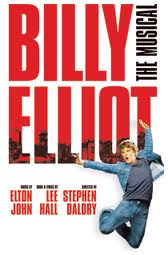
Live cinema linkups may not be quite the same thing as actually being there, but when the reality of seeing a show involves a return trip to London and a night in a hotel, it clearly make commercial sense to nip down to the nearest multiplex. I’m not the world’s biggest fan of musicals but I saw Billy Elliot at the Victoria theatre in 2007 and thought it one of the best stage shows I’d ever seen, so here was an opportunity to revisit it, some ten years later.

Based on Stephen Daldry’s superb movie (released in 2000) this is a canny adaptation that incorporates many of the film’s best moments and throws in some ideas of its own. It’s 1984 and the men of a small County Durham mining town are out on strike. Teenager Billy (played in this performance by Elliott Hanna, but the role is shared with three other young actors) is coping with the recent death of his mother. Dad (Deka Walmsley) is struggling to hold the family together, while Billy’s older brother, Tony (Chris Grahamson) is a committed militant, and Grandma (Ann Emery) is rapidly succumbing to dementia. Sent to the local gym for boxing lessons, Billy finds himself much more interested in the ballet classes run by local dance teacher, Mrs Wilkinson (Ruthie Henshall), but he knows that Dad won’t approve of him swapping one class for another…

It has to be said that the musical version has a somewhat unsteady start, featuring overheated jokes about meat pasties and a kitchen invasion by striking miners, that are both clumsily handled, but it quickly settles into its stride and once Billy reports for boxing training, it becomes truly engaging. There are some superbly staged routines – a scene where a ballet class becomes entangled with a face-off between striking miners and truncheon-wielding police is a particular highlight, as is Billy’s anger-fuelled tap-freakout in front of a row of riot shields. Only the stoniest hearts will resist shedding tears in several scenes here, particularly the one where Billy and Mrs Wilkinson share a reading/singing of his Mother’s last letter. Young Elliot Hanna demonstrates such breathtaking talent that you cannot take your eyes off him. When a seasoned trouper like Ruthie Hensall pales in comparison alongside him, you know he surely must have a bright future ahead.

The figures speak volumes of the show’s success. It’s run continuously in the West End since 2005, has toured worldwide and has been seen by a total audience of more than 9.5 million. People love this show and I am no exception.

4.6 stars

Philip Caveney

Around The World In 80 Days

10435070_10204518047729805_4711626084637840170_n

19/07/14

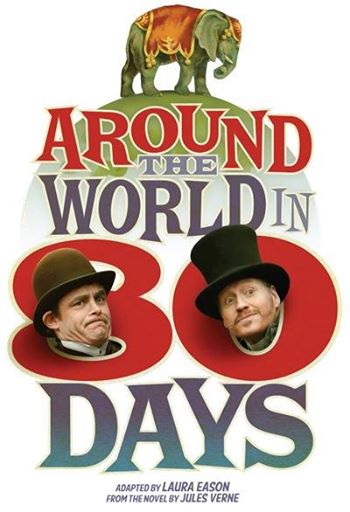
Around The World In 80 Days (Royal Exchange Theatre, Manchester) is a brilliant adaptation of Jules Verne’s classic novel, expertly pitched to appeal to the widest possible audience. I can’t remember when I last laughed so hard (and so often) at a theatrical presentation. Of course, any production of this story is going to stand or fall on the quality of its Passepartout and here, he’s played by Michael Hugo, who clowns (and occasionally improvises) his way through a breathless series of set-pieces, whilst maintaining an assured partnership with Andrew Pollard’s stiff-upper-lipped Phileas Fogg.

Though undoubtedly the star here, Hugo is only the jewel in a supremely talented cast. Six other actors take on all the remaining roles, which averages out at around twenty characters apiece! Between them they take on accents, characters and at one point even submit some breathtaking gymnastics. The constantly changing locations are achieved with a minimum of fuss and the use of some everyday objects – in one scene a (surprisingly convincing) Indian elephant is expertly conjured with the use of a grey raincoat and some sound effects.

And it doesn’t stop there. At various points we share the experience of travelling by train, ocean liner and ice sledge and it really feels like we’re doing it! Throughout proceedings, Hugo maintains a fabulous rapport with the audience, at one point even involving younger members to help him to evoke the feel of a ship at sea. A scene where he channels his inner Jackie Chan to offer some kung-fu style choreography was a particular delight. At the play’s conclusion the applause was absolutely ecstatic and little wonder, as this is a production that seems intent on redefining the word ‘entertainment.’ If you see only one play this summer, I urge you not to miss this. It really is THAT good. Those of you with young children can confidently take them along in the certain knowledge that they won’t be bored for a moment.

5 stars

Philip Caveney

Nathan Penlington’s Choose Your Own Documentary

_2014NATHANQ_GH

19/08/14 Gilded Balloon Teviot, Edinburgh

I kind of know Nathan Penlington – or, at least,  there’s a tenuous connection. We come from the same home town. My brother was friends with his brother for a while, and – when I started my very first teaching job in North Wales – Nathan was in the sixth form. I didn’t teach him, but he wasn’t a kid you could fail to notice: long hair, a penchant for tartan, and a regular performer of magic tricks and poetry. I still have a CD of his poems somewhere, sold at the end of a school event. So, when we saw Choose Your Own Documentary advertised, I was interested to see what he’d ended up doing. And ‘making rather good documentaries’ seems to be at least part of the answer, alongside ‘writing books’ and ‘reflecting on the past.’

Choose Your Own Documentary is an innovative blend of film and spoken word, with a twist of audience participation. Nathan, it transpires, is a long-time fan of Choose Your Own Adventure books, and the documentary tells us of the bulk purchase he made of second-hand copies. Inside the books were the twenty-year old private scribblings of a troubled young boy, whose fragments of diary haunted Penlington, and pre-empted the film: he decided to track down the boy and see what sort of man he had become. For many film-makers, that would be enough.

But Penlington is trickier than that: he doesn’t reveal the whole story. We, the audience, have to decide which parts we want to see. We are given little remote controls, and we have to vote for what comes next. We are inside the frustrating world of the Choose Your Own Adventure series, knowing that there are other – maybe better – permutations. If we want to see those, we have to attend the show again (I think I would, if it weren’t at the Fringe, and there weren’t so many other things I want to catch). It’s clever, it’s original, and it’s also strangely moving. Luckily, there’s a book (The Boy in the Book by Nathan Penlington, published by Headline), which contains the whole story. So we buy that, and leave content.

4.4 stars

Susan Singfield

Woyzeck

Unknown-1

17/08/14

Gilded Balloon Teviot, Edinburgh

Splendid Productions’ version of Woyzeck is a real triumph. I have a head full of superlatives, and don’t know where to start.

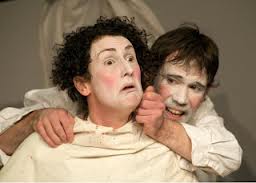
Well, unlike Splendid, I’ll start at the beginning. The actors are on stage, not in-role, and interacting with the audience. They greet us, make sure we’re comfortable, ask someone to hold a mirror while they finish their make-up. They explain what they are doing (“We’re setting it up so that we can make a tonal change in a minute”), and there is such wit and warm-heartedness in the approach that it’s impossible not to smile.

And then they go to the end. The murder scene. There’s a numbered caption board telling us that this is scene 23, and what happens in it, and there are three actors and there’s a stage full of props. Sound effects are produced on stage in front of us. Costume changes too. The caption cards change with every scene, and the chronology is all over the place. There’s music and singing, and audience participation. We are made to feel complicit in the killing and in Woyzeck’s destruction; why don’t we intervene and stop it? And it’s marvellous, all of it. Brechtian brilliance. Fourth wall ripped away. Lively, confrontational, exciting and joyous. The best thing I’ve seen at this year’s Fringe.

Thank you, Splendid. I’ll be coming to see this again when you go on tour.

5 stars

Susan Singfield

Austen

Unknown

16/08/14

The Space on the Mile, Edinburgh

I’ll be honest; this one started at a disadvantage: I don’t really like musicals very much. It’s not a blanket prejudice (I think Matilda is delightful, Little Shop a lot of fun and Cabaret bloody brilliant) but it’s not my favourite theatrical genre. I’m also aware that a small Fringe production can’t be expected to have the same impact as those big-budget West End shows I’ve mentioned above, and yet… It could so easily have been much more than it was.

We saw a musical two-hander last year (I Need a Doctor), which was lively and charming and used its size to its advantage. Austen, with four actors, always felt too small.

The conceit has potential: two students researching Austen discover that the spinster author had a love life of her own. The action cuts between the students in the present day, and moments depicting Jane’s relationships in the past. Sadly, it doesn’t really work. The songs all sound the same as one another, with no shift in tone for the modern day. A single piano is used for each of the bland ballads, and the lyrics are oddly anachronistic (most of the dialogue is faux-Austen in style, but there’s a song which repeats the very modern refrain ‘You’re so special’ so often that it’s utterly nauseating, and makes you long for Radiohead to complete the idea). 

And the story itself is weak. It might surprise the two students to discover that Jane Austen had relationships, but it surely doesn’t surprise anyone who’s read her books or even looked her up on Wikipedia. She did live in the real world and enjoy some social interaction. And, in truth, her putative affairs weren’t really very interesting: a flirtation, a friendship and a rejected proposal. So what? Why do they care? What do they think it says to them?

There are spurious links made between the people Austen encountered and the characters in her books. We are not allowed to make these connections for ourselves, but have them pointed out to us in some clunky exposition: “Oh, he must be the inspiration for Wickham!” Mrs Austen is conflated with Mrs Bennett; it’s all just too pat and convenient.

It wasn’t all terrible; the actors did their best with the turgid script, and they could all sing rather well. The scene with the royal librarian was funny and engaging. But, all in all, this is one to miss.

0.5 stars

Susan Singfield

Product

Unknown

Assembly Hall, Edinburgh

14/08/14

When it premiered at the Traverse Theatre in 2005, Mark Ravenhill’s Product starred the playwright himself as a desperate Hollywood producer, pitching a dreadful script to an actor who is clearly never going to take the part. I missed that version, but was delighted to have the opportunity to see director Robert Shaw’s revival of this sharp satire, this time with Olivia Poulet (Leah) delivering the monologue.

Poulet is perfectly cast; she oozes flattery and fake sincerity, skewering a character who believes that – if she just keeps talking, if she just keeps pretending – she will somehow manage to save her career and convince the actor to take the part. But the actor is us – the audience – and we can see through Leah’s posturing; indeed, the humour derives almost as much from Leah’s lack of self-awareness as it does from the increasingly ridiculous details she reveals from the script.

And how deliciously ridiculous those details are: the script emerges as a sexually explicit rom-com about Al Qaeda (improbably named Mohammed and Me), and there are laughs a-plenty as Leah attempts to make the prospect tempting. She focuses on the costume (Versace), the accommodation (a Docklands flat) – as if the actor will be as beguiled as Leah herself by the promise of such vicarious luxury.

I love this piece: I love its humour, its bite and – ultimately – its simplicity. I love the way that Ravenhill has somehow managed to construct a wonderfully written play mainly by writing an appalling film, and I love the vulnerability that Poulet brings to what is essentially an unsympathetic role.  I’ve seen (and enjoyed) a lot of student productions during this year’s Fringe, but sometimes it’s good to see what a seasoned professional can do. Sterling stuff.

4.7 stars

Susan Singfield

Jekyll and Hyde

_2014JEKYLLH_T7

15/08/14

Spotlites at Merchants Hall, Edinburgh

I have recently written a novel involving Robert Louis Stevenson, so was initially drawn to this production merely because of its subject matter, but I soon found myself completely blown away by its sheer sense of style. In Headlock Theatre’s contemporary reworking of Stevenson’s classic tale, Doctor Jekyll is a young scientist working on clinical trials in order to develop a drug to combat depression. He’s spurred on by the fact that his own sister, Marta, suffers from the illness. Impatient to get the drug (C9) onto the market, he volunteers to test out its effects on himself… and quickly starts to go off the rails.

This fluid, energetic production utilises speech and physical theatre to tell a familiar story and in so doing, makes it fresh and riveting. Scenes flow effortlessly into one another, as the eight-strong team work superbly together to create all the locations with nothing more than two chairs and one clipboard as props.  In what is essential an ensemble piece there are of course, two standout roles: Nathan Spencer is a striking Doctor Jekyll while Tom Boxall, as a smirking, twitching Mr Hyde, manages to be absolutely terrifying.

It’s always exciting to discover new talent at Edinburgh and Headlock Theatre are surely destined for even greater things. Until then, Jekyll and Hyde is a triumphant calling card that satisfies on just about every level.

5 stars

Philip Caveney

Mojo

mojo

12/08/14

C Venue 34, Edinburgh

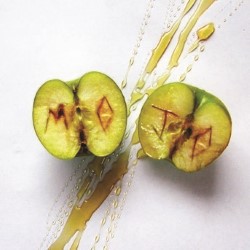
Set in 1950’s London, Mojo is Jez Butterworth’s Olivier Award winning play located in The Atlantic Club,  where pop singer Silver Johnny appears to be on the verge of the big time and the club’s various workers wheel and deal with each other, hoping for a slice of the action. But when the club’s owner, Ezra turns up dead in two separate dustbins, paranoia descends…

It’s a brilliant play – swaggering, macho, loaded with canny period detail and a homoerotic subtext – you have to remember that in the 1950’s, homosexuality was something that had to be kept clandestine. Mojo inhabits the kind of territory that Harold Pinter made his own back in the day and Butterworth excels at finding the dark humour in a brutal and unforgiving world. This is an amateur production, by the oddly named company My Son Tristan, but the actors rise to the challenge and submit excellent performances.

It’s hard to single out one player in particular, but Cody Maltby as the pill-popping Sweets, gets most of the funny lines and has a field day with them. The real tragedy is that on the night we visited, the production had attracted a crowd of just sixteen people and with hindsight, a more intimate venue would have been more appropriate. But we’ve seen packed venues presenting less assured performances and poorer material than is on offer here, so catch this before it’s gone. There’s plenty to admire.

4.4 stars

Philip Caveney

Lysistrata

09/08/14

C Venue 34, Edinburgh

ramin-sabi-1041-lysistrata-a3-lst145502

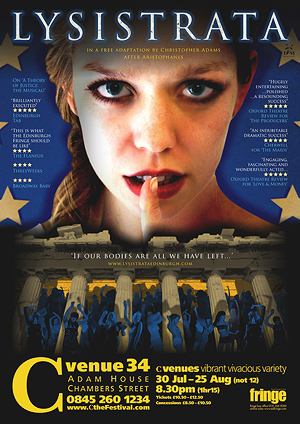
Christopher Adam’s loose adaptation of Aristphanes’ classic comedy – the tale of a prototype feminist who instigates a ‘sex strike’ in an attempt to gain more rights for women – brings the story bang up to date and sets it against Greece’s recent bailout by the IMF, an intriguing premise that really pays dividends (ha ha!). The four cast members work really hard to depict nine characters between them and largely pull it off, playing both genders with confidence, while Louisa Hollway is a striking, memorable Lysistrata, but if only they could have had the luxury of a couple more actors to take care of some of the minor roles! There were some problems on the night we viewed the play with the rather shonky set (a clothes drier that seemed to possess a life of its own and a rug on a polished floor that seemed like an accident waiting to happen) but these are minor niggles. Bringing contemporary issues like the economic crisis and trolling on social media into the action, breathe new life into the play and make it seem incredibly prescient. After a brief run of disappointments, this one redressed the balance.

4 stars

Philip Caveney