Theatre

Within Sight

05/03/20

Traverse Theatre, Edinburgh

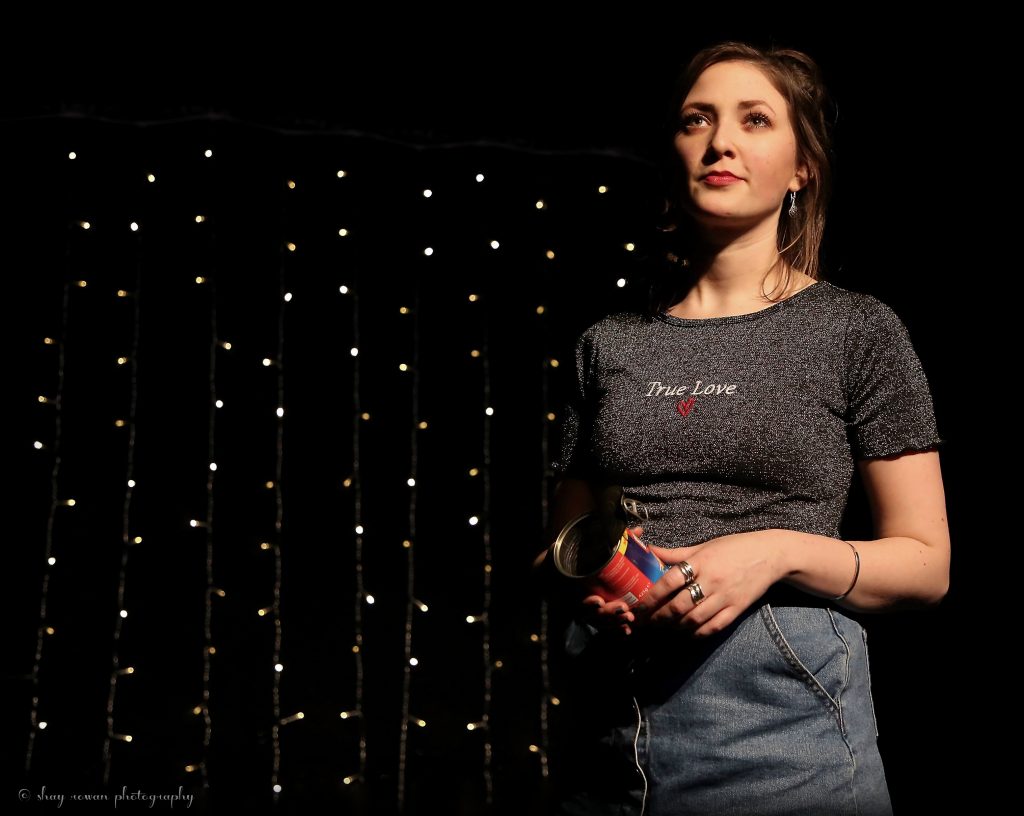
Ellen Renton’s Within Sight is a beautifully written piece, following a disabled athlete’s failed attempt to qualify for the paralympics. Like Renton, the protagonist has albinism, and is angry at the way the world seems set to trip her up.

Renton is clearly a talented poet: the language is rich and rhythmic, engaging and provocative. The video projections (by filmmaker Kiana Kalanter Hormoz) complement the narrative well, providing sighted members of the audience with a sense of the protagonist’s experience. And I like the running, the physical exertion, the beats that match the words. There’s a real sense of battle here, of exhaustion, of how it feels when simple, everyday actions are rendered difficult.

If there’s a problem, it’s that there’s not quite enough of anything: the play is very short (about forty minutes), and there’s certainly space within the story for more detail, more emotion, more elucidation. There’s plenty of scope for another twenty minutes’ worth, I think – although Renton might not relish the extra running that would entail…

Nevertheless, this is a thought-provoking performance, drawing much needed attention to the casual able-ism that permeates society.

3.6 stars

Susan Singfield


We Are in Time

04/03/20

Traverse Theatre, Edinburgh

About ten minutes into the performance of We Are in Time, Susan taps me on the shoulder. She leans in close and whispers two words into my ear.

‘It’s tosh!’

I stare at her in bewilderment. I mean, there are many words I would use to describe this show – unique, audacious, beautiful – but ‘tosh’ certainly isn’t one of them. She notes my puzzled expression and shakes her head, then points surreptitiously to The Narrator, a young woman whose face has been naggingly familiar from the moment she walked onstage. The penny drops. Of course! It’s Alison O’Donnell, best known for playing DS Alison ‘Tosh’ McIntosh in the TV detective drama, Shetland. And I have to say, ‘Tosh’ is a long way from her regular beat.

I relax and go back to being enraptured.

It’s hard to describe exactly what this show is, but I’ll try. The set has all the stark, clinical lines of an operating theatre, complete with two illuminated tables. Instead of being peopled by a team of surgeons, however, there are a dozen musicians, sawing industriously away at their respective instruments – violin, viola, cello, double bass – creating a series of mournful, haunting melodies. Meanwhile, the recently deceased Jay (Jodie Landau) wanders calmly amongst them, singing lines that seem to have originated in a medical textbook, while Stella (Ruby Philogene) gratefully prepares to receive his donated heart. Every so often, O’Donnell chimes in with detailed information about the various procedures that are observed in such situations. Behind the performers, a large screen conveys a series of related images.

Through the various streams of information, we follow the progress of the heart, which travels from Jay’s chest cavity, halfway across the globe, until it finally finds its new home in Stella. In the process, a compelling and complex human drama is enacted through music, song and imagery. The result is eerily haunting, surprisingly informative and even suspenseful.

Written by Pamela Carter, with music composed by Valgeir Siguròsson and beautifully performed by the Scottish Ensemble, We Are in Time is quite simply an extraordinary theatrical experience. In all my years of theatre-going, I can honesty say that have never seen anything quite like it before.

And that, in my book, is a major recommendation.

4.6 stars

Philip Caveney


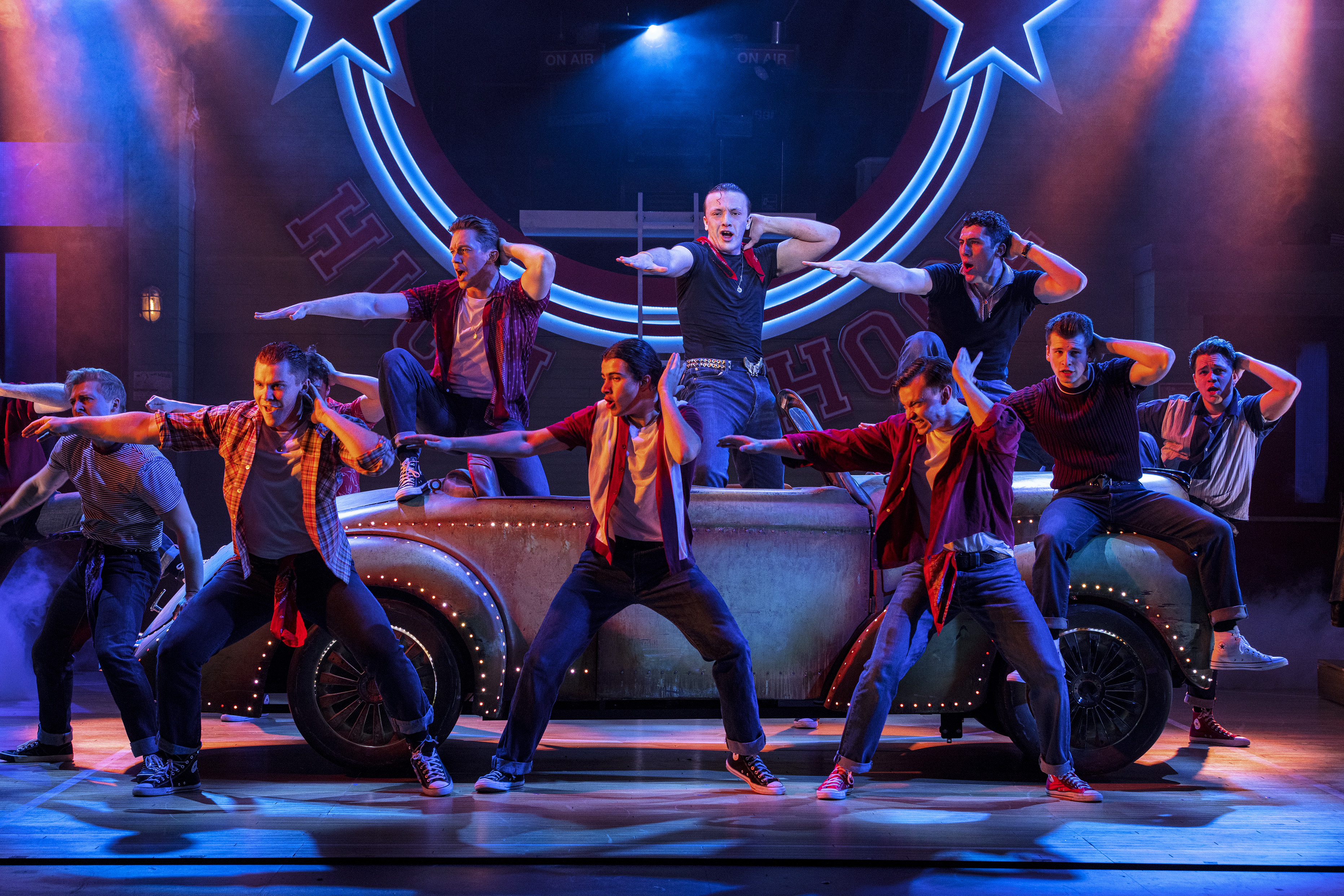
Everybody’s Talking About Jamie

03/03/20

Festival Theatre, Edinburgh

Nobody’s talking about sixteen-year-old Jamie New (Layton Williams). There’s nothing remarkable about him. His careers teacher, Miss Hedge (Lara Denning), predicts a future for him as a forklift truck driver. His friend, Pritti (Sharan Phull), does her best to help him to revise. Sure, class eejit Dean Paxton (George Sampson) enjoys a bit of homophobic bullying, but Jamie doesn’t let it get to him. It’s not like his sexuality is a secret.

He does have a secret though: he knows exactly what he wants to do when he leaves school – and it doesn’t involve any forklift trucks. Jamie wants to be a drag queen. But  Miss Hedge keeps banging on about being realistic, and Jamie doesn’t have the confidence to believe that he can realise his dream. Until his lovely mum (Amy Ellen Richardson) buys him some red high heels for his birthday, and Pritti challenges him to drag up for prom – if that’s what he wants to do.

And Jamie realises he’s going to have to come out for a second time.

This is a heartwarming story by Dan Gillespie Sells and Tom MacRae, reminiscent of Jonathan Harvey’s Beautiful Thing in its positive depiction of a young gay man, also called Jamie, loved and supported by his family and friends – although, of course, this one is true. Jamie New experiences very few obstacles: his dad (Cameron Johnson)’s a shit, but so what? He’s got Ray (Shobna Gulati), his mum’s gloriously gobby best mate, who’s always on hand to offer knock-off lippy and sage advice. He doesn’t need his dad. And if Miss Hedge is set against Jamie drawing attention to himself by wearing a dress to prom, clearly the only thing to do is to show her why she’s wrong.

Williams is very appealing in the lead role, and utterly convincing as the conflicted teen, veering between bravado and fear as he works out what kind of adult he wants to be. Shane Richie is hilarious, both as drag shop owner Hugo and his alter ego Loco Chanelle: he’s a seasoned performer with perfect comic timing, and he really knows how to elicit a big laugh. But the standouts are Phull and Gulati: the former’s plaintive singing is beautifully emotive, while the latter’s well-timed profanities are both audacious and refreshing.

It’s a shame the score is kind of meh, with only a couple of notable tunes and no real bangers that linger in the memory. Still, Katie Prince’s lively choreography complements Matt Ryan’s direction well, and I leave the theatre smiling, and glad to see that the real Jamie (Jamie Campbell) is clearly living his best life, posing for photos in a fabulous show gown, a million miles away from a fork lift truck.

 4 stars

Susan Singfield

The Ballad of Johnny Longstaff

27/02/20

Traverse Theatre, Edinburgh

The Young ‘Uns are a curiously named trio of singers, three middle-aged guys in plain shirts and jeans, who amble amiably onto the stage and explain that they first acquired their name many years’ ago, when they really were the youngest members of a Teeside folk club. Then they start to sing in glorious three part harmony and it’s easy to see why Sean Cooney, David Eagle and Michael Hughes have already won three prestigious folk awards. The sound they make together is sublime.

But who is Johnny Longstaff, you may ask? He was a teenager from Stockton-on-Tees who, back in the 1930s, found himself unemployed and hungry. Along with thousands of others, he took part  in the infamous hunger marches to London,  protesting the plight of the Northern working classes. Later, he participated in the Mass Trespass movement and the battle of Cable Street, where he and his friends violently opposed the marches of Oswald Mosely’s Brown Shirts. And later still, he was one of the many who volunteered to fight Franco in the Spanish Civil War only to find, after Franco’s eventual victory, that their very existence had been erased from history. It’s a memorable story even without the music.

We hear testimony from the man himself via a series of recordings he made when he was in his sixties – and his recollections are punctuated by pieces from the trio ranging from stirring marching songs, to rambunctious drinking ditties and melancholic melodies. As they perform, a series of carefully chosen images appear on the screens behind them. A particular high point for me is the plaintive ballad that unfolds as an old photograph of Longstaff and his comrades gradually filters onto the screen. As the image finally comes onto focus, there’s the chilling realisation of how young the protagonists of this story actually were – and of the horrors they endured in the name of freedom.

This is more than just a folk concert. It’s a powerful slice of gig theatre, that deserves attention from a wider audience than just the folk purists – and judging by the packed crows at the Traverse, it appears to be reaching one. The Young ‘Uns are only around for a couple of days before they march triumphantly on to Hull and Liverpool. Grab some tickets if you can get them.

4.4 stars

Philip Caveney

The Importance of Being Earnest

26/02/20

Bedlam Theatre, Edinburgh

We’re a little late to this because of conflicting dates in our calendar and, it must be said, that in the depths of a very chill February, Bedlam Theatre is not a venue for the faint-hearted. But, suitably wrapped up in layers of winter clothing, we soon discover that this is a production worth braving the elements for.

The Importance of Being Earnest is probably Oscar Wilde’s funniest play. It’s certainly his most quotable effort, fairly bristling with those witty, erudite one-liners that he’s justifiably acclaimed for. It marked the climax of his career – at the opening night in 1895, Wilde was presented with that infamous bouquet by the Marquess of Queensberry, and the rest is tragedy.

The play is, of course, mostly about the titular character, who is Jack in the city and Ernest in the country, largely because he’s an orphan who was discovered, as a baby, in the left luggage department of Victoria station. In a handbag. (A handbag?). He’s played here by Gordon Stackhouse, with just the right amount of angel-faced insouciance, delivering a deadpan double-act with his best friend, Algernon (Fergus Head – last seen by B&B in the thought-provoking, Education, Education, Education).

Ernest/Jack is wildly in love with Algernon’s cousin, Gwendolyn (Aine Higgins), but must first convince her overbearing mother, Lady Bracknell (Ishbell McLachlan), that he has what it takes to be a suitable husband. Lady B is, of course, a gift for any actor and McLachlan makes the most of the opportunity, firing on all cylinders and portraying her as magnificently awful, with a voice that could stop a runaway ox in its stride.

Algernon meanwhile (who is also pretending to be Ernest – don’t ask) takes one look at Jack’s young ward, Cecily (Georgie Carey), and proposes marriage to her. How the ensuing complications are untangled is the stuff of wild(e) farce, and this jaunty three-act play virtually rockets along, coaxing much laughter from the audience along the way. It’s a student production, so the props are on the rickety side, but they’ve done wonders with what they’ve got (somebody please give these people a bigger budget!). I’m onside from the opening salvo of Smiths/Pulp/Beastie Boys tracks that precede the first act. A final scene where the cast dance gleefully along to Primal Scream’s Rocks is frankly an inspired touch.

I think Oscar would have approved.

4.2 stars

Philip Caveney


Dial M For Murder

24/02/20

King’s Theatre, Edinburgh

For a playwright who purportedly ‘hated writing,’ Frederick Knott has certainly had a lasting impact. True, he didn’t write a lot but his 1951 stage thriller, Dial M For Murder, is still packing in the punters almost seventy years after its creation, and is a classic of its kind.

Predictably, the King’s Theatre is full tonight; this one is almost guaranteed to be a crowd-pleaser. But it’s subtly done: Anthony Banks’ direction avoids the arch high-campery that’s all-too pervasive in period crime dramas these days. Sure, he embraces (and even highlights) the nonsensical aspects of the plot, but not at the expense of credible characters.

Still, there’s no getting away from it: this is a schlocky tale of murder and intrigue. Beautiful heriress, Margot (Sally Bretton), has been having an affair with dashing young writer, Max (Michael Salami), and has worked hard to keep her tennis-player husband, Tony (Tom Chambers), in the dark. She has no intention of leaving her marriage, and thinks she can keep everyone happy. But Tony is onto her, and has a yearning for revenge… His plan is cunning and convoluted; can he contrive the outcome he desires?

The four-strong cast (Christopher Harper, dual-roling as Captain Lesgate and Inspector Hubbard, completes the quad) deliver slick, believable performances, even managing to sustain my interest in the overly-expositional opening half hour. After that, things become more action-packed, and we’re less reliant on hearing the detailed back story.

I really like the bold lighting and sound design (by Lizzie Powell and Ben and Max Ringham respectively), which works especially well in the scene transitions. The passing of time following the fateful incident at the core of the play is beautifully evoked, and the use of The Beatles’  Tomorrow Never Knows is perfect here.

So yes, Dial M For Murder is a well-worn piece, and it won’t win any innovation prizes in 2020. But it’s a classic for a reason, and this production does it proud.

4 stars

Susan Singfield


Home is Not the Place

21/02/20

Traverse Theatre, Edinburgh


In Home is Not the Place, poet/dramatist Annie George explores the story of her own childhood and that of her grandfather, the Malayalam poet, PM John. If his name doesn’t exactly resonate with contemporary audiences, that’s hardly surprising. He died in 1945 at the age of 40 and, a couple of years later, nearly all of his writing was destroyed in a house fire. As a novelist myself, the idea fills me with horror – I still have a huge trunk of my early work, which I have stubbornly dragged from location to location. It’s unpublishable but losing it would be a nightmare.

And it’s this lack of substance that makes for a slightly frustrating experience – the sections that deal with George’s own story are far more compelling than the slightly nebulous narrative concerning her grandfather. We hear recollections of George’s childhood journey to London from India, how she eventually found refuge in the more nurturing nature of Scottish society and how she developed as a writer herself. But of PM John there are only vague impressions, built around an old portrait of him, which has been badly ‘restored.’ (I would have loved to hear one of his poems, for instance, which would give a clearer picture of who he was and what he represented. Presumably this absence is even more irksome for George.)

HINTP uses still images, short pieces of film and atmospheric bursts of Indian music to illustrate the various themes. The central thrust of the narrative is about the way our experiences shape us as individuals and about what the term ‘home’ really means to each person. This comes through eloquently. George is a compelling narrator and once she’s settled into her stride, she pulls me into the poignant sweep of the piece. 

But I’m left wanting to know more about PM John – I spend some time afterwards fruitlessly searching for more information about him on the internet. Perhaps that’s been George’s intention all along.

3.8 stars

Philip Caveney
 

I Think We Are Alone

18/02/20

King’s Theatre, Edinburgh

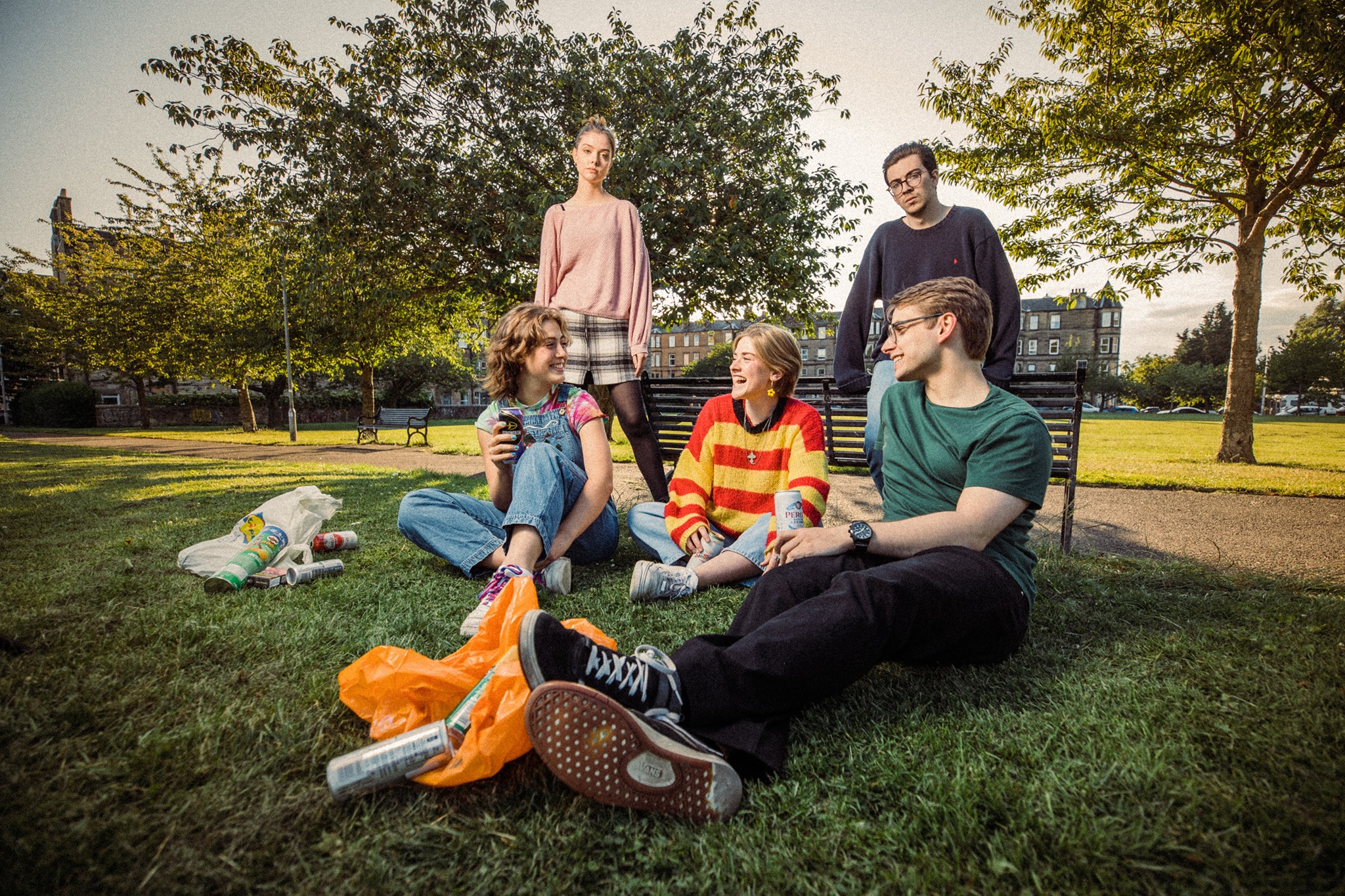
I Think We Are Alone is all about compartmentalisation: about the boxes we create in which we hide our deepest fears, our greatest losses, our inner conflicts. In this brilliantly choreographed show, those boxes are represented quite literally by big translucent rectangles, mounted on wheels and expertly moved around the stage by the cast to create a whole series of settings. They are the doors of a hospice, the walls of a dance club – sometimes they shimmer and pulsate with light, sometimes the ghosts of past memories stare mournfully through them, as if entreating us to help.

And sometimes those same rectangles crowd suffocatingly in upon the performers, encircling them, crushing them, sealing them off from salvation.

It would be easy in the midst of all this spectacle to lose track of the performances, but Sally Abbott’s meticulously crafted script never allows that to happen. We are introduced to six seemingly unconnected characters and then gradually, expertly, Abbott pulls the threads of the disparate tales together, showing us how characters interconnect with other, the elements they have in common, the things that separate them. As one revelation unfolds in the second act, I actually slap my forehead, wondering how I can have failed to see it coming. But I have, and that’s down to the skill of the writing.

Clare (Polly Frame) and Ange (Charlotte Bate) are struggling to get past a dark secret they have shared since childhood, a secret that threats to drive them apart forever. Josie (Chizzy Akudolu), the proud mother of Cambridge student, Manny (Caleb Roberts), wants her son to have all the advantages of a classic education, something she always longed for but never had. And sad loner Graham (Andrew Turner) drives a night taxi from destination to destination, desperately searching for missing connections. As for Bex (Simone Saunders)… ah, now that would be telling.

Co-directed by Kathy Burke and Scott Graham, I Think We Are Alone is more than just a series of monologues and duologues. It’s a splendid example of contemporary theatre, replete with beautifully nuanced acting and Frantic Assembly’s trademark choreographed transitions. A particular nod should be given to Paul Keogan, whose sublime lighting gives the piece a dazzling sheen.

This is thrilling stuff. Miss it and weep.

4.6 stars

Philip Caveney
Trojan Horse

12/02/20

Traverse Theatre, Edinburgh

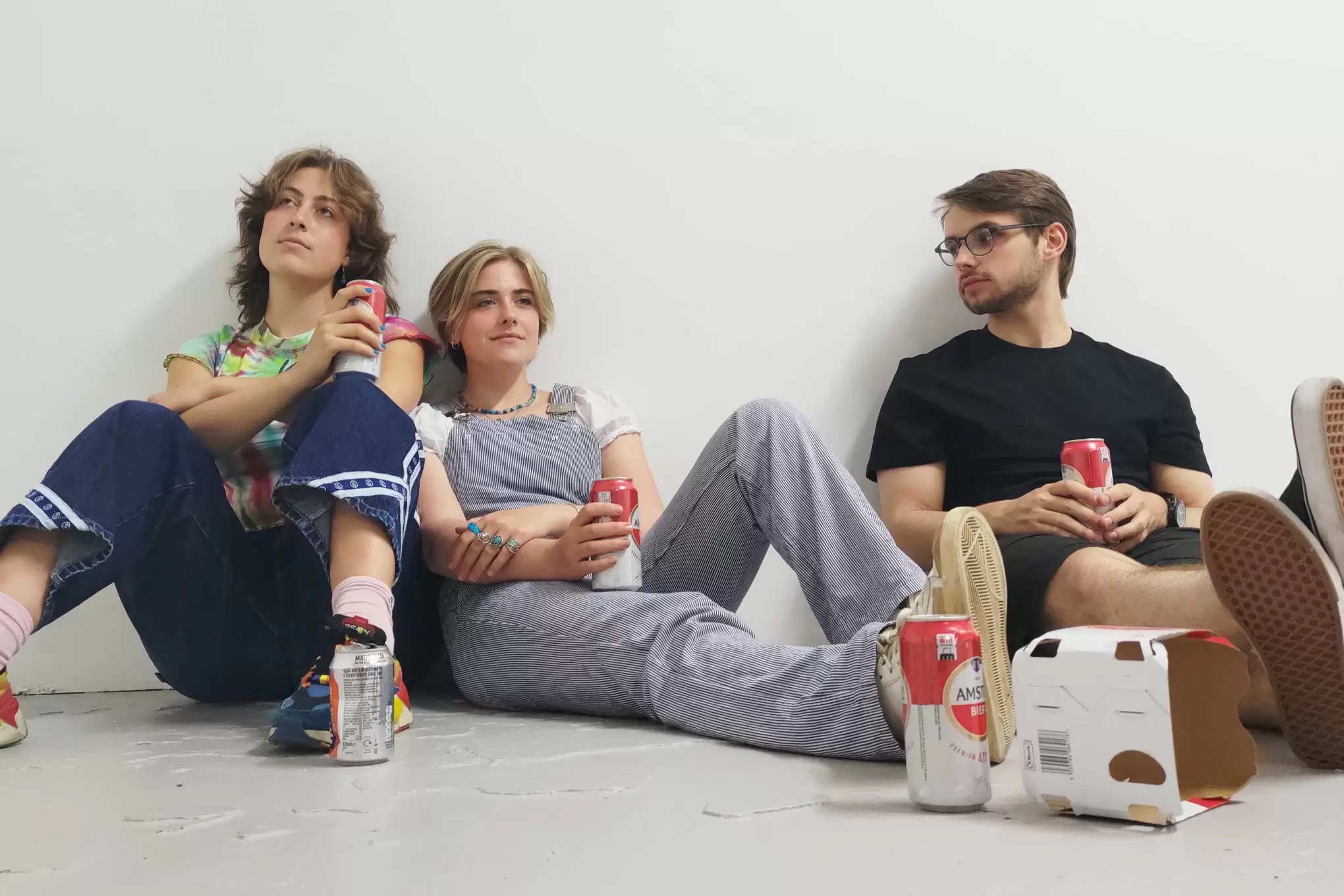
This is the second piece of work we’ve seen by LUNG, the verbatim theatre company that works to ‘shine a light on political, social and economic issues in modern Britain using people’s actual words to tell their stories.’ Last year, Who Cares? –  a heartbreaking play about Manchester’s young carers – succeeded in raising our awareness of the plight of 700,000 youngsters nationwide; tonight, Trojan Horse lifts the lid on a controversial news story we’d all but forgotten.

In 2013, an anonymous letter was sent to Birmingham city council, implying that there was a Muslim conspiracy to ‘Islamify’ state schools in Birmingham: a deliberate and concerted effort to force out non-Muslim staff and governors and implement a hard-line agenda. Clearly, such an allegation had to be investigated. Equally clearly, the investigation needed to be fair, objective and professional, as well as robust – and certainly free from political baggage.

Sadly, this was not the case. Park View’s OFSTED ranking went from Outstanding to Inadequate overnight. Teachers’ and head teachers’ careers were destroyed. The children – from one of the most deprived areas in Britain – emerged as collateral. An ideological war was being fought, and they were caught in the crossfire.

In this compelling drama by Helen Monks and Matt Woodhead, hundreds of hours of interviews are distilled into composite characters, representing teachers, governors, pupils, council workers and inspectors. While contemporary narratives focused on the accusers’ perspectives – with tabloids shrieking about compulsory prayers and segregation – Trojan Horse gives us a chance to hear voices from the other side, from those directly implicated and affected by the claims. And it’s a shocking story.

Some concerns, it seems, were justified. Even by his own words, Tahir Alam (Qasim Mahmood) seems to have misunderstood the remit and parameters of what a governor should do, taking credit for turning schools around and creating an aspirational culture. There’s no doubt that Park View was transformed – with an A*- C GCSE pass rate that leapt from 4% to 76% – but surely any accolades belong to the leadership team and staff; surely it’s their hard work and dedication that will have made the difference?

Other issues, however, were clearly fuelled by Islamophobia. In-class gender segregation, for example, was deemed to be a problem. But, as council worker Jess (Komal Amin) points out, no one was complaining about entirely separate schools attended by boys and girls in predominantly white catchment areas. It was claimed that the curriculum was being narrowed, with music and drama sidelined in favour of more academic subjects such as English and maths. The schools disputed this but, even if it were true, this was – ironically – in line with Michael Gove’s own plans: arts subjects have been systemically demoted in the state system over the last decade. To be clear, I truly believe both segregation and a lack of arts provision are wrong. But they’re not more wrong in Muslim schools than they are anywhere else.

Such is the power of this piece that, even here, I find myself focusing on the issues raised rather than reviewing the drama. But I suppose this points to its success. Yes, it’s well acted; yes, the direction is nimble and fluid. But the point, surely, is to let us hear from those who have been silenced, and to open our eyes to the agenda that shape the news we read.

Trojan Horse is currently on its second tour of the UK, which will culminate in a potentially cataclysmic performance in Westminster. I wonder if Gove will dare to attend?

4.3 stars

Susan Singfield


Peter Pan Goes Wrong

11/02/20

Festival Theatre, Edinburgh

We’ve all been there, haven’t we? That excruciatingly bad theatre performance in the local village hall where everything goes wrong – the actors can’t act, the singers can’t sing and the dancers can’t dance. The makeshift props have a habit of collapsing at key moments and the lighting and sound cues are completely out of control. This, of course, is the kind of stuff that fuels Mischief Theatre’s productions, and is at the heart of their meteoric success since 2013’s The Play That Goes Wrong.

With Peter Pan Goes Wrong, things have taken a palpable step up. Perhaps it’s simply because it’s based on an established classic, or maybe they are learning to push the boundaries of what they do, but – whatever the reason – the gags are more confidently staged, while some of the ‘accidents’ look convincing enough to make me wince. It’s an ensemble piece so it’s hard to pick out individual performances, but I do laugh muchly at Katy Daghorn’s exaggerated physicality in the role of Wendy and I love the way that both Max “Only There Because His Dad Is An Investor In The Show” Bennett (Tom Babbage), and Lucy “The Co-director’s Daughter Who Suffers From Stage Fright” Grove (Georgia Bradly) are given the opportunity to milk the audience’s sympathy.

Of course, since Peter Pan productions famously involve wire work, there’s plenty of scope for the titular hero to flail helplessly around above his co-stars heads, and the idea is exploited to the full. Also, a pirate ship number – which brilliantly utilises an out-of-control revolving stage – builds to a frenetic and highly inventive climax that has me laughing so hard I nearly fall off my seat.

Here’s the proof that getting things wrong in the theatre can sometimes pay off handsomely.

4 stars

Philip Caveney