Theatre

The Great Gatsby

21/04/22

Festival Theatre, Edinburgh

Regular readers of B&B may be somewhat surprised to see this review. We haven’t previously covered ballet, mainly because of a reluctance to show our general ignorance of the subject. But it is theatre, when all is said and done and, when we see that Northern Ballet’s adaptation of The Great Gatsby is to visit the city, it seems the logical choice for a starting point. F. Scott Fitzgerald’s famous novel is a story we already know, so we should have no problem following the action. And so it proves.

Actually, on reflection, Gatsby seems an inspired choice for the tricky metamorphosis of literature-into-dance. For one thing, those jazz-age excesses are perfectly suited to the medium and, for another, many of the novel’s most memorable scenes are built around visual motifs: the blinking green light of the Buchanan’s home on the horizon; those lavish parties frequented by alcohol-fuelled celebrities; the distorted reflections in the infamous room of mirrors.

Jay Gatsby (Joseph Taylor) spends his days reminiscing about his lost relationship with Daisy Buchanan (Abigail Prudames), back when he was a young soldier. He even gets to dance alongside his younger self (Harris Beatty), before four men in black raincoats and derby hats step out of the shadows and neatly illustrate how criminal activities turn Gatsby into the rich socialite he is today.

But wealth and success haven’t dulled the longing he still harbours for Daisy, who now lives with her husband, Tom (Lorenzo Trossello), and their little daughter – an adorable performance by Rosa Di Rollo – in their home across the bay (cue that blinking green light).

Into this turbo-charged atmosphere dances Daisy’s naive cousin, Nick Carraway (Sean Bates), who soon befriends Gatsby and then can only watch in dismay as he and Daisy become ever more entangled in a relationship that will surely end in tragedy.

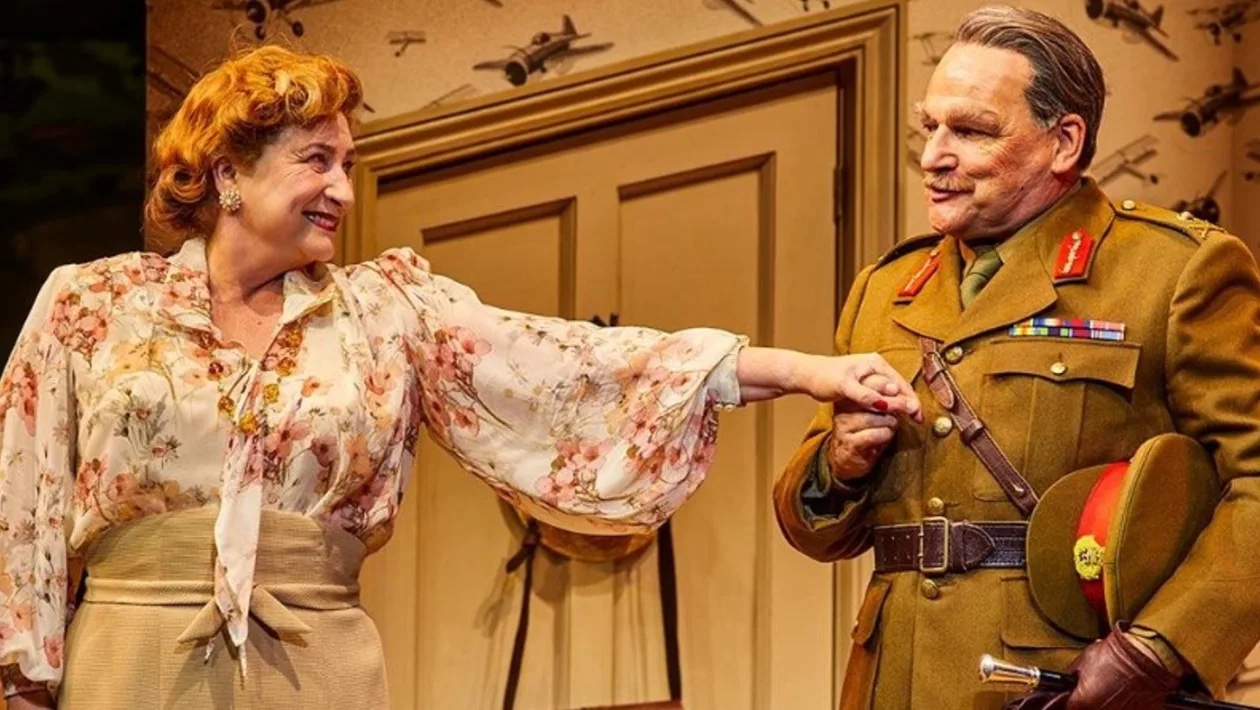
This stirring adaptation also feels curiously cinematic, an effect heightened by Jérôme Kaplan’s brilliant set design, which contrives to present physical events – even an entirely convincing road accident – with absolute authority. And the dancing, of course, is sublime. While I freely admit that I don’t know the difference between an arabesque and a jeté, I’m still enraptured by the cavalcade of physical perfection that whirls and leaps and pirouettes around the stage with apparent ease. I particularly enjoy the earthy physicality of Riko Ito as garage mechanic George Wilson, driven to distraction by his wife Myrtle (Minju Kang)’s affair with Tom Buchanan – and also the wonderfully accomplished ensemble pieces, where those epic parties of the roaring twenties are lavishly enacted in perfectly-tailored suits and glittering cocktail dresses.

The music of the late Sir Richard Rodney Bennett provides the perfect accompaniment for the story, encompassing as it does elements of jazz, ragtime and sweeping, soulful grandeur. We even get to hear the great composer sing in the production’s penultimate piece, a heartfelt rendition of I Never Went Away, which offers a poignant preface to a brutal and shattering conclusion.

So there we have it it. As an introduction to an art form, The Great Gatsby offers everything I was hoping for. Also, it proves a propitious night for a first foray into ballet, as long time choreographer and director David Nixon OBE is about to step down from the role he’s occupied for twenty-one years.

An emotional onstage presentation duly ensues and a heartfelt standing ovation caps an evening that will linger in my memory.

4.2 stars

Philip Caveney

The Meaning of Zong

20/04/22

Lyceum Theatre, Edinburgh

The Meaning of Zong opens in a contemporary UK bookshop, where Gloria, a young black woman (Kiera Lester), attempts to tell the white staff that they have misclassified a book about the Atlantic slave trade. They’re mystified. “It’s in African history,” they tell her. “But it’s British history,” she replies. They don’t understand, prevaricating with platitudes about ‘being allies,’ while vaguely insinuating that such decisions are taken by a distant boss. Gloria’s frustrated, but help is at hand, in the form of Olaudah Equiano (Giles Terera), a former slave, who steps out of the history book to tell Gloria (and us) his tale.

And the tale he tells is truly shocking: a shame-inducing account of an event so appalling it ought to be common knowledge. That it is not speaks volumes, illuminating the importance of that opening scene. If we don’t even acknowledge our history, how can we hope to learn from it?

In 1793, Oloudah tells Gloria, there was a massacre on board a British slave ship called The Zong. 132 slaves were thrown into the sea and left to drown, jettisoned because – so it was claimed – there was a shortage of drinking water, and so their killing was a “necessary” act. Not only did they commit murder, the ship’s owners also put in an insurance claim for the loss of their “property.” The insurers disputed the claim, of course (because some things are immutable), but not before Oloudah chanced upon the case, and joined forces with anti-slavery campaigner Granville Sharp (Paul Higgins) and shorthand secretary Annie Greenwood (Eliza Smith) to ensure the case was brought to public attention. The slave owners’ blatant dismissal of human beings as “cargo” caused outrage, and proved to be a significant step on the path towards abolition.

Although it’s an ensemble piece, this is very much Terera’s project: as well as playing Oloudah, he is both writer and co-director (along with Tom Morris). It’s a spectacular achievement, making bold social and political points, while still being playful and overtly theatrical. He pulls no punches and yet we’re on his side; he never lets us off the hook, but we feel galvanised rather than defensive.

We never witness the massacre. Instead, we are shown the legal struggle Oloudah and Granville mount to have the court’s ruling overturned. Instead, we are shown the strength of three female slaves (Lester, Bethan Mary-James and Alice Vilanculo), recounting the story of Anansi, the spider god, calling on the spirits to save them. And one of them – unnamed – is saved, clinging to a rope, reaching through the years to become Terera’s inspiration for this devastating reminder of our collective guilt.

Jean Chan’s set is a thing of beauty, reinforcing the notion that everything is connected, that we can’t escape our past just by shutting our ears and hiding things away. Thus Westminster Hall’s magnificent wooden ceiling is also the slave ship’s hull; the judge’s bench is also a Waterstones bookshelf. The furniture we sit on, the cutlery we use, the sugar we sprinkle in our tea: these things are all linked to slavery, Oloudah tells Gloria – and the truth will out.

Sidiki Dembele’s onstage drumming is both powerful and provocative, first bringing the audience together then silencing us with its force. It’s the perfect accompaniment to a story that demands to be heard.

The Meaning of Zong has already finished its run at the Bristol Old Vic, and only has a few more days here in Edinburgh before it moves on to Liverpool. It’s worth seeking out. We mustn’t let this story fade away. It belongs in the bookshop’s window, not relegated to a forgotten shelf.

4.7 stars

Susan Singfield

The Da Vinci Code

05/04/22

King’s Theatre, Edinburgh

Ah, The Da Vinci Code. That preposterous juggernaut of a 2003 novel: badly written, controversially researched, ludicrously convoluted – and yet, somehow, as popular as can be, selling more than eighty million copies worldwide. 

Dan Brown’s tale leans on other people’s cleverness: his protagonist, Robert Langdon, is a Harvard professor, whose sidekick, Sophie Neveu, is a brainy cryptographer. Their enemies are equally learned, and the murder at the heart of this high-octane mystery takes place in the highbrow setting of the Louvre. Indeed, the whole plot is reliant on the duo’s impressive understanding of theology, symbology and Renaissance art. All of this, of course, is just smoke and mirrors, obscuring what is – essentially – a cryptic crossword given legs. Nevertheless, it’s undeniably engaging; there’s a reason the novel was a runaway hit. 

This stage adaptation (written by Rachel Wagstaff and Duncan Abel) doesn’t shy away from the schlocky nature of the source material. Instead, director Luke Sheppard uses more smoke and mirrors, this time in the form of impressive technical effects and slick production values. If touring shows can sometimes seem a little lazy, this is anything but, and Brown’s silly story is elevated by some damn fine theatrics. 

The plot is pared back, so that there’s less obfuscation and greater clarity. There are fewer chases (thank goodness). Nigel Harman imbues Langdon with a credible seriousness: it’s an unshowy, subtle piece of characterisation that serves the production well. In many ways, he’s the still centre of it all: bemused at finding himself involved, but quietly determined to sort things out. Hannah Rose Caton’s Sophie is somewhat livelier, as suits the role, but neither she nor Harman dominate the stage. That’s not what this is about, after all. 

The focus here is on the clues, on the elaborate treasure hunt that sees the pair wielding guns and crossing continents, challenging religious doctrines and theorising about everything from the Mona Lisa to the Holy Grail. David Woodhead’s bold set – all gauze panels and moments of revelation – is complemented by Andrzej Goulding’s stunning video design, with luscious projections filling every wall. It’s a dazzling spectacle (and, naturally, there’s an extra frisson for us as an Edinburgh audience, when the depiction is of nearby Rosslyn Chapel).  

I like the chorus too: the company sits, blank-faced and hooded at the side of the stage, rising occasionally in sporadic chants and rituals, all precisely choreographed by Tom Jackson Greaves. 

So – admittedly somewhat to my surprise – watching this production is a real pleasure. And not even a guilty one. 

4 stars

Susan Singfield

Human Nurture

19/03/22

Traverse Theatre, Edinburgh

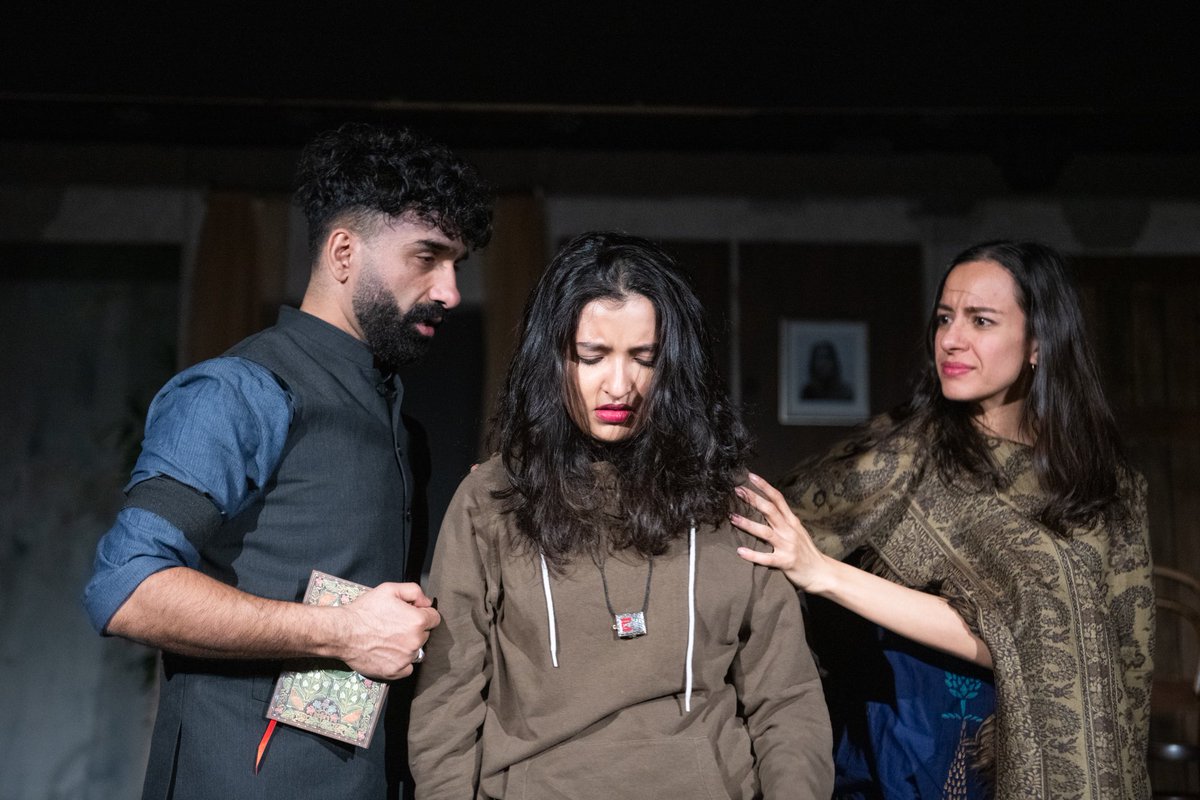
It’s Harry (Lucas Button)’s eighteenth birthday and, when his old friend ‘Roger’ (Justice Ritchie) turns up out of the blue, bringing him a Colin the Caterpillar cake and a selection of shared memories, he’s initially delighted. The two of them recall their days in the care system together: the adventures they had, the everyday trials they faced. 

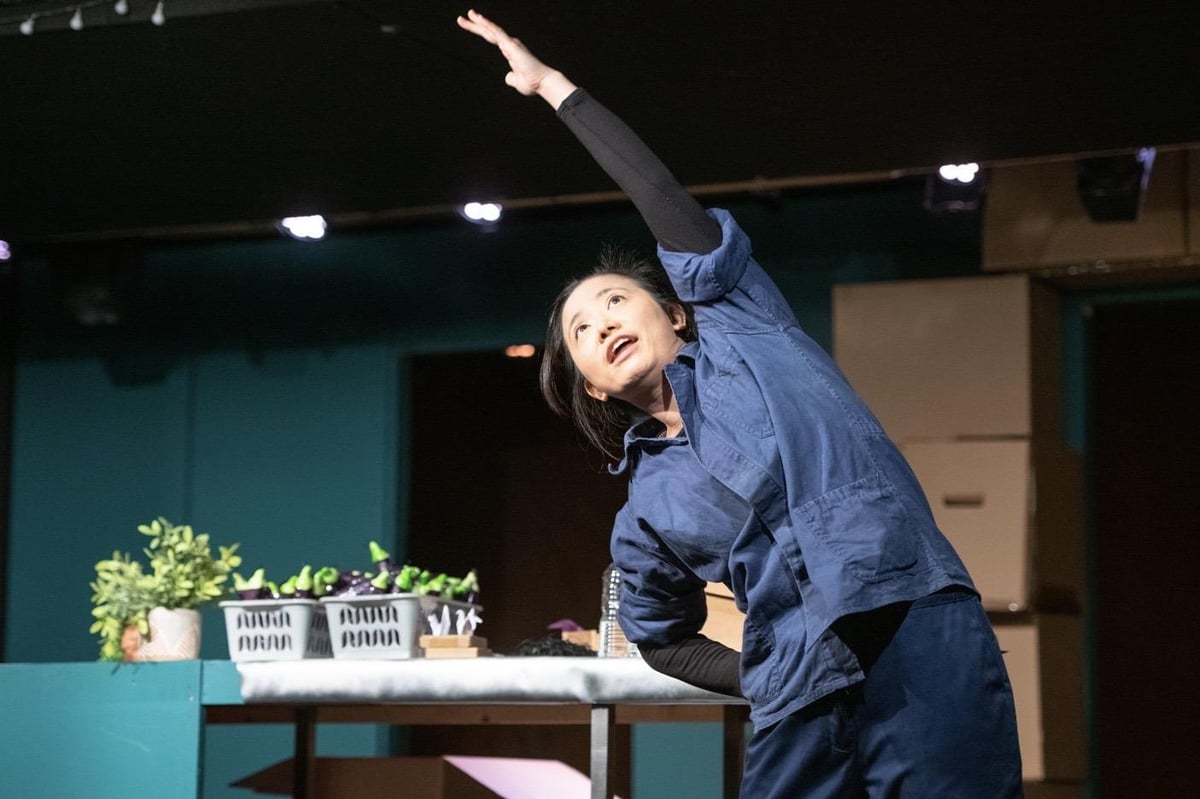
But now things have changed somewhat. Harry is still struggling to make his way in the world, while Roger, who prefers now to answer to Runaku – his real name; the name his parents gave him – is about to set off for university and exciting new horizons. 

But before he leaves, he has some issues that need to be addressed. 

Harry has been pretty vocal on social media lately and many of his views are racially insensitive, to say the least. Runaku wants him to face up to his duplicity but, as Harry protests, how can he be a racist when his best friend is black?

Ryan Calais Cameron’s punchy play handles a complex subject with surefooted skill and nails the central flaw that lies at the heart of Harry’s logic. We soon learn that Runaku has been marginalised all through their years together, and that Harry needs to face up to something he’s avoided since the beginning of their friendship.

Both Button and Ritchie attack their roles with vigour and the physicality of their performances prevents this two-hander from ever becoming static. Movement director Yami Löfvenberg and Rob Watt’s pacy direction have them hurling themselves around the stage, slipping expertly through a whole range of emotions from cheery bonhomie to outright anger. I also enjoy the live music from musician Neeta Saarl and the way she interacts with the performers – though the lengthy electronic overture she performs at the beginning feels suspiciously like an attempt to pad out the play’s brisk running time.

But this is thought-provoking stuff, that isn’t afraid to tackle its sensitive material with refreshing honesty.

4 stars

Philip Caveney

The Scent of Roses

10/03/22

Lyceum Theatre, Edinburgh

After an unfortunate delay, due to the continuing saga of the dreaded COVID 19, The Scent of Roses is finally with us and it’s been well worth the wait. A timely meditation on the nature of everyday lies and the importance of finally speaking the truth, Zinnie Harris’s spiky, ambitious play is beautifully realised within Tom Piper’s austere set design. Initially claustrophobic, a suburban bedroom is gradually opened out like an ingenious puzzle box to reveal unexpected depths and wider horizons.

We’re somewhere in Scotland in the near future, where the summer temperatures are soaring and where birds are liable to fall from the skies for no explicable reason – and everywhere there’s the unpleasant odour of dying flowers.

Chris (Peter Forbes) and his wife, Luci (Neve Mcintosh), are having a heart-to-heart in their bedroom. Chris has little choice in the matter, because Luci has locked them both inside and hidden the key. It seems to be the only way she can get him to open up to her. Chris, it seems, has not been entirely truthful about his fidelity over the years and, it turns out, Luci has a terrible secret of her own to share with him.

Meanwhile, their daughter, Caitlin (Leah Byrne), arrives at the house of her former teacher (and lover), Sally (Saskia Ashdown), carrying a dead crow in her bloodstained hands. Caitlin claims to have run over the unfortunate bird on her bike – but then she also adds that she’s just murdered her father. It quickly becomes clear that Caitlin is a serial liar and we shouldn’t take anything she says for granted.

It’s only when Sally heads over to meet up with her estranged mother (Maureen Beattie) that the various strands of this Gordian knot of a storyline are finally unravelled before being skilfully retied. The cast all handle their roles admirably (particularly Beattie as the long-suffering mother who must put her own triumphs on hold in order to see to her daughter’s issues) and Harris handles the directorial reins with assurance. Ben Ormerod’s lighting design floods the stage with a palpable swathe of brilliant ‘heat.’

After a recent diet of tried-and-tested crowdpleasers, this is exactly the kind of theatre I’ve been longing for – mature, challenging and above all else, thought-provoking; so much so that my companion and I immediately head off to a local drinking den to discuss it at great length.

Which accounts for the fact that I’m writing this with a wee bit of a hangover.

At least, that’s my story. And I’m sticking to it.

4.2 stars

Philip Caveney

A Midsummer Night’s Dream

09/03/22

Assembly Roxy, Edinburgh

EUSC’s A Midsummer Night’s Dream is a real treat. I’m feeling a bit tired and grumpy before we set off for the theatre – a culmination of late nights and hayfever – but this sprightly production soon puts a spring in my step and, by the time I leave, I’m all smiles.

There’s something endearing about the audiences for these student productions: they’re always so vocal in their enthusiasm. It really helps to cement the whole ‘shared experience’ feeling of live performance, and debunks the idea that theatre only appeals to the middle-class and middle-aged. Their liveliness feeds the atmosphere, which is almost as charged off-stage as on. I love it.

Director Sara Cemin deftly braids the disparate strands of Shakespeare’s play. This is a vivacious, playful production, subtly updated with occasional asides (I mean, I don’t think “Fuck’s sake!” appears in the First Folio), which illuminate the jokes, sending laughter rippling through the auditorium.

The fever dream chaos is nicely realised: the four passionate youths, lost in the woods; the bumbling Mechanicals, desperately sincere in their desire to create something worthwhile; the mischievous faeries, unable to resist the impulse to play tricks. It’s a perfect storm.

The Mechanicals are the standouts. Some of this is down to Billy Bard himself, of course: there’s such a clever balance of scorn and tenderness in his rendering of them. But Cemin deserves credit for drawing this out, for resisting the urge to make them pantomime-ish figures, affording them instead the dignity of working people, striving to make something good (while still gently poking fun). Max Prentice (last seen by B&B in EUTC’s Education, Education, Education in 2018) is perfectly cast as Bottom: he’s clearly a natural comedian, and is instantly engaging. He’s definitely one to watch. But don’t underestimate those in the smaller roles either; this strand highlights the power of ensemble performance.

I do have a couple of minor gripes. First: the dry ice machine. “Fuck’s sake,” as Helena would say. It works well to set the scene when the faeries first appear, but – where cough-inducing smoke is concerned – less is more. Second (and this might just be me): the long interval. I know people need time to go to the loo and buy a drink, but anything longer than fifteen minutes disrupts the momentum, and all the tension that’s been so carefully built in the first act just starts to dissipate. Neither of these is a deal-breaker though.

I love Amelia Chinnock Schuman’s choreography, particularly in the fight scene, which is impressively visceral. The four lovers (Lucy Melrose, Archie Barrington, Isabelle Hodgson and Will Nye) approach this tussle with evident gusto, and the fear of injury seems very real (not least because of the rucked-up rug I keep thinking someone’s going to trip over. Yes, I am a laugh). The music is a satisfying addition too. It’s all original (by Joe Pratt and Mark Sandford), and I applaud the decision to have live musicians on stage. The songs are well-integrated into the production: enhancing rather than intrusive.

No review of AMND is complete without reference to Puck, and Priya Basra seems made for the role. She imbues the goblin with the necessary likability, so that we can witness his careless cruelty without abhorring him. She has eye-rolling down to a fine art.

All in all, then, this is an absolute delight. There’s only one night left. Buy a ticket – quickly!

4.3 stars

Susan Singfield

Sheila’s Island

01/03/22

King’s Theatre, Edinburgh

Sheila’s Island, directed by Joanna Read, is a reworking of Tim Firth’s 1992 play, Neville’s Island, about a group of middle-managers on an outward bound ‘team-building’ trip. Only two notable things have changed: the protagonists’ gender, and the need to explain why no one has a working phone. The former is dealt with more convincingly than the latter: the women are as rounded and credible as their male counterparts. As for the perennial mobile problem, I’m quite happy to buy the idea that ‘water damage’ has rendered Julie’s unworkable; I’m less convinced that the other women would have acquiesced to a request to hand theirs over to the course organisers. It just seems unnecessarily convoluted. ‘No signal’ would suffice…

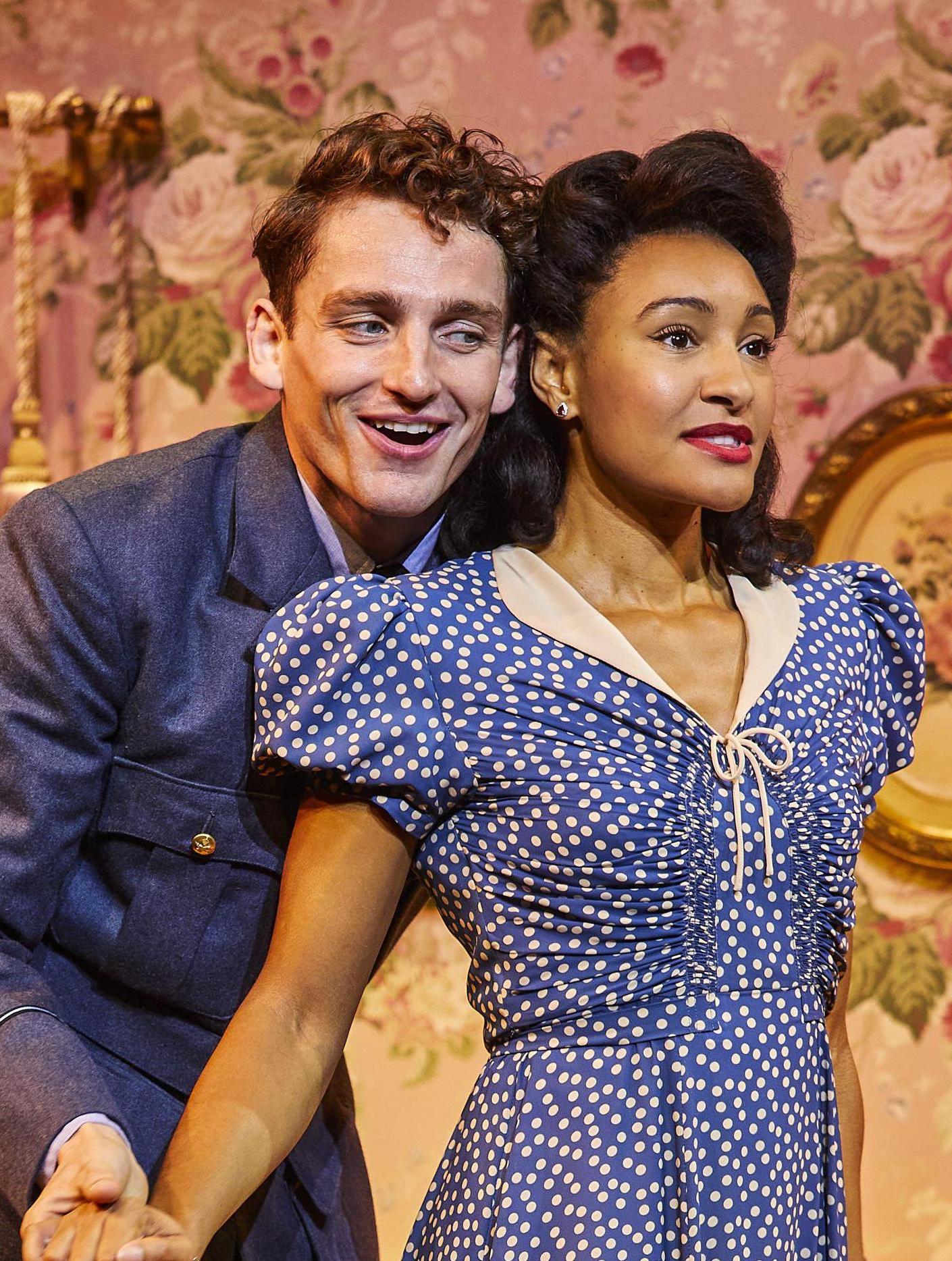
The island in question is in the Lake District – Derwentwater – only a mile from the mainland. It’s November 5th, and the women are there because Sheila (Judy Flynn), their team leader, has led them astray, after misreading the first clue on a treasure hunt. They’re stranded because their canoe has sunk. Denise (Abigail Thaw) is particularly miffed, because her rucksack is still in the canoe, but Julie (played tonight by understudy, Tracy Collier) has packed enough for ten, so they’ll probably be okay. Except that Fay (Sara Crowe) is with them… and Fay has a lot of personal issues to work through.

Firth is good at humour, and there are jokes a-plenty in the script, delivered with gusto (and great timing) by the performers. The low-stakes situation is played for laughs: this is a long way from Robinson Crusoe or Lord of the Flies; the women can expect to be rescued within a day or so. Nevertheless, they rapidly descend into disharmony, with petty rivalries sparking heated exchanges, and their ridiculous attempts at bushcraft are genuinely funny.

Where the play fails, for me, is in its attempt to deliver something deeper than the shallow waters at the island’s edge. I don’t believe any subject should be off-limits when it comes to jokes, but neither do I think that issues as serious as nervous breakdowns, suicide attempts and being a long-term carer should be appropriated as asides. The subjects are too weighty for this flimsy tale to bear, and they make the tone uneven. It seems a little tin-eared, if I’m honest.

The set (by Liz Cooke) is a thing of loveliness, with simple, stark lines depicting bare trees, and an inlet of water reflecting Paul Anderson’s gorgeously lit winter sky with all its Bonfire Night fireworks. In the end, though, Sheila’s Island doesn’t quite deliver the “oohs” and “aahs”.

3 stars

Susan Singfield

Bedknobs and Broomsticks

17/02/22

Festival Theatre, Edinburgh

There’s no doubt about it: director Candice Edmunds has created something wonderful here. From the first moment, it’s clear we’re in for a spectacle, and the extended opening sequence is an absolute triumph. It’s 1940. A cosy, intimate family scene is devastated by a bomb. The walls come tumbling down, the parents disappear, and three children stand wide-eyed in the chaos of an air-raid. They’re hustled out of London and onto a train. Not a word is spoken. The storm clouds – held aloft on sticks – are two-dimensional cutouts; ditto the train. It’s cheeky and inventive, exactly the sort of unabashed theatricality I adore.

It’s a good job Edmunds is so skilled, because the story – based on the 1971 Disney movie and Mary Norton’s earlier novels – is horribly muddled, a hybrid of whimsy and threat that doesn’t quite work. It always was. Even as a child, I didn’t like Norton’s The Magic Bedknob or Bonfires and Broomsticks. They have neither the light-hearted charm of Mary Poppins nor the gravitas of The Lion, The Witch and the Wardrobe.

The three orphaned children are Charlie (Conor O’Hara), Carrie (Izabella Bucknell) and Paul (Aidan Oti). They’re evacuated to the remote Dorset village of Pepperinge Eye, where they’re taken in by the mysterious Eglantine Price (Dianne Pilkington). At first mistrustful, their fears are soon assuaged, despite the fact that their newly appointed guardian is an apprentice witch. Because she’s not just any witch, but a witch with a mission: Miss Price is going to stop the Battle of Britain.

Sadly, the writing isn’t strong enough to carry off this coup de théâtre: lurching from a fanciful undersea dance to a terrifying armed encounter just feels odd and unsettling. The historical backdrop to the tale is largely accurate, and then – for no real reason – not. The ending is unnecessarily convoluted. And, The Beautiful Briny aside, the music isn’t the Sherman brothers’ best work either.

Nevertheless, this musical production is beautifully staged and performed – and, viewed as a collection of set pieces, it’s literally fantastic. Kudos to Jamie Harrison, the set and illusion designer: there are so many clever tricks here, and I can’t fathom out how all of them are done. Pilkington is well-cast in the main role, and Charles Brunton’s Emelius Brown exudes loveable ineptitude. Jacqui DuBois’ postmistress/museum curator Mrs Hobday is very funny too.

I love the ensemble work. The puppetry is delightful, and the choreography vibrant and enchanting.

This is a first-rate piece of theatre, too good for a second-rate tale.

3.8 stars

Susan Singfield

The Wedding Singer

16/02/22

Rose Theatre, Edinburgh

The Rose Theatre is packed, the twelve-piece band are noisily tuning up their instruments and the atmosphere of mounting excitement is palpable. It’s only when you return to events like this that you realise how much you’ve missed them.

The Wedding Singer is an excellent choice for a student production. Inspired by Adam Sandler’s 1998 comedy – you remember, back when Sandler was actually funny – and set some time in the 1980s, this is a funny, breezy musical all about the American preoccupation with marriage. While there are a few technical issues with the sound equipment in the first half, it never gets in the way of the general air of exuberance as the ensemble cast dance energetically around the stage, moving in unison with well-rehearsed aplomb.

Robbie Hart (Chris Kane) makes his living as… well, the clue’s in the title. Together with his two best friends, Sammy (Beni Barker) and George (Joey Lawson), he writes customised songs to suit every occasion. He’s also looking forward to his own impending marriage to Linda (Megan Le Brocq), even though he finds himself powerfully drawn to waitress Julia (Phoebe Sampson). When he’s left at the altar by Linda, it ought to be a simple transference of affection, but it’s complicated. Julia has just become engaged to the odious Glen (Mitchell Collins), a yuppie dedicated to making money. What hope is there for a struggling musician who lives in his Grandma Rosie (Rachel Meek)’s basement?

With foot-tapping tunes, some very funny lines and plenty of 80s cultural references, The Wedding Singer offers a guaranteed good night out and the crowd is vocal in its appreciation. Hart and Sampson have genuine chemistry together, while Collins (looking for all the world like a young Mark Wahlberg) is magnificently sleazy, and Meek exercises her comic skills as Robbie’s groovy granny, still well able to strut her stuff. But it’s also important to say there are no weak links here, with every performer giving one hundred percent.

If I have a criticism of tonight’s show it’s of the unnecessarily long interval between acts. The show inevitably loses some of its momentum and the cast have to work their respective socks off to recover from it – but recover they do and the final wild applause feels genuinely well-deserved.

We’ve missed these student shows so much over the lockdown. It’s truly enervating to see so much young talent given the opportunity to shine. Those in need of a guaranteed pick-me-up should head down to the Rose Theatre pronto.

But don’t hang about, it’s only on for three more performances.

4 stars

Philip Caveney

Wilf

10/12/21

Traverse Theatre, Edinburgh

James Ley’s latest offering is about as far away from a ‘Christmas play’ as it could be. In fact, there’s only one nod towards the festive season: a decorated tree in the corner of the stage. Tree aside, this is more of an antidote to Yuletide than an evocation of it. And that’s fine, because there’s plenty of the traditional stuff on offer at other venues in the city. Wilf is a December play for those who want something… else.

And it really is something else. Where to start? Calvin (Michael Dylan) is struggling. He’s bipolar – in the midst of a manic episode – and everything is going wrong. He knows he needs to leave his abusive boyfriend, Seth, but there’s no one who can help. Not his mum: she’s left for a new life in the American bible belt, and has cut him out of her life. Not his driving instructor, Thelma (Irene Allan), because – after a mere 104 lessons – Calvin has passed his test, and the ex-psychotherapist is pleased to be rid of him. So where can he turn?

The answer soon presents itself: Wilf. Wilf is an unlikely saviour, not least because he is a car. Specifically, Wilf is a beaten up old Volkswagen, so there’s more than a hint of Herbie about him – although Wilf’s antics are more colourful than his predecessor’s. And by colourful, I mean sexual. Calvin and Wilf’s relationship is intense.

To be fair, Calvin’s pretty intense all round. With his shiny new driving license and his battered old car, he finally finds the courage to break away from Seth, but he’s a long way from feeling okay. A road trip around Scotland, staying in Airbnbs and cruising graveyards for anonymous sex, seems appropriate. And, with Wilf’s help, Calvin might just make it.

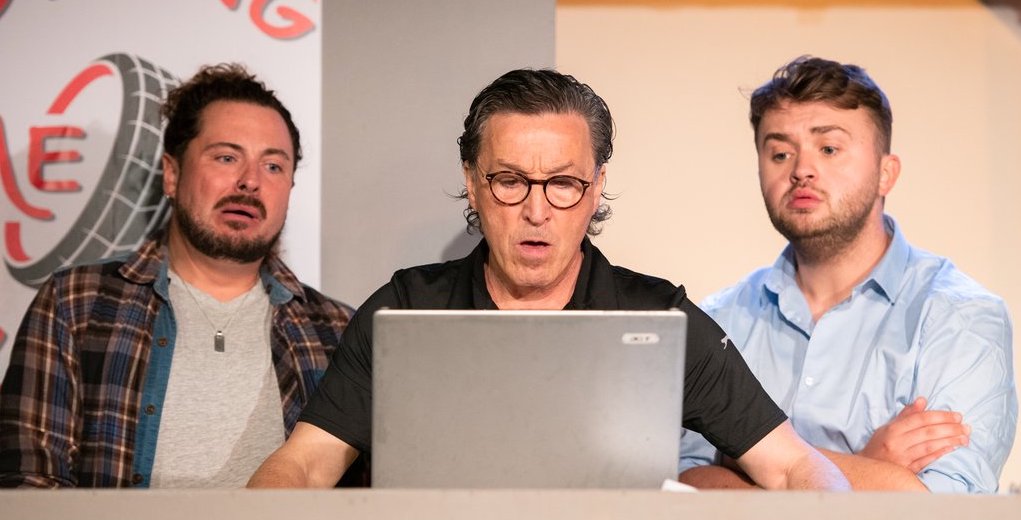
This tight three-hander, directed by Gareth Nicholls, is equal parts quirky and charming. Dylan is immensely likeable as Calvin, and treads the line between comedy and tragedy with absolute precision. The soundtrack is banging – who doesn’t love a bit of Bonnie Tyler? – and the simple set (by Becky Minto) makes us feel like we’re with Calvin all the way: inside the car; inside his head.

Allan brings a powerful energy to the role of Thelma, while Neil John Gibson, as everyone else, represents a gentler, more nurturing humanity, especially in the form of Frank.

All in all, Wilf is a gloriously weird concoction, and a most welcome addition to the winter theatre scene.

4 stars

Susan Singfield