Theatre

The Talented Mr Ripley

16/09/25

Festival Theatre, Edinburgh

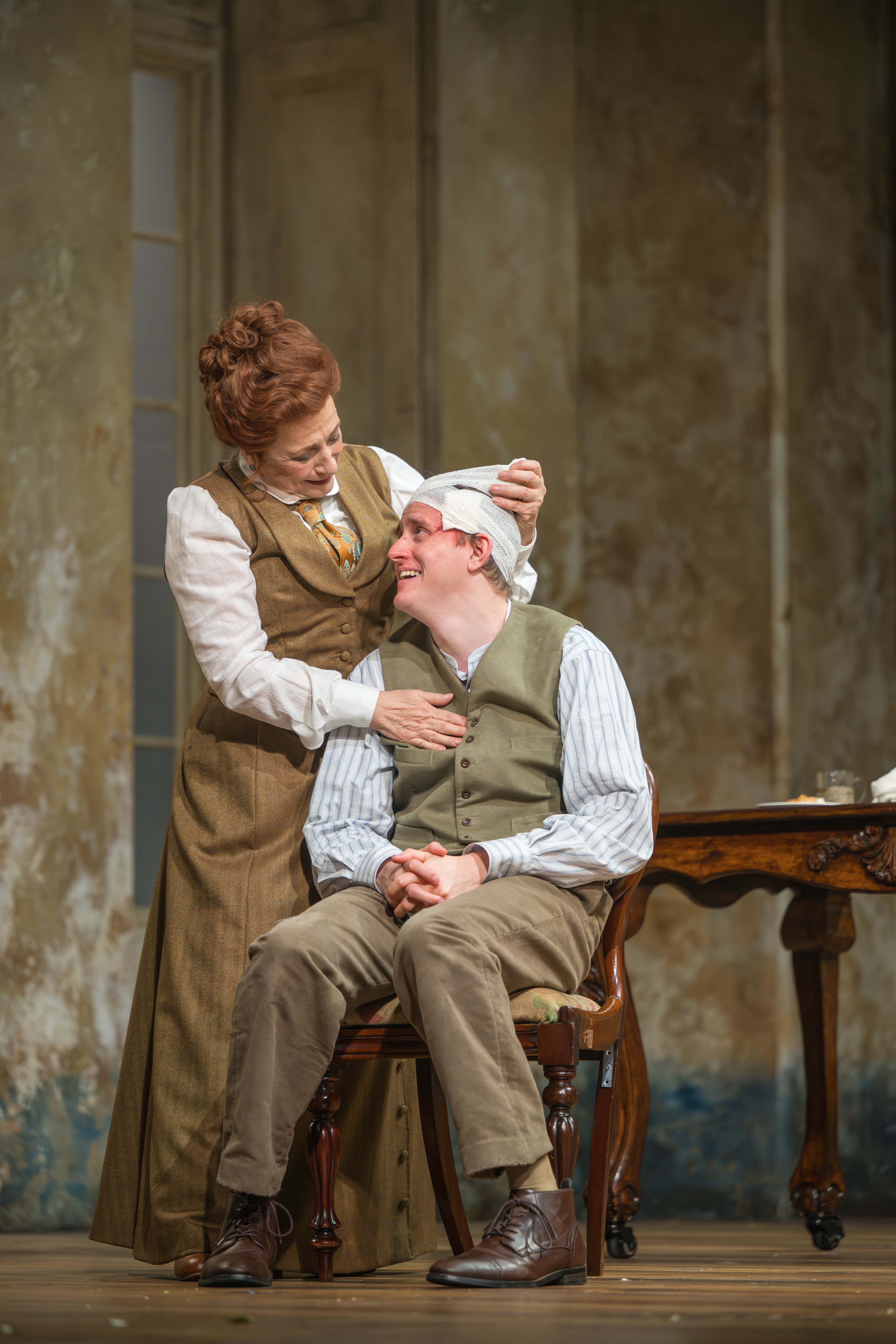
The enduring appeal of Patricia Highsmith’s anti-hero reasserts itself here in Mark Leipacher’s stylish adaptation. First unleashed on the novel-reading public in 1955, the murderous con-man has somehow kept us all rooting for him through four sequels, as well as numerous film and TV dramatisations. Can this stage version offer us anything new?

Tom Ripley (Ed McVey) is a chancer, living on his wits in NYC, largely untroubled by conscience. When the wealthy Herbert Greenleaf (Christopher Bianchi) approaches him with a lucrative offer, of course Tom accepts. No matter that Greenleaf’s proposal is predicated on an error: Tom is not friends with the old man’s errant son, Dickie (Bruce Herbelin-Earle); indeed, he’s only met him once. But Greenleaf Sr is desperate. Not only is Dickie frittering away his trust fund in Europe, playing at being an artist instead of taking over the family business, but his mother (Leda) is sick, and she wants to see her boy. If Herbert pays his expenses, will Tom travel to Italy and persuade Greenleaf Jr to come home?

You can bet Dickie’s life he will.

Before long, Tom has insinuated himself into Dickie’s world, revelling in the carefree habits of the idle rich, with spontaneous weekends in Rome or Nice, lounging on the beach and eating in restaurants. But when Herbert calls off the unsuccessful enterprise, Tom is faced with a dilemma. How can he go back to his old life now?

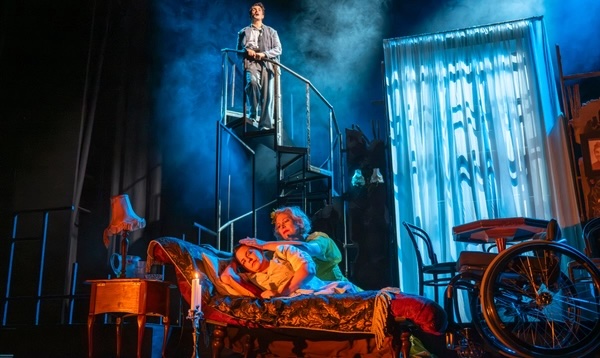
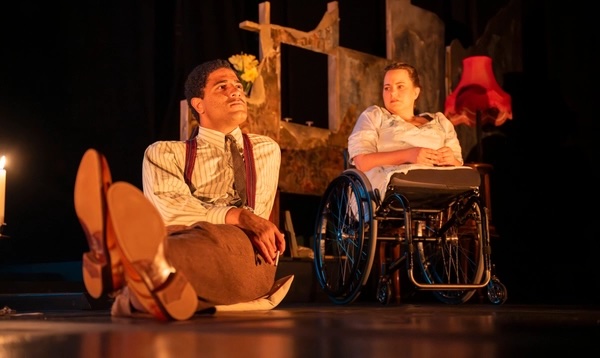
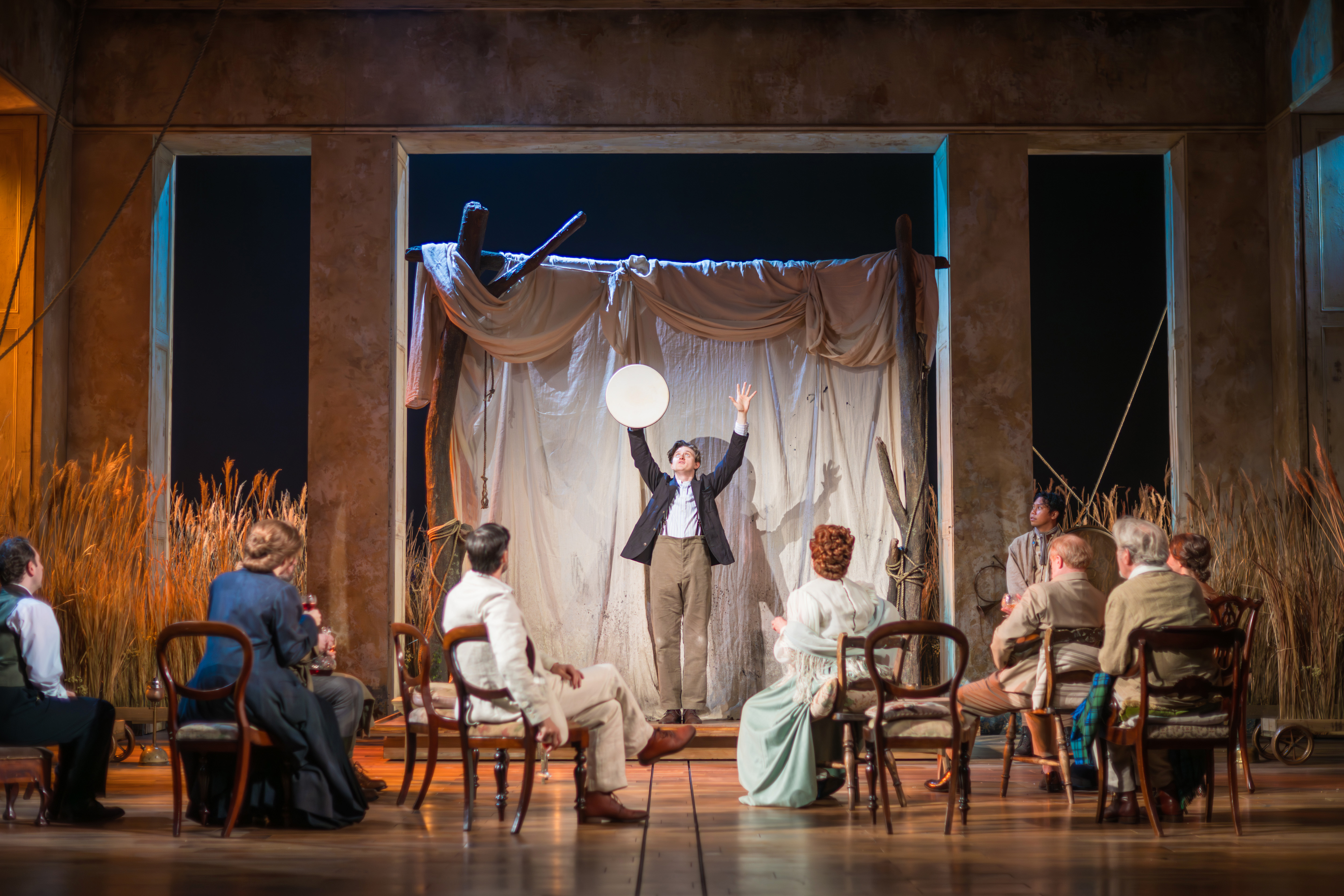
The abstract set design (by Holly Pigott) locates us firmly within Tom’s psyche, as he struts his stuff on the raised white square, nimbly avoiding the perilous hole in the middle, where all obstacles to his success are thrown. The threats to Ripley’s carefully-constructed façade appear as a chorus of noir detectives, complete with belted trench-coats and wide-brimmed Fedoras. “Do you ever feel like you’re being watched?” he asks repeatedly, as they peer at him from the shadows, always one step behind. The image is bold and memorable.

There are lots of directorial flourishes, some more successful than others. I love the Venetian plague doctor masks that also represent pigeons, and the way Dickie’s girlfriend, Marge (Maisie Smith), doubles as a Renaissance statue. I also like the convergence of Dickie and Tom. I’m less convinced by the fourth wall-breaking shouts of “Cut!” precipitating a reset. I understand the point – we’re following Ripley’s thought-processes as he figures out a course of action – but it’s distracting, further complicating an already-labyrinthine plot. The second act, in particular, feels cluttered, and would definitely benefit from paring down.

McVey delivers a star turn in this demanding role, exploring the complexity of Ripley’s multi-faceted character. Perhaps a smaller theatre would allow us a more nuanced view of his performance; as it is, we’re only able to see the broad strokes, but these are impressive enough.

An ambitious, stylish piece of theatre, proving that there’s plenty of life in Tom Ripley yet – if not in those who dare to get too close to him.

4 stars

Susan Singfield
Wallace

10/08/25

Traverse Theatre, Edinburgh

“The Scottish can’t rap!”

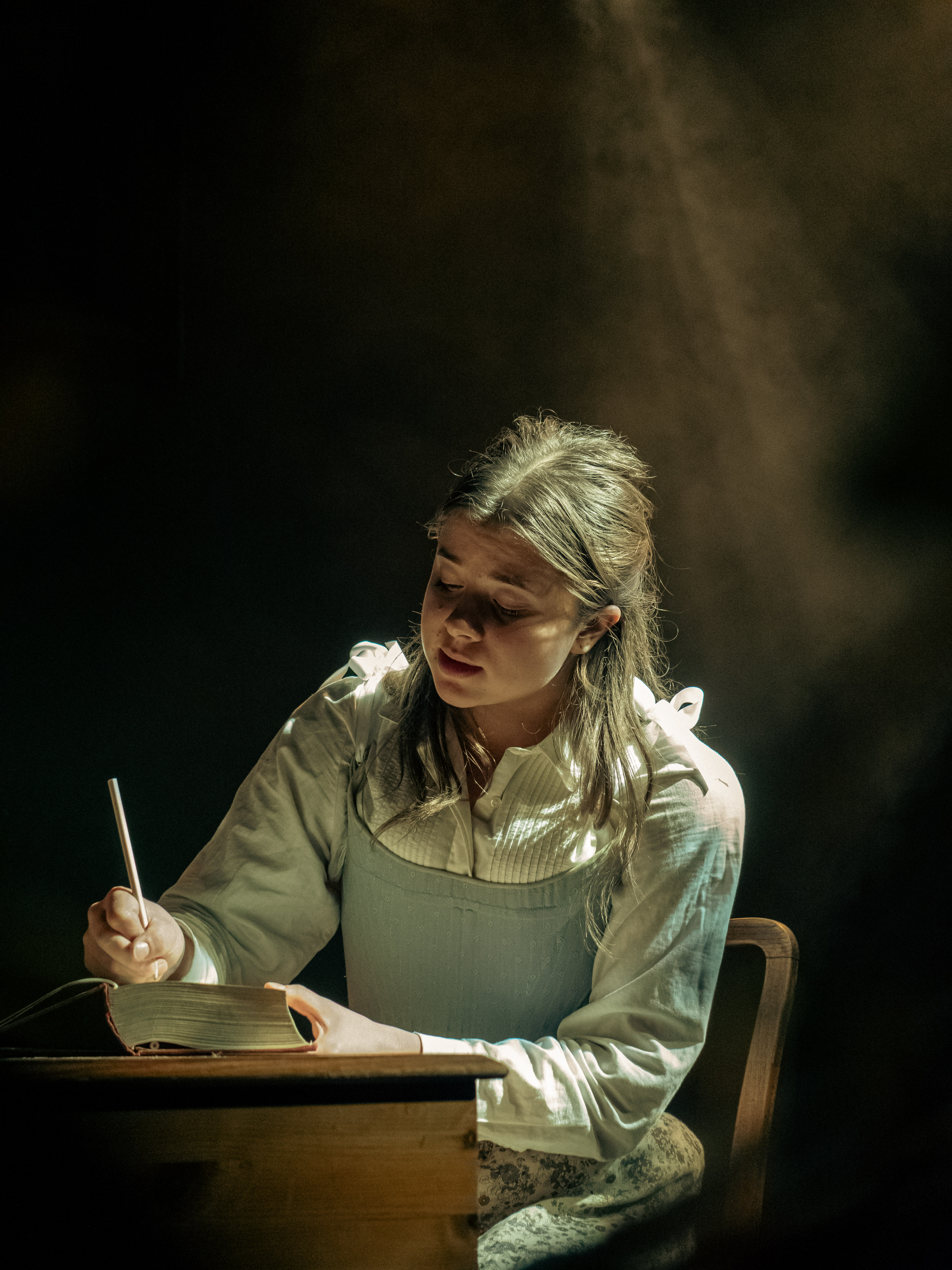
Thus proclaims one of the three-strong cast of Wallace, shortly before they launch into their opening salvo and prove that – hell, yes – they really can! This intriguing production, which launches the autumn season of A Play a Pie and a Pint, is obviously inspired by the success of Hamilton. It proudly proclaims that Scottish history is just as deserving of a contemporary retelling as anything that ever went on in the USA and, in that ambition, it succeeds big time.

Three friends chatting over drinks in a bar become extra-animated when one of them claims to be an actual descendent of William Wallace – you know, the guy from Braveheart. This is the precursor to a deep dive into the hero’s history, as the three players musically discuss the known facts, the probable myths and even the possibility that (whisper it) WW might not have existed.

Written by Rob Drummond, with music and lyrics by Dave Hook (who also performs alongside Patrica Panther and Manasa Tagica), Wallace offers an audacious exploration of Scotland’s most celebrated warrior, all backed by a pumping four-four beat. The trio of performers switch effortlessly between characters merely by throwing on a jacket or a hat, depicting Wallace’s supporters as well as those who fought against him in his doomed bid for Scottish independence.

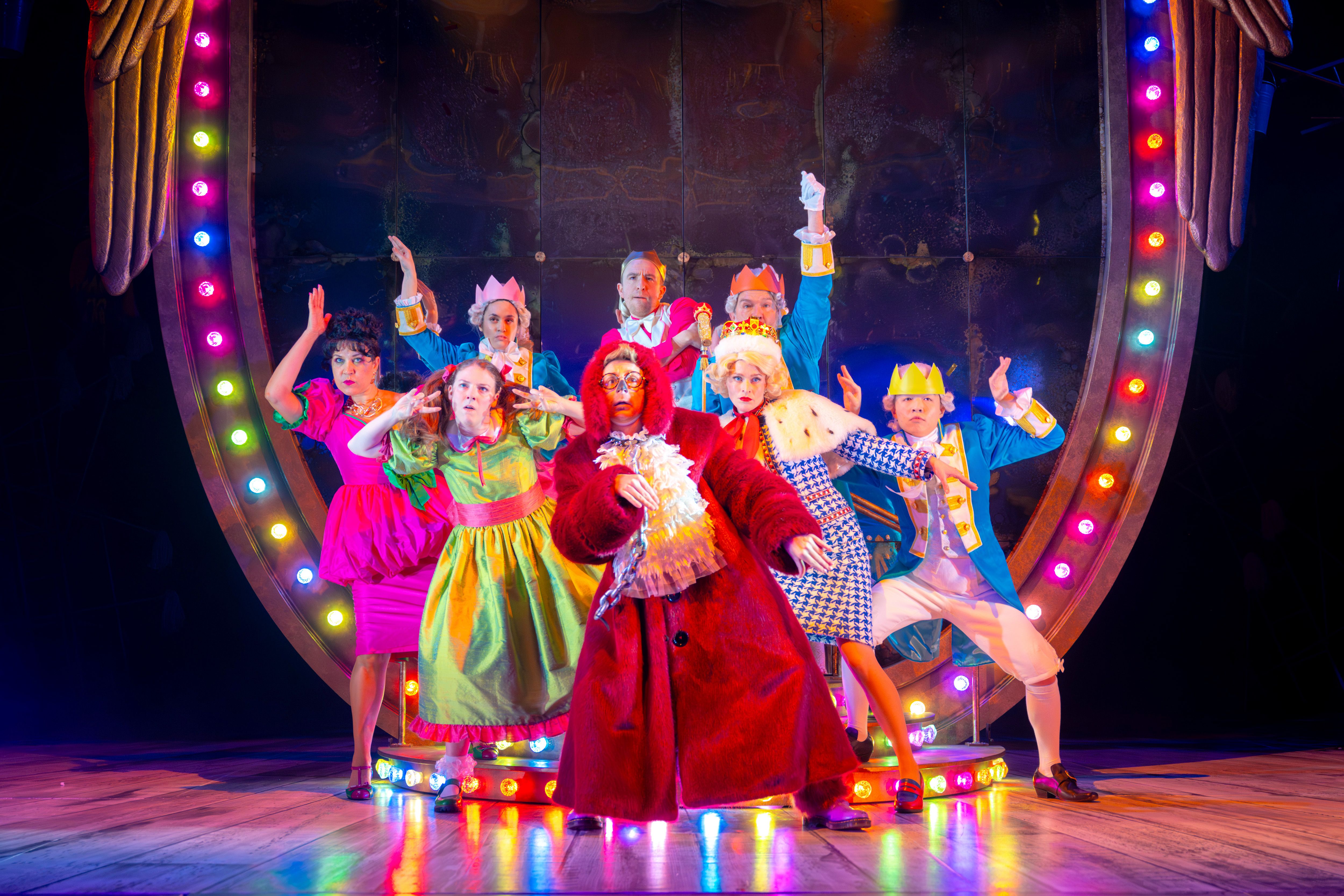
Hook stays in the role of Wallace, while Tagica does a splendid job of portraying Edward Longshanks, complete with dark glasses and a red fur coat. Panther, after pointing out that women have been virtually written out of history, takes on the swaggering persona of Robert the Bruce with evident relish.

Whip-smart, caustically funny and actually pretty informative (I come out knowing a lot more about the titular Scot than I previously did), Wallace snaps from song to song and from argument to argument like the proverbial tiger on vaseline, holding the audience spellbound right up to the final triumphant chord. Snappily directed by Orla O’Loughlin, this is a perfect example of how to make history vibrant and compelling enough to dazzle a contemporary audience.

It’s pure dead brilliant.

5 stars

Philip Caveney

Motorhome Marilyn

24/08/25

Gilded Balloon Patter House (Doonstairs)

Our last Fringe show of 2025 is Motorhome Marilyn, a choice inspired by my mum, who listened to Michelle Collins talking about the play on Radio 4’s Woman’s Hour, and was taken with its backstory. Back in the late 90s, Collins was in LA, trying to build on her UK fame. While she was there, she noticed an old lady emerging from a dilapidated motor home, dressed as Marilyn Monroe. The image stayed with her for years until, in 2018, she mooted the idea for a play to her writer friend, Stewart Purmutt, and they started work on it. When Purmutt died in 2024, Ben Weatherill took over, and now Motorhome Marilyn – more than quarter of a century in the making – has finally parked up at this year’s Festival.

The set, by Joshua Beaumont and Matthew Emeny, is pretty lavish by Fringe standards. We’re inside a camper van, stuffed to the pop-top with Monroe memorabilia. There are posters, tea towels, mugs and cushion covers: if there’s an available surface, Marilyn’s face adorns it. And there’s Denise (Collins), a Marilyn lookey-likey, whose own identity has been subsumed over the years, so that she’s no longer sure who she really is.

There’s also Bobby, Denise’s confidante, who just happens to be a snake…

Directed by Alexandra Spencer-Jones, the story works quite well: there’s a Miss Havisham-like quality to Denise, who is tragically stuck in a role she’s aged out of. Her hopes for stardom have come to nought, but she’s nothing else to cling to, no option but to don that platinum-blonde wig and paint on a scarlet smile. Collins imbues the character with pathos, although there are moments when I’d like to to see her emotions heightened – with some Eastenders-style excessiveness, perhaps.

Occasionally, too much is spelled out for the audience: we are not left to infer anything, but spoon fed each detail. This detracts from the authenticity of the dialogue, which is a shame. Nonetheless, Motorhome Marilyn is a sometimes funny and always engaging piece of work, an ode to failure and broken dreams.

3.4 stars

Susan Singfield
Revolver

23/08/25

Pleasance Courtyard (Beneath), Edinburgh

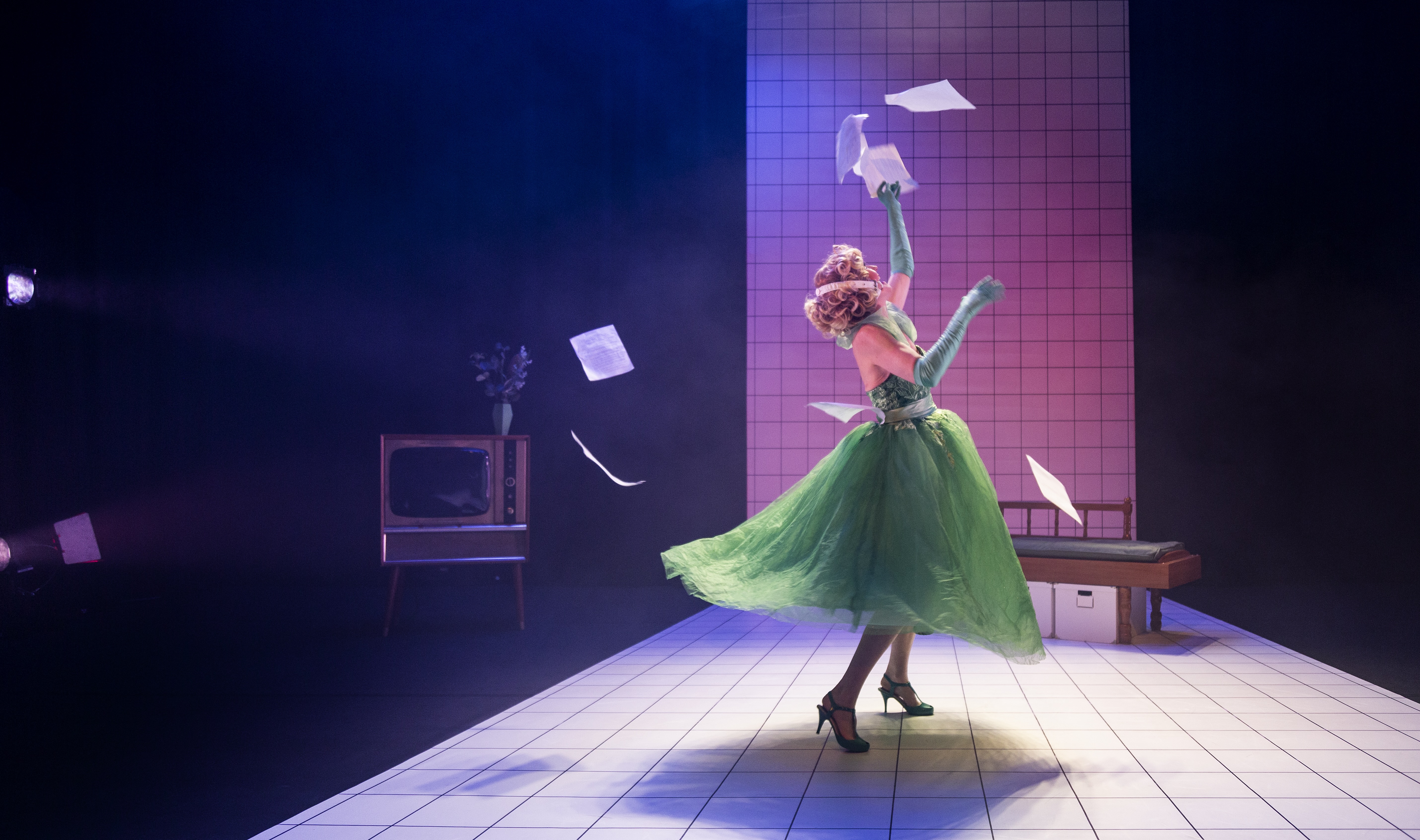
In 1966, when Revolver was released, my mum was 18 years old, and had already been a fan of The Beatles for quite some time. As a Liverpudlian teenager, she’d spent many a lunchtime in the legendary Cavern Club, and was lucky enough to attend the Fab Four’s notorious 1964 homecoming gig at the Empire. She was, naturally, a member of their fan club – and still has her Christmas Flexi Discs to prove it. So, when she was scheduling her visit to this year’s Fringe, it was obvious that there was one production she wouldn’t want to miss…

Writer-performer Emily Woof’s play doesn’t disappoint. It’s about three women, the first of whom is Jane Fraser, a former teacher turned TV-researcher, delighted to be working on a documentary about female fandom through the ages. The second is Helen, Jane’s mum, who spent her adolescence dreaming about John Lennon. And the third is Valerie Solanas: writer, activist – and pistol-wielding would-be killer.

Directed by Hamish McColl, Revolver is an intricate piece of theatre, dealing with the very questions Jane thinks the ‘Fangirls’ documentary should address. But, while the protagonist is thwarted in her endeavours by James, the ratings-driven film-maker who hired her, Woof makes her points cogently, drawing salient connections between fame and feminism, reverence and rage.

James’s sensationalist approach to the documentary – he favours the tagline ‘Young, Dumb and Fun’ – undermines the girls who screamed for their pop idols, ignoring the sociopolitical circumstances that gave rise to them. Woof uses Helen and Valerie to illuminate the disconnect between history and herstory, to validate the heightened emotions of teenage fans – and to shed light on the boiling rage that drove Solanas to shoot Andy Warhol.

Tracks from The Beatles album are played throughout, sometimes to mark transitions and sometimes as the soundscape. This works best when there is a clear association between the songs and what is happening onstage, e.g. Tomorrow Never Knows provides the perfect background to an acid trip. Occasionally, the song choices seem a little random, taking me out of the moment while I try to understand the link (Tax Man plays us out, for instance, and I don’t know why), but overall the soundtrack serves the piece well.

I like how knotty this is: Woof doesn’t shy away from the complexity of the issues at hand, and her performance is both bold and nuanced. I’m not entirely convinced by the sexual fantasy sequence (the language seems too sophisticated for an inexperienced young girl), but that’s my only quibble with the writing.

A thoughtful, exacting play, Revolver demands serious consideration from its audience. “Nobody can deny that there’s something there.”

4.4 stars

Susan Singfield
Wodehouse in Wonderland

22/08/25

Assembly George Square (Studio 3), Edinburgh

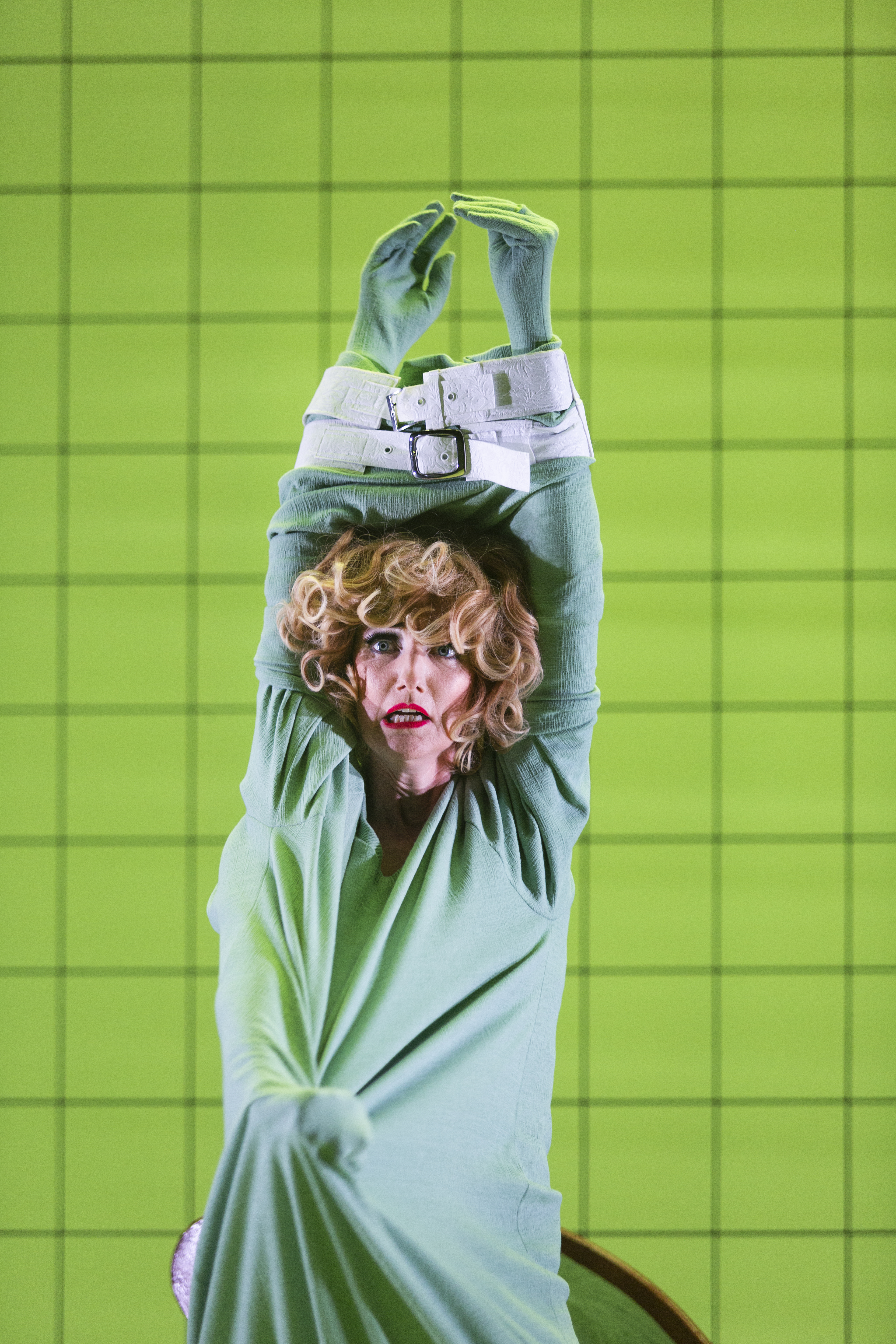
Not so much an impersonation as a celebration, Robert Daws is clearly having a whale of a time in William Humble’s Wodehouse in Wonderland, and, after a few minutes of uncertainty while I tune in to the tone of the piece, so am I. Wodehouse is, of course, one of those writers who almost defy belief: incredibly prolific, very successful in his own lifetime – but remembered now for the accusations levelled at him for his ‘collaboration’ with the Nazis during World War Two.

We meet him in the 1950s, living in exile in Long Island and reluctant to return to his British homeland. He’s still writing fiction (though a book now takes him six months rather than three) and he’s also hankering after another shot at writing for the theatre with his old partner, Guy Bolton, who lives nearby.

Daws offers a relaxed and jovial performance as Wodehouse, mixing martinis as he talks, expressing his intense dislike for the great Russian authors (too gloomy) and making slyly humorous observations about his wife, Bunny’s profligacy. He also speaks lovingly about his adopted daughter, Leonora – or ‘Snorkles’ as he prefers to call her – who he claims is his ‘Number 1 critic.’

He talks – with great reluctance – to his American biographer, who eventually nudges him in the direction of that unfortunate business with the Germans… and, lest the tone grow too serious, every so often, Daws interrupts proceedings to launch into a rendition of one of the author’s comic songs.

Wodehouse in Wonderland is a revelation in many ways. I was a fan of Jeeves and Wooster back in the day and read several of their adventures when (just like Wodehouse in his youth) I was sequestered in a rather unpleasant boarding school. I learn quite a lot about the author over the hour and realise that I have been misinformed about that ‘collaboration’ business – so it’s nice to have the record set straight.

Towards the conclusion, there’s also a moment of sweet sadness, which Daws handles with absolute assurance. While this may be best suited to those familiar with Wodehouse’s work, it’s not essential. Those looking to spend a pleasant and rewarding hour on the Fringe should find plenty here to keep them thoroughly entertained.

4.4 stars

Philip Caveney

The Insider

21/08/25

The Pleasance Dome (King Dome), Edinburgh

We’ve reached that point in August where, when I see a fabulous show at the Fringe, I come away wishing I’d caught it earlier, all the better to extoll its virtues. Mind you, Teater Katapult’s The Insider is selling out the Pleasance’s 174-seat King Dome with apparent ease, so perhaps they don’t need any help from me.

As we file into the performance space, we cannot help but notice actor Christoffer Hvidberg Rønje, dressed in a smart business suit, glaring balefully at us from the confines of a large glass cubicle, like some exhibit in a freakish zoo. He will not emerge from his enclosure until the play is done. As per our instructions, we all put on the stereo headphones we’ve been supplied with to be greeted by the sound of a blues performer singing about money and how he needs it really REALLY badly. (Well, we’ve all been there.) Then the lights go down on us, the glass box is illuminated and the play begins.

It’s 2017 and Hvidberg Rønje plays a banker – we are never given his name – involved in the Cum-Ex insider trading scam that resulted in high street banks losing billions of dollars. But now he’s been called to answer for his actions. The actor speaks his lines to a series of pre-recorded accomplices and inquisitors and, because it’s all filtered through headphones, every single utterance – every bump, squeak and scratch – is weirdly amplified in the crucible of my head. The result is totally immersive and weirdly compelling. It’s astonishing that somebody like me – a poster boy for dyscalculia – can be transfixed by a story about mathematics, but there’s no other adjective for the state in which I find myself.

That glass box where the story plays out could so easily be reductive, but the walls occasionally feature vivid projections and rows of information. Occasionally, Hvidberg Rønje draws on the glass with a white pen, illustrating how the great scam was achieved in ways that even I can understand.

The actor goes through a whole range of moods during the performance – the sequence where he makes his first ‘killing’ has him dancing around his enclosure in a drunken frenzy and performing a gymnastic leap from the top of a filing cabinet that makes me gasp – and, once again, that amplified sound system has us sharing every mood with him, from those early bouts of ecstatic glee to a sense of mounting paranoia as his malpractice is uncovered.

Brilliantly directed by Johan Sarauw, with sound design by Peter Albrectsen and Sun Tee Engelstoft, The Insider is quite simply mesmerising. If you can get hold of a ticket for one of its last few performances, I urge you to do so. You’ll be watching one of the Fringe’s most original productions.

5 stars

Philip Caveney

Ghouls Aloud: Elysium

20/08/25

Appleton Tower, (Ruby)

In the final week of Fringe 2025, it’s gratifying to chance upon an act that feels quite unlike anything else we’ve seen this year. Ghouls Aloud are Milly Blue and Jessie Maryon Davies, the former a singer/storyteller, the latter a musician. The show begins in straightforward fashion with a song, Blue accompanying herself on acoustic guitar, before breaking off and launching into a story, described by its creators as contemporary horror. It is, I suppose, a piece of gig theatre.

It’s the tale of a young couple who, with their new baby, move into the protective surroundings of Elysium Fields, a gated community somewhere in prosperous South London. ‘The woman’ (we don’t learn her name) likes the feel of their new home – with one exception. The little garden at the back of their house is covered with a layer of astroturf, and she vows to remove it to plant vegetables and wild flowers.

But she will learn that Elysium Fields has a dark history and there are things in its soil that might better be left undisturbed…

Blue becomes the central character of the piece and also personifies a clutch of others in and around Elysium Fields: friends, neighbours, the odd gatekeeper who the residents call ‘Penfold.’ Blue switches accents and mannerisms with great skill, so there’s never any doubt who she is portraying at any given moment. Maryon Davies also chips in with lines of dialogue, whilst supplying original keyboard compositions, ranging from beautiful melodic ballads to eerie, unsettling soundscapes as the tension begins to build.

Occasionally I find myself distracted by a few too many complications, minor characters who don’t really add enough to the narrative to earn their place, however skilfully they’re portrayed – and I’m not entirely convinced that a subplot that talks about the conflict between Israel and Gaza is a comfortable fit here – though arguably, that may be the point.

But I do admire the ambition of Elysium and the distinctive ways in which the duo go about telling the central story. If I am reminded of anyone, it’s the much-missed Will Greenway, who, for several years was a must-see at the Fringe and who also has a highly individual way of creating a story with music – albeit much more gentle than this. Overall, I find this compelling enough to keep me hooked right up to the unsettling final scene – and I’ll be interested to see what Ghouls Aloud come up with next.

4 stars

Philip Caveney

Alone

19/08/25

Assembly George Square (The Box), Edinburgh

Writer-director Luke Thornborough’s Alone has been selling out the Assembly’s tiny Box theatre, and it’s easy to see why this intense two-hander is benefitting from great word-of-mouth. Co-directed by Stuart McDougall and performed by Alchemy Theatre, it tells the tale of a couple of astronauts stranded in a failing spaceship, facing their inevitable doom. Even though there are two of them, it’s hard to imagine a more lonely scenario, and the theme of isolation is explored in great detail.

Dr Sarah Taylor (Anthea Freya Hill) is a climate scientist, collecting extra-terrestrial bacteria in an attempt to reduce carbon dioxide back on Earth. Jessica Holland (Courtney Bassett) is her pilot, tasked with keeping the spacecraft on course. They don’t have much in common – they are definitely colleagues rather than friends – but, over time, they have settled into an uneasy alliance. But now, five years into their mission, with everything spiralling out of control, they are really put to the test…

The set, originally by Courty Kayoss (this version designed and built by Indrid Heron), is ingenious: convincingly techy, despite, on closer inspection, comprising mainly painted wooden panels and shiny bolt locks. It’s chaotic without being overwhelming, highlighting the enormity of the women’s work, while still allowing for small-scale, precise actions. It’s immersive too, especially when the smell of cooked noodles pervades the room.

Bassett and Hill deliver flawless performances, their chalk-and-cheese characters both utterly convincing. Taylor’s earnest obsession contrasts nicely with Holland’s down-to-earth approach, and there’s something really endearing about the latter’s excessive ketchup consumption, her sole home comfort confined to a squeezy bottle. As the tension rises and cracks begin to appear in both the spaceship and the women’s relationship, I find myself spellbound by their moral quandaries, wondering where they will draw the line.

And the ending is perfect.

Holland’s wrong about The Smiths though: their lyrics are glorious.

4.6 stars

Susan Singfield
The Alchemy of Sadness

18/08/25

Space@Niddry Street, Edinburgh

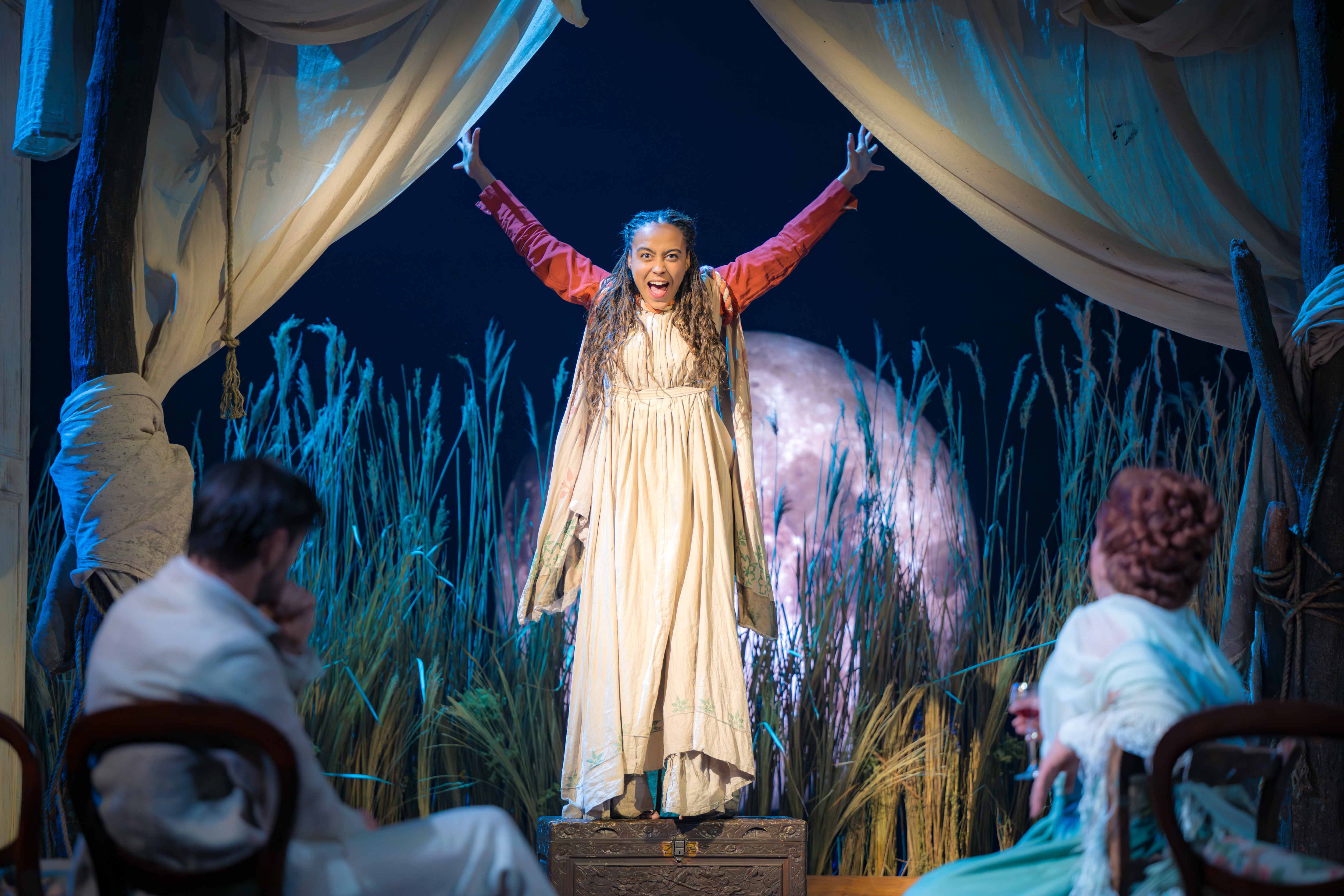
Thiago (Oscar Fabela) works at a major public relations firm but, when we first meet him, he’s stuck at home, talking via his laptop to HR operative, Aurora (Kristen Tarrago). There has been an ‘issue’ between Latino Thiago and his pushy white boss, Liam (Zachary Story), one that has resulted in Thiago being ousted from his long-established post.

But who is to blame? Liam’s relationship with Thiago has alternated between staring at him in silence, openly flirting with him and then yelling at him to shape up. Thiago doesn’t know how to deal with these wildly contrasting attitudes. What does Liam actually want from him?

It doesn’t help that the two men have recently been handling the comeback of a notorious celebrity chef, who has been widely criticised and publicly shamed for his adversarial relationships with his own workforce. Thiago’s suggestion to base the chef’s return around the launch of a new menu centred on the concept of ‘gratitude’ has been well received by everyone who hears about it – including the chef himself. But since Thiago came up with the concept, why is Liam taking all the credit?

Written by Alex Garcia Lagua (inspired by his own time as a restaurant supervisor) and directed by Leticia Mora, this tight little three-hander examines the toxic environment of the office and the various ways in which people can find themselves exploited by their seniors. Furthermore, who owns an idea? The person who first thought it… or that person’s boss? Both Fabela and Story convince in their respective roles, while Tarrago doubles as the ultra-corporate Aurora and as Thiago’s no-nonsense work-mate, Mari.

I like that the drama is relatively low key. This isn’t some massive world-shaking event: instead, it’s entirely credible, the kind of issue that can be found in any workplace and which can profoundly affect the lives of those who suffer through it.

4 stars

Philip Caveney

Tom at the Farm

17/08/25

Pleasance at EICC (Lennox Theatre), Edinburgh

I have high hopes for this critically-acclaimed Brazilian adaptation of Michel Marc Bouchard’s Tom at the Farm. The eponymous Tom (Armando Babaioff) is grieving: his boyfriend, Paul, has recently died in a car accident. Paul will be buried in the rural town where he was raised, so advertising executive Tom leaves the big city behind and makes his way to the remote family farm. But he soon discovers that he isn’t welcome there: Paul’s mother, Ágatha (Denise Del Vecchio), doesn’t know that her son was gay, and his homophobic older brother, Francis (Iano Salomão), is determined to keep her in ignorance. Francis is a brutish, unreconstructed kind of guy, and his threats feel very real. Tom agrees to say nothing, so long as he can attend his lover’s funeral.

Just a few years ago, the plot might have seemed outdated: LGBTQIA+ people in Brazil have had their rights enshrined in law for many years; surely closeting has long been relegated to the past? Sadly, however, this 2011 play is all-too relevant again, as regressive regimes gain strength around the world – and none more so than Bolsanaro’s Brazil. It is no longer a safe place for the queer community, whatever their law says.

So this Cena Brasil Internacional production, directed by Rodrigo Portella, has an important message at its heart: homophobia is toxic and damaging, corrupting everything it touches.

However, I’m not as immersed in the story as I want to be. The vast Lennox Theatre feels too big for four actors, the audience too far away from the action. The staging is simple, relying on the buckets of mud and muck that engulf the space, but it’s all at such a distance; even in the front row, I’m in no danger of being spattered, or pulled in like Tom. I find myself reminiscing about a student production of The Lieutenant of Inishmore I saw back in 2014, where we were herded into a tiny room and given bin-bags to put over our clothes to protect them from the bloodshed. Tom at the Farm needs more of that: what’s the point in all the spitting and fighting and slipping and sliding if the audience experience is sanitised?

I have three other bugbears and they are both with the script. First, Sara (Camila Nhary)’s arrival unbalances the play: it’s too late and precipitates nothing. Second, the climactic, most exciting moment occurs offstage, and is merely recounted to us, which seems especially peculiar in such a carnal production. Third, I’m just a bit over the whole sophisticated city slickers vs. boorish country folk cliché.

Despite all this, there is still a lot to admire here: the performances are angry and raw, the actors’ physical commitment unwavering. The lighting (by Tomás Ribas) is stark and uncompromising, transfixing Tom as effectively as a proverbial deer, illuminating the dark heart of the farm. I like the use of golden English subtitles translating from the spoken Portuguese, and the unfurling of the Pride flag during the final bows.

Tom at the Farm is a haunting howl against prejudice, and a timely reminder that we have to keep on fighting the good fight.

3.4 stars

Susan Singfield