Theatre

Treason the Musical

27/10/23

Festival Theatre, Edinburgh

“Remember, remember, the fifth of November, gunpowder, treason and plot. I see no reason why gunpowder treason should ever be forgot.”

We haven’t forgotten, of course. Bonfire Night looms large in the national calendar: every year, we bundle up in hats and gloves for an evening of funfairs, ginger parkin and fireworks. Guy Fawkes is burned again and again, his straw-stuffed effigies punished annually for his attempted crime.

So no, he’s not forgotten. But what exactly do we remember?

On the way to the theatre, I realise just how shaky my own grasp of the history is. I know that Guy Fawkes and some Catholic collaborators attempted to blow up the Houses of Parliament and that it was something to do with the Reformation. I know that he was hung, drawn and quartered. And, um, that’s it.

So I’m fascinated to learn more about the context, to understand how James I/VI angered Catholics by reneging on his promise to stop persecuting them, sacrificing their freedom for his own financial gain. Ricky Allan’s songs and Charli Eglington’s book help to illuminate the lives of those forced to deny their faith. It’s a salient message: in a world of tyranny and subjugation, terrorism is inevitable.

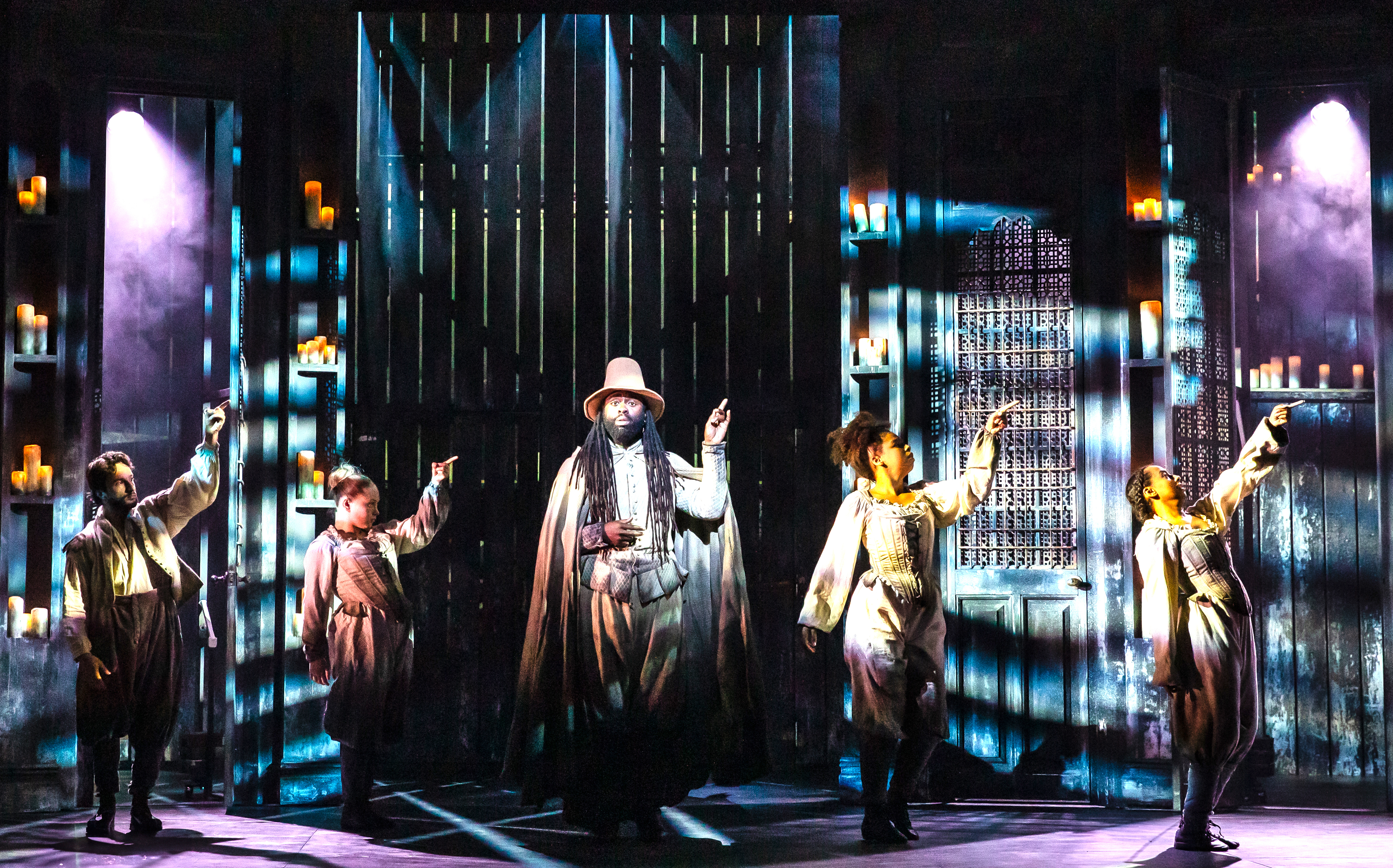
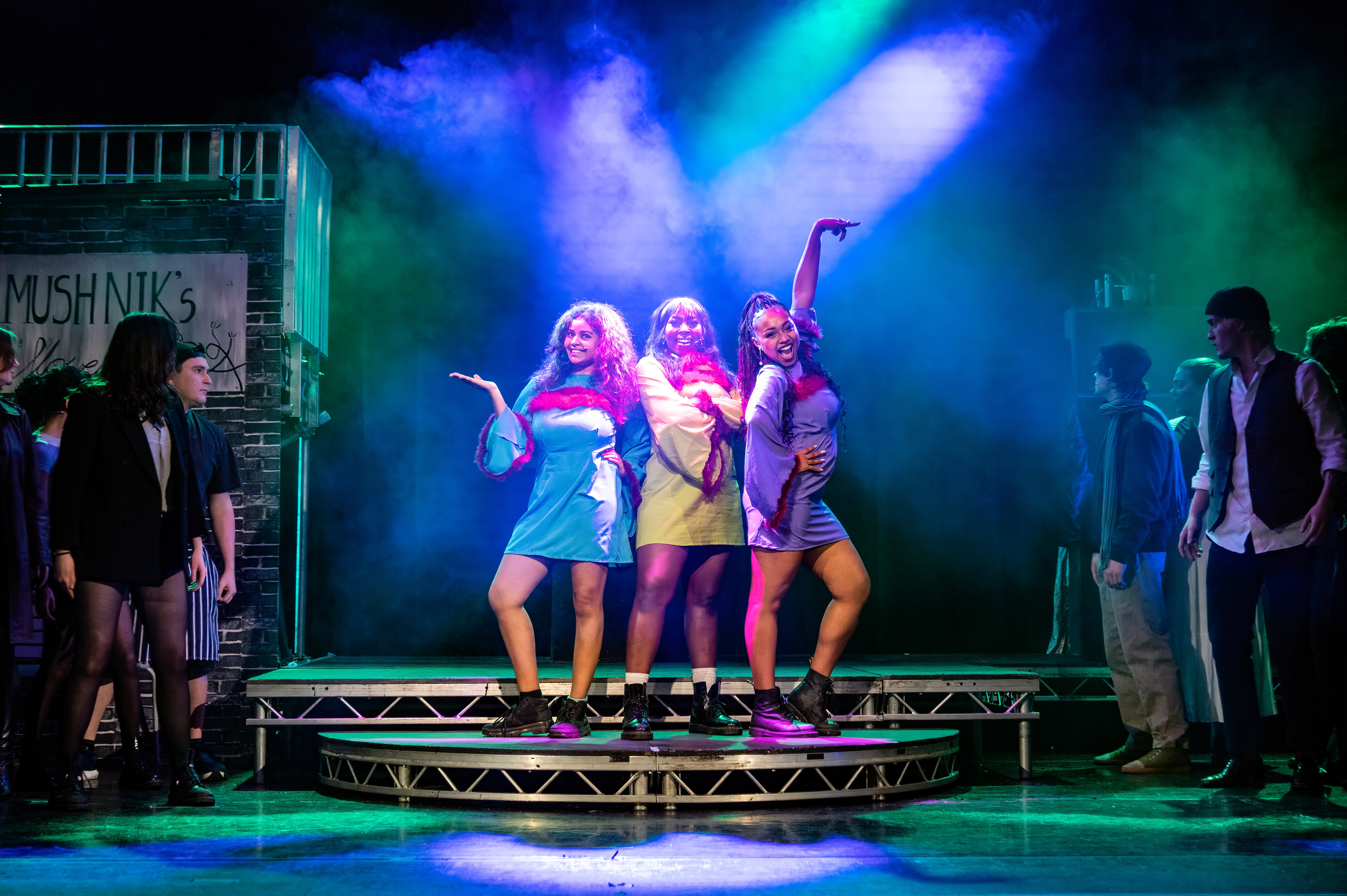
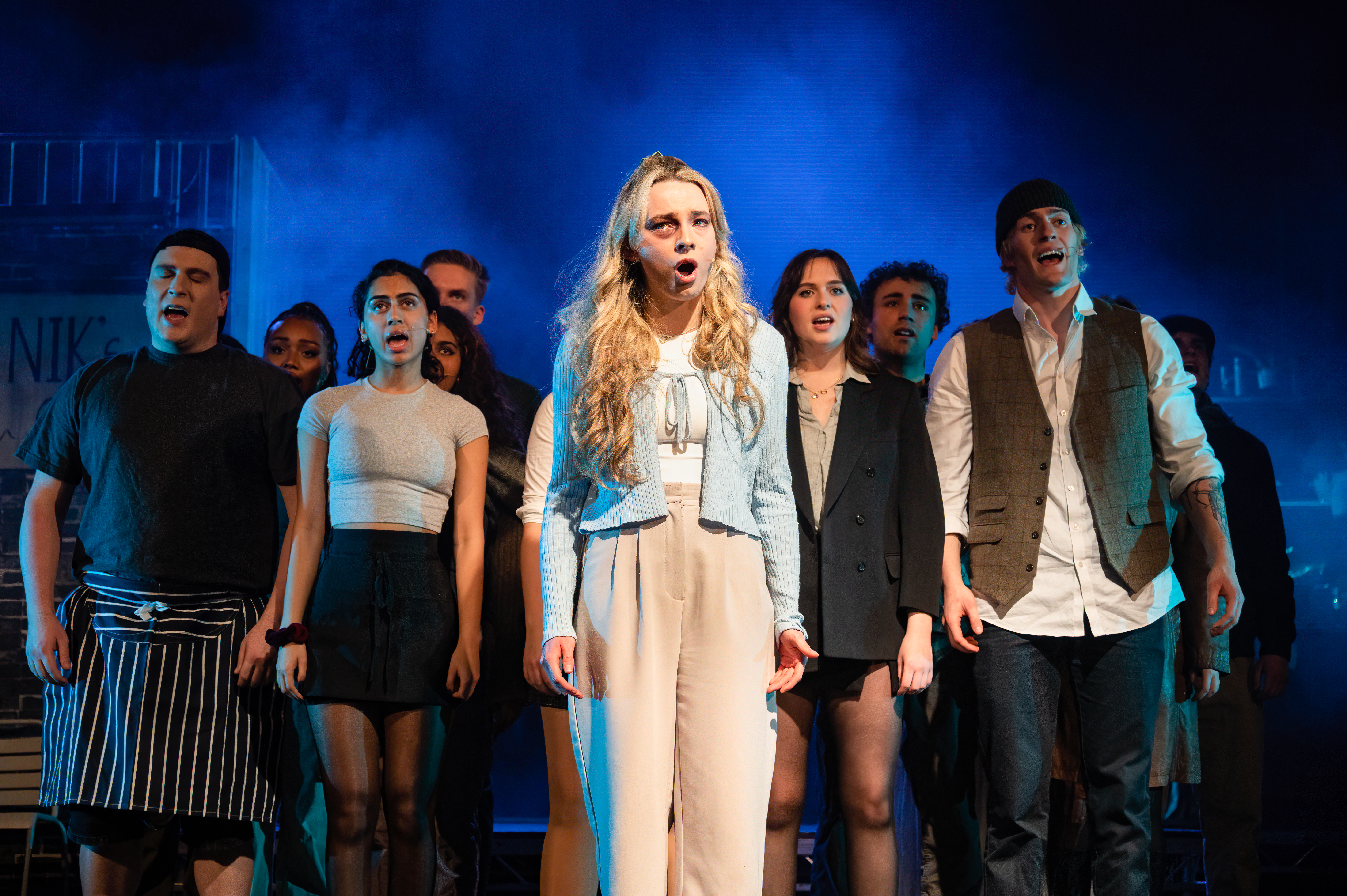
Although Guy Fawkes (Gabriel Akamo) is the name we all know, this show, directed by Hannah Chissick, focuses primarily on Martha and Thomas Percy (Nicole Raquel Dennis and Sam Ferriday), opening with their illicit wedding and charting their troubled marriage. Although both actors deliver strong performances, this seems like something of a mis-step, as the ups and downs of their relationship are less interesting than the actual gunpowder plot, which is relegated into second place.

In fact, Fawkes barely features in the actual story here. Instead, he’s cast as an observer, a narrator, leading the audience through the events as they unfold. This has a curiously distancing effect: he never actually enters the scenes to interact with the other characters, so it appears as if he were not involved. This means that the ending, when he’s captured and tortured, feels unearned. We don’t know what he’s being punished for.

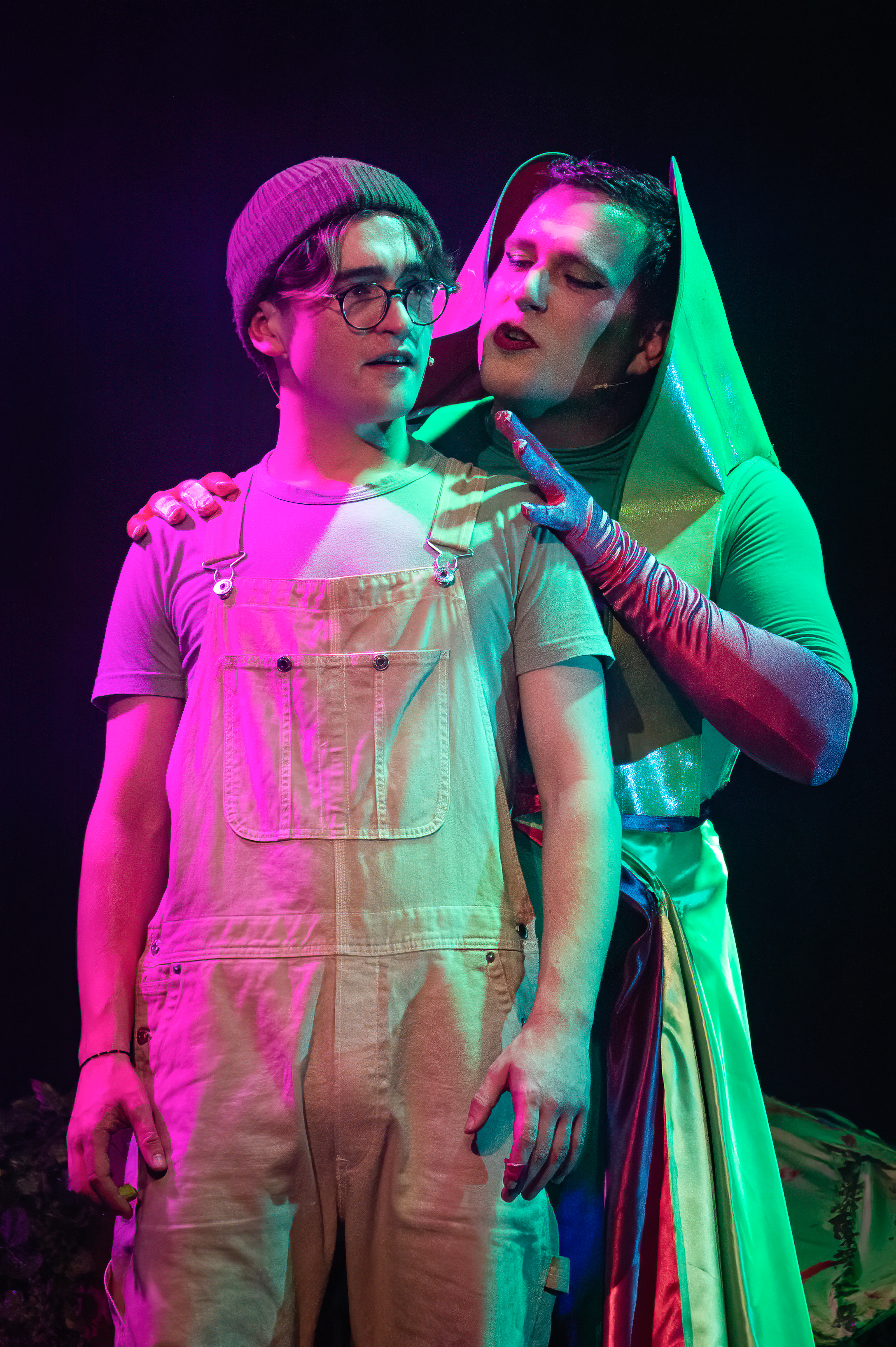
There’s a problem with the pacing too, particularly in the second act. While the first is punctuated with a little levity in the form of Oscar Conlon-Morrey’s Iago-like Robert Cecil, manipulating King James (Joe McFadden) with practised ease, the second is a far more sombre affair, with too many ballads getting in the way of the action. Dennis and Emilie Louise Israel (Anne Vaux) give it socks and their soaring voices are undeniably impressive, but it does get a little wearing listening to them worry about how ‘vulnerable’ their menfolk are, when I’m impatient to know what’s going on with the barrels of explosives and the attack on parliament.

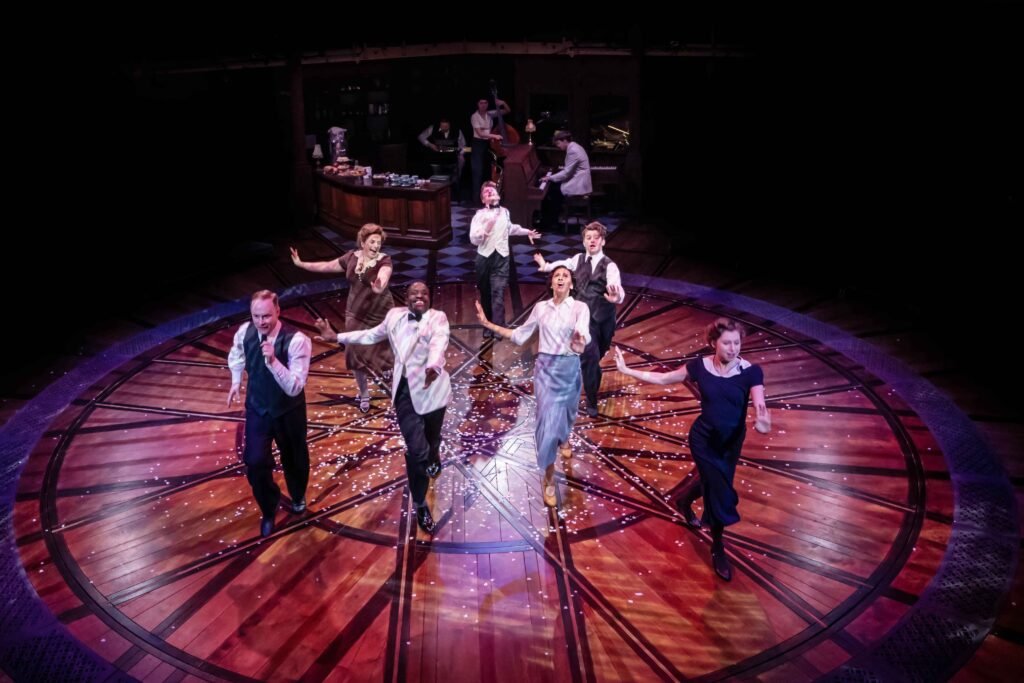
There is much to like, however. I love Taylor Walker’s choreography: the ensemble work is impressive, the artful movement adding to the sense of menace and unease. And the vocals are impressive: perhaps Israel is the standout, but there are no weak links here. It’s a real pleasure to listen to these performers sing.

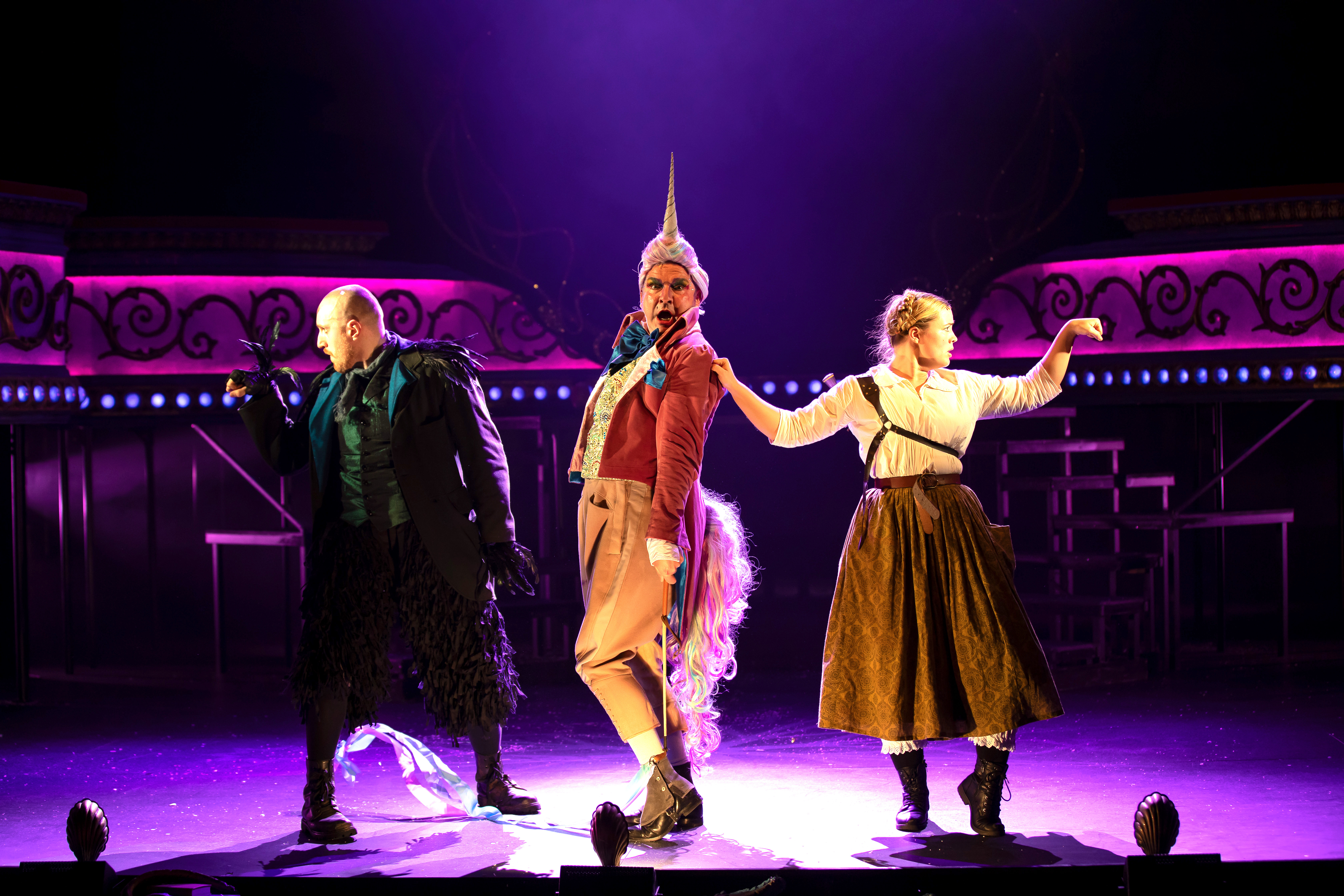
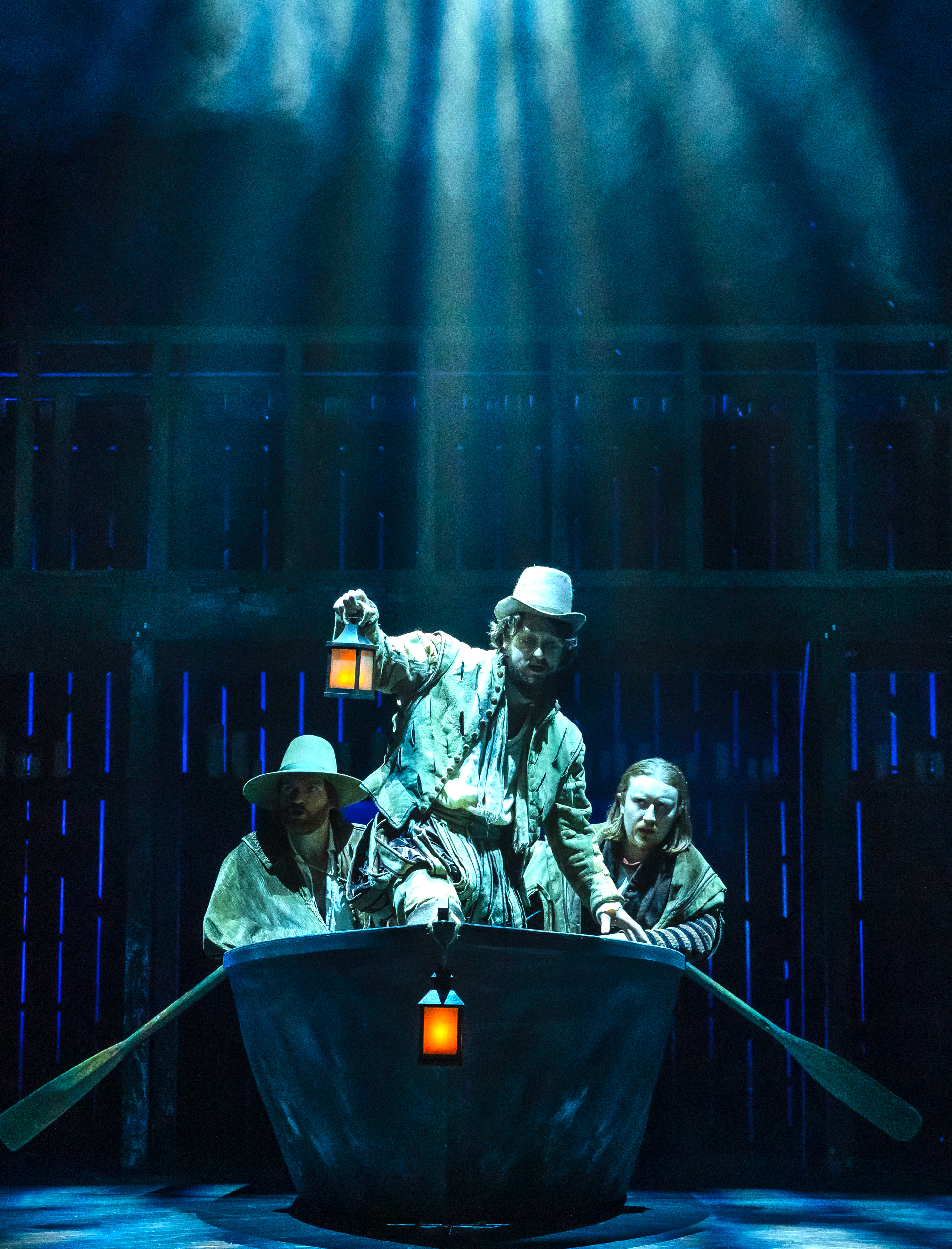
Best of all, the production looks sumptuous: between them, Philip Witcomb (set) and Jason Taylor (lights) have created a thing of beauty, all sliding doors and shafts of light; one moment a palace, the next a tunnel. The transitions are instant and almost magical, an exemplar of stagecraft’s sleight of hand. The moment when a boat comes sliding out of the darkness is thrilling, transporting us to the Thames at night, the tension immediately cranked right up.

So, although it smoulders rather than going off with a bang, this is certainly a handsome piece of work.

3 stars

Susan Singfield

Battery Park

26/10/23

Traverse Theatre, Edinburgh

Whatever happened to Battery Park? Back in the 90s, they were ‘the band most likely to happen’, but they suddenly – irrevocably – split, leaving just one iconic album for their many fans to remember them by. So where and why did it all go wrong.? The beauty of Andy McGregor’s love letter to the Britpop era is that it’s all done with such veracity it’s hard to believe that it’s a piece of fiction – that the titular band never existed.

The play opens in the present day. Angie (Chloe-Ann Tylor) is at University and she’s doing her dissertation on Britpop (of course she is!). She tracks down Tommy (Chris Alexander), drinking alone in his regular haunt at Greenock Bowling Club, and asks him for the inside story. He needs a little persuading but soon enough he’s reminiscing about his younger self (Stuart Edgar), his older brother, Ed (Tommy McGowan), and their best pal, Biffy (Charlie West), who is one of those guys who likes to hang around with musicians – a drummer. Tommy has been writing songs and, lured by the possibility of a paid gig at the aforementioned bowling club, the boys hastily put together their band.

But while Tommy can write a catchy song, he’s not that confident a performer, so when Lucy (also played by Tylor) mentions that her best friend, Robyn (Kim Allan), is a brilliant vocalist/guitarist, it’s a no-brainer. Robyn is confident, talented and determined to make it big, no matter what it takes. From their very first performance, the new line-up seems destined for success…

Battery Park captures the sweaty exuberance of a band’s early days with absolute authority, providing an inspired mix of drama and high-octane rock. Kenneth McLeod’s set design somehow manages to incorporate all the necessary jumble of instruments and amplification into the story without ever getting its leads tangled, and I find myself marvelling at the ingenuity: the speaker cabinet that doubles as a safe is inspired!

While the first act chronicles the band’s dizzy rise to the brink of stardom, Tommy has signalled from the outset that the second will detail its heartbreaking descent into ignominy. The resulting dramatic irony is almost too much to take. By the closing stages, I’m watching with tears in my eyes.

All the performers excel, both as actors and musicians – and it certainly helps that the band’s numbers (also written by McGregor) are a series of propulsive bangers, each one containing a memorable hook in the chorus. As the musicians hit the final chords of the closing song, the applause erupts, intense and heartfelt.

As gig theatre goes, this is a perfect example of the craft. Don’t miss it.

5 stars

Philip Caveney

Disfunction

24/10/23

Traverse Theatre, Edinburgh

Sadly, this is the final PPP of the season; Tuesday lunchtimes just won’t be the same without an invigorating hour of original theatre. Luckily, Disfunction (“with an ‘i'”) provides a rousing send-off. This is first-rate stuff: a beautifully distilled character study, with a slice of social commentary on the side.

Kate Bowen’s play tells the story of sisters Moira and Melanie (Maureens Beattie and Carr respectively) and a game they’ve been honing for fifty years. Their goddaughter, Tanya (Betty Valencia), thinks she’s found a way to monetise their creation – by turning it into a sort of reality-TV experience, where viewers can pay to watch them play. At its best, the game is all Taskmaster-style fun: one round requires a blindfolded participant to put a pin in a map and then (sans blindfold) make their way to wherever the pin lands. Caveat: no cars allowed. Oh, and once they get there, they need to take a photograph of themselves. With four animals.

At its worst, the game is an exercise in, well, dysfunction. With a ‘y’.

The Maureens are surely two of Scotland’s national treasures, aren’t they? It feels like a real privilege to see these two great actors in such an intimate setting. They clearly relish their roles, especially Carr, who gets the plum part of the sassy, self-destructive Melanie. But Beattie is just as impressive as the more reserved and taciturn Moira, and Valencia more than holds her own as troubled Tanya, all bright-eyed desperation, a paper-thin smile covering her pain.

Lu Kemp’s kinetic direction means that the characters are always in motion (notable moments include a hilarious performance of Whigfield’s Saturday Night routine), and highlights that peculiar combative closeness that defines so many families.

Are there any negatives? Not really. Disfunction‘s role-playing political round perhaps stretches credulity (if there are only three people playing and each one has to ‘be’ a politician, who has set the questions to catch the others out?), but that’s my only gripe. Otherwise, it’s a pure delight. After all, as Tanya so cannily perceives, who doesn’t want to watch a bunch of strangers tearing themselves apart?

4.5 stars

Susan Singfield

Moorcroft

24/10/23

Traverse Theatre, Edinburgh

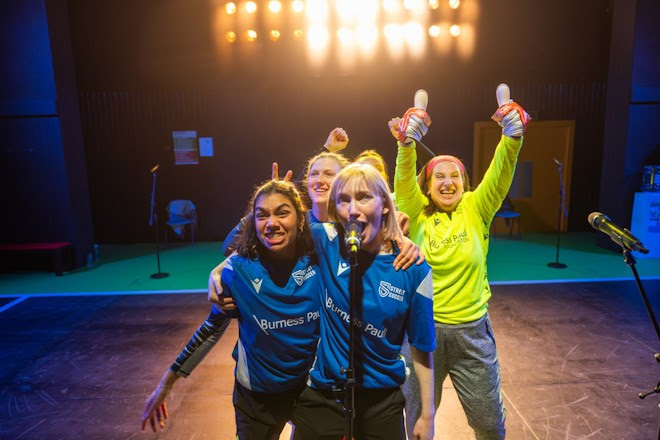
It’s Garry (Martin Docherty)’s 50th birthday and he’s not in the mood for a celebration. Instead, he prefers to think back to his teenage years and the wee amateur football team he put together with his best friends in Renfrew. He warns us in advance, this isn’t going to be an easy ride…

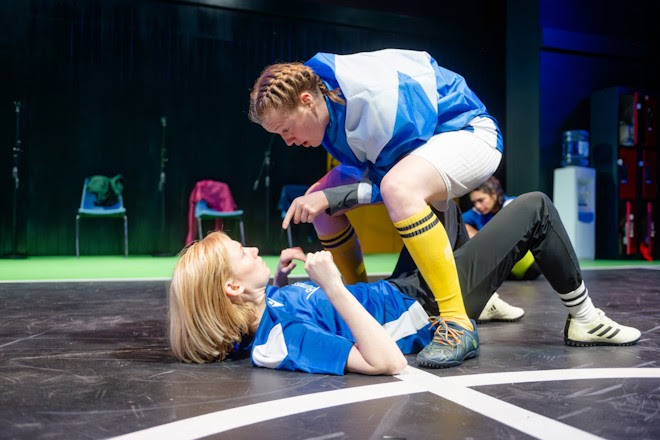
He assembles his crew. For starters, there’s Mick (Jatinder Singh Randhawa), once a promising member of a junior football team, now plying his trade as a hairdresser. There’s Tubs (Dylan Wood), who is gay – and in a 1980s small town, that’s seriously difficult – and there’s Paul (Sean Connor), struggling to cope with an abusive, alcoholic father. Noodles (Santino Smith) appears to be the most successful of the crew, with a decent job and the money to pay for some fancy football shirts (but should they be that shade of maroon?). Sooty (Kyle Gardiner) is a dedicated mod with a fishtail parka and no higher ambition than to ‘do a Quadrophenia’ and ride his scooter to Brighton, while Mince (Bailey Newsome) has an uncanny propensity for saying the wrong thing at the wrong time… every time.

But from their very first training session, the teammates work well together. The go from strength to strength, finding pleasure in the simple joys of kicking a ball around a pitch. They are blissfully unaware that darker times are inexorably closing in on them.

Moorcroft, written and directed by Elidh Loan, is a fabulous slice of theatre, one that moves effortlessly through a whole series of emotions. It swerves from raucous hilarity to visceral anger to heartrending tragedy with all the sure-footed precision of a well-drilled team. There are superb performances from the entire cast – particularly from Newsome as the slow-witted but oddly adorable Mince – and I especially enjoy the physical sequences as the team leap, twirl and kick their way through a series of energetic routines backed by a selection of 80s bangers. Loan knows exactly when to switch the mood. One minute I’m laughing out loud, the next my eyes are filling with tears.

It would be so easy to dismiss this as ‘a play about football’ but it’s much more than that. Moorcroft is a meditation on masculinity, its strengths, its weaknesses. It’s a reflection on the everyday deprivation of working-class life, and it’s a lament about the awful injustice of fate. Compelling and propulsive throughout, it never once relaxes its powerful grip.

It shoots, it scores. It’s a winner.

5 stars

Philip Caveney

I, Daniel Blake

17/10/23

Traverse Theatre, Edinburgh

It’s a propitious time for this play to appear, following, as it does, close on the heels of Ken Loach’s ‘final’ film, The Old Oak. 2016’s I, Daniel Blake was one of the veteran director’s most palpable successes, a compelling and often heartbreaking study of working-class life in broken Britain, set in the North East of England and featurIng stand up comedian Dave Johns in the title role.

It’s Johns who has adapted the film for stage and, for the most part, he’s stuck pretty closely to Paul Laverty’s screenplay – a little too closely perhaps, because surely the whole  point of a theatrical adaptation is to open up the original to fresh perspectives. Suffice to say that all the key scenes from the movie are present and correct, and it’s a hard heart indeed that can resist the subsequent pummelling.

Daniel (David Nellist) is a widower, a carpenter by trade, recently stricken by a debilitating heart attack. His doctor has advised him that he cannot risk doing anything strenuous but, in order to qualify for Jobseeker’s Allowance, he has to be able to demonstrate that he is actively looking for employment. At the job centre he encounters Katie (Bryony Corrigan) and her daughter, Daisy (Jodie Wild), recently rehoused from London and struggling to survive in an unfamiliar location. But Katie is a few minutes late for her meeting and is brusquely told that she is being sanctioned and will have to wait four weeks to get any money.

Daniel befriends the pair and does what he can to help them settle into their new home, while he goes about the thankless task of jumping through the various hoops that the DHSS keep throwing in his path. It’s clear that sooner or later, the merde is going to hit the fan…

The performances are exemplary (particularly Corrigan, who has to handle most of the heavy lifting), and there are some credible attempts to bring the piece up to date with recordings of the voices of Boris Johnson and Liz Truss, demonstrating their complete lack of empathy for anyone who is less privileged than them. Rhys Jarman’s design makes good use of video projection, highlighting a series of meaningless adverts supposed to inspire confidence in the government’s approach to unemployment, while Mark Calvert handles the direction with an assured touch.

But not everything from the film translates effectively to the stage. There are perhaps a couple of heartless interviews too many and a lengthy scene that follows the infamous graffiti incident – a homeless guy delivering an attempt at a rabble-rousing oration –  feels uncomfortably tacked on.

Still, this is a credible and compelling play and the fervent applause from a packed audience makes it clear, that if anything has changed for the unemployed since 2016, it’s certainly not for the better.

4 stars

Philip Caveney

Meetings with the Monk

17/010/23

Traverse Theatre, Edinburgh

Meetings With the Monk, this week’s offering from A Play, A Pie and A Pint, is a gentle affair, a study in both mental health and the limitations of live drama. Deceptively simple in tone, it explores these two issues in some depth – although the meta-theatricality arguably hogs the show.

Brian James O’Sullivan is our guide, the elision between writer, actor and character established right from the off, as he assumes the role of the front of house staff, pointing out the emergency exits and informing us about next week’s play. He’s chatty and friendly, explaining what’s going to happen, breaking down the performance into its component parts, ticking them off on a list as they occur. Introduction? Check. Exposition? Check. Rising action? Bring it on.

The story is almost incidental. The title sounds enticing (what do monks talk about?) but, actually, the meetings with the brothers are the least interesting things about this piece. It turns out that people who live cloistered lives don’t have all that much to say. Still, their soothing words have a profound effect on ‘Brian’, who’s struggling with depression, and thinks that taking a leaf out of his Granny’s book and going on a retreat might help. The Abbey is very different from his home in Glasgow and, in this quiet place, he finds the space to clear his head. 

O’Sullivan is a stand-up comedian and he uses that skill to his advantage. Although this piece isn’t a comedy by any means, his easy interaction with the audience means that we’re immediately on his side, and he knows just when to undercut a difficult topic with humour, so that it never feels too much, even when he’s talking about suicide. 

The set (by Gemma Patchett and Johnny Scott) is monkishly austere, while Ross Nurney’s lighting – appropriately – lightens the mood, a simple coloured spot indicating an abbey or the goodness that shines from Brother Felix.

Nimbly directed by Laila Noble, this is an enjoyable and thought-provoking play, although I do find myself wishing for a little more substance. I really enjoy the exploration of theatrical storytelling, but I’d also like a bit more plot or at least a bigger climax. Father Felix, who appears as a recorded voice – apparently, there are several different recordings, and O’Sullivan doesn’t know which will be played on the day – feels like a wasted opportunity. I keep waiting for him to say something memorable. 

Nonetheless, I applaud the experimental nature of Meetings With the Monk. It’s a quirky, original piece of writing, and one that invites much discussion afterwards..

3.6 stars

Susan Singfield

Dracula: Mina’s Reckoning

11/10/23

Festival Theatre, Edinburgh

Bram Stoker’s Dracula is one of those novels, like Alice in Wonderland, that is more famous for its enduring imagery than for its story. Its iconic characters are part of the fabric of our culture, recognised instinctively, even by those who have never so much as picked up the book. Such tales are ripe for retelling, like ciphers waiting to be reshaped for our times.

Into that space steps Mina’s Reckoning, a reimagining of the world’s most famous vampire, written by Morna Pearson and directed by Sally Cookson. This all-female and non-binary production redresses the gender imbalances in the source material: here, the women are elevated from mere victims and damsels-in-distress and are actually afforded some agency.

Whitby is out and north-east Scotland is in, justified by the fact that Scots writer Emily Gerard provided much of the inspiration for Stoker’s novel: it was from her work that he learned about the Romanian superstitions that inform some of the most compelling ideas in his book. More specifically, we’re in Cruden Bay, in a women’s asylum, where some of the characters speak in the Doric dialect. The Scots angle works well, the rhythms of the language creating an earthy poetry. The play opens with Mina (Danielle Jam) banging on the asylum door, demanding to be let in. She has Jonathan’s journals and wants Dr Seward (a wonderfully comic Maggie Bain) to help her ward off the evil that’s on its way.

The long first act sticks pretty closely to Stoker’s tale, albeit with more jokes and some judicious pruning (the boring suitor sequences are gone, thank goodness, and so are the details of Jonathan’s interminable journey). The second, shorter, act is much better, precisely because this is where the creative reimagining takes place, allowing Mina to come into her own. It’s a shame that the piece skews this way: it feels unbalanced. I’d like a shorter set-up and a longer unravelling.

It’s a great idea to recast Dracula as a woman and Liz Kettle clearly relishes the role. She’s a bold presence, at once attractive and repellant, exactly as the Count should be. Here, the blood-sucker is more nuanced than her original incarnation, both supervillain and saviour. As Mina seals her Faustian deal, we recognise what Dracula is offering her, and understand exactly why she makes the choice she does.

Kenneth MacLeod’s set is both the production’s strength and its weakness. It’s clever and imposing, evoking the chillingly austere asylum as well as the grand gothic castle – all staircases and hidden corners – and I like the use of Lewis den Hertog’s video projections and Aideen Malone’s lights to stain the walls red with blood, turning them into journals, then night skies, then stormy seas. However, the set’s cage-like qualities – the bars and rails imprisoning the women – also create a sense of distance, so that it’s hard to feel close to the characters and to empathise with them. What’s more, it makes the whole play less scary because we’re not immersed in the ghoulish goings-on.

Benji Bower’s music is wonderfully eerie and evocative but the sound drowns out the dialogue at times, which is a shame, as it obscures some of the finer details of the plot. Likewise, the ensemble work is excellent, but comes at the expense of the individual characters, as the inmates of the asylum blend together.

Albeit a little uneven, there’s a lot to like about this NTS and Aberdeen Performing Arts production, in association with Coventry’s Belgrade Theatre. The powerful image of Kettle, striding the ramparts – grey hair flowing, coat tails billowing – is one that will stay with me for a long time.

3.8 stars

Susan Singfield

Stay

10/010/23

Traverse Theatre, Edinburgh

Stay, it turns out, is a musical, but lest that word should conjure images of hordes of costumed performers, leaping and gyrating across a stage, let me quickly point out that this is the latest in the Traverse Theatres’s A Play A Pie and A Pint season. It’s a two-hander. But its smallness of scale is more than made up for by its sweet, affecting nature and for the insights it offers into its difficult theme.

Rowan (Craig Hunter) and Kit (Daisy Ann Fletcher) meet up in their favourite corner of the local park. Rowan is carrying an urn containing somebody’s ashes: he’s finally prepared himself for the task of scattering them in the duck pond, but he needs back-up for this grim task and, of course, Kit is there, dressed in her hospital scrubs, ready to make jokes about every aspect of this solemn occasion.

The two of them were once lovers but four years ago something went badly wrong – and yet, somehow, Rowan doesn’t want his current girlfriend here today. For this challenge, Kit is the perfect choice…

Written by Jonathan O Neil and Isaac Savage and directed by Melanie Bell, Stay is a deceptively simple piece, its quirky plaintive songs recounting a poignant story about a relationship gone awry. Rowan is steady and dependable, Kit adorably scatty, forever taking the narrative off in unexpected directions, but together they have something special. Both leads deliver the plaintive, haunting songs with considerable skill and the piece is cunningly written, luring you in with its seemingly innocuous narrative, before heading off into darker territory and deftly delivering a climactic gut punch.

If I wanted to nitpick, I’d say there’s one song too many after that change of direction; nevertheless, Stay is a delightful piece of lunchtime theatre that will make you laugh and cry in equal measure.

4.5 stars

Philip Caveney
A Little Life

08/10/23

Cineworld, Edinburgh

Beamed live from the Harold Pinter Theatre in London’s West End, A Little Life has recently been the subject of some controversy – not least the fact that its star, James Norton, spends much of the three-hours-and forty-minute duration stark naked. As a gruelling depiction of sexual exploitation unfolds, Norton’s performance is extraordinary, a genuine tour de force.

But there are issues that override that performance.

Jude lives in New York’s trendy Tribeca district and we’re to believe he is a high-flying lawyer (although we are never shown anything of his professional life). He has a trio of equally high-flying friends (a movie star! an artist! an architect!) and is – weirdly, at the age of thirty – about to be adopted by Harold (Zubin Varla), a wealthy professor, who sees Jude as the son he’s never had.

If this sounds too good to be true, don’t be fooled – because most of what ensues is frankly too bad to be true. Jude, it turns out, has endured a childhood of unbelievable cruelty. Abandoned as a baby, he is put into the care of sadistic monk, Brother Luke (Elliott Cowan), who – in the finest Catholic tradition – farms him out as a child prostitute. And it doesn’t end there. He stumbles from one awful experience to the next, exploited at every turn by a string of monstrous abusers (all played by Cowan). Could anyone really be as unlucky as Jude?

But here in the present day, people are queuing up to worship him! Willem (Luke Thompson), the aforementioned movie star, is deeply in love with Jude and wants the two of them to become a couple. But, because of those childhood experiences, Jude cannot enjoy anything like a healthy relationship, preferring instead to spend his time slicing himself open with a razor (something we are repeatedly shown in sickening detail).

Adopted from her own novel by Hanya Hanigihara, with the assistance of Koen Tachelet and the play’s director, Ivo van Hove, A Little Life is, it has to be said, cleverly presented. All the characters are constantly onstage, slipping effortlessly between the various scenes while, on two walls, slow-motion tracking shots of New York offer a sense of place.

But the story feels increasingly like torture porn, a relentless slice of sheer misery. I’m sure the highbrow audiences watching this play would never lower themselves to watch a film like Saw, for instance, yet A Little Life displays the same kind of world view, a callous and prurient invitation to wallow in somebody else’s misery. It feels manipulative, a coldly contrived feel-bad experience, which ultimately adds up to not very much at all.

A section of the audience is seated onstage, behind the action, presumably so that we can see our own reactions reflected in theirs. However, while many are holding handkerchieves to their faces, I feel curiously unmoved because it all feels too callous for comfort. Norton is terrific, but the vehicle he’s starring in really doesn’t stand up to scrutiny.

2.8 stars

Philip Caveney

And… And… And…

07/10/23

Traverse Theatre, Edinburgh

Though still at high school, Cassie (Caroline McKeown) is already a committed eco-warrior, working tirelessly to organise regular beach clean-ups in her locality. She takes every opportunity to lobby big corporations to plead on behalf of environmental causes and lately has even taken to making her own clothes from natural fibres. But as the climate change disasters inexorably mount, she finds herself increasingly obsessed with the subject. And it’s an obsession that threatens to overpower everything else in her life.

Meanwhile, Cassie’s best friend, Claire (Tiana Milne-Wilson), has her own pressing issues to contend with. Her mother is steadily succumbing to a deadly lung disease after years of smoking cigarettes and is no longer able to work. The final demands for rent and electricity are coming in on an almost daily basis and Claire desperately needs to find a paying job. The only possibility she’s discovered is the chance to apply for an apprenticeship at a locally-based multi-national plastics manufacturer, a company that she knows Cassie openly despises.

Isla Cowan’s And… And… And… is a topical story from Strange Town Theatre, one that isn’t afraid to address the horrifying scale of its central premise and to openly accept the impossibility of finding an easy solution – indeed, there’s a strangely satisfying meta-twist in this tale that comments on its own artificiality, the very idea of finding an ‘answer’ within the confines of a fifty-minute play.

The two leads give compelling and nuanced performances and the duo’s friendship feels utterly palpable. This is a youthful and exuberant approach to the subject, created for and by the generation who have been handed the poisoned chalice of a devastated planet. The frustration they feel is written large. Katie Innes’s simple but effective stage design is created mostly from heaps of detritus, an approach that serves as a constant reminder of the play’s theme, while Steve Small handles the direction with aplomb.

The play’s conclusion – that everyone needs to do whatever they can to reduce their personal carbon footprints and work together towards a more optimistic future – may not be exactly earth-shattering, but nevertheless, it comes through loud and clear.

4 stars

Philip Caveney