Theatre

The Girls of Slender Means

17/04/24

Lyceum Theatre, Edinburgh

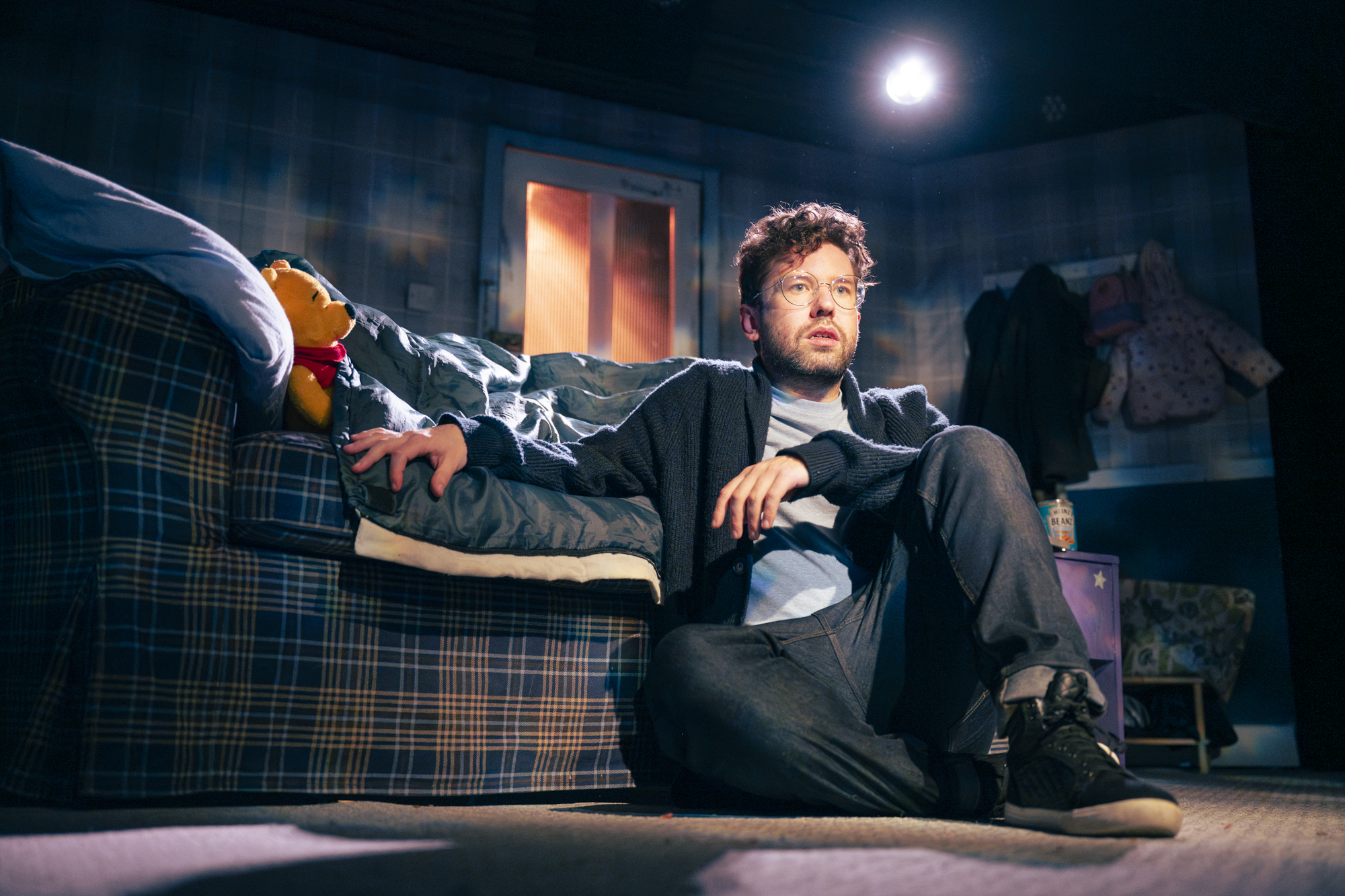
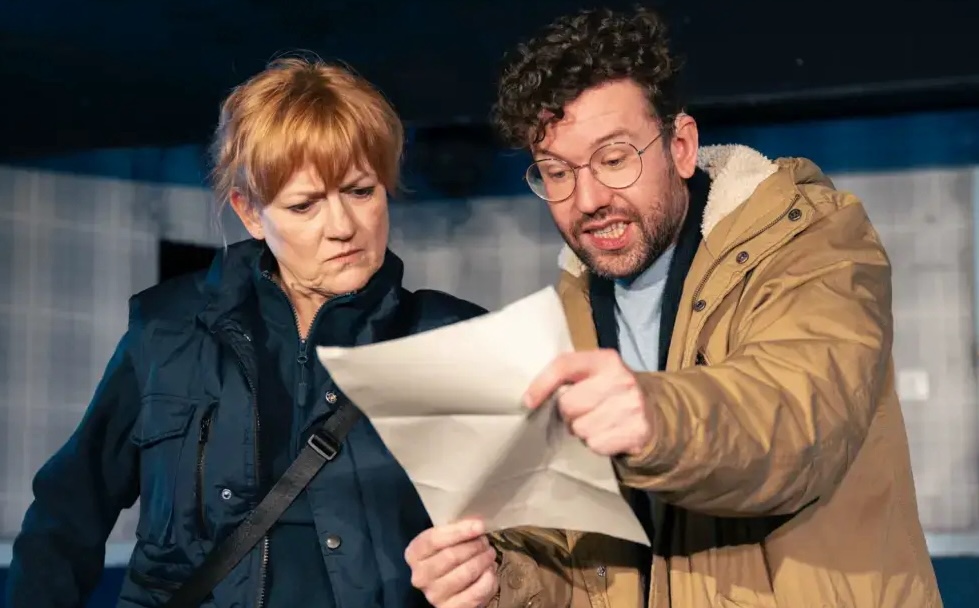
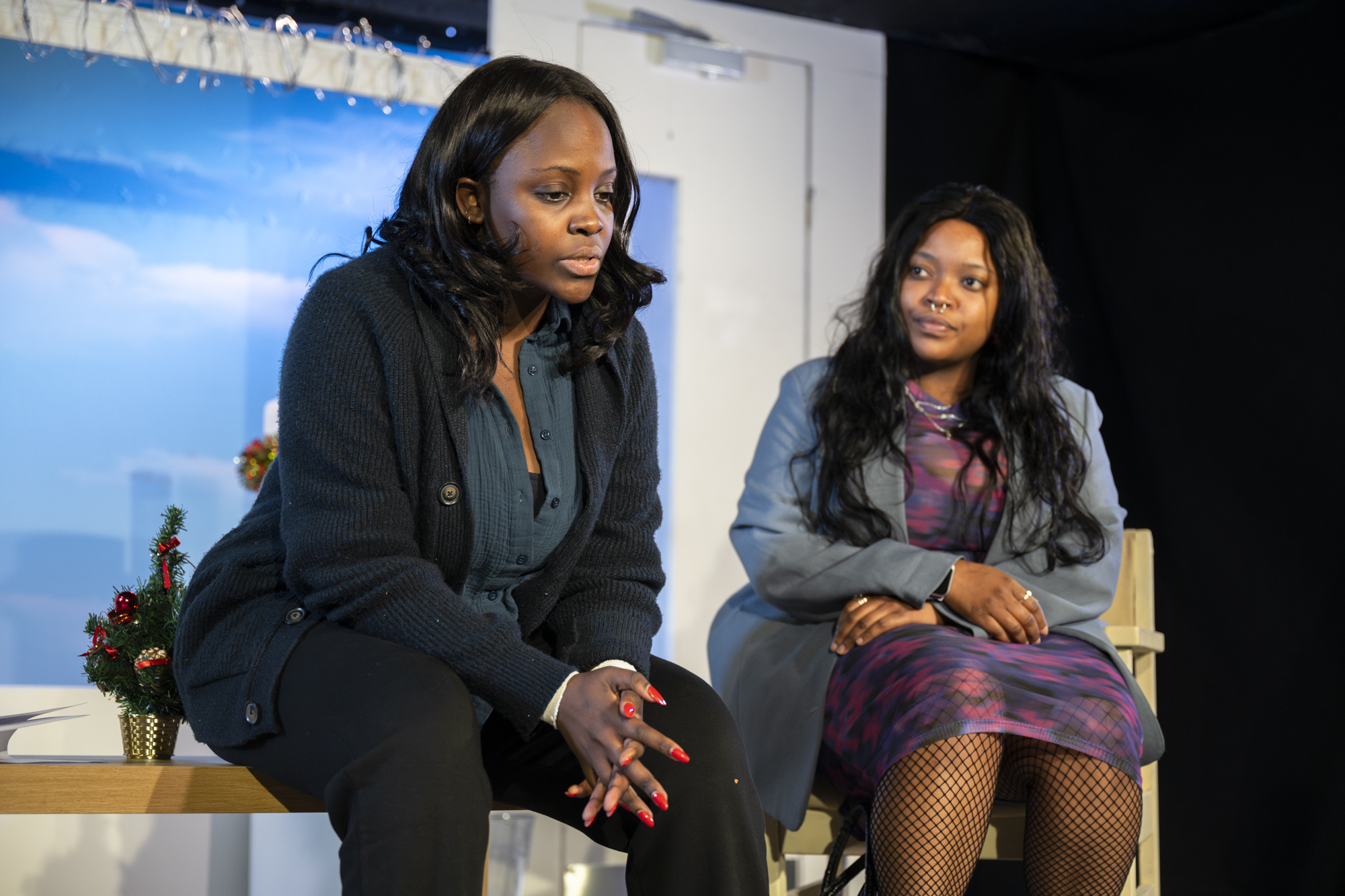
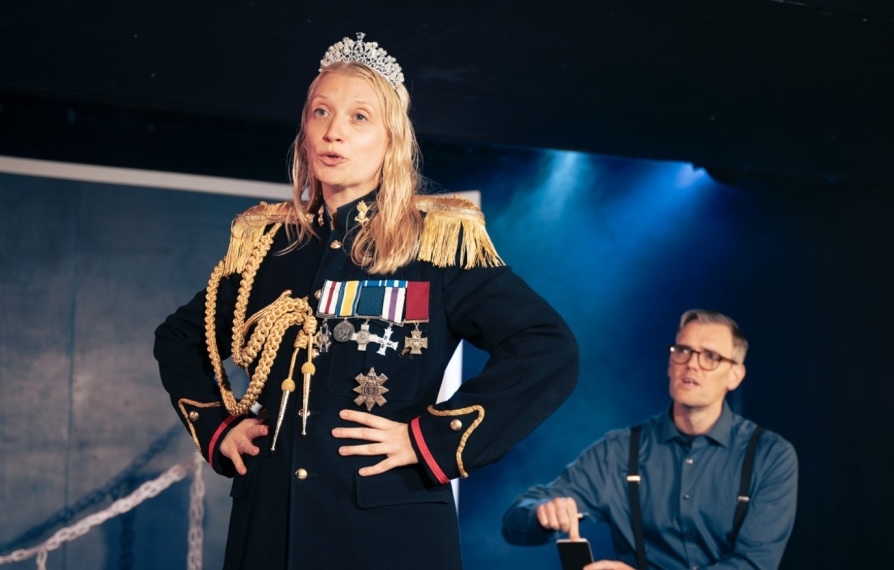
Gabriel Quigley’s vivacious adaptation of Muriel Spark’s novel opens in the 1960s. Jane (Molly Vevers) is the editor of Elan magazine. Her bright young assistant, Bluebell (Molly McGrath), nervously pitches a feature, but Jane is distracted by news of a certain Nicholas Farringdon (Seamus Dillane)’s demise. Maybe she can write a piece about him? After all, she knew him, back in the day. And, just like that, she is hurtling down Memory Lane, back to 1945 and the months between VE Day and VJ Day, when she lived in the May of Teck…

The May of Teck is a pithily-straplined boarding house, “for the pecuniary convenience and social protection of ladies of slender means below the age of thirty years, who are obliged to reside apart from their families in order to follow an occupation in London.” The young occupants – who all work as secretaries – share everything: rations, deportment tips, clothes. One dress in particular, a Shiaparelli known affectionately as Scappers, is dear to all their hearts. They each get to wear it on special occasions; there’s a strict rota in place.

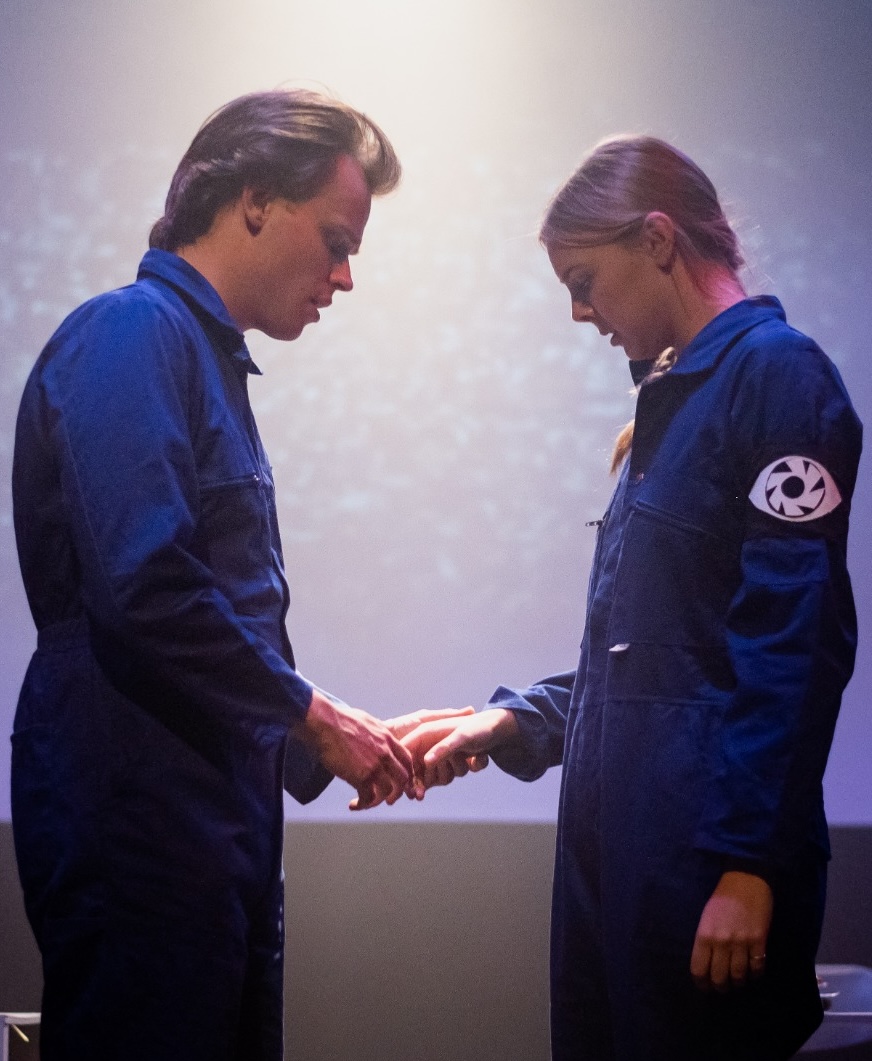
The first act is sprightly, frothy, almost determinedly light; the focus is on fashion and friendship, dancing and diets. Beautiful Selina (Julia Brown) carefully monitors her calorie-intake to ensure her hips don’t grow too wide to wriggle through the tiny bathroom window so that she can sunbathe on the roof. Live-wire Anne (Amy Kennedy) provides a caustic running commentary on everything and everyone, while angelic elocution teacher, Joanna (McGrath again), recites poetry and sews. Meanwhile, Pauline (Shannon Watson) never stops prattling about her love affair with famous actor Jack Buchanan, and our Scottish protagonist, Jane, forges fan mail to authors for her publisher boss, and dreams of being a poet herself one day. Her attempts to be taken seriously – her dowdy cardigan, her constant references to “brain work” – are undermined by her goofy awkwardness, wonderfully captured by Vevers.

There’s a tonal shift in the second act. As we get to know the girls better, we begin to see beneath the gilded surface. Their frivolity is revealed for what it is: a distraction from the horrors they have endured during the war. It shouldn’t come as a surprise; it’s been there all along in Jessica Worrall’s set design, the monochrome backdrop of bombed-out buildings a constant reminder that the girls’ colourful chatter belies a darker truth. But it shocks, providing an effective wake-up call. They are survivors. No wonder they cling so desperately to the fantasy Scappers provides.

Under Roxanna Silbert’s direction, the story has a clear contemporary resonance, and not just because we, like they, are living through the dying days of a Tory government, fearful of what might happen next. The production is impressive as a whole, but there are also some stand-out scenes, most notably the droll office sequence and the dance, where the girls’ boyfriends are represented by legless mannequins.

Spark’s lesson is clear. Don’t underestimate people because they seem shallow; you don’t know what’s concealed within their depths.

4.3 stars

Susan Singfield
This is Memorial Device

05/04/24

Traverse Theatre, Edinburgh

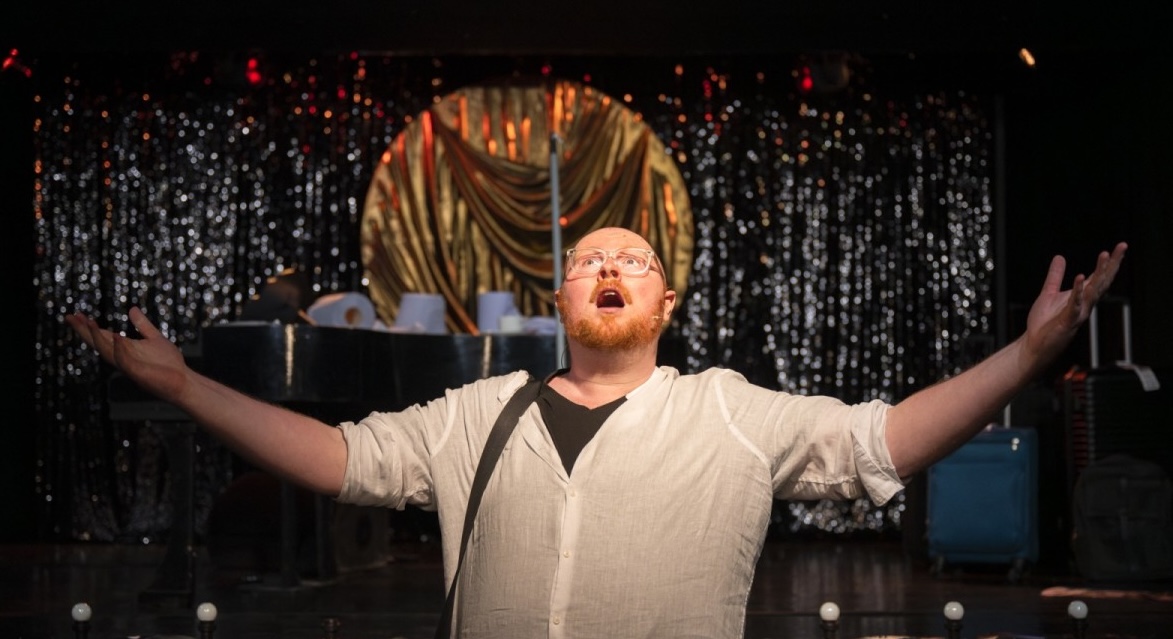
A band does not become a cult all on its own – it takes devoted followers to propel it into those glorious realms, and music critic Ross Raymond (Paul Higgins) is one such follower. We’ve been summoned to a cluttered storage room in Airdrie, wherein he has assembled all the mementos of his youth, the time when he fell head over heels in love with the titular band, the greatest musicians you’ve never heard of. And he so desperately wants to spread the love, to show us exactly why they are legendary, it’s almost embarrassing.

This is Memorial Device, produced in association with The Lyceum Theatre and the Edinburgh International Book Festival, is based upon the acclaimed novel by David Keenan. Graham Eatough’s adaptation is essentially a monologue, though it’s augmented by filmed contributions from four other actors – Julie Wilson Nimmo, Mary Gapinski, Sanjeev Kohli and Gabriel Quigley – all of whom have their own respective ‘memories’ to share. And there are, of course, the four showroom dummies, who stand in for the members of the band, lovingly assembled by Raymond as the story unfolds.

He proudly shows us the various bits and pieces he has curated over the years – the scrapbooks, the vinyls, the cassettes and the T-shirts, the various scribblings and doodles in which he perceives some kind of hidden meaning. His fervour is evident, his wild-eyed enthusiasm utterly compelling as he darts back and forth across the stage, attempting to demonstrate the qualities that first drew him in to the band’s orbit, that first made him want to give them his allegiance.

Higgins submits an extraordinary performance and there’s enough detail here to convince us that this band actually existed. The music by Stephen Pastel and Gavin Thomson completes the illusion and the production hits a fevered peak as Raymond attempts to lead us in a chant hidden within the music that (sadly) only he can hear. If you’ve ever fallen for the charms of an obscure rock band, purchased all their music and followed them from gig to gig with their name proudly emblazoned on a T-shirt, then you’ll identify with what’s happening here.

A hit at this year’s Fringe, This is Memorial Device is back for a short run at The Traverse. If, like us, you missed it, here’s your chance to rectify the situation and become a believer.

4 stars

Philip Caveney

The Scaff

02/04/24

Traverse Theatre, Edinburgh

For someone who has always maintained a complete indifference to the game of football, I do seem to be watching a lot of plays about it lately, all of them at the Traverse. And the thing is, the standard has been incredibly high. First up, there was the five-star masterpiece that was Moorcroft. Then there was the wonderful Same Team, which also found a fresh approach to its chosen subject. Now here’s The Scaff, the final offering in the A Play, A Pie and A Pint spring season, which I approach with some trepidation.

Can the Traverse really hope to pull off a hat trick?

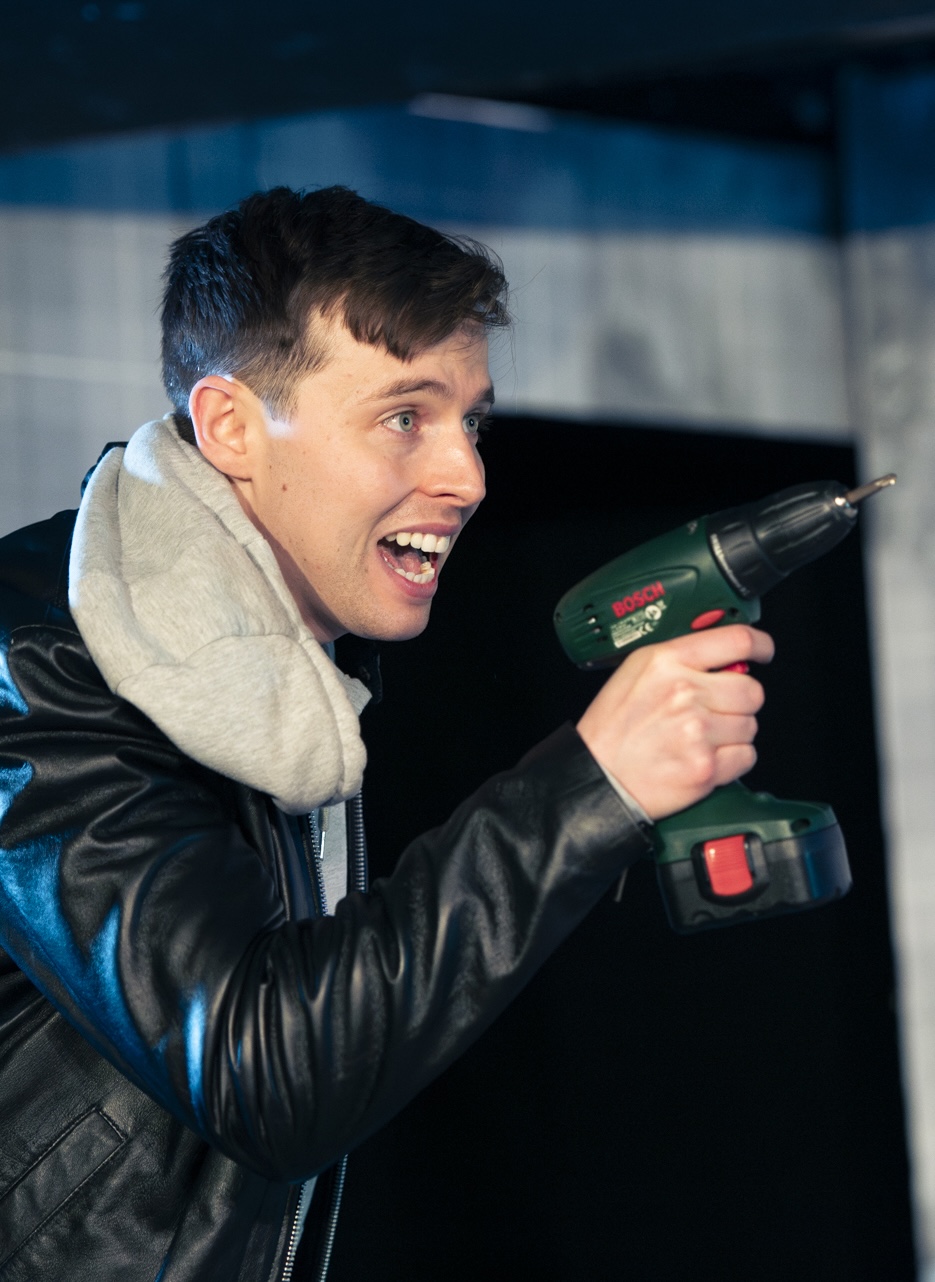
Happily, it turns out that they can. Written by Stephen Christopher and Graeme Smith, this is an assured and acerbically funny play, centred around a school football team. Jamie (Bailey Newsome) and Frankie (Stuart Edgar) live and breathe for the game. They spend most of their time out on the pitch, helping the team’s star player, Coco (Craig McClean), to rack up the goals. They’re also friends with Liam (Benjamin Keachie), but one day Jamie overhears Coco referring to Liam as ‘a scaff’. And while there may be some truth in the accusation – Liam’s Mum does buy own-brand crisps and Liam is forced to play in Mitzuma football boots, for God’s sake – Jamie encourages Liam to take his revenge on Coco by unleashing a hard tackle in the next game.

Liam takes his friend’s advice with disastrous consequences. Coco’s resulting injury means that the team will be without their top scorer as they approach the school cup final. Liam is in disgrace – and can Jamie and Frankie even admit to being friends with a boy who is now little more than a pariah?

Of course, The Scaff is about so much more than football. It concentrates on the subject of friendship and the difficulties that life can throw into its path. It’s also about the the constant longing to be liked and the awful fear of thinking that you are hated for things you have no control over. And mostly, it’s about the difficulties of escaping from an identity that others have bestowed on you, a term that is as degrading as it is dismissive.

The performances of the four leads are strong, each actor convincing in his respective role. I particularly enjoy Keachie’s physicality as a boy almost crippled by anxiety, forever giving sidelong glances to his companions, beseeching them for support and also forgiveness. Director Jordan Blackwood handles the tricky problem of making a quartet of actors on a bare stage convince as team players, and the performers give it their best, leaping, twirling and launching savage kicks at an imaginary ball. They manage to pull off the illusion, with the audience reacting delightedly to each successive goal. I find myself yelling and clapping along with them, something that no actual football match has never managed to make me do.

It’s been another strong season for A Play, A Pie and A Pint, and The Scaff provides a winning finalé that scores on just about every level.

4.6 stars

Philip Caveney

Hotdog

26/03/24

Traverse Theatre, Edinburgh

Hotdog (Chloe-Ann Tylor) is all dressed up and ready to party! 

Wearing a garish hired costume and carrying a handbag, a phone and a bottle of lemonade, she’s leaving the sanctuary of her flat and heading off to an undisclosed location to strut her stuff. Outspoken and full of pent-up bile, she is determined that tonight she will be the life and soul of the party. She will dance and drink and curse and laugh out loud! She will sweep aside anybody who has a single bad word to say about her and show them who’s the boss.

But, as is so often the case, her forced exuberance only exists to mask a deeper, darker truth. Because something bad happened to Hotdog in the recent past – something that it’s going to take her a very long time to come to terms with.

Written by Ellen Ritchie and directed by Beckie Hope-Palmer, with an enchanting central performance  by Chloe-Ann Tylor, the latest piece from A Play, A Pie and a Pint is an astutely observed drama that deals with the subject of trauma. Tylor (most recently seen by B&B in  Same Team: A Street Soccer Story and in the fabulous Battery Park) talks directly to the audience, discussing her character’s uncompromising, no-holds-barred approach to life. She tells us about her apparent hatred of her over-protective mother and her revulsion for the kind of fridge-magnet things that people are prone to say to her. 

As she chips steadily away at the brittle carapace she’s constructed around herself, the real story gradually emerges – and it’s utterly heartbreaking.

Tylor is joined onstage by Ross Allan, who at first undertakes the role of a silent stage hand, ensuring that props, music cues and sound effects are there whenever Hotdog needs them. It’s only in the poignant final stretches that he becomes Andy, the proprietor of the chippy where Hotdog tends to finish up her evenings. As in his previous role, he is exactly the helping hand she needs, the one who keeps a caring eye on her. He’s also the bearer of a truth universally acknowledged – that Joni Mitchell is the greatest lyricist of all time.

Kenny Miller’s set might at first glance seem overly complicated, but all those meticulous white lines on the floor – like Hotdog’s motivation – eventually fall into place.

4 stars

Philip Caveney

The Motive and the Cue

21/03/24

Cineworld, Edinburgh: National Theatre Live

It’s 1964 and Welsh superstar Richard Burton (Johnny Flynn) has decided to turn down some lucrative film offers in order to perform Hamlet on Broadway. (We’ve all been there.) He’s decided that the director should be John Gielgud (Mark Gatiss). Now in his sixties and considered something of a has-been, he famously played the Danish prince to great acclaim as a young actor.

To complicate matters, Burton has recently married Elizabeth Taylor (Tuppence Middleton) – for the first time – and she reluctantly accompanies him, but finds herself banished from the rehearsal space and sequestered in a swish hotel room with an endless supply of alcohol, while her husband grapples with his role.

Jack Thorne’s fascinating play, beautifully directed by Sam Mendes, never shows us the finished production but lingers instead on successive rehearsals as director and star bicker and feud their way to a fresh vision of Shakespeare’s most-performed play. There’s a large ensemble cast at work – some eighteen of them – but most of the other actors are relegated to supporting roles, though both Allan Corduner as Hume Cronyn and Luke Norris as William Redfield manage to make an impression. Meanwhile, Gatiss and Flynn joust entertainingly with each other to sometimes hilarious effect, Gatiss perfectly embodying Gielgud’s sly and snarky manner, while Flynn turns up the bombast as the hubristic Burton, his working-class-lad-made-good bluster deliciously rendered.

Middleton too does well with her character, capturing Taylor’s earthiness and her uncanny ability to cross all boundaries, particularly in the scene where she acts as a kind of intermediary when Gielgud and Burton (inevitably) end up at each other’s throats. I love the scene where Gielgud reflects on the tragedy of achieving stardom at twenty-three, to which Taylor points out that she was just twelve when National Velvet became a runaway hit.

The production is also blessed with an extraordinary set by Ed Devlin, where scene changes are revealed using an ingenious expanding letterbox arrangement. I have no idea how this is achieved, but the effect is remarkable, the transformations so slickly done it feels almost like a series of magic tricks.

This is a play that will delight anyone who loves theatre and the way it works, a glimpse at the nuts and bolts that lie behind the glittering façade. It’s fascinating to see the players experiment with the source material as they gradually inch their way to what will eventually become one of the most successful theatre productions in history.

4.6 stars

Philip Caveney

Pushin’ Thirty

19/03/24

Traverse Theatre, Edinburgh

It’s 2011 and Eilidh (Taylor Dyson) and Scott (Sam James Smith) have just won their school talent show with a brand new song. Like plenty of other teens, they dream of pop stardom, but they live in Dundee, not a place renowned for its entertainment opportunities. Scott impulsively announces they should pack their bags and head for London, where fame surely awaits them – but Eilidh is reluctant to leave while her mum is ill, so Scott grabs his guitar and jumps aboard the Megabus without her.

Now it’s 2023 and they’re both fast approaching the dreaded three-o. Eilidh is living with her widowed dad and working at a local bakery. The two former friends haven’t exchanged so much as a word over the passing years, not even a Facebook post. When Scott returns out of the blue, his dreams of stardom in tatters, Eilidh is somewhat nonplussed to learn that he wants to pick up where they left off…

The latest addition to the A Play, A Pie and A Pint season, Pushin’ Thirty by Taylor Dyson and Calum Kelly is a gentle, whimsical tale about missed opportunities and the enduring importance of friendship. It’s a deceptively simple piece, laying bare the types of hurts and insecurities we so often bury. Anchored around two vivacious performances from Dyson and James Smith, this is compellingly told, the actors inhabiting their roles with ease so that we totally believe they really are old pals. There’s a steady stream of witty banter (never ask Scott why he doesn’t sing!) interspersed with some memorable songs from Dundee-based company, Elfie Picket. Beth Morton’s direction is sprightly: the pace never flags and the music is seamlessly incorporated.

Anyone who has ever picked up a guitar and dreamed of making it big will identify with this story. By my reckoning, that covers most of the people I know – and I’m sure they’d all enjoy this funny, heartwarming production.

4 stars

Philip Caveney

Blue Beard

15/03/24

Royal Lyceum Theatre, Edinburgh

I’m a massive fan of writer/director Emma Rice – and also of fairytales. I even wrote my own version of Blue Beard some years ago, a short story currently languishing in the proverbial drawer where unpublished fiction goes to die. So, co-produced by Wise Children, Birmingham Rep, HOME Manchester, York Theatre Royal, and – of course – Edinburgh’s Royal Lyceum, this adaptation promises to be a delight. It doesn’t disappoint.

We all know the story. Blue Beard is a charming villain: rich, handsome and very popular. Sure, he’s had more wives than Henry VIII, but he doesn’t pretend to be a saint, and it’s no surprise when a naïve young woman agrees to marry him. The surprise comes later, when he gives his new bride a key but prohibits her from using it, placing a temptation in her way that he knows she can’t resist. When, inevitably, she opens the forbidden door, she finds the dismembered corpses of his previous wives and understands immediately that she is next. Luckily, she has brothers, and they come riding to the rescue. And then – spoiler alert! – she lives happily ever after.

Naturally, things pan out a little differently here. Rice embraces the anarchic heart of the fairy tale, while simultaneously tearing it apart. The result is as chaotic and brash as anyone who knows her work will expect: maximalist and frantic and as unsubtle as the protagonist’s cerulean facial hair. I love it.

The music (by Stu Barker) is integral to the piece. It’s enthralling, and beautifully performed by the impressive cast, all of whom turn out to be quadruple-threats, not only dancing, singing and acting with aplomb, but also playing a range of instruments and, in the case of Mirabelle Gremaud, adding gymnastics and contortion to the mix.

Vicki Mortimer’s ingenious set comprises boxes within boxes: indeed, the whole play is a magic show, all dazzling mirror-balls and sleights of hand. The cabaret glitz enhances the plot: no wonder Lucky (Robyn Sinclair) finds Blue Beard (Tristan Sturrock) spellbinding; he’s a magician, after all; illusions are his stock-in-trade. The thrilling, illicit pleasure draws us in: we too are seduced by Blue Beard’s ostentation and flair; excited as he conjures a horse race from nowhere; throws knives at his assistant (Gremaud); saws Lucky in half. This first act is all about the seductive allure of darkness, the impulse that makes us devour murder-mysteries and glamourise the bad guys.

But Rice’s Blue Beard comes with a warning, in the form of Mother Superior (the fabulous Katy Owen), whose Convent of the Three Fs reminds us that real women – as opposed to their fairytale counterparts – are at once fearful, fucked and furious. She’s both narrator and chorus, veering between humour and rage, first undercutting the tension with a perfectly-placed “fuck off”, then skewering Blue Beard’s dangerous pomposity.

The second act draws all the disparate strands together. Lucky doesn’t have brothers who can rescue her, but she does have Treasure and Trouble, her mum and sister (Patrycja Kujawska and Stephanie Hockley), and Blue Beard is no match for this formidable trio.

Out in the real world, the Lost Sister (Gremaud) is not so lucky. A screen showing black and white CCTV footage of a man following a woman is a theatrical gut-punch, less visceral than the slo-mo, gore-spattered, cartoon battle we’ve just enjoyed, but much more chilling. The auditorium, which just a moment ago was a riot of whoops and claps, is silent, aghast. The Lost Brother (Adam Mirsky) weeps; the Mother Superior sheds her habit. The smoke clears; the illusion breaks.

This is theatre with a capital T.

5 stars

Susan Singfield

Escaped Alone

14/03/24

Traverse Theatre, Edinburgh

First performed at the Royal Court in 2016, Caryl Churchill’s Escaped Alone is a fascinating piece, revealing some essential human truths despite the brevity of its running time.

Three retired women – neighbours – sit in a garden, chatting inconsequentially. Mrs Jarrett (Blythe Duff) calls out a greeting as she passes by and is invited to take a seat. On the surface, she fits in, joining in the conversation. But she’s plagued by her knowledge of what’s happening in the news. At regular intervals, while the other women freeze, Mrs Jarrett rises and stands before Lewis den Hertog’s bleak black and white video projection, monologuing about apocalyptic events in the world beyond the garden. It’s like she’s zoning out, and we’re inside her head – and then she’s back again, making small talk, as if nothing has happened.

Although the catastrophes Mrs Jarrett describes are absurd in their extremity – all food has been diverted to TV channels; the hungry only know breakfast as an image on their screens; obese people sell their flesh, cutting rashers from their own bodies – the situation is depressingly normal. Just this morning, listening to the radio, I hear that 300 kidnapped Nigerian schoolchildren are still missing. In Gaza, shots have been fired at starving Palestinians waiting for a food truck. War still rages in Ukraine. It’s horrible. “Should we have curry or pasta for dinner tonight?” I ask my husband. We’re all fiddling while Rome burns.

The set, designed by Anna Orton, heightens the feeling of pretence. The grass is too green, the sky too blue; it’s what the women want to see, not what’s really there.

But, however fervently they cling to the façade they’ve created, real life keeps creeping in. “I’d love to go to Japan,” muses the agoraphobic (Anne Kidd). “Get yourself to Tesco first,” advises the caustic former GP (Joanna Tope), puncturing the daydream. Most resolutely cheerful of all is the ex-hairdresser (Irene McDougall), fresh out of prison for killing her husband. She went down for manslaughter, “but it might have been murder, in actual fact.” Nothing is what it seems.

Under Johanna Bowman’s direction, the performances are pulsing with vitality. There’s an urgency to proceedings that underscores the latent horror. Churchill’s script offers no real plot or character progression and this Tron Theatre production makes sense of that. It’s a snapshot of the way we’re stuck: a never-ending cycle of looking away; distracting ourselves from what’s really happening; ignoring the overpowering emotion consuming us.

“Terrible rage. Terrible rage. TERRIBLE RAGE.”

4.3 stars

Susan Singfield

A Giant on the Bridge

08/03/24

Traverse Theatre, Edinburgh

One look at the stage in Traverse 1 is enough to convince me that tonight, I’m going to witness some serious musicianship. There’s a complex arrangement of guitars and drums on display, as well as electronic keyboards, a violin, a harmonium and other instruments I cannot even name. They’re all connected by a jumble of leads and microphones that make me wonder how anyone will negotiate their way through it without tripping up. Then six musicians emerge from the wings, pick up their respective instruments and launch headlong into an extended piece of gig theatre that pretty soon has me in raptures.

Devised by Liam Hurley and Jo Mango, A Giant on the Bridge is created from a collection of songs written in Vox Sessions by the inmates of prisons across Scotland. It’s heartening to acknowledge that this joyful music has emanated from such grim beginnings, but here it is: a complex, labyrinthine piece that explores a whole range of different moods, moving from plaintive acoustic ballads to propulsive electric rock.

There are five different narratives here, the performers often breaking the fourth wall to speak directly to the audience. Louis Abbot delivers The Songwriter’s Story, telling us in essence about his daily routine, trying to coax music from troubled prisoners. Kim Grant delivers her Giant Story, a traditional tale about an imprisoned giantess, who has lost her heart to a ruthless king. Jo Mango gives us Clem’s Story; she’s a social worker and poet whose interactions with the daughter of an inmate unlock her own past trauma, while Jill O’Sullivan shares June’s Story, playing the role of a young woman looking after the daughter of her twin brother, D, and preparing for his imminent release from prison. And finally, Solareye relates D’s Story; he’s a man who sees and translates everything that happens to him into a distinctive form of rap.

If this description makes it all sound like a complex jumble, make no mistake: the various story threads are brilliantly interwoven, the narratives cunningly echoing and reinforcing each other, before the strands are drawn together into a heartfelt and uplifting conclusion. I find myself constantly thrilled by the sheer ambition of this production and the way its various goals have been so consummately achieved. The musicians also take on acting roles with aplomb.

It’s not just me who loves this show.. The wild applause from a packed audience is confirmation of how successful – and how unique – this musical experiment is. If you can grab a ticket to see it before it moves on, I urge you to take the opportunity. This is something very special.

5 stars

Philip Caveney

Bread and Breakfast

05/03/24

Traverse Theatre, Edinburgh

The latest production in the A Play, A Pie and A Pint season offers a distinct change of pace. Who’s up for a good old-fashioned British farce? You know, the kind of vehicle that Brian Rix would have had a field day with back in the 1960s – slapstick characters painted with broad strokes and even broader dialogue.

Welcome to Nessie’s Lodge, a bed and breakfast somewhere in the Highlands, a place where holidaymakers can relax in real style – provided they turn a blind eye to the indigestible food and the bedbugs… not to mention the rats. I said not to mention them! Proprietor Irene (Maureen Carr) is growing rather tired of the business, even though it boasts a single star from the AA. She dreams of selling the establishment to anybody who’s dumb enough to shell out money for it. But she’s continually hampered by her dimwitted young employee, Jo (Erin Elkin), who somehow manages to misinterpret every instruction she’s given. 

Then, in a distinctly Fawlty Towers twist, an AA restaurant inspector (James Peake) arrives out of the blue and the writing’s on the wall for Nessie’s Lodge. Also on the wall is a possibly priceless work of art that might just save Irene’s bacon…

Bread and Breakfast, written by Kirsty Halliday and directed by Laila Noble, has some genuinely funny lines in the mix, though there’s a worrying tendency to over-signal and over-explain them. Furthermore, it should also be said that those classic Whitehall farces were always anchored by absolute precision and excellent production values – which we can’t really expect from a modestly-budgeted lunchtime show.

The packed crowd at this afternoon’s show are clearly enjoying themselves, laughing throughout. As ever, stalwart actor Carr generates her own brand of potty-mouthed good humour; she’s a natural comic and has the audience in the palm of her hand. Elkin is excellent as Jo, giving her an edgy, almost manic appeal, as she flails from one hapless misunderstanding to another. Meanwhile Peake has the funniest moment of the show, as he delivers a spirited rendition of God Save Our Gracious Quing!  

If Bread and Breakfast isn’t quite to my taste, it’s nevertheless interesting to see a play so tonally different from anything I’ve previously seen at PPP.

3 stars

Philip Caveney