Film

Roma

18/12/18

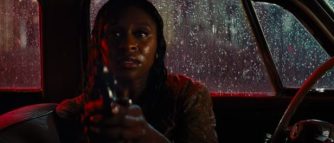
At first, our aims are simple enough. We want to view Alfonso Cuaron’s Roma on a big screen, rather than on the iMac that is the closest thing we have to a TV – but finding a cinema in Edinburgh that is actually showing this Netflix Original is problematic. Then we discover that The Filmhouse has managed to obtain it for a few days, so we book seats. Our first attempt to view it is effectively snookered by a badly-timed power cut in our area and it takes some pretty frantic rejigging to get ourselves booked in for the following day, but we manage it; and I’m happy to report that the effort is worthwhile, not least because of the film’s stunning deep focus black and white cinematography (Cuaron acting as his own DP in the absence of regular collaborator, Emanuel Lubezki), but also because the film’s catharsis is so powerful when it finally hits, that I sit in the darkened cinema quietly sobbing away.

This autobiographical story is set in the early seventies in the Colonia Roma district of Mexico City. It concerns a middle class family and their young, live-in maid, Cleo (Yalitza Aparicio) who goes placidly through her daily grind of washing clothes, preparing food, and wiping up the seemingly endless mounds of dog poo deposited by the resident mutt, whilst giving as much time and attention as she can, to the family’s four children. For the first twenty minutes or so, this is pretty much all we see and beautifully filmed though it is, I find myself wondering what all the fuss is about. Why all the Oscar buzz? But then, more important issues begin to rear their heads and pretty soon, the film is stretching its muscles and I am totally hooked.

The first incident of note is when the father of the family, university lecturer Pepe (Marco Graf) goes off to a conference in Quebec and decides not to return to his wife and children. In the ensuing uncertainty, his wife, Sofia (Marina de Tavira) struggles to make ends meet and hides the truth from her kids, telling them that Pepe’s work in Canada is taking longer than expected, even though he is occasionally glimpsed running around the city with his latest conquest. Cleo, meanwhile, becomes emotionally entangled with Fermin (Jorge Antonio Guerrero), an aggressive young man who is obsessed with martial arts. It’s clear that the relationship is going precisely nowhere but before that realisation sinks in, Cleo is confronted with an unforeseen problem of her own.

As the film steadily unfolds, so events become ever more dramatic – there’s a New Year’s Eve forest fire, that must be coped with by a collection of (mostly drunk) party guests – a violent student protest that is bloodily overpowered by the local military – and a heart-stopping sequence in a hospital where the mounting drama of a situation spills over into absolute tragedy. Through the escalating chaos, Cleo moves with incredible calm and dignity and Roma is quite clearly a love letter to her, (or rather, to ‘Libo,’ the real life woman who cared for the young Cuaron and his siblings), showing that despite her perilous position as an employee, she is an important member of the family unit, indeed, the very hub around which it operates. Aparicio’s performance is extraordinary. A schoolteacher, who has never acted before, she is quite simply enchanting in the central role and it will be interesting to see where she goes from here.

Roma is undoubtedly a slow-burner, but it’s lovingly and lavishly mounted, the era evoked in a whole series of scenes that capture the essence of what it must have been been like to live in 1970s Mexico. It’s interesting to note that one sequence depicts a family visit to the cinema where the film on the screen is Marooned, a low budget space adventure that was clearly a huge influence on Cuaron’s blockbuster, Gravity. There’s every reason to suspect that Roma could very well be rewarded with a gong at next year’s Oscars, an occurrence that would  undoubtedly raise interesting questions about the future of movie-making itself.

Meanwhile, if no cinema near you is showing it, then do watch it on the biggest TV you have access to. It’s a fabulous piece of work and proof, if it were needed, that Cuaron is one of our most interesting and gifted filmmakers.

5 stars

Philip Caveney

Mortal Engines

14/12/18

A thousand years after a nuclear holocaust, the earth has been reduced to a vast wasteland in which gigantic ‘traction cities’ roam the earth in search of smaller moving towns to be devoured and converted into much-needed fuel. Most powerful amongst the travelling behemoths is ‘London,’ currently controlled by Thaddeus Valentine (Hugo Weaving), who, we soon discover, is a thoroughly bad egg, hellbent on appropriating what’s left of the world’s meagre resources, no matter what it takes.

When London absorbs its latest conquest, (a Bavarian hamlet, since you ask) it takes on board a masked young woman with a grudge. She is Hester Shaw (Hera Hilmar), who seeks revenge on Valentine for something that happened back in her childhood. But her assassination attempt is foiled by young Tom Natsworthy (Robert Sheehan), an employee at the London museum… yes, there still is a museum, plus a rough assemblage of some of the city’s salvaged tourist attractions, all arranged higgledy-piggledy across its skyline. (It’s at moments like this when I can’t help pondering how anybody could have managed to convert a city into a Mad Max-style vehicle of such enormous scale – I mean, where did they start?  But perhaps I’m missing the point.)

When Tom and Hester find themselves expelled into the wasteland, a relationship develops – but then they become involved with the Anti Traction League, based in what’s now simply known as ‘the East’ on the far side of what just might be the Great Wall of China. The league travel in fantastic airships and are masterminded by Anna Fang (Jihae). Meanwhile Hester is being hunted by an undead creature called Shrike (voiced by Stephen Lang), who is pledged to destroy her and…

If this is starting to sound somewhat complicated, let me assure you, that it is – and that’s rather a pity because – as you’d expect from something that’s been produced by Peter Jackson – the world-building here is frankly astonishing and I can only speculate about the millions of New Zealand dollars that must have been lovingly poured into this enterprise. But, as is so often the case in films of such immense scale, the human characters are somewhat dwarfed by the process, only periodically managing to poke their heads up from the general grandeur to try and capture attention. Christian Rivers handles the directorial reins but this has Jackson’s fingerprints all over it and, not for the first time, I find myself yearning for those early low budget horrors he used to make, back in the days when he was skint.

Mortal Engines is based on a quartet of books by British fantasy author Philip Reeve. The first volume was published in 2001 and this project has been stuck in development hell for a very long time. I’d love to be able to report that it’s a great success, but something seems to have been lost in translation from book to film. While a story this complicated can work brilliantly on the printed page, it doesn’t always come through on the screen. I don’t mean to say that this isn’t worth a viewing. There’s stuff in here that will have fantasy fans enthralled. There are exciting chases, wonderful touches of invention throughout and, as I said before, it all looks good enough to eat – but sadly, that’s not enough to make this project fly as convincingly as it should.

3.4 stars

Philip Caveney

Sorry to bother you

13/12/18

Boots Riley is a new name to me but, on the merits of this, his first feature, it’s one I expect to hear a lot more of in the near future. Sorry To Bother You is a quirky slice of satire and, in many ways, a polemic – a powerful critique of the current state of American society. Riley, who in a recent interview proudly announced that he is ‘a communist,’ clearly has a healthy distrust of big corporations and their ethos of rampant greed. He’s also more than happy to state his dissatisfaction with the situation.

The action occurs in a near-future Oakland, where a corporation called WorryFree offers workers food and board in exchange for a lifetime of unpaid servitude – and where the most popular show on TV is one where the participants are ritually humiliated and beaten to a pulp. Cassius Green (Lakeith Stanfield) lives in his Uncle’s garage, where he shares the bills with his performance artist girlfriend, Detroit (Tessa Thompson). Constantly strapped for cash, but understandably reluctant to take the WorryFree route, Cassius seeks a post at telemarketing company, RegalView, where he is told to ‘stick to the script’ and where he will be paid a commission on every sale he makes.

At first he struggles to stop his clients from hanging up on him, but then veteran employee, Langston (Danny Glover) gives him a bit of free advice. ‘Use your white voice, bro,’ Langston urges him, ‘and things will improve.’ Cassius prevaricates for a while, but soon finds he has a real flair for impersonating a white man’s voice. It’s not long before he’s closing many profitable deals and is being groomed to take the gold elevator up to the top floor, where the ‘Power Dealers’ rule.

But when co workers, Salvador (Jermaine Fowler) and Squeeze (Steven Yeun) decide to form a pressure group with the intention of securing a fairer deal for RegalView’s workforce, Cassius finds himself with a difficult choice to make…

What starts as an irreverent and amusing farce takes a much darker turn when Cassius opts to ride that elevator to the top floor. Up there, he is the guest at a lavish party thrown by RegalView’s enigmatic CEO, Steve Lift (Armie Hammer), who pressures him into performing a rap routine (something he has no talent for), and who then offers him a vast amount of money to head up a brand new initiative…

As I said earlier, this is a debut film and since Riley’s previous experience has been as a musician, STBY occasionally looks a little rough around the edges. There are some poorly lit nighttime sequences and occasional bits of character interplay that don’t really develop into anything – but there’s no doubting the power and passion fuelling this story. A scene where Cassius spills the beans about RegalViews secret plans only to see the companies shares go through the roof is, in the era of Donald Trump, all too believable. Stanfield and Thompson are beguiling in the lead roles and, as you might expect, there’s a powerful soundtrack to push along the action.

Slightly deranged and very, VERY original, this is the opening salvo in what could prove to be a powerful new voice in contemporary cinema. It’s well worth checking out.

4.4 stars

Philip Caveney

Spider-Man: Into the Spider-Verse

12/12/18

That unwieldy title notwithstanding, this is a genuine treat. For those who are wary of watching yet another retread of a tired and over-familiar concept, let me assure you that this doesn’t so much as reinvent the franchise as grab it by the neck, tear it to pieces and start all over again. The result is one of the most exciting slices of animation I’ve seen in a long time.

Troubled teenager Miles Morales (voiced by Shameik Moore) is struggling to fit in to the straight laced Brooklyn high school where he has recently enrolled. His father, Jefferson (Brian Tyree Henry) is a New York cop, a disciplinarian and a vociferous Spider-Man critic. Miles finds himself gravitating towards his mysterious Uncle Aaron (Mahershala Ali), who is an adventurous sort, prone to bending the rules. One night, when Miles and Aaron are indulging in a graffiti-art session in a deserted stretch of subway, Miles is bitten by a robotic spider and, shortly afterwards, begins to experience major changes to his mind and body.

Understandably confused, he returns to the subway, just in time to witness regular Spider-Man villain, Kingpin (Liev Schrieber), opening up a portal to a whole series of alternate realities and, for good measure, enacting a murder that will have all staunch web-heads shrieking ‘Noooo!’  at the screen. Kingpin’s meddling with reality is an attempt to reconnect with characters from his past, but his machinations have unwittingly invited five different personifications of Spider-Man to leave their own dimensions and head for present-day New York. I won’t list the alternate Spideys in detail but suffice to say: two of them are female and one is a cartoon pig called Peter Porker. The thing is, does Miles, still coming to terms with his new abilities, have the necessary stuff to join up with them?

Phil Lord’s plot may be bat-shit crazy, but it doesn’t matter one jot because Spider-Man: into the Spider-Verse careers along at such a breakneck pace there’s never any time to question the absurdity of it all. What’s more, the eye-popping animation is so extraordinary that it virtually dazzles the viewer into submission with levels of ingenuity and chutzpah rarely witnessed in this genre. There’s a whole riot of styles thrown into the mix, with individual frames freezing momentarily to do homage to veteran artists like Steve Ditko and John Romita, and more experimental sequences that break new ground entirely. It’s fabulous stuff. Oh, and  just wait till you see what they’ve done with Doctor Octopus!

Purists may not approve of some of the liberties that have been taken with the source material, but the fact is that the Spider-Man franchise has already been pretty thoroughly milked (yet another live action movie is due to land early next year), so if you’re going to slip into that distinctive red and blue outfit, you’d better have something different to offer. And believe me, this film has that in abundance.

Oh yes, and this features one of the best Stan Lee cameos ever (voiced by the man himself, of course), which, given his recent demise, makes it all the more poignant. Here he plays the owner of a cheap novelty shop, selling knock-off Spider-Man outfits and pointing to a sign that says ‘No refunds.’ Priceless.

There is only one other viewer at the afternoon screening I attend, and that’s a shame, because here’s one superhero movie that actually deserves closer investigation. Don’t let it swing over the horizon without giving it a spin.

4.7 stars

Philip Caveney

Three Identical Strangers


08/12/18

Three Identical Strangers is a disturbing film, documenting the extraordinary lives of three young men, who – at the age of nineteen – discovered they were triplets, separated at birth.

The initial, heartwarming version of their tale is rather well-documented: in 1980, when they first found one another, Bobby, Eddy and David were big news. They gave countless TV interviews, and embraced their notoriety, strutting their stuff around New York, making the most of their newfound celebrity. They even scored themselves a brief appearance in Madonna’s first movie, Desperately Seeking Susan, and seemed to revel in each other’s company.

But there’s a darker side to their story and it’s not comfortable to watch. Because the boys and their adoptive parents were never told that they were triplets; the details of their lives were hidden from them. Why? The adoption agency Louise Wise Services contravened ethical guidelines by withholding this information; what was their motivation?

Science, it seems; or the pursuit of knowledge.

The boys were born in 1961, and nature/nurture was a hot topic. What, Dr Peter Neubauer wondered, could be learned if identical siblings were brought up in different socio-economic circumstances, or parented in contrasting ways? And how better to find out than to collude with an adoption agency, and carefully allocate twins to pre-selected families? Under the guise of monitoring the progress of adopted kids, the similarities and differences in their progress could be observed. Of course he knew he was on shaky moral ground (otherwise, he would have been more open about his plans); nevertheless, the experiment went on. He must have been delighted when the triplets were born.

After an initial third focusing on the brothers’ fairytale discovery, the film goes on to focus on the fallout, the impact on the boys and the men that they became. And it’s devastating really, the effect of Dr Neubauer’s god-complex, meddling with people’s lives to further his own interests.

The doctor himself is dead now, but his assistants’ recollections are chilling, not least because they seem so unapologetic, so unabashed about the nature of their work. The boys all went to decent families; they can’t see the damage they have wrought.

In the main, this is a compelling documentary, dispassionately told, allowing people and events to speak for themselves. I’m a little uncomfortable about the way Eddy’s adoptive father, Mr Galland,  is presented, the blame for his son’s problems laid squarely at his door. He was a strict, unemotional parent, for sure, but that doesn’t mean he didn’t love his son, didn’t try his best to do right by him. Director Tim Wardle’s partiality is on show here: he much prefers the way that David’s father, Mr Kellman, brought him up.

Still, that’s my only complaint. Otherwise, this is a shocking story, rightly – if tardily – exposed to scrutiny. Bravo to those who have worked to tell the tale; shame on those who sought to cover it up.

And good luck to the boys – and to the other twins affected by this twisted social research project, some of whom do not yet know that they have a double somewhere out there in the world.

4.4 stars

Susan Singfield

Anna and the Apocalypse

07/12/18

Last summer, wandering around my home city in the vicinity of the Usher Hall, I came across something entirely unexpected. A strange crowd had collected in front of the building – not the usual ticket-bearing punters, queuing to see the latest concert, but a motley assortment of blood-spattered zombies, growling at me in a most disconcerting manner, while more soberly attired actors handed out inflatable candy canes.

What was it all in aid of, I wondered? One young woman informed me that they were starring in an upcoming film called Anna and the Apocalypse, a movie shot in and around Glasgow, and they were celebrating the fact that they’d just signed a distribution deal with ‘a major player.’ Their energy and enthusiasm was infectious. I took the opportunity to snap a selfie with one of the undead and went on my way.

Now, a little over six months later, the film is in the cinemas and, given my unusual introduction to it, I find myself wanting to like it a little more than I actually do. It’s by no means terrible, you understand, but this spirited mash-up of Shaun of the DeadHigh School Musical and er… White Christmas, has the ghost of those rather better films hanging over it and, try as I might, I can’t quite dispel them.

The eponymous Anna (Ella Hunt) is a self-assured teenager who feels somewhat constrained by the sleepy town of Little Haven, where she lives with her father, Tony (Mark Benton). Her mother has recently shuffled off the mortal coil and Anna is considering taking a year out before starting uni, so she can travel and see a bit more of the world. Meanwhile, she interacts with her best buddy, John (Malcolm Cumming), works part time down the local bowling alley and puts up with the caustic remarks of the snide school head, Mr Savage (Paul Kaye). And then, on the night of the high school Christmas concert, a zombie epidemic breaks out…

Of course, given the subject matter, this was always going to be compared with Shaun, but it’s particularly damning when Anna’s best scene is almost a rerun of the one where Simon Pegg’s character pays a visit to the corner shop and, in the midst of total devastation, fails to notice that anything is amiss. Still, there’s plenty to like here, despite that. The songs, by Roddy Hart and Tommy Reilly are catchy; Hunt (who was absolutely the best thing about The More You Ignore Me) clearly has a big cinematic future ahead of her; and this is sprightly and funny enough to keep a late-night crowd happy.

Who knows, maybe in years to come that festive theme might turn this into a cult Christmas hit – and that’s clearly the filmmakers’ intention, as they pile on the tinsel and mistletoe a little too relentlessly for comfort. I’d also like to see a few genuine scares thrown into the mixture. Though this is as bloody and visceral as the genre demands, it never really unnerves me. And, for good measure, a film shot in Scotland and funded by the Scottish Arts Council, might have worked better if there’d been a few more Scottish actors (and accents) in the mix.

Though… and I could be way off beam here… is that (an uncredited) David Tenant briefly acting the role of one of the undead?

Anyhow, Anna and the Apocalypse is a fun film and, those fancying a giggle could do a lot worse than this.

3.8 stars

Philip Caveney

They Shall Not Grow Old


27/11/18

I’ve come to this one rather late in the day, partly because of other commitments and partly because I really wanted to wait until I had the opportunity to see it on a cinema screen. I’m glad I waited.

Peter Jackson’s First World War documentary is, of course, a considerable technical achievement, featuring state-of-the-art colourisation processes – but it’s also a powerful evocation of a brutal military campaign. Using archive footage from the Imperial War Museum (much of it getting its first public airing here), They Shall Not Grow Old is primarily the chronological story of the British ‘Tommy,’ following his tortuous path from enlistment to armistice.

Jackson cannily holds back the film’s trump card for a good twenty minutes or so. The images we are first presented with are in a square framed ratio, those speeded-up monochrome visions that we’re already familiar with, the kind that somehow contrive to demote the Great War to the level of a Charlie Chaplin comedy routine. We watch as ranks of new recruits skitter haphazardly across the screen, marching as though auditioning for Mack Sennett. We see countless numbers of young men answering the call of duty, doing their basic training, boarding troop ships to cross the channel, and still Jackson holds back.

And then there’s a spellbinding change when battalions of troops arrive at the Western Front to prepare for the upcoming conflict. Quite without warning, the pace suddenly slows, the screen floods with naturalistic colour and we hear the sounds of mobilisation – the relentless trudge of boots through mud, the rumble of engines, the whinnying of horses – and off in the distance, the forbidding rumble of explosions, the nagging rattle of gunfire. It’s a chilling transition, one that makes the hairs on the back of my neck stand to attention. Quite suddenly, one hundred years of history have evaporated in the blink of an eye and I realise I am looking at real people, many of them just teenagers, who turn their mournful, apprehensive faces to the camera as they stumble by, knowing they are almost certainly going to their deaths.

It’s the film’s most unforgettable moment.

Which is not to denigrate the rest of it, not at all. I listen to the accounts of real veterans who went through the ordeal and somehow survived; and I’m shown the inevitable consequences of war: the heaps of dismembered, bloated bodies; the shattered buildings; the splintered trees; the twisted hell of No Man’s Land. And through it all these young men continue to grin for the camera, give it a sly wave, mumble a quick ‘Hello Mum,’ as they pass by. I feel humbled by seeing them and by experiencing just a little of what they had to go through.

How does the rest of that famous stanza go? ‘At the going down of the sun and in the morning, we shall remember them.

And we do – now. But back then, when those men returned, no one wanted to acknowledge the truth of what they had been through. And I’m still not sure we’ve learned the lessons that would prevent such a horror from ever happening again.

4.4 stars

Philip Caveney


Overlord

26/11/18

War makes monsters of men.’ In Julius Avery’s Overlord, this adage is taken to its logical conclusion as a bunch of evil Nazis, occupying a small village in France, carry out a series of rather nasty experiments on the local population. This canny blend of war movie and 18 certificate body horror is undoubtedly a mash-up, but such beasts are rarely as well handled as this, or as downright entertaining. Indeed, here’s a movie that hits the ground running and goes galumphing gloriously along to its final blood-drenched moments.

Of course, because of the presence of JJ Abrams as executive producer, the film was widely expected to be a fourth instalment in the Cloverfield franchise, but I’m happy to say the C-word is never mentioned here and it’s just as well, since this has its own agenda and fulfils it very effectively.

It’s 1945, the eve of D Day, and we join Private Boyce (Jovan Adepo) in a crowded transport plane, preparing to bale out over German-occupied France. Boyce and his fellow paratroopers have been tasked with an important mission. They are to destroy a church steeple in the aforementioned French village, which the Germans are currently using as a communications centre. The success of Operation Overlord depends on its timely destruction (so no pressure there). But within minutes of the film’s start, the plane is taking on fire and, in a totally immersive and nerve-shredding sequence, all hell breaks loose. Boyce barely escapes with his life.

A little later, approaching the village accompanied by a few other survivors, including hard-bitten veteran, Ford (Wyatt Russell), Boyce encounters Chloe (Mathilde Olivier), a young woman struggling to survive under the predations of the ruthless Nazi Commandant Wafner (Pilou Asbaek). She takes the American soldiers into hiding at her aunt’s house… but what exactly is happening in the compound that houses that all-important church tower? Why are so many prisoners being taken there? And why is Chloe’s aunt making all those strange noises in her room?

The gradual metamorphosis from action film to horror movie is effectively done, pushing the envelope a little further with each new revelation, until our disbelief is well and truly suspended – and the very real horrors of war seem to lend extra gravitas to the fantasy elements of the story. The presence of deadly explosive charges adds an extra layer of suspense to the final furlong. It’s breathless stuff. More squeamish viewers should be warned that there are scenes here that may test their resolve to the limit, but those who fancy a B-Movie plot married to A-Movie production values are going to have a whale of a time with this. I know I did.

That said, anyone scheduled to undergo a medical procedure in the near future might want to give this one a miss. It gets very messy.

4.3 stars

Philip Caveney

Assassination Nation

24/11/18

Salem. Teenage girls. Mass hysteria. And death. Assassination Nation‘s parallels with the witch trials are not subtle. But they are bold and audacious, timely and provocative. This is a fascinating film.

It’s not a retelling of The Crucible, but it riffs on the themes: a society bound by rules so strict that no one really follows them; the chaos that’s unleashed when the underbelly is exposed. And the teenage girls, easy scapegoats for the mob. Why look for someone else to blame when there are sassy, sexy young women strutting about the town, showing off their nubile bodies and their high intellects?

Lily (Odessa Young) is our heroine: an eighteen-year-old with attitude. Her parents are Mr and Mrs Uptight, squarer than a box, but Lily has opinions of her own. She’s smart: when the school principal (Colman Domingo) takes her to task for submitting pornographic drawings for an art assignment, she argues eloquently; these are not mindless ‘shock-the-system’ images, but a considered response to the world she knows. Taken aback, the principal acknowledges she’s right, but asks her to concede: ‘This is high school; it’s not appropriate here.’

And that’s kind of the point of the whole film: that we all collude in pretending reality is something else. We wear our masks and present public selves that are very different from our private selves, and (some of us) outwardly condemn others who are seen to do the very things that we do too. Writer-director Sam Levinson clearly has something to say about this, and he’s not shy about saying it. The utter absurdity of modern American life is mercilessly exposed.

Things begin to fall apart in Salem when an anonymous hacker starts uploading everybody’s secrets: texts and emails, photographic caches, google searches, everything. It’s no longer possible to maintain the illusion that everyone follows the creeds laid out for them, and the fallout is huge. At first it doesn’t seem to matter too much: the mayor is rightly exposed as a hypocrite, standing on a ‘family values’ platform, denying LGBT+ rights, while secretly cross-dressing. But we soon learn that he’s a victim too, that no one can flourish in a world that condemns individuals when they reveal the truth about themselves.

And then, as more people have their private lives revealed, we discover that the mob is hungry for blood. Even the most innocuous photographs are seen as proof of corruption; we’re back in Crucible territory now: if you’re accused, you’re guilty; there’s really no way out. Eventually, inevitably, Lily’s own phone is hacked. She’s been sexting with a married neighbour, so the townsfolk have a lot to say. The baying crowd turns on her and her friends: they are literally out to kill.

This is a vibrant, pulsating movie, that screams its message loudly and proudly – and largely successfully. Oddly, I detest the first fifteen minutes or so, and am actually contemplating walking out of the cinema (something I haven’t done since Heat) but I’m glad I sit it out, because – once that frantic, in-yer-face, split-screen throbbing is over – it all starts to fall into place, and the opening makes sense in context too.

It’s a film for our times, that’s for sure. There are tongue-in-cheek trigger warnings that seem at first to be poking fun at ‘snowflakes’ but turn out to foreshadow scenes that show how relevant these issues really are. There’s a chilling moment where a mob is chanting, ‘Lock him up!’ about an innocent man: no prizes for making the connection here. I said it’s not subtle. But why should it be? Sometimes the most affecting art is created using broad strokes.

I don’t think it’s a spoiler to say the girls become avengers – it’s clear from the posters, after all, but I have some qualms about the way in which weapons are used in this final third. It’s all a bit glamorous, a bit ‘good-guy-with-a-gun’ for my liking. But then, I suppose, the truth is this: in a society as rigid and divided as modern America, the suits who make the rules really had better look out. Because the guns are out there. And those they seek to victimise know how to use them too.

4.3 stars

Susan Singfield

Outlaw King


23/11/18

In a move that is happening with increasing regularity, Outlaw King has gone straight to Netflix. When this first started, I imagined it would only be an occasional thing, but now, it seems, the streaming company have their eyes on the Oscars. The inevitable result is that brilliant films like the Coen Brothers’ Ballad of Buster Scruggs have been afforded the same treatment; and Alfonso Cuaron’s upcoming release, the Oscar-tipped Roma, looks certain to follow an identical path. Oh sure, it will have a ‘limited theatrical release,’ but that may only amount to one week in a few cinemas in London in order to qualify for competition. Ultimately, it means that British cinema goers are going to miss out and this worries me. I love cinema and I want to see it supported not sidelined.

Ironically, this powerful action movie, based around the life of Robert the Bruce is yet another film that really deserves to be viewed on the big screen. There’s sumptuous location photography, filmed (in what is becoming the exception rather than the rule) in the places where the story actually happened. The time is clearly right for the subject. Consigned to a supporting role in Mel Gibson’s Braveheart, Robert the Bruce is an important figure in Scottish history, and the man chiefly responsible for securing its independence from England.

When we first meet Robert (Chris Pine), he is renewing his fealty to King Edward the First of England (Stephen Dillane), mostly at the insistence of his elderly father, Robert Senior (James Cosmo), who feels he’s seen enough bloodshed for one lifetime and fears the consequences of taking on his country’s occupiers. Robert reluctantly toes the line, paying his exorbitant taxes and even agreeing to marry Edward’s daughter, Elizabeth (Florence Pugh, building on her star making role in Lady Macbeth), a woman he has never even met before. But the capture and murder of Scottish rebel leader, William Wallace, brings about a change of heart in Robert and, against all contrary advice, he takes up his sword and sets about trying to unite Scotland against a common enemy. It’s no easy matter and he has plenty of defeats to overcome before he can make any progress. But as the saying goes, ‘if at first you don’t succeed…’

David Mackenzie makes an assured job of all this, handling the more intimate scenes and the epic battles with equal aplomb. The growing relationship between Robert and Elizabeth is sensitively handled but the film is unflinching when it comes to the visceral – a scene where one character is hung, drawn and quartered is certainly not for the faint-hearted. A climactic cavalry charge is so brilliantly immersive, I find myself wincing at every hack of a claymore, every thrust of a lance. Again, this really needs the scale of a cinema screen to fully bring Barry Ackroyd’s superb cinematography to life – even the biggest of home screens cannot hope to do it justice.

Pine handles the Scots accent convincingly enough and there’s nice supporting work by Aaron Taylor-Johnson as the pugnacious James Douglas, one of Robert’s closest allies. Those hoping for an appearance by the infamous spider of legend will be sadly disappointed, but lovers of stirring action will find plenty to enjoy here.

4 stars

Philip Caveney