Film

The Green Knight

02/10/21

Amazon Prime

Has there ever been a more divisive movie than The Green Knight?

Unceremoniously pulled from its intended theatrical release and plonked onto Amazon Prime, it’s interesting to look at the audience reviews, which feature a plethora of five star ratings and an equal number of one stars. The latter break down into three distinct groups. Many people decry that the film is simply ‘too dark’ for their modest screens – and I have to agree that, if ever a film demanded to be seen at the cinema, this is the one.

More worrying are the blatantly racist comments about the casting of Asian actor, Dev Patel, as the ‘quintessential British hero’ Sir Gawain. But this is a work of chivalric fiction, written anonymously in the fourteenth century. It’s not as if director, David Lowery set out to do a biopic about Winston Churchill. Gawain could be played by any actor and Patel is terrific in the role.

The third strand is the most baffling: people complaining that, over the film’s two hour duration, ‘absolutely nothing happens’ – even though most of them casually add that they stopped watching after twenty minutes or so! The truth is that a lot happens in this film, even if the story unfolds at a leisurely pace, and what happens is fascinating stuff, open to a viewer’s own interpretation.

Our hero is the nephew of The King (Sean Harris), and we’re first introduced to Gawain as a slovenly layabout, happily carrying on with commoner Essel (Alicia Vikander), but, despite her entreaties, showing no inclination to marry her. One Christmas Eve, Gawain is summoned to a feast at the castle where he is invited to sit at his Uncle’s side. At this point, there’s an unexpected visitor, the titular Green Knight (Ralph Ineson). He rides in and issues a playful challenge. If any man will face him in combat, he will offer them the chance to strike him with a sword. But in one year’s time, that man must present himself to the Green Knight and receive the same treatment in return. Gawain recklessly steps up to the plate and, no doubt fuelled by a little too much alcohol, lops off the knight’s head, thinking perhaps that it will end there – whereupon the ancient warrior picks up his severed bonce and gleefully rides away.

One year later, as Christmas looms, Gawain is understandably nervous. After some procrastination, and girdled by a protective belt fashioned by his witchlike mother (Sarita Chowdhury), he sets off for the Green Chapel to meet with his adversary.

A classic quest dutifully unfolds. On his travels, Gawain meets with a duplicitous young thief (Barry Keoghan), a talking fox, and a mysterious lord (Joel Edgerton). He also has a close encounter with the lord’s wife – also played by Vikander – who tests Gawain’s mettle as a ‘gallant knight’…

The Green Knight is a splendid film. I love the gorgeous cinematography, its grubby depiction of a medieval world. I enjoy the various themes that criss-cross throughout the story. Here is a profound meditation on death, on coming of age, on the need for a brash young man to find his maturity. It explores the constant struggle between pagan beliefs and the rising power of Christianity (note how the Green Knight is depicted as the Green Man of mythology). I love the strange hallucinogenic interlude where Gawain encounters a race of giants and I marvel at the fact that, hours after the credits have rolled, we’re still discussing the meaning of some of the film’s weirder moments.

Of course this won’t be for everyone. And of course, some will see it as pretentious. But in many ways, The Green Knight is one of the most original films I’ve ever seen. It should have had its proper chance to dazzle us on the big screen.

4.6 stars

Philip Caveney

The Guilty

01/10/21

Netflix

Director Antoine Fuqua has previous form with cop movies. 2001 ‘s Training Day brought Denzel Washington a well-deserved Oscar, while End of Watch (2012), starring Jake Gyllenhaal, was also a memorable addition to the genre. Gyllenhaal returns in this riveting slice of drama, a remake of a Danish movie of the same name. Here he’s Joe Baylor, currently relieved of his usual duties as an L.A. street cop – for reasons that will eventually be revealed – and demoted to handing emergency calls in the midst of a catastrophic wildfire, which is straining emergency services to the limit.

Baylor is edgy and unpredictable. He’s suffering from asthma and going through the throes of a painful separation from his wife and young daughter. He’s also nervous about an important court appearance he’ll be making the following morning. But, for now, he has an important job to do and, when he receives a panicked call from Emily (voiced by Riley Keogh), he goes straight into protective mode, trying to find a way to get her away from her husband, Henry (Peter Sarsgaard), who has her locked in the back of a speeding van. In the process of his enquiries, Baylor also discovers that the couple have two young children left alone at home…

The Guilty is essentially a one-hander, with Gyllenhaal onscreen throughout. Though the hard scrabble bustle of the emergency room is fully realised, his supporting actors are relegated to background roles or appear simply as disembodied voices on phone lines. Given this approach, it’s remarkable that the film manages to generate almost unbearable levels of suspense as Fuqua steadily racks up the peril and the potential repercussions of Baylor’s actions. It’s not until the halfway point that we start to fully appreciate something worrying. Baylor may not be handling the situation as well as he could. Perhaps he’s letting his instincts overrule his common sense.

Gyllenhaal submits a stellar performance here, making us fully appreciate the complexities of this flawed character and pulling us further and further into his troubled world. Ultimately, the only thing that lets The Guilty down is the film’s conclusion, which seems unwilling to embrace the full enormity of what lies behind Baylor’s impending court case – and there’s an unlikely late development that slightly defuses the film’s power. Screenwriter Nic Pizolatto should have had the guts to step up to an unpalatable truth, which would make this story more hard-hitting.

That said, The Guilty is one of those rare creatures (along with Buried and Locke), a filmed monologue that fully deserves its place on the big screen. Though of course, as a Netflix film, the size of the screen will depend on whatever you have to view it on.

3.9 stars

Philip Caveney

Sweetheart

25/09/21

Cineworld, Edinburgh

Writer-director Marley Morrison’s debut feature is a charming coming-of-age tale, brimful of angst and high-octane emotions.

Seventeen-year-old AJ (Nell Barlow) is being taken on holiday against her will. Sure, she used to love going to Dorset’s Freshwater Holiday Park when she was a kid, but things have changed. For one, her dad’s not with them this time, and no one’s told her why her parents have split up. For another, the entertainment’s lame, and she doesn’t like sunbathing or swimming or talking to people. Okay?

But seventeen is an annoying age, with autonomy just out of reach. For now, AJ’s mum, Tina (Jo Hartley), gets to make the rules, and AJ has no choice but to spend the week cooped up in a caravan. Her sisters are there too: the younger Dayna (Tabitha Byron) and the older – and very pregnant – Lucy (Sophia Di Martino). Lucy’s boyfriend, Steve (Samuel Anderson), is clearly used to the family dynamic. He’s truly the nicest guy on earth, smiling and sympathising with everyone, making coffee and carrying bags and providing reassuring hugs. Every holiday needs a Steve.

AJ’s at odds with the world. She’s been in trouble at school; she just doesn’t fit in. She’s cut her hair in a fit of pique; she hides away in a bucket hat and aviator shades. She doesn’t want to conform but she doesn’t know what she wants. Her mum tells her to go out into the caravan park and “make some friends;” AJ just looks at her in despair. How?

And yet, thanks to the lovely lifeguard Isla (Ella-Rae Smith), that’s exactly what she does. AJ falls for Isla the minute she sees her, and the attraction seems mutual, although AJ’s convinced that “girls like Isla have boyfriends.” And it’s true, in a way: Isla’s a free spirit, and – although she’s not in a relationship – she does like having sex with boys. But that doesn’t mean she’s not interested in AJ…

Morrison really captures the raw pain of being a teenager: the self-conscious awkwardness; the self-loathing; the unfocused rage at a world that doesn’t understand, that should understand, that doesn’t hear what’s being unsaid. The family relationships are expertly drawn, the characters opening up as the as the story unfolds, so that we can see each of them clearly.

The young holiday-camp workers are believable too. At first, they seem supremely cool and confident but, as AJ gets to know them better, she soon learns that they have their own issues, their own dreams, desires and disappointments. And they seem to like AJ: she’s found a crowd where she can have fun.

I grew up in North Wales and had summer jobs in holiday parks a lot like Freshwater. Cinematographers Emily Almond Barr and Matthew Wicks have certainly captured their spirit here, and I’m particularly impressed by the nuanced way the clubhouse is depicted, at once horribly kitsch and embarrassing (from AJ’s point of view) and full of sparkle and promise and respite from the world (as seen by Tina and Dayna).

This is an age-old tale, and there aren’t many surprises, but it’s been lovingly updated and is never less than compelling.

4 stars

Susan Singfield

Herself

23/09/21

Cineworld, Edinburgh

The multi-talented Clare Dunne co-wrote this script, has a sole credit for ‘story,’ and also plays the titular ‘Herself.’ It seems fitting that this film should be a kind-of-but-not-at-all-really one-woman project, just like the house that her character, Sandra, wants to build.

Sandra’s husband, Gary (Ian Lloyd Henderson), is a violent man. Sandra’s been saving up so that she can leave him, but he finds her secret money-stash and decides to punish her. She’s clearly been anticipating the attack, and gives her oldest daughter, Emma (Ruby Rose O’Hara), the signal they’ve arranged. Emma races off to the nearest shop and shows them Sandra’s hand-written message. ‘Help. Phone the Garda. My life is in danger.’ It’s a heartbreaking moment; no one could fail to be moved by Emma’s trusting, fearful little face, imploring the shopkeeper to understand.

It works: Sandra doesn’t die. And she escapes from the relationship. But her new situation just isn’t tenable: she relies on painkillers and a wrist support to cope with the nerve damage Gary inflicted on her arm, and she’s living in a hotel room next to Dublin Airport, miles away from her daughters’ school and friends. There are no cooking facilities, and the only place for the kids to play is the multi-storey car park. Sandra has two cleaning jobs – in a bar and in a private home – and she struggles to get to them on time. Something, somewhere, has to change.

And Sandra has to make the change. Herself.

This is a deceptively gentle film, with a searing polemic at its heart. There’s Gary, wheedling for another chance. There’s the courts – for all the fall-out: the custody arrangements, the maintenance payments. And there’s the council and their housing list. When Sandra approaches them with an eminently sensible plan (“You have all this land. Lend me the money to build a house on it and I’ll pay you rent. It’ll work out cheaper than putting me up in a hotel”), it’s obvious the answer is going to be no. The person behind the desk doesn’t have the power to green-light such a project and, even if she did, the bureaucracy involved would be mind-boggling. Anyway, if places were being allocated, Sandra probably wouldn’t qualify. Not while there’s a housing shortage, and plenty of people worse off than her.

But Herself, directed by Phyllida Lloyd, is also a fairy tale, a fantasy about what might happen, if only… If only rich people shared the land they have; if only communities worked together to help those in need.

Enter, stage right: the fairy godmother – disguised here as grumpy doctor, Peggy (the inimitable Harriet Walter). Sandra’s is Peggy’s cleaner; she’s been using the doctor’s laptop to sneak a peek at YouTube instruction videos on how to build her own house, and Peggy realises she can help. She has a big garden, standing empty, with more than enough space. And she’ll also lend Sandra the money she needs.

It’s enough to get the ball rolling. Retired builder, Aido (Conleth Hill), is reluctant at first, but is swayed by his son, Francis (Daniel Ryan)’s desire to assist. He’s soon joined by a host of volunteers, all eager to make a difference. There’s a lovely lesson here: by helping Sandra, they help themselves, each acquiring a sense of purpose and accomplishment.

This is a multi-layered tale, and there are surprises here that I won’t spoil. Suffice to say, it’s unpredictable, and avoids clichés, both of character and story arc. If occasionally it veers close to mawkishness, it always cuts away in time, which is testament to Dunne and co-writer Malcolm Campbell’s skilful writing.

The two child actors (O’Hara and Molly McCann) are both terrific – natural and sweet and utterly believable – and the supporting cast is uniformly strong. But this is Dunne’s film in every way. She owns it. Herself.

4.1 stars

Susan Singfield

Shang-Chi and the Legend of the Ten Rings

14/09/21

Cineworld, Edinburgh

I’m somewhat late to this but the word is that Shang-Chi has been one of cinema’s biggest hitters – though the three other people in the audience for my showing doesn’t exactly suggest that Cineworld is being overrun.

This film is an important addition to the Marvel Universe in the same way that Black Panther was – and those like me, who are old enough to remember the impact made by the original Bruce Lee films, will understand how important it is that American Asians have their own superhero to root for. So here he is, played by the extremely likeable Simu Liu as ‘Shaun,’ an unassuming lad working in a valet at a hotel in San Francisco, parking the cars of rich customers, ably assisted by his best friend Katy (Awkwafina).

But Shaun has a secret. He isn’t quite as unassuming as he appears. He is, in fact, Shang Chi, the son of the ruthless – and immortal- Xu Wenwu (Tony Chiu-Wai Leung), the possessor of ten mystical golden rings that give him the power of a thousand men, enabling him to vanquish entire armies single-handedly. Always a useful thing. But when Shaun is attacked by a bunch of armed warriors on a bus, who have been sent by Xu to steal the fancy green amulet that Shaun has worn since he was a little boy, he begins to realise that his toxic dad is seeking to renew their acquaintance – and that Shaun’s sister, Xialing (Meng’er Zhang), is probably going to be drawn into his father’s orbit too. It’s time to stop pretending and step up to face the consequences.

The film opens well (once we’re past a rather po-faced introduction) and the aforementioned bus punch-up is nicely done, with Awkwafina providing some much-needed comic relief as the put-upon-friend in a difficult situation, but it isn’t very long before Shaun and Katy are off on a mission to the mystical village of Ta Lo, where an ancient community lives surrounded by mystical creatures and a helpful water dragon. They also meet Trevor Slattery (Ben Kingsley), a former actor, who can somehow talk to mystical creatures. (Again, file this one in the comic relief section.)

From this point, the story seems to ramp up the pomposity, as Xu Wenwu, who believes he’s being summoned by his late wife, arrives with an army of warriors in tow, intent on setting free an ancient evil dragon who has been locked away in some forbidden cavern… and a massive cosmic punch-up dutifully ensues.

I have to say that, in the film’s latter stages, it loses me somewhat. The stodgy, leaden feel of the story makes two hours seem like three and I feel sorry for the wonderful Michelle Yeoh, who is saddled with a ‘wise auntie’ role and is therefore required to say something profound every time she opens her mouth. While it’s clear that much money has been lavished on the CGI budget and it’s certainly a handsome film, but the final dragon-on-dragon conflict just seems cumbersome and goes on and on, until I’m reduced to checking my watch at regular intervals.

A final coda, with Benedict Wong summoning Shaun and Katy into the extended Marvel Universe, doesn’t feel remotely enticing and I’m unlikely to watch whatever comes next.

In the end, Shang Chi‘s main failing is that it can’t seem to make up its mind what it wants to be. As a kung fu kick- about, it works well enough, but director Destin Daniel Cretton seems intent on making it more than that, overburdening the film with meaning in order to cover all the bases and – for my money at least – he doesn’t really succeed.

3.4 stars

Philip Caveney

Candyman

05/09/21

Cineworld

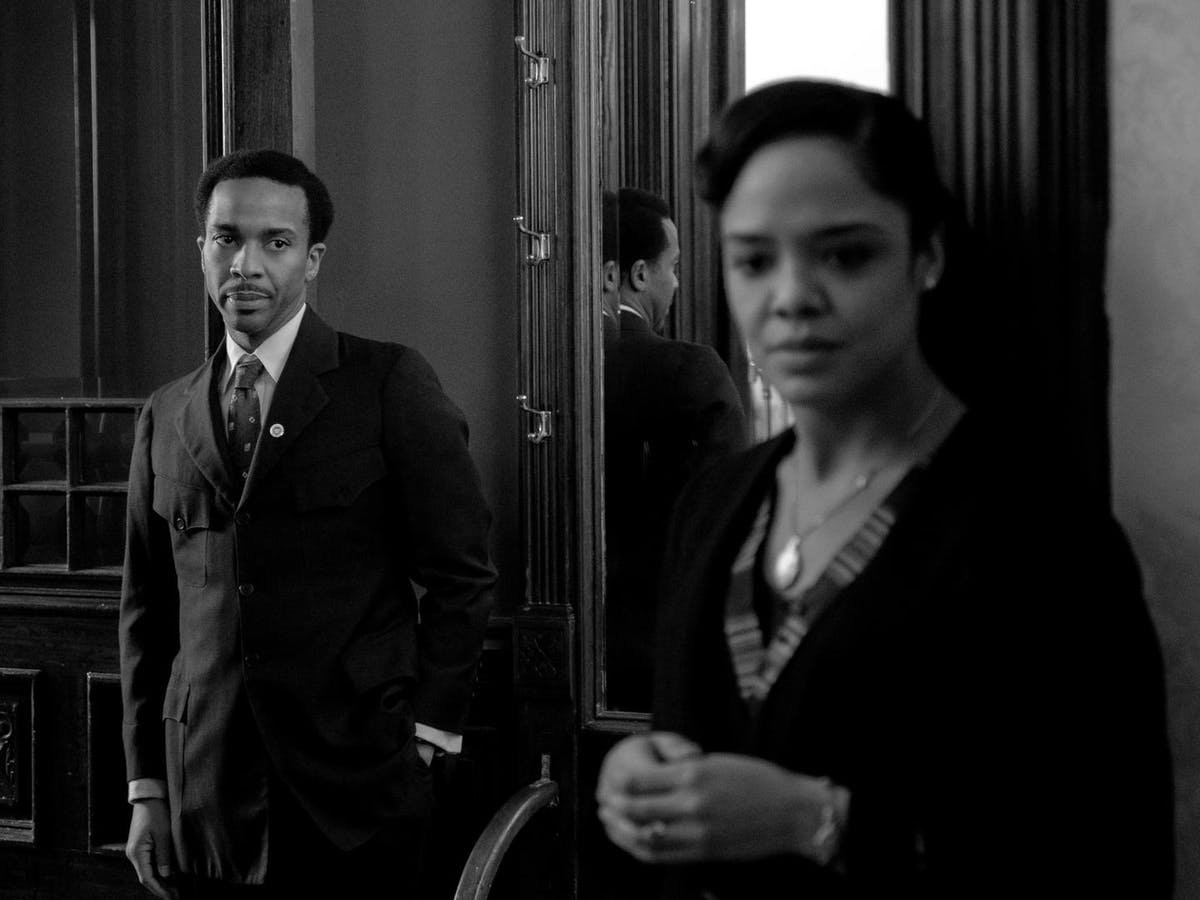
Horror remakes can be decidedly tricky customers. Like those endless Halloween sequels, for instance, they can turn out to be pale retreads of a brilliant original. I have good memories of Bernard Rose’s 1992 Candyman, which was so much more than just another creepy slasher movie. That said, I’m also uncomfortably aware it had its own slew of inferior sequels, so I’m not exactly filled with anticipation at the prospect of Candyman 2021. But, with Jordan Peele attached as producer, I’m hopeful that this new offering from director Nia DaCosta might have something different to offer.

It’s clear from the get-go that this is intended to be more than just a straightforward reboot. For one thing, the opening credits (even the Universal logo) are reversed left to right, as though reflected in a mirror – a delightful reference to the film’s central premise – and then the startlingly stylistic cinematography takes a grip on my senses, aided and abetted by delightful shadow-puppet sequences, depicting the history of the film’s infamous urban legend. There’s also a powerful ‘black lives matter’ subtext running through this version. Some critics have derided it, claiming that it is hammered home a little too forcefully, but I disagree. The message is an important one and it’s clearly stated. It adds to, rather than reduces, the power of the story. And that has to be a good thing, right?

Twenty-seven years after the events of the first film, visual artist Anthony McCoy (Yahya Abdul-Mateen II) is living in a swish high-rise apartment in the area of Chicago that borders the old Cabrini Green housing project where the original Candyman strutted his grisly stuff. This part of the city has been gentrified over the years and now, Anthony and his art-dealer partner, Brianna (Teyonah Parris), spend their time sipping expensive wine and attending flashy art exhibitions. But Anthony has lost his painting mojo. It’s been some time since he came up with anything new.

When Brianna’s younger brother, Troy (Nathan Stewart-Jarrett), tells him about an old urban legend, Anthony is interested enough to wander into Cabrini Green with a camera, looking for inspiration. It’s there that he meets William Burke (Colman Domingo), who tells him more about the story of the Candyman. And it’s there too that Anthony is stung by a bee and begins to experience some startling reactions to the venom…

Cinematographer John Guleserian creates a world where everything seems inverted. The sinister glass towers of Anthony’s home are depicted upside down as though plunging into sinister depths, rather than reaching for the sky. Much of the ensuing action is glimpsed via reflections in mirrored surfaces – and one sequence where an art critic is murdered in her high rise apartment, filmed in a distanced silent long shot actually makes me gasp. I have been made to feel like a helpless observer. The film doesn’t shy away from its slasher roots either. There are some genuinely wince-inducing murders and a couple of instances of extreme body horror that almost have me looking away from the screen. But the violence, though savage, never feels salacious – and DaCosta has the canny knack of knowing exactly when to cut away from the action.

Ultimately, this feels like a palpable win, a film that treats the original with reverence but also manages to develop the story in coherent and inventive ways. The stylish art direction adds a dazzling sheen to the whole enterprise. There’s also a wonderful joke in here that provides, once and for all, the definitive answer to an age old question: ‘Why do people in horror movies go wandering down staircases into dark and gloomy cellars?’ I won’t reveal what happens but, in the midst of all the dread, it actually makes me laugh out loud.

There will always be reboots of popular horror movies and many of them won’t be worth the price of admission. But this one, I feel, is a cut above.

4.6 stars

Philip Caveney

Our Ladies

04/09/21

Cineworld, Edinburgh

Our Ladies is a joyous film, both raucous romp and celebration. It’s a coming-of-age tale, centring on six teenage girls, caught on the cusp between childhood and adulthood. It’s 1996 and they’re straining at the leash during their final few weeks at Our Lady of Perpetual Succour Catholic School in the Scottish Highlands. Fort William is a beautiful town, but it is very remote, and the girls are desperate for new experiences. So, when Sister Condron (Kate Dickie) organises a trip to Edinburgh, they’re eager to go. Okay, so they’ll have to participate in a choir competition, but so what? There will be a few sublime hours in the afternoon when they can do whatever they want: go shopping, go dancing, get pissed, get laid.

Finnoula (Abigail Lawrie), Chell (Rona Morison), Kylah (Marli Sui), Orla (Tallulah Greive) and Manda (Sally Messham) are the cool girls, the natural inhabitants of the coach’s back seat, with vodka in their Coke bottles and cigarettes in their bags. They’re on a mission to take Edinburgh by storm. Finnoula has her own agenda: she wants to experiment a little away from the confines of home, while Kylah has a list of obscure CDs she needs to buy. Chell’s just along for the giggles, and Manda doesn’t care what happens, as long as she’s with Finnoula. Leukaemia survivor Orla has the most specific aims: she wants to buy some thigh high boots and have sex, so that she can stop being the only virgin in the crowd. One thing’s for sure, none of them wants anything to do with straight-laced doctor’s daughter Kay (Eve Austin), with her Head Girl badge and shiny, mapped-out future.

What I like about Michael Caton-Jones’s film (based on Alan Warner’s novel, The Sopranos) is the gloriously realistic and non-judgmental way the teenage girls’ sexuality is portrayed. They’re horny as hell: they’ve all had sex with local hearthrob Dickie Dickinson (Alex Hope), and rumours of sailors coming ashore send them rushing to the town’s one nightclub, on the lookout for fresh meat. On the coach, they flash their bras at passing drivers and hold up signs saying, ‘Shag Me.’ I’ve read reviews that see this as problematic in a post-MeToo world, but I just can’t agree. The girls’ overt sexuality isn’t the problem; the issue is the way some adult men exploit it. And that’s shown here, clearly.

There are only a few false notes. Orla’s light BDSM fantasy doesn’t quite ring true, and I’m never really sure why she’s wearing a headscarf over a perfectly lovely pixie cut. She’s had chemotherapy, but her hair has grown back, and it’s beautifully styled, so the moment of revelation when she removes the scarf to show her new boyfriend, Stephen (Martin Quinn), doesn’t make any sense.

That aside, this is a great little movie. Denis Crossan’s cinematography perfectly captures the majesty of both Edinburgh and Fort William (Loch Linnhe’s singular charm is particularly breathtaking). There is, however, one abiding mystery: how did they manage to film the Edinburgh sequences at the end of my road without me even noticing?

The young cast are wonderful, vivacious and wild, and I’m caught up in their seize-the-day revelling, with its undercurrent of self-knowledge, that this might – for some of them – be as good as it ever gets.

4.1 stars

Susan Singfield

Annette

03/09/21

Cineworld Edinburgh

Director Leos Carax has a reputation for the unusual. Anyone who witnessed Holy Motors (2012) will testify that he loves to embrace the absurd. So Annette would seem like a good fit for him. This surreal rock opera, created by Ron and Russel Mael of Sparks – who themselves are suddenly enjoying some time in the sun after a long sojourn in the ‘whatever happened to?’ file – gives Carax free rein to unleash his bonkers world-view. There are some gorgeous visuals in here, strong performances and several scenes that feel genuinely unique. How ironic then, that what ultimately lets the film down is the songs.

There’s a really upbeat start to proceedings as the cast and crew parade through the streets singing about how excited they are to get this show started. And then it begins…

This is the story of Henry McHenry (Adam Driver), a ‘provocative’ stand up comedian who seems to love insulting the poor saps who buy tickets to see his shows. If it’s supposed to be funny, well, it isn’t working for me, but perhaps that’s the point. Henry is in the throes of a passionate love affair with world famous opera singer, Ann Desfranoux (Marion Cotillard), to whom he sings even when they are in the midst of sexual intercourse. Not wanting to be left out, she joins in with him.

But when Henry’s ‘comedy’ career suddenly hits the rocks and Ann’s operatic trajectory continues to soar, in true A Star in Born fashion, Henry becomes ever more Machiavellian in his attempts to bring her down, even after she’s given birth to their daughter, the titular Annette. The child is unusual to say the very least and not just because she appears to be made of wood.

It would perhaps be unfair to give away much more of the plot, but suffice to say that what starts out as very strange becomes increasingly bizarre. So there’s plenty here to keep a viewer entertained.

Which brings me back to the aforementioned songs, too many of which seem to consist of characters singing the same six words over and over again in a minor key. After a while it begins to feel like a particularly irritating ring tone. It also makes me think that the bum-numbing running time of two hours and twenty minutes could easily have been reduced by a good forty minutes, if the Maels had done a bit of judicious trimming.

It’s also doubly bewildering when a final duet between McHenry and his daughter is the film’s undoubted musical highlight, but by that time it feels too late in the day to save it. A shout out is due to the astonishing Devyn McDowell, who kind of steals the film in its closing moments. I think she’ll be a huge star in the future.

Driver also deserves full credit for playing it straight and giving his role total commitment. Cotillard – somewhat underused for reasons that soon become clear – at least gets to sing some classic arias with great skill. (And yes, she does perform them herself.) But the current plethora of four and five star reviews for Annette seem wildly overstated. And much as I enjoyed Edgar Wright’s documentary about Ron and Russell, this is not their finest moment. I fully expected to love this, but in the end, I’m somewhat disappointed by it.

3.2 stars

Philip Caveney
The Nest

31/08/21

Cineworld

Commodities trader Rory O’ Hara (Jude Law) is an outwardly successful businessman. He is happily married to Allison (Carrie Coon), with whom he has two delightful children, his son, Ben (Charlie Shotwell), and stepdaughter, Sam (Oona Roche). The four of them dwell in a lovely home in New York and Allison is working successfully as a riding instructor. All things considered, Rory ought to be content with his life.

But something is bugging him, something he finds hard to deny. He wants…well, more – and he thinks he’s spotted a perfect chance to achieve it back in London, working for his former boss, Arthur (Michael Culkin). After all, it’s the 1980s, an era when any get-rich-quick scheme should be grabbed with both hands and dragged kicking and screaming into submission. This is an opportunity not to be missed!

Before any of his family can utter an objection, Rory has uprooted them and dragged them off to a mouldering mansion in the dark heart of Surrey. Yes, the place is virtually falling down around them, but Led Zeppelin once recorded an album here! Rory sets to work, purchasing a horse for Allison, building a stable for it and doing his utmost to push Arthur towards a lucrative contract with some America buyers he’s encountered. If it comes off, Rory will be rich beyond his wildest dreams. But what he’s clearly lost sight of is the happiness of his own family. Allison is struggling to tame that new horse. Ben is having trouble at the private school he’s been enrolled at. And Sam just feels as though she’s always having to settle for second best.

As Rory’s overpowering drive to be successful at any cost moves into top gear, the O’ Haras start to unravel, and there’s something about the house they’re living in that feels more and more unsettling…

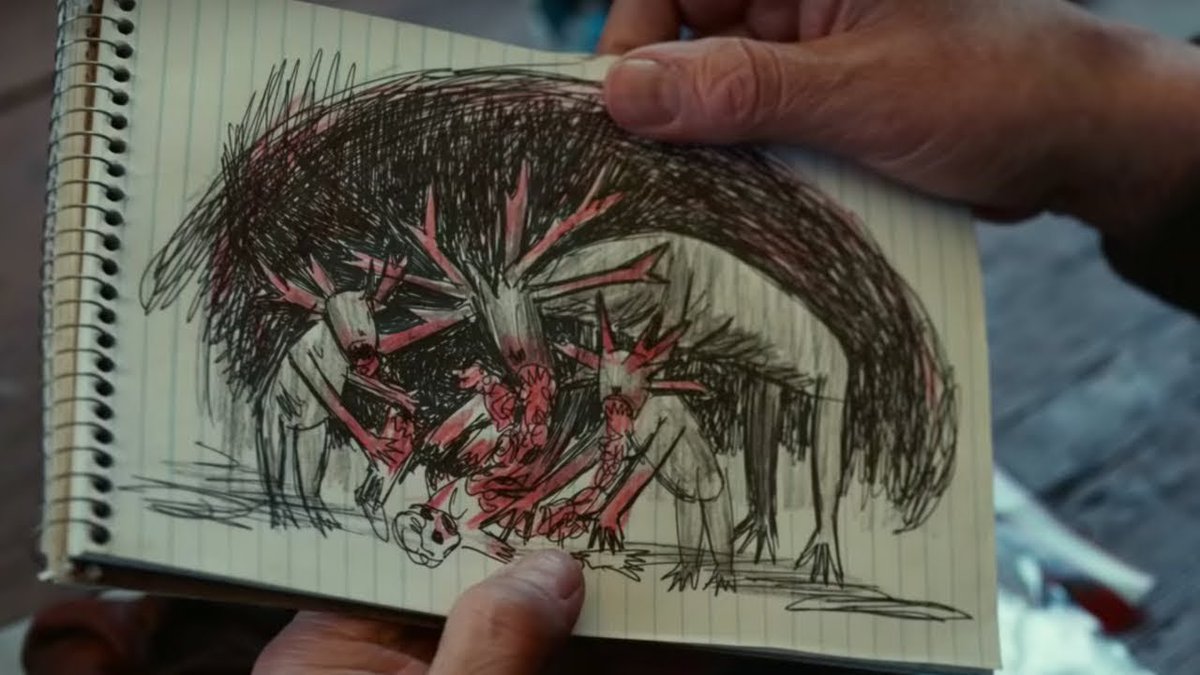
The Nest demonstrates an unusual – perhaps unique – approach to its theme, utilising all the tropes of a contemporary horror movie and applying them to a story about a family in turmoil. The oppressive atmosphere and Richard Reed Parry’s creepy soundtrack continually hint at the possibility of something supernatural lurking in the woodwork, but it gradually becomes clear that the ravenous beast that haunts this home is Rory’s vaulting ambition – that constant yearning for success that he can no longer control.

Rory’s brief visit to his mother (played by the ever-dependable Anne Reid) goes some way to explain how he’s become the venal, boastful creature that he is, but it doesn’t really excuse him, when he can no longer seem to open his mouth without attempting to impress whoever is unfortunate enough to be listening. A horrified Allison witnesses his descent and begins to go off the rails herself.

Both Law and Coon offer superb performances here, capturing the rapid disintegration of the couple’s relationship. Writer/director Sean Durkin helms the piece with great control, gradually racking the tension up another notch as he steers his ship into tragedy. And as for those supernatural possibilities… well, there is one thing here that is never rationally explained – and it will play on your mind after you’ve left the cinema.

4.2 stars

Philip Caveney
Censor

23/08/21

Cineworld, Edinburgh

It’s 1985, the UK is in the midst of Thatcherism and the era of the ‘video-nasty’ is casting a pervasive grip on the public imagination. Enid (Niamh Algar) works as a censor – presumably for the British Board of Film Classification, though it’s never spelled out. Enid’s daily routine obliges her to suffer through a seemingly endless supply of filmed rapes, murders and general carnage, occasionally making notes as she does so (such as suggesting that a display of eye-gouging might be cut down a little). Her colleague, Sanderson (Nicholas Burns) tells her she’s too diligent, that if it were down to him, he’d pass the lot without a qualm, but Enid wants to ensure that she takes every care to protect the public. Because such violent images can be harmful, right?

Enid also has something lurking in her past, the mysterious disappearance of her sister, Nina, when they were children, now an unsolved ‘cold case.’ So when Enid is asked to look at a film by mysterious director, Frederick North (Adrian Schiller), she’s deeply disturbed to discover that some of the details in his screenplay seem to eerily recall what actually happened to her and Nina back in the day, details that she has suppressed for years. And then she meets North’s sleazy producer Doug Smart (Michael Smiley), and the memories of her childhood trauma start to crowd in on her consciousness. Soon, she is having trouble differentiating between what she sees on the screen and what’s really happening…

This is writer/director Prano Bailey-Bond’s first full-length feature and she handles it with verve and assurance. My abiding fear was that a twenty-first century feature that clearly references infamous 80s film-makers like Dario Argento and Lucio Fulvi would feel too much like a director trying to have her cinematic cake and eat it – but, while it’s probably fair to say that there is some of that about Censor, it’s to Bailey-Bond’s credit that she manages to navigate those murky X-rated waters without ever getting out of her depth.

Cinematographer Annika Summerson probably deserves much of the praise for managing to uncannily recreate the look of those vintage films, complete with grainy imagery, lens-flare and ever-changing aspect ratios. Algar shines as a woman who has repressed her inner demons for so long, she wears them like a suit of clothes.

Censor is fascinating, both as a memento of an infamous period in cinema history and as a gradually-unfolding mystery with a cleverly handled pay-off.

4.2 stars

Philip Caveney