

Film

Bank of Dave

19/01/23

Netflix

Netflix’s Bank of Dave claims to be a true(ish) story. While I appreciate that there has to be a degree of artistic licence in any film based on real events, it only takes a quick Google search to persuade me that in this case, that licence may have been pushed a tad too far. ‘Ish’ doesn’t quite cover it. Others, of course, may disagree. Oddly enough, if this were presented to me as a work of fiction, I’d be much happier about it.

Dave Fishwick (Rory Kinnear) is a cheery, plain talking Northerner. He’s also a highly successful businessman with a fortune created from selling vans. Based in Burnley, he’s been lending money to local friends and businesses for years and, what’s more, he donates all his profits to charities. He eventually decides he’d like to set up his own bank (as you do) and engages the services of London-based corporate lawyer, Hugh (Joel Fry), in order to help him achieve that goal. Though initially sneery about anything north of Watford Gap and, fully aware that no new bank has been granted a licence for 150 years, Hugh heads off to Burnley. Once there, he’s swiftly converted by Dave’s cheery persona and by the charms of Dave’s niece, Alexandra (Phoebe Dynevor), an A & E doctor – who, it must be said, appears to have more spare time on her hands than most in her profession. 

But Hugh soon comes up against a cabal of snooty London bankers, led by the villainous (and entirely fictional) Sir Charles Denbigh (Hugh Bonneville, once more steering his career into darker waters). These toffs are determined to block the deal by any means possible. What, let some Northern oik get into the business of banking? No fear!  It soon becomes evident that founding a new bank is going to be no easy matter.

The early stretches of the film feel somewhat caricatured as the evil privileged elite stamp gleefully over everything the cheery Northerners attempt to do. The latter are depicted as a bunch of saints, fond of a good laugh, a foaming pint and a night at the karaoke bar, clapping along as Dave belts out the greatest hits of Def Leppard. (Fans of the veteran band will doubtless enjoy the film as it features several of The Lepp’s best known songs and even a guest appearance from the musicians themselves.)

Once it hits its stride, Bank of Dave is a cheerful and uplifting movie with an overall ‘greed is bad’ message that few viewers will disagree with. Piers Ashworth’s script is funny, Kinnear provides a genuinely affable presence and Fry, once he’s loosened up a bit, is immensely likeable as a leading man. Most viewers will feel genuinely uplifted by the triumphant ending.

So why the relatively low score?

Inevitably, I must return to my original point. How ‘true’ should a true story be? How much massaging of the facts are viewers expected to accept? And why can’t filmmakers – just for once – own up to the fact that a ‘true’ story might not need the unconditionally joyful ending that’s been invented here? 

You be the judge. For me, it’s an issue.

Still, that said, hats off to the real Dave – he might not have achieved the dizzy heights this film credits him with, but he has made a real difference to a lot of people’s lives.

3.2 stars

Philip Caveney

M3GAN

18/01/23

Cineworld Edinburgh

M3gan is a retread of a very familiar trope. The toy that’s more dangerous than a mere plaything. The AI that goes awry. We’ve seen it all before, haven’t we? And yet, having said that, this is terrific fun, brilliantly executed and perfectly paced, with a running time that never allows its deliciously sinister title character to overstay her welcome. There’s also a mischievous sense of humour, which can’t be said for many of its predecessors.

Gemma (Alison Williams) is a roboticist working for a toy company called Funki. They’re best known for producing jolly little companions for children – think more sophisticated Furbys. Indeed, the film opens with their latest cheesy commercial featuring entranced children interacting with their cute little ‘pets’.

Gemma’s ball-busting boss, David (Ronny Chieng) is furious that other toy companies are copying their ideas and selling them at half the price. He wants Gemma to concentrate on creating a cheaper, furrier version of their current best-seller, but she has bigger ambitions. Together with co-workers, Cole (Brian Jorden Alvarez) and Tess (Jen Van Epp), she’s been secretly working on a more sophisticated AI called M3gan (Model 3 Regenerative Android), a super-smart robot, designed to bond with the child that owns it.

When Gemma’s young niece, Cady (Violet McGraw), is orphaned in a car accident, Gemma has to take on the responsibility of parenting a child, something she has no experience of. So wouldn’t it be great, she thinks, if she could enlist a helper, someone who will always put Cady’s welfare first, while also freeing Gemma to pursue her own interests? And before you can say ‘This is a very bad idea!’ Gemma has activated M3gan and synched her with Cady. Now the AI stands ready to oppose anyone who opposes her new best friend. What could possibly go wrong?

This is a ton of fun. M3gan is a wonderfully chilling central character, created using a clever combination of animatronics, puppetry and the stylings of 10 year old actor, Amie McDonald. You’ll believe a doll can dance, whilst simultaneously brandishing a deadly weapon. McDonald’s efforts are matched by a nicely nuanced performance from McGraw, and the scenes between the two of them are spellbinding – especially when M3gan sings one of her syrupy songs! 

As you’d expect in this genre, it’s not all lighthearted fun. There are moments of bloodshed in the later stretches and, though writers Akela Cooper and James Wan don’t flinch from the body horror, director Gerard Johnstone knows exactly when to cut away from images that could so easily nudge this into the realms of an 18 certificate.

In my experience, horror films have a habit of careening out of control in the final third, but once again, M3gan confounds expectations, keeping the momentum going right through to the final scenes. Those expecting a lacklustre reworking of Child’s Play will be pleasantly surprised. Here’s a film that dances to its own tune. I leave the cinema having been thoroughly entertained – though I can’t help reflecting on the world of litigation that poor Gemma is going to face in the aftermath of M3gan’s climactic carve up.

Those in possession of an Alexa, be warned. This may make you a tad nervous about asking her to switch off the lights at bedtime.

4.2 stars

Philip Caveney

Enys Men

15/01/23

Cameo Cinema, Edinburgh

Mark Jenkins made an impressive feature debut in 2019 with Bait – a story about the gentrification of a Cornish fishing village. Filmed in monochrome, using hand-cranked 16 mm stock, it had a distinctive look, akin to one of those old public information shorts that still pop up on Youtube. The film received a well-deserved BAFTA for ‘outstanding debut by a British director’.

Enys Men (Stone Island) is both more ambitious and more nebulous than its predecessor. Jenkins has progressed to colour, but even that is done on his own terms, retaining that grungy, scratchy look he’s known for. He’s also retained the services of Mary Woodvine, who played a wealthy, holiday-cottage owner in Bait. Here, she’s ‘The Volunteer,’ marooned on a remote island off the Cornish coast, tramping industriously around the rocky landscape in a vivid red waterproof jacket. Her daily task is to keep tabs on a bunch of rare flowers.

According to her daily log, it’s the year 1973; day after day, she steadfastly records the fact that nothing has changed. Not a thing. But it’s clear from early on that her life is shadowed by vivid memories and by a series of troubling hallucinations. Who is ‘The Girl’ (Flo Crowe), who hangs around the woman’s cottage, observing her routine? And who is the elusive ‘Boatman’ (Edward Rowe, another familiar face from Bait), who regularly contacts The Volunteer via a short wave radio, promising to bring supplies, most crucially petrol for the generator.

And then there are other characters, less easy to explain – silent milkmaids, singing children, and dirt-plastered tin miners – whose expressionless visages seem to stare across the centuries in silent accusation.

Enys Men is the kind of film that flings out plenty of questions but takes its own sweet time before offering just one or two answers. Indeed, the glacial pace and the constant use of repetition test my patience at times (as does the guy sitting next to me, who spends most of the evening looking at his phone) and it’s probably fair to say that Jenkins’ script needs a little more flesh on its bones to adequately fill the film’s one-hour-thirty-six-minute running time.

Still, for all that, this is an offering that will inspire plenty of conversation long after the final credits have rolled. Jenkins is a true auteur and, though Enys Men certainly won’t be for everyone, it’s nonetheless a unique viewing experience.

3. 6 stars

Philip Caveney

Tár

13/01/23

Cineworld, Edinburgh

Todd Field’s Tár is a complex, demanding film. And yet, despite its difficult themes and its contemptuous, autocratic central character, it’s also engaging and exciting.

At first, I’m not quite sure. The film begins with the credit sequence. This feels pretty audacious in itself. They’re called ‘end credits’ for a reason, right? They’re for putting your coat on and fumbling your way down the stairs in the dark, not for actually watching. I mean, I don’t care who provided the catering truck, or who the post-production supervisor is. Here, I’m forced to watch, and to listen to the music (Elisa Vargas Fernandez’s Cura Mente).

Okay, so I’m unsettled, which I guess is the point, but from here we’re into an equally long opening scene, where we meet the eponymous Tár being interviewed. The discussion itself is deferred by an interminable introduction, listing not just the highlights, but every one of the great conductor’s achievements, and – when the questions do begin – they’re dry and academic, the answers a forensic examination of classical music from a maestro’s perspective. I find myself shifting in my seat, wondering how this is the film that’s just won Cate Blanchett a Golden Globe.

And then…

Suddenly, there’s a shift. We’re with Tár at Julliard, where she’s teaching a class. She’s angered by a young student’s dismissal of Bach as ‘irrelevant’, and we’re offered a glimpse of her scathing nature as she belittles his concerns. It’s a shocking moment – and it’s not the last. Because somebody is watching her…

Blanchett is utterly compelling. She towers; she glowers. Lydia Tár is both maestro and monster, impressive and imperious. She’s living her best life: conducting the prestigious Berliner Philharmoniker, launching her autobiography, Tár on Tár, flying first class around the world, and sharing a stunning apartment with her wife, Sharon (Nina Hoss), and their young daughter, Petra (Mila Bogojevic). But she’s also careless of other people’s feelings, and ruthless in her dealings, both personal and professional. She has dalliances with some of the impressionable young women she mentors, then ditches them when she grows bored. Nothing seems to touch her – until it all comes crashing down.

The whole thing is disquieting, elements of melodrama and thriller juxtaposed with the minutiae of how a professional orchestra works. I’ve never seen anything quite like it. Both the story arc and the characters are unconventional, the precise, deliberate nature of the structure mirrored by Tár’s meticulous dissection of Mahler’s fifth symphony.

By the time the end-end credits roll, I’m a complete convert. This is a fascinating film, so densely packed I know I need to watch it again (something I rarely do). Quite simply, Tár is a masterpiece.

5 stars

Susan Singfield


The Pale Blue Eye

12/01/23

Netflix

It’s the year 1830 and, at West Point military academy, a student has been found hanged. More puzzlingly, his heart has been removed post mortem. Veteran detective August Landor (Christian Bale) is recruited by Captain Hitchcock (Simon McBurney) and Superintendent Thayer (Timothy Spall) to investigate. He is somewhat surprised to discover that he has an ally amongst the cadets in the gangling form of Edgar Allan Poe (Harry Melling), who – as well as exhibiting a flair for writing dark poetry – is also an amateur sleuth. Soon, another murder occurs…

Director Scott Cooper has worked with Bale before (most memorably on the hard hitting western, Hostiles), but The Pale Blue Eye, based on a source novel by Louis Bayard, is a much more laid back affair, handsomely filmed and starring a clutch of accomplished character actors in minor roles. However, the women in particular have a thin time of it. Any film that offers the likes of Gillian Anderson and Charlotte Gainsbourg such thankless, underwritten roles should hang its head in shame.

Ultimately, The Pale Blue Eye is a two-hander between Bale and Melling (the latter having a field day as the wide-eyed, melodramatic young author). The result is an atmospheric story, with a distinctly Gothic flavour and some genuine surprises hidden within its twisty-turny plot – so it’s a pity that the eventual solution to the mystery is so risible – and that the reasons for the murders should prove to be so clumsily reductive about both disability and violence against women.

Poe aficionados will doubtless have fun spotting the various references to the great author’s work, but ultimately this feels like a missed opportunity.

3 stars

Philip Caveney

Till

07/01/23

Cineworld, Edinburgh

The story of Emmett Till and his mother, Maimie Till-Mobley, is a real-life tragedy that echoes down the years, a case that was only fully resolved in 2022 – even though the initial events unfolded more than sixty years ago.

It’s August 1955, and Mamie (Danielle Deadwyler) lives and works in Chicago. Her husband died during World War 2, but she has found herself a decent job (the only Black woman in her office) and is well able to give her live-wire fourteen year old son, Emmett (Jalyn Hall), a comfortable life. Mamie is understandably worried when Emmett announces his wish to go and visit his cousins and work with them on a cotton plantation in Mississippi for the summer. She knows that it will be a stark cultural change from the relatively enlightened city in which the boy has grown up – and she knows too that he’s always ready to lark around and crack jokes. Mamie’s mother, Alma (Whoopi Goldberg), advises her to warn her son to keep his head down. “If he does that, he’ll be fine,” she says. “He’ll be back in no time.” So Mamie reluctantly agrees to the visit.

But her worst fears are soon shockingly realised. In Mississippi, Emmett visits a convenience store and makes friendly overtures to Carolyn Bryant (Haley Bennett), the white woman behind the counter. The next time Mamie sees her son is at the railway station in Chicago, where she views his brutalised, barely recognisable body in a wooden box. He’s been beaten, shot and lynched.

Chinonye Chuku’s film is fuelled by righteous anger, the knowledge that such brutality can – and still does – exist in one of the world’s more powerful countries. There are plenty of other characters in the story, all faithfully rendered, but it is Deadwyler’s extraordinarily powerful performance that gives it wings. Little wonder she’s considered a front-runner for the next Oscars.

If I’m honest, the screenplay (by Chuku, Michael Reilly and Keith Beauchamp) has a tendency to occasionally drift into too much exposition, and the slowly unfolding process of the trial can sometimes seem ponderous. But that’s a minor niggle. I’d be lying if I didn’t admit to viewing much of this through a fuzzy veil of helpless tears.

The most shocking details of all are reserved for the end credits, one of which actually makes me gasp in disbelief.

If you’re looking for a cheery outing to the movies, Till really isn’t the film for you, but it’s an important piece of relatively recent history and a fitting tribute to the memory of both Emmett Till and his incredibly brave and resourceful mother. My advice? Steel yourselves and take a long, hard look.

4 stars

Philip Caveney
A Man Called Otto

05/01/23

Cineworld, Edinburgh

Based on the popular novel, A Man Called Ove by Fredrik Backman – and presumably renamed to avoid problems with pronunciation – A Man Called Otto stars Tom Hanks as the titular Otto Anderson, the kind of character most forgivingly known as a total curmudgeon. When we first encounter him, he’s trudging grumpily around his neighbourhood, firing off hostile remarks to his neighbours at point blank range. They’ve come to tolerate him over the years and it’s clear from early on that some kind of tragedy haunts his past, though the details will only be revealed in flashbacks. In these scenes, the young Otto is portrayed by Truman Hanks (who, it must be said, looks nothing like his father).

But a seismic change is coming with the arrival of a new set of neighbours. Marisol (enchantingly portrayed by Mariana Treviño) is Mexican, the mother of two young girls, with a third child already on the way. Together with her easy-going but hapless husband, Tommy (Manuel Garcia-Rulfo), she immediately launches a charm-offensive, determined to win her gruff old neighbour over – and, bit by bit, she begins to make progress.

The story arc here puts me in mind of A Christmas Carol with all the Christmassy bits cut out. Like Scrooge, Otto has to be reminded of the good things he encountered before a set of unfortunate circumstances transformed him into the miserable, hard-bitten specimen he’s become. He also has to come to terms with a crippling loss that occurred back down the years and to address a long-standing feud he’s had with his other neighbours, Reuben (Peter Lawson) and Anita (Juanita Jennings). Most importantly of all, he has to learn to change his ways before it’s too late.

Meanwhile, he makes regular attempts to end his own life, with decidedly comic results. It’s also interesting to note Otto’s developing friendship with transgender teen, Malcolm (Mack Bayda), kicked out of their house by their father.

If A Man Called Otto occasionally strays a little too close to the lake of sentimentality, screenwriter David Magee and director Marc Forster know exactly when to snatch proceedings back from the edge and the result is a charming tale, by turns funny and poignant. Most of the laughs are generated by Treviño, who displays a wonderful gift for comic timing and of whom I expect to see a lot more in the future. The film’s conclusion will inevitably coax tears from all but the most hardbitten viewers.

Ultimately, this is an enjoyable way to spend a couple of hours. I haven’t read the source novel, so I can’t tell you if it’s a decent adaptation – but I enjoy the film. It marks the point where Tom Hanks officially becomes ‘old.’ And watching it, I’m eerily transported back to the first time I met him, interviewing him for the movie Splash in 1984, when we were both a good deal younger.

3.6 stars

Philip Caveney

Empire of Light

03/01/23

Cineworld, Edinburgh

Sam Mendes’ Empire of Light is essentially a passionate love letter to the cinema, the kind of film that could have created with me – or somebody very like me – in mind

It’s 1981 and, somewhere on the south coast of England, the Empire cinema, a magnificent but now somewhat dilapidated Art Deco picture house, proudly announces its current offerings: The Blues Brothers and All That Jazz. Filmed on location in Margate, the atmosphere of the era is convincingly evoked, right down to the last detail. Here is the age of Thatcherism, a time when fascism, in the form of skin head culture, was in the ascendent. But, within the sheltering walls of the Empire, deputy manager Hilary (Olivia Colman) and her team of social misfits seem inured to change, even though two of their four screens are now permanently closed.

Hilary is occasionally expected to find time to pop up to the office of sleazy manager, Mr Ellis (Colin Firth) – for a joyless sexual fumble on his desk. Ellis is married and it’s supposed to be a secret but – of course – the others are well aware of what’s going on. A change is signalled by the arrival of new employee, Stephen (Micheal Ward), a handsome young Black man with a liking for Two Tone music. When Hilary shows Stephen around the derelict, pigeon-infested ballroom on the top floor, something clicks between them…

At a time when streaming is increasingly becoming the norm, it seems doubly poignant when projectionist Norman (Toby Jones) explains how moving pictures employ a simple trick to deceive the viewer’s eyes into thinking they are watching something more than a long series of still photographs. We occasionally see him in his booth, the walls plastered with images of movie stars from across the eras, meticulously directing images from his 35 mm reels onto a giant screen. The moment is mesmerising and it’s a timely reminder that cinema itself is in danger of suffering the fate of the dinosaurs.

Beautifully shot by Roger Deakins and written by Mendes, Empire of Light is compelling, and at times overpoweringly poignant. I almost get tired of praising Olivia Colman, but – from Tyrannosaur onwards – she has offered up a series of extraordinary screen performances and Hilary may be her best character yet. She’s complex and unpredictable, vacillating from joyful enthusiasm to vengeful anger. You believe in her implicitly and, furthermore, I’ve rarely seen mental illness presented with such skill, such gentle acceptance. Much of this is due to Mendes’ nuanced script, and the fact that the director’s own mother struggled with her mental health may have instructed his writing. Stephen too is a compelling character, somehow managing to operate through the hateful levels of racism he experiences on a daily basis, keeping his gaze firmly fixed on a brighter future.

This charming and affecting movie has me entranced from its opening shot to its final frame and I suspect that anybody with a genuine love of film is going to have a similar experience. Go and see it – in the cinema, please!

5 stars

Philip Caveney

Corsage

02/01/23

The Cameo, Edinburgh

Corsage, for me, is something of a history lesson, albeit one with a lot of fictional elements, so I have to do some frantic reading afterwards, to learn about the source material, and to understand the narrative that is being reimagined here. Austrian writer-director Marie Kreutzer has clearly grown up in a country familiar with Empress Elisabeth, who – along with her husband, Franz Joseph – ruled Austria and Hungary for the latter half of the19th century. It shows. There is almost no exposition: the audience is clearly expected to know Elisabeth, to be aware of her reputation. I’ve never heard of her until today, and I suspect that many others in this cinema are in the same position. This doesn’t spoil the film at all, but it does make me very aware that I am – even as someone who can speak German – experiencing it very differently from its native viewers.

Vicky Krieps plays the Empress. It’s 1877, the eve of her 40th birthday, and she’s desperately bored and unhappy. Her husband (Florian Teichtmeister) tells her that her job is simply to ‘represent’, while his is to, you know, do the actual work involved in heading up an empire. ‘Representing’ mostly means looking beautiful, and looking beautiful mostly means being thin, so Elisabeth’s days are spent exercising, eating tiny slivers of orange and being laced into impossibly tight corsets. No wonder she’s cranky: snapping at the servants, pretending to faint rather than endure another round of meets-and-greets. She’s contemptuous and entitled too – but why wouldn’t she be? Royalty is raised that way. Despite it all, she’s a tragic character, oppressed by the very regime she symbolises, and isolated from her children. I find myself drawn to her, empathising with her sense of entrapment. Krieps imbues her with a vulnerability that softens her, despite never pulling any punches about her capricious nature.

Kreutzer’s direction is interesting. The film moves at a glacial pace, which I find irritating at times, especially in the middle third. But there are many quirky flourishes to admire: the deliberate anachronisms; the audacious fabrications. There are some delicious little jokes (look out for the Emperor’s whiskers), and some very salient points about the nature of celebrity, and the ways in which women are expected to perform. Elisabeth’s straitjacket might be an invisible designer one, cut from the finest fabric, but – in her way – she’s just as trapped as the women she visits in the asylum. Given the opportunity to use her voice where she won’t be heard (in a silent movie reel), her mouth moves to mirror the screams she hears in the hospital. It’s the same gilded cage that did for Diana. And there’s only one way to escape… Let’s hope Meghan and Harry manage to buck the trend.

Corsage, then, is a fascinating piece of cinema. While I don’t exactly enjoy it, I am impressed by it, and I know I’ll be thinking about it for quite some time to come.

3.8 stars

Susan Singfield

Film Bouquets 2022

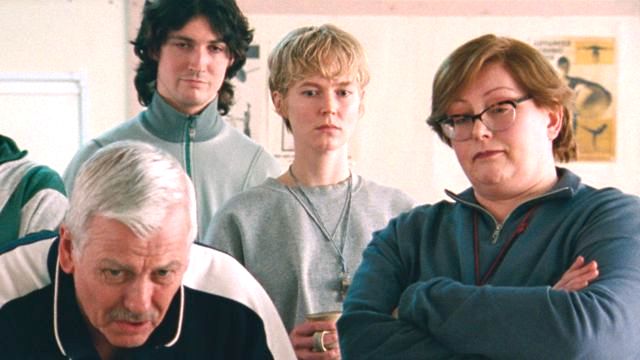
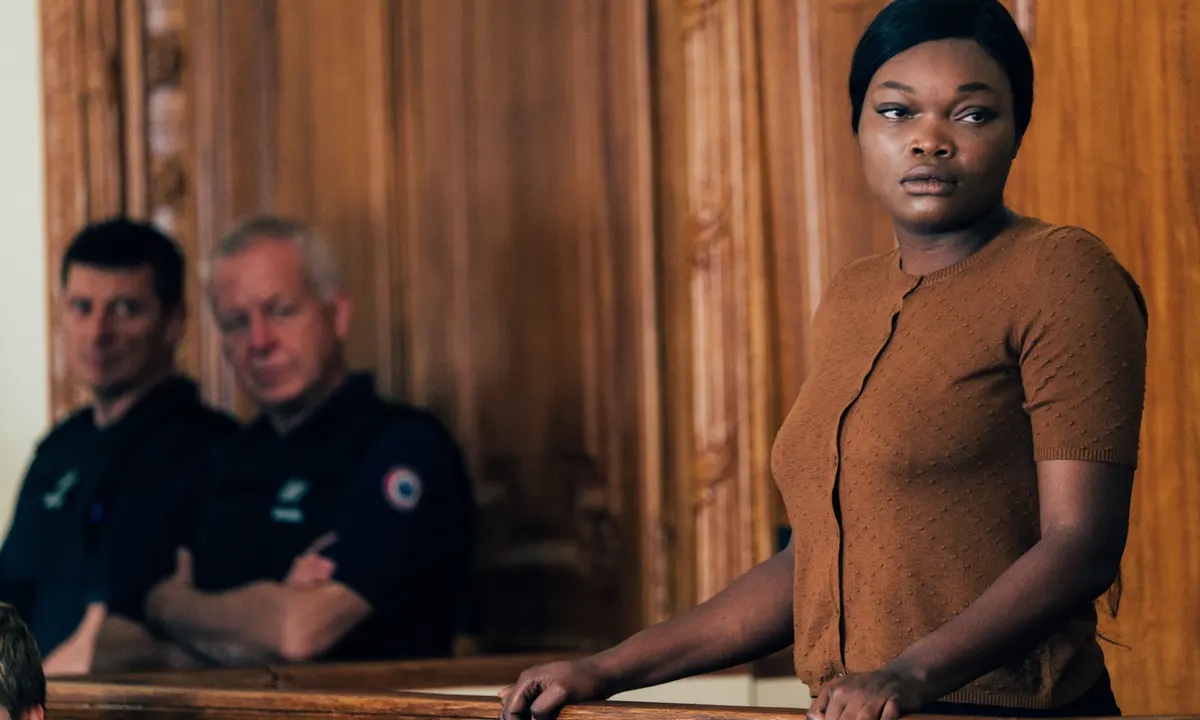
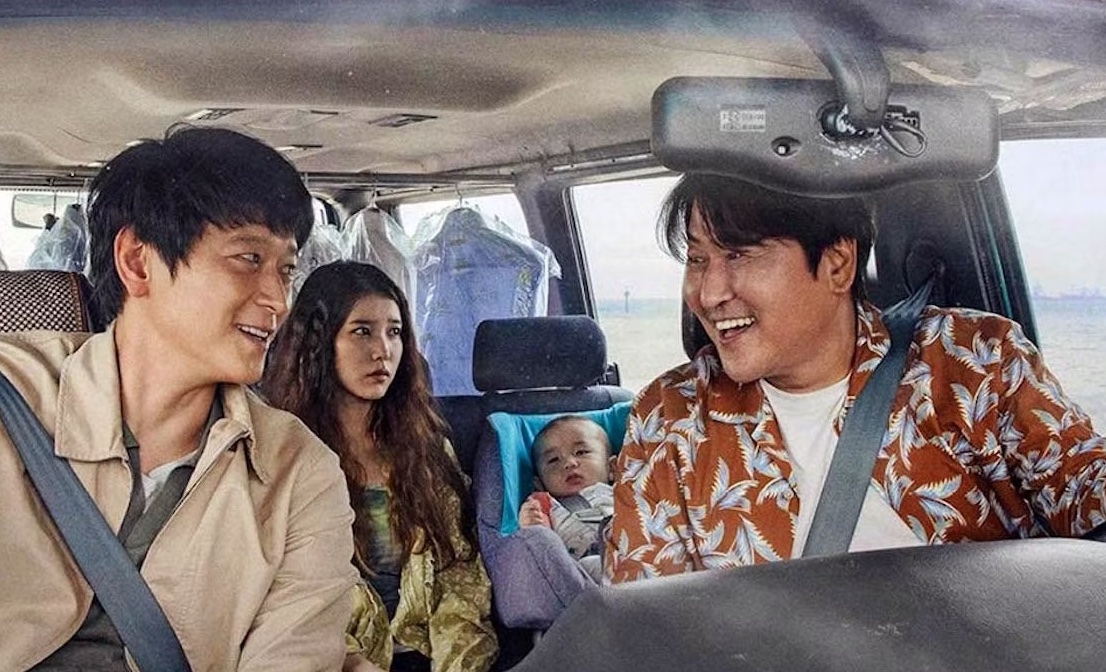
2022 was a surprisingly good year for film, although – as cinephiles – it was worrying to note that audiences seemed happy enough to continue watching movies at home after last year’s lockdowns ended. Cinemas were feeling the pinch and there was a lot of talk of this being the end of an era, while others pinned their hope on Avatar: The Way of Water bringing people back in droves. Here at B&B, we’ve always believed that the big screen is the best possible place to watch a movie, so we were delighted to be back in our local multiplex and indie venues. Here’s our selection of the films that have really stayed with us throughout the year.

Belfast

Kenneth Branagh’s semi-autobiographical film was the first must-see of the year – an absolute joy, with a brilliant central performance from newcomer Jude Hill. This film is all about formative experiences, the kind that shape a young boy’s future.

Nightmare Alley

A new film from Guillermo del Toro is always cause for celebration. This bleak, dark tale is the work of a gifted director at the peak of his powers, handling a tricky subject with consummate skill.

Red Rocket

Director Sean Baker’s ability to depict working-class life is his real strength and Red Rocket, powered by astonishing performances by Simon Rex and Suzanna Son, offers a brilliant exploration of Trump’s America.

The Worst Person in the World

Joaquin Trier’s film is a rare beauty, a picaresque tale of life and love in contemporary Oslo. It’s built around a superb, award-winning performance by Renate Reinsve. A film that positively buzzes with invention.

Elvis

Baz Luhrmann’s biopic is a big, brash, noisy exploration of the late singer’s life and times. Against all the odds, Austin Butler makes the role his own and Tom Hank’s portrayal of the sleazy, manipulative Colonel Tom Parker is also right on the button.

Bones and All

Luca Guadadigno’s visceral tale of love and cannibalism is a brilliant reinvention of a well-worn trope which can be seen as an allegory about drug addiction. It’s brilliant stuff, but not for the faint-hearted – by turns romantic and repugnant.

She Said

This searing account of the uncovering of Harvey Weinstein’s crimes by two Washington Post journalists is timely and superbly recreated, with excellent performances from Carey Mulligan and Zoe Kazan in the central roles.

The Banshees of Inisherin

Martin McDonagh’s film is a beautifully observed contemplation of the thankless futility of human existence. This is his best offering since the sublime In Bruges, with wonderful performances from Colin Farrell and Brendan Gleeson.

Aftersun

A gorgeous film, sweetly sad and tinged with tragedy. Debut writer/director Charlotte Wells knocks it out of the park with her first feature, coaxing extraordinary performances from Paul Mescal and Frankie Corio. An absolute must-see.

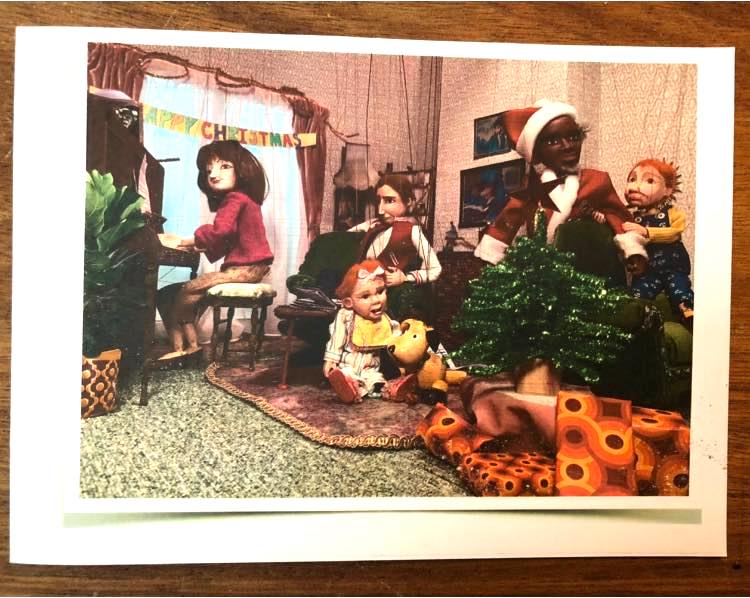
Guillermo del Toro’s Pinocchio

Not content with one title in our selection, del Toro has two – despite the fact that we had to watch Pinocchio on the small screen. Few films deserve the description ‘masterpiece’ as thoroughly as this one.

Philip Caveney & Susan Singfield