Film

I, Daniel Blake

17/10/23

Traverse Theatre, Edinburgh

It’s a propitious time for this play to appear, following, as it does, close on the heels of Ken Loach’s ‘final’ film, The Old Oak. 2016’s I, Daniel Blake was one of the veteran director’s most palpable successes, a compelling and often heartbreaking study of working-class life in broken Britain, set in the North East of England and featurIng stand up comedian Dave Johns in the title role.

It’s Johns who has adapted the film for stage and, for the most part, he’s stuck pretty closely to Paul Laverty’s screenplay – a little too closely perhaps, because surely the whole  point of a theatrical adaptation is to open up the original to fresh perspectives. Suffice to say that all the key scenes from the movie are present and correct, and it’s a hard heart indeed that can resist the subsequent pummelling.

Daniel (David Nellist) is a widower, a carpenter by trade, recently stricken by a debilitating heart attack. His doctor has advised him that he cannot risk doing anything strenuous but, in order to qualify for Jobseeker’s Allowance, he has to be able to demonstrate that he is actively looking for employment. At the job centre he encounters Katie (Bryony Corrigan) and her daughter, Daisy (Jodie Wild), recently rehoused from London and struggling to survive in an unfamiliar location. But Katie is a few minutes late for her meeting and is brusquely told that she is being sanctioned and will have to wait four weeks to get any money.

Daniel befriends the pair and does what he can to help them settle into their new home, while he goes about the thankless task of jumping through the various hoops that the DHSS keep throwing in his path. It’s clear that sooner or later, the merde is going to hit the fan…

The performances are exemplary (particularly Corrigan, who has to handle most of the heavy lifting), and there are some credible attempts to bring the piece up to date with recordings of the voices of Boris Johnson and Liz Truss, demonstrating their complete lack of empathy for anyone who is less privileged than them. Rhys Jarman’s design makes good use of video projection, highlighting a series of meaningless adverts supposed to inspire confidence in the government’s approach to unemployment, while Mark Calvert handles the direction with an assured touch.

But not everything from the film translates effectively to the stage. There are perhaps a couple of heartless interviews too many and a lengthy scene that follows the infamous graffiti incident – a homeless guy delivering an attempt at a rabble-rousing oration –  feels uncomfortably tacked on.

Still, this is a credible and compelling play and the fervent applause from a packed audience makes it clear, that if anything has changed for the unemployed since 2016, it’s certainly not for the better.

4 stars

Philip Caveney
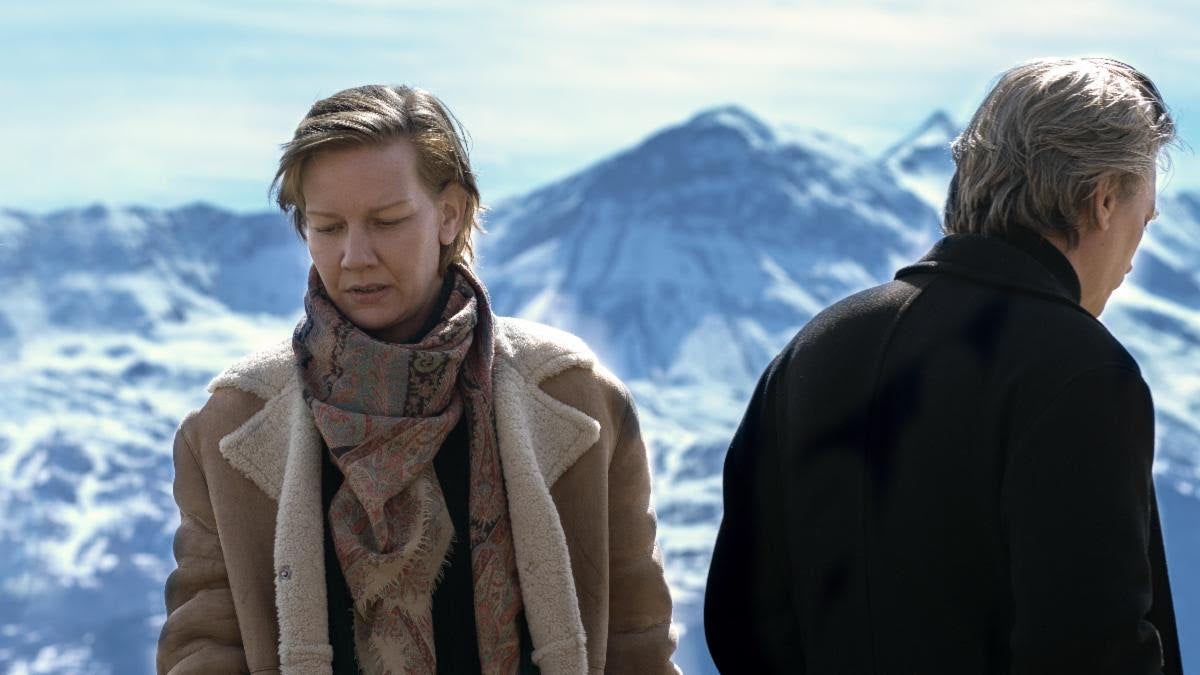
The Great Escaper

11/10/23

Cineworld, Edinburgh

This poignant film, written by William Ivory and directed by Oliver Parker, relates the true story of pensioner Bernard Jordan (Michael Caine), who, when we first encounter him in 2014, is living a life of quiet desperation in a care home in Hove. He and his wife of many years, Rene (Glenda Jackson, in her final film role), have become used to the daily grind of meals and medication. Bernard is a veteran of World War 2 and like many others, he’s applied to go over to France to commemorate the seventieth anniversary of D Day, but is disappointed to be told that he’s left it too late.

Bernard and Rene have a heart-to-heart discussion about the situation. She’s not mobile enough to travel these days, but realises that Bernard has a long-held need to confront a particular ghost from his past. She advises him to go to France anyway, realising that this is something he really needs to do. He takes her at her word and slips away early one morning. When the care home staff finally start to notice his absence, Rene does an excellent job of stalling for time…

The Great Escaper is one of those stories that would seem ridiculously far-fetched if it weren’t true. Aboard the cross channel ferry, Bernard befriends Arthur, a former RAF officer (John Standing), who is haunted by his own tragic memories of the war; and he also encounters, Scott (Victor Oshin), a more recent veteran, who had the bad fortune to stand on a landmine in Helmand Province and is now struggling to adjust to his new life as an amputee.

These contemporary strands are punctuated by scenes of a young Bernard (Will Fletcher) and Irene (Laura Marcus), meeting during wartime and falling in love – and there are steadily unfolding sequences of the event that has haunted Bernard’s dreams for decades. The young actors who double for Caine and Jackson are perfectly cast in their roles.

This isn’t an epic film by any stretch of the imagination – it’s small and realistic and never afraid to show the darker side of ageing, the awful tragedy of it. Though the media interest in Bernard’s adventure actually happened, it’s never feels overblown; it’s measured and realistic. There’s also a refusal to glorify the bravery of the veterans.

The film’s strongest moment is the scene where a sobbing Bernard stands alone amidst a forest of white crosses in a military graveyard. ‘What a waste,’ he cries – and I’m pretty confident there’s not a soul in the audience that would disagree with him.

If eventually the film feels a little too sombre for its own good, there are still genuinely heartwarming performances from the two leads. Caine came out of retirement for the chance to work with Jackson again (they last appeared together in 1975’s The Romantic Englishwoman) and now, reunited for one final appearance, they make a winning team.

4 stars

Philip Caveney
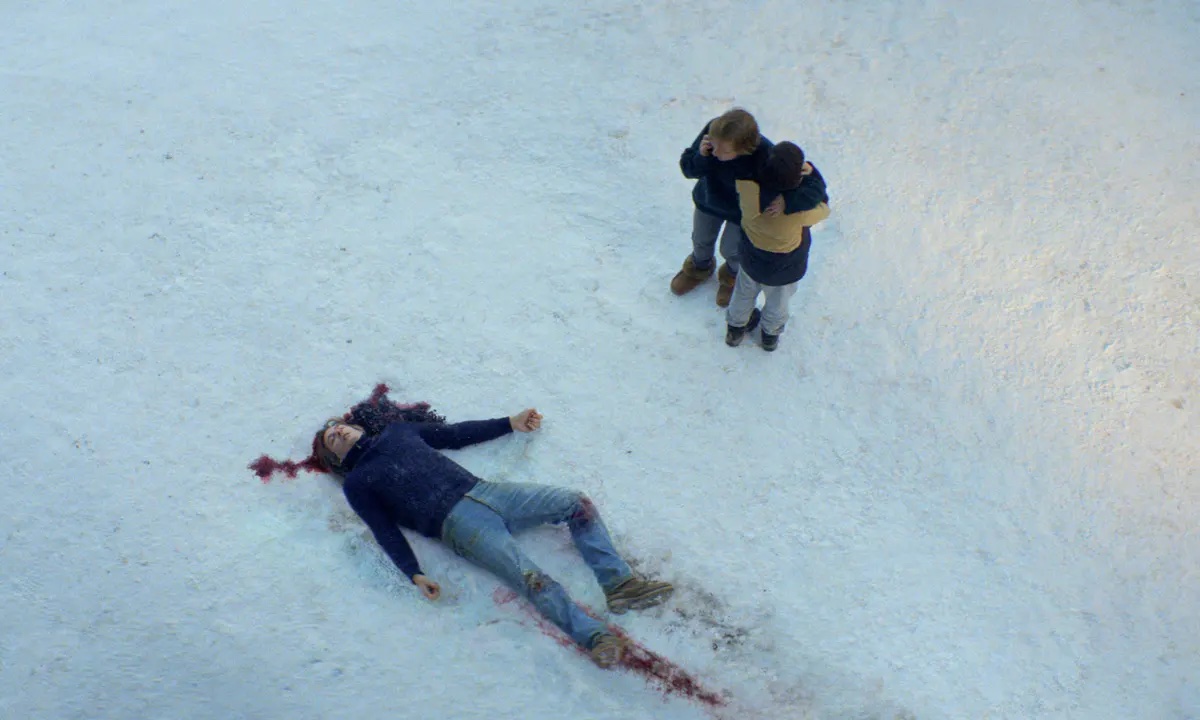
A Little Life

08/10/23

Cineworld, Edinburgh

Beamed live from the Harold Pinter Theatre in London’s West End, A Little Life has recently been the subject of some controversy – not least the fact that its star, James Norton, spends much of the three-hours-and forty-minute duration stark naked. As a gruelling depiction of sexual exploitation unfolds, Norton’s performance is extraordinary, a genuine tour de force.

But there are issues that override that performance.

Jude lives in New York’s trendy Tribeca district and we’re to believe he is a high-flying lawyer (although we are never shown anything of his professional life). He has a trio of equally high-flying friends (a movie star! an artist! an architect!) and is – weirdly, at the age of thirty – about to be adopted by Harold (Zubin Varla), a wealthy professor, who sees Jude as the son he’s never had.

If this sounds too good to be true, don’t be fooled – because most of what ensues is frankly too bad to be true. Jude, it turns out, has endured a childhood of unbelievable cruelty. Abandoned as a baby, he is put into the care of sadistic monk, Brother Luke (Elliott Cowan), who – in the finest Catholic tradition – farms him out as a child prostitute. And it doesn’t end there. He stumbles from one awful experience to the next, exploited at every turn by a string of monstrous abusers (all played by Cowan). Could anyone really be as unlucky as Jude?

But here in the present day, people are queuing up to worship him! Willem (Luke Thompson), the aforementioned movie star, is deeply in love with Jude and wants the two of them to become a couple. But, because of those childhood experiences, Jude cannot enjoy anything like a healthy relationship, preferring instead to spend his time slicing himself open with a razor (something we are repeatedly shown in sickening detail).

Adopted from her own novel by Hanya Hanigihara, with the assistance of Koen Tachelet and the play’s director, Ivo van Hove, A Little Life is, it has to be said, cleverly presented. All the characters are constantly onstage, slipping effortlessly between the various scenes while, on two walls, slow-motion tracking shots of New York offer a sense of place.

But the story feels increasingly like torture porn, a relentless slice of sheer misery. I’m sure the highbrow audiences watching this play would never lower themselves to watch a film like Saw, for instance, yet A Little Life displays the same kind of world view, a callous and prurient invitation to wallow in somebody else’s misery. It feels manipulative, a coldly contrived feel-bad experience, which ultimately adds up to not very much at all.

A section of the audience is seated onstage, behind the action, presumably so that we can see our own reactions reflected in theirs. However, while many are holding handkerchieves to their faces, I feel curiously unmoved because it all feels too callous for comfort. Norton is terrific, but the vehicle he’s starring in really doesn’t stand up to scrutiny.

2.8 stars

Philip Caveney
The Creator

30/09/2

Cineworld, Edinburgh

Director Gareth Edwards made an impressive feature debut with Monsters in 2010, but followed it with a lacklustre Godzilla reboot and, in 2016, an underrated Star Wars standalone, Rogue One. The Creator marks a significant step up for him. This epic sci-fi adventure is set on a war-torn planet Earth in the year 2070 and its story – about the struggle between humans and AIs – could hardly be more topical, particularly as Edwards (who co-write the screenplay with Chris Weitz) takes it in an entirely unexpected direction. Who are the bad guys in this story? Wait and see.

Twenty-six years after a nuclear explosion has ravaged Los Angeles, Joshua (John David Washington) is an American Army operative, working under deep cover amidst AI forces, who are based in New Asia. He’s fallen in love with and is married to enemy scientist, Maya (Gemma Chan), which is complicated to say the very least, particularly as she’s now pregnant by him. But when the mission goes badly awry, Maya is caught in the crossfire and Joshua only just manages to escape with his life.

Some time later, he’s approached by Colonel Howell (Alison Janney), who has compelling evidence that Maya is still alive and wants Joshua to join a new mission to hunt her down. What’s more, she assures him, Maya is deeply involved in the creation of a new AI ‘super weapon’, something that American forces are desperate to eradicate. Sensing an opportunity to be reunited with his wife, Joshua agrees to the mission – but when he comes face to face with the new weapon, he is understandably bewildered. Alphie (Madeleine Yuna Voiles) is a child, possibly the most adorable-looking creature in the universe – and she may even contain Joshua’s own DNA.

What ensues is a fabulous slice of world-building, a series of breathless action sequences set against majestic eastern landscapes. There may be a little too much gunplay here for some – and the 12A certificate means that punches are occasionally pulled to try and constrain all that violence – but it’s impossible not to be swept up in the steadily rising suspense, as Joshua desperately tries to get Alphie to safety.

The Creator looks like a big expensive project but Edwards has brought the film in for a comparatively miserly eighty million dollars (it sounds like a lot but is a third of what these sci-fi extravaganzas usually cost). What’s more, the story, which sounds like broad strokes on paper, is considerably more nuanced than most sci-fi adventures and I find myself constantly impressed by the film’s invention, the grubby reality of the AI creations that populate this imagined world. Edward’s script fearlessly challenges our expectations about America. The usual Hollywood message is completely subverted and the age-old macho-saviour complex revealed as a toxic sham.

John David Washington makes a compelling hero (and, after Tenet, he must be relieved to star in a film that viewers can actually understand), while Madeleine Yuna Voiles is quite simply mesmerising as Alphie. If you like action and you like sci-fi, chances are you’ll enjoy The Creator. And happily, you won’t have to pay fifty million dollars to see it.

4.4 stars

Philip Caveney

The Lesson

24/09/23

Cineworld, Edinburgh

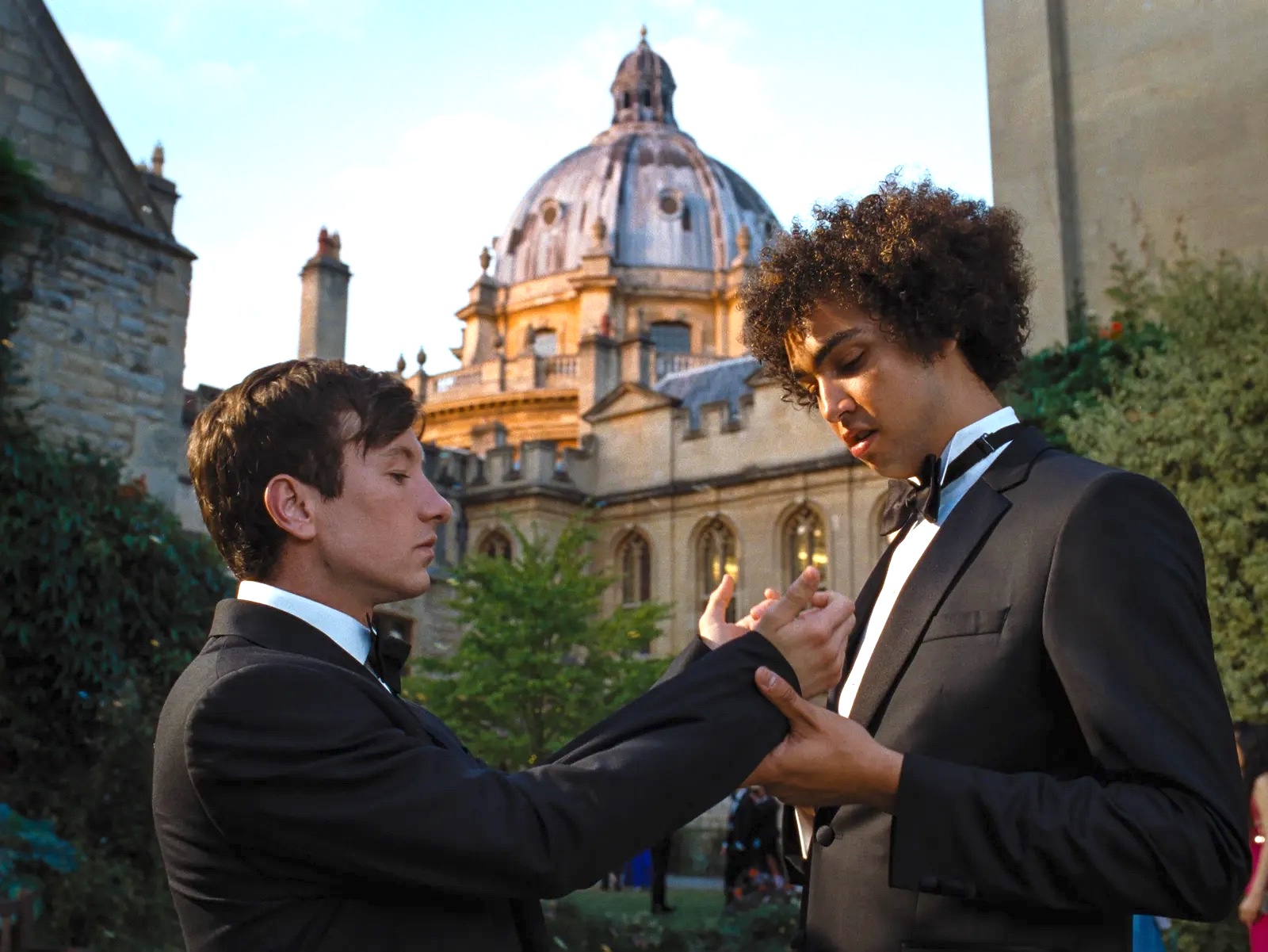
The Lesson is one of those films that’s hugely enjoyable while you’re watching it, but falls apart when you try to analyse it – a bit like the airport novels its antihero, JM Sinclair, so witheringly disparages.

Sinclair (Richard E Grant) is a novelist of some renown – indeed, he is the subject of Oxford graduate Liam (Daryl McCormack)’s PhD thesis – but it’s been five years since he published anything. Since the death of his elder son, Felix, JM has been struggling; he writes daily, late into the night, but he just can’t finish his latest book. Meanwhile, his wife, Hélène (Julie Delpy), is determined that their younger son, Bertie (Stephen McMillan), should get into Oxford to study English literature, a feat which – despite his expensive schooling and obvious intelligence – can apparently only be accomplished by hiring a private tutor.

Enter Liam.

At first, the job seems like a dream come true. The Sinclairs live in the lap of luxury, their large country home filled with impressive artwork and attentive staff. Liam lodges in the guest house, swims in the lake, eats dinner with his idol and gets on well with Bertie; he even has time to finish his own first novel. But JM turns out to be a bruising presence and the family bristles with unhappy secrets; it doesn’t take long for the idyll to sour.

McCormack is a mesmerising screen presence (he surely has a big career ahead of him) and Grant, of course, is never less than interesting. Delpy imbues Hélène with an unsettlingly dispassionate and watchful air, while McMillan plays the innocent very convincingly – so that, no matter what chicanery is exposed, there’s someone we want to see being saved.

Director Alice Troughton does a good job of building the suspense: there’s a genuine sense of threat and the character dynamics are nicely drawn. The script, by Alex MacKeith, has some excellent moments, but also throws up some problems, not least the improbability of Liam’s ability to remember every word he’s ever read, on which the plot hinges. What’s more, although there are some genuine surprises, the main reveal is obvious from very early on, and there are several other details that just don’t ring true.

All in all, although The Lesson has its moments, it doesn’t quite live up to the movie it could be.

3.1 stars

Susan Singfield

Dead Man’s Shoes

16/09/23

Cameo Cinema, Edinburgh

Two men stride purposefully across a picturesque stretch of moorland near Matlock, Derbyshire. They are former soldier, Richard (Paddy Considine), and his younger brother, Anthony (Toby Kebbell), who has learning disabilities. As they walk, gentle music plays and we’re given glimpses of them playing together as toddlers. But what we’re about to see is far from gentle. It’s a harsh and unremitting tale of revenge.

Anthony has been wronged and Richard has returned to his hometown to put things right.

Meadows shows us a run-down rural community that is dominated by local kingpin, Sonny (Gary Stretch), and his sorry henchmen, a bunch of hapless deadbeats who drive around in (of all things) a battered Citroen 2CV. They make easy money selling drugs to the hardscrabble locals and treat anyone who opposes them with contempt. They are the big fish in this tiny pond, simultaneously pathetic yet somehow powerful. It’s clear that Gary and his crew wouldn’t last five minutes in the city but here, they see themselves as players.

But Richard has them squarely in his sights. He begins by confronting them, telling them exactly what he thinks of them and they are instantly dismayed. Nobody ever talks to them like that! Richard knows what they have done to his brother and he will make them pay. As he tightens the screws, he begins to expose them for what they are and they begin to understand the true meaning of fear…

Originally released in 2004, Dead Man’s Shoes is a collaboration between writer/actor Considine and director Shane Meadows and it’s now making a welcome return to UK cinema screens.

Part crime-thriller, part horror story, Dead Man’s Shoes brilliantly utilises Meadows’ flair for eliciting naturalistic performances and improvised dialogue, while Considine displays the hard-edged acting chops that soon launched him into the mainstream. Six years later, he directed the extraordinary Tyrannosaur, which in turn provided Olivia Colman with a star-making vehicle. It’s fascinating to contemplate how much has changed since this film’s release. It seems like a world away.

If you haven’t seen Dead Man’s Shoes, here’s your opportunity to correct the situation. It’s an extraordinary, low-budget gem, that still shines brightly nearly twenty years after its first outing.

4.6 stars

Philip Caveney
A Haunting in Venice

15/09/23

Cineworld, Edinburgh

Kenneth Branagh’s third attempt to bring Agatha Christie’s most celebrated detective back to cinema stardom initially feels like every James Wan movie you’ve ever seen: a series of elaborate jump scares designed to unnerve viewers and open them up to the possibility of supernatural goings on.

But it isn’t long before we encounter Poirot, recently retired to – well, the clue’s in the title – and apparently finished with the world of sleuthing, happier to fill his spare time with gardening. He’s even hired ex-police officer, Vitale Portfoglio (Riccardo Scarmacio), to act as his bodyguard, ensuring that anybody who comes looking for the services of a sleuth is treated to a quick push off the edge of a canal. But one person does manage to get through. She’s author Ariadne Oliver (Tina Fey), who thinks she’s responsible for Poirot’s fame in the first place by featuring a thinly-disguised version of him in one of her early novels. Now she wants to enlist him to investigate the notorious medium, Mrs Reynolds (Michelle Yeoh), who – Oliver claims – seems to be ‘the real McCoy’.

Staunch non-believer Poirot agrees to go along to a Hallowe’en event in a crumbling palazzo, said to be haunted by the ghosts of many lost children. The current owner, Rowena Drake (Kelly Reilly), is keen to contact the ghost of her daughter, Alicia (Rowan Robinson), who committed suicide. Rowena has hired Mrs Reynolds to contact her and find out exactly why she did it.

Poirot is soon happily exposing Mrs Reynolds as a fraud but things take a nasty turn when the medium falls to her death from a high window (bet she didn’t see that coming). And naturally, the killings are not going to end there. A large group of mid-listers find themselves marooned by a violent storm in a building that – conveniently – can only be accessed by boat.

The main problem with A Haunting in Venice is that it’s neither fish nor fowl. The ghost story/horror elements fail to convince, while the plot (if I can call it that) is so risible and convoluted that it’s hard to take any of it seriously. Amidst a sea of familiar faces, the only ones that really connect are a re-teaming of Belfast father and son duo, Jamie Dornan, as a doctor haunted by his experiences in the Second World War and Jude Hill as his somewhat creepy son (who, unfortunately, is a dead ringer for a young Michael Gove). But sadly, they’re not enough to make this turkey fly.

In the latter reaches of the film, some of the sequences are so murky and labyrinthine that I’m occasionally left wondering what is happening to who and where. Screenwriter Michael Green (who has based this farrago on a 60s Christie novel entitled Hallowe’en Party), somehow manages to have his cake and eat it by suggesting that not every supernatural element has been faked. But the intellectual flexing required to solve the case suggests that, by its conclusion, Poirot is back in the game.

After suffering through A Haunting in Venice, I seriously doubt I’ll be back to see the next in the series.

2.4 stars

Philip Caveney

Past Lives

10/09/2

Cineworld, Edinburgh

It’s hard to believe that Past Lives is only the debut film of Korean-Canadian playwright, Celine Song. Here she has created a narrative so assured, so brilliantly handled, it’s little wonder that critics around the world have fallen for its charms. And I am swooning along with them.

When we first see the three main protagonists, they are chatting together in a bar, while a couple of unidentified voices speculate about what their relationship might be. We learn further down the line that they are playwright, Nora (Greta Lee), her novelist husband, Arthur (John Magaro), and Korean engineer, Jung Hae (Teo Yoo). Their relationship is complicated to say the very least, and the film takes its time unravelling an explanation. But relax, there’s no great hurry.

First we must backtrack twenty-six years to see young Nora (or Na-Young, as she was called then) and Jung Hae, at school together in Korea. They are already inseparable, so much so that their respective mothers take the two of them out on a first ‘date’. But huge changes are looming. Nora’s parents are keen to emigrate to Canada, so that their respective artistic careers can prosper. To help her adapt to her new home, Na-Young adopts the name ‘Nora,’ and is obliged to say goodbye to Jung Hae, but twelve years later, the two of them reconnect online and begin a series of soulful conversations.

Jung Hae tells Nora that he still thinks about her all the time. Sadly, work commitments get in the way and once again the two of them drift apart.

Then, at a writer’s retreat in Montauk, Nora meets Arthur and, almost before they know what’s happening, a decade or so has slipped by and the two of them are happily married and living in a tiny apartment in New York.

And then, Jung Hae travels thousands of miles to visit them…

In clumsier hands the stakes at this point. Nora and Jung-Hae would doubtless realise that they’ve always been meant for each other and Arthur merely an obstacle to be overcome, by force if necessary. But Song’s beautiful and lyrical approach to the story displays a generosity of spirit that takes in all those conflicting emotions and accepts that it’s okay for them to exist – that the three protagonists are all on the same journey through life and can co-exist, without recourse to anger or brutality. Song’s perceptive screenplay makes her characters act and talk like real people actually do.

Shabier Kirchner’s cinematography captures the cities of Seoul and New York in vivid detail and the plaintive music by Christopher Bear and Daniel Rossen is perfectly matched to the film’s languorous, sedate pacing. By the third act I am, quite frankly, spellbound by the story, which is sweet and yearning and deeply affecting, particularly when Jung Hae confesses to Nora that he didn’t realise that liking Arthur would cause him so much pain. The conclusion is so adeptly handled I want to applaud.

If this is Song’s debut, I can only wonder about what she might achieve further down the line. Meanwhile, Past Lives is truly impressive. Miss it and weep… or see it and weep. The choice is yours.

5 stars

Philip Caveney

The Equalizer 3

03/09/23

Cineworld, Edinburgh

Denzel Washington famously resists doing sequels, but this is his third outing as everybody’s favourite vigilante, Robert McCall, and his fifth film with Antoine Fuqua, with whom he won his second Oscar for 2001’s Training Day. (If you’re wondering, the duo’s other collaboration is the much underrated remake of The Magnificent Seven. You’re welcome.)

TE3 takes McCall away from his familiar beat and sets him down in Italy, where he’s exacting his usual unflinching version of comeuppance to an elderly farmer, who is not quite the innocent he appears to be – though what he’s actually done to deserve such retribution is kept a secret until the end. On first appearance, McCall has an almost sepulchral look, as though his endless diet of shooting and punching bad people has taken a terrible toll on him.

On his way out, McCall makes an uncharacteristic mistake and winds up with a bullet in his back, but luck is with him and he winds up being taken care of by Enzo (Remo Girone), a charming small-town doctor who doesn’t ask too many questions and who offers McCall a place to lay his head. Filmed in the impossibly picturesque town of Amalfi, it’s hardly surprising that McCall soon starts thinking that he’s finally found himself a home.

But even impossibly picturesque Italian towns have their crosses to bear and here it’s in the form of Mafia thug Vincent Quaranta (Andrea Scarducio), who has his own heinous plans to transform the sleepy little harbour into a convenient place for shipping off regular consignments of illegal drugs. It soon becomes clear that McCall has some more trash to take out before he can happily retire…

Washington is a fabulous actor, with enough gravitas to elevate material like this and take it to another level – and Fuqua too is a skilled director, who never makes the mistake of allowing the violence in his films to look ‘cool’. The physical exchanges between McCall and those who are foolish enough to underestimate him are unflinchingly visceral and (quite literally) pull no punches.

You could argue that the people McCall comes up against are almost cartoonishly evil and that much of the pleasure in watching these films comes from seeing such creatures given the same rough treatment they’re happy to hand out. But I’d be the first to admit that I enjoy TE3 enormously and, on a giant IMAX screen, Washington’s performance looks even more towering than usual.

There’s also a labyrinthine quality to the plotting here, including a through-line that brings in Dakota Fanning as CIA operative Emma Collins as a key part of the story – and there are brief glimpses (blink and you’ll miss ’em) of characters from the previous instalments. Stay in your seat till the end and all will become clear.

Will there be a TE4? Probably not. It’s unusual for a franchise to make it to a third outing without jumping the shark, so maybe Washington and Fuqua should quit now, while they’re still ahead. Then again, Robert McCall does seem to have an uncanny knack of moving to locations that need his unequivocal style of rough justice. If one arrives, I’ll be there for it.

4 stars

Philip Caveney

Scrapper

29/08/23

Cineworld, Edinburgh

Georgie (Lola Campbell) is just thirteen years old and, since the recent death of her mother, she’s managing to fend for herself in a council flat somewhere in London, all on her own. The neighbours know of her situation but turn a blind eye to it, not wanting to see her engulfed and spat out by the system. Meanwhile, with her best friend, Ali (Alin Uzan), Georgie is making ends meet by stealing second-hand bikes and selling them on to local shopkeeper, Zeph (Ambreen Razia).

Georgie is determinedly self-sufficient and precocious beyond her years, even able to smoothly talk her way out of trouble when a woman finds her trying to remove her bike-lock. But then one day, Jason (Harris Dickinson) climbs over the garden fence and introduces himself to Georgie as the father she’s never met. He’s been over in Spain working as a ticket tout, but has returned with the intention of getting to know his daughter. Georgie is initially suspicious of him, not allowing him to sweet-talk her, the way he’s already doing with Ali – but, bit by bit, her defences begin to crumble…

This is the feature debut of young writer/director Charlotte Regan and it’s been compared to Aftersun, with which it does perhaps share some DNA – though that’s perhaps unfair, because Scrapper is its own beast.

Steadfastly refusing to play to the usual poverty porn clichés, Scrapper depicts the estate where Georgie lives in bright, primal colours and offers us short, direct-to-camera comments from some of the other local inhabitants – even the spiders in Geogie’s house manage to have their say! Campbell’s performance is extraordinary, while Dickinson is totally convincing as Jason, a man who has never really matured but is doing the best he can to meet the demands of fatherhood.

I like too the scenes that are shown from Georgie’s own POV – the weird assemblage of bicycle parts she has constructed in the spare room, which in her mind’s eye assumes gigantic proportions: a dizzy ladder climbing to heaven, where she hopes her mother is waiting for her.

Sweetly sad and often affecting, Scrapper is a delightful low-budget gem from a young director with plenty of potential.

4 stars

Philip Caveney