Film

How To Have Sex

31/01/24

Mubi

Molly Manning Walker’s debut film comes screeching onto the screen like, well, a trio of teenage girls. Tara (Mia McKenna-Bruce), Em (Enva Lewis) and Skye (Lara Peake) have just finished their GCSEs and now they’re in Malia, buoyant, excited and ready to cut loose. They’re looking at seven days of sheer, unadulterated hedonism. And, as Skye keeps reminding her, Tara needs to seize the opportunity to lose her virginity.

At its heart, How to Have Sex is about peer pressure. The holiday resort’s formulaic enforced ‘fun’ doesn’t leave much space for dissent, especially when you’re sixteen and desperate to fit in. The girls really enjoy their first night, getting drunk, doing bad karaoke and eating cheesy chips, but the following morning, hungover, Skye puts the kibosh on all that. “We’re not going to get laid if we stick together all the time,” she says.

And from then on, Tara stumbles, adrift.

McKenna-Bruce is perfectly cast as Tara: all big eyes and yearning, wanting to find her place in the world. Meanwhile, Peake deftly captures Skye’s insecurity-turned-meanness, while Lewis shines as the only one of the three who is at ease with herself: unlike her friends, she knows who she is and what she wants. She’s got the grades, the career plan – and she’s comfortable with her sexuality, enjoying her holiday fling with Paige (Laura Ambler), their next-door neighbour at the hotel.

Paige’s room-mates are Badger (Shaun Thomas) and Paddy (Samuel Bottomley). There’s an unmistakable spark of attraction between Tara and Badger, but they’re both quite shy and soft underneath their brash surfaces – and swept along by the pressure to conform. They’d clearly like to be together but instead, hyped up by a baying nightclub mob, he goes onstage for an unsatisfactory public blow job, while she endures a miserable first shag with Paddy.

Molly Manning Walker convincingly evokes the teenage experience, and I especially like Tara’s palpable sense of not fitting in, not being able to enjoy herself in the same way as the others appear to be doing. Despite its in-your-face appearance, the film is actually pretty nuanced, the emotional and social complexity acknowledged and explored.

My only bugbear is a petty one: why are they talking about “getting ten As” when GCSEs have been graded by number since 2019?

Nitpicks aside, How to Have Sex is a sweeter, more engaging and thought-provoking film than its name and cover-image might suggest. Much like its characters.

If, like us, you missed this movie’s fleeting cinema release, you’ll be pleased to know that you can now catch it on Mubi.

4 stars

Susan Singfield

The Zone of Interest

28/01/24

Cineworld, Edinburgh

The opening credits roll, the title appears onscreen… and then it slowly fades to black and the screen goes blank. For a very long time. I’m starting to think that something has gone wrong but then I become aware of dull sounds: a hubbub of voices, the occasional twittering of birdsong. And I think I know why director Jonathan Glazer has engineered this. 

He is giving the audience an opportunity to relax and take a few deep breaths, something we will doubtless be thankful for later.

The screen finally illuminates and we observe a family enjoying a tranquil summer picnic on the banks of a river: a father, a mother and their children of various ages. They laugh and splash in the water and chase each other through the trees. And a little while later, the family pack up their things and head back through the verdant countryside to their lovely home with its extensive garden. We can’t help noticing though, that a high wall borders that garden, a wall topped with barbed wire. And on the far side of it, we can just see a tall chimney spouting a thick column of smoke…

Welcome to the family home of Rudolf Höss (Christian Friedel) and his wife Hedwig (Sandra Hüller). He, of course, is the commandant of Auschwitz and spends much of his time on the other side of the wall, committing atrocities on a daily basis. Meanwhile, Hedwig runs the home, keeping a sharp eye on her many servants and even playing gracious host to her mother, who can’t believe how lucky her daughter is to have such a lovely home and garden to spend her time in. Mother even peers towards the wall and wonders if that woman is in there. You know, the one she used to clean for…

The Zone of Interest, adapted by Jonathan Glazer from the novel by Martin Amis is an extraordinary film – stark, chilling and impossible to dismiss. This is about the mundanity of evil, the bureaucracy of mass murder. It’s a film in which smiling men in business suits sit around a table with charts and statistics and work out the best way they can feed ever more people into the ovens – and how, if the ovens are recharged in rotation, they can, in effect, wipe an entire race of people off the face of the planet. 

Rudolph, we see, does not think of himself as a monster; he’s simply a man working to the orders of his Führer, doing his best to accomplish the difficult task he’s been set. He loves his wife, his children, even his horse. But of course, real monsters are just everyday people fuelled by hierarchy, encouraged by their superiors to wade ever deeper into the sewer of depravity. People who obey without question.

Like the best horror films, The Zone of Interest understands that what frightens an audience most is what it doesn’t see. There are no torture scenes here, no images of people burning, starving or fighting for their lives. But there are sounds in the background, a constant mingling of shouts, moans, screams and gunshots – a relentless cacophony that gradually grows in volume as the film progresses, sometimes accompanied by Mica Levi’s hellish soundtrack.

I cannot stop thinking about what’s happening on the other side of the wall, cannot feel anything but appalled that human beings can inflict such savagery on each other. And I’d be a lot happier if I believed that such things could never happen again. But sadly, I don’t.

The film has a coda which I won’t reveal, only to say that it depicts the aftermath of the Nazis’ attempted genocide, showing in a few broad strokes the enduring, poisoned legacy that they left in their wake. This may not be a film to ‘enjoy’ in the traditional sense, but it is undoubtedly a cinematic masterpiece, and one which I would urge every viewer to see.

5 stars

Philip Caveney

All of Us Strangers

27/01/24

Cineworld, Edinburgh

All of Us Strangers is a curious creature. Not exactly a tale of the supernatural, not really a love story, it borrows elements from both genres and weaves them seamlessly together to create something that’s impossible to classify. More than anything else, this feels like a lament for lost opportunities – a meditation on longing and regret.

Written and directed by Andrew Haigh and based on a novel by Taichi Yamada, it tells the story of Adam (Andrew Scott), a lonely screenwriter, currently plying his trade in a near-empty high-rise somewhere in London. He’s currently attempting to write a screenplay based on a true incident from his childhood: the death of his parents in a car crash back in 1978, when he was eleven years old.

Adam’s musings are interrupted by the arrival of the man who appears to be the block’s only other resident. He’s Harry (Paul Mescal), currently halfway through a bottle of whisky and clearly looking for company. But Adam is nervous and politely refuses Harry’s advances.

Seeking inspiration, Adam makes the train journey to his parents’ old house in the suburbs of Dorking and is astonished to discover that both Dad (Jamie Bell) and Mum (Claire Foy) are still alive, looking exactly as he remembers them. The 70s aesthetic of their lives is convincingly evoked, right down to the soundtrack of Erasure and Frankie Goes to Hollywood, and his folks are eager to find out how their boy has fared since they last saw him.

And then, Adam reconnects with Harry and an intense sexual relationship develops, their first encounter sensitively captured, their wild hedonistic nights in London’s gay clubs accompanied by a succession of pounding nightclub bangers. But where are they – and the story – heading?

Essentially a four-hander – we never meet any other characters – this sweetly-sad narrative is anchored by impressive performances from the four stars. Scott, in particular, creates a beautifully-judged picture of loneliness and regret, a man struggling to come to terms with a world where he struggles to function. In the scenes where he’s enjoying some time with his parents, he effortlessly slips into a state of childlike wonder.

Many viewers have said that watching this moved them to tears, though I stay resolutely dry-eyed throughout. Perhaps this says more about me than it does about Haigh’s film, but what All of Us Strangers captures particularly well for me is the curious way a writer’s mind works; how half-remembered incidents from childhood can be developed into something tangible, the stuff of alternative reality, and how such discoveries can sometimes become almost overwhelming.

If not the five-star masterpiece I’ve been led to expect, this is nevertheless an exciting and provocative slice of contemporary cinema.

4.2 stars

Philip Caveney

The End We Start From

21/01/23

Cineworld, Edinburgh

The End We Start From – with a screenplay by Alice Birch based on the novel by Megan Hunter – comprises two distinct stories in a single telling. On the surface, we have the literal tale of an apocalyptic flood rendering much of the UK uninhabitable. Underneath, there is a metaphorical account of a new mother drowning under pressure.

Directed by Mahalia Belo and starring Jodie Comer, the allegory is not subtle. As the Woman takes a bath and caresses her heavily-pregnant belly, the camera inverts: her whole world is about to be turned upside down; as the Woman’s water breaks, so the flood smashes through her kitchen window, engulfing her and changing everything. She’s nameless, billed only as ‘Woman’; she is clearly supposed to be an archetype, a universal Everymother.

But it doesn’t need to be subtle. This works.

Comer is luminous; she has that elusive quality we used to call the ‘X’ factor until the phrase was hijacked by Simon Cowell’s karaoke nights. The camera loves her, and she is a truly talented actor. The supporting cast (especially Joel Fry as her partner and Katherine Waterston as her friend) are great, but there’s no doubting whose movie this is. Comer imbues the Woman with a strong, relatable character, fighting for survival against the odds.

Birch’s script is spare and under-stated – and therefore terrifyingly believable. This isn’t a Zombie flick, where everyone suddenly becomes feral, but the prospects are just as bleak; this climate disaster is devastating but credibly so. People are flooded out of their homes so they take to their cars in search of somewhere safe. Before long, the roads are blocked; towns and villages on higher ground close ranks, scared of sharing and losing what they have. Shelters are set up, but spaces are limited. In the midst of all this is the Woman, wide-eyed with the shock of having just given birth, frightened for herself and for her baby. And desperate people do desperate things…

Belo’s low-key direction cleverly magnifies this awful plausibility. She never lingers on the violence we know is out there, its menace amplified by the fact it’s just out of sight. The aftermath of a broken, waterlogged London emerging from the storm is especially affecting. The tempestuous weather – beautifully, even languorously, shot by Suzie Lavelle – feels like a warning, a case of ‘when’, not ‘if’. We can almost feel the strength of nature and our powerlessness against it.

Indeed, emerging from the cinema into the wild wind and rain of Storm Isha, the storyline seems scarily prescient as we battle our way home.

4.3 stars

Susan Singfield

The Holdovers

20/01/24

Cineworld, Edinburgh

Great Christmas movies are such rare creatures – hard to get right at the best of times – so when one arrives at multiplexes in late January, I can only put it down to circumstances beyond the filmmaker’s control. Alexander Payne’s The Holdovers definitely belongs on Santa’s nice list, and better late than never, I guess. 

The action takes place at Christmas 1970 and tells the story of a grumpy educator, who finds himself thrown into the company of a headstrong young student, and gradually begins to discover the true meaning of the festive celebration. Anybody thinking that this sounds a little like Ebenezer Scrooge is on the right lines, though any similarities to Charles Dickens’ classic tale may be entirely unintentional.

The curmudgeon in question is Paul Hunham (Paul Giametti), a classics teacher at elite New England boarding school, Barton Academy. Paul has taught there for years and is plagued by problems, including an eye condition and a rare syndrome that makes him smell of rotting fish. Perhaps unsurprisingly, thanks to his acerbic manner and his refusal to ever back down on any given subject, he’s disliked by pupils and staff alike. He’s obstinate, even when the school’s head virtually begs him to give a more forgiving exam grade to a boy whose father is one of the school’s most generous patrons.

As the Christmas holidays loom and snow blankets the countryside, Paul is assigned the thankless task of looking after those few pupils who, for whatever reason, are unable to make it home to their families. At first, there are five boys in this invidious position, but, when a wealthy father with his own helicopter intervenes to ferry most of them away on a skiing holiday, there’s only one of them stuck with the prospect of seeing in the New Year with Paul.

He’s Angus Tully (Dominic Sessa), a boy plagued by depression ever since the break up of his parents’ marriage, and currently struggling to make it through each day. The ill-matched duo’s only other companion is Mary Lamb (Da’Vine Joy Randall), the school’s head cook. She’s mourning the recent death of her only son, a former student at Barton, obliged to join the American army, when Mary can’t provide the necessary money to secure her Black son a place at one of the prestigious Universities his white classmates take for granted.

A merry trio indeed.

From these distinctly unpromising beginnings, Payne spins a moving, endearing and sweetly sad story about human interaction. As Paul and Angus begin to learn about each other, so their respective defences are gradually breached. The film, already nominated for several awards, demonstrates what a brilliant performer Giametti is when given the right material, while Sessa and Joy Randall are right there with him. The era is convincingly evoked (down to a set of vintage pre-credit titles) and Eigild Bryld’s stark, snow-bound cinematography captures the story’s bleak setting perfectly. As a former boarding school boy, I find myself constantly reminded of the occasional ‘holdover’ experiences from my own childhood.

Whether this film has the power to make waves against this year’s impressive raft of Oscar contenders remains to be seen, but I suspect that The Holdovers will be the Christmas film of choice for a lot of movie fans in years to come. But maybe I’m putting too much emphasis on the festive setting: a film this good is welcome any time.

4.8 stars

Philip Caveney

Poor Things

12/01/24

Cineworld, Edinburgh

What is Yorgos Lanthimos’ secret? Since 2015’s The Lobster, he has released a string of wild, absurdly funny and generally unhinged films, the kind of projects you’d expect to see consigned to little art house cinemas, but – as we saw withThe Favourite – his inventive offerings are pulling in the big crowds and attracting top-flight performers to star in them. Tonight’s early evening screening is packed with a predominantly young crowd, who spill out afterwards, excitedly discussing what they’ve just watched. In an age where predictable comic-book films have ruled the roost for far too long, this is heartening to see.

Poor Things, adapted by Tony McNamara from the novel by Glaswegian author Alasdair Gray, is surely Lanthimos’ most surreal piece yet. It’s been relocated to London (much to the ire of Gray’s fans) and relates the story of Bella Baxter (Emma Stone), a woman who, in the film’s opening scene, throws herself from a bridge into the River Thames. Her corpse is found by Dr Godwin Baxter (Willem Dafoe), a scientist in the Victor Frankenstein tradition. He carries her to his laboratory, reanimates her and makes a few radical adjustments, creating a new being who has to completely relearn how to speak, walk and generally comport herself.

Godwin is assisted by his young protégée, Max (Ramy Youssef), who quickly falls in love with Bella, but into this already weird scenario wanders caddish lawyer, Duncan Wedderburn (Mark Ruffalo). He spots an opportunity and promptly purloins Bella for his own nefarious purposes. He whisks her away on a whistle-stop tour of the world, calling in at some of the strangest cities you’ll ever witness on the screen…

It’s hard to know where to start throwing superlatives at this, but I’ll try.

Poor Things simply vibrates and hums with pure invention, switching from black and white, to heightened colour, from fish-eye lens interiors and cramped city streets, to majestic – almost hallucinatory -landscapes, every frame so packed with ideas that I’m convinced I could watch this a dozen times and spot something new with every viewing. Stone, in a performance that has already claimed a Golden Globe and seems a good bet for an Oscar, is extraordinary here, uncannily inhabiting the character of a naïve woman. She is subjugated and exploited by the vicissitudes of toxic males, but somehow manages to assert her own agency and emerge victorious. Dafoe, who could so easily have been a clichéd horror figure, emerges as a sympathetic and weirdly adorable character, who has devoted his life to exploring the mysteries of science but still cares about his ‘daughter”s happiness. Hats-off also to composer Jerskin Fendrix for the suitably eerie score, which complements the action perfectly.

A word of warning: Poor Things has an 18 certificate and some of the content – especially those sections set in Paris – are unapologetically sexual in nature, but the film somehow never feels prurient. These scenes only serve to fuel the essence of the story: how the inherent nature of mankind is to corrupt and destroy everything of value. This may sound po-faced, but I’ve seldom seen a message delivered with such unfettered exuberance.

This is Lanthimos’ best feature yet (after The Favourite, that’s praise indeed). I’m already excited to hear about where he’s headed next. Just name the date, Yorgos; I’ll be first in the queue.

5 stars

Philip Caveney

Society of the Snow

11/01/24

Netflix

The story of the Andes ‘miracle’ plane crash is something I’ve been interested in since reading Piers Paul Reed’s book on the subject, when it was published just a couple of years after the event. Like a lot of people, I also watched Frank Marshall’s 1993 film, Alive, and thought he’d made a decent fist of it, given that the setting was mostly recreated using green screens, and that North American actors like Ethan Hawke and Vincent Spano took the main roles.

So I was initially surprised to learn that JA Bayona had, for a long time, been planning his own take on the story. For Society of the Snow, he also acts as co-screenwriter, using Pablo Vierci’s book of the same name as his source. He’s shot the film in Spanish and filmed much of the story in the actual location where the crash occurred, which must have presented a logistical nightmare for him and his team.

But I’ve loved Bayona’s previous work – The Orphanage and The Impossible are two particular highlights. So I popped a note in my mental diary, promising myself I’d watch it on the big screen at my earliest opportunity. But of course, this is a Netflix production, afforded a limited theatrical release from the 22nd December, a time when I would be far from a cinema, which is why I eventually settle (once again) for watching it on streaming.

Two hours and twenty-four minutes later, I’m a blubbering wreck and fully aware that, if I’d managed to see this when it first came out, it would have been one of my top ten films of 2023, no question.

The film opens in October 1972, when a team of young rugby players, together with members of their family and some friends and supporters, are preparing to climb merrily aboard a charter plane in their home town of Montevideo, Uruguay. They are planning to make the relatively short flight across the Andes to Santiago, Chile, where they are due to play a match. But things go disastrously wrong and – in one of the most brutal and horrifying sequences I’ve seen in a long while – crashes onto a remote mountainside. 

Three crew members and nine passengers die in the impact and, for the twenty-three survivors, there’s the awful realisation that they are trapped in sub-zero temperatures, with no source of heating and just a few scraps of food foraged from suitcases.

Hopes of rescue soon fade as the planes searching for them fail to spot a trace of wreckage in the thick snow. The survivors hear a heartbreaking radio broadcast: the search has been called off until the spring. A dreadful  realisation begins to set in. They are going to have to try to survive until the weather improves. Meanwhile, they are horribly aware that the only source of nutrition available to them is the frozen bodies of their friends and family, lying just a short distance from the plane’s fuselage…

Society of the Snow is a powerful and thought-provoking account of humanity’s impulse to survive, told in unflinching detail, but it is never allowed to become merely the horror story that the media is so keen to promote (try to find an account of the story that doesn’t trumpet the word ‘cannibal’). On the contrary, it’s a testament to the team spirit of the young men who manage to keep themselves alive and motivated in that wilderness for seventy-two days, never accepting their fate, even when nature seems intent on sending them to their doom at every opportunity. 

The story is told from the point of view of Numa (Enzo Vogrincic), a charismatic young lawyer, who is instrumental in inspiring his friend, Nando (Augustin Pardella), to step up and become the team’s leader. That said, this is very much an ensemble piece, with every actor performing their respective roles to with convincing authenticity. There are some heartbreaking exchanges between the survivors and it’s at these moments that the screen in front of me keeps blurring as my eyes fill with tears.

Amidst the bleakness of the story, Pedro Luque’s exquisite cinematography explores the majesty of the location and Michael Gicchino’s score provides an emotive backdrop to the suffering and the eventual hard-won triumph of rescue. This is an immersive film in every sense of the word and watching it makes me fully appreciate the hardship and suffering that the protagonists experienced, but their refusal to capitulate to the slings and arrows that assail them is also inspiring.

Some of the films on Netflix can be underwhelming, but Society of the Snow is an extraordinary achievement and confirmation, if ever it were needed, that Bayona is an exceptional talent. Don’t miss it.

5 stars

Philip Caveney

Night Swim

07/01/24

Cineworld, Edinburgh

As regular cinema-goers, we’ve experienced quite a few haunted locations over the years: haunted cabins, haunted mansions, haunted theatres. But a haunted swimming pool? I think that’s a first. And yes, I can guess what you’re thinking. A haunted swimming pool – how scary is that going to be?

So it’s to writer/director Bryce McGuire’s credit that Night Swim is genuinely unsettling. (Note of caution: if being immersed in water makes you nervous, this film may not be for you).

The swimming pool in question comes included in the knock-down price of the new property purchased by former baseball star, Ray Waller (Wyatt Russell), and his wife, Eve (Kerry Condon). Their kids, Izzy (Amélie Hoeferie) and Elliot (Gavin Warren), are understandably thrilled, mostly because – unlike me – they haven’t watched the film’s opening sequence, which depicts what happened to the little girl who lived there before…

Ray is in the early stages of a degenerative illness and struggling with the thought of not being able to play his beloved sport any more, but a doctor has assured him that swimming is the ideal exercise for him. So having the pool there is a good thing, right? Soon, Ray discovers that his regular swim sessions do appear to be improving his health, so he’s keen to dive in at every opportunity. But we know, don’t we, that in stories like this, apparent good fortune generally comes with a hefty price tag? And the two kids are starting to experience unpleasant things down in those shadowy depths.

Somehow, Night Swim never feels repetitive – and, unlike those films that beggar your belief (no way would they ever dive back in there!) – there are always convincing reasons for the major players to re-immerse themselves. What’s more, these are not the kind of 2D characters that so often inhabit films in this genre. They are well-rounded, likeable people, who we actually care about. The ghostly goings-on are at first just glimpsed or suggested, observing the rule that what we don’t quite see is so much scarier than splatter laid on with a trowel. And yes, there are expertly handled jump scares – though I’m not sure the shuddering, swooping 4DX seats at the screening we attend add very much to the experience.

This is a superior fright flick in almost every respect. Even the eventual explanation for what’s happening in the Wallers’ pool carries water (sorry). Advance reviews suggested that this film was lacklustre but for me, Night Swim keeps delivering the chills right up to its watery conclusion, without ever jumping the shark.

Hey, now there’s an idea. A haunted shark in a swimming pool! Hollywood, give me a call. I’m always open to offers. Meanwhile, Night Swim is a tight little chiller that keeps me hooked. Come on in, the water’s er… unpredictable.

4 stars

Philip Caveney

Ferrari

04/01/24

Cineworld, Edinburgh

Director Michael Mann has been plying his trade since the late 60s, with varying degrees of success, occasionally coming up with pure gold with films like The Last of the Mohicans and Heat. Recently, he’s concentrated on more personal works and Ferrari is very much a passion project, something he’s been tinkering with for years, based on a screenplay by the late Troy Kennedy Martin.

It’s not the kind of biopic we might have expected, but instead focuses on a single turbulent year in Enzo Ferrari’s life(1957), when his iconic sports car company is speeding dangerously close to extinction, mainly because Enzo (a convincingly-aged Adam Driver) is much more interested in his cars winning races than he is in selling them.

Meanwhile, his domestic life is also a holy mess. Since the untimely death of his much-loved son, Enzo has become estranged from his wife, Laura (a smouldering Penélope Cruz, threatening in every scene to steal the film from its titular hero). Enzo is spending much of his spare time in the company of his mistress, Lina (Shailene Woodley), with whom he has another son. This seems to be an open secret in Enzo’s neighbourhood of Modena, but Laura is yet to find out – and there are sure to be fireworks when she does.

And then Enzo’s business manager gives him an ultimatum. If he wants to sell enough cars to save the company, he must enter – and win – the gruelling Mille Miglia road race, at the same time seeing off his main competitor, Maserati. If he fails, it will be game over.

So, no pressure.

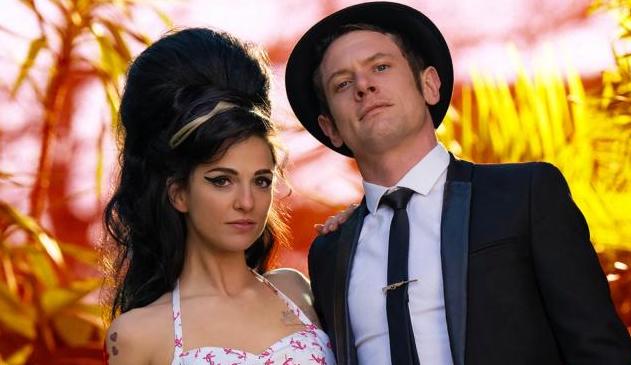
Ferrari is a handsome production, the 1950s era convincingly evoked right down to the last detail. Despite the nominative determinism, Driver doesn’t get to sit behind a steering wheel unless you count the knackered old jalopy in which he putters around the countryside. It’s left to younger men like the ambitious Alfonso de Potago (Gabriel Leone) or old hand Peter Collins (Jack O’Connell) to climb into those vintage cars and send them roaring around the track.

The racing scenes are perhaps the film’s strongest suit, the cars screaming along country roads with such visceral intensity you can almost smell the petrol, feel the wheels juddering beneath you. Incredibly, the cars had no roll bars back then, not even seat belts, so accidents were generally disastrous. One such scene is so brilliantly staged it actually has me exclaiming two words out loud (the first of them being ‘Oh!’). In another sequence, a nerve-wracking race is intercut with scenes of Enzo at a church service, amplifying the point that, in Modena, sports car racing is perceived as a kind of religion. And I Iove the scene on the eve of Mille Miglia where drivers write letters to their partners, for all the world like soldiers about to go into battle.

There’s plenty to enjoy in Ferrari but it won’t be for everyone. Petrolheads will doubtless feel that there isn’t enough actual racing to keep them happy, while the many scenes of marital discord and the various wheelings and dealings behind the scenes can sometimes feel suspiciously like padding. But there’s no doubting Mann’s obsession with his subject and his ability to capture every detail with considerable flair.

Ferrari offers a distinctly bumpy ride, with no opportunity to strap in.

3.6 stars

Philip Caveney

One Life

02/01/24

Cineworld, Edinburgh

One Life, written by Lucinda Coxon and Nick Drake, is the true story of Nicholas “Nicky” Winton (played at different life stages by Johnny Flynn and Anthony Hopkins), the self-effacing man who orchestrated his own Kindertransport, managing to rescue over six-hundred children from Nazi occupied Czechoslovakia in 1938.

Winton never sought recognition; despite this extraordinary endeavour, he was by all accounts a resolutely ordinary man. But, fifty years on, urged by his wife, Grete (Lena Olin), to tackle the clutter in his study, he finds himself confronted by an old scrapbook, carefully detailing the names and foster homes of the refugees he helped. It’s an important artefact and Winton doesn’t want it to languish unseen in a library. The plight of the Czechs at the start of the war must not be forgotten; the scrapbook must be seen, must be used as a reminder that it’s our duty to help those in need.

Winton approaches his local press but they don’t know what to do with it. Undeterred, he calls on his erstwhile colleague, Martin Blake (Ziggy Heath/Jonathan Pryce), to see if can pull any strings and, before long, Elizabeth Maxwell is on board. From there, it’s not a great leap to the pages of the Daily Mirror, owned by her husband, and thus to wider recognition. Readers of a certain age might remember the 1988 episode of the always tonally-uneven That’s Life! where Esther Rantzen (played with gusto by Samantha Spiro) veered from tittering about nominative determinism to reuniting Winton with some of the youngsters he helped, now middle-aged and keen to meet their saviour.

But Winton was always quick to point out that he didn’t work alone, that he was just one member of a team, so I shouldn’t neglect to mention the others here. Along with Blake, Doreen Warriner (Romola Garai) and Hana Hejdukova (Juliana Moska) worked tirelessly in Prague, identifying those in need of refuge and sorting out their paperwork. Meanwhile, Nicky’s mother, Babette (a rather magnificent Helena Bonham Carter), slogged away in the UK, fundraising, finding foster families and chivvying the government.

Hopkins’ performance is heartbreaking. It’s hard to convey the inner turmoil of a quiet and unassuming man, but Hopkins makes it look easy. In his face, we see how Winton’s sadness about the children he couldn’t save clouds his whole life, even as he’s lauded for what he has achieved. Flynn is a surprisingly good physical match for Hopkins, and he perfectly encapsulates the younger Winton’s clarity and sense of purpose. The children need saving. So he saves them.

I don’t know how anyone can sit through this film without weeping. The cruelty inflicted on the Jews is breathtaking. Director James Hawes doesn’t dwell long on any one act of inhumanity. Instead, he shows us snippets of frightened faces, close-ups of guns, a family huddled together under a blanket, the thin arm of an evacuee stretching piteously towards a parent. Heightened by Volker Bertelmann’s moving score, the cumulative effect is devastating. I don’t want to believe that such evil is possible.

669 only accounts for a small percentage of those who needed help, but every one of those is a person; every one of those matters. Winton’s stoic “Save one life, save them all” mantra stands, and this clear-eyed, unsentimental film shows us why.

4.3 stars

Susan Singfield