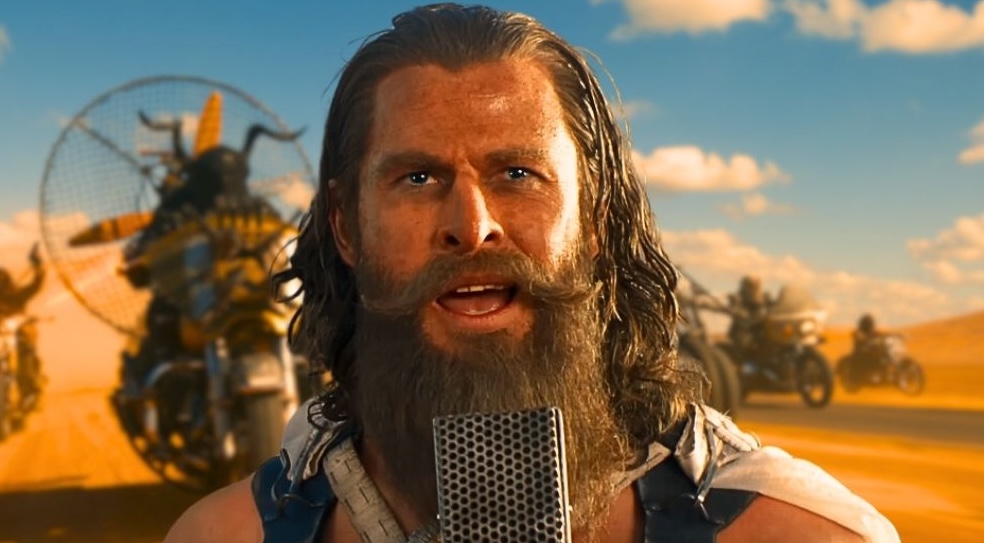

Film

Vanya: National Theatre Live

23/02/24

Cameo Cinema, Edinburgh

I have previously been somewhat baffled by the general adulation heaped upon Andrew Scott. Don’t get me wrong, I’ve always thought him a perfectly decent actor, but have somehow failed to appreciate the full depths of his talent.

Until now.

Simon Stephens’ brilliant adaptation of Anton Chekov’s Uncle Vanya features seven characters in a complex tale of a family’s interactions on a remote country estate. All of them are played – perhaps inhabited would be a more accurate word – by Scott. There’s no recourse to any costume changes and the set design amounts to little more than a series of chairs, a piano and a doorway. Scott slips effortlessly from one character to the next, using only slight modulations of voice and tiny mannerisms to tell me instantly who he is at any given moment. The effect is uncanny. The term tour de force is often used but I’ve rarely seen it so consummately earned.

Credit should also go to Stephens, whose script strips the story back to its basics (and slightly updates it) so that all the characters’ motivations are clear from the outset – and to director Sam Yates who keeps the whole enterprise beautifully understated, so that it flows from scene to scene like honey in a heatwave. But the lion’s share of the accolades must go to Scott, who is mesmerising in every role: pompous and self-aggrandising at Aleksandr Sebryakov, the retired professor still obsessed with working on his latest project; smooth and sensual as Aleksandr’s young wife Helena; and painfully self-conscious as his daughter Sofia, who has always been told that she’s ‘plain’.

He’s delightfully gossipy as Maria – the mother of the titular Ivan (Vanya), a hard working man who has selflessly devoted himself to supporting Aleksandr, whom he has idolised since childhood – and wonderfully tragic as Mikhail, the middle-aged country doctor who is desperately in love with Helena.

And finally, he is comically ingratiating as Ilya, an impoverished landowner, now dependent on the goodwill of the Sebryakov family. A delightful running joke has us (and the rest of the cast) forgetting that he’s there, observing everything that happens.

If this sounds hopelessly complicated on paper, fear not. The wonder of this National Theatre Live production is the way in which it glides like gossamer through the cuts and thrusts of a family drama, where even a scene where Scott is obliged to make love to himself unfolds like a dream. Throw in a rendition of Jacques Brel’s heartbreaking ballad If You Go Away and I’m completely sold, a convert to Scott’s evident talent.

Vanya – and Scott – are both extraordinary. If you get the opportunity to see this, I urge you to take it.

5 stars

Philip Caveney
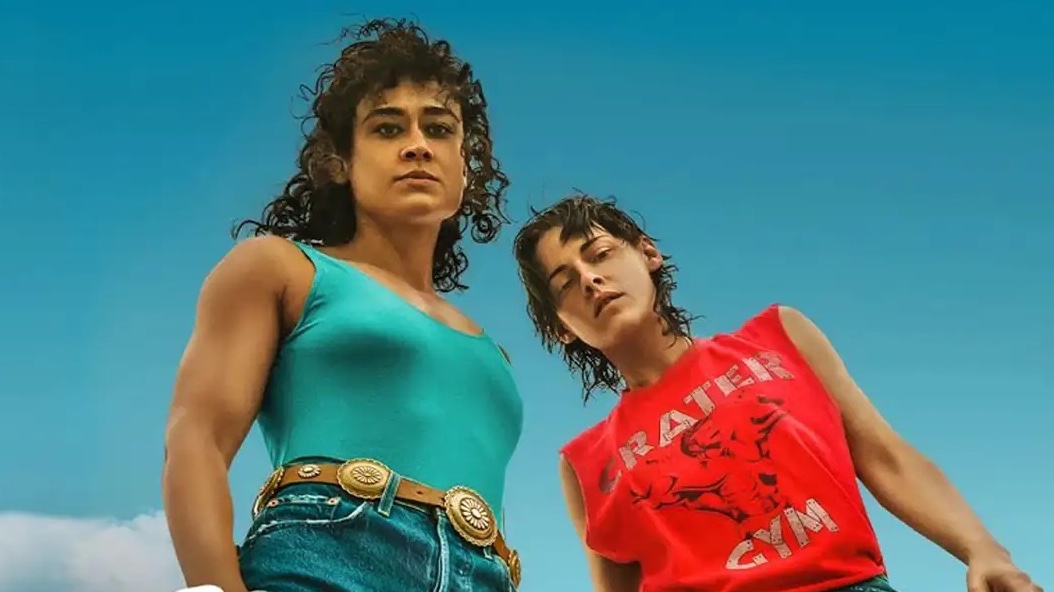
Passages

21/02/24

MUBI

Film director Tomas (Franz Rogowski) is a bit of a shit. His tyranny is evident as soon as we encounter him on set in Paris, berating an actor for failing to display exactly the right amount of nonchalance when walking downstairs. At the wrap party, we learn that the actor is also his husband, Martin (Ben Whishaw), which sets the alarm bells ringing. Just how toxic is their relationship?

Very, it turns out. Martin isn’t really in the mood to party, so Tomas hooks up with Agathe (Adèle Exarchopoulos), a school teacher/film extra. Suddenly, he’s in love with her – and moving out of the marital flat. But when Martin tries to move on too, Tomas proves reluctant to let him go. Before long, he’s got both Martin and Agathe miserably dancing to his tune. Like I said – he’s a shit.

Directed by Ira Sachs, Passages is a fascinating study of unapologetic selfishness. The performances from all three leads are intense and engaging, and Whishaw and Exarchopoulos elicit great sympathy for their characters. However, although Rogowski inhabits the role convincingly, Tomas is so utterly awful from the outset that there’s very little progression. We just see a man behaving badly, over and over – demanding too much from the people he claims to love, while never giving anything in return. I find myself frustrated by both Martin and Agathe’s willingness to indulge him. I’m literally shouting at the screen: “Just tell him no!” (I’m watching this at home, not at the cinema, so the shouting is okay – although I’m not sure that the neighbours agree…)

The world-building is exquisite: there’s no obvious exposition; we’re simply dropped into the characters’ lives, mid-story – but we’re never in any doubt as to what is going on. It’s adroitly done.

There’s no denying the fact that Passages is well directed and beautifully acted – but it’s a film to admire rather than enjoy.

3.4 stars

Susan Singfield

Dream Scenario

20/02/24

Amazon Prime

Over a long and varied career, Nicolas Cage has developed a reputation for embracing weird movie projects, and writer/director Kristoffer Borgli’s Dream Scenario certainly fits that description – even if Paul Matthews, a rumpled professor of Zoology at an obscure university, appears to be the most normal guy in the world. Released in 2023, the film barely got a look in at the multiplexes and, having missed it there, I’ve been eager for it to start streaming. It’s finally available to rent on Amazon Prime, and I have to say, it is worth the wait. This bizarre, complex and occasionally shocking film has more twists and turns than the proverbial python on itching powder.

It begins (hardly surprisingly, given the title) when Paul listens to an account of a dream that his daughter, Sophie (Lily Bird), has experienced the night before – a dream in which she is floating helplessly skyward while her father sweeps up leaves in the garden and pays absolutely no attention to her plight. Paul feels weirdly guilty about his inability to do anything to help her, but older daughter Hannah (Jessica Clement) and Paul’s wife, Janet (Juliet Nicholson), assure him he’s just being paranoid.

But then other people start having dreams about Paul and in all of them, he’s just standing there, watching. As these dream scenarios become more common, a bewildered Paul finds himself featuring in the dreams of most of the students in his classes, a situation that seems to make them more receptive to his usually rather dry lectures. It’s not long before he’s a social media sensation. He can’t help but enjoy this new-found celebrity, telling himself that his stalled academic career might receive an invigorating bump from this strange phenomenon. He even engages the services of a team of marketing people, led by the vacuous Trent (Michael Cera), who keeps trying to persuade him to forge a partnership with Sprite.

But then the dreams that feature him take a much darker turn and Paul finds, to his dismay, that his students – and most of his friends and colleagues – are no longer quite so keen on him…

Dream Scenario is a fascinating film, one that works on many levels. It’s tempting to see it as an allegory about the nature of fame in the 21st century, the ways in which the most innocuous events can go viral and affect people’s lives – and also, how easily circumstances can change, resulting in those same people being cruelly cancelled by their former admirers. I like the way in which I find myself increasingly unsure, as the narrative unfolds, as to what’s a dream and what’s reality, the lines between the two realms blurring. Always a gifted performer, Cage is particularly compelling here, capturing Paul’s bumbling persona, as well as his rising doubts and paranoia as he sees his hopes for a more fulfilling career dashed and compromised at every turn.

There’s an interesting coda that takes the whole idea in a slightly different direction, while at the same time remaining true to its central premise. I’m left with the distinct conviction that, had I managed to catch this on first release, it would have numbered among my favourite films of 2023. But, better late than never, I guess.

4.5 stars

Philip Caveney
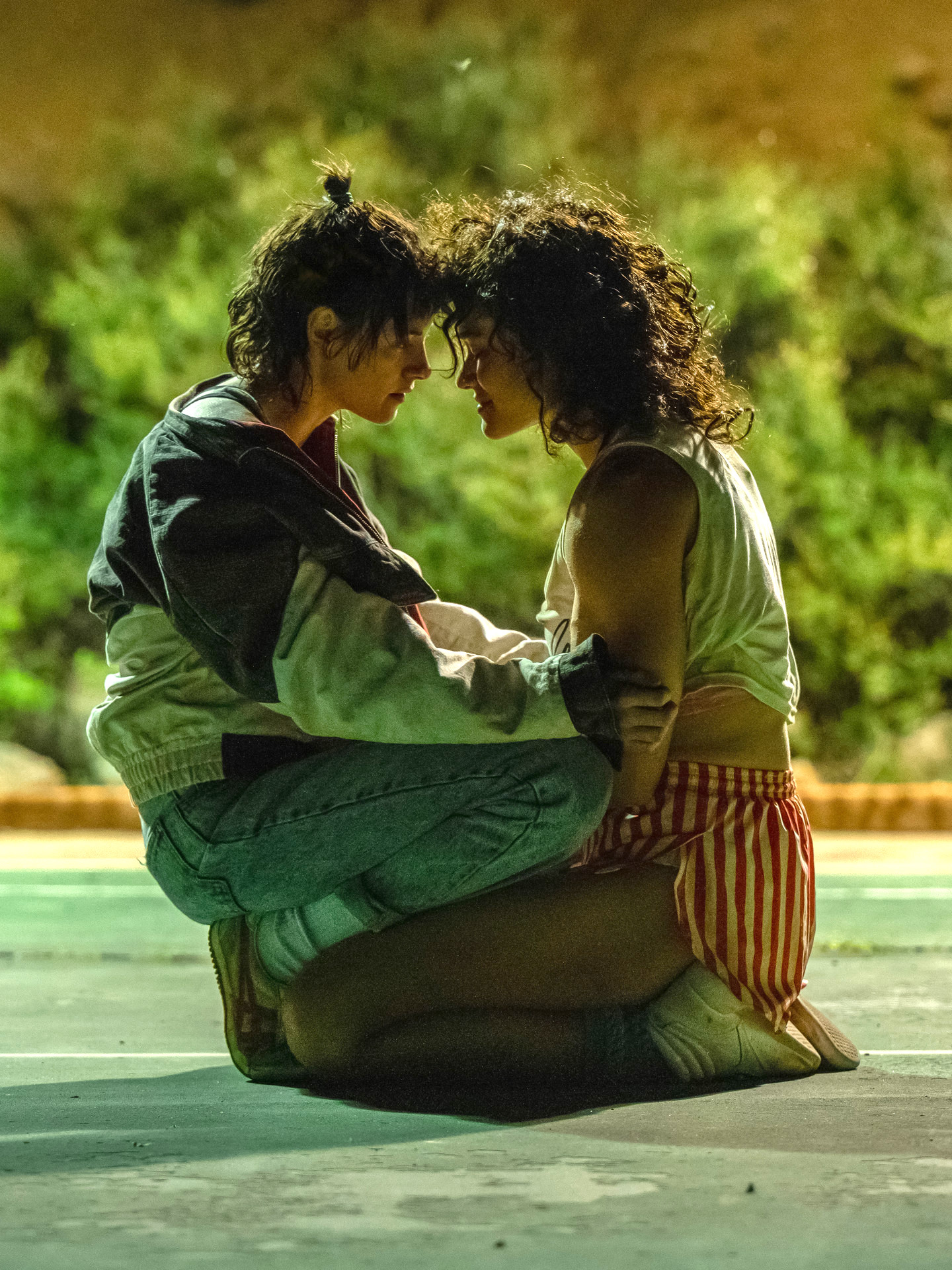
Wicked Little Letters

19/02/24

Cineworld, Edinburgh

I’m primed to like Wicked Little Letters. With Olivia Colman, Jessie Buckley and Anjana Vasan as the triumvirate of talent at its helm, what could possibly go wrong?

And yet I find myself struggling to warm to this film. Despite fine performances from the three leads, as well as a stellar supporting cast (including Timothy Spall, Joanna Scanlan and Alisha Weir), it feels somehow both heavy-handed and insubstantial.

Set in 1920s Littlehampton, Wicked Little Letters is loosely based on a true story. Colman plays Edie Swan, a repressed spinster, unable to escape from her overbearing father (Spall). When a spirited Irish widow (Buckley) moves into the house next door – complete with daughter Nancy (Weir) and new partner Bill (Malachi Kirby) – Edie is delighted, but her friendship with Rose soon turns sour. Then Edie begins to receive poison pen letters, and the local bobbies know exactly where to lay the blame. But Woman Police Officer Gladys Moss (Vasan) thinks they may have jumped the gun…

To quote the very excellent Deborah Frances-White, “I’m a feminist, but…” the misogyny in this movie is cartoon-like, laid on with a proverbial trowel. At the same time, racial politics are completely ignored. I find it hard to believe that the same white male colleagues who openly sneer at Gladys because of her gender wouldn’t also have something to say about the fact that she’s Asian. Likewise, it’s incredible that Rose doesn’t face much anti-Irish prejudice, and no one ever mentions the fact that Bill is Black. I like the fact that the fictional characters are more diverse than their real-life counterparts, but intersectionality matters, and it doesn’t make sense to ignore it here.

At first, I enjoy the humour in Jonny Sweet’s script, but I get bored of the whole “sad stinky fucking foxy arsehole” sweariness; it’s repetitive and the shock value soon wears thin. Director Thea Sharrock does a good job of evoking a sense of time and place, and of allowing her cast to shine, but there’s no getting away from the thin material. It doesn’t help that there are no red herrings, or that what little suspense there is is squandered by revealing the culprit at the halfway point.

Colman, of course, is brilliant, managing to convey a perfect mixture of horror and triumph every time she utters a profanity – and this, along with Buckley’s brittle vivacity and Vasan’s wide-eyed determination, elevates the film. Wicked Little Letters works well as a character study, less so as a compelling narrative.

3.6 stars

Susan Singfield

Bob Marley: One Love

18/02/24

Cineworld, Edinburgh

It’s been a long time coming, but finally Bob Marley has his biopic. While it does a pretty decent job of capturing the era in which he rose to prominence and makes you appreciate how many insanely ear-wormy hits he created, there is a slight tendency here to sanitise his offstage antics. But perhaps, with no less than four of his immediate family onboard as executive producers, that’s no great surprise.

We first meet Marley (Kingsley Ben-Adir) when he’s already successful, married to Rita (Lashana Lynch) and watching bewildered as his home town teeters on the edge of a brutal civil war. When a house invasion results in Bob being shot and Rita rushed to hospital, Bob takes the advice of his record producer, Chris Blackwell (James Norton) and heads off to London, where he develops plans for Exodus – the record that will propel him to superstardom. Along the way, he experiences recurring visions of his childhood years under colonial rule, and of the white father he never really knew.

The film is at its best when it’s showing us recreations of the stage shows that would cement Marley’s reputation as an electrifying live presence – and I particularly enjoy the scene where the title track of Exodus is taken from a single idea, through a series of rough improvisations with the band, until it finally comes close to the finished article. I’ve rarely seen a better recreation of the way a band works together to develop a song.

If Ben-Adir is a little too handsome for the role (something that’s accentuated by the post-credit sequences featuring the real Marley), he nevertheless nails the man’s dance moves, gestures and affectations with aplomb. Ironically, it’s Lynch who has more opportunity to generate genuine emotion. In a scene where she berates her husband about the various sexual indiscretions she’s had to tolerate over the years and the way her own singing career has been sublimated in order to help him achieve his goals, she really shines.

In the end, One Love is an enjoyable movie, that could perhaps have benefitted from a grittier approach. Lovers of Marley’s music will have a field day, as one belter after another blasts from the speakers. Like me, fans will doubtless find themselves foot-tapping and twitching in their seats. More than anything else, this is a celebration of the man’s musical accomplishments and his unwavering quest for peace, rather than a warts-and-all investigation of his private life.

4 stars

Philip Caveney

La Passion de Dodin Bouffant (The Taste of Things)

17/02/24

Cineworld, Edinburgh

Apéritif: Set in France in 1885, La Passion de Dodin Bouffant or The Taste of Things is very much a foodie film.

Amuse-bouche: The pace is languid, the plot – such as it is – simmering slowly, allowing the audience to absorb the complex flavours of the central characters.

Entrée: French-Vietnamese film-maker Anh Hung Tran has already won the coveted Best Director award at Cannes, and this unusual film is now an Oscar-contender too.

Plat principal: Benoît Magimel plays the eponymous Dodin Bouffant, a famed gourmet; his real-life ex, Juliette Binoche, is his trusted cook, Eugénie. She lives in his château, which diners come to visit from all over the world. Over two leisurely hours, we imbibe a sense of how their twenty-year relationship has matured, like the fine wines Dodin keeps in his cellar. Food binds them together: they are lovers, yes, but first and foremost they are cooks.

Salade: Kitchen assistant Violette (Galatéa Bellugi) brings her teenage niece to work one day. Pauline (Bonnie Chagneau-Ravoire) might be green, but Eugénie recognises fresh talent when she sees it, and she soon persuades Dodin to let her take the girl on as her apprentice. Pauline’s appearance signals change. Will Eugénie finally agree to marry Dodin?

Fromage: It might seem a little cheesy to use food as a metaphor for love, but when it’s as sumptuously done as this, it’s perfectly justified. The connections feel real as well as symbolic, the care taken over each component of every dish surely an indication of deep affection.

Dessert: I defy anyone to watch this film without salivating. Cinematographer Jonathan Ricquebourg’s camera lingers lovingly over basted meats and exquisite sauces; we see glass-clear consommés and glistening poached pears. When she tastes Eugénie’s Baked Alaska, Pauline weeps. I almost do the same, even though it’s just an image on a screen.

Café: A gentle story with notes of romance and an aftertaste of melancholy, The Taste of Things is a lovely film. Just not one to watch when you’re hungry.

4 stars

Susan Singfield

The Iron Claw

14/02/24

Cineworld, Edinburgh

As I sit watching this film unfold, I can’t help picturing writer/director Sean Durkin’s hopeful pitch to a room full of potential financiers.

“So Sean, what’s this film about?”

“It’s about the world of wrestling – and it’s inspired by a real-life family drama. Oh, and it will star Zac Efron. You know, from High School Musical?”

Whatever those execs pictured in that moment, I’m pretty sure it was nothing like The Iron Claw, but – trust me – the resulting movie is about a hundred times better than it could ever sound as a pitch. If you have expectations, prepare to adjust them.

We first meet the Von Erich clan in the 1970s, when they are conducting their lucrative tag-wrestling partnership and going from strength to strength under the tutelage of their father, Fritz (Holt McCallany), a veritable toxic stew of a man. Fritz thinks nothing of flinging his boys headlong into the wrestling life, even those who are not cut out for it. The Von Erichs have the physiques of Greek gods and the hairstyles to match and, as all-American boys, they do whatever Daddy says, getting little in the way of guidance from their mom, Doris (Maura Tierny), who seems mostly preoccupied with putting gargantuan amounts of carbs on the table.

The oldest (surviving) boy is Kevin (Efron), who, though built like the proverbial stone sewage outlet, somehow manages to maintain his good humour even when being passed over in favour of one of his younger siblings. These include human chameleon Harris Dickinson as David, whose good looks and articulacy make him an ideal frontman and Kerry (Jeremy Allan White), whose dream of throwing the discus at the 1980 Moscow Olympics are scuppered when America withdraws for political reasons. And then there’s young Mike (Stanley Simons), a gentle, optimistic teenager who hankers after a career as a musician – until Fritz derides this as a pipe dream and demands he become a wrestler like his brothers…

As you might expect, the Von Erichs come in for more than their fair share of tragedy; indeed, their story is so overloaded with the stuff that Durkin has removed some of the bleaker occurrences and completely eliminated one member of the clan – Chris, if you’re wondering – arguing that there’s only so much misery an audience can endure in a two-hour cinema visit. Put it this way: if this was fiction, nobody would believe that one relatively small bunch of people could possibly encounter so many slings and arrows in their journey through life. Little wonder that rumours of a ‘Von Erich curse’ proliferated as the family was hit with one terrible disaster after another.

Don’t get me wrong, The Iron Claw (named for Fritz’s signature technique) isn’t one endless blub-fest. Indeed, Durkin ensures that there’s plenty here to lift the mood as the action unfolds. There’s a wonderfully cheesy evocation of the 70s and 80s, with an upbeat soundtrack comprising some of the biggest rock songs of the era, and there’s a whole raft of superb performances from the ensemble cast. Lily James, in a change from her usual ‘middle-class posh girl’ roles, delivers what may be a career-best performance as Kevin’s vivacious and resourceful partner, Pam. And there’s a delightful cameo from Aaron Dean Eisenberg as motor-mouthed wrestling champion, Ric Flair, who comes across as a nasty piece of work on TV, but is revealed to be a nice guy when he’s allowed to be himself.

I was warned to bring some Kleenex to this, but though I’m often shocked by the constant barrage of bad luck the family encounters, I remain resolutely dry eyed throughout. But maybe that’s just me. The Iron Claw is a brilliantly-nuanced story that looks at the toxic nature of the wrestling industry, skilfully eviscerates it and reveals the genuine humanity that lurks behind all that pantomime posturing. 

And it’s clear from the word go which member of the family is chiefly responsible for all that heartbreak.

4.7 stars

Philip Caveney
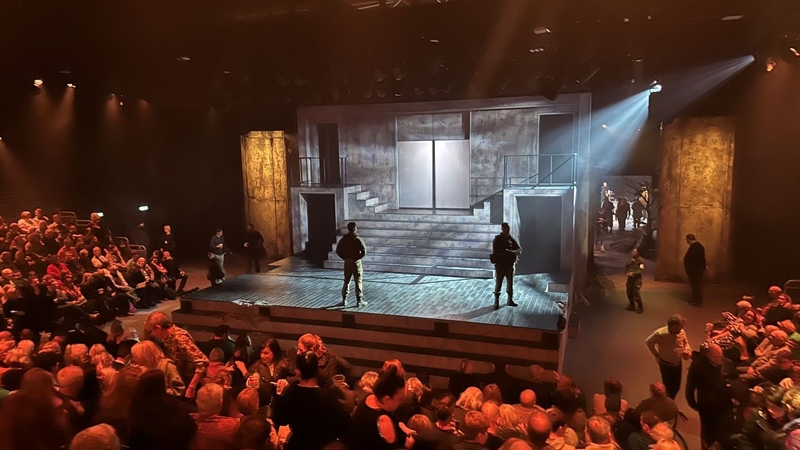
Argylle

07/02/24

Cineworld, Edinburgh

There’s a lot riding on Argylle. An expensive co-production between Paramount and Apple, with a cast of A-listers to die for, Matthew Vaughn’s high concept spy spoof is a valiant attempt to restore his box office fortunes after his last project, The King’s Man, pretty much sank without trace. But the new film has already opened to dismal advance reviews of the one and two star variety. Can it really be that bad?

It doesn’t help that at Edinburgh’s Cineworld, it can only be viewed in expensive special formats not covered by an Unlimited card. My gruelling session at the dentist’s this morning precludes me from being thrown around in a 4DX chair, so I opt for IMAX and settle down to watch – with the other four customers. Word has clearly got around.

Welcome to the world of best-selling novelist, Elly Conway (Bryce Dallas Howard), one of those annoying writers whose every publication is greeted with rampant adulation – and who has an irritating habit of reading the end of her latest books at launches, which is wrong on just about every level.

In her head, her titular spy hero, Argylle, is played by smooth, handsome Henry Cavill, so imagine her surprise when she climbs aboard a train to visit her parents and finds herself sitting opposite genuine spy, Aidan (Sam Rockwell). He’s more unkempt than his fictional counterpart, but just as deadly when push comes to shove, as it soon does. Aidan reveals that the plots of Ellie’s books are so near to actual real life happenings, that an evil cabal of terrorists are determined to take her out.

Ellie (and her cat, Alfie) follow Aiden into a dizzy world of punch ups, shoot outs and explosions. The plot is so ridiculously complex, it doesn’t bear scrutiny but – largely due to the fabulous chemistry between Dallas Howard and Rockwell – I find myself going along with it. There’s a jaw-dropping revelation every ten minutes or so (nobody is who you think they are, and sometimes they’re not who they think they are either) and Vaughn has the good sense to keep his foot on the accelerator so we don’t waste too much time pondering the stupidity of much of what’s happening.

It’s almost worth the price of admission for a delightful, extended ‘guns and gas masks’ dance sequence, which would have provided the perfect climax, but is almost immediately undermined by another lengthy set-piece that follows hard on its heels and doesn’t quite measure up to the one we’ve just seen.

In the end, Argylle is a little too overstuffed for comfort and I can’t help feeling that thirty minutes could be excised from this to deliver a leaner, meaner version that would play more effectively. That said, I have a good time with this.

Those who like post-credit sequences will probably be as baffled by the one we’re offered as I am. Something to do with The Kingsmen franchise? I give up.

If you enjoy high concept movies, you might care to give this one a whirl. At least you won’t be bored. But be warned, you’ll need to suspend your disbelief.

3.6 stars

Philip Caveney

American Fiction

03/02/24

Cineworld, Edinburgh

If these first few weeks are anything to go by, 2024 is going to be a good year for film. Cord Jefferson’s debut feature is a long way from your typical bums-on-seats blockbuster, but the cinema is hearteningly busy tonight. We’re in for a treat.

American Fiction is a clever, cerebral film, exploring the reductive nature of the Black stories that are promoted by white-controlled media. Thelonious ‘Monk’ Ellison (Jeffrey Wright) is a Black writer and professor, earning more from teaching than he does from his highbrow books. But in a brilliantly satirical scene, we see his white students complaining that he is making them uncomfortable by explicitly referring to the racist language deployed by the period authors they’re studying. When his white bosses back them up, Monk bristles: he isn’t the sort to back down easily. Before long, he’s been practically ordered to ‘take a break’, and so he heads reluctantly to Boston for a long overdue visit to his family, his employment status decidedly shaky. Is this what happens to Black people when they don’t comply with liberal white people’s notions of how to address racism? Wow.

To add to Monk’s woes, his agent (John Ortiz), calls to say that his latest manuscript hasn’t found a buyer. “It’s not Black enough,” Arthur tells him. “What does that mean?” asks Monk, although he knows exactly what it means. It means that his literary novels don’t conform to the blaxploitation model that white people like to indulge in; it isn’t anything like Sintara Golden’s runaway bestseller, We’s Lives in da Ghetto. As a fawning TV interviewer heaps praise on Golden (Issa Rae), Wright imbues Monk with an understated and entirely credible fury. In Bialystock-Blum mode, he pseudonymously dashes off a ridiculous pastiche of a Black novel and then watches incredulously as it become a huge success. He’d like to take the opportunity to go public and make his point – but his mom (Leslie Uggams) is sick, and someone has to pay for her care…

This well-written and often laugh-out-loud funny script, based on the novel Erasure by Percival Everett, deftly punctures the self-aggrandising nature of allyship, as white people vie to show off their woke credentials, often at the expense of the actual Black people sitting next to them. It’s also a beautifully-observed depiction of complex family dynamics, as Monk and his doctor siblings (Tracee Ellis Ross and Sterling K Brown) struggle to deal with their fractured relationships and their mother’s decline. It’s bold, intelligent – and also very accessible. The fourth-wall-breaking final ten minutes are especially audacious, but the entire two-hour run is a joy to behold.

Both thoughtful and thought-provoking, American Fiction is an impressive piece of work, deftly straddling the highbrow/lowbrow chasm that so infuriates its protagonist.

5 stars

Susan Singfield

The Color Purple

01/02/24

Cineworld, Edinburgh

Not so much an adaptation of Alice Walker’s 1982 novel (or Steven Spielberg’s 1985 film, for that matter), this ambitious production is based on the Broadway musical which first got to strut its stuff in the early 2000s and has gone through several iterations since. Inevitably, much of the novel’s more hard-hitting elements have been sanded and burnished for consumption by a mass audience.

Directed by Blitz Bazawule, with music composed by Kris Bowers, the result is a film that occasionally bursts into exuberant, joyful life but just as often feels bowdlerised as it struggles to make a song and dance about incidents that don’t quite fit the medium.

We first meet Celie (Phylicia Pearl Mpasi) when she’s a teenager, pregnant with her second child – by her father, Alfonso (Deon Cole). Mpasi brilliantly portrays Celie’s loneliness and distress, especially when, as he did with the previous baby, Alfonso takes the infant away from Celie without any explanation. Shortly thereafter, he offers her up as a bride to the heinous ‘Mister’ (Colman Domingo), a musician of sorts who has several motherless kids to care for in his ramshackle home down by the swamp. He needs somebody to get the place in shape and, if Celie is slow in following his orders, he’s all too ready to let his fists do the talking. Colman too, is utterly convincing as a man who’s never had his authority challenged by anyone.

Celie sets to work, determined to look after her new ‘family’ but when her beloved sister, Nettie (Halle Bailey), turns up saying that Alfonso has been making moves on her, Celie begs Mister to allow Nettie to move in with them. He agrees and inevitably, it isn’t long before he attempts to sexually assault her. When she dares to hit back, he throws her out of the house telling her never to return – and Celie has nobody to fight her corner.

The years move inexorably on – a scene where Celie views the changing seasons through the windows of the house as she ages is brilliantly handled. Celie (now played by Fantasia Barrino) has become inured to her own suffering, but redemption arrives in the form of vivacious blues singer, Shug Avery (Taraji B Henson), the woman who Mister reveres above all others and whom he’ll go to any lengths to please. When Celie and Shug form an unlikely alliance, it’s clear that change is in the air…

To give The Color Purple its due, Bazawule brings a whole host of invention to the difficult task of directing this piece, constantly exploring different approaches to a complex project. Cinematographer Dan Lautsen makes everything look luminous and remarkable and I particularly love a fantasy sequence set on a huge gramophone turntable. For me, the film is at its most successful during the big, ensemble pieces with scores of dancers whirling and leaping to vibrant, blues-inflected songs. I should also mention Danielle Brooks’ remarkable performance as Sophia, a powerful and assertive woman, eventually brought to heel by the injustice of the age. Brooks brings genuine verve to her portrayal and the scenes where she languishes in a prison cell provide the film’s most heartbreaking moments.

The relationship between Celie and Shug has been not so much downplayed as eradicated. In the book, it’s explicitly sexual; here it amounts to a quick snog in the cinema and a few meaningful looks, which I think speaks volumes about what makes contemporary American audiences uncomfortable. Why the subject of rape is deemed acceptable for depiction but a concensual lesbian relationship isn’t remains something of a head scrambler. Go figure.

The story’s conclusion, where everybody gathers to let bygones be bygones, feels every bit as unlikely as it did in the original story and, if I’m honest, it’s in this sequence where it all gets a little too schmaltzy for my liking. 

So, once again, here is another of those curate’s egg productions (a phrase I use far too often). It’s good in parts (sometimes very good) but elsewhere, I find the ingredients a little too bland for my taste.

3.6 stars

Philip Caveney