Film

Small Things Like These

03/11/24

Cineworld, Edinburgh

Some films are like icebergs. There’s a lot more going on beneath the surface than we are actually shown onscreen. Small Things Like These, directed by Tim Mielants and adapted by Enda Walsh from the novella by Claire Keegan, is a good case in point.

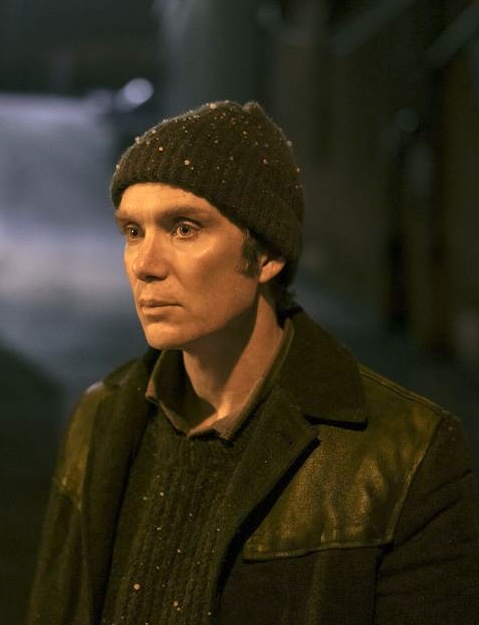
Set in a small town in Ireland some time in the early 1980s, it’s the story of Bill Furlong (Cillian Murphy), a mild-mannered coal man, who spends most of his time distributing sacks of fuel to the local community. He rises in the small hours every morning and plies his trade through all weathers. Every night he comes home to his wife, Eileen (Eileen Walsh), and his five daughters, living cheek by jowl in their little house. His first task is always to scrub his dirt-encrusted hands clean. But some things are not so easily erased.

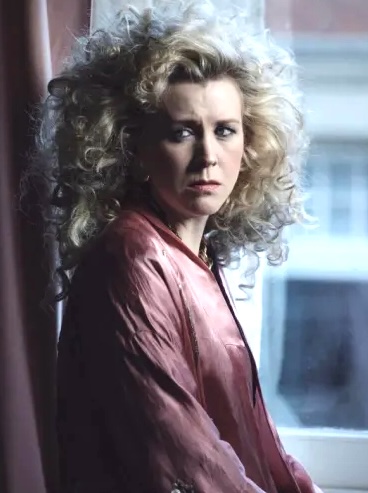
One of his regular delivery slots is to the local convent and, when visiting the place, he cannot help but notice the seemingly endless ranks of teenage girls, pressed into service in the laundry and the kitchen, working like slaves for the nuns, under the steely command of Sister Mary (Emily Watson). When he finds one of the girls, Sarah (Zara Devlin), who is pregnant and being made to sleep in the coal shed as a punishment, the incident kindles a series of powerful memories from his childhood, when young Bill (Louis Kirwan) and his unmarried mother – also called Sarah (Agnes O’Casey) – were taken into the home of a kindly local woman, Mrs Wilson (Michelle Fairley).

In terms of plot, there isn’t much more to be said but what there is – in abundance – is a sense of steadily mounting pressure as older Bill, a man who finds is hard to be confrontational, who can barely muster half a dozen words in any given conversation, gradually arrives at the realisation that he has to do something about a situation that will allow him no rest.

Murphy manages to evoke so much with just smouldering expressions and the occasional panic attack, while Watson submits a powerful cameo as Sister Mary: cold, supercilious, calculating, willing to bribe Bill with cash to procure his silence about some of the things he’s witnessed. Meanwhile, everyone else in the community is urging him not to make waves, pointing out that the nuns have the power to make things really difficult for him and his family.

And Christmas is coming… why rock the boat?

As somebody who was raised as a Catholic, I identify with much of what I see here – and as the film builds to its powerful conclusion, I find my anger rising along with it. Small Things Like These won’t be for everyone – so much of the story is left for the viewer to mull over and conjecture about – but for my money it’s a little gem, a film that pins down the dark iniquities that are all too often committed in the name of religion. It’s possibly the bleakest ‘Christmas’ movie ever.

The film is dedicated to all the women who suffered in the ‘Magdalene laundries’ of Ireland before they were finally done away with in the – believe it or not – late 1990s.

4 stars

Philip Caveney
Anora

02/11/24

Cineworld, Edinburgh

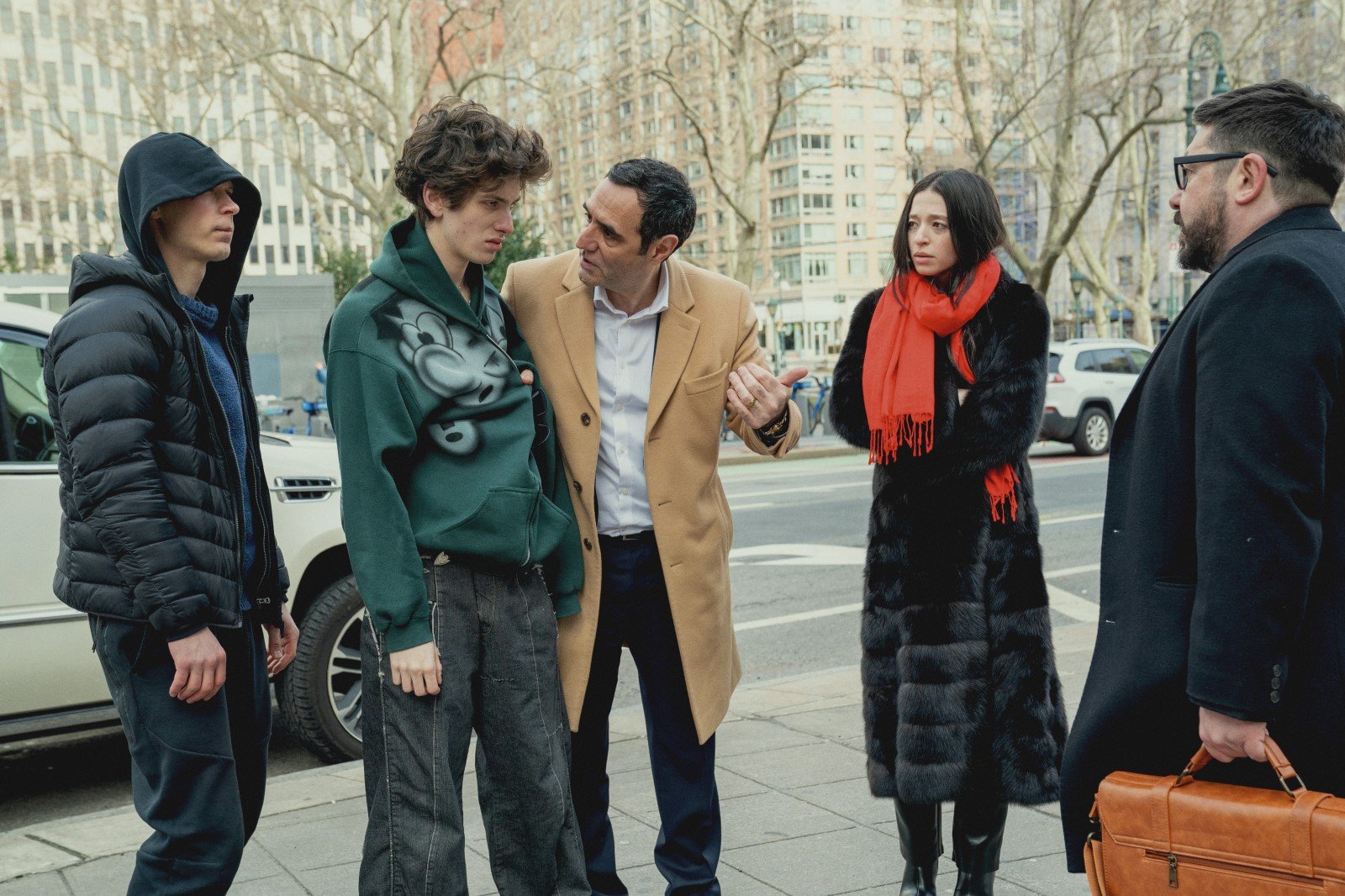
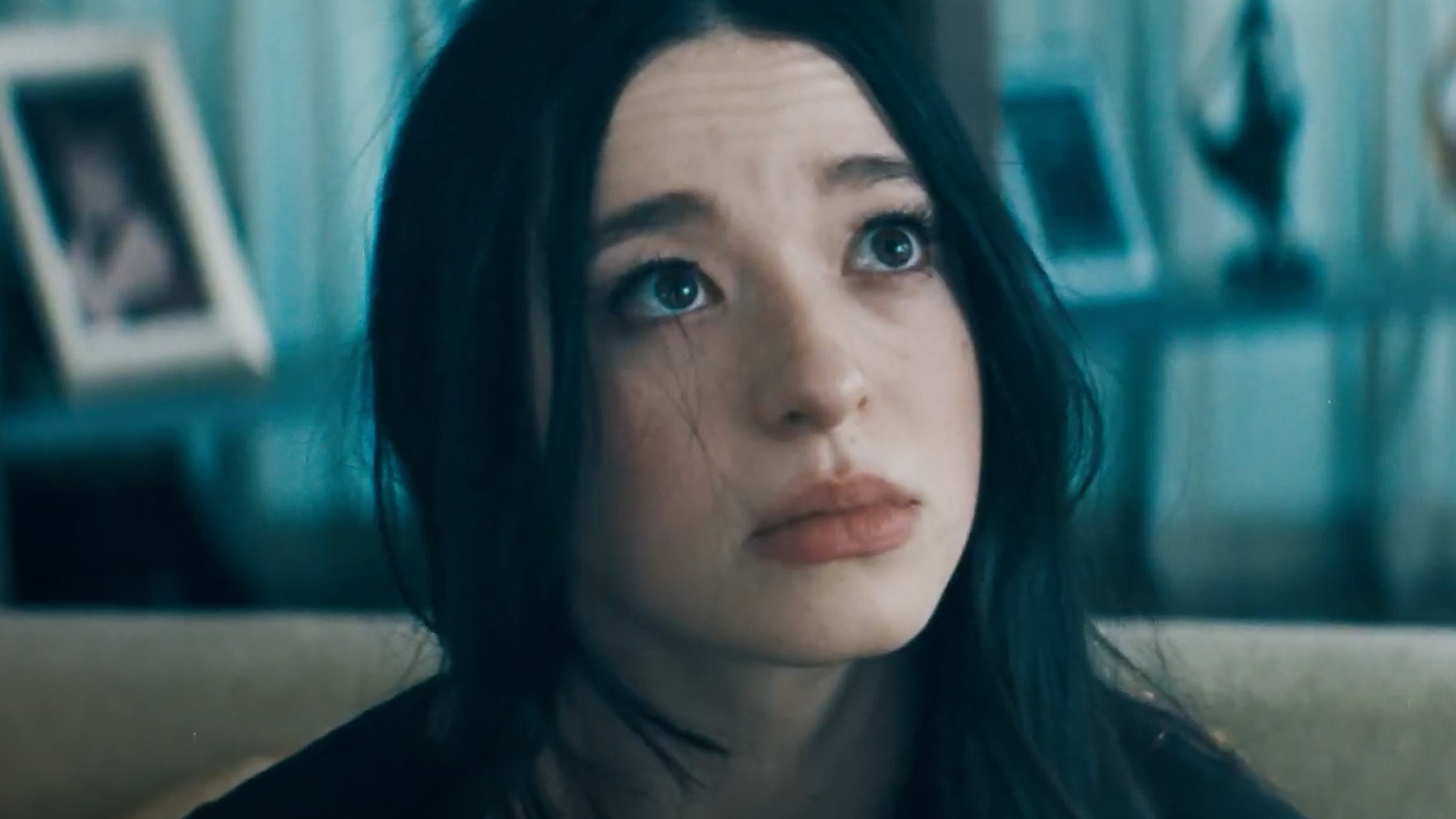
Sean Baker excels at placing marginalised people centre stage and showing them in all their complex, multi-faceted glory. Transgender sex workers (Tangerine), motel-dwelling families (The Florida Project), washed-up porn stars (Red Rocket): they’ve all emerged from his films as so much more than mere victims or villains. This time, his camera is focused on exotic dancers and escorts.

The eponymous Anora (Mikey Madison) – or Ani, as she prefers to be known – works in a New York strip club. In the opening stretches of the film, the emphasis is on the ordinariness of her job: Ani moves from client to client with practised ease, using the same lines, the same moves, spending her break in the staff room, chatting to her co-workers while eating a Tupperware-packed meal.

But one night, a young Russian turns up at the club, demanding an escort who can speak his language. Thanks to her Russian grandmother, Ani fits the bill, although she prefers to speak English because her accent is “terrible”. Ivan (Mark Eidelshtein) turns out to be the son of a billionaire oligarch, and he’s willing to pay handsomely for Ani’s time. He’ll give her $15k if she’ll spend a week with him in his mansion as his girlfriend.

Of course Ani agrees. Why wouldn’t she? Ivan is fun: he’s blithe, impulsive, generous and wild. Ani is many of these things too, although she can’t afford to be so carefree. In Vegas – where they’ve gone on a whim in his private jet – Ivan proposes. “Don’t mess about with this,” Ani cautions him. He’s not messing, he reassures her. And so they get married.

But there’s no happy-ever-after here because Ivan is a long way from Prince Charming. He’s a spoilt brat, infantilised by indulgent parents, who – when they learn of his inappropriate match – send their henchmen (Karren Karagulian, Yura Borisov and Vache Tovmasyan) to set things straight. Like the child he is, Ivan responds by running away…

The middle section of the film combines a comic caper with a tragedy, as Ani and the henchmen try to track Ivan down. The humour is slapstick but the emotions are raw. Madison is extraordinary in the central role, a firebrand of a character, lighting up the screen. While Karagulian and Tovmasyan – as brothers Toros and Garnick – provide the comedy via their ineptitude, Borisov – as Igor – is an altogether more serious and thoughtful character. Even stooges are fully fleshed-out in a Baker film.

In the closing stretches, we see how flawed the Cinderella model is. The social commentary here is fierce: rich people hold all the aces. The fallout is shocking and Baker skilfully leads us to a final scene of utter devastation.

5 stars

Susan Singfield

Heretic

31/10/24

Cineworld, Edinburgh

It’s Hallowe’en so it feels only natural to take in a creepy movie on this most auspicious of days. We’re reviewing some theatre tonight, so we decide to nip in to an afternoon showing of Heretic, which is having advance screenings prior to its full release tomorrow. The trailers have been promising (though, annoyingly, they show far too much of the actual film for my liking) and the idea of seeing Hugh Grant explore his darker side sounds like fun, so in we go.

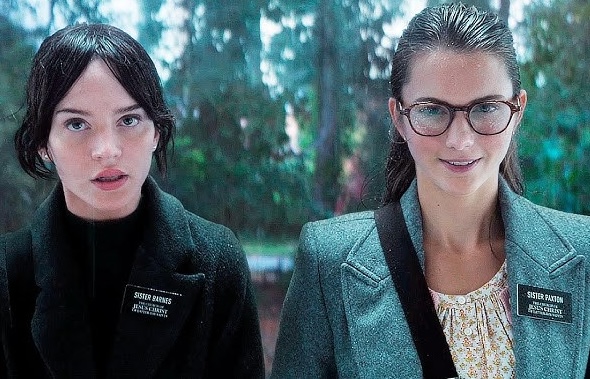
Sister Barnes (Sophie Thatcher) and Sister Paxton (Chloe East) are Mormon missionaries whose thankless daily ritual is to go out into the world to try and enlist converts to their faith. In early scenes we see them cycling around an unnamed backwater of America, being roundly ignored by everyone they approach – apart from some teenagers who pull down Sister Paxton’s skirt in order to catch a glimpse of her ‘magic underwear.’

Pretty soon, however, they arrive at the remote home of Mr Reed (Grant), who invites them in for a chat, assuring them that ‘his wife’ is on the property, so it will all be above board. His house is… unusual, and as it turns out, he’s rather well read on the subject of religion – indeed, he’s made a study of the world’s four main faiths and is more than happy to share what he’s learned. It isn’t long before he’s telling the two young women that the Book of Mormon is a sham, that all religions are essentially the same and that Radiohead’s Creep is a direct steal from The Hollies’ The Air That I Breathe.

He also has a riddle for them to solve – one that requires them to risk everything they believe in. And he assures them that they will witness a miracle…

It would be a crime to reveal more about this curious concoction, other than to say that writer/directors Scott Beck and Bryan Woods create a dark sense of foreboding from the opening scenes onward and that Heretic’s early stretches become a sort of cod-philosophical discussion about the nature of belief. Religion, we are assured, is basically a construct created to exercise power over those who follow it.

The film is essentially a three-hander. (A back story featuring a church elder (Topher Grace) who is looking for the two young women is so brusquely handled that I can’t help feeling that some of it has been lost in the edit.) Grant meanwhile is having a whale of a time, playing up the erudite, hoity-toity malevolence to the max. Both Thatcher and East do an excellent job of portraying their respective characters’ mounting anxiety as they head deeper and deeper into the brown stuff.

It’s in the film’s last third that I start to have serious doubts about the whole enterprise. Once the full scale of the Reed residence is revealed, the logical part of my brain can’t stop wondering about the impossibility of a lone man keeping such a complicated establishment in running order. I mean, what are the maintenance costs? Why has he created such a complex labyrinth in the first place? And how has he managed to do it without anybody noticing?

The final twist seems to want to have its cake and eat it – are we seeing something that’s actually happening or is just a twisted vision in the head of one of the characters? Well, that will ultimately depend on your own beliefs, I suppose. I’ve been suitably entertained by what I’ve witnessed onscreen, but I’m left with the conviction that Heretic isn’t anywhere near as clever as its creators would like to think it is. But on the other hand, I haven’t seen anything else quite like it.

Happy Hallowe’en!

3.4 stars

Philip Caveney

The Wild Robot

27/10/24

Cineworld, Ediburgh

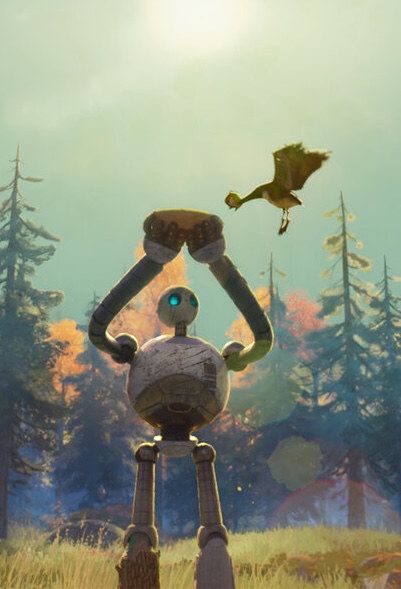
In what will almost certainly be one of Dreamworks’ final in-house animations, The Wild Robot pulls out all the stops, making this one of the most visually stunning productions outside of Studio Ghibli. In its early sections, it also deploys some perfectly-timed slapstick sequences that are laugh-out-loud funny.

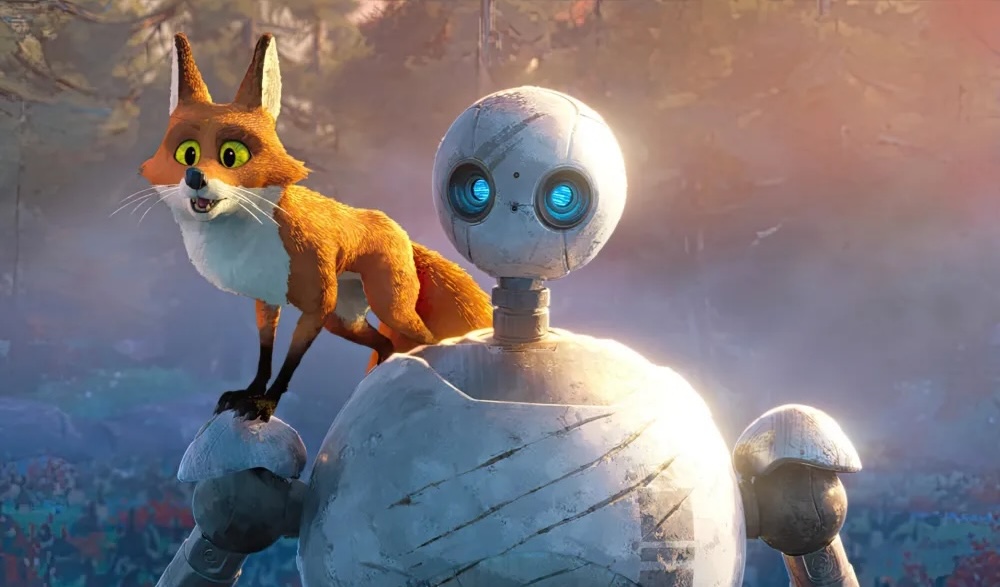
This is the story of Rozzum Unit 7134 (voiced by Lupita Nyong’o), an AI ‘household assistant’ accidentally deposited on a Pacific island and inadvertently switched on by an exploratory rodent looking for food. ‘Roz’ immediately starts wandering the unfamiliar landscape, frantically seeking out suitable tasks to accomplish, but there are no humans to be assisted and the island’s resident wildlife inevitability see the new arrival as something to be feared. Determined to make a success of this unexpected situation, Roz sets out to learn all the different creatures’ languages so that she can adapt to their individual needs.

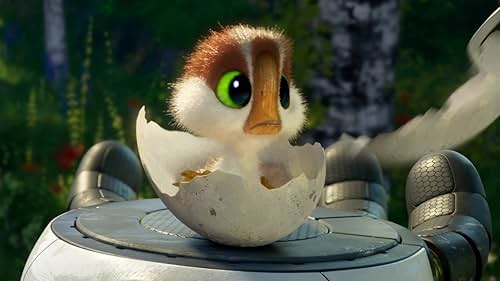
But things become complicated when she accidentally kills a nesting goose and crushes all but one of its eggs. She manages to save the surviving egg from the attentions of hungry fox, Fink (Pedro Pacal), and when it finally hatches, the chick – who Roz eventually names Brightbill (Kit Connor) – imprints on Roz, perceiving the robot as his mother. Roz now has some clearly designated tasks to accomplish. Brightbill needs to learn to eat, swim and then fly before he and the rest of the local goose population set out on their yearly migration. Assisted by Fink and a knowledgable possum(Catherine O’ Hara), Roz has to make some serious adjustments to her usual mode of practice…

As I said, The Wild Robot, based upon Peter Brown’s novel, is an impressive piece of animation, sometimes breathtaking in its depictions of the island’s landscape and its various inhabitants. Huge flocks of birds and butterflies are rendered in such detail that it sometimes feels like I’m watching a heightened David Attenborough documentary. Writer/director Chris Sanders also makes some canny observations about the nature of AI and its capacity for adaptation.

A shame then that in the final third, the script increasingly feels the need to have some of the characters making cringe-making fridge-magnet-style observations about the nature of love and understanding – Bill Nighy’s migration leader is a particular case in point. Those elements are already being shown in ways that even the youngest of audiences can comprehend, so such mawkish pronouncements feel like a mis-step. Also, the cynical part of my brain makes me wonder how, in the loving multi-species community that eventually evolves on the island, the carnivores will ever manage to survive.

But perhaps that’s just me.

Quibbles aside, this is a beautiful and genuinely moving film that explores some fascinating ideas. If it does prove to be Dreamworks’… ahem… swan song, then it’s an impressive note to end on.

4 stars

Philip Caveney
Smile 2

24/10/24

Cineworld, Edinburgh

The release of Smile was a genuine cause for celebration – an 18 certificate film that was actually scary and didn’t depend on costly special effects to achieve its goals. I loved the film, concluding my review by hoping that writer/director Parker Finn would resist the urge to turn it into a franchise. Two years later, here’s the unpromisingly titled Smile 2 and it’s time for me to eat a large slice of humble pie, because the sequel is bigger, gnarlier and, it must be said, way more ambitious than its predecessor. It manages to skilfully expand the original theme into a great big metaphor about the perils of stardom, drug addiction and fan worship. It’s better than the original, which let’s face it, hardly ever happens.

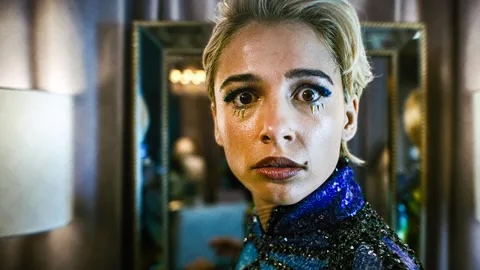
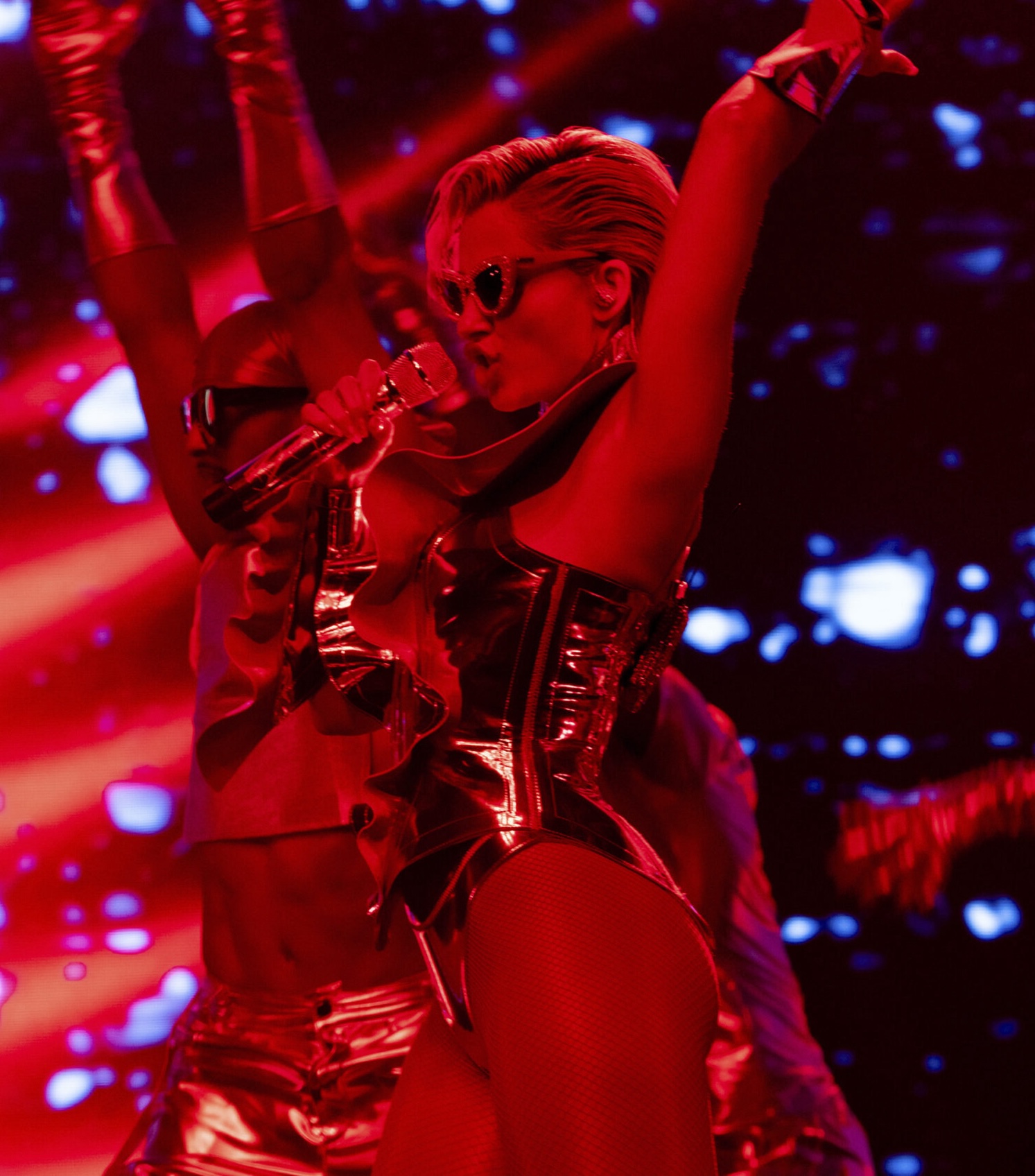
Skye Riley (Naomi Scott) is a celebrated pop diva, looking to relaunch her stalled career after a devastating car crash, which claimed the life of her partner, Paul (Ray Nicholson), and left her badly injured. Her body still carries the scars of the various operations she’s undergone in order to get back in the game but, compelled by her ever-pushy manager (and mother) Elizabeth (Rosemarie DeWitt), Skye is in rehearsal for the big tour that will hopefully propel her back into the charts. So – no pressure there.

When a back injury prompts her to visit her former drug supplier, Lewis (Lukas Gage), in the hope of scoring some prescription pain killers, she encounters a man who is under the grip of the mysterious inner demon that we encountered in the original film. (A pre credits sequence has quickly shown us how he came to be next in line for a helping of horror.) Lewis is grinning happily, even as he beats himself to death with a dumb bell.

Understandably not wanting to be associated with his death, Skye flees the scene but, as she goes gamely on with rehearsals, she’s horribly aware that something is wrong. The world of pop music inevitably has more than its fair share of grinning onlookers but, as the days slip by, there seem to be more and more of them and a mounting air of madness infects everything that Skye does, even when she reconnects with former best friend, Gemma (Dylan Gelula).

What’s more, her time is fast running out…

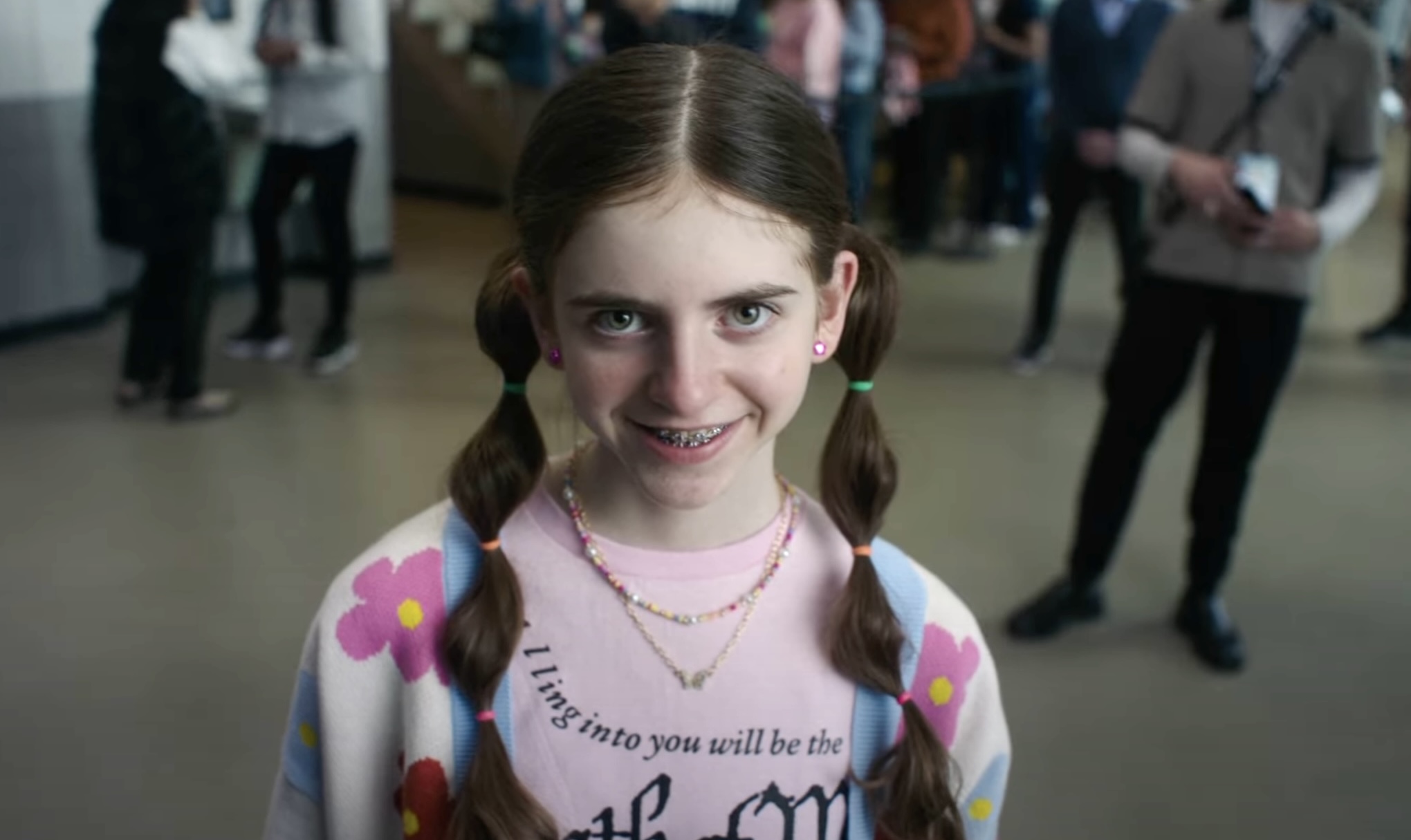
Scott is terrific in the lead role, acting up a storm as Skye moves from anxiety to fear to utter terror – and she also handles the musical elements with assurance, singing Cristobal Tapia de Veer’s compositions with enough authority to convince me that she really could cut it as a pop star if ever she desired such a career. Finn manages to construct a whole series of jump-scares that really do catch me unawares. The pop world gives him the opportunity to throw in plenty of unsettling images: the star-struck young fan with braces on her teeth who can only stare and smile; the malevolent stalker who wants much more than just an autograph – and the gurning dance troop invading Skye’s apartment at one point is an absolute triumph.

There’s also a toe-curling sequence where Skye is invited to be guest presenter for a major children’s charity and… well, let’s just say that things do not run as smoothly as she would like. As the pressure mounts, and poor Skye can’t even look into a mirror without seeing something terrifying, Smile 2 becomes a masterclass in runaway anxiety. What next, I wonder? Smile 3: The Musical?

If anyone can make that work, Parker Finn is clearly the man for the job.

4.8 stars

Philip Caveney

The Apprentice

19/10/24

Cineworld, Llandudno

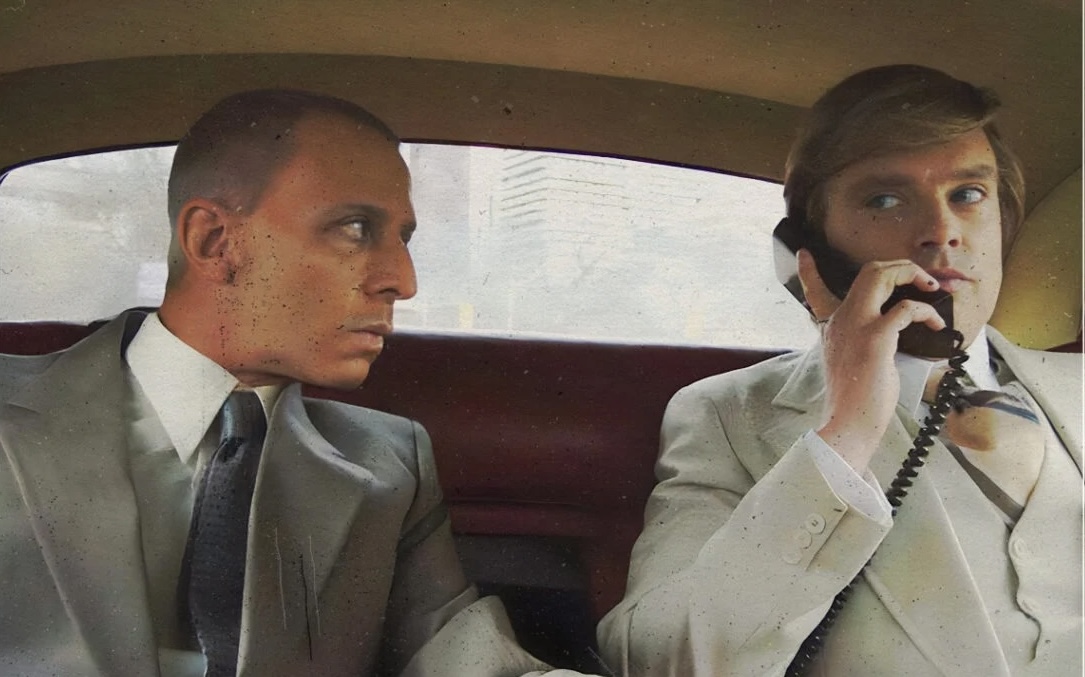
We’re in Wales, visiting Susan’s mum, but Brenda is a bit of an anti-Trump-obsessive and like us, she’s been eagerly awaiting the release of The Apprentice. It’s clearly time to flex the Unlimited card. Abi Abbasi’s biopic couldn’t have come at a more inopportune time for Trump. Of course he’s threatened legal action, though I’m pretty sure that Abbasi’s film doesn’t feature anything that isn’t already common knowledge to those who’ve read some of the numerous books about the man – but what it does, very effectively I think, is to illustrate how the Trump-monster was made and shaped.

Like most beasts, he’s learned his craft through imitation.

When we first meet Donald (Sebastian Stan) it’s 1973 and he’s essentially a slum landlord in New York City, trying his level best to please his ever-critical father, Fred (Martin Donovan), and deal with his alcoholic older brother Freddy (Charlie Carrick). The family fortune has already been made and the Trumps are currently fighting allegations that they have been discriminating against their African-American tenants – but Donald is looking for ways to better himself and has a vision of turning the long-derelict Gulf and Western building into a gleaming new construction called Trump Tower. But he knows he can’t do it alone.

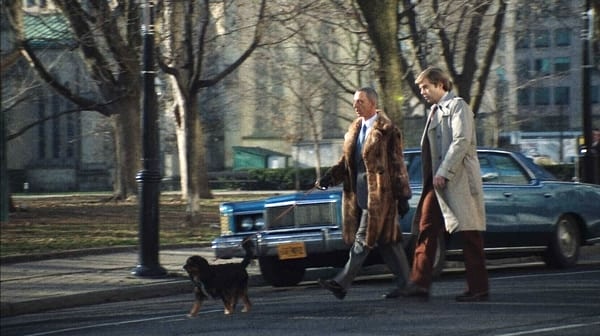
Then he falls into the company of Roy Cohn (Jeremy Strong), a ruthless lawyer, best known at this point for securing the death penalty for the Rosenbergs, a man who will stop at nothing to get his own way. He takes Donald under his wing and quickly drills into him his personal mantra. Never admit defeat, the truth is what you say it is and always act as though you’ve won, even if you haven’t.

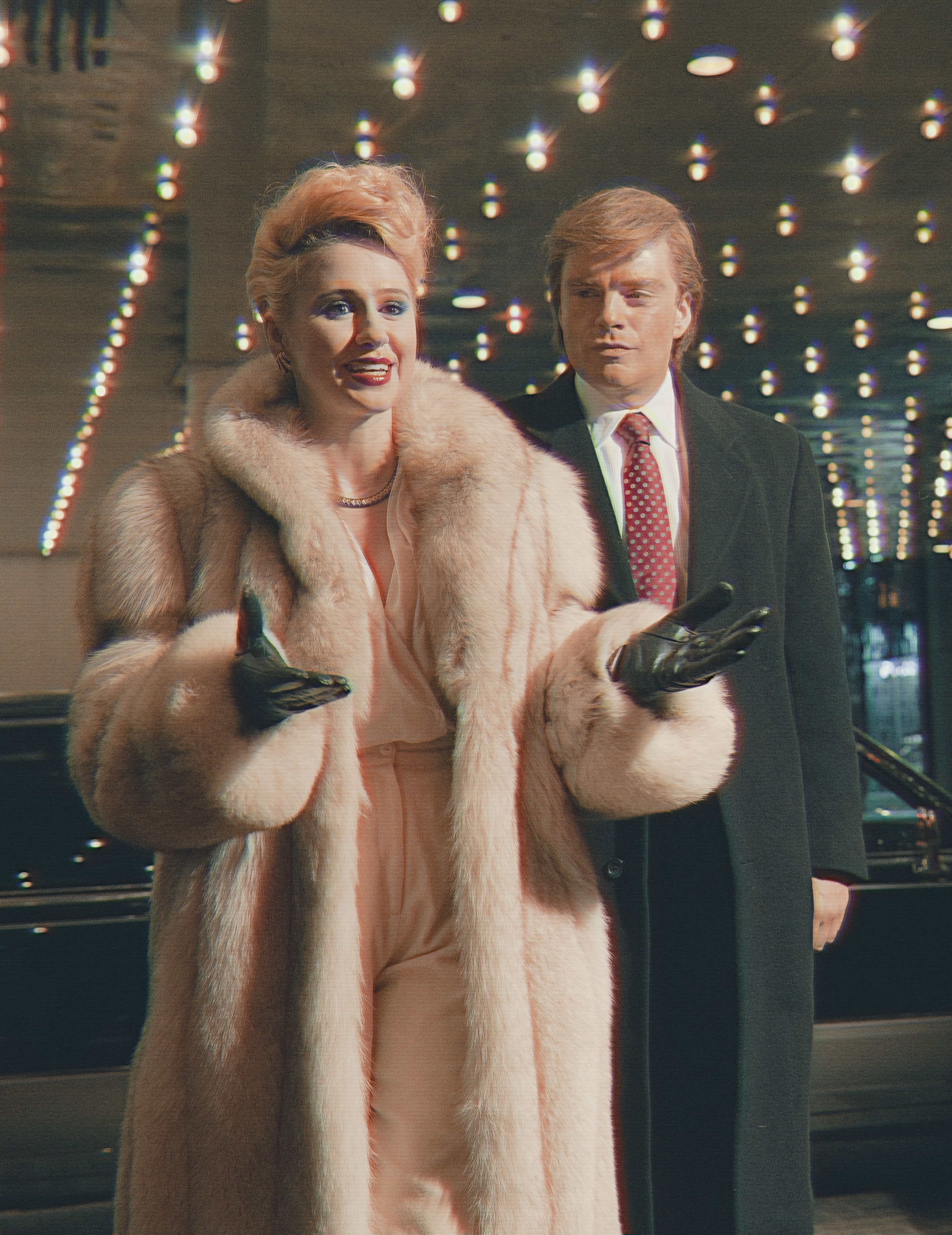
Pretty soon, Trump has become the perfect acolyte, copying all of Cohn’s traits and even doubling down on them. When Donald meets and falls for Ivana Zelničková (Maria Bakalova), there’s a moment where it seems as though the film might be about to let him off the hook. His clumsy attempts to seduce her make him seem almost… relatable – but the feeling is short-lived. The monster soon comes back to the fore and the scene where his affectations turn against his former love is shocking to say the least.

Sebastian Stan does a pretty good job of capturing Trump’s gradual deterioration into the beast we know. Holding back the man’s distinctive hand gestures and vocal affectations until the film’s final furlong, he literally grows into the role. Strong, meanwhile, submits an extraordinarily chilling performance as Cohn: lean, cadaverous, almost alien, he surveys everyone he meets with the same dead-eyed stare. Here is a man who hides his real identity behind a mask, who puts down his enemies with a barrage of verbal abuse, while secretly pursuing a dissolute life with complete abandon. He’s totally toxic and yet, his ultimate treatment by Trump, when he has outlived his use, is all the more shameful because of that toxicity – and it’s hard not to feel some sympathy for him.

Abas meanwhile, captures the look and feel of the changing decades with a skilful combination of found footage and reimagined scenes. His use of music is inspired. Using Yes Sir, I Can Boogie as Ivana’s unofficial theme tune is particularly effective.

Trump can (and surely will) protest that releasing The Apprentice when he is gearing up for the fight to become the US President for a second term is inexcusable – but, as this film so clearly portrays, when it comes to a dirty, underhand fight, this is a man with considerable experience of his own.

4.3 stars

Philip Caveney

Timestalker

13/10/24

The Cameo, Edinburgh

The release of a new Alice Lowe film is a cause for celebration. Actor/writer/director – and as far as I know, she might do the catering as well – Lowe is adept at ensuring that a modest budget goes a long, long way. Her debut feature, Prevenge, was released way back in 2017, shot while she was pregnant (of course it was), so Timestalker has been many years in ahem… gestation. It’s probably best described as a fantasy set across hundreds of years, and the central theme is the general futility of pursuing the heart’s desire.

We first meet Agnes (Lowe) in the 1600s in Scotland, where she’s a lonely spinster, much gossiped about by her neighbours, who pays the occasional visit to a masked preacher, a man given to talking about the dawning of a new religion. When said preacher is arrested and brought to a public place for torture and execution (they made their own entertainment those days), his mask is removed, revealing the handsome face of actor Aneurin Barnard. Agnes is instantly and irrevocably smitten. Attempting to approach him, she trips and falls face first onto the executioner’s axe, which is the bloody end of her.

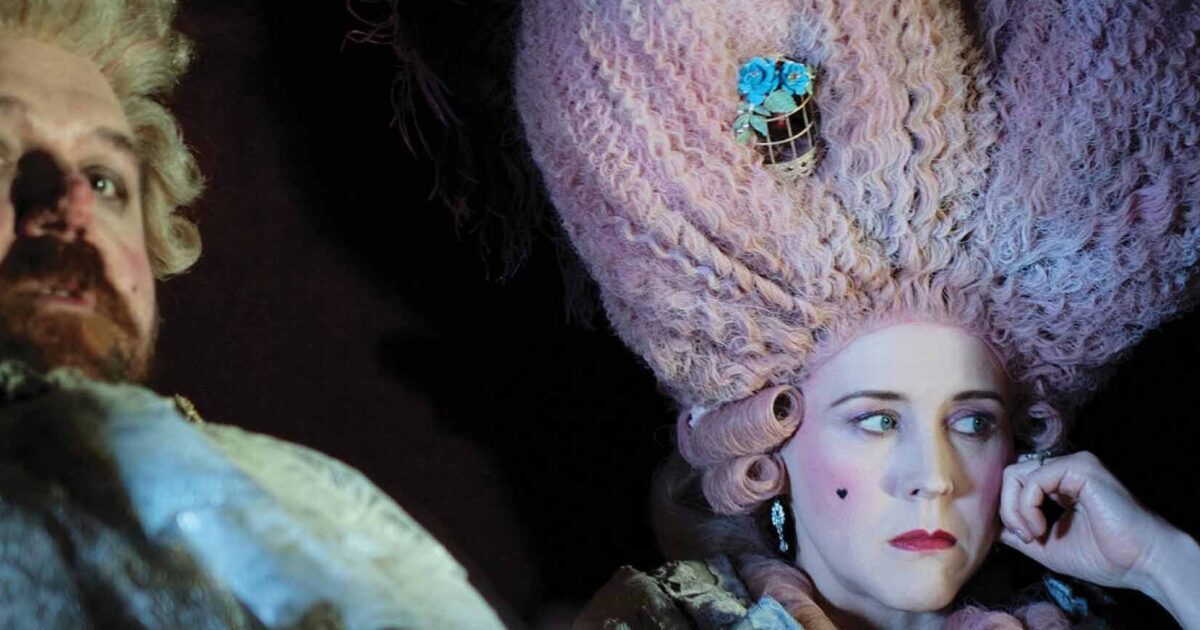
Except that it’s not. She’s promptly reborn in the 1790s, rich but bored, with a toxic husband played by Nick Frost. This Agnes has a penchant for wearing some truly monumental wigs but she’s missing something in her life. When she spies the visage of a handsome highwayman – Barnard again – her passion is reignited and she is, once more, in pursuit of love. But of course it’s doomed to end badly. With each transformation, her luck fails to improve and an added problem is that every new persona harbours memories of the one before… and where exactly does Cleopatra fit into all this?

Lowe’s sparky script is laced with deadpan humour, and cinematographer Ryan Eddleston has a lot of fun aping the look of celebrated films. If the opening sequence is Witchfinder General, then the 80s New Romantic section has the muted, pastel tones of Adrian Lyne’s Flashdance – and Lowe has the perm to back it up. Sadly, the budget doesn’t quite stretch to making the Manhattan locations look entirely convincing.

Tanya Reynolds does a good job of embodying the various iterations of Agnes’s perennial sidekick, Meg, and Jacob Anderson is quietly impressive as different versions of a character simply known as Scipio. Frost continues to be suitably malevolent in every loathsome bloke he portrays.

While it might sound faintly bewildering on the page, the myriad twists and turns of the plot are confidently handled and there are some cleverly placed visual clues – a huge heart hidden in a forest, a brightly plumaged songbird in a cage – to keep reminding us of what’s gone before.

As ever with Lowe’s work, the spirit of pure invention is kept proudly to the fore and I find myself wondering what this formidable film maker could achieve given a hundred-million-dollar budget. Until that unlikely event actually happens, why not seek out your nearest independent cinema and sample the delights of her latest gem? It’s well worth your time and money.

4 stars

Philip Caveney

A Different Man

05/10/24

Cineworld, Edinburgh

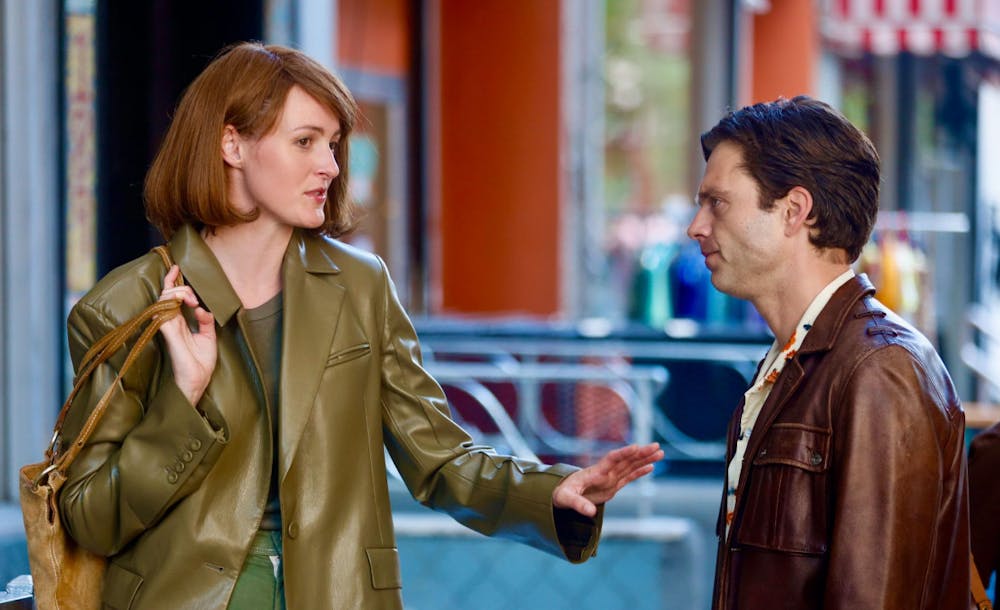
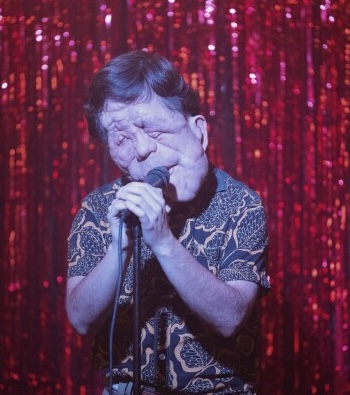
It’s not hard to imagine actor Adam Pearson’s delight on first reading the script for A Different Man. The film, a three-hander, was written expressly for him – and, my word, it gives him a chance to show what he can do. It also challenges our preconceptions and prejudices around disability and disfigurement – but not in any obvious, seen-it-all-before way.

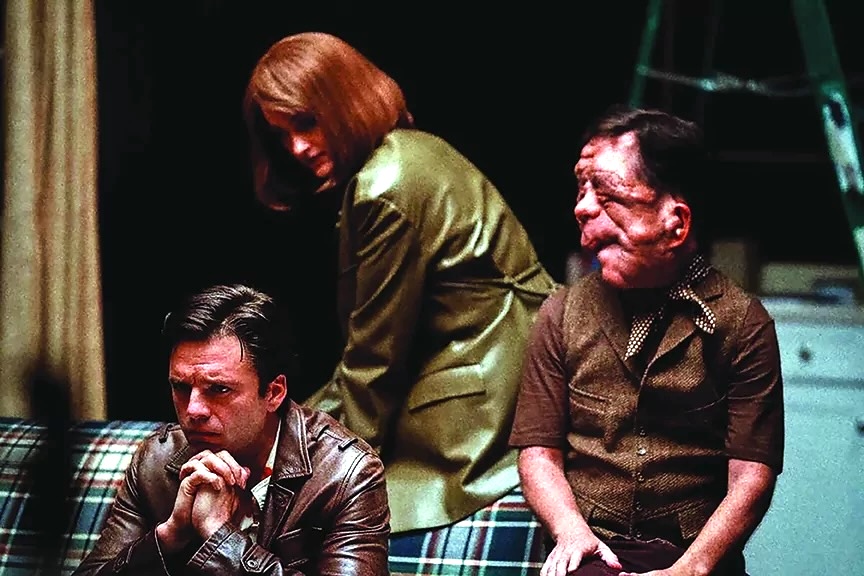
Writer-director Aaron Schimberg has a cleft palate, so he knows something of how it feels to look different. Pearson, meanwhile – along with his character, Oswald, and Sebastian Stan’s character, Edward – has neurofibromatosis, which is a lot more noticeable. Edward copes by keeping his head down and trying to make himself small. He’s quiet, unassuming, and sadly accepting of his lot. He is an actor, but he doesn’t get much work – unless you count condescending corporate training videos of the ‘how to behave around your disabled colleagues’ variety.

And then two things happen.

First, Edward is offered the chance to take part in a drug trial for a revolutionary new treatment that will transform his appearance. Next, he meets his new neighbour, aspiring playwright Ingrid (Renate Reinsve), and begins to develop feelings for her. She’s nice to him – but recoils when he makes a tentative move.

He decides to take the plunge.

As the tumours begin to literally fall from his face (courtesy of some pretty impressive prosthetics), a new Edward emerges, smooth-skinned and conventionally handsome. Keen to shuck off his old identity as well as his deformities, he informs everyone that Edward has committed suicide and rebrands himself as ‘Guy’. Before long, he’s living the dream, with a well-paid job, a luxury flat and an active sex life. What more could he want?

The answer, it turns out, is the starring role in Ingrid’s off-off-Broadway play, Edward, which is all about her friendship with her tragic neighbour. But she’s not sure about giving Guy the part – it wouldn’t be authentic and surely a disfigured actor ought to get the role? But, she has to admit, there’s something compelling about Guy, even if he does have to wear a mask on stage.

And then Oswald turns up, cheerily intrigued by the idea of the play with a central part he feels he was born for. He’s keen to see how Ingrid has written the character and what Guy brings to the role. He looks like Edward used to look, but that’s where the similarity ends. Because Oswald is no one’s victim. He’s a happy, talented, popular man, keen to grasp new opportunities, comfortable in his own skin. Edward can’t cope, his cocksure persona crumbling in the face of Oswald’s frank and open confidence. Before too long, he finds himself replaced…

The three central performances are all impressive, although Pearson is the one who shines. Stan is believably conflicted as the shy, awkward Edward, his true nature visible to the viewer even when he’s swaggering and trying to inhabit his brave new world. Reinsve, meanwhile, is perfect as the deluded Ingrid, convincing herself that she’s not only well-intentioned but also alert to discrimination, despite the self-serving nature of her work, and the fact that she keeps referring to Beauty and the Beast as her inspiration.

A Different Man is well-crafted on every level but, primarily, it is a clever piece of writing, as multi-layered as Stan’s prosthetics, unflinching in its examination of how non-disabled people view those with disabilities. Without offering any easy answers, it also explores the ideas of authenticity and appropriation, all the while avoiding anything resembling a cliché. This is the sort of script that sparks ethical discussions – akin in some ways to American Fiction, The Substance or Scottish playwright Kieran Hurley’s Mouthpiece.

Nuanced, shocking, intelligent and insightful, this is a memorable movie for all the right reasons.

4.7 stars

Susan Singfield

Joker: Folie à Deux

04/10/24

Cineworld, Edinburgh

Todd Philips’ 2019 film, Joker, was cinematic Marmite. For every viewer that loved it (and I was firmly in that camp), there was an equal number of comic book fans who detested it, largely because the film had no truck with the conventions of the genre that inspired it. Instead, here was an unflinching exploration of a mentally ill man, abandoned by the healthcare system and ultimately championed by a bunch of deluded followers. It was grubby, brutal and utterly devastating.

Folie à Deux is equally divisive, though this time around what has incensed most social media pundits is the fact that the film is… well, there’s no other way to say this: a musical. In 2024, the genre appears to have fallen into total disrepute with movie fans, to the extent that even films like Wicked are reluctant to depict any actual singing and dancing in their trailers in case it puts off potential viewers.

Go figure.

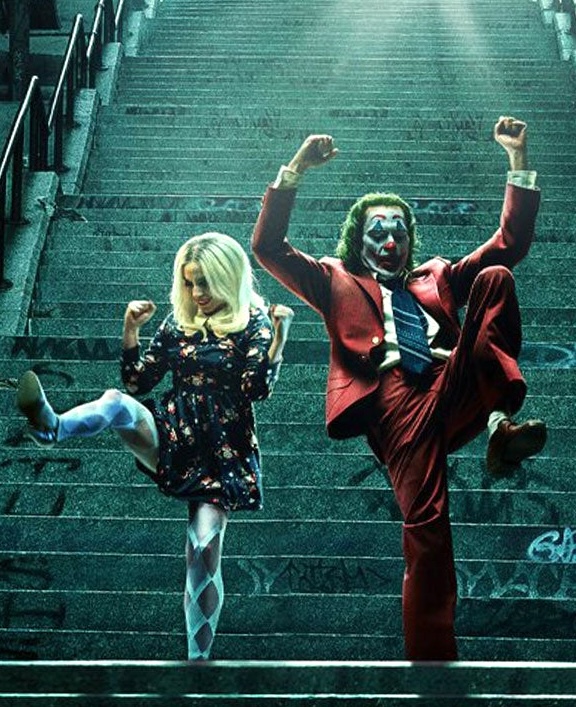
It’s two years after the events of Joker and Arthur Fleck (Joaquin Phoenix) is languishing in Arkham State Hospital, overseen by callous prison warder Jackie (Brendan Gleeson), who seems to delight in humiliating him at every opportunity. (Interestingly, it’s Jackie who tells the nearest thing to an actual joke in this story and, it has to be said, it’s a corker.)

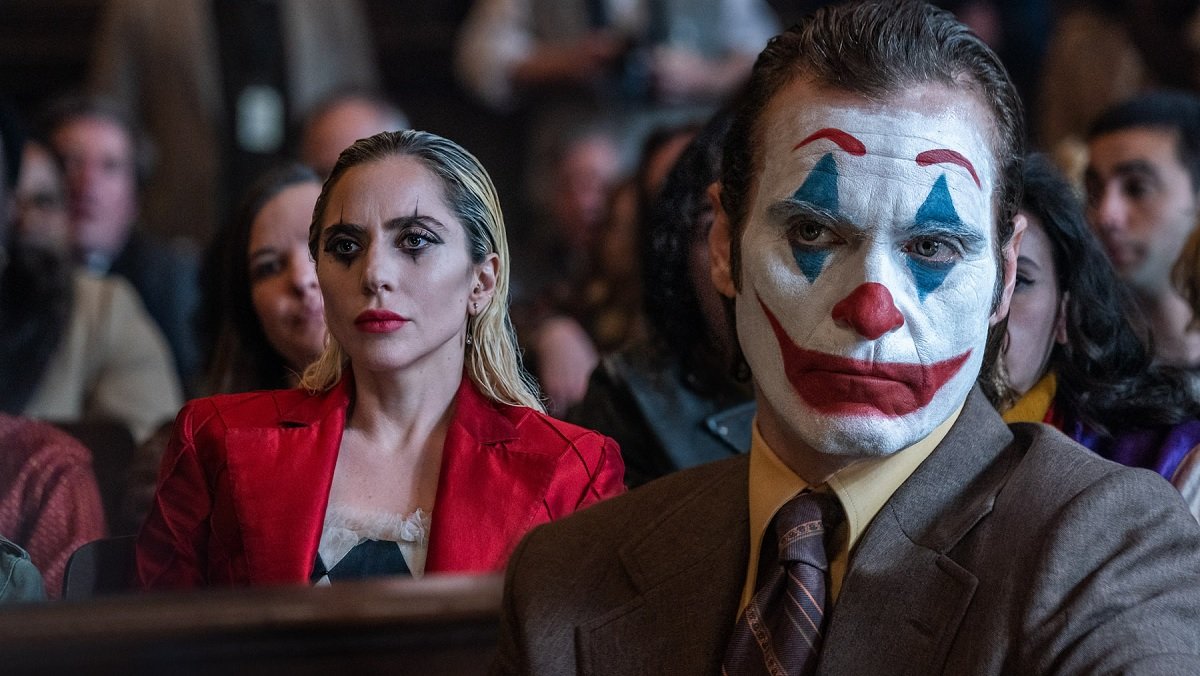
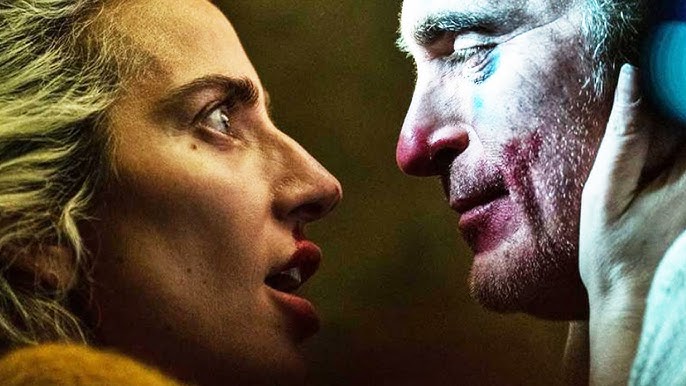
Arthur is fast approaching his day in court, schooled by his defence lawyer Maryanne (Catherine Keener), who is pretty sure that a plea of ‘dissociative identity disorder’ will save him from the death penalty. And then, attending an in-prison musical therapy session where inmates are encouraged to sing their troubles away, Arthur meets Harleen ‘Lee’ Quinzel (Lady Gaga) and, for the first time in his life, he has a reason to want to survive… and to slap that makeup back on his gaunt visage.

The term ‘musical’ is used quite loosely here. Phoenix and Gaga work their way through a series of solid gold bangers from the likes of Sinatra and Jaques Brel, but it’s made clear from the outset that these sequences occur in the cerebral landscape of Arthur’s head, his way of making sense of what’s happening to him. (Those with long memories may be reminded of Dennis Potter’s Pennies from Heaven, which adopted a similar approach.) A scene where Arthur is being interviewed by TV journalist Paddy Meyers (Steve Coogan) is a good case in point. Midway through the interview, Arthur suddenly breaks into song and dances around his cell – but Paddy remains blissfully unaware of his antics.

Phoenix is an actor of extraordinary ability and he slips into this unfamiliar discipline with his usual aplomb, using his newly slimmed-down frame to accentuate every move. Gaga, who has much more experience in the field, is also sensational, able to imbue an old chestnut like Get Happy with a strangely sinister edge, making me feel that I’m hearing it for the first time. As with the previous film, Philips steadfastly refuses to moderate his approach for the spandex brigade, doubling down on the grime and squalor. Folie à Deux is every bit as unsparing and unforgiving as its predecessor, whilst somehow managing to retain a beautiful humanity.

This may not be the perfectly-honed movie that was Joker, but for my money, it runs it a close second and is far (very far) from the embarrassing misfire that so many are describing it as. Some irate comic fans seem to have been hoping for a rerun of its predecessor, but what would be the point of that? I can’t help feeling they’ve somehow missed the point.

But then, I’m always happy to admit that I love a good musical.

4.6 stars

Philip Caveney
His Three Daughters

01/10/24

Netflix

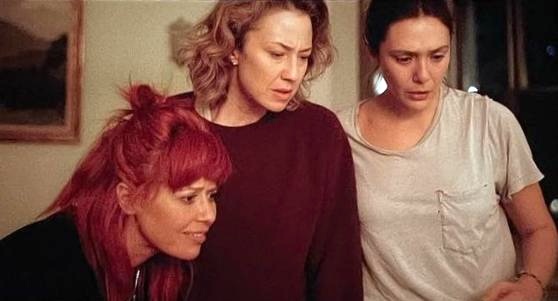
Vincent (Jay O’Sanders) is rapidly approaching the end of his life and his daughters have come to his Manhattan apartment to be with him when he finally expires. Katie (Carrie Coon) is the eldest of them, a natural organiser, working alongside hospice worker, Angel (Rudy Galvan), to ensure that all loose ends are securely tied up. She’s trying to ensure that the Do Not Resuscitate order that Vincent wanted is in place. She’s also trying to write her father’s obituary.

The youngest daughter, Christina (Elizabeth Olsen), a slightly dippy Grateful Dead fan, spends much of her time singing to Vincent and making needy phone calls to her husband and young daughter.

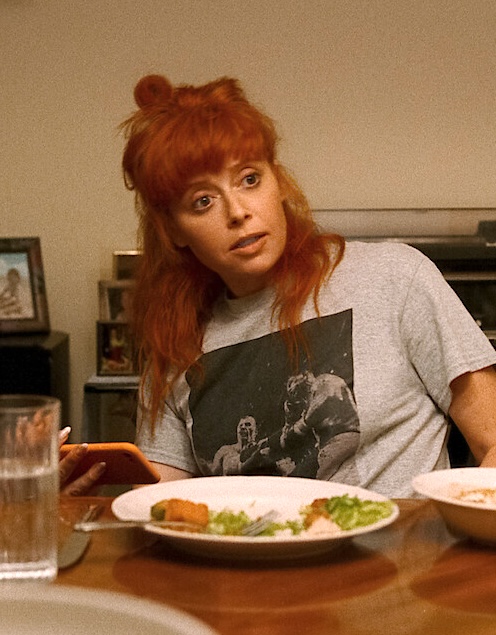
And then there’s step-sister, Rachel (Natasha Lyonne). Though not Vincent’s biological daughter, she has actually lived in his apartment for years and in some ways seems to be the most profoundly affected by his approaching death. She’s clearly determined to be as blitzed as humanly possible when the end arrives, courtesy of the seemingly endless supply of spliffs she smokes at every given opportunity.

This gentle and quirky film, written and directed by Azazel Jacobs, is essentially a character study, which plays the three very different women against each other, as they chat, reminisce and argue. Sparks fly when they finally address long-held grudges and feuds. Confined entirely to Vincent’s apartment, this could easily feel claustrophobic, but all three performances are strong enough to carry the feature along. Lyonne perhaps gets the most interesting role, drifting through the situation with a manic grin and a WGAF attitude, as the clock inexorably ticks through the closing hours of Vincent’s life.

There’s an unexpected revelation in the final furlong that initially makes me think that Jacobs has just ruined everything he’s spent so much time building – but happily that feeling is short-lived and it quickly becomes clear that he knows exactly what he’s doing.

His Three Daughters is a delightful and affecting film that has many insightful things to say about the human condition and our attitude to death. And if that sounds grim, don’t worry. There’s plenty here to make you smile. Don’t be surprised if, like me, you come away from this singing Five Little Ducks.

Just saying.

4.2 stars

Philip Caveney