Film

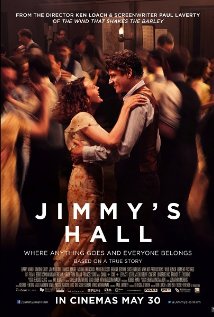
Jimmy’s Hall

MV5BNTk0NDk4MzIzMl5BMl5BanBnXkFtZTgwNjMwMTA5MTE@._V1_SY317_CR11,0,214,317_AL_

04/10/14

A new film by Ken Loach is usually a cause for much celebration, but Jimmy’s Hall falls somewhat short of his own impeccable standards. Of course, he’s done Ireland before (much more successfully) with The Wind That Shakes The Barley, a film so filled with anger that it makes for uncomfortable (though riveting) viewing. With this story, Loach’s longtime screenwriter Paul Laverty, homes in on a much more intimate real life story, set in Co Leitrim in the late 1930’s. Jimmy Gralton (Barry Ward) returns to his hometown after a ten year exile in New York. Back in the day, he  fell foul of the authorities with his ownership of a local dancehall, which was seen by many to be a focus for discord and (God forbid) communism. But he isn’t back home long before the local youth start pestering him to open up the dance hall again, arguing that these are more enlightened times and surely nobody could possibly object.

It doesn’t take long to discover that the times are nothing of the kind. Gralton comes up against his former adversary, Father Sheridan (Jim Norton) an embittered old priest who thinks he sees communists lurking behind every tree and it isn’t long before the dancehall becomes a target of every hardliner in the vicinity. Gralton’s attempts to make the church accept that those who come to his hall are merely looking for entertainment and education, are doomed to failure.

It’s an interesting little story, but there may not have been enough meat here to base an entire film around. All of Loach’s trademark tropes are present and correct – improvised sequences featuring non-professional actors, naturalistic sound and extended crowd scenes, but in this film, the latter only serve to give proceedings a funereal pace and the story rarely generates any real sparks of life. Loach has been quoted as saying that Jimmy’s Hall may be his final movie, but I sincerely hope not. I’d like to see him go out on a stronger note than this.

3 stars

Philip Caveney

What We Did On Our Holiday

MV5BMzY4MDc4NDYyOV5BMl5BanBnXkFtZTgwODgzMTc2MjE@._V1_SX214_AL_

4/10/14

On paper, this looked rather promising. Created by the writing team that brought us Outnumbered, it seemed to belong in that same tried-and-tested arena of harassed parents vs precocious children. Doug (David Tennant) and Abi (Rosamund Pike) are taking their three young kids up to the Scottish Highlands to visit Granddad Gordie (Billy Connolly) to celebrate his birthday, but nothing here is as straightforward as it might appear. Doug and Abi have actually separated after his infidelity with one of his students, while Granddad Gordie isn’t going to be celebrating any more birthdays, as he’s suffering from terminal cancer. So rather than upset him, everyone (kids included) is told to pretend that it’s business as usual.

The film starts well, following the established Outnumbered formula, as the two parents struggle to control their fractious offspring in a variety of picturesque locations on the long drive up to Scotland and there are plenty of laughs, expertly mined. But all too soon they arrive at their destination and we are introduced to Granddad Gordie, who unfortunately turns out to be one of those all-wise creations who wander around spouting lines that would be better placed on a series of novelty fridge magnets. On the morning of the birthday bash (an overly elaborate and expensive affair orchestrated by Doug’s pompous brother, Gavin (Ben Miller) and his depressive wife, Agnes (Amelia Bulmore), Gordie decides to take the three kids on a fishing trip and at this point, the story takes an abrupt left turn into much darker (and it has to be said, faintly unbelievable) territory. The three children take centre stage and matters aren’t helped one jot by the fact that they are considerably less appealing than their TV counterparts – the little girl in particular is profoundly irritating.

Having served up a mostly laughter-free middle section, the writers decide that what we really need to round things off is a syrupy, optimistic conclusion, which they duly deliver complete with a cliff top Highland Fling at sunset. This is a pity, because the film promised so much in its first half hour, that the dismal ending somehow rings even more hollow. Though there are decent performances from most of the adult actors, this can only count as a missed opportunity.

1.8 stars

Philip Caveney

Gone Girl

MV5BMTk0MDQ3MzAzOV5BMl5BanBnXkFtZTgwNzU1NzE3MjE@._V1_SY317_CR0,0,214,317_AL_

4/10/14

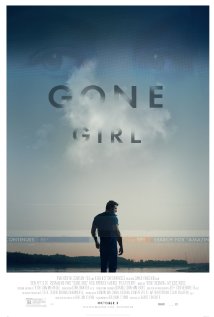
David Fincher’s adaptation of Gillian Flynn’s twisted page-turner is a classier affair than the actual book – but as with Before I Go To Sleep, having read the work beforehand is a definite disadvantage, because this is a story that gets its chops from the big reveals it occasionally drops into the proceedings.

On the day of his fifth anniversary, bar owner Nick Dunne (Ben Affleck) comes home to find that his wife, Amy (Rosamund Pike) has gone missing. Signs in the house suggest that she has been abducted. A police investigation ensues and as it unfolds, Nick begins to look more and more suspicious… does he actually know more about Amy’s disappearance than he is letting on? It would be a crime to reveal too much of the plot machinations here because Gone Girl is all about plot. Indeed, Flynn pushes the various twists and turns to such an extent that, in book form at least, the story starts to seem somewhat risible. But Fincher is so adept at creating atmosphere, it’s easier to overlook such shortcomings on the big screen. What’s more he has cast the film so shrewdly, that we believe in characters that on paper seem flimsy.

The book’s conclusion was a particular disappointment for me, but again, Fincher manages to make it work. This is an assured production that never loses momentum and which serves its source material well. If you haven’t already read the novel, maybe you should wait until after you’ve seen the film.

4.2 stars

Philip Caveney

The Butler

MV5BMjM2NDY3MjkyMF5BMl5BanBnXkFtZTcwMDM5Nzg5OQ@@._V1_SX214_AL_

26/9/14

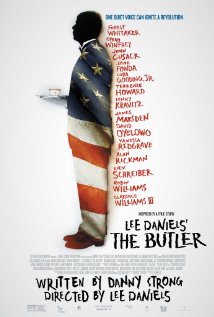
I put off watching this for quite some time, thinking that I probably wouldn’t like it that much and I have to say, that having finally bitten the bullet, I was correct in my assumptions. Lee Daniel’s saga is a probably well-intentioned attempt to portray the way in which black people have worked in the wings throughout history to service their white employers; in this case, in the wings of the White House.

The story follows Cecil Gaines (Forrest Whitaker) the son of a plantation worker who witnesses the murder of his father and the (off screen) rape of his mother,  before running away to find a better life for himself. He eventually finds employment at a Washington hotel and is then invited to work at the White House himself. His wife, Gloria (Oprah Winfrey) and he have a couple of sons, and when the oldest becomes involved in the Black Power movement, it puts a rift between father and son, that takes a long time healing. Meanwhile, a string of Presidents, all played by major actors, comes and goes while Cecil attends to their needs. Robin Williams is Eisenhower, James Marsden is Kennedy, John Cusack is Nixon. Curiously the only who really nails it is Alan Rickman as Reagan. It’s an oddly sanitised affair and it’s hampered by the fact that both Whitaker and Winfrey are too old to play their younger selves and have to be plastered with latex to embody the latter stages of their lives. If this was a biopic, it might have been more satisfying but Gaines is a composite, based on various real life butlers and too much of the film has Whitaker standing around serving drinks, while world-changing events unfold all around him.

It’s nicely mounted and for the most part, well acted, but his feels like a decidedly chocolate box approach to an important subject.

2.8 stars

Philip Caveney

Maps To The Stars

MV5BMTcxNDQwMjY0NV5BMl5BanBnXkFtZTgwOTgwNzE0MjE@._V1_SY317_CR0,0,214,317_AL_

26/09/14

David Cronenberg takes us on a guided tour to the dark heart of Hollywood, showing us elements of that city that the tour guides would certainly want to steer clear of. Along the way, we are introduced to a set of characters who are all pretty repellent in one way or another. Indeed, in the hands of a lesser director, this film would have struggled to hold the attention of an audience. But Cronenberg guides it all so expertly, the result is horribly compelling.

Agatha (Mia Wasikowska) has been badly burned in a fire in her childhood, but arrives in Hollywood full of hope for the future and looking for work. She hooks up with handsome limousine driver, Jerome (Robert Pattison), telling him that she has ‘become friends on the internet’ with Carrie Fisher (bizarrely playing herself). Fisher recommends Agatha as personal assistant to Havana Segrand, (Julianne Moore) a shallow, self-obsessed actress, currently chasing a role in what she hopes will be her ‘comeback’ movie, playing her own mother (herself a famous actress who died in a drowning) in a biopic of her life. (Weird enough yet? Stay tuned, it gets even stranger).

Benjie Weiss (Evan Bird) is a teenage phenomenon, star of the ‘Bad Babysitter’ franchise (think McCaulay Culkin, but with much more attitude) who has experienced a few problems in his childhood, while his father, Dr Stafford Weiss (John Cusack) is a celebrity therapist, whose patients include Havana Segrand. And Benjies Mother, Christina (Olivia Williams) is just a strung-out mess.

It’s evident from the very beginning that this isn’t going to end particularly well for anybody and Cronenberg doesn’t disappoint. Moore’s creation is a particular delight – snide, venal, happy to issue orders to Agatha whilst taking a dump, she is gloriously repulsive and must be a contender for yet another Oscar nomination with this. While it might not be quite up there with the director’s best efforts, it’s nonetheless entertaining stuff, well worth seeking out.

4 stars

Philip Caveney

The Riot Club

MV5BMjAxNTA3NjI0NF5BMl5BanBnXkFtZTgwODcyMjQ3MjE@._V1_SX214_AL_

20/09/14

The Riot Club’s theatrical roots are apparent in the film’s structure: most of the action centres on a single dinner, conforming loosely to the unities of time, action and place that are not so common in cinema. That said, Laura Wade’s adaptation of her play (Posh) works very well on the big screen, its cast of loathsome characters proving queasily engaging.

The Riot Club is fictional, but it is based – not very obliquely – on the real-life Bullingdon Club, whose famous alumni include David Cameron, George Osborne and Boris Johnson. If even half of what the film suggests is true, then it is terrifying to think that we are being governed by such a group of louche, hedonistic, over-privileged thugs.

We see the Riot Club through the eyes of Miles (Max Irons), whose instinctive good nature is compromised when he joins the group. He is flattered to be asked; as Harry (Douglas Booth) boasts, there are twenty-thousand students at Oxford, but only the finest ten can join the Riot Club. Their definition of ‘finest’ is rather narrow: members must be male (of course), and have attended a good school (“Eton, St Paul’s, Westminster… Harrow if you absolutely must”); furthermore, they need the right connections and the willingness to endure a series of bizarre initiation rites. Miles appears to fit the bill, although his fellow club members are bemused and appalled by his choice of girlfriend, a state-educated northerner called Lauren (Holliday Granger). But what starts as fun and silly snobbery soon reveals a darker side: the boys have such a strong sense of entitlement that they cannot empathise with anyone outside their set. They cause mayhem and destruction and do not care; they know that they can pay their way out of trouble.

Parts of this polemical film are genuinely difficult to watch. Life is just a game to the Riot Club boys; they commit atrocious deeds in the full knowledge that they will not just get away with them, but will go on to work in positions of incredible power. They really can do what they like.

I’m scared.

4.2 stars

Susan Singfield

The Borderlands

Unknown

19/09/14

Found-footage movies seem to dominate the horror film market these days, so it’s refreshing for once, to find one that’s a cut above most of the competition. The Borderlands deals with paranormal goings-on in a remote West Country church, reported by its decidedly twitchy priest. A team of Vatican investigators are sent to try and fathom what’s going on. Deacon (Gordon Kennedy) is a hard-bitten cleric who has experienced spooky events all over the world. Mark (Aidan McCardle) is the official team leader, a real ‘by the book’ stickler (and frankly a bit of a twerp). The third member is Gray (Robin Hill) a ‘techie’ and a man with no religious beliefs whatsoever. He sets up countless hidden cameras and equips everyone with radio controlled head cams, which  immediately makes the ‘found footage’ side of things more believable than most of the other films in the genre, where we’re expected to believe that characters will keep pressing ‘record’ while their pals are being slaughtered.

Director, Elliot Goldner, deals in suggestion. Things are glimpsed in the dark, but never properly seen, there are sounds in the night that are never readily identified, and the three investigators encounter things that they cannot easily explain. It all goes to generate considerable (sometimes almost unbearable) tension. What’s particularly intriguing about the story is that Gray, the confirmed Atheist, turns out to be much more suggestible than his Catholic companions. As is generally the case in films of this kind, the tension is gradually cranked up to max and there’s a labyrinthine conclusion that will have claustrophobic viewers climbing the walls. If there’s a major criticism, it’s having brought us to the brink of terror, the film doesn’t really know what to do with us, but maybe that’s beside the point.

If you’re looking for something to give you some decent chills after a night at the pub, this one should do nicely.

3.8 stars

Philip Caveney

The Killing USA

MV5BMTQ5MTUxMzU3Ml5BMl5BanBnXkFtZTgwMDU3NDYxMjE@._V1_SX214_AL_

17/09/14

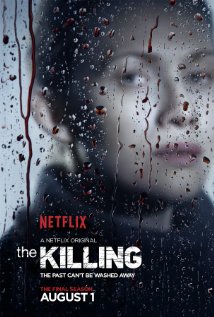
As a fan of the original Swedish series, Forbrydelsen, I had mixed feelings about watching this. After all, wouldn’t it just be a pale rerun of Sarah Lund’s adventures? Here, Lund has metamorphosed into Seattle-based Sarah Linden (Mireille Enos) a nervy and committed detective about to quit the force and marry her fiancé. On the eve of her departure, she’s teamed with a new partner, Stephen Holder (Joel Kinnaman) a hip, jive-ass, chain-smoking low life, initially much more unlikable than his Swedish counterpart. Just as Linden is about to depart, news comes in of the murder of a teenage girl, Rosie Larsen and Linden starts putting off the nuptials in order to stay at the helm of the investigation.

So far, so like the original – but just as I was at the point of abandoning this as a ‘seen it all before,’ something strange happened – something that demonstrated that the ‘perp’ from the original story, couldn’t have committed this murder. Having established the basic outlines, the producers of The Killing USA had decided to run with the idea and introduce a few tropes of their own. Chief amongst them, was the decision that rather than tie the whole thing up neatly in one series, the Larson investigation would actually extend over two and would be a much more complicated affair than its Nordic progenitor. So, in come a whole bunch of plots and sub plots. Rosie’s Dad, Stan (Brent Sexton) used to be a mob hit man. His wife, Mitch (Michelle Forbes) suffers a nervous breakdown and goes on the lam. Then there’s the machinations of would-be city Mayor, Darren Richmond (Billy Campbell) and the many shady people who work for him and oppose him. Even more complicated is the fact that Linden and Holder both have ghosts of their own lurking in their respective pasts. After initial hostility, the two detectives gradually establish a working relationship and both actors deserve plaudits for making their characters so believable and (against all the odds) really likeable.

The result is that a few episodes into season one, the story begins to grip and apart from a few soggy stretches towards the middle of season two, it manages to keep you hooked to the end. Only the finest armchair detectives will work out whodunnit (I was left guessing until the final moments). This being an American production, of course there are some elements of sentimentality, you won’t find in the original, but at the same time, there’s a final episode twist that is so cynical, such a vicious slap in the face, it literally left me gasping.

Season three takes a major step away from the source material. Linden and Holder team up again investigate a series of killings that appear to go back years, while the man who was originally charged with the murders, Ray Seward (Peter Sarsgaard), awaits imminent execution on death row. But, if the killings are still being perpetrated, how can Seward possibly be guilty? Freed of the constraints of following the original storyline, this is the best season of the three. The relationship between the two detectives deepens (at several points incorporating a tantalising ‘will they, won’t they’ element), the desperate race against time to exonerate Seward is nail biting by the final episodes and there’s a last minute reveal that most viewers will not see coming.

The Killing USA is therefore not the pale imitation you might have expected, but a complex and entertaining drama with an identity of its own.

4.5 stars

Philip Caveney

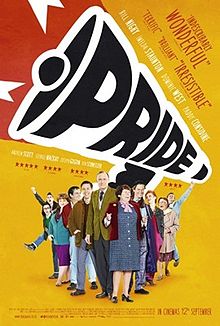
Pride

Pride_poster

14/09/14

Set in 1984, at the height of the miner’s strike, Pride tells the true-life story of Mark Ashton (Ben Schnetzer) a young gay activist who manages to persuade a group of like minded-friends to form LGSM (Lesbian and Gays Support the Miners). They start to collect money on behalf of one particular group of strikers, in South Wales and are so successful, It’s not long before the group meets up with likeable Union man, Dai (Paddy Considine). He invites them to the sleepy village of Onllwyn, to meet the miners in person – where inevitably, they encounter resistance from some of the more reactionary inhabitants – but after an initial frosty reception, they start to find allies in some rather unlikely places…

Pride is simply irresistible. Cut from the same cloth as films like The Full Monty and Brassed Off, it features a terrific ensemble cast – Bill Nighy, Imelda Staunton and Dominic West are undoubted highlights, but the overall casting is note-perfect. While it occasionally plays for easy laughs, (‘Dai, your gays have arrived!’) it’s never less than entertaining stuff and also takes the opportunity to slip in some genuinely throught-provoking moments.

It would be a cold heart indeed that doesn’t shed tears at the film’s emotional conclusion. Like most ‘true-life’ stories, there remains the conviction that dramatic licence must have been exercised on some of the actual events, but nevertheless, this is a successful slice of drama, snappily directed by Matthew Warchus, wittily scripted by Stephen Beresford and one that manages to keep itself just the right side of sentimentality.

4.5 stars

Philip Caveney

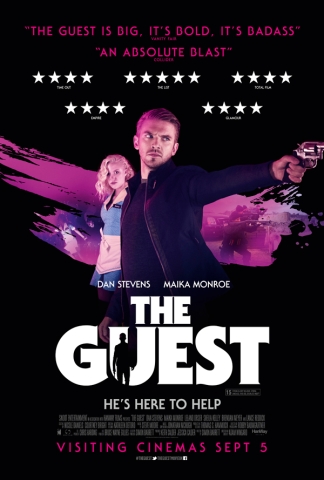
The Guest

7673_poster_iphone

11/09/14

After watching The Guest, I’m convinced of one thing. Dan Stevens is destined to be a big movie star – and this is his ‘breakout’ film. About as far from Downtown Abbey as he could reasonably go, it showcases his handsome, charismatic charms to the max and he has a lot of fun with the role. The fact that it isn’t really that good a film barely seems to matter.

Stevens plays ‘David,’ who turns up at the home of the Petersons, a family who are still in mourning for their son, Caleb, a marine who has (apparently) been killed in action. David claims to be Caleb’s best buddy who was with him when he died. After working his considerable charms on Caleb’s mother, Laura (Sheila Anderson) David is invited to become a house guest  and is soon involved in ‘looking after’ the family members, with particular attention to twenty year old Anna (Maika Monroe) and her teenage brother, Luke (Brendan Meyer). To the latter, he cheerfully suggests that he deals with the school bullies by breaking their noses and carrying a knife. It quickly becomes apparent to Anna (if not her parents) that David may not be the clean cut hero he’s pretending to be…

It’s in these early stretches where the film is at its most convincing, though director Adam Wingard (who gave us the queasily watchable You’re Next) needs to learn about pace – he often resorts to disguising the story’s slower-moving sections by dolloping swathes of electronic music over the top of the action. As the film galumphs shamelessly into its final third, it deteriorates into a risible bloodbath and as the body count rises, so all its hard-earned credibility goes straight out of the nearest window. Lance Reddick as ‘Major Carver,’ has the thankless task of steaming in like Basil Exposition, to explain exactly who ‘David’ is, before heading up a climactic face-off at a Halloween-themed party that looks like it’s stepped out of a Tobe Hooper movie.

OK, this isn’t going to win any prizes for originality… in fact, it’s not going to win any prizes, full stop. If it’s anything, it’s Stevens’ calling card to Hollywood, which suggests in no uncertain terms, that given bigger and better vehicles than this, he’s likely to shine. Watch this space.

3.1 stars

Philip Caveney