Author: Bouquets & Brickbats

Small Axe: Red, White and Blue

07/12/20

BBC iPlayer

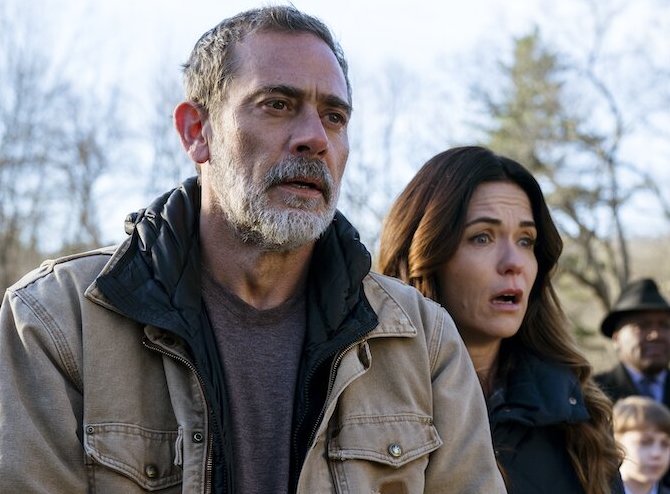
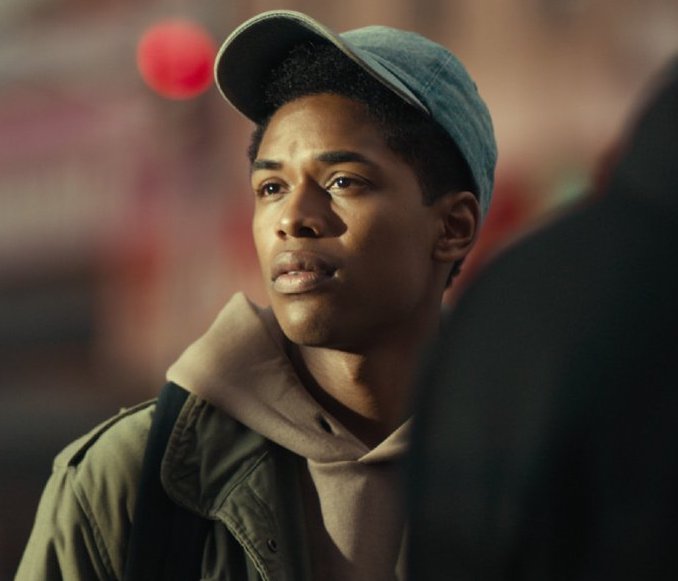
After the experimental Lovers Rock – which I have to confess, really didn’t work for me – Red, White and Blue, sees director Steve McQueen moving back to the kind of material he explored in Mangrove: the rampant racial discrimination experienced by black people in 1980s London. The difference this time around is that the major player here is a black police officer. Once again, it’s based on a true story, that of Leroy Logan (John Boyega), a former research scientist, who, after witnessing the savage beating of his father, Ken (Steve Toussaint), at the hands of two police officers, decides to join the Metropolitan police in the fervent hope that he will be able to improve things from the inside.

Of course, he quickly learns that making such changes is no easy matter and that, once on active duty, he will be unable to count on his white colleagues to back him up in any dangerous situation. But he’s clearly a tenacious individual. Logan stayed in the force until his retirement in 2013 and remains a member of the National Black Police Association.

If this were a Hollywood movie, of course, we’d see Leroy battle his way through appalling odds to emerge at the end, bruised, bloody and victorious. But this is crushingly realistic stuff – the inevitable realisation being that, though things may have improved a little since the 80s, they haven’t improved anything like enough. This story ends pretty much as it starts – with Logan stubbornly refusing to compromise his position.

Boyega is particularly impressive in the lead role – indeed, he dominates this episode and makes it very much his own. A scene where he finally explodes into anger at the callous conduct of his fellow officers is riveting stuff. There’s also a gruffly likeable performance from Toussaint as his father, a man who carries his bottled-up rage around with him like a cross he has to bear.

Next stop, the Brixton Riots. Can’t wait.

4 stars

Philip Caveney

Mank

04/12/20

Netflix

It seems I’ve been waiting for this film for just about forever. Director David Fincher first mentioned it as a possible follow up to Alien3 way back in 1992. With a screenplay by his father, Jack, it would focus on the creation of Citizen Kane. It would provide an answer to how much involvement Orson Welles actually had in the writing of that Oscar-winning screenplay and it would, of course, look into the allegations that the film was besmirched by the machinations of powerful newspaper tycoon, William Randolph Hearst.

Was I up for this? Yes, big time, because this is a story that has fascinated me since my youth. But, as it turned out, I was going to have to be patient…

And now, in one of the bleakest years in human history, it finally turns up, virtually unannounced on Netflix. Needless to say, I don’t allow a great deal of time to elapse before I tune in.

And it’s worth the wait. This is absolutely sumptuous, oozing class from every beautiful monochromatic frame, courtesy of cinematographer Erik Messerschmidt. Here is a faultless recreation of an era, right down to the visible scene descriptions, written clickety-clackety on a manual typewriter. From the opening credits onwards, Mank puts the viewer slap-bang in the early 1940s and keeps them immersed in that turbulent era right up until the final credits.

Washed-up screenwriter Herman J Mankiewicz (Gary Oldman) finds himself installed in a remote desert location, shortly after suffering serious injuries in a car crash. Sternly monitored by John Houseman (Sam Troughton) and ably assisted by English secretary, Rita Alexander (Lily Collins), he has been given the daunting task of writing the debut motion picture for Mercury Theatre’s Wunderkind, Orson Welles (Tom Burke). And he has just sixty days in which to do it.

It doesn’t help that Mank (as he is known to his friends) is an alcoholic. But he sets about the task with as much vigour as he can muster and, as he writes, his mind skips back and forth (rather like the screenplay he’s working on) over his changing fortunes in the Hollywood film industry.

We encounter Mank’s hostile relationship with muck-raking press baron, Hearst (Charles Dance), his platonic friendship with Hearst’s wife, Marion Davies (an almost luminous Amanda Seyfried), and his pugilistic dealings with the extremely unlikable Louis B. Mayer (Arliss Howard). There’s more – much more – in a packed two hours and eleven minutes; indeed, it’s probably fair to say that this is a story as rich and multi-layered as Kane itself. It’s also surprisingly prescient. The realisation that a super-rich newspaper proprietor can exert a powerful influence over the politics of a country, even going so far as to film fake news items to help steal an election, seems like a decidedly contemporary notion… but clearly that kind of thing has been going on for decades.

The film isn’t quite perfect. A scene where Mank goes on a (very long) drunken diatribe at one of Hearst’s lavish parties stretches credulity, and there are a few leaden missteps around the middle section, but these are minor blips in something that’s a giant step up from much of the so-so fodder that gets made. Fincher has created a warm, and moving testimonial to his late father’s memory, one that deserves to stand alongside the infamous movie it commemorates. Of course, it helps if you’re a fan of Kane in the first place, but it’s by no means essential.

If you’ve a couple of hours to spare, why not spoil yourselves? This is a superb piece of cinema.

4.8 stars

Philip Caveney

The Laundromat

03/12/20

Netflix

The Panama Papers – the massive exposé of hundreds of shady shell companies, dating back to the 1970s – was revealed in 2016 by a mysterious whistle-blower known only as ‘John Doe.’ It’s a fascinating tale of greed and deceit and one that was inevitably going to find its way onto cinema screens sooner or later. Furthermore, Steven Soderbergh is exactly the kind of director I would have picked to helm such a project. And yet, The Laundromat doesn’t quite work – mostly, I think, because of its scatter-shot approach.

It starts well. We are introduced to Jurgen Mossack (Gary Oldman) and Ramon Fonseca (Antonio Banderas) wandering through a variety of exotic locations as they chat direct to camera, sip cocktails and explain that shell companies aren’t exactly illegal, they are simply ways of ensuring that billionaires won’t have the tiresome burden of paying all those pesky taxes they owe.

No big deal. The way they tell it, it sounds almost reasonable. But it can more succinctly be described in two words. Money laundering.

And then we meet Ellen Martin (Meryl Streep), recently widowed when she and her husband were on a cruise on Lake George and their hire boat capsized. First Ellen learns that the insurance policy she and her hubby took out for the trip won’t pay up because the firm they bought it from has itself been purchased by a shell company known only as ‘Nevis.’ And then her plans to retire to a condo that overlooks the place where she and her husband first met are brutally scuppered when the apartment is purchased – for cash – by a couple of Russian oligarchs.

Understandably miffed, she decides to devote some time to investigating the dealings of Nevis…

So far, so good, but it is at this point that screenwriter Scott Z. Burns takes us on a whistle-stop tour around the globe, to meet other people who, because of the wheelings and dealing of Messrs Mossack and Fonseca, are the nominal owners of shell companies, purportedly worth millions of dollars, but in reality not worth the paper they are printed on. African billionaire Charles (Nonso Anonzie) is attempting to pay off his wife and daughter over an affair he’s been having with a teenage girl, by making them the ‘owners’ of two such companies – and, in China, Madame Gu (Rosalind Chao) will seemingly go to any lengths to protect the reputation of her husband, whose main method of generating income seems to be trading in human organs.

These side-stories whizz past and aren’t investigated deeply enough to make them feel like part of the overall narrative arc. The unfortunate effect is that, by the time we get back to Ellen Martin’s quest, much of the story’s momentum has been lost. The film is by no means terrible, but it is unfocused – and even a late reveal (which I have to admit I didn’t see coming) fails to salvage it.

There’s certainly food for thought here. It’s interesting to note that the victims focused on in these stories are not the poor and impoverished, but middle-class people who’ve failed to realise that they are toiling at the behest of the greedy rich, whose paramount intention is to hang on to every penny they have generated, with no concern for the human wreckage left in their wake. It’s also sobering to learn that Mr Mossack and Mr Fonseca were able to walk away from this debacle with what amounts to little more than slapped wrists. Because, you know, it’s not really illegal…

For a winter evening stuck at home, this provides a decent night’s entertainment, but it certainly won’t figure among Steven Soderbergh’s best films – and there’s surely a more definitive adaptation of the Panama Papers story waiting somewhere in the wings.

3.6 stars

Philip Caveney

They’ll Love Me When I’m Dead

02/12/20

Netflix

With David Fincher’s Mank due to appear on Netflix any day now, this seems like the perfect moment to have a closer look at the maverick genius, Orson Welles. Mank is all about screenwriter Herman J. Mankiewicz, and the making of Citizen Kane. For many decades consistently referred to as ‘the best movie ever made,’ it certainly was an absolute game changer when it appeared in 1941. Welles was only 24 years old at that point – but, mostly due to the awful treatment he subsequently received from his peers in Hollywood, he would never achieve such dizzy heights again.

Also on Netflix is this gem – a documentary about the great director’s long (and ultimately doomed) attempts to create one final movie, The Other Side of the Wind. The film, as meticulously reconstructed from a series of outtakes by Welles’ old buddy, Peter Bogdanovich, can also be found on Netflix if you look hard enough, but it’s this vivid documentary that makes for the better watch. Narrated by Alan Cummings, directed by Morgan Neville and starring a whole cavalcade of Welles’ former friends and acquaintances, it gives an all-too-clear indication of the kind of mayhem that ebbed and flowed around the great man during the film’s troubled shoot. (You can almost smell the hashish blasting around the likes of Dennis Hopper, John Huston and Rich Little as they stumble around the set, vainly trying to work out exactly what Welles is attempting to do.) But TOSOTW had other problems to contend with, not least having the movie’s master print seized and locked up by the Shah of Iran – one of Welles’ shady backers.

Did Welles deserve to be regarded as a cinematic genius? Oh, yes, definitely. Was he treated abominably by the country that spawned him? Most assuredly. Hollywood may belatedly have offered him a trumped-up award for cinematic achievement, but nobody was ready to back up any of his enterprises with hard currency. In retrospect, it seems that they were simply trying to absolve their own collective guilt.

But it’s important to point out that, through a career plagued by adversity, Welles did somehow manage to create some astonishing films. Kane, The Magnificent Ambersons, The Trial, A Touch of Evil… and also, some of the best Shakespeare adaptations ever committed to celluloid – Chimes at Midnight is frankly extraordinary. This is a decent legacy for any director to leave behind, let alone one who started so promisingly and thereafter had every kind of shit heaped on his shoulders. He developed a reputation for being hard to get on with, but is it any wonder?

If you haven’t seen this, do take the opportunity to catch up with it and, if you’re feeling brave, move on to The Other Side of the Wind. Sure, it’s a tad incoherent and I’m really not sure about the film within a film – the one that clearly sets out to rubbish the likes of Michelangelo Antonioni and Federico Fellini, but… imagine how good it might have been if only Welles’ had the budget he needed to do it properly.

4.2 stars

Philip Caveney

The Scran & Scallie: Scran at Home

28/11/20

Stockbridge, Edinburgh

We were devotees of the short-lived (but hopefully one-day-to-be-revived) Southside Scran, which opened up in our neighbourhood just two years ago. Indeed, we banged on about it so much that, last Christmas, no fewer than three people bought us vouchers for the place. We were delighted! But we only got to spend two of them before disaster struck: the ceiling fell down, and the restaurant shut while repairs got underway.

And then COVID.

The Kitchen Group announced the permanent closure of Castle Terrace, another of their restaurants in our vicinity (truly, we were spoiled), and also confirmed that Southside Scran would be closed for the rest of 2020. A double blow. For them more than for us, of course. But we feel the loss too. We chose our flat because of its location, its proximity to the theatres and cinemas and restaurants and bars. All closed. All gone.

So we seized upon the news that The Scran & Scallie has started offering an ‘at home’ menu for collection or delivery. At last! The chance to indulge in some of our favourite food for the first time since last January. And we could put our remaining voucher towards it too.

It’s not as good, of course, as going out. Even though we do, literally, go out, because we opt for collection rather than delivery, so drive down to Stockbridge to pick up our order. (Usually we’d walk, but it’s forty minutes each way, and we don’t want a cold dinner.) But it’s as good as not-going-out can be: each course perfectly executed, each mouthful a delight.

Philip’s starter is the duck terrine with pear and raisin chutney, which is rich and gamey and delicious. I have the goat’s cheese tart with walnut condiment, and it’s light and creamy, all soft cheese and delicate puff pastry, with the walnut providing a welcome crunch.

My main is a gnocchi and blue cheese gratin. I rarely order gnocchi because they’re often awful, but I know I’m in good hands here so I take the risk. It’s a good move: this dish is like posh invalid food: intensely flavoured and utterly indulgent. Philip opts for the special, which today is sea trout with beetroot, hispi salad and salsa verdi. We share a side of chips, because, why not? And the sea trout is the standout of the evening, which isn’t a surprise: we always seem to love the Kitchin Group specials. It’s cooked to perfection, the flesh succulent and flaky, the skin as crispy as can be.

We wait almost an hour before moving on to our cheese course, which we do ourselves, because we’re at home, and we can. I’ve made some crackers, and we’ve a couple of new arrivals from Pong, so we have a little nibble on those, and drink another glass of wine.

And then it’s back to The Scran & Scallie‘s offerings: sticky toffee pudding and chocolate custard with honeycomb, which we share. They’re both glorious, and we luxuriate in the sugar fix.

We’re at home, so there’s the washing up to do, but – you know what? – that’s okay. We’re smiling; we’ve had a lovely time. I wash; he dries. And we spend the whole time enthusing over the meal we’ve just had.

4.8 stars

Susan Singfield

Michael Inside

26/11/20

Netflix

At a time when it’s necessary to go hunting around for decent feature films, it’s always reassuring to discover that there are still some low budget treasures to be found hidden deep in the archives of Netflix. Originally released in 2017, Michael Inside is one such treasure, a searing study that all too vividly depicts the ways in which a young man’s life can go seriously off the rails.

Dafhyd Flynn plays the titular Michael, a troubled teenager who, after his drug-addicted mother kills herself and his father winds up in prison, is trying to make the best of a bad hand of cards by living with his grandfather, Francis (Lalor Roddy) on an Irish council estate. But drugs are endemic here and, when a friend asks Michael to ‘look after’ a stash of cocaine for a while, he doesn’t feel able to say no. Before you can say ‘poor decision,’ the police are knocking on his door and he’s looking at a short, sharp shock in the local nick.

And shocking it most certainly is. His first day inside is particularly unnerving as he’s immediately bullied by an older inmate. Help seems to appear in the shape of the ever-smiling David Furlong (Moe Dunford). He encourages Michael to stand up for himself but, as the boy soon discovers, everybody here has his own agenda and nobody does anything without an ulterior motive. Soon, Michael is being forced to do terrible things simply to survive his sentence.

Writer/director Frank Berry has crafted a bleak and powerful drama that has all the austere command of Ken Loach at his most harrowing and Dafhyd Flynn offers an impressive performance in the central role, saying little but somehow speaking volumes. And, as Michael’s luckless grandfather is pulled deeper into the relentless orbit of the estate’s powerful drug dealers, it becomes apparent that for Michael, serving his relatively short term in prison is only the beginning.

Once out, there are new terrors to be confronted.

Michael Inside is frankly nobody’s idea of a feelgood movie, but there’s no denying its power and its brutal assertion that drugs can have a catastrophic impact… and not just on the people who use them.

4.4 stars

Philip Caveney

The Life Ahead

26/11/20

Netflix

It’s been some years since Sophia Loren appeared in a movie (2014’s short film Human Voice was her last outing) and this remake of 1977’s Madame Rosa is an interesting choice for her return to a full length feature. The fact that both films are directed by her son, Edoardo Ponti, may explain her presence here but, rest assured, this is more than just an example of cinematic nepotism. The Life Ahead is eminently watchable.

Loren plays Madame Rosa, a former prostitute who has turned her attention to looking after the children of her younger colleagues, in order to make ends meet. When Rosa’s friend, Dr Coen (Renato Carpentieri), asks her to take in lawless young Senegalese orphan, Momo (Ibrahima Gueye), she’s understandably reluctant – Momo has already mugged her for a set of candlesticks in the local marketplace. But Coen’s pleading – plus the offer of 750 euros per month – is enough to bring her around to the idea.

Momo is clearly not going to be easy to win over. Since the death of his mother, he’s been determined to make his own way in the world, by any means possible, even if it involves dealing drugs for local kingpin, Ruspa (Massimiliano Rossi). Madame Rosa, meanwhile, has her own ghosts from the past to contend with and, as she and Momo begin to discover more about each other, so an uneasy alliance develops…

Ponti also co-wrote the screenplay and coaxes a good performance from his mother, though it’s really young Gueye who is the standout here, easily conveying Momo’s endearing mix of recklessness and vulnerability. Sequences involving an imaginary lioness are also nicely depicted, as is the developing relationship between Momo and local shopkeeper, Hamil (Babak Karimi). If the story’s conclusion is a tad sentimental, it’s no matter – the film holds my attention right up to the final frame and it’s lovely to see Loren back in action after so long.

And, given the right opportunities, Gueye could have a brilliant future.

4 stars

Philip Caveney

Small Axe: Mangrove

20/11/20

BBC iPlayer

The first release in Steve McQueen’s Small Axe series, Mangrove, plays a little like a British version of Aaron Sorkin’s recent American project, The Trial of the Chicago 7. It relates an all-too-familiar story of police persecuting black people, in this case, the proprietors and customers of Mangrove, a West Indian restaurant in Notting Hill, established in the late 60s.

Frank Crichlow (Shaun Parkes) sets the place up in an attempt to give his neighbours a community hub, where they can enjoy traditional Jamaican cuisine, the odd game of cards and some playful banter – but, as the new decade looms, he regularly suffers at the hands of the local Metropolitan police force, in particular PC Pulley (Sam Spruell), an unabashed racist who seizes every opportunity to raid the establishment, beating up customers and gleefully trashing whatever comes to hand, simply because there’s nobody to stop him.

But Pulley has reckoned without Black Panther member Altheia Jones (Letitia Wright) and her activist friend, Darcus Howe (Malachi Kirby). Together, they encourage Frank to organise a peaceful protest march to complain about the rough treatment they are receiving. When the police’s heavy-handed attempts to control proceedings ensure that the march erupts into violence, it soon becomes clear that the only way the matter can be properly resolved is in court.

McQueen manages to capture the heady atmosphere as the inhabitants of Notting Hill spread their wings and take their first flights in the direction of a perceived freedom, little realising what a long and arduous trip it is going to be. There are strong performances from an ensemble cast, with Kirby and Rochenda Sandall particularly impressive as Howe and his girlfriend, Barbara Beese, and Spruell brilliantly loathsome as the odious Pulley.

There’s a vibrant soundtrack of early 70s hits, ranging from ska classics to the mellow tones of Jim Reeves, and McQueen’s team has a good eye for period detail. At times shaming – Alex Jennings’ portrayal of Judge Clarke offers a toe-curling depiction of a privileged white man seemingly oblivious to his own innate racism – Mangrove is a timely reminder that, though things surely have improved to some degree, there’s still a very long way to go before the UK achieves anything approaching equality for all.

With another four episodes to follow, each one featuring a different story, this is a powerful opening salvo in the Small Axe series, and makes it clear that McQueen is determined to take no prisoners. Bring it on.

4.2 stars

Philip Caveney

How To Build a Girl

13/11/20

Apple TV

Caitlin Moran’s 90s-set semi-autobiographical novel makes an awkward transition to film, with Moran handling screenplay duties and Coky Giedroyc directing. I say ‘awkward,’ because there’s quite a lot here that I like, but there are also elements that, to my mind, don’t quite come off. Moran’s own beginnings are well-documented (as are those of a young Julie Burchill, whose very similar formative years may also, I think, have provided some of the inspiration for this tale) and it’s inevitable that I spend much of the film speculating about who certain characters might be based on.

Beanie Feldstein stars as Johanna Morrigan, a literature-obsessed teenager who struggles to make friends in her hard-knock state school and whose only ally is her English teacher, Mrs Belling (Joanna Scanlan), who recognises her star pupil’s talent despite spending much of her time trying to rein her in. Johanna lives in a crowded council house alongside her knackered mum, Angie (Sarah Solemani), her jazz musician father, Pat (Paddy Considine), her brother, Krissi (Laurie Kynaston), and a whole clutch of squalling babies.

But when she enters and wins a local writing competition, it isn’t long before the world of music journalism beckons… and, almost before she knows it, she’s attending rock concerts and acquiring a reputation as the new hip gunslinger on the block, able to slay famous musicians with a single line of sarcasm.

But of course, all that careless bitching is sure to have repercussions somewhere further down the line…

Feldstein is a terrific talent, as her work in Booksmart attests, but, who decided to place her in a story set in Wolverhampton? To give Feldstein her due, she really does her best with what’s she’s been given, but her accent strays, inevitably, from Cardiff to Liverpool and all points in between, occasionally even paying visits to sunny California.

Furthermore, I’m not always entirely convinced by the depictions of working-class life on Johanna’s council estate, which at times feel distinctly caricatured, the memories of somebody who’s spent too many years in London’s hipster hangouts to achieve total recall.

But perhaps I’m being too harsh. For the most part, How To Build a Girl galumphs merrily along, liberally peppered with cameo roles from a whole raft of well-known actors, many of whom are afforded barely a line of dialogue. (Clearly Moran and Giedroyc made full use of their address books.) Alfie Allen offers a nice performance as John Kite, the doomy, gloomy rock star whom Johanna falls head over heels for and there are some neat observations about the male-dominated world of music journalism in the 90s.

The overall result is pleasant enough, but the conviction remains that this would have flown more convincingly with an unknown in the lead role – preferably somebody from the Black Country.

3.6 stars

Philip Caveney

Greyhound

12/11/20

Apple TV

Not only does Tom Hanks star in this Apple Original as the harassed captain of a second World War American destroyer, he also wrote the screenplay, basing it on C. S. Forester’s classic novel, The Good Shepherd.

Hanks plays Captain Ernest Krause, charged with the monumental task of leading a huge supply convoy across the Atlantic, carrying much-needed provisions for the allied war effort. Krause knows that every man on the ship is looking to him for leadership and he’s also painfully aware that, beneath those restless waves, German U boats are waiting in ambush with the aim of sinking as many ships as possible. The pressure is palpable.

It’s evident from the start that formidable amounts of money have been lavished on this production. The depictions of life aboard ship are queasily authentic and there’s no denying the steadily mounting suspense that’s generated whenever a torpedo is launched in the general direction of Krause’s ship, The Greyhound. The shock and awe of naval warfare is brilliantly replicated, too, but that dogged dedication to authenticity makes everything a bit too technical for comfort, with Krause’s every directive being repeated ad infinitum by various members of his crew.

If there’s a major failing here, it stems from the fact that we learn precious little about any of the characters in the story. All we really know about Krause is that he prays every morning and that he never has time to eat. The excellent Stephen Graham, second-billed here as the ship’s navigator, has little opportunity to strut his stuff, while the equally excellent Elizabeth Shue, briefly glimpsed in a couple of flashbacks, has even less.

It’s clear that in his screenplay, Hanks wants to concentrate on the notion that the exploits of real heroes are largely unsung: that courage often comes from the most quiet and unassuming people – but the problem is, this leaves me wanting more than this film is ultimately able to deliver. It’s hard to care about people you don’t know and no amount of weaponry can ever hope to make up for that deficit.

There are admittedly some lovely details – a scene where Krause quietly removes his blood-stained shoes and puts on a pair of carpet slippers is strangely moving – and I like the moment when he unwittingly calls a member of his crew by the name of the man’s predecessor, recently killed in action – but such moments are not quite enough to make this cinematic vessel suitably seaworthy.

Don’t get me wrong. This film doesn’t exactly sink without trace, but the beating heart of the story is, sadly, missing in action.

3.4 stars

Philip Caveney