18/09/26
Cineworld, Edinburgh
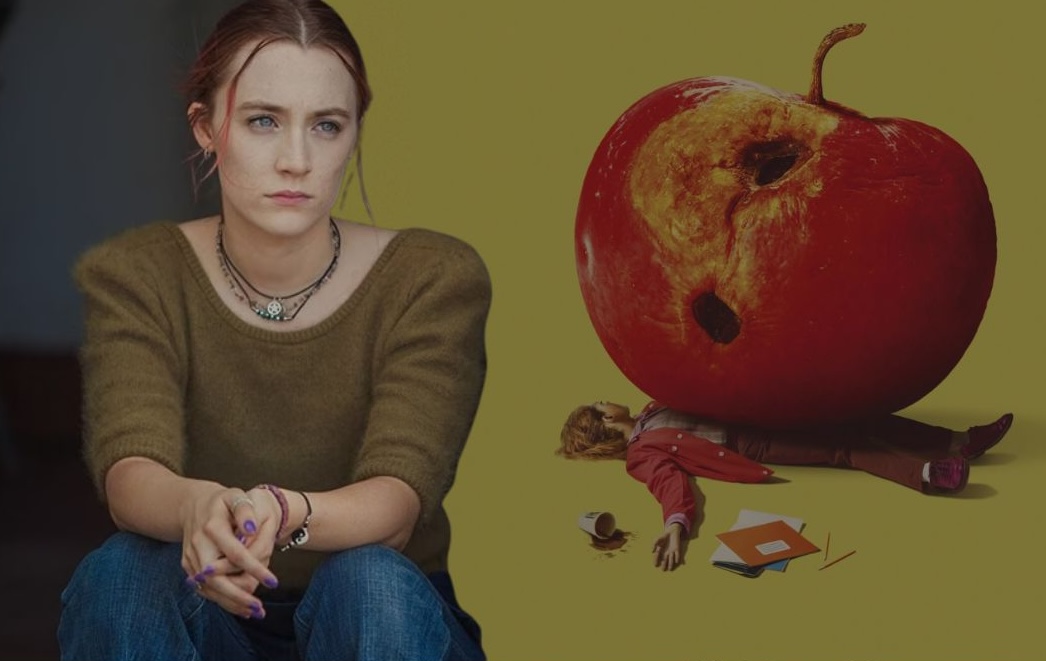
Based on Rasmus Lindgren’s 2020 Swedish novel, De Oönskade, Bad Apples is both a dark comedy and a scathing critique of a results-driven education system. It’s provocative – and I love it.
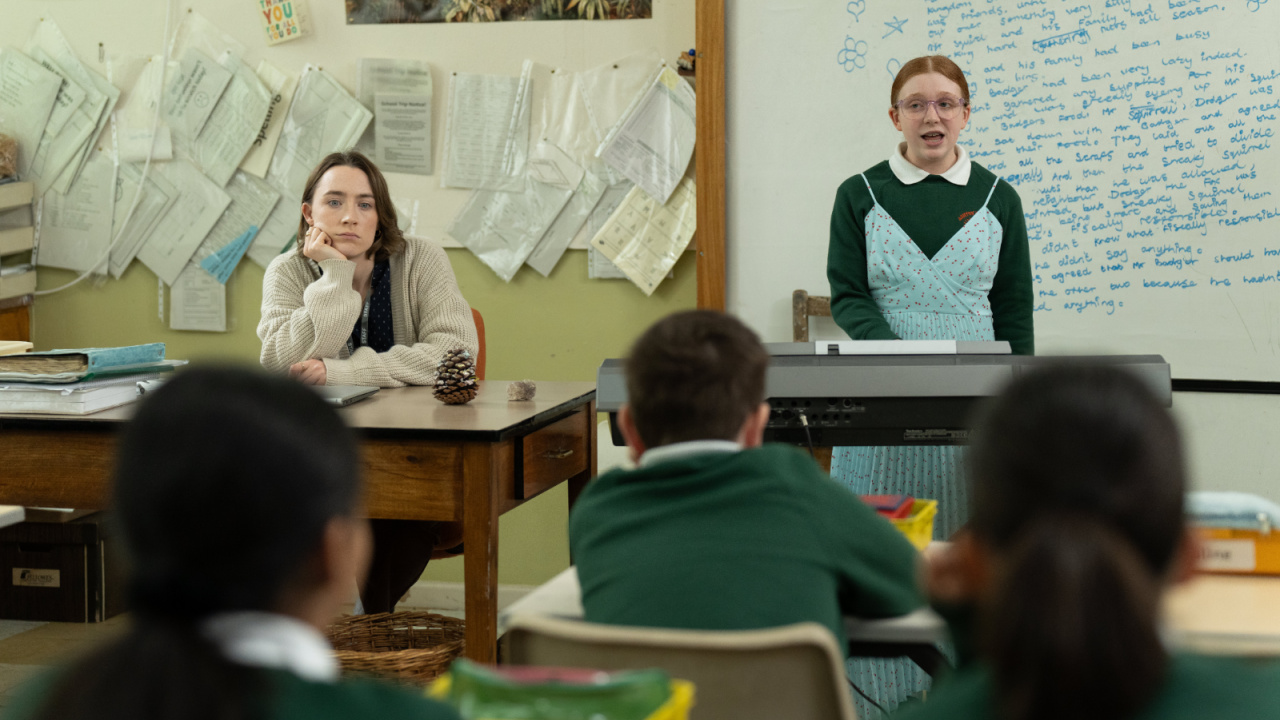
Directed by Jonatan Etzler, the film’s opening is depressingly realistic. We’re introduced to Maria (Saoirse Ronan), an inexperienced young teacher struggling to cope in an underfunded rural state primary. Her nemesis is a troubled ten-year-old called Danny (Eddie Waller), who disrupts every lesson – and she gets little support from her stressed head teacher (Rakie Ayola). There’s no money for a learning support assistant. Maria will just have to soldier on.
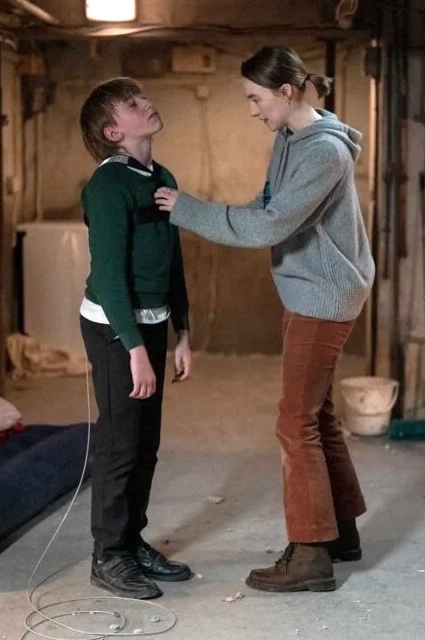
From here, the story evolves into a dark fantasy, where Maria makes a devilish pact with her own id. She’s already in a panic when she finds Danny bashing her car with a metal bar. OFSTED are coming tomorrow and she can’t bear to think about what they’ll see in her classroom. Trying to wrest the bar from his hands, she accidentally knocks the boy out. On the way to A&E, he suddenly comes round and threatens to tell everyone she’s attacked him; impulsively, she drives him to her house instead.
And locks him in her basement.
If the ‘bad apple’ metaphor is a bit on the nose, the Jungian allegory isn’t exactly subtle either. Maria’s house represents her self (it’s messy, unloved and in need of repair, but clearly full of unrealised potential), while the basement symbolises the unconscious – both personal and collective. After all, she’s surely not alone in her belief that everyone would be better off if Danny just disappeared.
At first, it seems Maria has stumbled on some kind of panacea. She and her are pupils are thriving: she now has time to spend with them, to encourage them to develop their skills; she can finally become the teacher she’s always wanted to be. And Danny is thriving too. His desperate anger has given way to a resigned acceptance and he’s revealed that he can neither read nor write. Maria leaps at the chance to teach him, appeasing her moral qualms (or superego) with the positive results yielded by her kidnapping.
But, of course, dark secrets and Faustian deals always manage to bite back. Danny’s dad, Josh (Robert Emms), might be a bit rubbish at the whole parenting malarkey but that doesn’t mean he doesn’t love his son, and it’s not as if the police are going to ignore a missing child. Most dangerous of all is Maria’s star pupil, Pauline (Nia Brown). Because when Pauline smells a rat, she’s not the kind of girl to ignore the stench…
Ronan makes for a spell-binding protagonist, earning our sympathy even as her behaviour crosses line after line into shocking iniquity. The two lead children are also perfectly cast: Waller delivers a heartbreaking performance as the angry, broken Danny, while Brown’s portrayal of the manipulative Pauline is both eerie and compelling.
Jess O’Kane’s script is witty, incorporating many laugh-out-loud moments amidst the horror. (My favourite line is, “As the head of the PTA…” – although, admittedly, it’s only funny in context. You’ll get it when you see it.) Nea Asphäll’s cinematography works well, the bright, light colours of the primary school belying Maria’s experience even as the darker tones of her home emphasise the grim reality.
A searing indictment of the way society deals with “problematic” children, Bad Apples forces us to acknowledge that our current arrangement simply doesn’t work. No individual – parent or teacher – can effect change on their own; nor can a single institution make a big enough difference. We need a systemic solution if we want things to improve. We can’t just keep sweeping uncomfortable truths under the carpet – or locking them in basements.
Because, to misquote Dr Jekyll, when devils are long caged, they have a tendency to come out roaring.
4.8 stars
Susan Singfield

