Month: October 2023

Dracula: Mina’s Reckoning

11/10/23

Festival Theatre, Edinburgh

Bram Stoker’s Dracula is one of those novels, like Alice in Wonderland, that is more famous for its enduring imagery than for its story. Its iconic characters are part of the fabric of our culture, recognised instinctively, even by those who have never so much as picked up the book. Such tales are ripe for retelling, like ciphers waiting to be reshaped for our times.

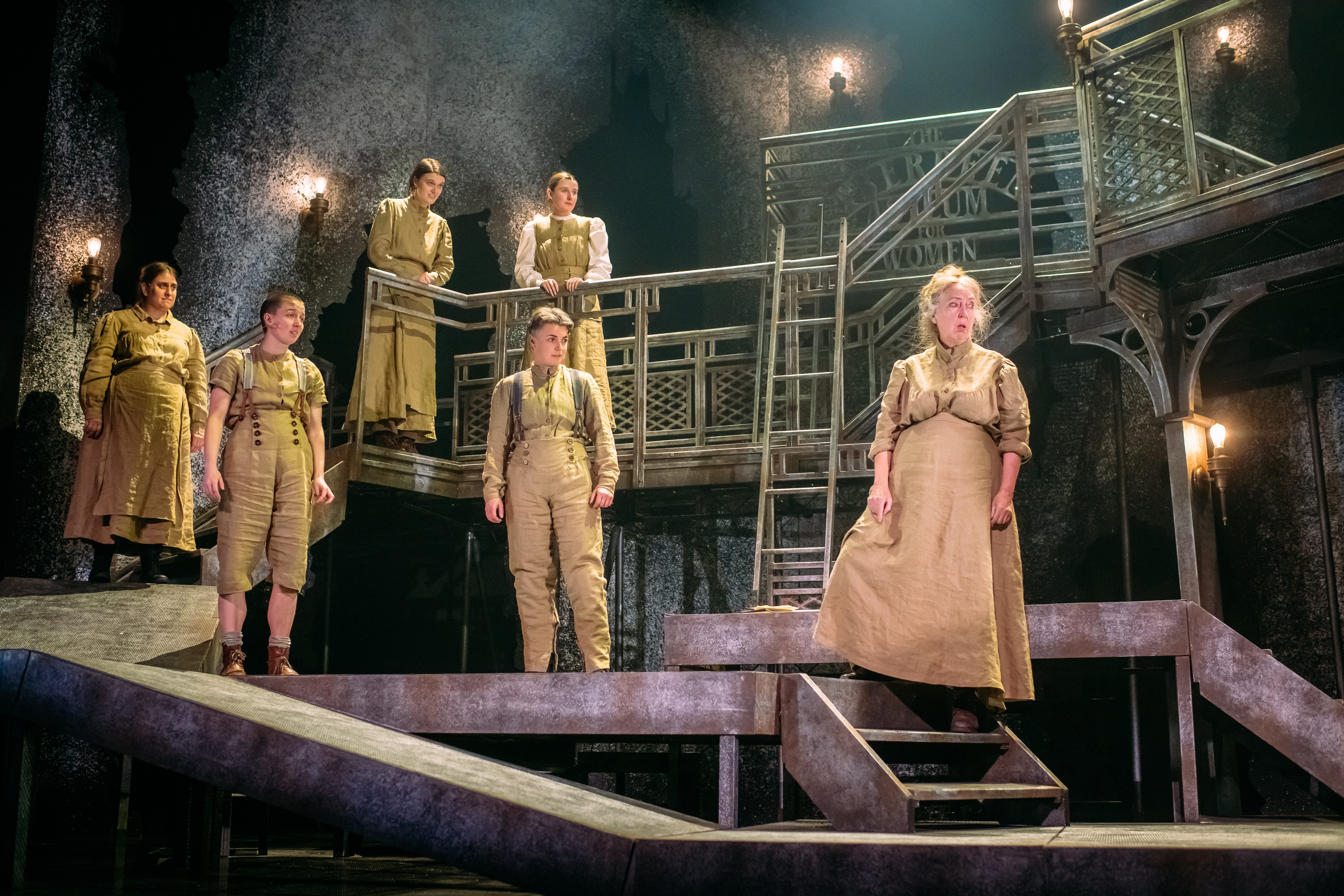
Into that space steps Mina’s Reckoning, a reimagining of the world’s most famous vampire, written by Morna Pearson and directed by Sally Cookson. This all-female and non-binary production redresses the gender imbalances in the source material: here, the women are elevated from mere victims and damsels-in-distress and are actually afforded some agency.

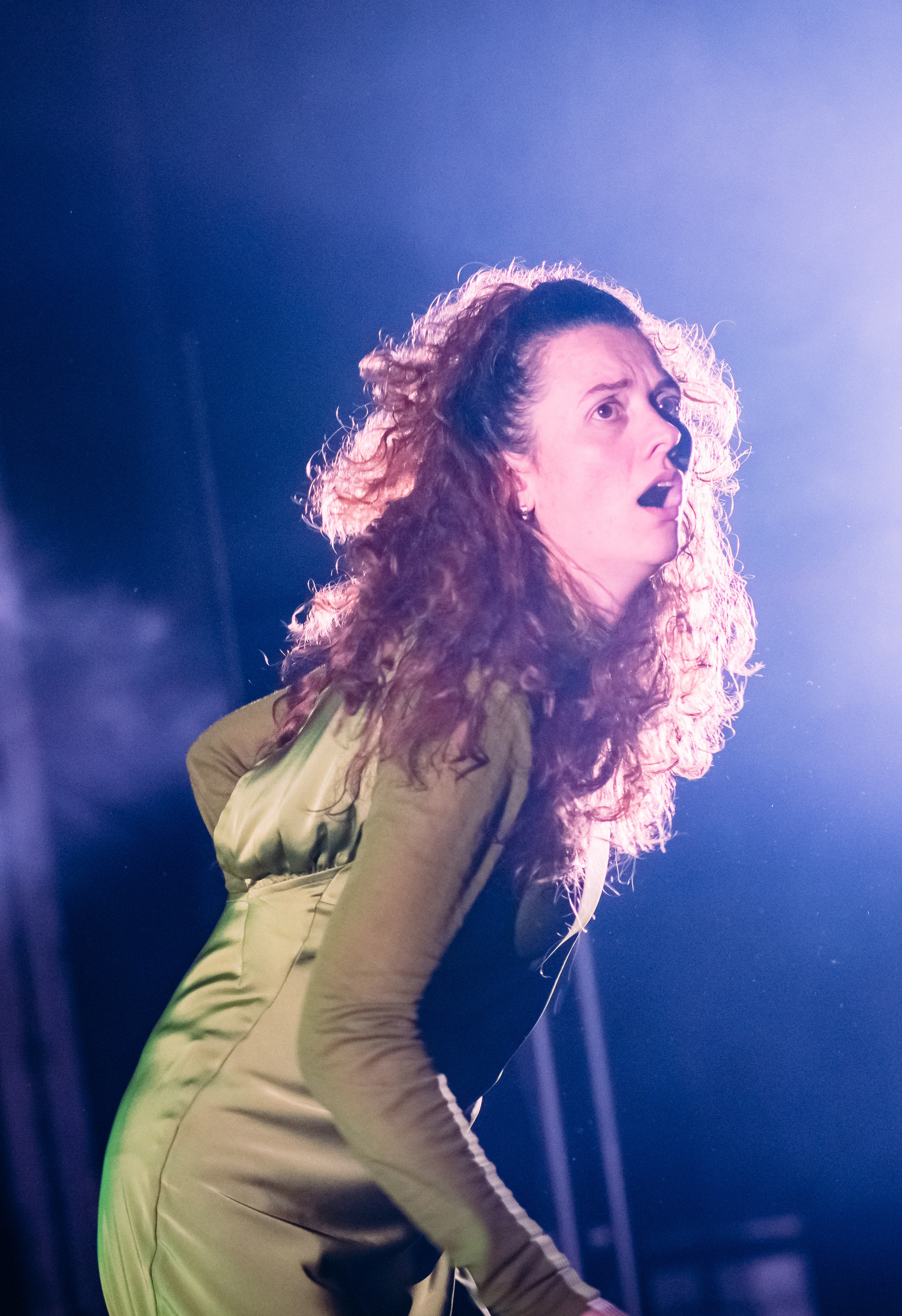
Whitby is out and north-east Scotland is in, justified by the fact that Scots writer Emily Gerard provided much of the inspiration for Stoker’s novel: it was from her work that he learned about the Romanian superstitions that inform some of the most compelling ideas in his book. More specifically, we’re in Cruden Bay, in a women’s asylum, where some of the characters speak in the Doric dialect. The Scots angle works well, the rhythms of the language creating an earthy poetry. The play opens with Mina (Danielle Jam) banging on the asylum door, demanding to be let in. She has Jonathan’s journals and wants Dr Seward (a wonderfully comic Maggie Bain) to help her ward off the evil that’s on its way.

The long first act sticks pretty closely to Stoker’s tale, albeit with more jokes and some judicious pruning (the boring suitor sequences are gone, thank goodness, and so are the details of Jonathan’s interminable journey). The second, shorter, act is much better, precisely because this is where the creative reimagining takes place, allowing Mina to come into her own. It’s a shame that the piece skews this way: it feels unbalanced. I’d like a shorter set-up and a longer unravelling.

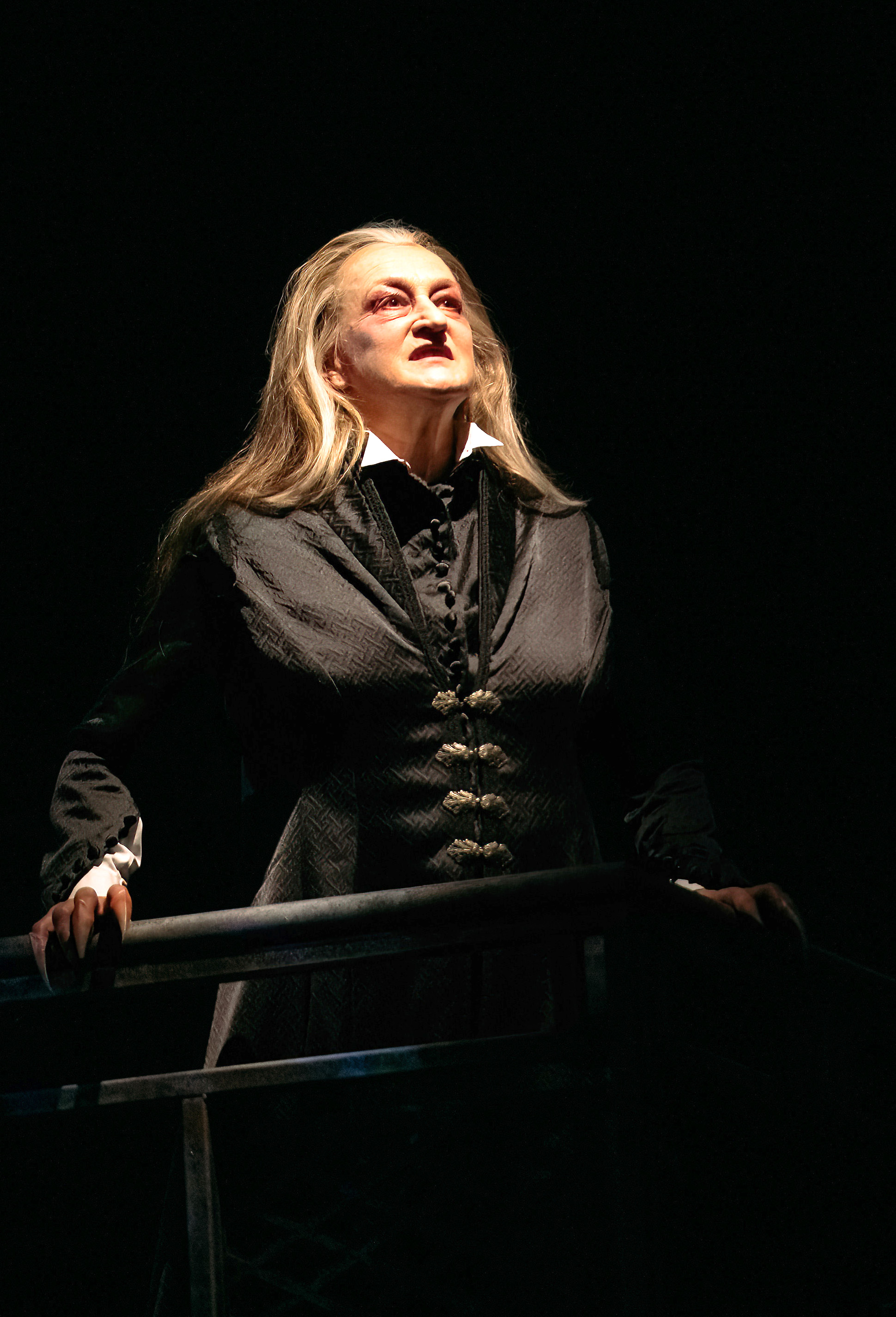
It’s a great idea to recast Dracula as a woman and Liz Kettle clearly relishes the role. She’s a bold presence, at once attractive and repellant, exactly as the Count should be. Here, the blood-sucker is more nuanced than her original incarnation, both supervillain and saviour. As Mina seals her Faustian deal, we recognise what Dracula is offering her, and understand exactly why she makes the choice she does.

Kenneth MacLeod’s set is both the production’s strength and its weakness. It’s clever and imposing, evoking the chillingly austere asylum as well as the grand gothic castle – all staircases and hidden corners – and I like the use of Lewis den Hertog’s video projections and Aideen Malone’s lights to stain the walls red with blood, turning them into journals, then night skies, then stormy seas. However, the set’s cage-like qualities – the bars and rails imprisoning the women – also create a sense of distance, so that it’s hard to feel close to the characters and to empathise with them. What’s more, it makes the whole play less scary because we’re not immersed in the ghoulish goings-on.

Benji Bower’s music is wonderfully eerie and evocative but the sound drowns out the dialogue at times, which is a shame, as it obscures some of the finer details of the plot. Likewise, the ensemble work is excellent, but comes at the expense of the individual characters, as the inmates of the asylum blend together.

Albeit a little uneven, there’s a lot to like about this NTS and Aberdeen Performing Arts production, in association with Coventry’s Belgrade Theatre. The powerful image of Kettle, striding the ramparts – grey hair flowing, coat tails billowing – is one that will stay with me for a long time.

3.8 stars

Susan Singfield
The Great Escaper

11/10/23

Cineworld, Edinburgh

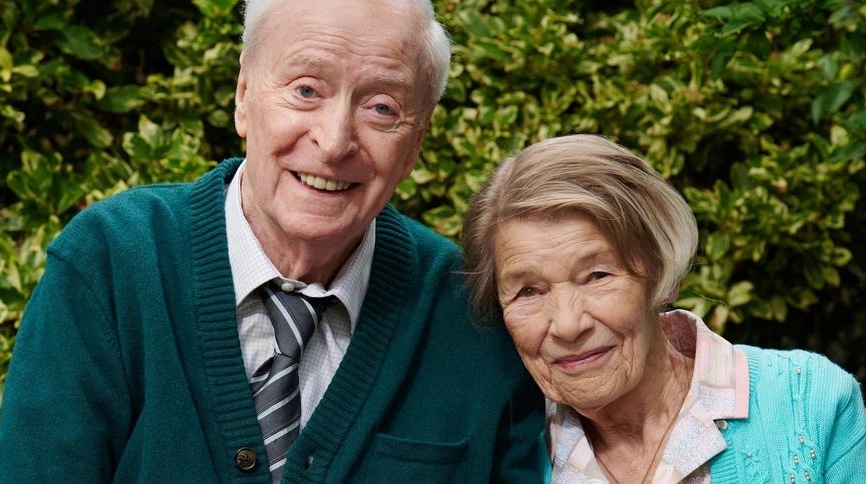
This poignant film, written by William Ivory and directed by Oliver Parker, relates the true story of pensioner Bernard Jordan (Michael Caine), who, when we first encounter him in 2014, is living a life of quiet desperation in a care home in Hove. He and his wife of many years, Rene (Glenda Jackson, in her final film role), have become used to the daily grind of meals and medication. Bernard is a veteran of World War 2 and like many others, he’s applied to go over to France to commemorate the seventieth anniversary of D Day, but is disappointed to be told that he’s left it too late.

Bernard and Rene have a heart-to-heart discussion about the situation. She’s not mobile enough to travel these days, but realises that Bernard has a long-held need to confront a particular ghost from his past. She advises him to go to France anyway, realising that this is something he really needs to do. He takes her at her word and slips away early one morning. When the care home staff finally start to notice his absence, Rene does an excellent job of stalling for time…

The Great Escaper is one of those stories that would seem ridiculously far-fetched if it weren’t true. Aboard the cross channel ferry, Bernard befriends Arthur, a former RAF officer (John Standing), who is haunted by his own tragic memories of the war; and he also encounters, Scott (Victor Oshin), a more recent veteran, who had the bad fortune to stand on a landmine in Helmand Province and is now struggling to adjust to his new life as an amputee.

These contemporary strands are punctuated by scenes of a young Bernard (Will Fletcher) and Irene (Laura Marcus), meeting during wartime and falling in love – and there are steadily unfolding sequences of the event that has haunted Bernard’s dreams for decades. The young actors who double for Caine and Jackson are perfectly cast in their roles.

This isn’t an epic film by any stretch of the imagination – it’s small and realistic and never afraid to show the darker side of ageing, the awful tragedy of it. Though the media interest in Bernard’s adventure actually happened, it’s never feels overblown; it’s measured and realistic. There’s also a refusal to glorify the bravery of the veterans.

The film’s strongest moment is the scene where a sobbing Bernard stands alone amidst a forest of white crosses in a military graveyard. ‘What a waste,’ he cries – and I’m pretty confident there’s not a soul in the audience that would disagree with him.

If eventually the film feels a little too sombre for its own good, there are still genuinely heartwarming performances from the two leads. Caine came out of retirement for the chance to work with Jackson again (they last appeared together in 1975’s The Romantic Englishwoman) and now, reunited for one final appearance, they make a winning team.

4 stars

Philip Caveney

Stay

10/010/23

Traverse Theatre, Edinburgh

Stay, it turns out, is a musical, but lest that word should conjure images of hordes of costumed performers, leaping and gyrating across a stage, let me quickly point out that this is the latest in the Traverse Theatres’s A Play A Pie and A Pint season. It’s a two-hander. But its smallness of scale is more than made up for by its sweet, affecting nature and for the insights it offers into its difficult theme.

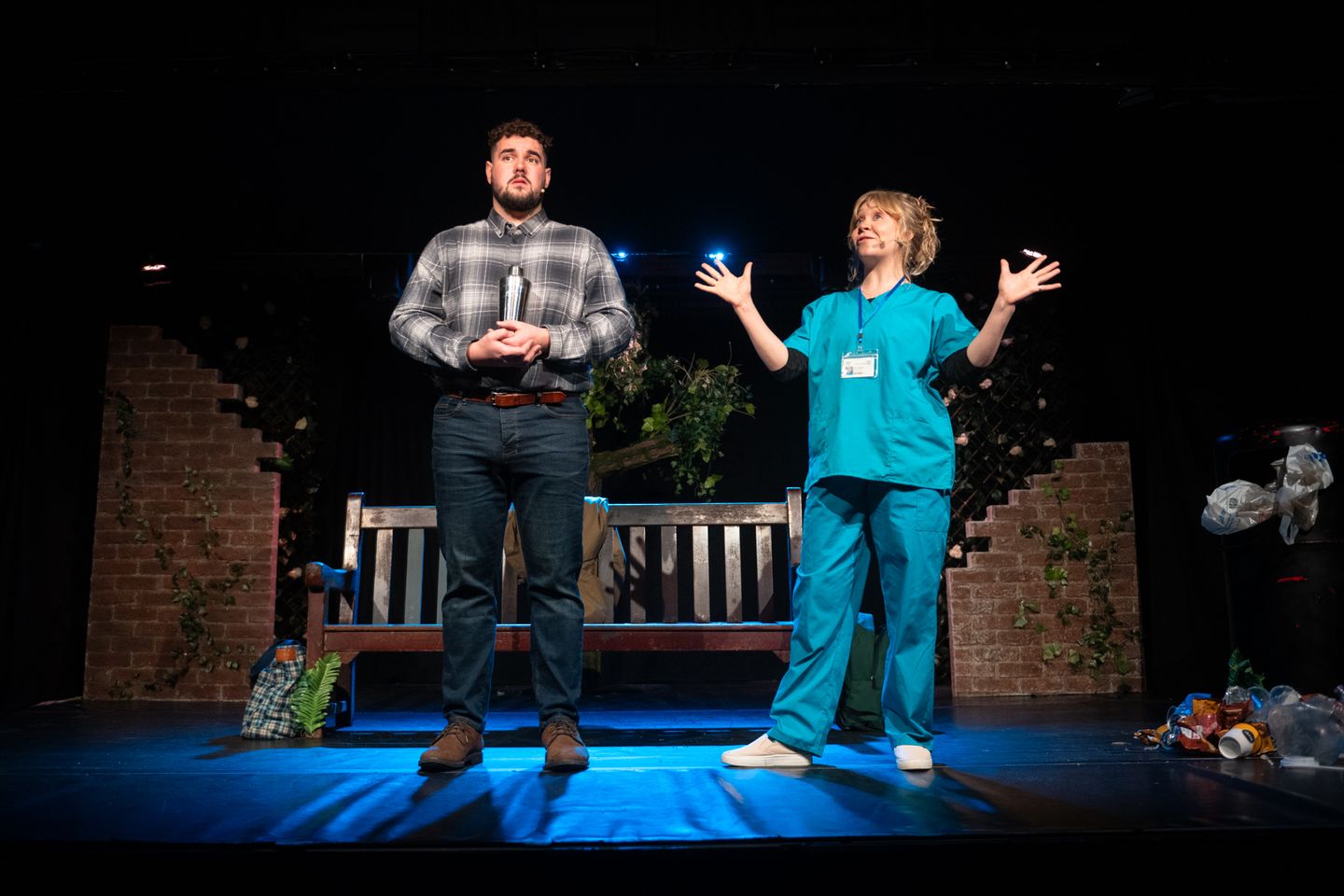
Rowan (Craig Hunter) and Kit (Daisy Ann Fletcher) meet up in their favourite corner of the local park. Rowan is carrying an urn containing somebody’s ashes: he’s finally prepared himself for the task of scattering them in the duck pond, but he needs back-up for this grim task and, of course, Kit is there, dressed in her hospital scrubs, ready to make jokes about every aspect of this solemn occasion.

The two of them were once lovers but four years ago something went badly wrong – and yet, somehow, Rowan doesn’t want his current girlfriend here today. For this challenge, Kit is the perfect choice…

Written by Jonathan O Neil and Isaac Savage and directed by Melanie Bell, Stay is a deceptively simple piece, its quirky plaintive songs recounting a poignant story about a relationship gone awry. Rowan is steady and dependable, Kit adorably scatty, forever taking the narrative off in unexpected directions, but together they have something special. Both leads deliver the plaintive, haunting songs with considerable skill and the piece is cunningly written, luring you in with its seemingly innocuous narrative, before heading off into darker territory and deftly delivering a climactic gut punch.

If I wanted to nitpick, I’d say there’s one song too many after that change of direction; nevertheless, Stay is a delightful piece of lunchtime theatre that will make you laugh and cry in equal measure.

4.5 stars

Philip Caveney

A Little Life

08/10/23

Cineworld, Edinburgh

Beamed live from the Harold Pinter Theatre in London’s West End, A Little Life has recently been the subject of some controversy – not least the fact that its star, James Norton, spends much of the three-hours-and forty-minute duration stark naked. As a gruelling depiction of sexual exploitation unfolds, Norton’s performance is extraordinary, a genuine tour de force.

But there are issues that override that performance.

Jude lives in New York’s trendy Tribeca district and we’re to believe he is a high-flying lawyer (although we are never shown anything of his professional life). He has a trio of equally high-flying friends (a movie star! an artist! an architect!) and is – weirdly, at the age of thirty – about to be adopted by Harold (Zubin Varla), a wealthy professor, who sees Jude as the son he’s never had.

If this sounds too good to be true, don’t be fooled – because most of what ensues is frankly too bad to be true. Jude, it turns out, has endured a childhood of unbelievable cruelty. Abandoned as a baby, he is put into the care of sadistic monk, Brother Luke (Elliott Cowan), who – in the finest Catholic tradition – farms him out as a child prostitute. And it doesn’t end there. He stumbles from one awful experience to the next, exploited at every turn by a string of monstrous abusers (all played by Cowan). Could anyone really be as unlucky as Jude?

But here in the present day, people are queuing up to worship him! Willem (Luke Thompson), the aforementioned movie star, is deeply in love with Jude and wants the two of them to become a couple. But, because of those childhood experiences, Jude cannot enjoy anything like a healthy relationship, preferring instead to spend his time slicing himself open with a razor (something we are repeatedly shown in sickening detail).

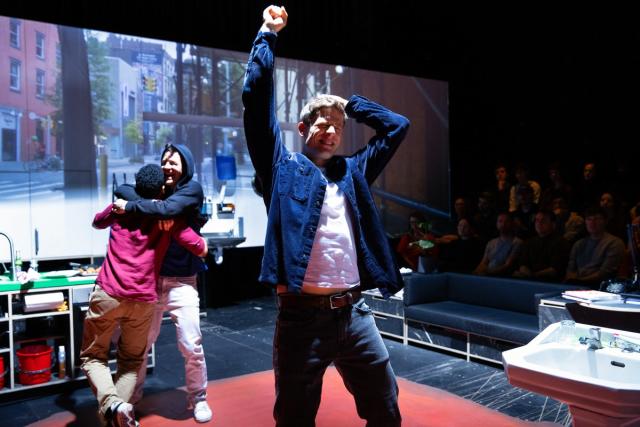
Adopted from her own novel by Hanya Hanigihara, with the assistance of Koen Tachelet and the play’s director, Ivo van Hove, A Little Life is, it has to be said, cleverly presented. All the characters are constantly onstage, slipping effortlessly between the various scenes while, on two walls, slow-motion tracking shots of New York offer a sense of place.

But the story feels increasingly like torture porn, a relentless slice of sheer misery. I’m sure the highbrow audiences watching this play would never lower themselves to watch a film like Saw, for instance, yet A Little Life displays the same kind of world view, a callous and prurient invitation to wallow in somebody else’s misery. It feels manipulative, a coldly contrived feel-bad experience, which ultimately adds up to not very much at all.

A section of the audience is seated onstage, behind the action, presumably so that we can see our own reactions reflected in theirs. However, while many are holding handkerchieves to their faces, I feel curiously unmoved because it all feels too callous for comfort. Norton is terrific, but the vehicle he’s starring in really doesn’t stand up to scrutiny.

2.8 stars

Philip Caveney

And… And… And…

07/10/23

Traverse Theatre, Edinburgh

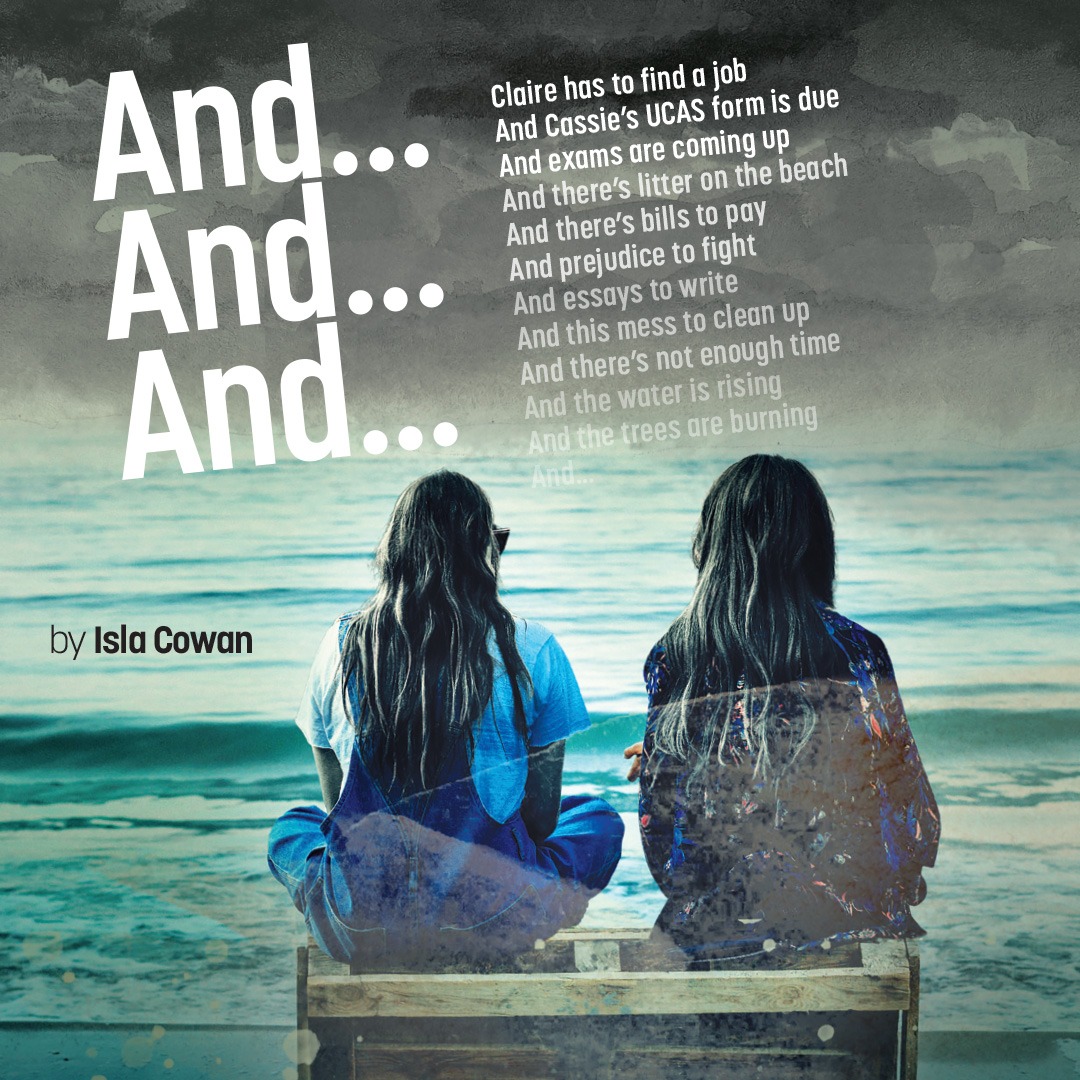
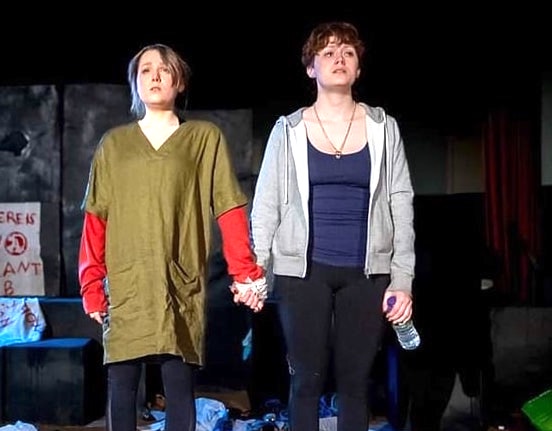
Though still at high school, Cassie (Caroline McKeown) is already a committed eco-warrior, working tirelessly to organise regular beach clean-ups in her locality. She takes every opportunity to lobby big corporations to plead on behalf of environmental causes and lately has even taken to making her own clothes from natural fibres. But as the climate change disasters inexorably mount, she finds herself increasingly obsessed with the subject. And it’s an obsession that threatens to overpower everything else in her life.

Meanwhile, Cassie’s best friend, Claire (Tiana Milne-Wilson), has her own pressing issues to contend with. Her mother is steadily succumbing to a deadly lung disease after years of smoking cigarettes and is no longer able to work. The final demands for rent and electricity are coming in on an almost daily basis and Claire desperately needs to find a paying job. The only possibility she’s discovered is the chance to apply for an apprenticeship at a locally-based multi-national plastics manufacturer, a company that she knows Cassie openly despises.

Isla Cowan’s And… And… And… is a topical story from Strange Town Theatre, one that isn’t afraid to address the horrifying scale of its central premise and to openly accept the impossibility of finding an easy solution – indeed, there’s a strangely satisfying meta-twist in this tale that comments on its own artificiality, the very idea of finding an ‘answer’ within the confines of a fifty-minute play.

The two leads give compelling and nuanced performances and the duo’s friendship feels utterly palpable. This is a youthful and exuberant approach to the subject, created for and by the generation who have been handed the poisoned chalice of a devastated planet. The frustration they feel is written large. Katie Innes’s simple but effective stage design is created mostly from heaps of detritus, an approach that serves as a constant reminder of the play’s theme, while Steve Small handles the direction with aplomb.

The play’s conclusion – that everyone needs to do whatever they can to reduce their personal carbon footprints and work together towards a more optimistic future – may not be exactly earth-shattering, but nevertheless, it comes through loud and clear.

4 stars

Philip Caveney

Disciples

06/10/23

Traverse Theatre, Edinburgh

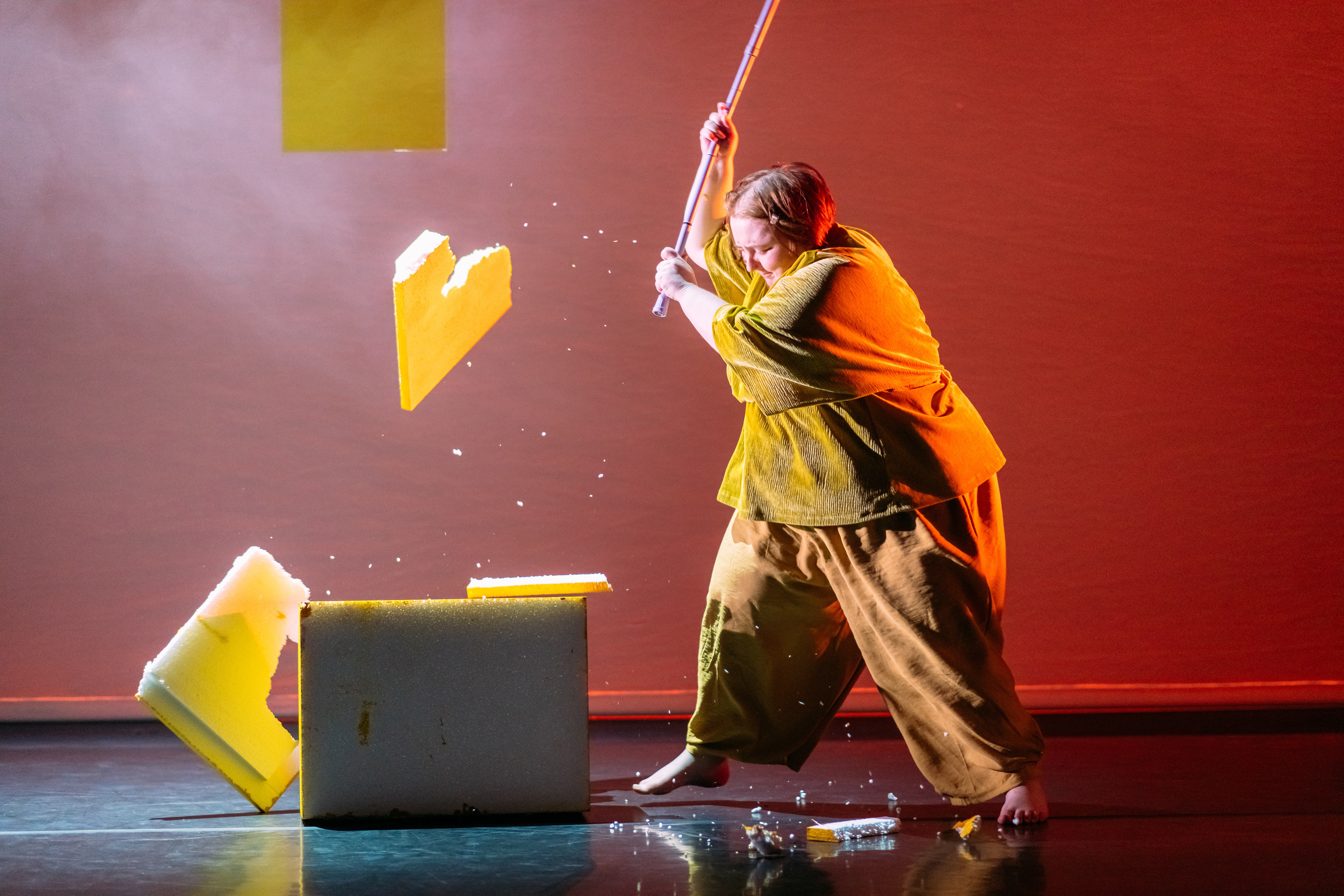
Disciples is a compelling piece of performance art, combining poetry, music, movement and visual imagery. Conceived and directed by Rachel Drazek and written by Ellen Renton, it’s about belonging and expectations, interdependence and joy. It’s also about giving people the chance to take up space – especially those who are often denied that opportunity.

The five-strong cast of disabled women and non-binary people bring Drazek’s vision to life: this is the “bold and beautiful new piece of dance theatre” she aspired to make. The creative process, we learn in an illuminating after-show discussion, was a collaborative one, the piece devised in rehearsal before being shaped by Renton. It shows: the performers’ agency is palpable. The resulting production is nuanced and doesn’t shy away from difficult emotions, but the layering of ideas ultimately adds up to something joyful and positive, reinforcing the idea that we are all connected and inter-dependent.

The costumes, by Zephyr Lidell, are simple but striking, each performer clad in a single, shimmering colour. Visually impaired musician Sally Clay (yellow) is all optimism; her singing voice is ethereal and she plays the harp and ukulele with aplomb. But she’s more excited about the dancing: post-show, she reveals that this is a long way from her comfort zone, and that she’s delighted to have been challenged in this way. Indeed, this point is echoed by Rana Bader (red), who seems to embody passion and strength; she is bursting with energy and exuberance, making a gazillion press-ups look easy. She’s not used to demands being made of her, she says; in rehearsal rooms, she sees her non-disabled peers being given detailed notes, while she is patted on the head just for turning up. She prefers being pushed.

Laura Fisher (lavender) is a dancer, so graceful and elegant that they take my breath away, while Irina Vartopeanu (green), uses BSL in a way I’ve never seen before, incorporated into the piece, not as a straight interpretation of what others are saying but as an expression in itself. She’s vivacious and somehow diaphanous.

Emma McCaffrey (orange), last seen by B&B in the excellent Castle Lennox, explores the idea of inner rage; they are an engaging performer with a bold stage presence and bring the humour needed to balance this play.

Disciples is a thought-provoking, sensory piece, and well worth catching if you can.

3.6 stars

Susan Singfield

Group Portrait in a Summer Landscape

05/10/23

Lyceum Theatre, Edinburgh

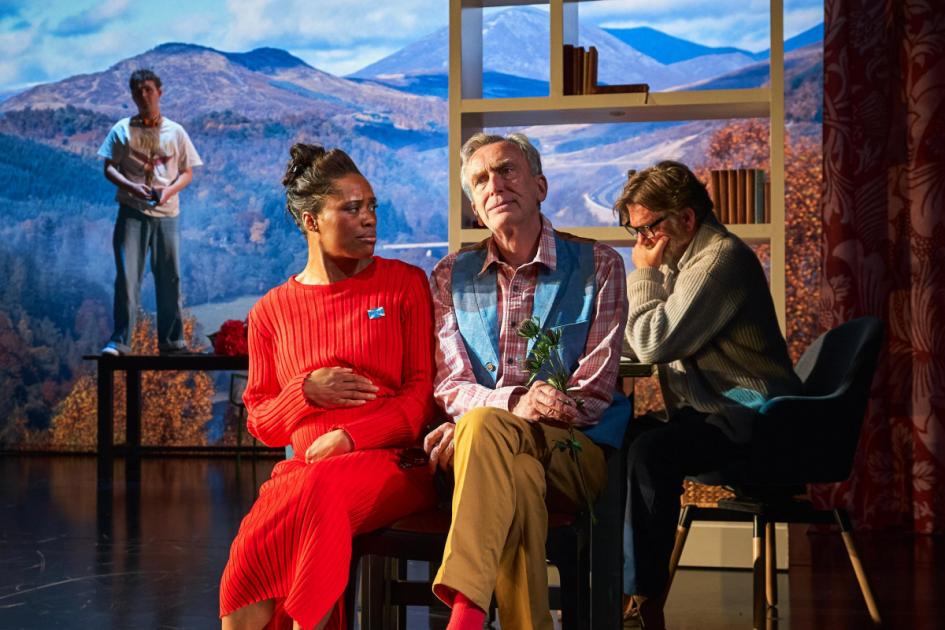
Patriarch Rennie (John Michie) has invited a disparate group of people to his retirement party. He’s had to keep the guest list secret from his wife, Edie (Deirdre Davis), because – with the exception of her old pal, film star Jimmy Moon (Benny Young) – there’s no way she’d agree to hosting the people he has in mind. En route to the couple’s country house in the Scottish Highlands is their daughter Emma’s ex-husband, for example – even though their wedding ended acrimoniously and Charlie (Matthew Trevannion) is renowned for wreaking havoc wherever he goes. Of course, he maximises the antagonism by bringing along his latest girlfriend, Jitka (Nalini Chetty), and why wouldn’t Rennie ask the newly-betrothed Frank (Keith Macpherson) and Kath (Patricia Panther) to join the party? It’s not as if Frank’s always been in love with Emma (Sally Reid) or anything, is it? Oops. There’s an uninvited presence too: the ghost of Rennie and Edie’s son, Will (Robbie Scott), who watches over the day’s proceedings with increasing horror…

Playwright Peter Arnott says he set out to to write a ‘Scottish Chekhov’ and to some extent he has succeeded. At first it seems as though, unlike Chekhov, Arnott is looking back at the political moment that nominally serves as the play’s pivot; he has the advantage of hindsight to create dramatic irony. After all, we know the outcome of the 2014 Scottish independence referendum, the divisive topic inflaming the characters. But we soon learn that this is just a distraction: as Charlie says, it’s mere tinkering around the edges while ignoring the real revolution that is on its way, and which only the rich and ruthless will be able to survive.

If Arnott’s script is retro, then David Greig’s direction is decidedly contemporary, a deliberate jarring of styles that helps to illuminate the sense that something is changing, mirroring the mismatch between parochial politics and apocalyptic predictions, Chekhovian naturalism and magical realism. I like the dissonance.

Jessica Worrall’s set also leans into the contrast, a hyper-realistic backdrop juxtaposed with a more figurative interior: a glorious photograph of a Highland glen and a sketched-in kitchen-diner, symbolised by oversized shelving units, enormous tables and vast floral curtains.

Both Simon Wilkinson’s lighting and Pippa Murphy’s sound are integral to the production: the former spotlighting the snippets of conversation that combine to drive the plot, the latter signalling the shifts to the ghost’s point of view, as the sound distorts and fragmented memories play through Will’s Walkman. This supernatural presence is one of my favourite things about the play: Scott physicalises the spirit’s pain and confusion with a beautiful awkwardness.

The first act is very strong, an interesting set-up that promises something the second doesn’t quite deliver. Although the characters are all cleverly depicted, the piece feels somehow unfinished, as if the story arc has been cut short. Rennie’s revelation, when it comes, is anticlimactic, and I don’t quite buy it as a reason for inviting these particular people to his home (why would anyone ever invite Charlie anywhere?). But, even if it’s a little opaque and doesn’t offer any real answers to the issues it grapples with, Group Portrait in a Summer Landscape is an intelligent and ambitious play, leaving us with a lot to think – and talk – about.

3.8 stars

Susan Singfield
Sister Act

04/10/23

Festival Theatre, Edinburgh

There are some films that make the transition to stage musical against all the odds – and there are others that are clearly destined to be that very thing from the word go. 1992’s Sister Act, a comedy vehicle for the then rising star Whoopi Goldberg, definitely belongs in the latter category. Funny, irreverent and already packed with rousing gospel tunes, this feels like a natural progression.

Philadelphia, 1977. Deloris Van Cartier (Landi Oshinowo) is trying to make headway as a singer on the Philly soul scene and, when we first meet her, she’s auditioning at a nightclub owned by her shady boyfriend, Curtis (Ian Gareth-Jones). Curtis (who naturally is married) assures Deloris that she’s not quite ready for stardom and offers her one of his wife’s cast off fur coats as compensation. Deloris already has doubts about the wisdom of the relationship and this is compounded when she witnesses Curtis murdering one of his henchmen, whom he suspects is a police informant.

Deloris seeks help at the local police station, where she encounters former school chum and crush, ‘Steady’ Eddie Souther (Alphie Parker). Eddie wants Deloris to lie low until she can speak about the murder in court and he thinks he has the perfect hideout for her. It’s a convent, Our Lady of Perpetual Sorrow, an ancient establishment that has fallen on hard times and is struggling to survive. It’s presided over by the acerbic Mother Superior (Lesley Joseph), who struggles to cope with Deloris’s potty mouth and, in an act of desperation, assigns her the task of coaching the convent’s resident choir, which is frankly terrible.

But Deloris has her own methods of coaxing the best performances out of the sisters and the results are startling to say the least.

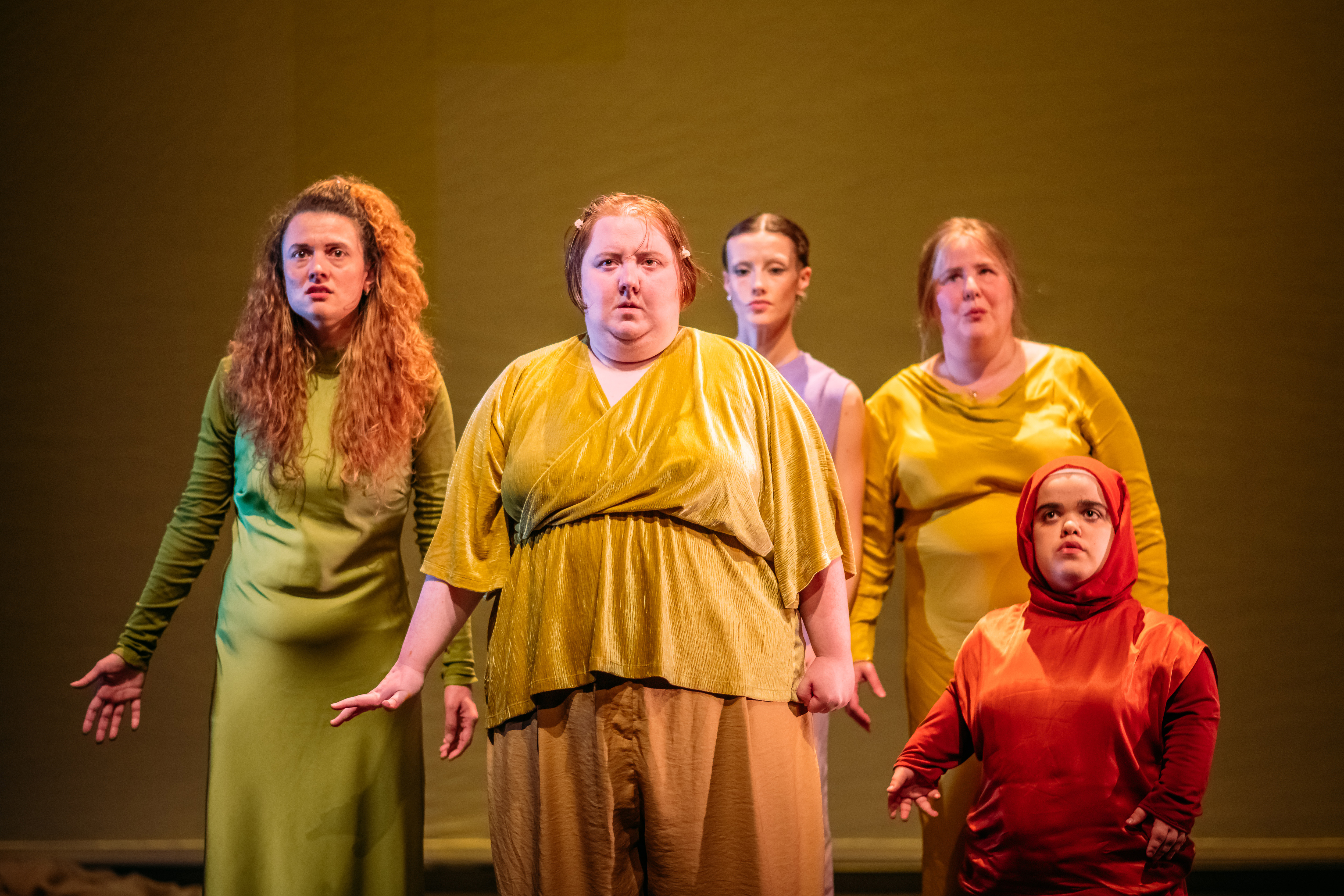
What ensues is a slick, funny, exhilarating and sometimes uproarious sequence of events that never loses momentum. There’s so much here to relish. The vocal performances of Oshinowo – and of Lizzy Bea who plays the young noviciate, Sister Mary Robert – are simply thrilling to witness, their voices soaring over the sound of a live band. The resident nuns all have their own individual characters and I’m particularly impressed by Isabel Canning’s Sister Mary Patrick, whose enthusiastic twirls and gestures demonstrate the sheer exuberance of a woman discovering the joy of her own inner creativity.

The set and costume designs by Morgan Large are gorgeous, a wonderful mash up of stained glass and 70s kitsch, the many complex scene changes happening as if by magic. Alistair David’s choreography makes everything look effortless and Joseph demonstrates the kind of comic chops that have kept her treading the boards for so many years. And yes, maybe there is a big dollop of schmaltz thrown in for good measure, but hey, that’s no hardship.

By the finale, which features more sequins than seems humanly possible, I’m clapping along with the rest of the packed audience, loving every minute. The term ‘feel-good theatre’ is sometimes overused but I can’t think of a more appropriate description for Sister Act. This is a ton of fun.

4.2 stars

Philip Caveney

The Sheriff of Kalamaki

03/09/23

Traverse Theatre, Edinburgh

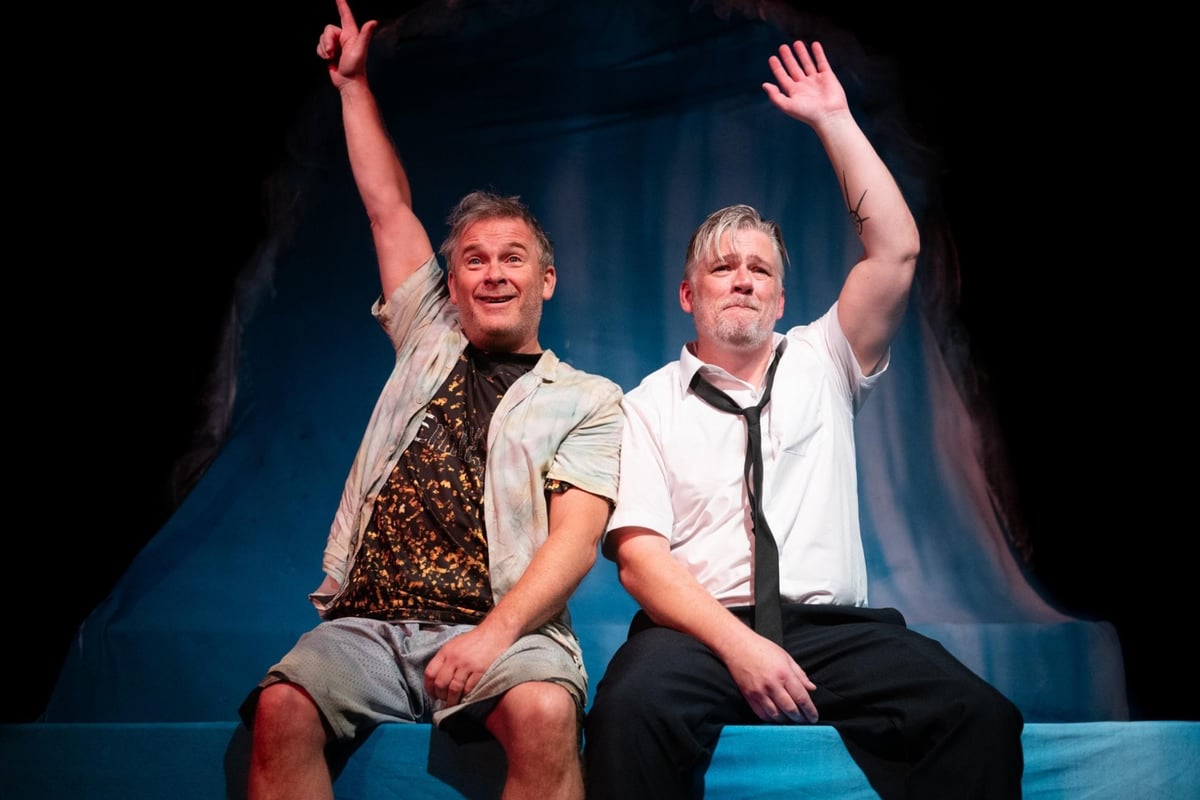
In this unusual two-hander by Douglas Maxwell, Paul McCole plays the eponymous law-keeper. It’s not an official role but alcoholic Dion is proud of the title, even if he did choose it himself. He swaggers (and staggers) his way through the bars and clubs of Zakynthos, seemingly unaware that he’s being used as a lookout by the local drug dealer. He’s a loveable character, his cheery bluster doing little to hide just how damaged and vulnerable he really is. His existence is precarious but he seems to be coping – until his apparently straight-laced brother, Ally (Stephen McCole), comes looking for him, after almost thirty long years…

Maxwell eschews a duologue in favour of two almost completely separate monologues, a structural device that mirrors the brothers’ estrangement. Dion, when we first meet him, is alone – as he has been since 1994. When Ally shows up, the ensuing conflict shows us how this situation began, and then it’s Ally’s turn to find himself bereft and isolated in Kalamaki, a solitary figure standing on a cliff, facing his demons, while in the town below him, everyone else is having fun. The script’s construction makes for an oddly unsettling experience, but I think it serves the story well.

Gemma Patchett and Jonny Scott’s set design is suitably stark: a raised platform, overshadowed by a huge, curved sheet that represents the sea and sky. This works well on a figurative level too, the brothers dwarfed by the natural world, the quarrel that once seemed so all-consuming now rendered petty and insignificant. After all, the planet’s burning: Ally’s plane is half-empty; tourists have turned their backs on the island’s unbearable heat and unpredictable wildfires.

Jemima Levick’s direction is lively and pacy, highlighting the superficial contrasts between the two men, while the real-life McCole siblings are both formidable performers, creating a convincingly acrimonious relationship. Their differences are slowly peeled away, revealing their essential similarities and exposing the myths we tell ourselves about what ‘a good life’ really is.

4 stars

Susan Singfield

Ka Pao

01/10/23

St James Quarter, Edinburgh

We’ve been looking forward to this evening. Not only are we catching up with friends we haven’t seen in waaaay too long, we’re also – on their recommendation – visiting Ka Pao, a new Scottish/Southeast Asian fusion restaurant in the swish St James Quarter. The menu looks exciting!

It doesn’t disappoint.

The venue earns its first plus-point by presenting us with two bottles of chilled tap water as standard – one still, one sparkling. I like this new trend and drink a lot (maybe too much) of the fizzy one.

There’s a set menu for four or more people, but not everyone in our party fancies it, so we go à la carte. All dishes are for sharing we’re told, and are encouraged to order three or four each: a snack, a starter, a main and a side. Thank goodness we stick to three – it’s still too much. But that’s my only gripe.

This is lovely food: fresh, distinctive and perfectly cooked. For snacks, we sample the tomato and aubergine dip with pork skins, the pork and bone marrow sausage and the arbroath smokie miang. The pork skins are amazing – puffed up like poppadoms (or like yak chews, according to our dog-owning friends). The sausage is also delicious, just bursting with flavour, but the arbroath smokie is the most interesting. It comes mashed with peanuts and galangel, and we’re instructed to wrap a spoonful in a spinach leaf. It’s sweet at first, then spicy, then finally fishy and smoky. We decide we like it.

Our starters are corn ribs with salted coconut, shrimp and lime, and crispy pork belly. Three of us have ordered the corn but two portions would suffice. Not that we’re complaining: these are easily the standout of the evening, deceptively simple, crisp and utterly delectable. We spend some time looking for recipes when we get home.

For mains, we have the green curry of lamb shoulder (which comes with broad beans, peas and banana chilli), the chicken leg massaman curry (with ratte potato, smoked grape and peanut) and the chuu chee curry of courgette (with peas and ramiro pepper), with a side of stir-fried savoy cabbage and a couple of portions of jasmine rice. The chicken curry is very good, although one of our friends finds it too sweet for her palate. The lamb is particularly tasty, a fiery delight, the chunks of meat slow cooked until they’re melt-in-the-mouth tender.

We all profess to be full, but we still say yes to pudding, sharing a couple of portions of almond and cardamom sponge with pineapple and coriander curd (wow!) and a serving of mango and calmansi soft-serve, a kulfi-like confection that offers a citrus-fresh contrast to the sweetness of the pudding.

Like the comic-book sound effect its name evokes, Ka Pao is bold, punchy and memorable – and we’ll certainly be back for more.

4.7 stars

Susan Singfield