Month: January 2017

Manchester by the Sea


08/01/17

Manchester by the Sea is a bleakly brilliant film, far more original and affecting than either the trailer or a synopsis can convey. The plot is fairly conventional fodder: Lee Chandler (Casey Affleck) is tasked with caring for his nephew, Patrick (Lucas Hedges), after the boy’s father dies. Lee is not really cut out for the job, and their relationship is fraught with problems, which they have to work to overcome. So far, so ordinary. But there is a rare honesty in the telling of this tale that renders it both raw and authentic, making it one of the most compelling films I have ever seen.

Casey Affleck is extraordinary. He’s closed, inarticulate and conflicted, a reserved, introverted man who’s called upon to fulfil a role he simply can’t take on. There is real pain in his performance, despite its understatement. The gradual revelation of his past trauma is beautifully handled by writer/director Kenneth Lonergan, whose script is clearly a gift for the actors in this film.

Michelle Williams, as Lee’s ex-wife Randi, is as exemplary as you’d expect; she only appears in a handful of scenes, but her final conversation with Lee is utterly heartbreaking, without ever straying into sentimentality or sensationalism. And Lucas Hedges, as Patrick, acquits himself well too, absolutely convincing as the grief-stricken, selfish, but ultimately decent teen.

The setting plays a huge part in this movie: the wintry colours of Manchester reflecting the apparent coolness of its residents. The eventual thaw is slow and slight. The cinematography is beautiful, capturing those cold blues and greys with icy precision.

We loved Manchester by the Sea. Do try to catch it; it’d be a real shame to miss this one.

5 stars

Susan Singfield


La La Land

08/01/17

Remember movie musicals? You know, the big sweeping MGM-style pictures, the kind they really don’t make any more? Well, clearly nobody told director Damien Chazelle, because, apart from a few subtle nods to the modern age, that’s pretty much what he gives us here. Apparently this is a long-cherished project for him, one that predates Whiplash, the picture that first propelled him into the public eye. Essentially, La La Land is a great big glittering love letter to LA and the creative industries that serve it.

The opening sequence pretty much sets out Chazelle’s stall. There’s a freeway full of gridlocked traffic. A girl in  a car begins to sing a song. She gets out of the car and dances a few steps and then the guy in the next car steps out and joins her. Pretty soon, hundreds of people are following their example, offering a brilliantly choreographed routine that is as audacious as it is delightful. It’s a wonderful start.

Soon we meet our protagonists and wouldn’t you know it, at first they hate each other on sight. Sebastian (Ryan Gosling) is a musician, a jazz obsessive who dreams of opening his own club. Mia (Emma Stone) is a would-be actress, a barista by day, who slogs hopefully through an endless series of auditions for roles she appears to have no real chance of attaining. After their initial conflict, the two start to strike sparks off each other. And before too long, of course, they’re hoofing up a storm and singing most of their dialogue.

And if there’s a bit of this film that isn’t fully realised, it’s the songs. Don’t get me wrong, the jazz-inflected score is strong, yes, but the so-called big numbers aren’t exactly memorable. It says a lot when the tune you come out humming is the Flock of Seagulls song, that’s only there as an example of ‘bad pop’ by the cover band in which Sebastian is forced to play in order to pay his rent. And while you might be able to recall one of the film’s original melodies, chances are that the lyrics will escape you. But look, that seems an almost churlish observation in the midst of so much invention, so much undoubted chutzpah.The cinematography is ravishing and the film simply bristles with invention.

There are echoes here of some of the great movie musicals: A Star Is Born, An American in Paris… and then there are other scenes that are refreshingly original. Stone is particularly good, especially in an early scene where she auditions for a character receiving bad news over the phone and you feel like shouting at the casting directors who aren’t taking enough notice of her!

Of course, these kind of movies traditionally have a happy ending and I have to applaud Chazelle for resisting that temptation, even if the alternative he offers may be a cleverly devised way of him having his cake and eating it.

But what a cake! Delicious, delightful and ultimately satisfying. If you miss those old-time musicals, this one is undoubtedly for you.

4.4 stars

Philip Caveney


Moana

05/01/16

Moana is the name of a young Polynesian girl, the daughter and heir of a chief. Her father wants her to take his place one day, and can’t bear the idea of her leaving Motonui, their beautiful island. But Moana is fixated on the ocean and what lies over the horizon, and it seems her destiny lies elsewhere. All becomes clear when her grandmother explains that Moana has been chosen by the ocean to find the demigod Maui and help him return the goddess Te Fiti’s heart, which he had stolen a millennium before. Moana sets sail, and so the adventure begins.

It’s a wonderfully animated film, with some absolutely gorgeous seascapes in particular. Te Fiti is also beautifully rendered, her transition from goddess to island a delight to see. And the story is engaging, especially once Moana tracks down Maui and their odd-couple interplay begins.

The music works well as a soundtrack, and never feels wrong, but neither is it especially memorable; none of the songs sound like they’d have a life outside the film. And some of the tropes feel a little too well-worn: comedy animal side-kick? Check. Contemporary Americanised dialogue? Check. Cheesy final message: just be yourself? Yawn. Check.

Still, overall this is a very watchable movie, and certainly one that will entertain the kids. Is it up there with the best Disney animations? Not really.

3.6 stars

Susan Singfield

Theatre Bouquets 2016

unknown-18

unknown-18

unknown-18

We’ve been lucky enough to see some amazing theatre again in 2016. Here, in order of viewing (and with the benefit of hindsight), are our favourite productions of the year.

Hangmen – Wyndham’s Theatre, London
Unknown-1

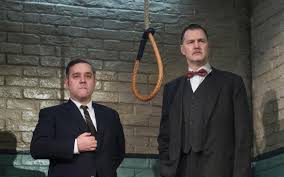
An excellent start to the year’s theatrical viewing, Martin McDonagh’s play was absolutely superb: funny, frightening and thought-provoking with an outstanding central performance by David Morrissey.

The Girls – The Lowry, Salford

Gary Barlow, Tim Firth and the original Calendar Girls credit Matt Crockett

This was the biggest surprise of the year for us: on paper, it sounded a million miles away from the sort of thing we usually enjoy, and we went along reluctantly. But it was a truly delightful production – flawlessly realised.

The Merry Wives – The Lowry, Salford

image

Northern Broadsides version of The Merry Wives of Windsor was a rambunctious, irreverent take on the tale, with the inimitable Barrie Rutter clearly relishing the role of Falstaff.

I Am Thomas – Lyceum Theatre, Edinburgh

I_Am_Thomas_415x800_jpg_300x200_crop_q85

A strange and eclectic production, telling the tale of Thomas Aikenhead, the last person in Scotland to be hanged for blasphemy, this was essentially a series of vignettes and musical interludes, with an ensemble taking turns to play the eponymous role.

King Lear – Royal Exchange Theatre, Manchester

04-KING-LEAR-RET-L-R-Pepter-Lunkuse-Cordelia-Don-Warrington-King-Lear-Photo-Jonathan-Keenan

Michael Buffong’s King Lear was a tour de force, a gimmick-free yet undeniably modern production. Don Warrington was well-cast in the central role, but it was Pepter Lunkuse’s Cordelia who really stood out for us. She’s definitely one to watch!

Stowaway – Home, Manchester

Unknown

Analogue Theatre’s troubling tale of a stowaway falling from a flying aeroplane and landing in the car park of a DIY store was fascinating, depicting a moment where worlds collide and understandings begin to take root. A thought-provoking, political play.

Royal Vauxhall – Underbelly Med Quad, Edinburgh
2016ROYALVA-APJ-300

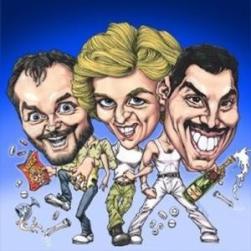
A quirky and irreverent musical, telling the true story of when Freddie Mercury and Kenny Everett dressed Princess Diana in drag and took her to the Royal Vauxhall Tavern in London for a night out, incognito. We loved this production.

Wonderman – Underbelly Potterrow, Edinburgh

Wonderman_edinburgh_FOURSHEETS-quartersize_final

Based on the short stories of Roald Dahl – and incorporating a true incident from his eventful life – Gagglebabble’s collaboration with the National Theatre of Wales was a sprightly mix of drama and music with a deliciously dark heart.

Cracked Tiles – Spotlites, Edinburgh
2016CRACKED_AVH

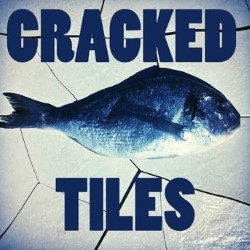
This beautifully crafted monologue, written and performed by Lorenzo Novani, was the downbeat tale of a young man who inherits a Glasgow fish and chip shop from his father Aldo. Novani was quite staggering as Riccardo.

Dear Home Office – Underbelly Med Quad, Edinburgh

2016DEARHOM_AXD

This was the story of unaccompanied minors applying for asylum in the UK, performed with touching vulnerability by eight refugee boys. The play was an amalgamation of the performers’ own experiences, blended with fictional accounts. A raw and truthful exposé.

The Suppliant Women – Lyceum Theatre, Edinburgh
29676962992_8e7a020135_b

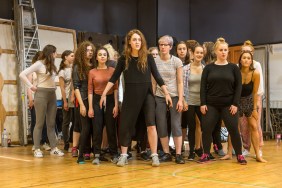
It’s a rare thing indeed when you go into a theatre and are treated to something unique – but that is the word that kept coming to us, as we sat entranced in the stalls of The Lyceum, watching David Greig’s production of The Suppliant Women. Truly brilliant.

Grain in the Blood – Traverse Theatre, Edinburgh

unknown-2

A real one-off, this was a stark, unnerving chiller, at once contemporary and classical, with dialogue that was taut and ultra-modern in style, all fragments and silences and unfinished thoughts. This was a complex, angular, unwieldy play – a fascinating watch.

Jack and the Beanstalk – King’s Theatre, Edinburgh
cfk-panto-beanstalk-header

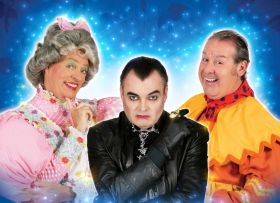
By far the best panto we have ever seen, this was a standout production, with fantastic performances from King’s Theatre regulars Allan Stewart, Andy Gray and Grant Stott. It brought the year to a celebratory end.

Susan Singfield

Film Bouquets 2016


Unknown-1

Unknown-1

Unknown-1

It was an interesting year for film. Here, in order of release, rather than stature – and with the benefit of hindsight – are our favourite movies of 2016.

Room

Unknown-1

This superb adaptation of Emma Donoghue’s novel got 2016 off to a cracking start. There were powerful performances from Brie Larson and young Jacob Tremblay as the central characters in a tragic yet oddly inspirational story.

The Revenant

Unknown

Alejandro Gonzalez Inaritu delivered another dazzling movie, this one as savage and untamed as the grizzly bear that mauled Leonardo Di Caprio half to death – but made up for it by helping him win his first Oscar.

Anomalisa

1401x788-068-ANOMALISA-008R

Writer/director Charlie Kaufman gave us a quirky (and deeply disturbing) animation that was a Kafkaesque meditation on identity and the bleak nature of the human condition.

Dheepan

Unknown-1

Jacques Audiard’s fascinating study of the lives of refugees never fell into cliche. There was violence here, but it felt horribly real and totally devastating. There were affecting performances from a cast of newcomers.

Victoria

201505757_6

Sebastian Schipper’s film really shouldn’t have worked. Delivered in one continuous take, the fact that it hooked us in so brilliantly was just the icing on the cake – a real ensemble piece but plaudits must go to Laia Costa as the eponymous heroine.

Sing Street

Unknown-2

John Carney may have only one plot but when it was delivered as beautifully as it was in Sing Street, we were happy to indulge him. This was a beautiful, heartwarming film with appeal to anybody who has ever dreamed about pop stardom.

The Neon Demon

1*jUNDeTEvI8L-iWHG0NnPrA

The fashion industry as seen by Nicolas Winding Refn is a hell hole and here, Elle Fanning as Jesse, was the latest recruit. A weird mash-up of sex, violence and extreme voyeurism, this was the director’s most assured effort yet.

Hunt for the Wilderpeople

1200

New Zealand director Taika Waititi offered up this delightfully quirky story about a troubled teenager (Julian Dennison) and his friendship with crusty curmudgeon, Hec (Sam Neill). This film reeled us in and kept us hooked to the end credits.

The Girl with all the Gifts

1200x675

Just when we thought the zombie movie had stumbled as far as it could go, Colm McCarthy’s film gave the genre a hefty kick up the backside – and there was a star-making performance from young Senna Nanua in the lead role.

Under the Shadow

84a67240-5eae-11e6-8163-65d9c75d2344_20160810_undertheshadow_trailer

Babek Abvari’s film had all the tropes of the contemporary horror movie and a powerful political message as well. Set in post war Tehran, young mother Shideh (Narges Rashidi) struggled to keep her daughter safe from the forces of darkness.

I, Daniel Blake

maxresdefault

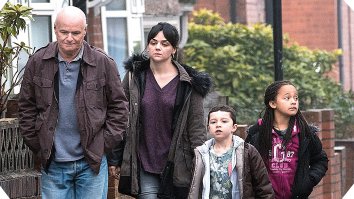
Ken Loach’s return to the screen resulted in one of the most powerful and affecting films of the year – a searing look at ‘benefits Britain’ that would have the most stony-hearted viewer in floods of tears. Should be required viewing for Tory politicians.

Train to Busan

busan-review-pic

Another day, another zombie movie – but what a zombie movie! Korean director Sang ho Yeon gave us a galloping ‘zombies on a train’ thriller that nearly left us breathless. There were some incredible set pieces here and a nerve-shredding conclusion.

Paterson

PATERSON_D16_0149.ARW

Jim Jarmusch presented a charming and quirky tale about a would-be poet living in a town that had the same name as him. Not very much happened, but it didn’t happen in an entirely watchable way. A delightful celebration of the creative spirit.

Life, Animated

t-life-animated-art-streiber-06-2016

This compelling documentary squeaked in right at the end of the year – the true life tale of Owen Suskind, an autistic boy, initially unable to speak a word, but rescued by his love of Disney movies. It was funny, uplifting and educational – and our final pick of 2016.

Silence

03/01/17

If I were ever asked to nominate somebody as ‘Greatest Living Film Director,’ Martin Scorcese would be a serious contender for the title. He has an exceptionally strong and eclectic body of work, which includes bona fide masterpieces like Taxi Driver, Raging Bull and Good Fellas –and even occasional misfires like The Last Temptation of Christ are never less than interesting. Silence is a film he’s been trying to make for something like thirty years. Based on a novel by Shusaku Endo and co-written by Scorcese with his old collaborator, Jay Cocks, it’s essentially a meditation on the power of belief – and the lengths to which people will go to in order to observe their chosen religion.

In seventeenth century Portugal, two young Jesuit priests, Father Rodrigues (Andrew Garfield) and Father Garrpe (Adam Driver), set themselves a difficult mission – to travel to Japan in search of their old tutor, Father Ferreira (Liam Neeson), who disappeared whilst trying to convert the locals to Christianity. Rumour has come back that Ferreira has ‘apostatised’ – renounced his faith – and is now living the life of a Buddhist under the watchful gaze of his captors. The young priests refuse to believe that this can be the case and they set off on the perilous journey to Japan, knowing that from the minute they arrive they will be in grave danger. Christians are hated there and are cruelly tortured and executed in large numbers. But that’s not to say that the film is necessarily pro (or anti) Christian; indeed, questions are raised about the very nature of missionary work, and the religious zeal that prompts people to try to force others to accept their ‘truth’.

Silence is a powerful slow-burner of a film, that certainly won’t be to everyone’s taste. It takes a while to unfold an intriguing story and with a running time of two hours and forty-five minutes, it will undoubtedly test the patience of many; but there’s a great deal here to enjoy – the ravishing cinematography of Rodrigo Prieto, Dante Feretti’s costume design and a superb central performance by Andrew Garfield, clearly delivering on a role that’s a bit of a stretch from his earlier turn as Spiderman. Liam Neeson, now the go-to guy for any performance requiring gravitas, delivers his cameo role with aplomb and I particularly like Yosuke Kubozuka as the Jesuit’s guide, Kichijiro, a would-be Christian who continually betrays his chosen faith only to come scrabbling back seeking forgiveness through the act of confession.

There are also some scenes of terrible violence here; the unflinching depictions of the barbaric treatment meted out to those who refuse to renounce their faith are not for the faint-hearted. People are burned alive, crucified and drowned all in the name of religion.

As to the film’s central tenet – is there a God? – Scorcese (who himself trained as a priest before deciding to seek his absolution through celluloid) is wise enough to resist offering a definitive answer. In the end, it is left to the individual viewer to decide. But I would urge you to go and see this film. It may have taken a very long time to bring it to the screen, but in my opinion at least, it has been well worth the wait.

4.2 stars

Philip Caveney

A Monster Calls

01/01/17

A Monster Calls is an intensely emotional movie, telling the tale of twelve-year-old Conor O’Malley (Lewis MacDougall), and his struggle to deal with the realisation that his mother (Felicity Jones) is dying of cancer. It’s made all the more poignant by the knowledge that Siobhan Dowd, who conceived the novel the film is based on, died of the same disease before she could write her book. What we have here, then, is fellow author Patrick Ness’s interpretation of Dowd’s idea – and it’s good to see he’s done her proud.

Lewis MacDougall’s performance is extraordinary. (I should perhaps note here that he’s a student at The Drama Studio in Edinburgh, where I now work; sadly I can’t claim any credit for his achievements, as he’s not in my class, I’ve never met him, and he’d filmed this before I even joined the team.) He’s a gifted young actor, perfect for the screen, with a touching vulnerability here that’s reminiscent of David Bradley’s Billy Casper in the 1969 classic, Kes. His anger, fear and frustration are all writ large, and Philip and I find ourselves crying at regular intervals.

The story is essentially a simple one, making use of the idea of ‘the monstrous other’ and exploring the concept of duality. Conor is conflicted: he loves his mother, but he can’t live with the uncertainty of not knowing when she’s going to die. And so he stumbles between quiet acquiescence and towering rage, the latter symbolised by the unleashing of the yew-tree monster – like Jekyll’s Hyde, Frankenstein’s monster, Bertha Rochester, or even Blue’s Savage in David Almond’s graphic novel. Like its literary predecessors, this monster allows Conor to release his repressed emotions. It is both his undoing and his salvation.

There’s a stellar cast at work here, with Sigourney Weaver and Toby Kebbell occupying the roles of Gran and Dad respectively, neither of whom are what Conor needs to fill the void left by his mum, although they both try hard, in their own ways. Felicity Jones’s portrayal of the dying Elizabeth is utterly heartbreaking; she’s a real chameleon, and it’s hard to think of her as the same actor I saw in Rogue One last week. And the monster’s stories are beautifully realised, with some delightful sequences featuring dazzling, stylised animation.

There are some flaws: the bullies’ dialogue, for example, is wholly unconvincing and depressingly generic, and the first fifteen minutes or so seem aimed at a much younger audience. But these are minor niggles in the face of such an affecting, tragic piece of work. It’s a lovely film, and well worth going to see.

4.2 stars

Susan Singfield