Month: November 2015

The Lady In The Van

MV5BOTY0MjM3NTQyOF5BMl5BanBnXkFtZTgwMzcwNjUxNzE@._V1_SX214_AL_44-lady-in-the-van

14/11/15

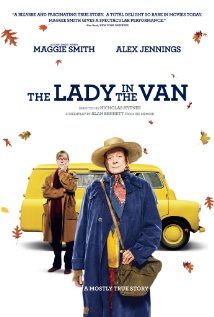
Based on Alan Bennett’s memoir and adapted from his 1999 West End play, The Lady In The Van features Alex Jennings as the great man himself, and is the true story of Miss Shepherd (Maggie Smith), an elderly transient who parked her beaten up old Bedford van in Bennett’s driveway and ended up staying there for fifteen years. The film’s a total delight, offering Maggie Smith a gift of a role as the obstinate, curmudgeonly and sometimes downright rude, Miss Shepherd, while Jennings’ assured turn as Bennett is so much more than just an uncannily accurate impersonation; indeed, here we get two Alan Bennetts for the price of one – the man who writes about his life and the one who actually lives it. With this simple but brilliant device, the film has a lot to say about the very nature of writing and the way in which real events are sometimes adapted for the purposes of entertainment. ‘But that didn’t really happen,’ writer Bennett will occasionally announce, like some glum member of a Greek chorus lurking in the background.

The story opens with a brief glimpse into Miss Shepherd’s past, the single traumatic event that initiated her deterioration into vagrancy, and then we witness her arrival in the street in Camden Town where Bennett has just purchased a house. We meet the other inhabitants of the street and witness their reactions to having this tragic creature parked nearby, an interesting mixture of liberal guilt and open disgust. Miss Shepherd’s toiletry arrangements are rudimentary to say the very least, while her open disdain for anyone who tries to help her, would probably move Ghandi to violence.

There’s so much to enjoy here. Bennett’s wry asides are sometimes cripplingly funny, Maggie Smith gives a triumphant performance in a role she was born to play and there are cameos from some big names, including one from each of the boys in the film of The History Boys. While much of the emphasis is on comedy, the film’s latter stages are deeply affecting and more sensitive viewers may find they have occasional recourse to a pack of tissues, and yet the script easily resists cheap sentiment.

Perfectly judged, beautifully acted and cannily scripted, there’s really not much here to criticise – just plenty to enjoy.

5 Stars

Philip Caveney
The Oresteia

The Oresteia - press pic 07 (A-702) The Oresteia - press pic 08 (B-123)

07/11/15

Home, Manchester

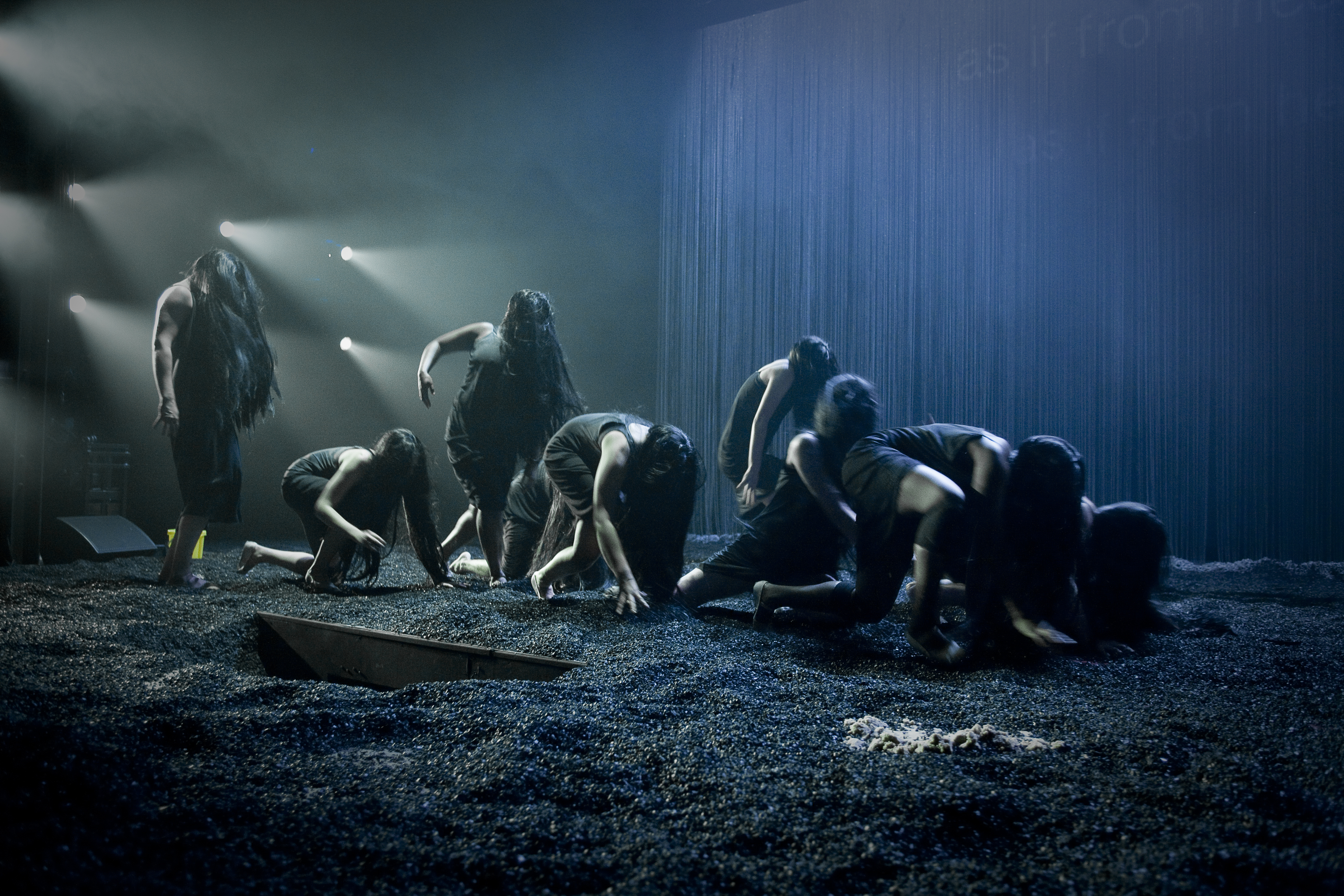
I’ve read a lot of Greek theatre (I did a Theatre Studies degree) and seen performances of some classic plays (Lysistrata and Phedra, for example) but I’ve never seen it done so… thoroughly… before, with a large chorus fully utilised, and the strophe and antistrophe physicalized on the stage. It’s like having pages of my text books brought to life, and I wish I’d seen it while I was studying.

This is a fascinating production – all modern dress and regional accents – and Ted Hughes’ adaptation of the script is as fluid and accessible as you’d expect. This very deliberate modernity contrasts spectacularly with the traditional techniques: the choral speaking, the off-stage action – and it really, really works.

Make no mistake, the story is preposterous. Of course it is. It’s all heightened over-reaction and soap-opera plot – affairs and murder and long-lost kids. While Agamemnon has been fighting in Troy, his wife, Clytemnestra, has taken Aegisthus as a lover. She wants revenge on Agamemnon because he’s sacrificed their daughter to the gods, and a bloody, convoluted family drama thus ensues, albeit with the input of Apollo and Athene.

The acting is uniformly strong, but it’s the chorus that stands out. Split into three parts (men, women and Furies), the ensemble admirably fulfils its function, narrating, commenting and advising the characters. The choral speaking is beautifully precise, an object lesson in how it should be done. The men in particular create a kind of filter for the audience; they stand in the auditorium, leaning on the stage in their jeans and trackies, like a group of blokes in their local pub, checking out what’s going on. At times they’re in the dress circle too, shouting down to the characters, deploring what they do.

It’s an accomplished piece of theatre, and excellent to watch. Do try to catch it if you can.

4.6 stars

Susan Singfield

SPECTRE

MV5BMjM2Nzg4MzkwOF5BMl5BanBnXkFtZTgwNzA0OTE3NjE@._V1_SX214_AL_ Unknown-2

08/11/15

The James Bond movies seem to have settled into a regular pattern – a decent outing alternating with a not so decent one. I’ve been following the films since Dr No and was initially delighted with Daniel Craig’s efforts. Casino Royale delivered a much needed kick up the franchise, even if most of its chops were nicked from The Bourne Identity. Craig seemed to cleave closer to Ian Fleming’s vision of his infamous antihero and the silly gimmicks were kept to a minimum. Quantum of Solace felt like a decidedly patchy follow-up, which never really built up a head of steam. Skyfall of course, kicked things clear out of the stadium, becoming the most successful Bond film of all time, which leaves returning director Sam Mendes only one direction in which to take things. Down.

In the latest outing, Bond is (once again) looking like he’s all washed up. He’s gone out on his own in search of the orchestrator of a sinister organisation and M (Ralph Fiennes) has no option but to order him to stand down. Not that it deters him at all. With the help of Q (Ben Wishaw) and Moneypenny (Naomie Harris) he loads his gun and heads out after the bad guys. Before you can say implausible, he’s heading off to a variety of locations to hunt down whichever evil mastermind is behind the latest series of outrages. Meanwhile, the headquarters of MI6, bombed to destruction in Skyfall, have been replaced by a brand new super dooper high rise building, masterminded by C (Andrew Scott) who may as well have the word ‘dodgy’ tattooed on his forehead.

The film starts promisingly with a pre-credits sequence set amidst Mexico City’s El Dia De Muerte celebrations. There’s a Touch of Evil style tracking shot, some massive explosions and a helicopter-set punch up that redefines the word ‘thrilling.’ If the rest of the film was up to this standard, it would be a wonderful thing indeed. Instead, after Sam Smith’s forgettable theme song, (too shrill by half) we’re treated to some exposition, which, after that brilliant opening salvo, seems to move with all the urgency of molasses in winter. It takes quite a while for the film to recover – there’s a forgettable car chase, a punch up on a train that echoes Connery’s fight with Robert Shaw in From Russia With Love, a new love interest with Gallic moody monkey Lea Seydoux and a brief snogathon with Monica Bellucchi that looks like it’s crawled straight out of the sexist 60s. Things don’t really pick up much until chief villain Oberhauzer (Cristophe Waltz) puts in a belated appearance, whereupon we’re treated to a bit of torture, (always a great way to focus the attention), followed by what ought to be the finale.

Except that it’s not. There’s another finale, which though decently executed feels like a sequence too far (and judging by the legions of audience members paying a visit to the loo, we weren’t the only ones who felt this way). SPECTRE is decent entertainment and it’s savvy enough to reference many of the earlier movies, but it’s not strong enough to take its place with the best examples of the series. Some tightening up would have helped it hit all the right targets, but as it stands, this falls into the usual pattern. ‘Bond will return’ promises a credit, but will he be Daniel Craig? Watch this space.

3.8 stars

Philip Caveney

The Program

MV5BNDMzMzY3NTIyM15BMl5BanBnXkFtZTgwMjAwNTY1NjE@._V1_SX214_AL_

06/11/15

Lance Armstrong was the consummate all-American hero. He famously overcame testicular cancer and went on to win the Tour De France seven times in a row. Along the way, he founded a cancer charity, became a spokesman for the underdog, inspired people to excel and made millions from sponsorship and endorsements. It was all based upon a lie. He was using performance enhancing drugs to achieve his spectacular results and when the truth finally came out, his glorious career lay in tatters.

All this, of course, is well known. Now here’s Stephen Frears biopic, which dramatises the story. What it is, is a stripped-down, turbo-charged version of the events, but it’s light on truth and even lighter on detail. We first meet Armstrong (Ben Foster)  when he’s in his 20s, when he realises pretty quickly that he’s never going to become a winner in his chosen sport, unless he joins in with the practise of doping, something that most of his competitors seem to be well versed in. He makes friends with journalist David Walsh (Chris O Dowd) who is initially a fan; but when Armstrong starts to easily win races that he’s previously failed at, alarm bells start to go off in Walsh’s head. The problem is, why do his fellow journalists fail to detect something fishy going on? Soon, Armstrong and Walsh are bitter enemies.

The main reason to see The Program is to relish Ben Fosters’ extraordinary performance in the title role. His depiction of an obsessive man consumed with hubris is quite extraordinary and the fact that he physically resembles Armstrong is just the icing on the cake. But back to the film’s shortcomings. For us to fully appreciate Armstong’s fall from grace, it would be necessary to learn more about his private life. But this is simply airbrushed over. A five year marriage to Kristen Richard is reduced to a single scene of them walking down the aisle together. There’s no sign of the three children they had. Likewise, his year long engagement to musician Sheryl Crow. The only mention of her is that the two of them are ‘friends’. And finally, his relationship with longterm girlfriend Anna Hanson, (who he’s still with) isn’t even mentioned, let alone the two kids they had together.

Stephen Frears is a veteran director, so I can’t believe he’s simply chosen to skip over such important details. Could it be that certain people didn’t want to be involved? At any rate, The Program is perfectly watchable, but it feels suspiciously like the edited highlights of a movie – the full impact of his disgrace fails to come across, largely because we don’t see the repercussions it has on those who loved him. So, in a strange way, the film is as much of a cheat as Armstrong himself.

Don’t get me wrong. It’s perfectly enjoyable fare. But you’re left with the conviction that it could so easily have been something much more than that.

3.8 stars

Philip Caveney

The Heatons Tandoori

Unknown-1 Unknown

Heaton Moor, Stockport

05/11/15

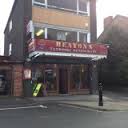
We all have our favourite curry house. For those who live around ‘The Moor’ it’s generally a toss-up between The Kushroom Koly and the Heatons Tandoori. We’ve always favoured the latter, not just because of the friendliness of the staff but also because of the impeccable standard of the food. Tucked away on Shaw Road, it’s an unprepossessing-looking establishment, but take a walk in that direction any day of the week and you’ll notice that one restaurant is nearly always busy – and that’s the Heatons Tandoori. It’s not exactly a Johnny come lately either. It’s been in its current location for 25 years

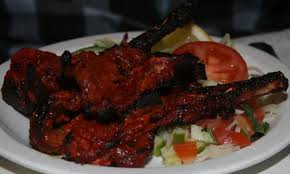
We start (naturally) with some poppadoms, served with bowls of mango chutney, raita, chopped onions and (always my favourite) lime pickle, which is hot and sweet and sour all at the same time. We also have a portion of tandoori lamb chops, which we choose to share, because the main courses here are always on the generous side. The chops come piping hot from the clay oven, nestling on some freshly chopped salad. They are perfectly cooked, spicy, juicy and featuring those lovely charred edges that are such a delight. The bones are quickly stripped of every morsel of flesh.

The main courses are also note perfect – a chicken dansak which is gloriously thick with lentils and a king prawn balti, deliciously spiced and featuring large chewy tiger prawns. We have these with a portion of boiled rice and a couple of huge nan breads, a plain one for me and a peshwari for Susan. The Heatons’ nan breads are rather splendid things, light as feathers and the size of zeppelins, they’re perfect to tear apart and dip into your sauces.

Because there’s never any hope of polishing off those gigantic portions, we ask for the remains to be bagged up, something the staff here are always happy to do, and we head for home, knowing that there’s a whole other delicious meal to be conjured from what’s in the bag. Susan is given a chrysanthemum on the way out, an enduring tradition which we’ve never really quite understood, but it matters not. Consistency is the name of the game when it comes to Indian food and we’ve never been disappointed by a meal at the Heatons.

Get down there and give it a try. You won’t be disappointed.

4.5 stars

Philip Caveney

Pomona

Unknown Unknown-1

03/11/15

Royal Exchange, Manchester

Something decidedly strange is happening on Pomona – the deserted concrete island that sits between Salford and Manchester in the middle of the river Irwell. In this dystopian future world, women are going missing in worrying numbers, while Gale (Rochenda Sandall) is taking extreme lengths to conceal what’s actually happening to them. Meanwhile, security guards Moe and Charlie, are charged with the task of guarding something hidden beneath the ground, something they don’t know anything about; and what does all this have to do with the ancient octopus-faced god, Cthulhu? It’s a good question and one I’m still not entirely sure I have the answer to.

Fresh from its success at the National Theatre in London, Alistair McDowall’s Pomona now makes its debut in the city where it’s actually set. It’s a labyrinthine tale, featuring seven disparate characters. The play’s themes: prostitution, sexuality and murder are probably intended to shock, but in truth these elements aren’t anything like as convincing as the ones that deal with Role Playing Games, something that seems to provide the main clue as to what’s actually going on here. The story isn’t told in a linear way – instead, it switches back and forth in time, so sometimes we know what’s going to happen to a character before he or she actually gets there.

The play begins with underwear-clad wheeler-dealer Zeppo (Guy Rhys) performing an extended monologue based around the climactic scene in Raiders of the Lost Ark for Ollie (Nadia Clifford) who is looking for her missing twin sister. Zeppo advises her not to look too hard, pointing out that a little knowledge can be a dangerous thing. But she goes looking anyway…

Individually, the ensuing scenes are mostly good, nicely acted and occasionally very funny – the ones featuring the hapless Charlie (Sam Swann) are particularly successful in this regard – and there are some nicely choreographed sections, where everything promises to fall into place, but never quite does. The fragmented nature of the work makes it feel more like a collection of short pieces in search of a story arc, so the overall play is somehow less than the sum of its parts, even if many of those parts offer much to admire.

Ultimately, I felt that Pomona was a little too pleased with itself for comfort – but the enthusiastic applause from tonight’s audience suggested that others found it captivating. One thing’s for sure. Here’s another play that will have you discussing its meaning long after you’ve headed for home.

3.8 stars

Philip Caveney

He Named Me Malala

MV5BMjQwODg2NDIyN15BMl5BanBnXkFtZTgwMTI4NDMwNjE@._V1_SY317_CR0,0,214,317_AL_

03/11/15

There are all kinds of movies for all kinds of audiences; and then there are films that are so important, you feel they should be required viewing for the entire population of every country it’s screened in. So it’s rather dispiriting to attend this advance showing of He Named Me Malala to find that only a dozen or so people have turned out to see it, while just next door, several screens are packed to bursting point for the latest Bond movie.

The Malala in question, is, of course, Malala Yousafzai, the young Pakinstani girl who in 2012 was shot in the head by Taliban soldiers for having the effrontary to campaign for something unthinkable: the right of a female to an education. They’d thought to make an example of her but against all the odds, she survived, to become something much more powerful than a martyr. She has become a figurehead for all women who long for and work towards equal opportunities. In 2014, she was awarded the Nobel Peace Prize, at which point the leaders of the Taliban must have realised that they had, almost literally, shot themselves in their collective foot.

This affecting documentary, directed by Paul Weitz, visits Malala in exile at her home in Birmingham. She is interviewed extensively as is her activist father, Zaiuddin, along with her mother and two brothers. The rest of the film is made up from newsreel footage, reenactments of some of the key scenes in her life and some eye-catching animation sequences which give an insight into the community in which she grew up. Malala is unbelievably charismatic and articulate beyond her years. It’s ironic that her name came from the folk story of a legendary young girl who led her country’s warriors into battle with the British and was shot dead in the process. We see her conversing with Presidents and Prime Ministers, we hear her speaking to the United Nations and we begin to appreciate that it’s more than just circumstance that has put her into the the world’s gaze. What she has to say is extraordinarily affecting and it’s a cold soul indeed who won’t tear up at the film’s poignant conclusion.

As a reviewer, I might argue that the cinematography could have been better, that the score might have been improved, that certain ideas were not pursued to their full extent; but given the incredible power of the subject matter, and the charisma of Malala herself, I can’t really do anything else but give this full marks and implore people to go and see it while you have the opportunity. Bond will be around for ages and sadly, based on the evidence of tonight’s screening, this lovely film may not.

5 stars

Philip Caveney

Bistrot Des Alpilles

IMG_1659bistrot-des-alpilles_54051_5d9

30/10/15

St Remy de Provençe

As restaurants in Provençe go, Bistrot Des Alpilles Is markedly different from the others – forget the traditional, old world settings that are generally the norm here  – this light, airy and spacious venue, with glass windows on three sides, is a stylish new build with a decidedly contemporary feel. The effect is rather like eating in a large and luxuriously appointed conservatory. We’re the first diners to arrive but are soon followed by other Friday night customers, all in search of some fine dining. The good news is, they’ve come to the right place. The service here is prompt and the staff are friendly.

There are four of us and we decide to choose from the 24 euro menu, which offers a selection of four dishes in each section. The starters include a memorable duck confit, served on a puy lentil salad. The warm fowl has a superb smokey flavour and is perfectly set off by the delightfully chewy lentils and the piquancy of the dressed salad. There’s also a charolais au boeuf served with al dente vegetables, and flavoured with pesto and parmesan; one of our party goes for an ouef joliet, a lightly boiled egg  in a brioche bun, served with porcini mushrooms. All the starters are note perfect, which bodes well for the main courses.

I opt for the mitonné de jour de boeuf (a chunky stew of ox cheeks in a succulent red wine sauce) which comes accompanied by a small dish of potatoes, mushrooms and crispy smoked bacon. The stew is delicious enough to require mopping up with chunks of freshly baked bread. Susan has the concigglionni aux moules safranées (saffron flavoured mussels on fresh pasta shells, served with slivers of smoked salmon). The pasta is clearly made in-house and its cooked to perfection. Again, there’s very little here to criticise and plenty to enjoy.

In our experience, if things are going to go wrong in France, it will be with the desserts – but I’m delighted to report that there are no problems here. There’s a fondant au chocolate, which is everything it ought to be – a deliciously light exterior which when broken into with a spoon gives up its rich, chocolate filing in an aromatic puddle. It comes with a pool of pistachio custard and a generous dollop of pecan nut ice cream. It doesn’t hang around on my plate for long. Susan’s soufflé gourmet glacé au caramel is every bit as delightful as the title suggests – perfectly set and deliciously flavoured.

As ever, we drink a bottle of the local rosé wine and after some discussion, we decide that we really can’t fault anything we’ve had here tonight. So it gets full marks. The sad thing is, we’re heading home tomorrow, but it concludes our week’s visit to Provençe in winning style.

5 stars

Philip Caveney

Les Saveurs

images images-1Unknown

28/10/15

St Remy de Provençe

Les Saveurs is a delightful little restaurant in the heart of St Remy, with space for about forty diners. We’re here on a quiet Wednesday in October, so it’s far from full, but there’s still a convivial, friendly atmosphere, and we’re ready to enjoy ourselves.

We’ve learned to order rosé wine when visiting Provençe; it’s not our preferred hue when we’re in Britain, but it’s the prevalent colour here, and tends to be better than our habitual white. We’re delighted today to see a selection from the local Mas de la Dame vineyard, which we visited earlier in the afternoon. At €21 for a bottle, it’s a fresh, crisp-tasting drink, and well worth every cent.

There’s a three-course set menu at €26, but we opt for the a la carte today; we’re not hungry enough for starters or puddings, and the main courses sound delicious.

Our companions both opt for the filet de boeuf angus, a generous slab of steak that’s cooked to perfection, soft and pink and tender throughout. There are garlicky roast vegetables to accompany it, and some skin-on chips that seal the deal: this is truly appetising fare.

I have l’agneau des Alpes, a lamb steak stuffed with sausage meat, with a lamb cutlet on top. The lamb is perfect: succulent and tasty – and served with ratatouille and crushed potatoes.

But the star is the bouillabaisse Philip chooses, a hearty bowl of intense fish stew, chock-full of crab, red mullet, dogfish, scallops, and one enormous langoustine. Served with the traditional croutons, cheese and aioli, this is a shining example, showing exactly what this dish can be.

It’s hard to fault food this good, and I’m not going to. If you’re ever in St Remy de Provençe, and looking for somewhere to eat, I’d suggest you give Les Saveurs a go.

4.8 stars

Susan Singfield

La Cassolette

IMG_1594 IMG_1600

25/10/15

St Remy de Provençe

We’re in St Remy in Provençe and no visit there would be complete without a visit to La Cassolette. This intimate and unpretentious restaurant, located on a narrow side street of the town, is an old favourite of ours, so it feels slightly odd to be reviewing it after all this time, but hey, here goes.

There are four of us to dine and the welcome at La Cassolette is always warm, the service prompt, the portions generous. We opt for the set menu at €21 per head (there is also a cheaper option at a surely unbeatable €13!). For starters, there’s a wonderfully rich and aromatic fish soup, which is served with toasted French bread, grated cheese and a bowl of thick, garlicky aioli. There’s also rillette de rougete de bassillic (potted red mullet, light and citrusy, marvellous) and a superbly flavoursome goat’s cheese salad.

On to the main courses. Two of us opt for Gardianne de Toro, a beef stew (made from the bull rather than the cow) with large melt-in-the-mouth chunks of meat flavoured with red wine and the unexpected contrast of slices of orange. This is  served with a mound of wild Carmargue rice and mopped up with slices of really fresh French bread. Delicious. Susan samples the pavé of rump steak, a meal that’s notoriously easy to get wrong, but this is an unqualified delight, mouth-watering and succulent with fat, crispy on the outside and nicely rare within. It comes with a perfectly judged potato dauphinoise and grilled tomato Provençal. One of our guests samples the sole meunière, light, fluffy and glorious in a beurre sauce, served with fresh vegetables.

If I’m honest the sweets don’t quite display the perfection of the previous courses – there’s a tart au citron that, though perfectly acceptable, is a little sweeter than I’d really like: a huge sticky rum baba that’s so shot full of rum it makes your head swim: there’s a panna cotta, which though delicious, hasn’t quite set, and there’s a trapezienne – a Genoese sponge cake swimming in creme patisserie. This is all fine, but it lacks the precision of the earlier courses.

We drink a carafe of the local rosé wine, which works out around a pound a glass and we feel we’ve enjoyed a superb meal at a great value price. If you’re lucky enough to be around St Remy and you’d like to sample traditional cuisine, this is definitely a place that’s worth a visit.

4.7 stars

Philip Caveney