Witchfinder General

Timestalker

13/10/24

The Cameo, Edinburgh

The release of a new Alice Lowe film is a cause for celebration. Actor/writer/director – and as far as I know, she might do the catering as well – Lowe is adept at ensuring that a modest budget goes a long, long way. Her debut feature, Prevenge, was released way back in 2017, shot while she was pregnant (of course it was), so Timestalker has been many years in ahem… gestation. It’s probably best described as a fantasy set across hundreds of years, and the central theme is the general futility of pursuing the heart’s desire.

We first meet Agnes (Lowe) in the 1600s in Scotland, where she’s a lonely spinster, much gossiped about by her neighbours, who pays the occasional visit to a masked preacher, a man given to talking about the dawning of a new religion. When said preacher is arrested and brought to a public place for torture and execution (they made their own entertainment those days), his mask is removed, revealing the handsome face of actor Aneurin Barnard. Agnes is instantly and irrevocably smitten. Attempting to approach him, she trips and falls face first onto the executioner’s axe, which is the bloody end of her.

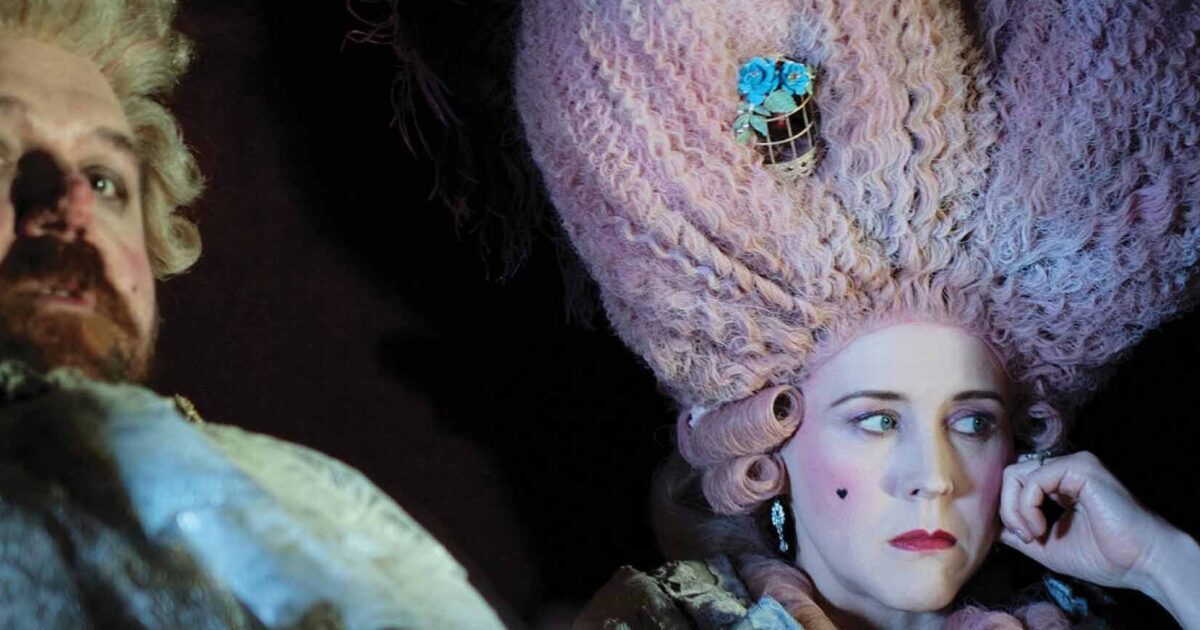
Except that it’s not. She’s promptly reborn in the 1790s, rich but bored, with a toxic husband played by Nick Frost. This Agnes has a penchant for wearing some truly monumental wigs but she’s missing something in her life. When she spies the visage of a handsome highwayman – Barnard again – her passion is reignited and she is, once more, in pursuit of love. But of course it’s doomed to end badly. With each transformation, her luck fails to improve and an added problem is that every new persona harbours memories of the one before… and where exactly does Cleopatra fit into all this?

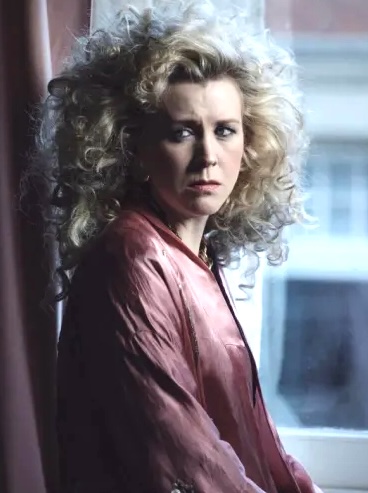
Lowe’s sparky script is laced with deadpan humour, and cinematographer Ryan Eddleston has a lot of fun aping the look of celebrated films. If the opening sequence is Witchfinder General, then the 80s New Romantic section has the muted, pastel tones of Adrian Lyne’s Flashdance – and Lowe has the perm to back it up. Sadly, the budget doesn’t quite stretch to making the Manhattan locations look entirely convincing.

Tanya Reynolds does a good job of embodying the various iterations of Agnes’s perennial sidekick, Meg, and Jacob Anderson is quietly impressive as different versions of a character simply known as Scipio. Frost continues to be suitably malevolent in every loathsome bloke he portrays.

While it might sound faintly bewildering on the page, the myriad twists and turns of the plot are confidently handled and there are some cleverly placed visual clues – a huge heart hidden in a forest, a brightly plumaged songbird in a cage – to keep reminding us of what’s gone before.

As ever with Lowe’s work, the spirit of pure invention is kept proudly to the fore and I find myself wondering what this formidable film maker could achieve given a hundred-million-dollar budget. Until that unlikely event actually happens, why not seek out your nearest independent cinema and sample the delights of her latest gem? It’s well worth your time and money.

4 stars

Philip Caveney

Fanny Lye Deliver’d

14/07/20

Curzon Home Cinema

Thomas Clay’s oddly titled film has clearly been a labour of love. Ten years in the making and set shortly after the end of the English Civil War, it’s been well reviewed elsewhere – and it stars Maxine Peake, surely the closest thing to a guarantee of quality that film lovers could reasonably ask for. So finally viewing the finished product comes as a crushing disappointment.

There are, of course, some good things to say about Fanny Lye Deliver’d. The look of the film is ravishing and the authenticity of the period setting sings out from just about every frame, putting me in mind of Michael Reeves’ wonderful Witchfinder General. A pity then that the authenticity doesn’t seem to extend to teaching the actors how to convincingly ride horses; they all look like they’ve never sat on a horse before, let alone ridden one. The musical score (composed by Clay and played on period instruments) is also rather good. But then there’s the story…

Fanny (Maxine Peake) is the hard-working wife of the much older John (Charles Dance), a former soldier and a hard taskmaster. It’s clear from the outset that Fanny is led a dog’s life, toiling from sunup to sundown, as she cares for her husband and her young son, Arthur (Zak Adams). The family’s routine is rudely disrupted by the arrival of Thomas Ashbury (Freddie Fox) and Rebecca Henshaw (Tanya Reynolds). The couple arrive stark naked and steal clothes from the Lye’s wardrobe but, when they explain that they have been set upon and rubbed of everything they own, the Lyes take them in, feed them, and tolerate their strange behaviour.

But a visit from the High Sheriff (Peter McDonald), who is in pursuit of two ‘heretics,’ changes everything, unleashing a whole series of violent events…

This might work if the visitors were charming enough to convince an audience that they really could fool a family like the Lyes into accepting their story, but, as played by Fox and Reynolds, they are about as likeable as a cockroach infestation. Quite why young Arthur would trust them – when their only interaction with him involves bullying him mercilessly – is therefore baffling.

We’re told that the two visitors represent a new sexual freedom, one that challenges the strictures of Puritanism,  but – when this supposed freedom seems to be demonstrated by its followers acting just as brutally as the people they supposedly oppose  – it doesn’t really cut the mustard. Furthermore, since the cathartic effect on Mrs Lye is the whole raison d’être for this story (narrated by Henshaw, years after the event) it’s frustrating to see how little opportunity Peake is given to shine, mostly having to convey Fanny’s inner turmoil with sidelong glances and occasional shrugs.

As if the nasty, spiteful storyline isn’t enough to put me off, the film has a slow, lumpen middle section, which drags remorselessly.  I find myself listening to Thomas Ashbury’s heavily accented drivel and vainly wish that Curzon Cinema would get around to offering subtitles for their films.

Fanny Lye Deliver’d feels like something of a missed opportunity, its good points totally swamped by an unpleasant and rather unconvincing storyline.

2.8 stars

Philip Caveney