
Will Poulter

Warfare

19/04/25

Cineworld, Edinburgh

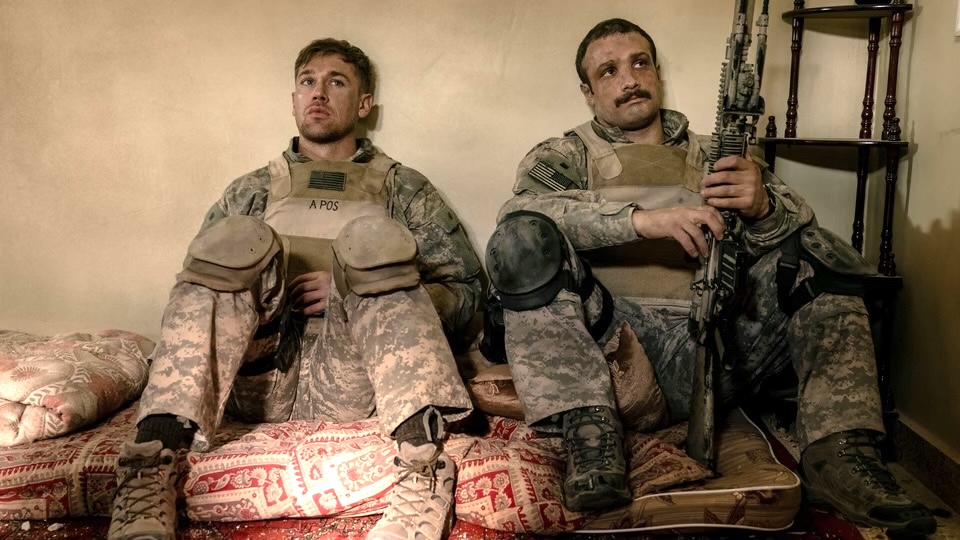
After the ferocity of Civil War, perhaps it was inevitable that Alex Garland’s next project would see him heading further into the world of military action – though it must be said that Warfare, co-written and co-directed with former marine Ray Mendoza (depicted in the film by D’Pharoah Woon-A-Tai), may qualify as the most realistic slice of it ever recreated on camera. Based on a real event, which took place in November 2006 in Ramadi, Iraq, it follows a platoon of Navy SEALS into action, as they occupy a house and await incoming Iraqi forces.

We first meet the platoon in their downtime as they watch an Eric Prydz workout video featuring some statuesque women and one man, bobbing about to the strains of Call On Me. The men laugh along and react to each other’s antics, letting off steam before heading into action. But the fun is short-lived. All too soon, they’re sneaking down darkened streets, singling out the house where they are going to hole up overnight while they wait for things to kick off. Two Iraqi families live there and are taken captive and secured in one room ,while the troops take up their positions, keeping watch for the insurgents they are told are gathering in this area.

As a new day dawns, I begin to recognise some of the actors. That’s Will Poulter as Erik and Joseph Quinn as new recruit, Sam. And there’s Cosmo Jarvis as the sniper, Elliott. But I can’t recall seeing a film where recognising the actors matters less, because this is a true ensemble piece, the characters’ identical uniforms making it difficult to tell them apart, just as it must be in reality. 

Warfare does exactly what it says in the title. It takes you from your safe seat in the cinema and plonks you down in the midst of the action – and it’s not somewhere you really want to be. There are none of the tropes that we so often associate with movies about war. There are no heroes here, no villains, no miraculous dodging of incoming bullets, no conveniently-timed lulls in the action.

At first what there is in abundance is waiting. The troops sit around, bored, longing for the action to start but only so it will eventually be over. And I share that awful anticipation with them. I flinch at every unexpected sound; I hold my breath whenever a radio crackles into life. And, when the action does come, it occurs with such unexpected shock that I find myself wincing at every explosion, every unexpected rattle of gunfire. 

The real-life event I spoke of is actually a tragedy. This is not the story of a platoon of soldiers who act with extraordinary valour and emerge with everything intact. It’s the story of a bunch of guys who have their asses handed to them in a string bag. It’s hard to watch and occasionally even harder to stomach, because there’s very realistic injury detail here and the troops who went through the experience have contributed all their memories to ensure that nothing is left out.

Warfare is truly game-changing. Does it qualify as entertainment? The truth is, I’m really not sure that it does, but it feels to me like an important film and a unique achievement, a construct that doesn’t try to tailor its narrative in an attempt to make it more palatable, preferring to depict warfare as it really is: bloody horrible. 

Those of a nervous disposition may want to give this one a wide berth – and anybody out there who harbours illusions about the nobility of war is about to have them well and truly shattered.

4.6 stars

Philip Caveney 

Guardians of the Galaxy: Volume 3

03/05/23

Cineworld, Edinburgh

Marvel Studios have had a lean time of it lately, with audiences and critics alike underwhelmed by their offerings, even if they do continue to generate huge profits. From their many properties, only two have continued to hold any allure for me: Spider-Man and Guardians of the Galaxy, mostly by virtue of the fact that neither of them takes itself too seriously.

Of course, since the previous GOTG, a lot of water has gone under the proverbial bridge. Writer/director James Gunn has been cancelled, sacked by Marvel and then installed at DC films, where he’s risen through the ranks like a meteor. He’s finally back at Marvel as a revered guest to helm the third (and allegedly final) instalment of the franchise he created.

But the fact that Volume 3 has a running time of two-and-a-half hours gives me cause for suspicion. Is it going to go all earnest on us? Well, yes and no.

When we hook up with The Guardians, they are struggling to get on with their everyday lives in a place called Knowhere – a quirky new colony they’ve set up. Peter Quill (Chris Pratt) is mourning the death of Gamora (Zoe Saldana), who Marvel fans will remember was one of the many characters snapped out of existence by Thanos in Avengers: Endgame. A version of her still exists, mind you, but she has no memory of her previous life and is now a Ravager under the command of Stakar Ogord (Sylvester Stallone, who appears to be cruising through his role on autopilot). Gamora has no memory of the fact that she and Quill were once lovers, which is… awkward to say the least.

Volume 3 devotes a large part of its running time to an origin story for the team’s most enigmatic member, Rocket (voiced by Bradley Cooper), and for me – against all expectations – these are the scenes that have the most impact, effectively adding heartbreak to a story that previously relied more on its comedy chops. There’s still plenty of the latter in evidence, especially in the bickering between Mantis (Pom Klementieff) and the endearingly dim-witted Drax (Dave Bautista). Meanwhile, Nebula (Karen Gillan) seems to have beef with just about everybody she encounters, which can get a bit wearing.

But the Guardians’ everyday life is rudely disrupted by the arrival of a remarkably buff Will Poulter as genetically-engineered golden boy, Adam Warlock. He’s been sent by megalomaniac geneticist, The High Evolutionary (Chuckwudi Iwuji) to collect Rocket (with whom The High Ev has an old score to settle). Pretty soon, there’s a major battle going on.

While I appreciate this is a comic book movie and there have to be some large scale punch-ups, I surely can’t be the only viewer who’s getting a little tired of watching spandex-clad characters being repeatedly smashed through brick walls, causing multiple explosions as they go? Sadly there’s an awful lot of that going on, and another issue for me is that, as the story progresses and the Guardians get split up, I’m not always sure where said punch-ups are taking place at any given time. Indeed, there’s so much fighting going on that, even with that portentous running time, the film sometimes feels curiously over-stuffed.

I know I’m fond of using the curate’s egg analogy but it’s never felt more appropriate than it does for Volume 3. Yes, there’s plenty to enjoy here; I won’t argue the point. But there are also some extended action set-pieces that have me wishing for access to a fast-forward button. Maybe it’s just me. Perhaps there are people out there who want more of that and less of anything new. I don’t know. Die hard Guardians fans will probably want to sit through till the bitter end for the by now obligatory post-credit sequences, the first of which is slightly baffling, while the second can only have significance for the kind of people who would choose GOTG as a specialist subject on Mastermind. (I confess I had to Google it. It helps if you’ve seen the Guardians Holiday Special on Disney + – apparently.)

Despite my grumpiness, I like a lot of this – but not quite enough of it to merit a four-star review. And a final caption announcing that ‘The Star-Lord Will Return’ does not exactly fill me with anticipation. Maybe that’s enough Guardians for one lifetime.

3. 8 stars

Philip Caveney

Midsommar

05/07/19

Rising star Ari Aster’s second movie, Midsommar, is a bucolic horror, a direct descendant of The Wicker Man. Starring Florence Pugh as the troubled Dani, it upends as many horror tropes as it embraces, the excesses building gleefully to a riotous, high-pitched finale.

The film opens with Dani worrying about her sister and pestering her reluctant boyfriend, Christian (Jack Reynor), for reassurance. He’s out with his flatmates: Josh (William Jackson Harper), Mark (Will Poulter) and Pelle (Vilhelm Blomgren), frustrated at being disturbed. He wants out of the relationship, he tells his friends, but he’s dithering, loathe to make a decision and act on it.

But then Dani’s parents die suddenly and he can’t ditch her; how can he? She’s clingy and needy, can’t be left alone. Christian feels trapped, compelled to invite her along on the trip he and his pals have planned, to visit the remote commune in Sweden where Pelle grew up, and take part in their midsummer festivities.

The tension here is nicely drawn: Christian caught in the middle between his girlfriend and his friends. Mark does not want Dani there and she is too fragile to let his animosity wash over her. The setup is promising.

From the dingy, gloomy hues of the opening reel, we are suddenly transported to the gloriously colourful and sunlit idyll of Pelle’s home with the Härga people. This is a daytime horror, no murky shadows where monsters lurk: these fiends are hiding in plain sight. Because, of course, not all is as it seems…

This is not a perfect film. There are some clear issues. Christian in particular is underwritten; his behaviour is inconsistent and lacking credible motivation. What we do know (he’s too weak to walk away from a failing relationship; he will deny a friendship, Judas-like) makes him unsympathetic, so it’s hard to care what happens to him. And then there’s Will Poulter. Mark starts off well enough, adding an interesting dynamic to the friendship group. But, once they arrive in Sweden, he seems to slowly fade from the film, a woeful underuse of such a fine actor. Perhaps, though, it’s the unthinking adherence to problematic clichés that causes me the most concern: exoticising the only disabled character; positioning naked elderly women as grotesques; suggesting mental illness is synonymous with violence and murderous intent.

Despite these problems, Midsommar is largely successful, not least for its bravura. Pugh is as compelling as ever, a real physical presence, dominating the screen. And there are some assured flourishes – a sequence where the protagonists’ car seems to quite literally start running upside-down along an inverted highway clearly shows Aster’s directorial chops. The mounting sense of dread is expertly manipulated, with even the silliest scenes adding a genuine disquiet. The fact that it all takes place in this sun-dappled pastoral hideaway only serves to highlight the brutality.

It’s worth noting too that all the horror here is human: we don’t need the supernatural; we are quite evil enough.

4.1 stars

Susan Singfield


Black Mirror: Bandersnatch

30/12/18

We haven’t reviewed earlier episodes of Charlie Brooker’s excellent Black Mirror series, mainly because we don’t really do TV shows – but a couple of things feel different this time around. For one thing, with so many feature films making their debuts on Netflix these days, it seems more appropriate. And for another, Bandersnatch is something of a game-changer. This is an interactive story, heavily influenced by the ‘make your own adventure’ books of the 1980s and one in which viewers can participate. As the tale unfolds, we are faced with a series of simple decisions: should a character choose Sugar Puffs or Frosties, for example? Clicking on one suggestion or another will influence what consequently happens on the screen. It starts small but the choices become ever more dramatic as the story scampers along.

It’s 1984 and young Stefan Butler (Fionn Whitehead) is an ambitious video game designer, who, after the tragic death of his mother, is living alone with his secretive father, Peter (Craig Parkinson). Stefan, when not spending time with his analyst, Dr Haynes (Alice Lowe), is developing a brand new game called Bandersnatch, which he takes along to major video game publisher, Tuckersoft, headed by ponytailed entrepreneur, Mohan Thakur (Asim Chaudrey). At the initial meeting, Stefan is introduced to one of his video game designer idols, Colin Ritman (Will Poulter), and is subsequently astonished to discover that the team like his ideas and want to offer him the opportunity to make it a reality.

But will he accept the offer? Well, that’s kind of up to you…

Bandersnatch is an astonishingly meta idea. As our choices send the action into deeper and ever more labyrinthine rabbit holes, it occurs to me that I am watching something that I am, however tangentially, able to influence. Rather than just being a passive observer, I am involved in the creation of a fiction. It gets even more interesting when characters I am trying to influence begin to disobey me. This is a genuinely exciting idea and it soon becomes apparent that the episode may require at least one repeat viewing to see if different choices will radically affect the outcome.

I’m not suggesting that Bandersnatch is one hundred percent successful. There’s a tendency to come up against buffers which repeatedly send you back to watch the same sequences over again – and I can’t help feeling that one particular outcome may happen in every version of the story – but Brooker deserves plaudits for coming up with this – and Netflix too, for having the chutzpah to finance it.

Where this concept may lead audiences in the future opens up fields for speculation, but to me it feels like an interesting first step. Watch this space.

4.7 stars

Philip Caveney

The Little Stranger

22/09/18

Sarah Waters’ The Little Stranger is a curiously enigmatic and unsettling tale, and its transition from page to screen is profoundly satisfying. It’s a ghost story without ghosts, a horror film without real scares. And yet an uneasy sense of impending doom pervades the piece, and the tension in the cinema is almost palpable.

It’s 1948, and Dr Faraday (Domhnall Gleeson) has returned from years of study and army-medic work to his Warwickshire hometown. He’s ill at ease here though, all too aware of his humble origins, and still obsessed with Hundreds Hall, where his mother once worked as a maid.

Called to the Hall to minister to an ailing servant, Faraday finds himself drawn to the Ayres family: the ailing matriarch (Charlotte Rampling), who’s haunted by memories of her dead daughter, Susan; Roderick (Will Poulter), who’s struggling to cope with both the physical injuries and the mental stress he’s brought with him from the war; and Caroline (Ruth Wilson), who – tasked with looking after them both – is bored and isolated in her idyllic country prison. But the relationships they forge are as unhealthy and demanding as the mouldering ancestral home, and it soon becomes clear that things are not going to end well.

This is a fascinating film, directed with the precision we expect from Lenny Abrahamson, following the award-winning Room. I like the careful slowness of it all, the repressed emotions that reverberate and shimmer. Domhnall Gleeson’s performance is wonderfully understated, the clenched jaw and tense body language testimony to just how much this man has to conceal: his past, his class, his raging desire.

Ruth Wilson is utterly convincing as the gauche Caroline Ayres, an unhappy blend of self-doubt and entitlement, both poor and rich, privileged and trapped. Of course, the whole film is a kind of commentary on class, on what it makes us and how we respond to it. And it’s as illuminating and disturbing as the shadows haunting Hundreds Hall.

The muted, misty colours of the post-war landscape mirror the shadowy ambiguities of the story, where we’re never quite sure if what we’re seeing is supernatural or not. It’s frustrating, all this teasing, but that’s no bad thing: it only adds to the film’s potency. Truly, this is an enthralling film.

4.4 stars

Susan Singfield

Detroit

30/08/17

Kathryn Bigelow’s angry howl of a movie deals with the infamous Algiers Motel Incident of 1967, one of the most shameful abuses of civil rights in America’s history. It’s certainly not an easy film to watch, but it’s undeniably powerful and recreates the events with an almost forensic eye for period detail.

Melvin Dismukes (John Boyega) is the luckless security guard who finds himself drawn into events at the motel after one of the residents plays a practical joke with a starting pistol, a joke that goes horribly wrong. A bunch of Detroit police officers, led by the openly racist Krauss (Will Poulter), enter the motel with guns drawn, determined to find the ‘sniper’ they believe is holed up there. Dismukes has the unenviable task of trying to maintain some kind of equilibrium amidst the rising tension, while Krauss, already in trouble for shooting an unarmed man in an earlier incident, is determined to make an arrest. The problem is, he isn’t particularly choosy about how he selects the so-called perpetrator.

The film quickly develops into a tense confrontation between the police and their captives, who are subjected to a terrifying ordeal that some of them, sadly, do not survive. The film then goes beyond the incident itself to examine the resulting trial and its woeful  verdict. Brit actor John Boyega plays Dismukes with dignity and steely determination and there’s a fine turn from Algee Smith, as a vocalist on the edge of stardom, whose life is suddenly and irrevocably affected by the events at the motel. But it’s Poulter who is the revelation here, playing a ruthless, smirking scumbag, a role that’s about a million miles away from his usual comfort zone. Clearly, Bigelow spotted something in that angelic face that was capable of portraying evil – and it’s interesting to note that the actor was attached to the role of Pennywise in the upcoming It before a change of director prompted him to bail out.

Detroit won’t be everyone’s cup of tea. It’s long and harrowing and some liberties have been taken with the real story (the police officers’ names, for instance, have been changed, presumably in an attempt to protect the film-makers from lawsuits), but it’s nonetheless an important and profoundly affecting film that absolutely deserves to be seen and heard . I would strongly suggest that you grab the opportunity to do exactly that.

4.6 stars

Philip Caveney

The Revenant

UnknownUnknown-1

14/01/16

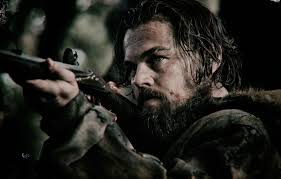
This time last year, Alejandro Gonzalez Inaritu dazzled the cinema-going public with his quirky comedy, Birdman. Now he dazzles us again, with something entirely different – a bleak, gruelling historical drama, based on a real life story, a film that pulses with bone-jarring violence offset by eerily beautiful location photography.  The Revenant looks set to dominate this year’s Oscars and it’s clearly a hard-won victory. At times, the actors look as though they’re going through as gruelling an experience as their screen counterparts. Here is the life of an 1820s fur trapper in all its grimy glory. It doesn’t look an appealing way to make a living.

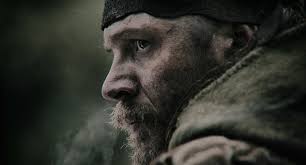
The story concerns an expedition into the American wilderness in the depths of winter. Hugh Glass (Leonardo Di Caprio) is the team’s scout and he’s accompanied by his mixed-race son, Hawk (Forest Goodluck). Barely ten minutes into the action, the men are attacked by Arikara warriors and only a handful of them escape with their lives. Matters aren’t helped when, shortly afterwards, Glass is attacked by a grizzly bear (a prolonged scene of almost unwatchable savagery) and is left close to death. The team leader, Captain Andrew Henry (Domhnall Gleason) decides to strike out for their home base and leaves Glass in the care of seasoned trapper John Fitzgerald (Tom Hardy) and callow youth Jim Bridger (Will Poulter). Henry instructs Fitzgerald to give Glass a decent burial when ‘his time comes.’ But Fitzgerald is a survivalist. He murders Hawk and leaves Glass for dead, throwing him into a half dug grave and abandoning him to a slow and painful death. But Glass’s hunger for revenge somehow keeps him alive…

This is the second time the story has inspired a film. In 1971, Man In The Wilderness starring Richard Harris, used the basis of it but changed Glass’s name to Zachary Bass. Inaritu’s film actually sticks closer to the real tale and has the added advantage of Emmanuel Lubezski’s stunning cinematography, his fluid camerawork soaring and sweeping throughout the action to create an almost immersive experience. Often you’ll find yourself closer to the action than is strictly comfortable. In one scene, Glass’s breathing actually fogs the camera lens – in another, blood spatters the screen. And then there are sequences featuring Glass’s fever dreams, strange, hypnotic, almost hallucinatory. It all makes for grim but compelling viewing. Many will be repelled by the extreme violence and a scene where Glass takes refuge from the cold inside a freshly killed horse – yes, you read that right – isn’t going to sit well with any vegetarians in the audience. (Strangely, this isn’t as ridiculous as it might seem. It was an old buffalo hunter’s trick to keep warm inside the gutted carcass of a freshly killed bison. Like a fleshy electric blanket).

The Revenant is an extraordinary slice of cinema, an epic story of survival, of man against nature. If Di Caprio ends up lifting the best actor Oscar (despite speaking only a handful of lines in the entire film) I for one won’t begrudge it to him. I’d say he’s earned it, if only in the scene where he’s required to devour a live fish.

Unmissable.

5 stars

Philip Caveney