Traverse

A Knock on the Roof

14/08/24

Traverse Theatre, Edinburgh

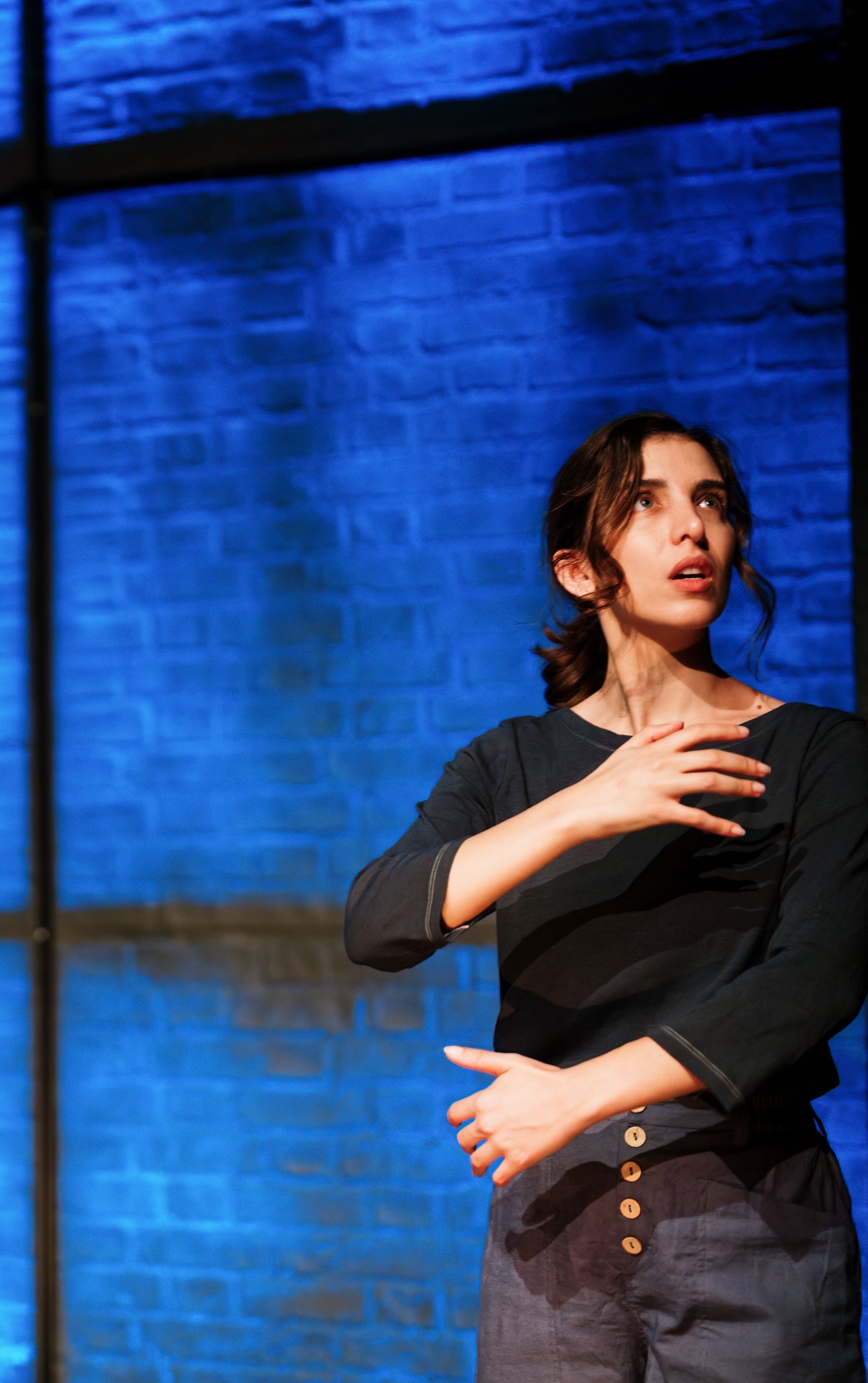
Written and performed by Khawla Ibraheem, A Knock on the Roof is a horrifying illustration of the realities of living under Israeli occupation.

Mariam’s ‘normal’ life sounds bad enough. The electricity supply only works for a few hours each day, so she has to be ready when it comes on – to charge her phone, wash the dishes, take a quick shower. Fresh water is in short supply, and she’s forbidden her son from swimming at the beach because the sea is so polluted.

When war comes – again – things are even worse.

Mariam’s biggest fear is the euphemistic ‘knock on the roof’ – a small bomb dropped on a residential building to give notice that a bigger one is on its way. This is a perverse distortion of the international humanitarian law requiring an effective warning before a civilian target is attacked, and it destroys Mariam’s mental health. Her husband is in England – working on his PhD, trying to forge a better life for them – so she’s on her own, looking after her young son and her elderly mother, and the anxiety is too much to bear.

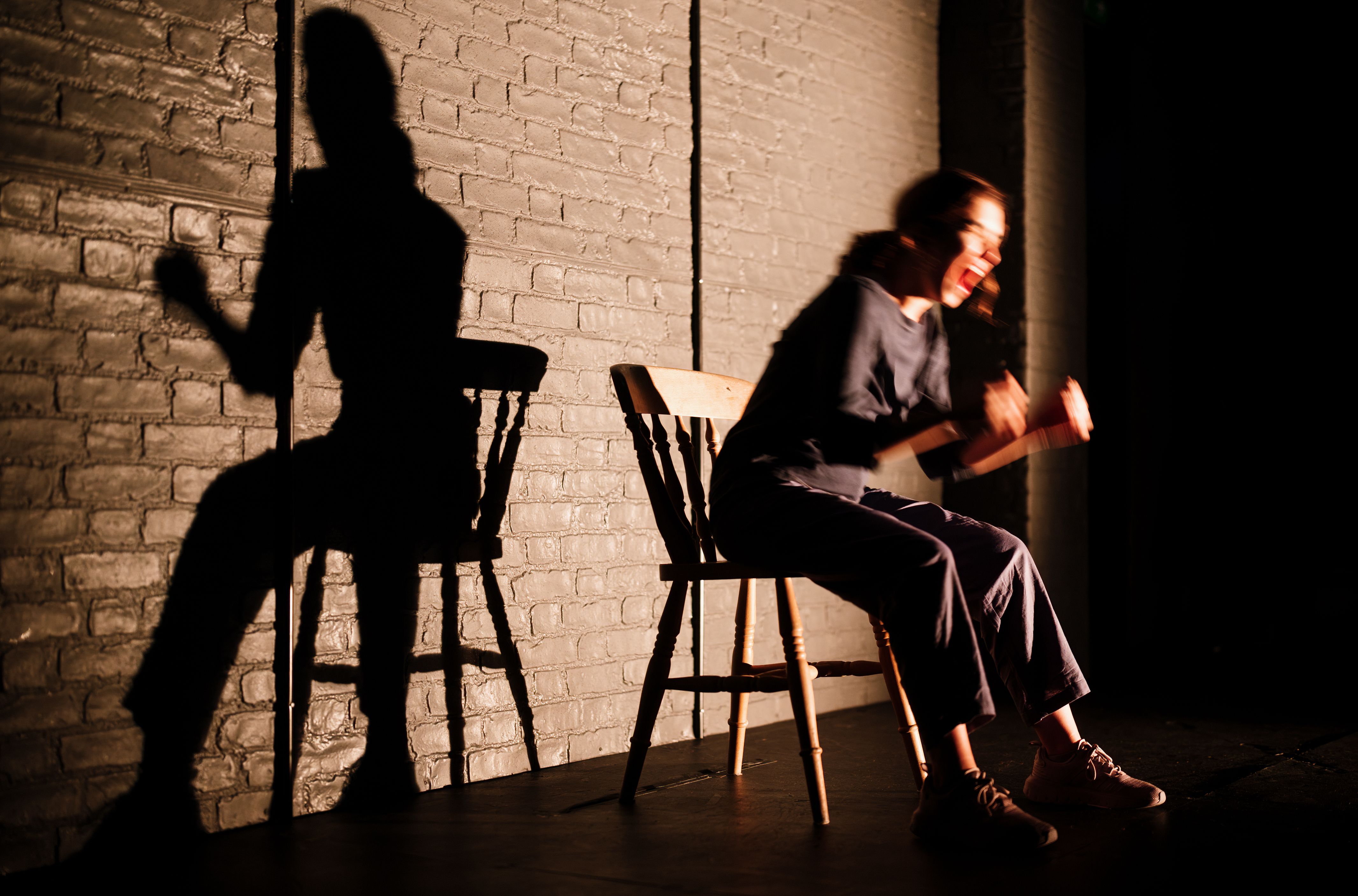
She begins to practise running, to maximise her chances of fleeing to safety in the five minutes she’ll have when the knock on the roof comes. Director Oliver Butler uses these sprints to make the monologue dynamic, Mariam’s kinetic force conveying her panic. This is further emphasised by the frantic pace of Ibraheem’s vocal delivery. In fact, sometimes she speaks so quickly that it’s hard to catch every word, but the gist is always clear, and it ensures we are in no doubt about how terrified she is.

The staging is almost completely stripped back, with a single chair the only prop. There is only one theatrical flourish in the whole play, and – when it comes – Hana S Kim’s projection is genuinely breathtaking.

If A Knock on the Roof begins to feel repetitive, then I guess that’s the point. This is how Mariam lives, repeating the same routine over and over, like a ritual. If she can get this right, she can save her son. In the end, she begins to wish for the bomb, because waiting for it is killing her…

An intense and heartfelt production with a vital message, A Knock on the Roof is a timely eye-opener, and an important part of Travfest 24.

4 stars

Susan Singfield

So Young

04/08/24

Traverse Theatre, Edinburgh

A new play by Douglas Maxwell is always a treat. He’s an insightful playwright, able to walk that precarious tightrope between hilarity and tragedy with absolute authority. So Young is up there with his best work.

The play opens in the bedroom of married couple Liane (Lucianne McEvoy) and Davie (Andy Clark). They are in flagrante delicto and it appears to be going well – all four minutes of it. We know it’s that long because Andy has been timing it on his phone. In the afterglow, he wistfully talks about the years when their couplings could last the entire day, but there’s little time to linger on such details because the couple are already running late. They’re due to meet up with their friend, Milo (Nicholas Karimi), who they have known for years – in Andy’s case since they were best mates at school.

Liane is somewhat dismayed when Davie casually mentions that Milo is planning to introduce them to a new female friend. Both Davie and Liane are uncomfortably aware that Milo lost his wife, Helen, to COVID only three months earlier. The new friend turns out to be Greta (Yana Harris), just twenty years old and a former pupil at the school where Liane teaches. When she mentions that she and Milo are now engaged, Liane cannot help reacting badly to the news. After all, Helen was her best friend in the world and, thanks to the pandemic, there still hasn’t been a proper funeral service. 

As glasses of wine are consumed, it’s clear that there’s going to be a confrontation…

Maxwell always creates utterly believable characters. McEvoy is terrific as the caustic, fearless Liane, who has the ability to nail any target with a few well-chosen phrases and does so with abandon. She also manages to provoke a spontaneous round of applause for her discourse on the importance of female friendship. Gray, meanwhile, is brilliantly funny as the hapless Davie, at one point managing to have the entire audience convulsed with laughter, with nothing more than a series of exasperated looks and the repetition of the words, ‘Three months?’ Karimi has perhaps the trickier task of conveying Milo’s world-view, the difficulties of carrying on alone when his partner is gone. Harris is convincingly bright-eyed and resolute as Greta, fielding Liane’s dismissal of her as a child who knows nothing.

Having got his four characters into such strife, it’s left to Maxwell to conjure a conclusion that satisfies the audience and, once again – ably assisted by director Gareth Nicholls – he manages it with considerable panache. So Young is a perfectly-pitched drama that keeps me hooked throughout.

4.8 stars

Philip Caveney

Disciples

06/10/23

Traverse Theatre, Edinburgh

Disciples is a compelling piece of performance art, combining poetry, music, movement and visual imagery. Conceived and directed by Rachel Drazek and written by Ellen Renton, it’s about belonging and expectations, interdependence and joy. It’s also about giving people the chance to take up space – especially those who are often denied that opportunity.

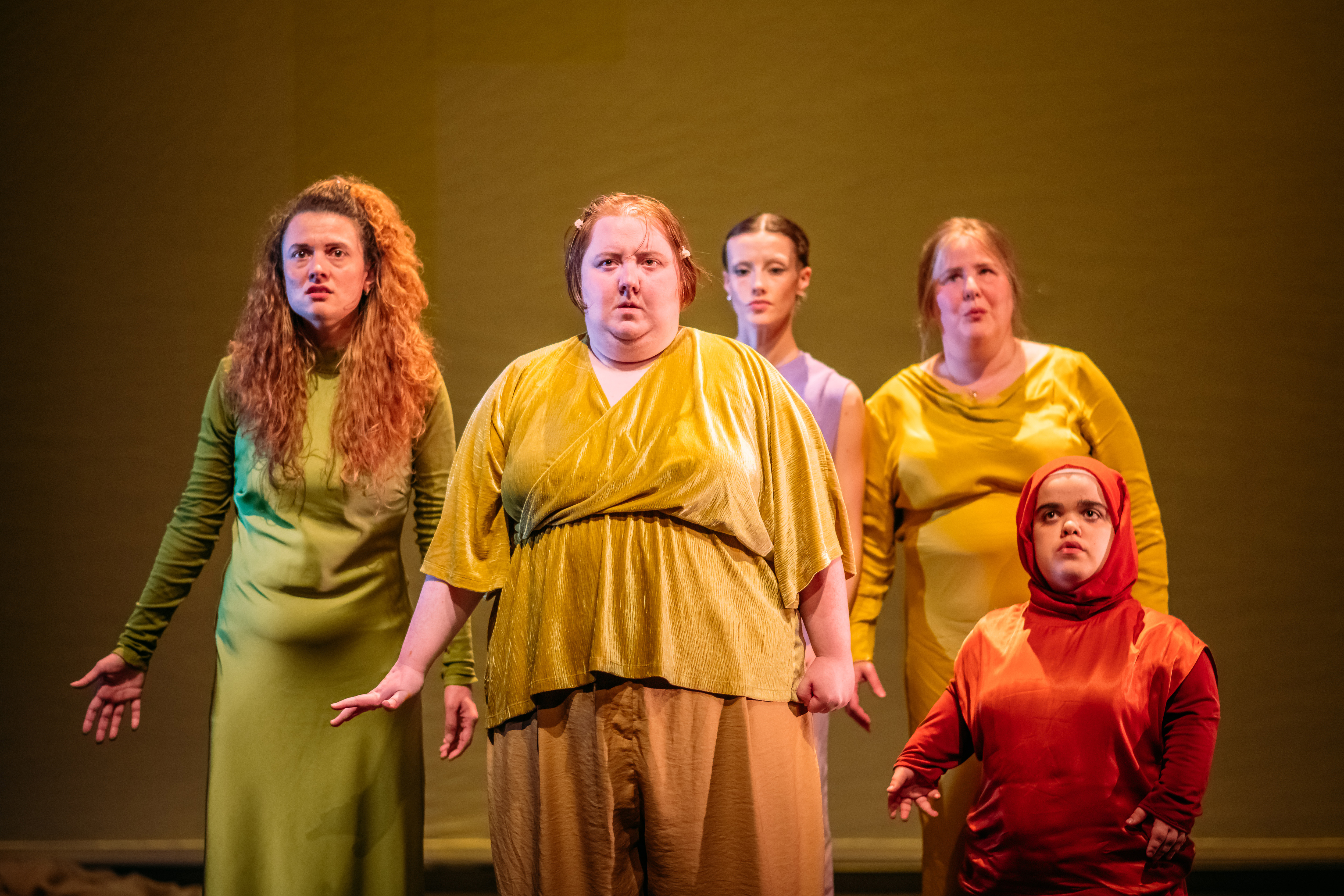
The five-strong cast of disabled women and non-binary people bring Drazek’s vision to life: this is the “bold and beautiful new piece of dance theatre” she aspired to make. The creative process, we learn in an illuminating after-show discussion, was a collaborative one, the piece devised in rehearsal before being shaped by Renton. It shows: the performers’ agency is palpable. The resulting production is nuanced and doesn’t shy away from difficult emotions, but the layering of ideas ultimately adds up to something joyful and positive, reinforcing the idea that we are all connected and inter-dependent.

The costumes, by Zephyr Lidell, are simple but striking, each performer clad in a single, shimmering colour. Visually impaired musician Sally Clay (yellow) is all optimism; her singing voice is ethereal and she plays the harp and ukulele with aplomb. But she’s more excited about the dancing: post-show, she reveals that this is a long way from her comfort zone, and that she’s delighted to have been challenged in this way. Indeed, this point is echoed by Rana Bader (red), who seems to embody passion and strength; she is bursting with energy and exuberance, making a gazillion press-ups look easy. She’s not used to demands being made of her, she says; in rehearsal rooms, she sees her non-disabled peers being given detailed notes, while she is patted on the head just for turning up. She prefers being pushed.

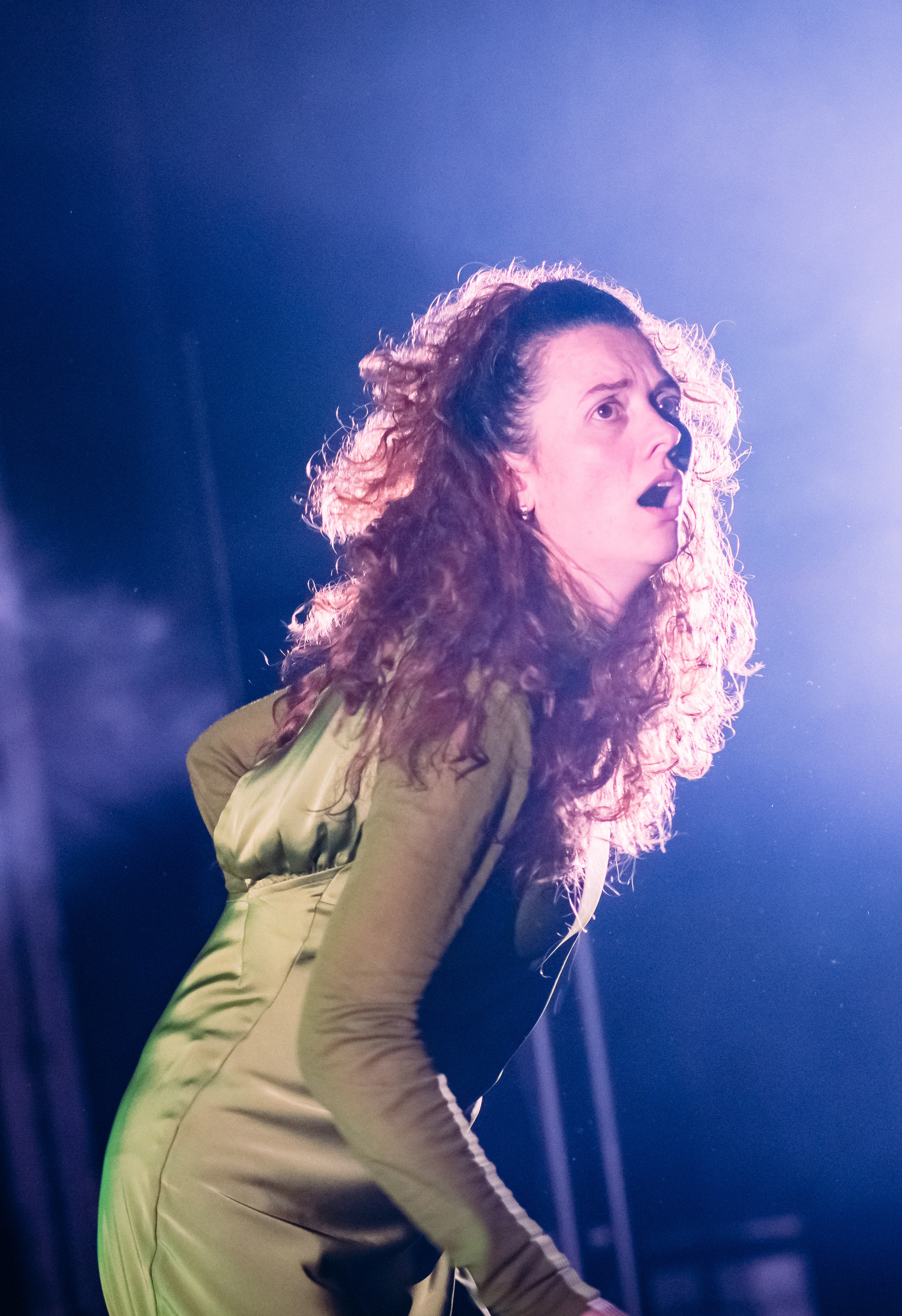
Laura Fisher (lavender) is a dancer, so graceful and elegant that they take my breath away, while Irina Vartopeanu (green), uses BSL in a way I’ve never seen before, incorporated into the piece, not as a straight interpretation of what others are saying but as an expression in itself. She’s vivacious and somehow diaphanous.

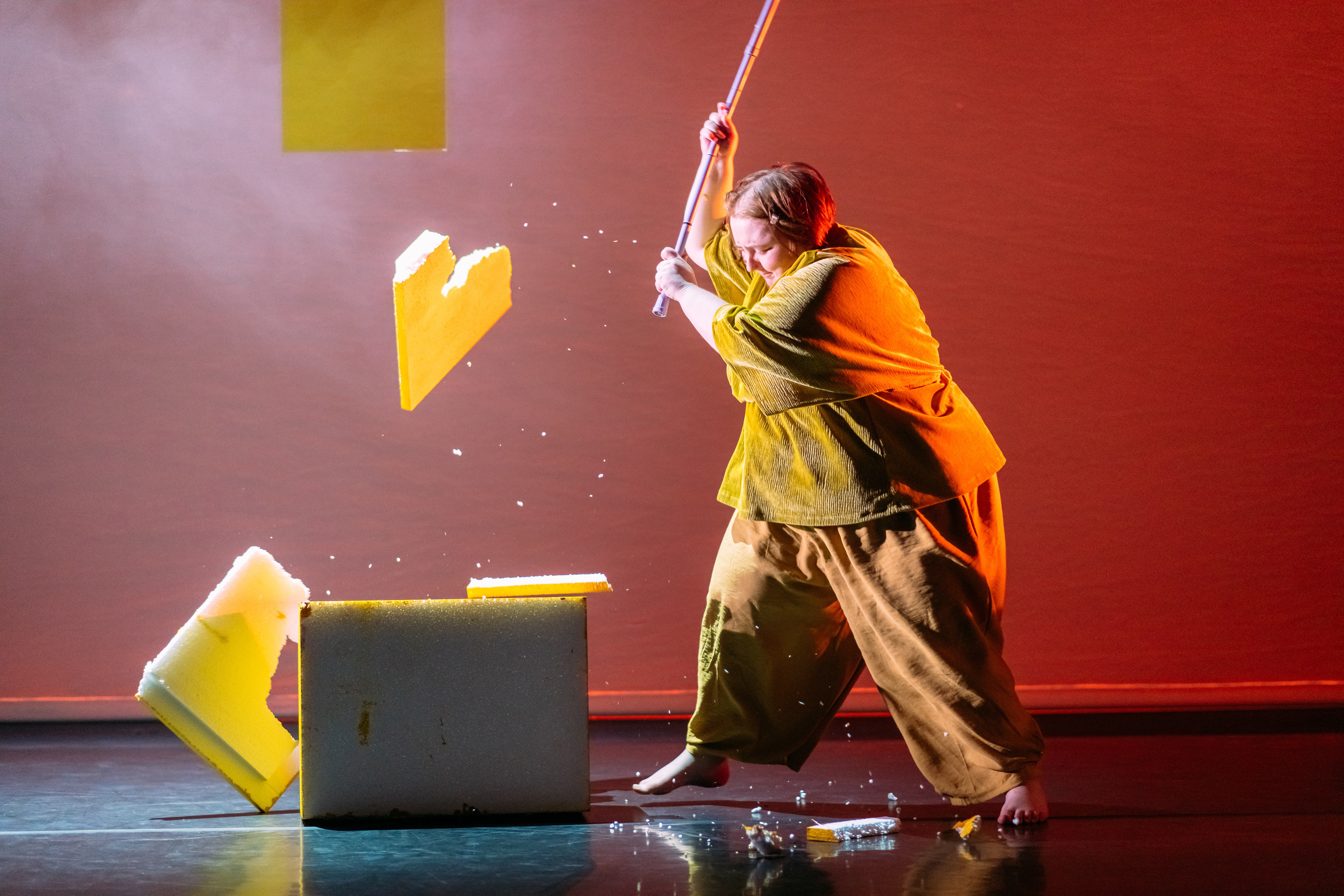
Emma McCaffrey (orange), last seen by B&B in the excellent Castle Lennox, explores the idea of inner rage; they are an engaging performer with a bold stage presence and bring the humour needed to balance this play.

Disciples is a thought-provoking, sensory piece, and well worth catching if you can.

3.6 stars

Susan Singfield

Nassim

24/08/23

Traverse Theatre, Edinburgh

Nassim (the play) is six years old, and has been performed by hundreds of acclaimed actors, including Whoopi Goldberg, David Greig and Cush Jumbo. The conceit is simple: each actor only performs the show once – without any rehearsal and having never seen the script. Nassim (Soleimanpour – the playwright) directs via a backstage camera and a loose-leaf script. Soleimanpour is Iranian but his plays have never been performed in Iran; Nassim is about his attempts to express himself creatively without being able to use his mother tongue. One by one, the actors speak for him, acting as a conduit for Soleimanpour’s words. It’s powerful and affecting.

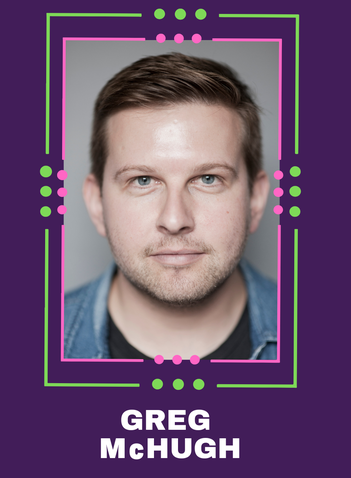
Tonight’s actor is Greg McHugh, best known to us as the terrifying Teddy in BBC Scotland’s Guilt. I’m happy to report that he seems a lot cuddlier in person, approaching Soleimanpour’s script with warmth, respect and humour. He gamely follows all of the instructions, including the more out-there ones, such as holding a sugar lump in his teeth (it makes sense soon after) and accepting cherry tomatoes as punishment for errors in a language game.

But Nassim isn’t just a play: it’s a lesson in Farsi and a reaching out across divides. The tone is gentle and benevolent, provoking smiles rather than laughs – and then, finally, tears. It’s a way for Soleimanpour, a conscientious objector, to reclaim his voice, to subvert the Iranian government’s attempts to silence him. For years, he was unable to leave Iran, and so he sent his scripts out into the world without him; now, he lives in Germany, and travels with them, joining the paper-doll chain of performers onstage, forging those connections in person. He’s freer than he used to be, but it comes at a price. He’s left behind his home, his family. His mother. Mumun. He teaches us a phrase: Delam tang shod barat. I miss you.

Only the hardest of hearts could fail to melt.

4.5 stars

Susan Singfield

Lie Low

22/08/23

Traverse Theatre, Edinburgh

Lie Low is a disquieting play, where nightmares are funny but the waking hours are bleak. It’s a year since Faye (Charlotte McCurry) was attacked, a year since a masked man broke into her house, hid inside her wardrobe and attacked her. She’s fine, she insists; she’s been coping. It’s just that she hasn’t been able to sleep for the last three weeks. If she could just sleep, then she’d be okay…

The disembodied, recorded voice of her doctor emphasises how little help Faye is getting. He suggests pills, meditation, no screens before bed, etc., but Faye has heard it all before. The doctor’s response might not align exactly to what a real doctor would say, but it’s an excellent representation of how it must feel when you’re not being heard, a cry for help met with distance and reserve.

But maybe the point is that nobody can help Faye. We talk glibly of wellness – “reach out, talk to someone, be kind to yourself” – but we can’t live laugh love our way to mental health. Faye is traumatised and she can’t do anything except paper over the cracks.

When Faye’s brother Naoise (Thomas Finnegan) phones her out of the blue, she seizes on the opportunity to try something out. He hasn’t spoken to her since the attack – he hasn’t known what to say, he tells her – but he can make amends now.

By donning a mask, getting into the wardrobe and re-enacting the attack…

Ciara Elizabeth Smyth’s script veers from humorous to horrific in the blink of an eye. The shift in tone is awkward, but that’s what makes it work, disorientating the audience, so that our laughter dies on our lips and makes us uncomfortable, as we recognise the deep-seated anguish behind Faye’s preposterous requests. Occasionally there is perhaps a little too much exposition: the piece works best when we are left to fill in the gaps for ourselves.

But when Naoise reveals the real reason for his call, things become even darker, and we find ourselves reeling, just like Faye, unsure of whose narrative to trust, uncertain what is real and what is not.

Directed by Oisín Kearney, Lie Low is a masterclass in precision and exactitude, every move carefully choreographed. The dancing is wonderfully jarring, at odds with Faye’s state of mind but reinforcing the metaphor of the duck mask: Faye’s brave face.

“I’m fine.”

4 stars

Susan Singfield

Babs

14/03/23

Traverse Theatre, Edinburgh

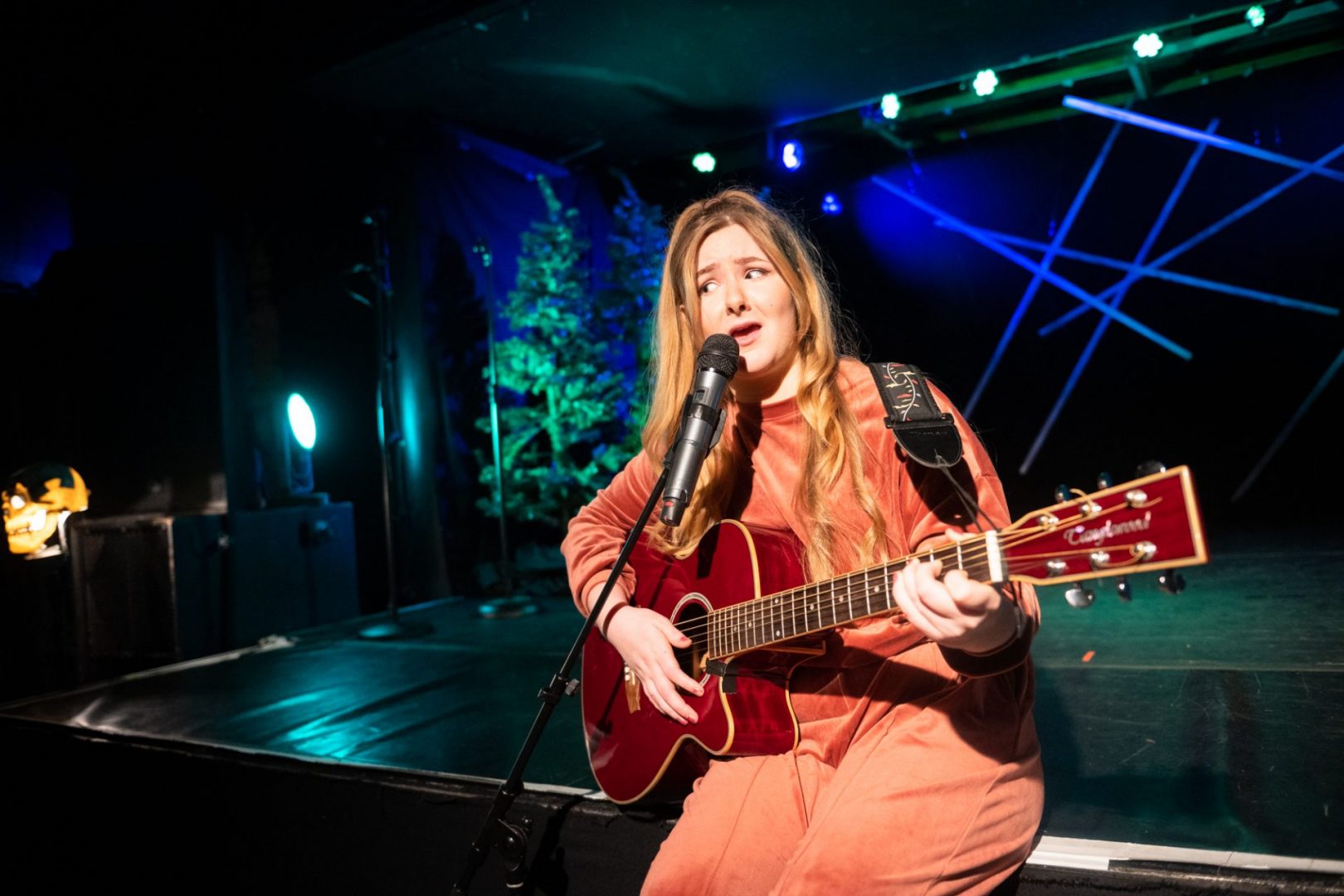
This week’s A Play, A Pie and A Pint is the pithily titled Babs by Morna Young. We’ve enjoyed Young’s work before – Lost at Sea and Aye, Elvis are both excellent examples of Scottish theatre – so we arrive at the Traverse this Tuesday lunch time with high expectations. The set, by Gemma Patchett and Jonny Scott, doesn’t give much away: there are a few fir trees, some pipes, a couple of skulls and a ukelele – an eclectic mix, promising something unusual.

We’re not disappointed.

Bethany Tennick plays Lisa, a troubled young quine from Aberdeen, who lives for her annual holiday with her best pal, Shelley. Apart from that, all Lisa has is her guitar, her tunes and a truckload of attitude. So when Shelley decides she’d rather go away with her new boyfriend, Gareth, Lisa is raging. How dare Shelley ditch her? Desperate and drunk, she signs up for a solo retreat, which turns out to be life-changing, because ‘Babs’, the mysterious host, is none other than Baba Yaga – she of the iron teeth and chicken-legged house… Why has she invited Lisa here?

Young’s decision to write the piece in Doric dialect gives it an urgent authenticity, underscoring Lisa’s need to be true to herself, even as she searches for a new identity. She is a bold, in-your-face character, and Tennick imbues her with such spark and vim that it’s impossible not to warm to her, even when she’s being completely unreasonable. The songs (composed by Tennick) add an extra dimension, showing us that Lisa has the potential to be more than ‘a sheep’, even if she can’t yet see it herself. The plaintive ode to her mother is especially emotive.

Despite its dark themes, Babs is essentially a comedy, and I spend much of the fifty-minute running time laughing at Lisa’s disproportionate outrage, or at her renditions of the other characters who populate the tale. Director Beth Morton keeps the pace snappy, and every joke lands well with the audience.

I’m fair-tricket to say this is another winner from 2023’s first PPP season.

4.2 stars

Susan Singfield

Until It’s Gone

28/02/23

Traverse Theatre, Edinburgh

This sprightly two-hander packs a lot into its fifty-minute running time. Until It’s Gone is the first of 2023’s A Play, a Pie and a Pint offerings, and it’s a corker: Alison Carr’s tight and cleverly-crafted script imagines a future where all of womankind have disappeared, and men are left to make the best of a world without them. In stark contrast to Charlotte Perkins-Gilman’s Herland, where women have created a female Utopia, this male-only Scotland is a dystopian mess, its citizens desperate for the women to return from their unspecified and unexplained exile.

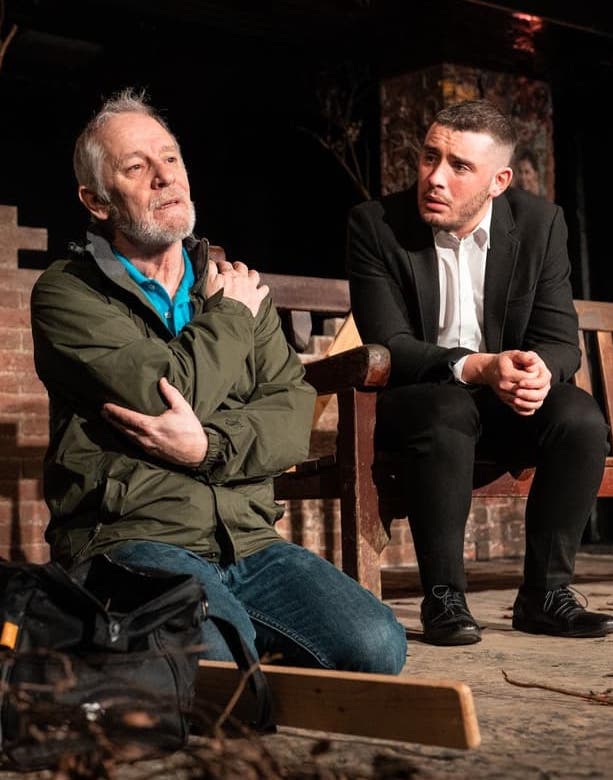
We’re offered a glimpse into this terrifying scenario through a simple park-bench, chalk-and-cheese set-up: a meeting between an eager young man of twenty-five (Sean Connor) and a gruff older one (Billy Mack). They’ve been matched by a supposedly ‘world-beating’ app, but this is not a date – or at least, not a conventional one. They are two avowedly heterosexual, cis-gendered men, following a strict government mandate to ‘connect’ – because things aren’t sustainable as they are. Through this smallest of microcosms, Carr seeds just enough information into the men’s darkly comic dialogue to allow us to envisage the bigger picture, the tortured society in which they live, where schools are closed, most interactions happen online, and everything feels wrong.

The characters are beautifully realised, played with warmth and humour by Connor and Mack, even as they expose the men’s real pain. The generational divide is deftly managed, the initial chasm between them narrowing as they talk and share confidences, slowly realising that they’re more alike than not, that their shared fate should bind them rather than pull them apart.

Under Caitlin Skinner’s assured direction, the play’s political points are clearly made without ever feeling intrusive. I like the cheeky use of tableaux and blackouts to mark the passage of time at the beginning, and the set – by Gemma Patchett and Jonny Scott – is modest but strikingly effective. I’m especially drawn to the myriad images of women adorning the tumbledown walls, and find myself wondering if they are ‘missing’ posters or simply photos, there to remind the men of what they’ve lost. 

Because, of course, you never know until it’s gone…

4.4 stars

Susan Singfield

Moonset

16/02/23

Traverse Theatre, Edinburgh

A school trip to the Paisley Witches’ Memorial proves momentous in Moonset, Maryam Hamidi’s spirited play about four teenage girls, who just need a little bit of power…

It’s a great premise. Surely the worst thing about being an adolescent is the lack of autonomy. There’s so much to deal with (exams, hormones, growing up, life), so much conflicting advice, so many rules and boundaries and exhortations to “be good”.

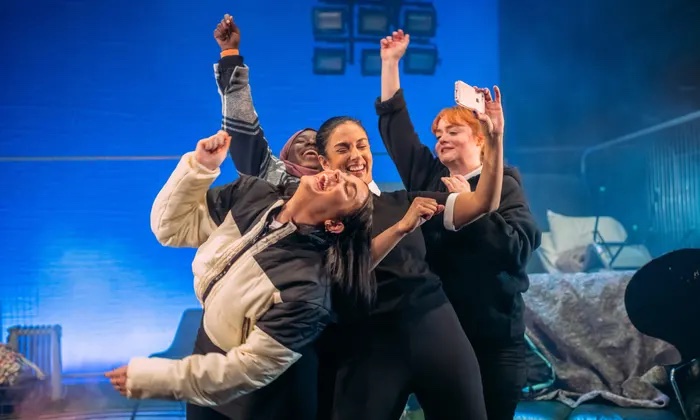
Roxy (Layla Kirk) feels like she’s on fire. Her best friend, Bushra, seems to be cooling on her, her mum (Zahra Browne) is concealing something, Nat 5s are looming – and why hasn’t she started her period yet? But Bushra (Cindy Awor) has her own problem – she has questions about her sexuality, and the answers seem scary. Meanwhile, Gina (Leah Byrne) is a ball of restless energy, bouncing from one calamity to another, and Joanne (Hannah Visocchi) isn’t sure her boyfriend, Gary, is quite the guy she’d like him to be.

They all feel powerless. And, like Abigail Williams and her friends before them, the girls seek strength in magic.

The teens’ exuberance is funny and engaging, but it doesn’t conceal the real problems they have to deal with. Hamidi’s bright, lively script grapples with dark themes – touching on coercive control, child abuse, immigration and cancer – treading this fine line with confidence. Director Joanna Bowman nimbly encapsulates the emotional turbulence of the formative years; she doesn’t hold back. We watch as the girls take terrible risks; they are as reckless and bold as only adolescents can be. And we’re on the roller-coaster with them, hoping against hope that the consequences of their actions won’t prove too appalling…

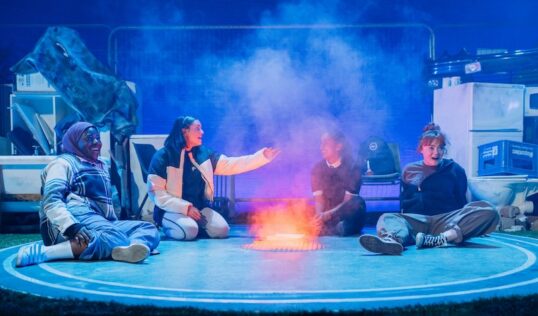
The set (by Jen McGinley) is a jumble, like the kids’ minds, with myriad items competing for attention. It works well, the empty circle in the middle representing their safe space: the junk yard, ironically, is the one place with nothing filling it, offering them room to think, to cement their friendship and ultimately find their hidden strengths. There are some pretty nifty effects too. I like the way the fire is created with smoke and light (courtesy of Simon Hayes). Movement director Vicki Manderson deserves a mention too: this is a kinetic piece and the momentum never flags, the performers interacting seamlessly with the space.

The set-up works well, leaving me scared for the girls and their futures. No spoilers here – suffice to say that, after the coup de théâtre at the end of the first act, the second provides a pay-off that is unexpected but satisfying. Although I’m crying as the lights go down, I’m also left with a feeling of hope.

4.3 stars

Susan Singfield
Love Beyond (Act of Remembrance)

11/02/23

Traverse Theatre, Edinburgh

Love Beyond (Act of Remembrance) is billed as ‘a love story – but not a typical one’. And yet this play, by Ramesh Meyyappan is, like all tales of love and loss, at once unique and ubiquitous, quirky and commonplace.

We meet Harry (Meyyappan) as he moves into a care home. He has dementia, and he’s also deaf. His new carer, May (Elicia Daly), is sweet and attentive, but she doesn’t know sign language, although she is ‘going on a course’. Naturally, Harry’s disorientation is heightened by the pair’s inability to communicate. Matthew Lenton’s skilful direction ensures the audience is drawn in, as those of us who can’t sign miss much of what Harry says, while some of those who are deaf presumably miss May’s words. It’s nicely done: we’re all given enough information to understand what’s going on, while also experiencing a little of Harry’s alienation from his new home, and May’s frustration at not being able to do her job.

The set (by Becky Minto) comprises three moveable screens. At first these are mirrors, magnifying Harry’s discomfort: the reflection of the audience staring at him adds to the sense that he no longer has a private life, or much autonomy at all. Cleverly, the screens are also transparent: lit from behind, they reveal Harry’s jumble of memories. We get to know the young Harry (Rinkoo Barpaga) and his true love, Elise (Amy Kennedy): we see them meet and fall in love; we see their joy and their sorrow, their prime and their decline. There’s something spellbinding about the way these images appear and disappear, and Harry’s yearning for Elise is palpable and heartbreaking.

The strength of this piece lies in the movement, which is precise, slow and beguiling – a realisation of the phrase ‘poetry in motion’. There is a gentle earnestness here that defies cynicism, so that a simple swimming mime becomes a thing of beauty; the act of putting on slippers becomes profound.

Composer David Paul Jones’s soundtrack is integral to the piece. The music is by turns melodic and jarring, light and intense, reflecting Harry’s inner turmoil just as clearly as the mirrors.

This year’s Manipulate Festival has thrown up some absolute gems – and this is one of them.

4.4 stars

Susan Singfield

Wilf

10/12/21

Traverse Theatre, Edinburgh

James Ley’s latest offering is about as far away from a ‘Christmas play’ as it could be. In fact, there’s only one nod towards the festive season: a decorated tree in the corner of the stage. Tree aside, this is more of an antidote to Yuletide than an evocation of it. And that’s fine, because there’s plenty of the traditional stuff on offer at other venues in the city. Wilf is a December play for those who want something… else.

And it really is something else. Where to start? Calvin (Michael Dylan) is struggling. He’s bipolar – in the midst of a manic episode – and everything is going wrong. He knows he needs to leave his abusive boyfriend, Seth, but there’s no one who can help. Not his mum: she’s left for a new life in the American bible belt, and has cut him out of her life. Not his driving instructor, Thelma (Irene Allan), because – after a mere 104 lessons – Calvin has passed his test, and the ex-psychotherapist is pleased to be rid of him. So where can he turn?

The answer soon presents itself: Wilf. Wilf is an unlikely saviour, not least because he is a car. Specifically, Wilf is a beaten up old Volkswagen, so there’s more than a hint of Herbie about him – although Wilf’s antics are more colourful than his predecessor’s. And by colourful, I mean sexual. Calvin and Wilf’s relationship is intense.

To be fair, Calvin’s pretty intense all round. With his shiny new driving license and his battered old car, he finally finds the courage to break away from Seth, but he’s a long way from feeling okay. A road trip around Scotland, staying in Airbnbs and cruising graveyards for anonymous sex, seems appropriate. And, with Wilf’s help, Calvin might just make it.

This tight three-hander, directed by Gareth Nicholls, is equal parts quirky and charming. Dylan is immensely likeable as Calvin, and treads the line between comedy and tragedy with absolute precision. The soundtrack is banging – who doesn’t love a bit of Bonnie Tyler? – and the simple set (by Becky Minto) makes us feel like we’re with Calvin all the way: inside the car; inside his head.

Allan brings a powerful energy to the role of Thelma, while Neil John Gibson, as everyone else, represents a gentler, more nurturing humanity, especially in the form of Frank.

All in all, Wilf is a gloriously weird concoction, and a most welcome addition to the winter theatre scene.

4 stars

Susan Singfield