
Traverse Theatre

4Play: 4 New Plays by 4 Scottish Playwrights

12/12/25

Traverse Theatre, Edinburgh

Last year, 4Play comprised four full plays, performed over two nights. This time around, it’s a truncated affair, with excerpts rather than entire scripts. The first two pieces are only ten minutes long, while the second pair are given longer to develop their themes, each with a running time of approximately twenty-five minutes.

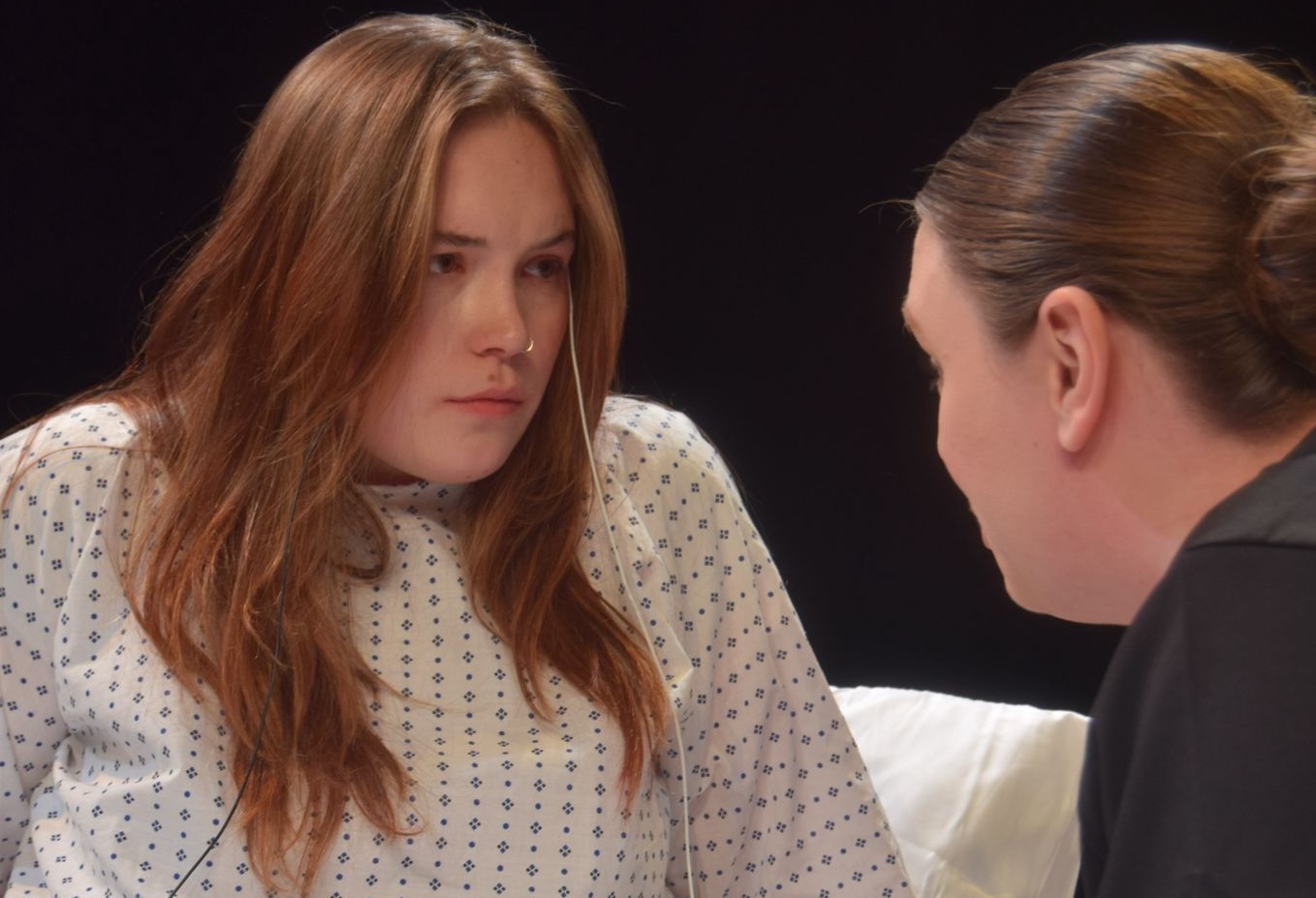
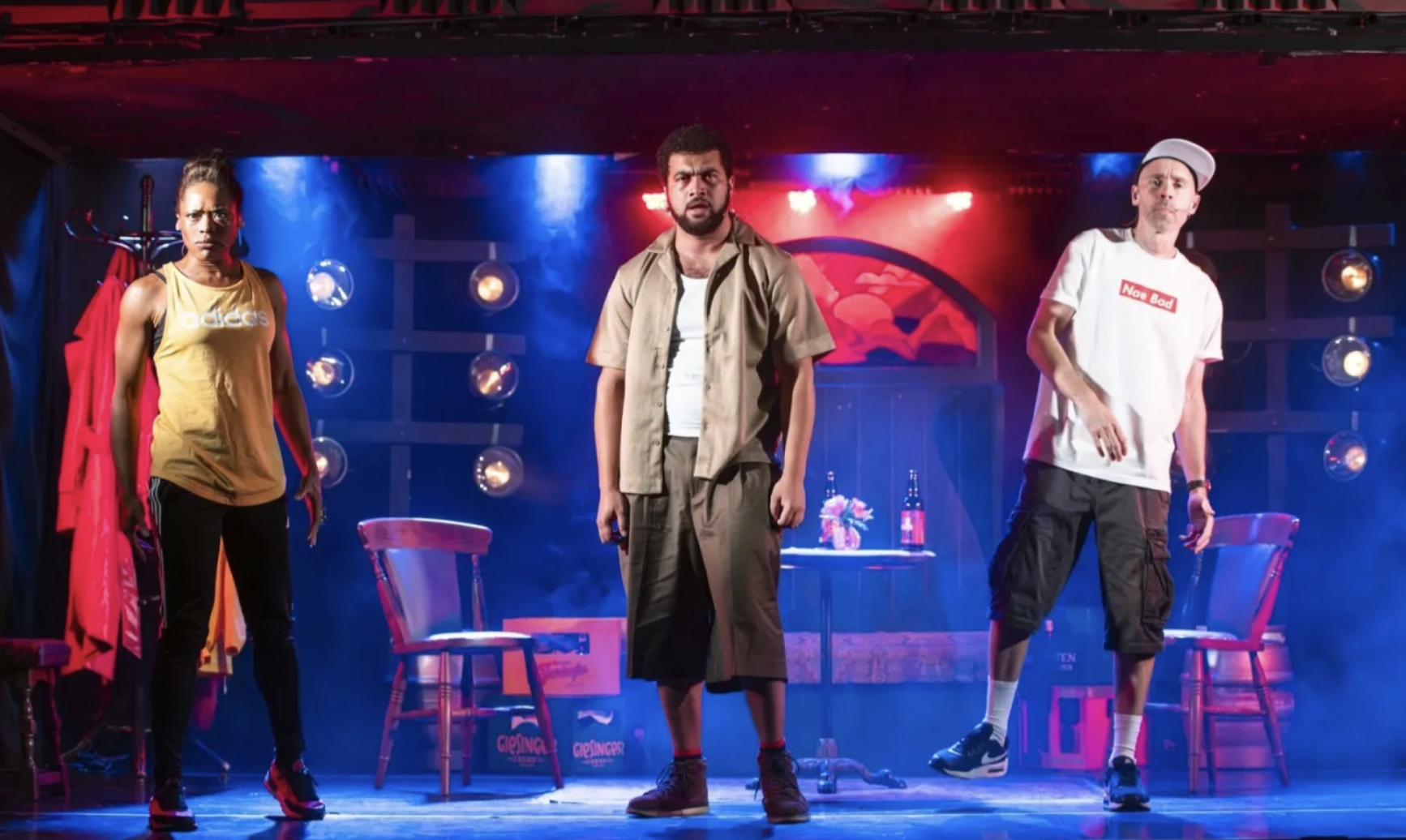
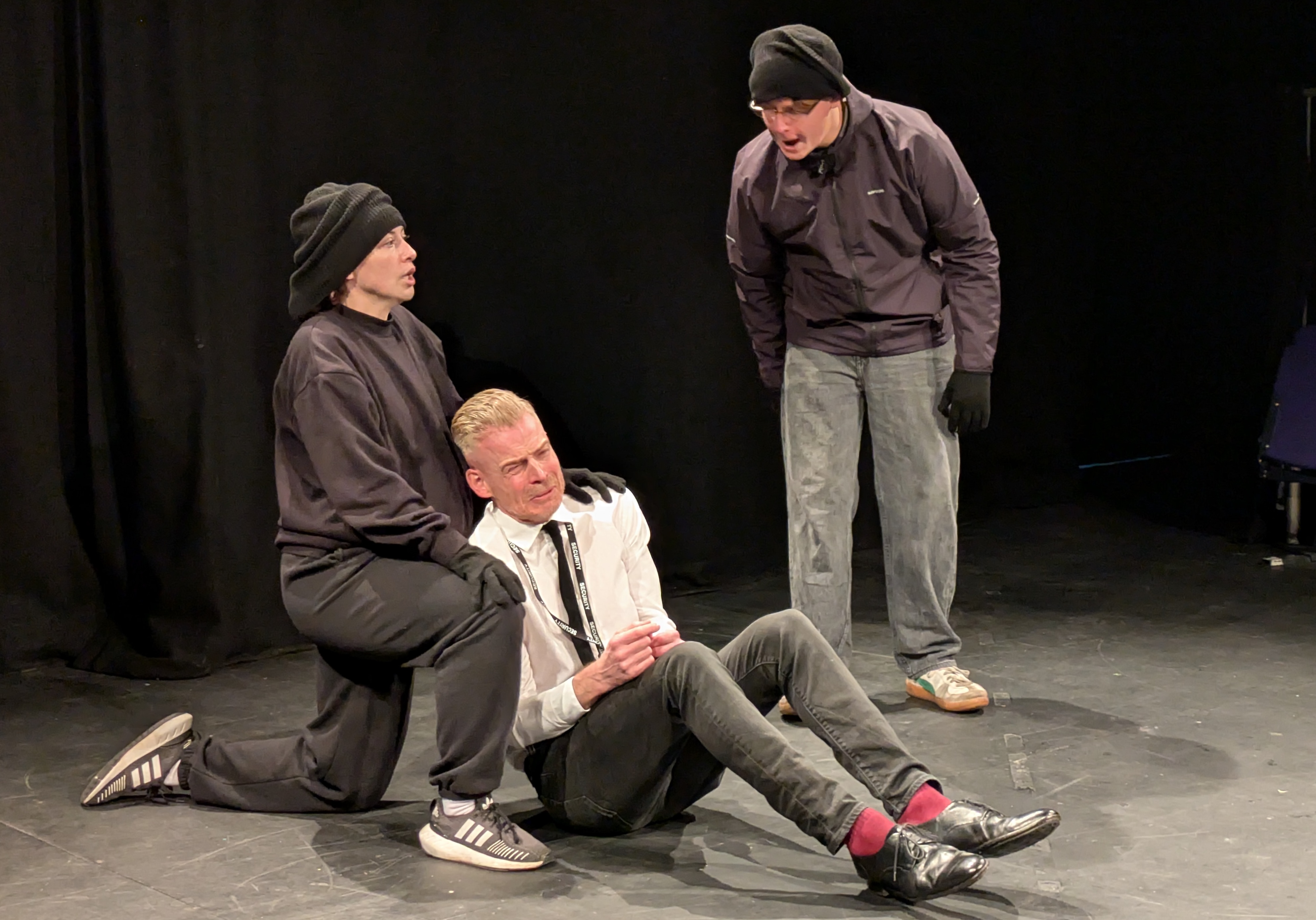
We open with a short extract from Ruaraidh Murray’s Chips, directed by Michael Nardone and Jake Sleet. Nothing to do with the California Highway Patrol, this is a fictionalised account of a true-life tale of… microchip theft. Apparently it was a thing in the 1990s. As if breaking, entering and taking apart computers wasn’t enough of a challenge, Kaz (Christie Russell-Brown) is heavily pregnant, and her partner-in-crime, Wan (Calum Manchip), isn’t exactly focused on the job…

The second piece is Brace, written by Geraldine Lang and directed by Matthew Attwood. Paul (Jack Elvey) and Lewis (Kieran Lee-Hamilton) are apprentice scaffolders, struggling to learn their trade without any real guidance. In their business, mistakes have material consequences, and it’s the people at the bottom of the pile who have to pay. Although I appreciate that the physicality of the boys’ work is key to the piece, I can’t help feeling that it’s a mistake to spend so much time constructing the scaffolding; I’d prefer to hear more dialogue and delve further into the plot.

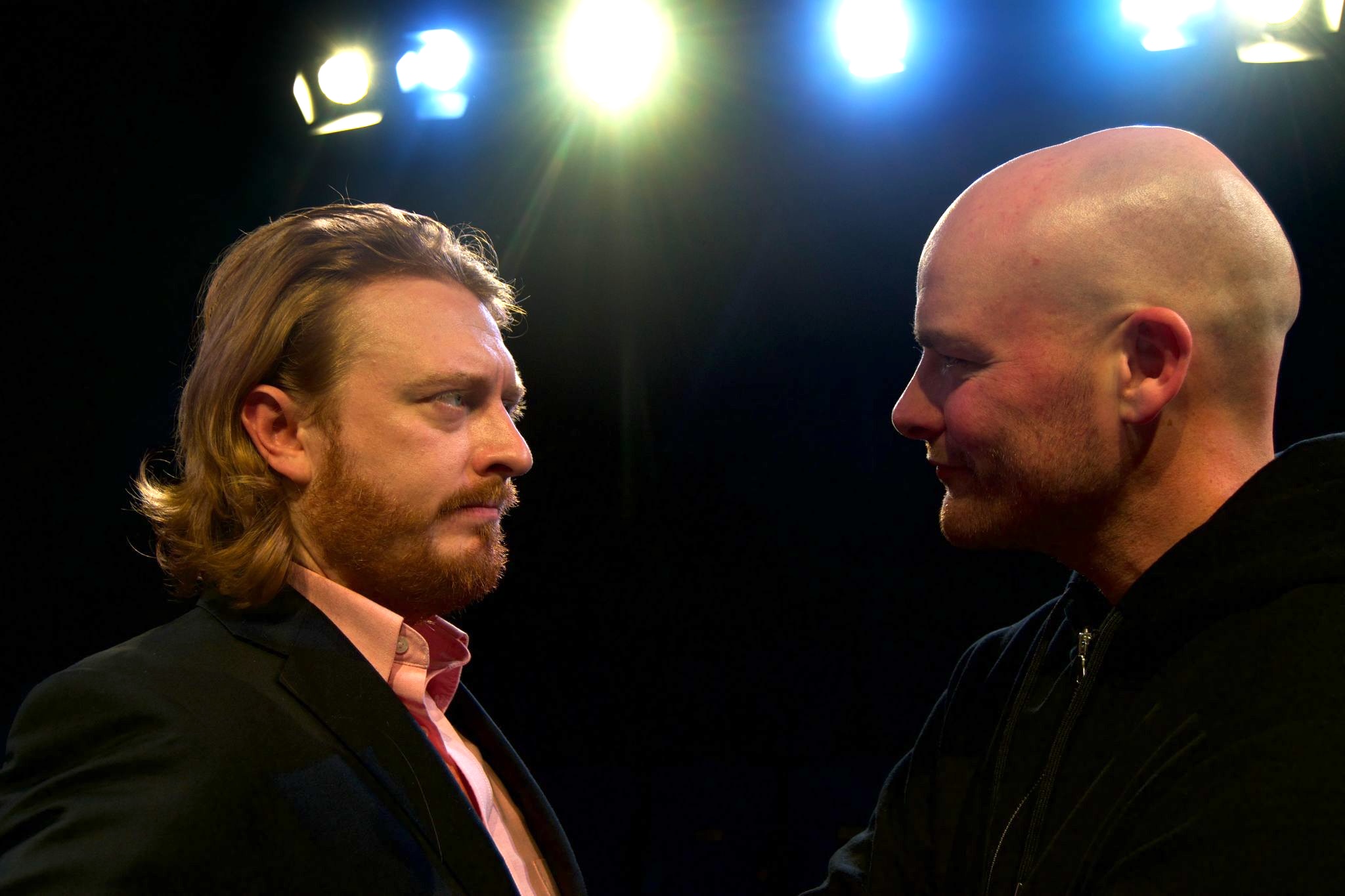
After the interval, it’s Sunday Palms, which is by far our favourite of tonight’s plays. From the opening soundscape – an oddly unsettling aural representation of a man returning home from work to his empty flat – to the awkward dialogue that follows the unexpected appearance of a childhood friend, Sean Langtree’s script is utterly compelling. Directed by Grace Ava Barker, the piece is immediately intriguing, and I’m fascinated to know where the story leads. Why is Brian (Daniel Campbell) so alarmed by Nathan (Langtree)’s presence? Whose victory does the title presage? Langtree’s Nathan is perfectly observed – just that little bit too needy, too edgy – while Campbell nails Brian’s discomfort, his attempts to hold to societal norms in the face of Nathan’s peculiar demands.

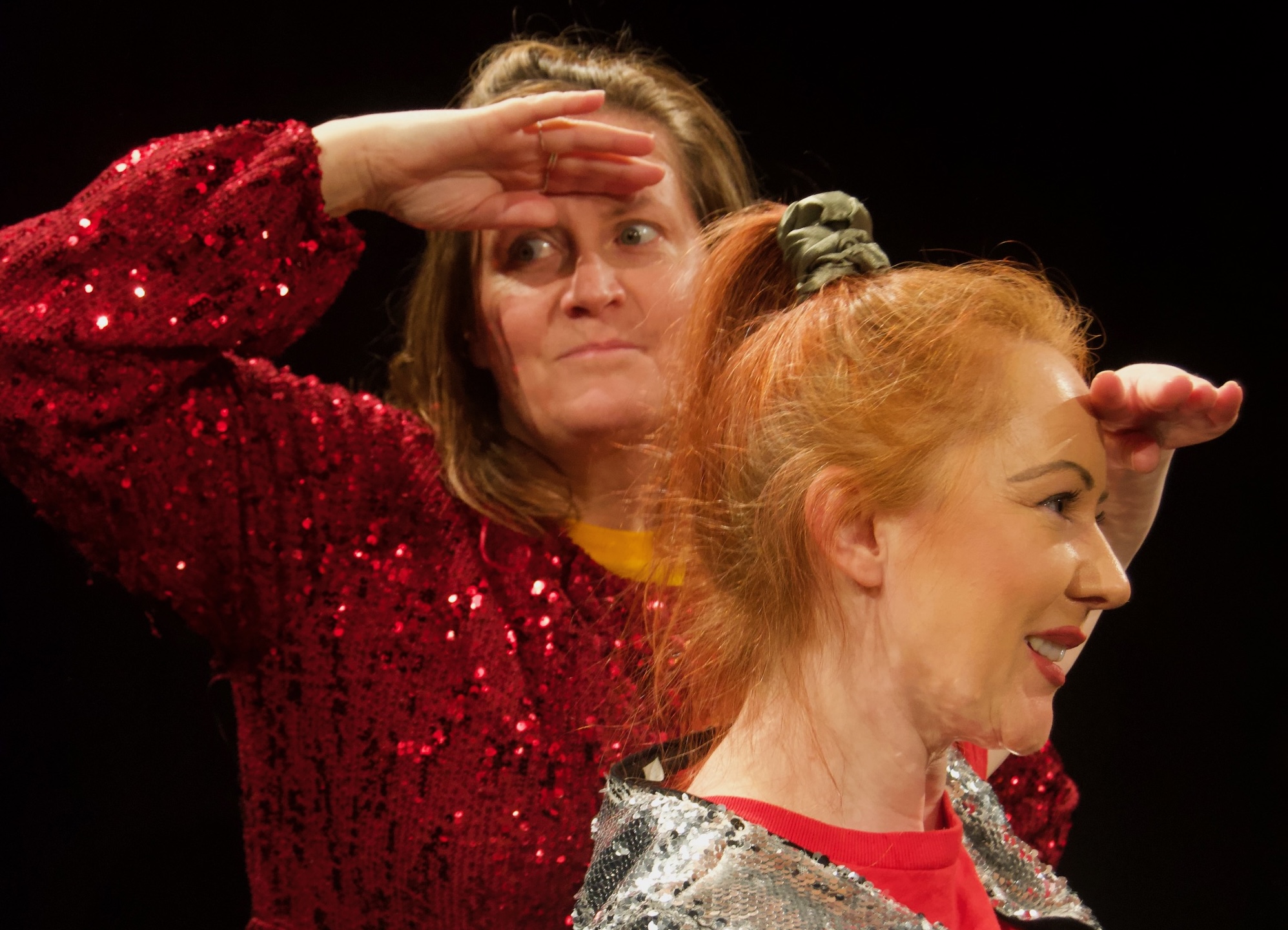
Last up, it’s Hunt by Andrea McKenzie, directed by Gwen M Dolan. We’re in the near future, and AI has taken over the cities. Mags (Deborah Whyte) and Joel (McKenzie) are yearning for a simpler life: to step away from their computers and connect with nature. The trouble is, they’re more familiar with tech than they are with tents, neither has remembered to pack the kettle – and how exactly do you light a fire? What’s more, Joel soon discovers that Mags hasn’t been entirely honest with her, and there’s more to this trip than she’s been told…

Reductions in length notwithstanding, 4Play – and other schemes like it – are vital to ensuring that new voices are heard in theatre. 4Play has had considerable success, introducing Katy Nixon’s Cheapo and Mikey Burnett’s Colours Run, which have both spread their wings and flown to critical acclaim. As Scotland’s new writing theatre, it makes perfect sense for the Traverse to support the event, and we’re delighted to have this opportunity to see emerging playwrights develop their skills.

3.2 stars

Susan Singfield

Arlington

06/11/25

Traverse Theatre, Edinburgh

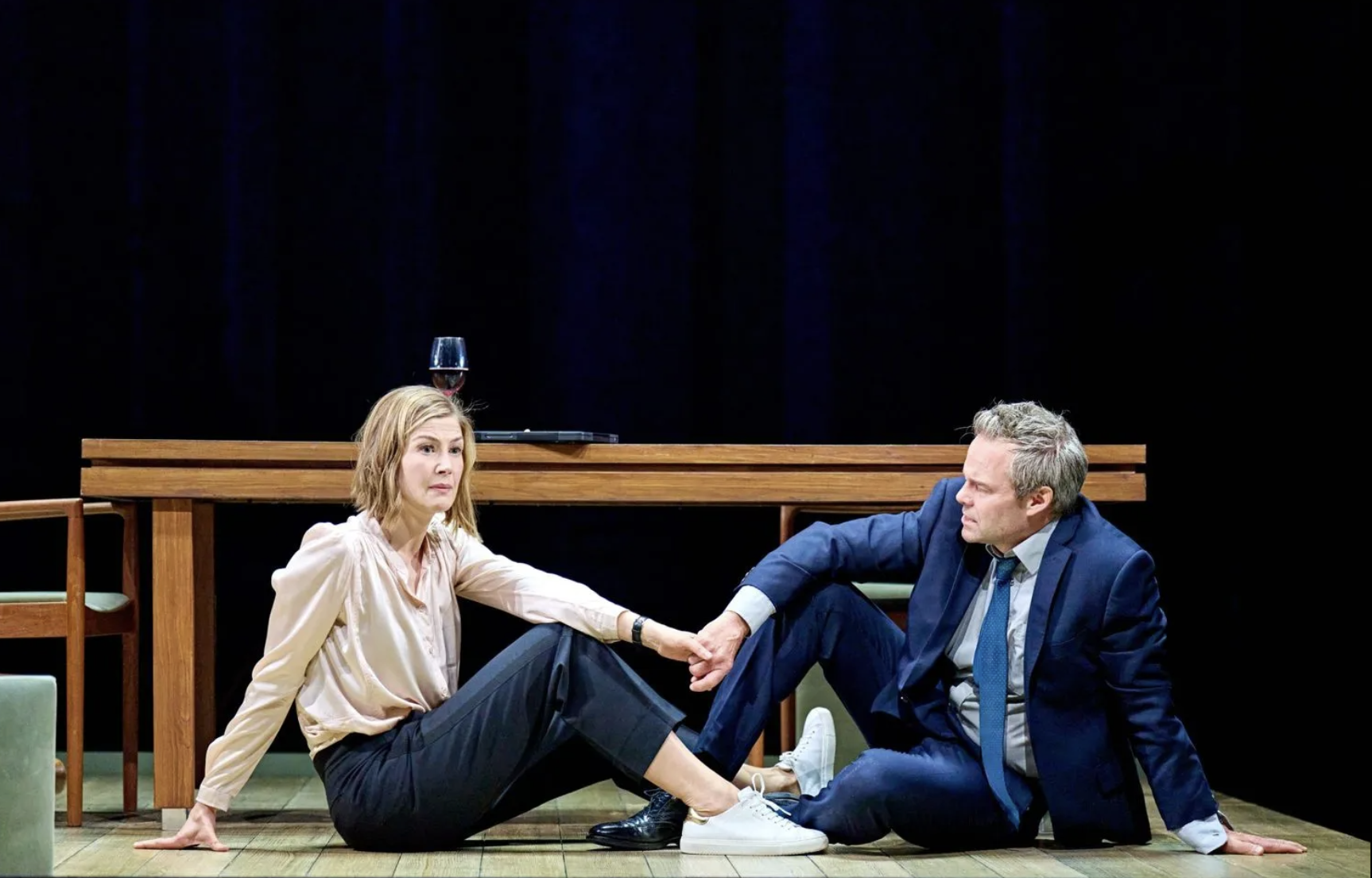
Rarely has the word ‘challenging’ felt more appropriate. Set in a dystopian near future, where an unexplained catastrophe appears to have afflicted the world, Enda Walsh’s Arlington plays out like some kind of enigmatic parable and, even after it’s finished, I cannot honestly say that I fully understand what it’s trying to say to me. But I do feel powerfully affected by it.

The play is divided into three distinct sections. In the first act, we meet Isla (Aisha Goodman), a young woman who has been kept prisoner in a Rapunzel-like tower since childhood and has only ever communicated with the outside world via a microphone to an unseen assistant. But now that man has gone, and The Young Man (Alex Austin) takes his place. He’s unsure of himself and clearly unfamiliar with the recording equipment, which leads to some genuinely awkward happenings and some caustically funny exchanges. He also strikes up an immediate connection with Isla, which eventually leads them both somewhere unexpected…

There’s an abrupt cut to the second part, which is essentially an extended dance sequence, performed by Jack Anderson – and this is, I think, the element that many viewers will find divisive. This is not to say that the piece isn’t brilliantly performed; indeed, it’s quite extraordinary, its central premise based (I think) on the many numbing repetitions that life imposes on us. At times, Anderson seems to virtually float around the stage, an ecstatic expression on his face, only the occasional flurry of sweat bearing testimony to the incredible effort he’s putting into this.

The dance goes on for – whisper it – twenty-five minutes – which according to your individual preferences will be either a joyful revelation or an ordeal to be got through.

And then we cut to the final section, where a bloodied Young Man has been made to take Isla’s place and is now being cruelly interrogated by a sardonic female voice. He’s also obliged to take part in humiliating gameshow-like endeavours, simply to be allowed to sleep…

Co-directed by Lucy Ireland and Jim Manganello, Arlington is ingeniously staged, the main action taking place on a raised dais with banks of surveillance equipment ranged below it. All too often I find myself watching events unfold via the monitors, drawn I suppose to the prurient nature of it. There’s also a huge projection screen behind the main stage on which images sporadically appear. These are sometimes very effective, especially an almost transcendental scene where Isla describes an imagined walk through a forest and it magisterially appears as she talks.

Each viewer will take from this play what they think its intention is. For me, it seems to confirm that, no matter how cruel and distancing the world may become, a meaningful relationship can always survive whatever onslaught is thrown at it – and that perhaps, in the end, love really is all that matters.

But I could be way off beam and, in a strange way, that is the play’s main strength. Those who like their theatre cut-and-dried may not warm to it but, long after leaving the theatre, some of the images linger in my mind’s eye, waiting for me to come up with new explanations for what they might actually mean.

4 stars

Philip Caveney

Righ Lasgair: The Fisher King

28/10/25

Traverse Theatre, Edinburgh

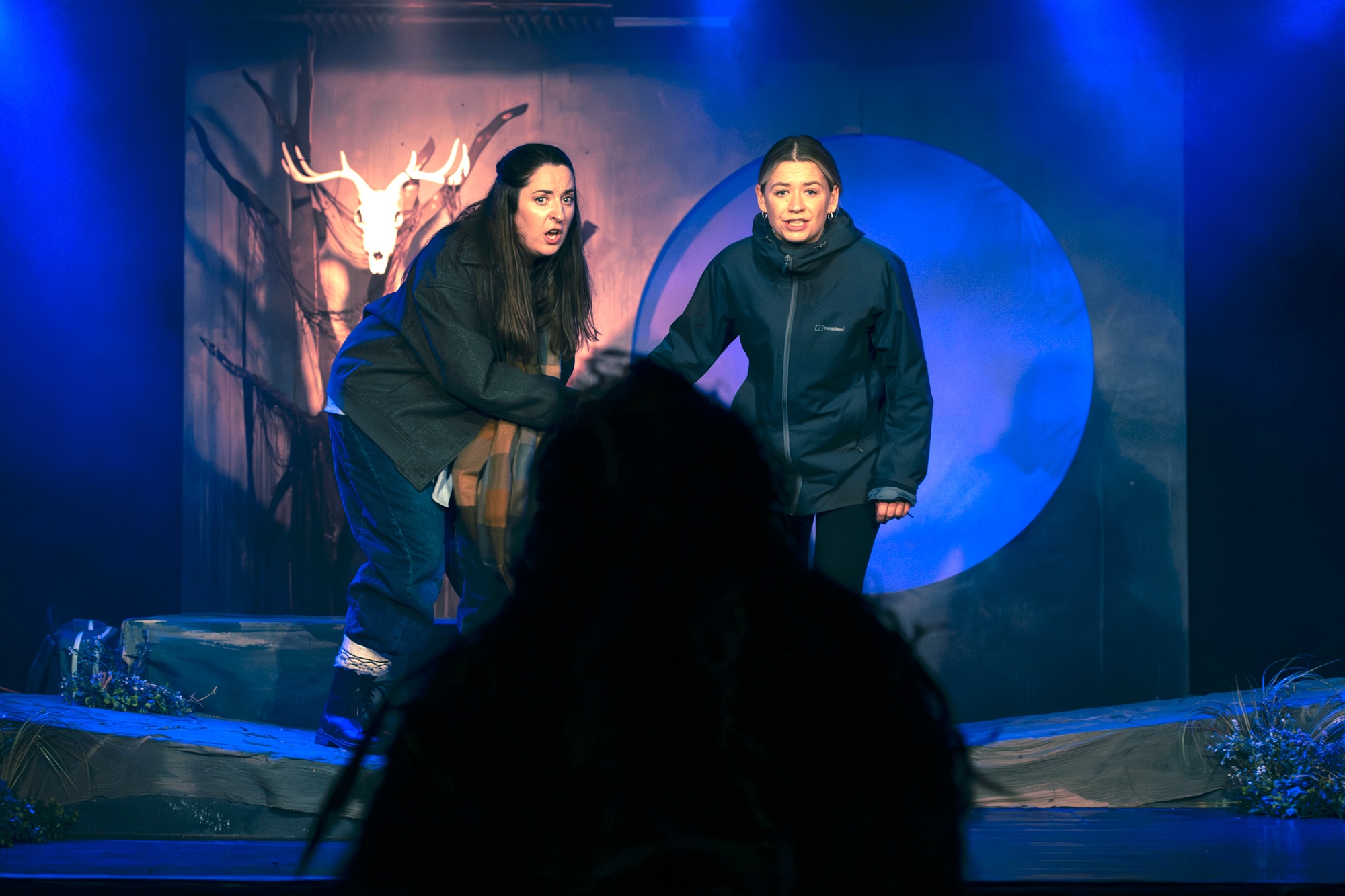
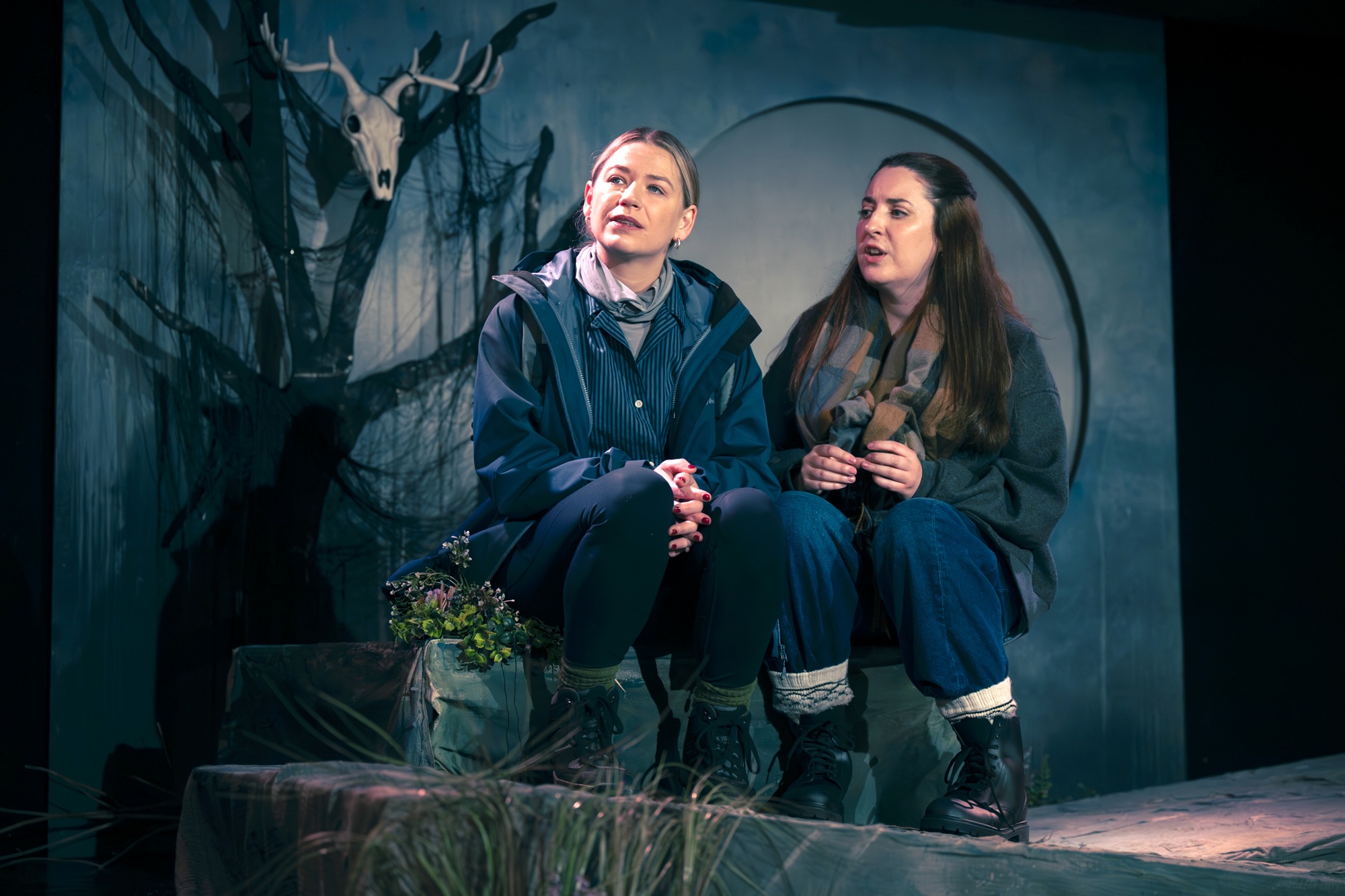
Lexie (Fiona MacNeil) and Effie (MJ Deans) have lived on the Isle of Lewis since childhood. At Lexie’s insistence, they have set off on a fishing trip to the remote Loch that she used to visit with her late father, back when she was wee. Effie has gone along with the idea, but it’s clear from the get-go she’s really not suited to the outdoor life, complaining every step of the way and much more interested in singing and chatting nonsense than pressing on with the hike.

On the long trek to their destination, Lexie spins yarns about some of the mysterious mythological creatures that are connected with this mountainous landscape. Chief among them is the elusive Righ Lasgar: The Fisher King, a creature renowned for luring his victims to their bloody deaths by apparently granting their heart’s desire. Lexie is desperate to catch fish today and, after a distinctly unpromising start, the two women begin to reel them in…

Kenny Boyle’s understated supernatural folk tale would, on the face of it, suggest that it’s an appropriate subject this close to Hallowe’en, but perhaps it’s too understated for its own good: the duo’s bickering is mostly played for laughs, which means that a late-stage attempt to shift the tone abruptly into the realms of terror really doesn’t come off.

There are other issues. While of course it’s commendable to incorporate Gaelic elements into new Scottish writing, reeling off words in the language and then repeating them in English feels ponderous. Non-Gaelic speakers should be able to work out what’s being said from the context. Furthermore, Lexie’s late-stage ‘revelation’ has no impact because it’s something that’s already been announced much earlier in the play.

MacNeil and Deans give this their best shot, and Heather Grace Currie’s set design cleverly evokes the great outdoors in the tiny space of Traverse 2. The costuming of the titular creature (played by Adam Buksh) is also pretty impressive but, sadly, it fails to generate the necessary chills to make that final gear-change work.

2.8 stars

Philip Caveney

Batshit

23/10/25

Traverse Theatre, Edinburgh

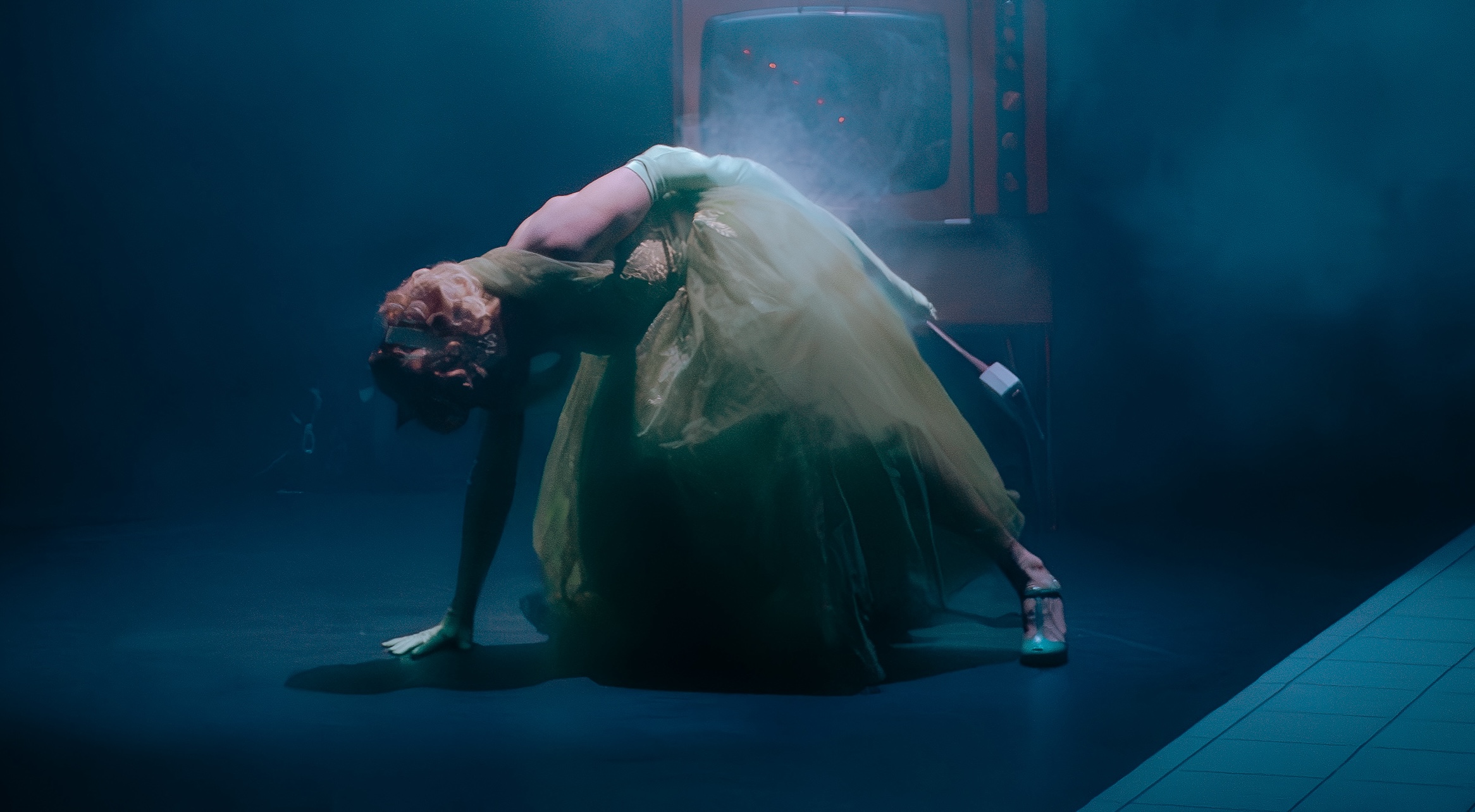
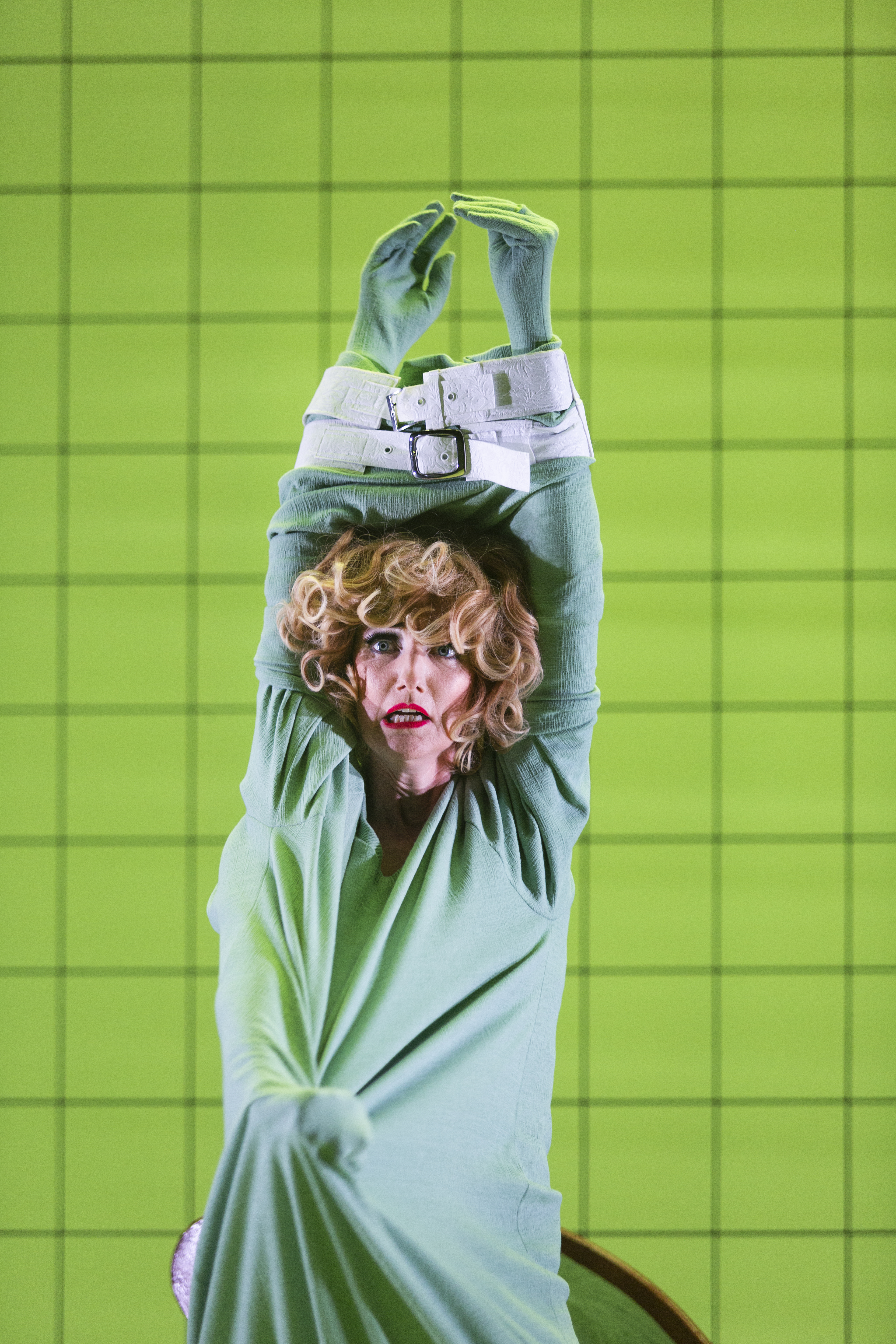
Leah Shelton’s Batshit explores the prevailing notion of madness as a female malady, where women’s physical and emotional states are pathologised and othered, deemed peculiar because they differ from the ‘norm’, i.e. the male.

Equal parts cabaret, polemic and eulogy to Shelton’s grandma, Gwen, this clever one-woman show brings its disparate strands together with absolute precision. It’s a demanding piece, blending the personal and the political with compelling sincerity. 

Gwen’s story is the microcosm, neatly illuminating the bigger picture. In the 1960s, following a miscarriage, she announced she didn’t want to be a housewife any more. Crazy, eh? Her husband certainly thought so and, backed up by a male-dominated medical profession, managed to have her sectioned. Despite many months of incarceration, drugged to the eyeballs and under constant surveillance, Gwen didn’t change her mind. She must be really, really cuckoo, right? Maybe repeated sessions of ECT might encourage her to listen to reason? Spoiler: they did. Turns out that people say what you want them to if you torture them enough…

Shelton is a talented physical performer, contorting her body to mirror her characters’ contorted thoughts. The movements are exaggerated and often grotesque, but delivered with such charm and gravitas that they never seem absurd. The metaphors are writ large – there’s nothing subtle about a straight jacket or a gag – but they’re incredibly effective, reminding us that we need to be vigilant even in these so-called enlightened times. Women’s freedoms have been hard-won and we take them for granted at our peril. Have you ever heard an angry or frustrated man being dismissed as ‘hysterical’?

Directed by Ursula Martinez, Batshit is a dazzling firework of a production, its message lingering in a trail of sparks that keep me thinking long after the applause has died away. These three nights at the Traverse (23-25 October) mark the end of the UK tour, so be sure to catch it while you can!

4.3 stars

Susan Singfield
Black Hole Sign

08/10/25

Traverse Theatre, Edinburgh

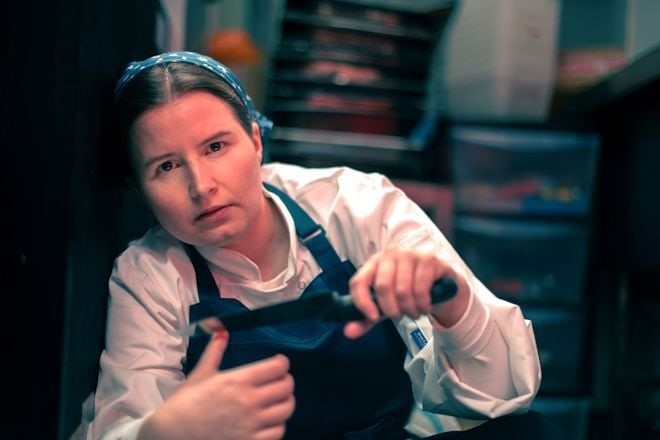
There’s a great big metaphor hanging over the unnamed hospital where this dark comedy takes place. A hole has appeared in the roof of A&E and water is dripping down onto the floor. As the story progresses, so the problem steadily worsens, the ingress ever more destructive. 

But senior charge nurse Crea (Helen Logan) and her team can only soldier on regardless, doing their best for their patients, no matter what. Crea has phoned for help about the roof only to be told (by a recorded voice) that she is number 74 in a queue. Her team include her right-hand woman, Ani (Dani Heron), currently doing a bit of soul-searching about her own future; affable porter, Tommy (Martin Docherty), who has long carriesd a torch for Crea; and Lina (Betty Valencia,) an almost cartoonishly helpless student nurse, who arrives chewing gum to ‘help her anxiety’ and who seems incapable of walking past a litter bin without knocking it over.

It’s clearly going to be a tricky night. Mr Hopper (Beruce Khan), a former alcoholic, is admitted with the fatal condition that gives the play its title, an inoperable affliction of the brain that is going to keep deteriorating and will cause his death in a matter of hours – but there’s no sign of anybody visiting him. Meanwhile, octogenarian Tersia  (Ann Louise Ross) is suffering from a urinary infection and is causing havoc as she experiences hallucinatory episodes that make her think that she is at a 1970s disco. The silver glittery shoes she’s wearing are all too real though.

At various points the play keeps cutting to an enquiry, some time later, where the members of staff have been called as witnesses and we learn that something really bad happened on that fateful night, resulting in a tragic death. It’s all too clear that somebody is going to have to pay the ultimate price for this disaster.

Playwright Uma Nada-Rajah is herself a staff nurse, who works in critical care, so it’s little wonder that, despite the sometimes slapstick levels of humour on display, the piece feels authentic, clearly inspired by events that the writer has actually experienced. It’s not the eviscerating howl of despair I came in expecting but then, such grim polemics can sometimes make for difficult viewing, so here the bitter pill has been sweetened with a shot of humour. Amidst the laughter, important points are being driven home.

It’s clear from the outset that tonight’s audience is on board with this fast-moving production, cleverly directed by Gareth Nicholls, though I must confess to being somewhat puzzled by a lengthy blackout, which – considering how little has changed when the lights come back up – seems unnecessary.

This niggle aside, the hearty applause at the play’s conclusion suggests that everyone present is in agreement with the story’s subtext. The National Health Service – one of the greatest institutions of modern times – is on its last legs and anything that forces this pressing concern into the spotlight is more than worthy of our attention.

4 stars 

Philip Caveney

Cheapo

07/10/25

Traverse Theatre, Edinburgh

Last time we saw this play – back in December – I was a little confused by the title. This version comes with a strapline that makes things a whole lot clearer – “Cheapo: chess slang for a primitive trap, often set in the hope of swindling a win from a lost position.”

Cheapo‘s previous appearance at the Traverse was part of the annual 4PLAY programme, where four new plays are showcased over four nights. It was our favourite of last year’s quartet, and I’m delighted to have the chance to watch this new iteration.

Katy Nixon’s script still resonates: her writing is spare and succinct, capturing the teenage characters’ raw emotions with devastating precision.

And their emotions are very raw. At a recent party, something dreadful happened to Kyla (Yolanda Mitchell) and she needs Jamie (Testimony Adegbite) to help her deal with the fallout. But Jamie isn’t prepared to renege on what he’s told the police – and he doesn’t understand why Kyla wants him to. In a not-especially-subtle-but-nonetheless-effective metaphor, they play a game of chess, arguing about their possible moves while fighting to avoid checkmate. The mounting tension is expertly undercut by some quirky flights of fancy, as the duo imagine how their lives might have played out in alternate universes – before coming back down to earth with a bump, still mired in the nightmare of their current reality.

The set, by Gillian Argo, is boldly emblematic: a crooked panel of black and white checkered flooring spreads up on to the wall, mirroring the chess board Jamie places on the table. A red carpet appears to signal the dangerous path the pair are on; again, the colour is repeated, this time in the takeaway food cartons that litter the table. It’s cunningly designed, with monochrome stools resembling giant pawns and strip lights that double as, um, light sabres.

Brian Logan is in the director’s chair this time, and the piece is perfectly paced, with long moments of stillness and contemplation punctuating the frenetic teenage energy. The movement is dynamic and I especially enjoy the dance sequences, as well as the way Kyla moves like a chess piece in the imaginary court scene.

Adegbite and Mitchell are perfectly cast: his earnest geek nicely contrasting with her streetwise façade. The exploration of misogyny and racism feels credibly rooted in their characters’ teenage experience, and their respective vulnerabilities and coping mechanisms are skilfully embodied.

Despite dealing with distressing themes, Cheapo is a witty and enjoyable piece of theatre, provocative but ultimately hopeful, that red carpet perhaps signifying something more positive than it first appears: an escape route for our young protagonists.

4.7 stars

Susan Singfield
Night Waking

01/10/25

Traverse Theatre, Edinburgh

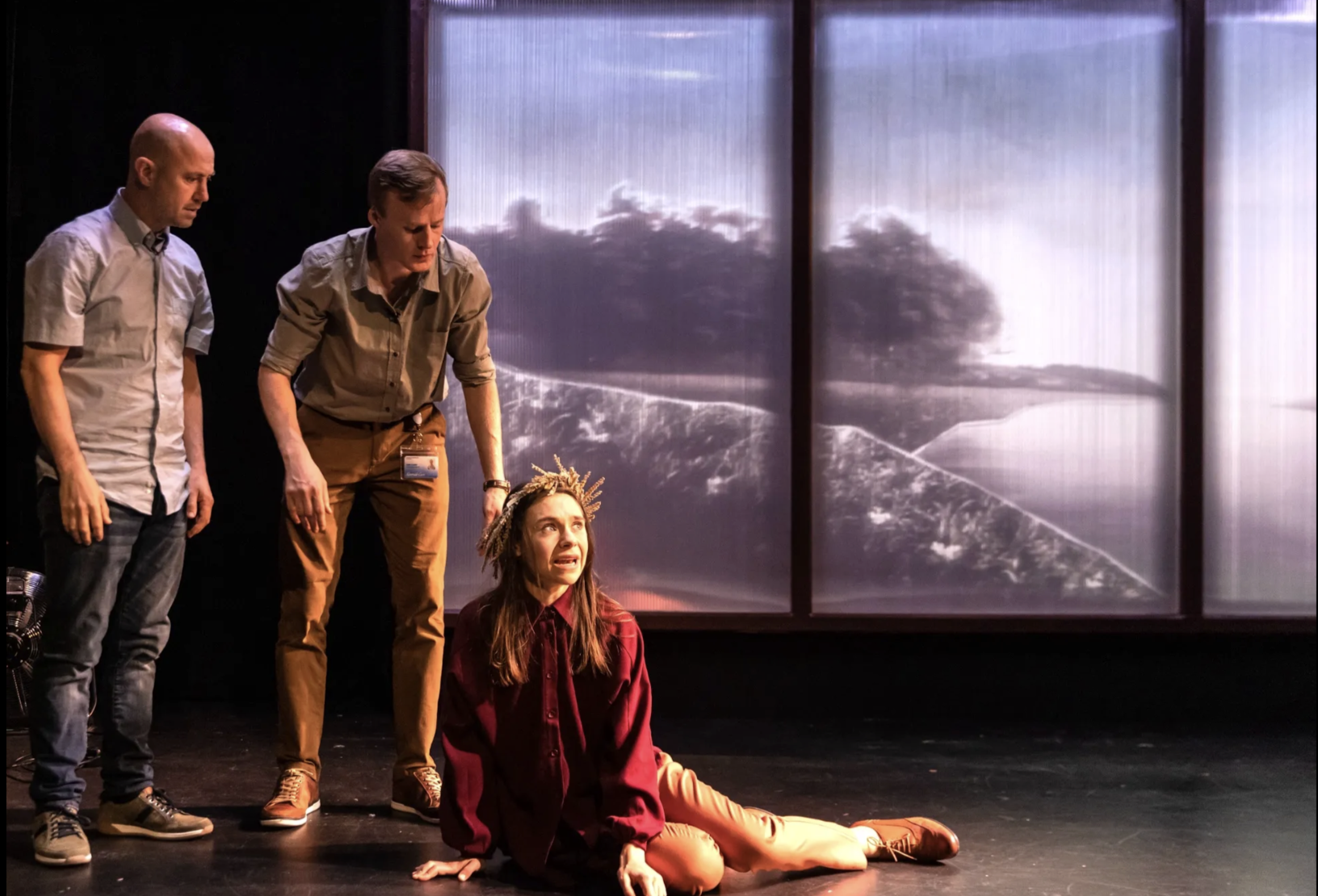
Adapted from Sarah Moss’s novel, Shireen Mula’s Night Waking is complex and demanding, exploring motherhood, colonisation and the ramifications of history. Nicola Jo Cully performs this challenging two-hour monologue with aplomb, segueing between a range of disparate characters, convincingly portraying the protagonist’s mounting despair.

To be fair, despair seems like a reasonable response to the situation Anna finds herself in. Temporarily uprooted from Oxford to a remote Scottish island, she feels marooned, alone all day with her two young children, while her husband, Giles, conducts his ornithological research into the declining puffin population. Her own academic career has stalled since she became a mum, and her attempts to write are stymied by the overwhelming demands of childcare and housework. She’s already feeling angry and depressed – murderous, even; suicidal – so the discovery of a baby’s bones in the garden is the final straw.

And it’s not the only skeleton in the manor house’s cupboard. Giles has recently inherited the island, and historian Anna is horrified when she uncovers evidence of the atrocities his ancestors perpetrated. No wonder the locals are so unfriendly; old resentments run deep.

I love the overlapping nature of the storytelling here, the way the script skips back and forth in time, slowly peeling back the layers to reveal more about both Anna’s situation and the island’s dark history. Rebecca Atkinson-Lord’s agile direction is complemented by Hugo Dodsworth’s impressive set and video design: the projected background images jolting us from one scene to another, as scattered and disconnected as Anna’s sleep-deprived thought processes; the open grave an unmistakable metaphor for digging up the past.

However, I’m not always convinced by the content. The historical aspects are a matter of record so – shocking though it is – I can easily believe that landowners forcibly shipped the impoverished islanders to Canada, and that infant mortality rates were devastatingly high. It’s the contemporary sections that stretch credulity. Am I really supposed to accept that an Oxford professor would allow her husband’s complete abdication of parental responsibility? That an educated, well-to-do 21st century man would interrupt his wife’s work meeting because their baby won’t stop crying? Any family wealthy enough to own an entire island would surely hire a nanny if they were struggling to cope.

A play to admire, perhaps, rather than to enjoy, Night Waking is wide-ranging and ambitious, as thought-provoking as it is informative, and I find myself utterly absorbed in Anna’s tale. The play’s closing statement, revealing how little has changed for the Highland’s inhabitants over the years, provides a hammer-blow of a conclusion.

4 stars

Susan Singfield
FEIS

23/09/25

Traverse Theatre, Edinburgh

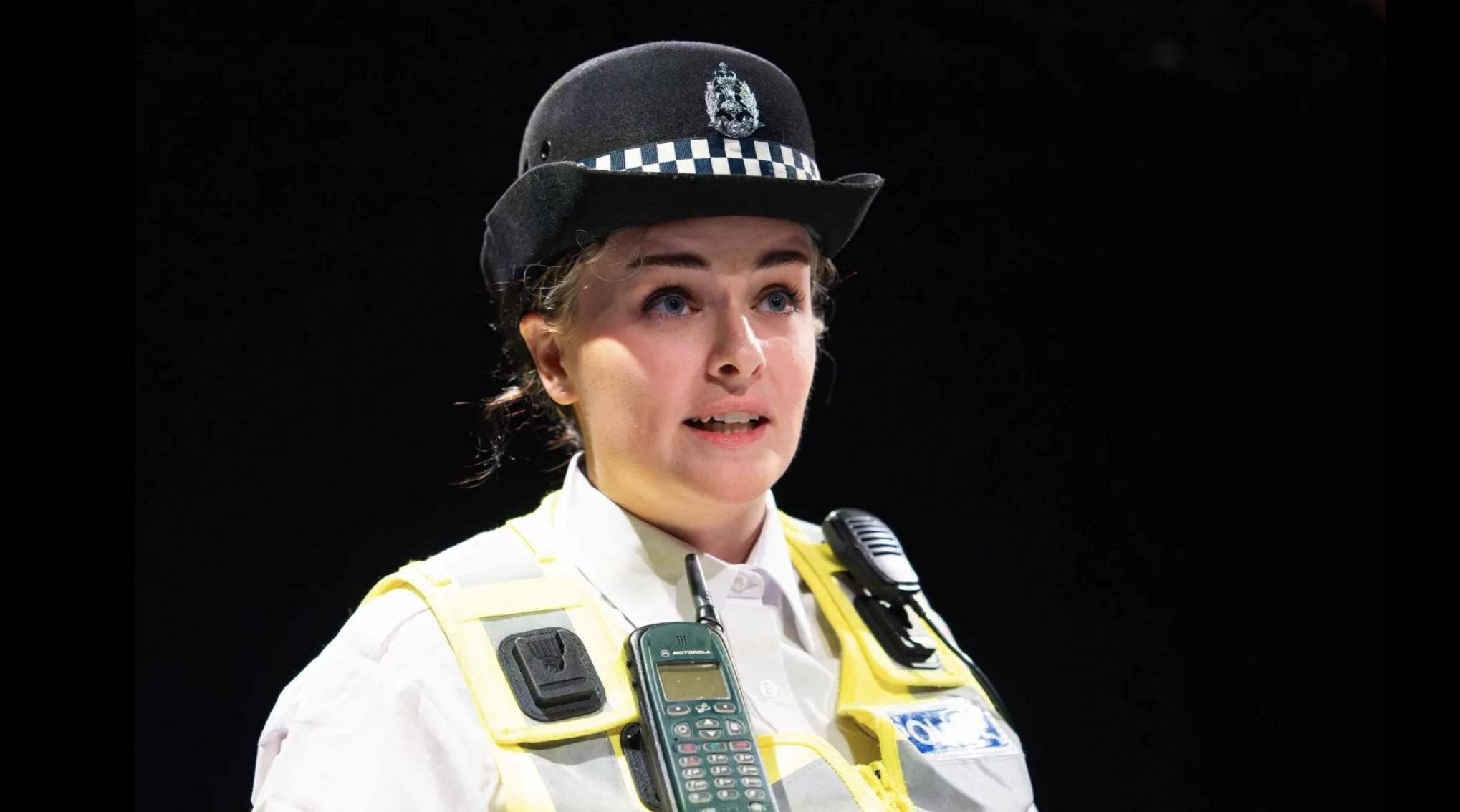
All is not well at Maguire’s School of Irish Dance. Back in the day, this Glasgow-based outfit was seen as a leader in its ghillie-footed field, when Deirdre (Louise Haggerty) won enough rosettes to paper the walls of her teenage bedroom. Decades later, the school’s fortunes are flagging disastrously and she’s been reduced to offering a ‘VIP’ service, performing online for an exclusively male clientele, who are not above offering extra money for her used socks.

Deidre’s mother, Maura (Julie Coombe), is blissfully unaware of these new measures but, when her teenage granddaughter, Aoife (Leah Balmforth), falls flat on her face at the 2023 Irish World Championships, things look pretty grim. Then Maura manages to scare off the school’s only other decent dancer and it’s clear that something has to give…
Billed as a dark comedy – though perhaps the term ‘farce’ might be more appropriate – FEIS (pronounced fesh) is a cautionary tale about ambition and the lengths to which some people are prepared to go to in oder to secure a win.

Writer Anna McGrath pursues the laughs with a vengeance, though it has to be said that the various twists and turns of the story often defy credibility and, in one particular instance, a real-life star of the Irish dance world has a pretty heinous accusation levelled against him.

Haggerty gives the lead role her all, even throwing in what looks to this novice like an impressive bit of Irish-dancing, but I remain unconvinced that anybody would go to the lengths Deidre does in order to attain her objective. Balmforth feels severely underused throughout, while Coombe’s is obliged to deliver a series of fat-shaming comments at an unseen dancer that feel somewhat at odds with contemporary thinking. (This may be the point but it feels ill-judged to me.)

Musician Brian James O’ Sullivan adds some spirited jigs and reels to the proceedings. Michael Flatley, meanwhile, was unavailable for comment.

3 stars

Philip Caveney

The Beautiful Future is Coming

08/08/25

Traverse Theatre, Edinburgh

Flora Wilson Brown’s The Beautiful Future is Coming is a triptych: a thought-provoking meditation on the subject of climate change set over centuries. 

New York, 1856. Eunice (Phoebe Thomas) believes she has discovered evidence that sunlight and carbolic acid will one day have a dramatic effect on the world’s weather. She’s understandably keen to spread the word – obsessed with the notion – and she’s supported at every step by her well-meaning husband, John (Matt Whitchurch). However, nobody in the scientific community is prepared to take the word of an amateur – and what’s more, a woman – seriously.

In 2027, Claire (Nina Singh) and Dan (Jyuddah Jaymes) are based at a design agency in London where, ironically, they are working on an advertising campaign for Greenpeace. They begin a flirtation, which develops into a serious relationship. But when Dan’s mother home is flooded by a sudden, catastrophic weather event, Dan’s whole worldview is irrevocably tainted.

In 2100, scientists Malcolm (James Bradwell) and Ana (Rosie Dywer) are trapped in a research centre in Svalbard, Norway, where a storm has been raging for months. Ana is trying to conduct experiments on weather-resistant strains of wheat – and getting precisely nowhere. She is heavily pregnant and beginning to wonder if she can make it to safety before her baby arrives…

The story switches effortlessly back and forth in time, the scenes interconnecting almost seamlessly, the events occasionally echoing each other, as if to emphasise that, no matter how hard humanity tries to effect change, we hardly ever succeed. 

This complex tale is told with deceptive simplicity. The three couples move around Aldo Vázquez’s set like chess pieces on a board, while Elena Penãs atmospheric sound and Ryan Day’s lighting contribute to the play’s immersive atmosphere. For me, the only uncertain point here is Dan’s OTT reaction to his mother’s fate – there’s been no hint in his previously cheerful demeanour that such darkness lies within him.

But The Beautiful Future is Coming does have a profound impression on me, even if I can’t help feeling that the words ‘Don’t Hold Your Breath’ would make an apt suffix.

4 stars

Philip Caveney

She’s Behind You

03/08/25

Traverse Theatre, Edinburgh

Johnny McKnight lifts the lid on all things panto in this hugely entertaining and informative one-dame show, directed by John Tiffany. She’s Behind You is an interesting hybrid, retaining all the bawdy glamour of Britain’s most popular theatrical form, while simultaneously offering a thoughtful commentary on its strengths and weaknesses. A seasoned writer and performer, McKnight has the audience in the palm of his spangly-gloved hands, eliciting gales of laughter as well as contemplative silences. He knows exactly how to tell his tale to best effect, effortlessly undercutting the more sombre moments with a raucous one-liner or comic song, carrying us along with him. It’s all beautifully designed by Kenny Miller and there’s a lightning-fast costume change (courtesy of Jennie Lööf) that will leave you breathless.

McKnight’s stage persona, Dorothy Blawna-Gale, is as warm as she is sassy, brash but never brutal – more Elsie Tanner than Cruella de Vil. “Punch up,” McKnight exhorts, reflecting on earlier iterations of his dame, where he followed in the footsteps of the Widow Twankeys and Ugly Sisters he’d so admired in his youth, making ‘harmless’ jokes about race, gender, sexuality and body size. “Times change,” he reminds us – and panto has to change with it. Some rules need to be kept – after all, the conventions of the genre date back to commedia dell’arte, a working-class art form that spurned elitism and focused on entertaining the masses – but some need to be broken.

For example, the gender imbalance doesn’t sit well any more, but most commercial panto casts are still at least 75% male, and the few women don’t get much agency, let alone the chance to tell jokes. There’s also an inherent homophobia, he tells us, which genuinely surprises me (I guess that’s my straight privilege showing). I’ve always thought of pantomime as gender fluid, sometimes sexist but never anti-gay. McKnight’s insider perspective opens my eyes, and I’m impressed by his efforts to walk the walk, writing scripts he can stand by and be proud of, serving his audiences rather than belittling them. Pantomime has survived so long by being adaptable and irreverent, so why is there so much resistance to challenging certain tropes?

But if all this sounds po-faced, then I’m doing McKnight a disservice, because – more than anything – She’s Behind You is a cyclonic blast, as big and bold as its glittering protagonist, and fully deserving the standing ovation it receives tonight.

So click your age-appropriate-but-sparkly orthotic heels together three times, and repeat, “There’s no place like the Traverse.” Dorothy Blawna-Gale will be waiting to see you. Oh yes she will!

5 stars

Susan Singfield