Tim Curry

The Rocky Horror Show

21/02/22

King’s Theatre, Edinburgh

‘It’s just a jump to the left… and then a step to the righ-hi-hi-hight!’

It’s hard to believe that Richard O’Brien’s shlock-horror musical began its theatrical journey way back in 1973. Like many others, I didn’t actually witness it until The Rocky Horror Picture Show hit cinema screens in 1975. I can honestly say I’d never seen anything like it. The sexual politics were startling to say the least, Tim Curry’s Frank N Furter virtually burned up the screen, and yet the film didn’t make much of an impact at the box office. Go figure.

It wasn’t until much, MUCH later that it began to build its dedicated cult following.

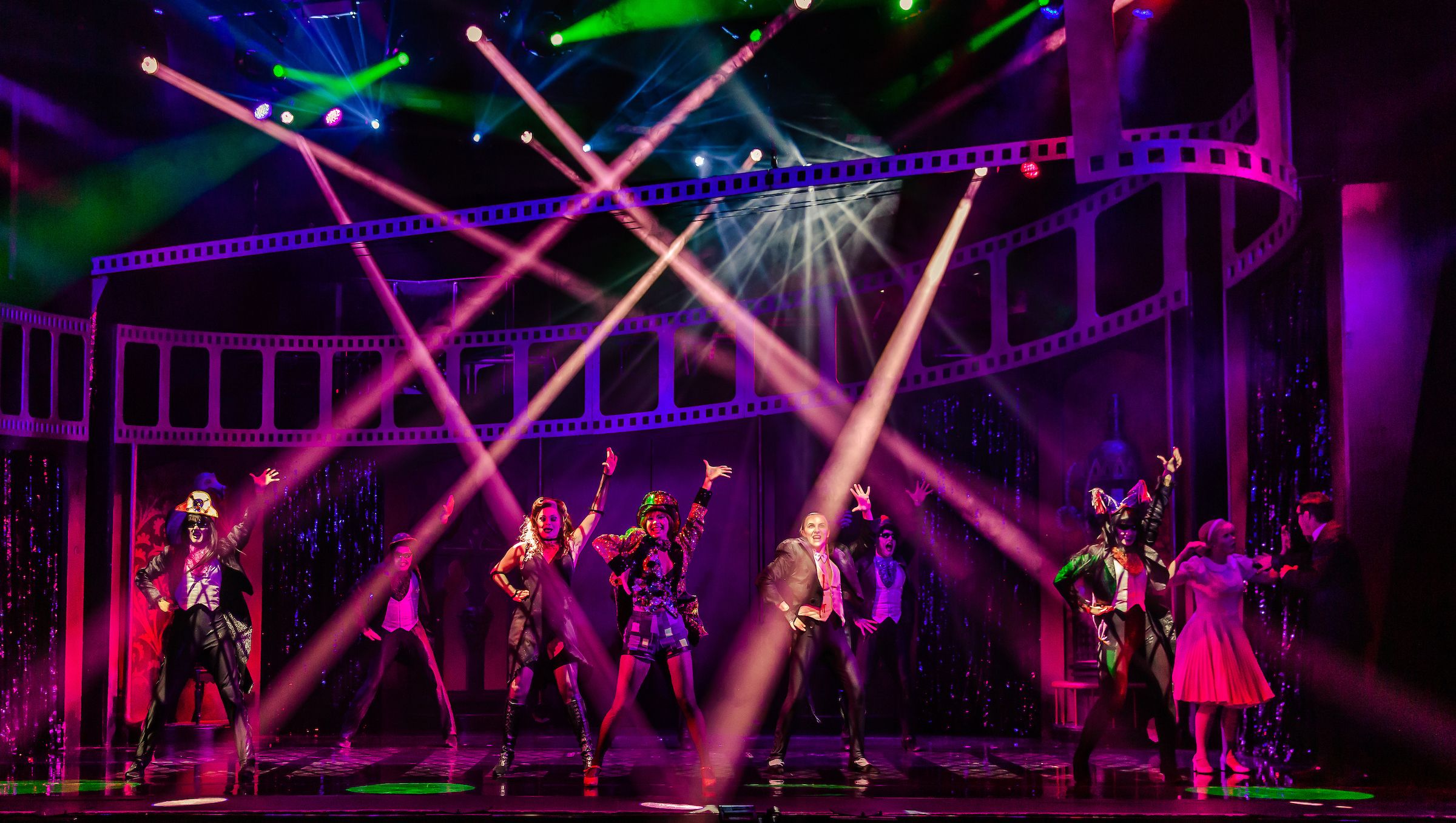
Die-hard fans are only slightly in evidence at the King’s Theatre tonight, a few brave souls sporting French maid outfits, stockings and suspenders – which may have more to do with the Scottish weather than anything else. But the elderly couple sitting in front of me are clearly longtime fans, singing along with every single number and helping each other into the aisle to smash The Time Warp.

Rocky Horror is just a gloriously silly romp with canny sci-fi references, backed up by a whole string of banging songs. From the opening chords onwards, I’m hooked.

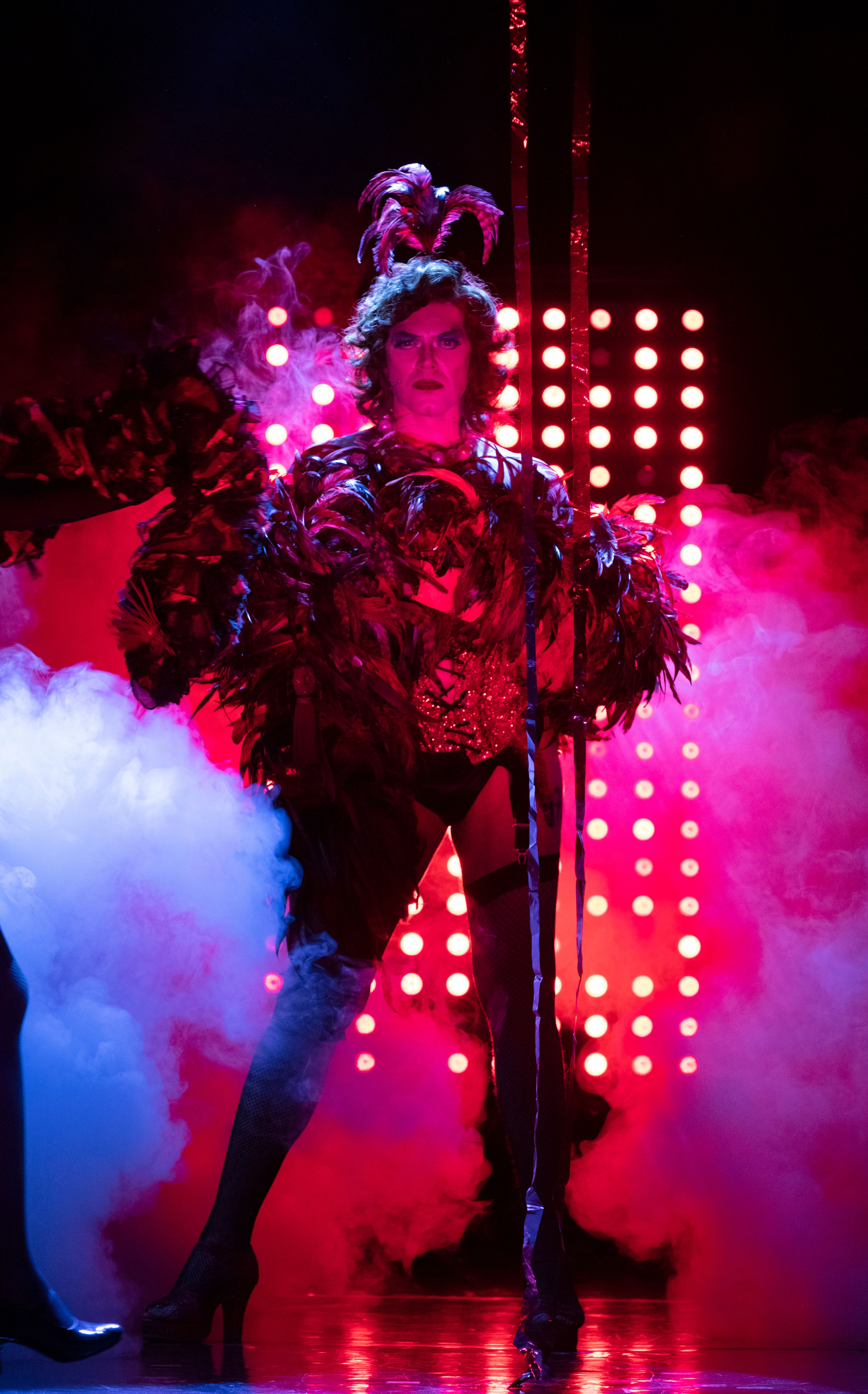
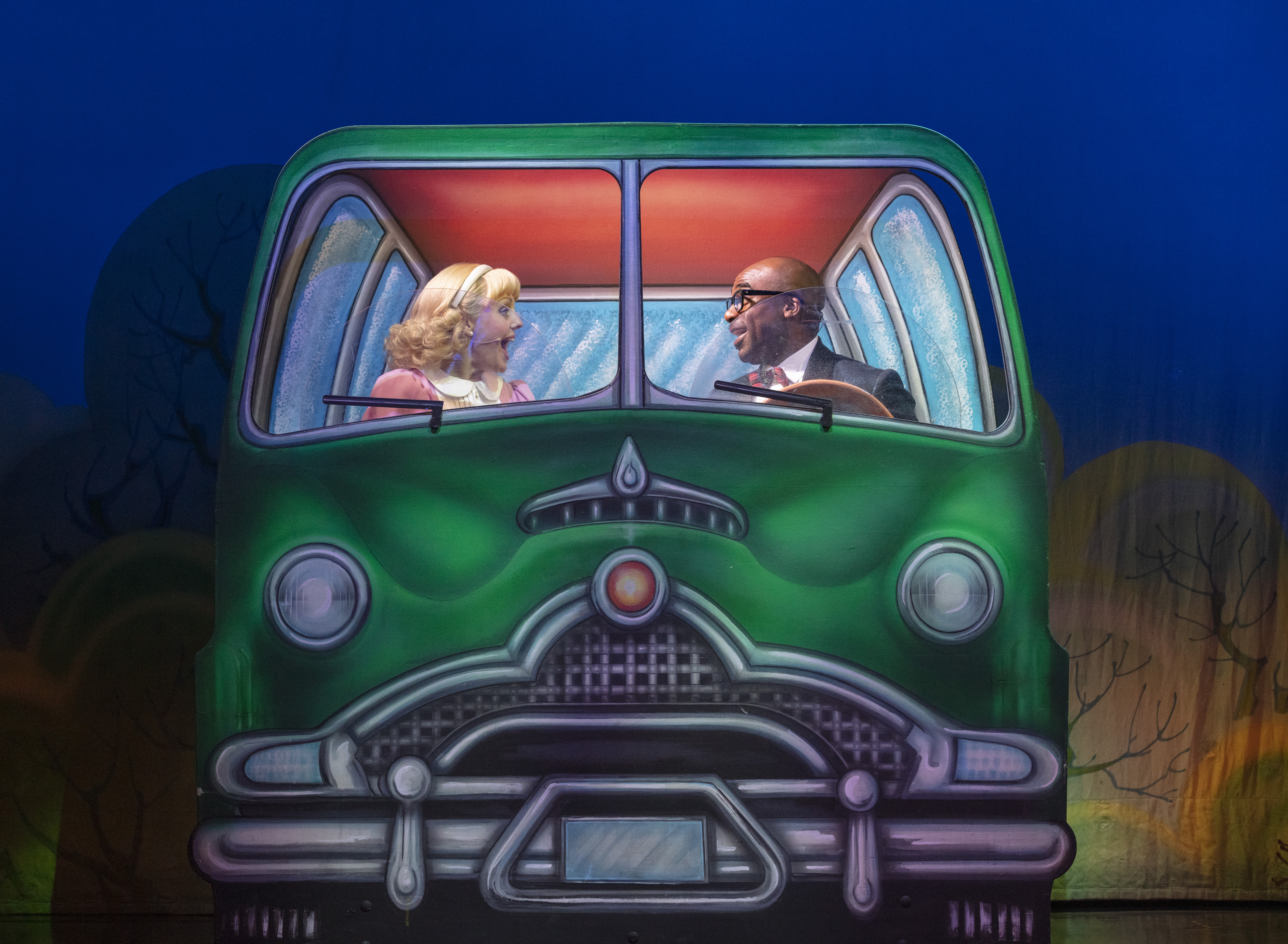
Brad (Ore Oduba) and Janet (Haley Flaherty) are two wholesome (okay, repressed) people, whose car breaks down one stormy night. They take refuge in that creepy-looking castle they passed a couple of miles back. Here they meet their unconventional host, Frank N Furter (Stephen Webb), his handyman, Riff Raff (Kristian Lavercombe), his maid Magenta (Suzie AcAdam) and a whole gaggle of deranged characters with a propensity for dissolute behaviour.

Furter, it transpires, has been working on a special project and Brad and Janet have arrived on the very night he plans to unveil Rocky (Ben Westhead), the perfect sexual companion.

This production, directed by Christopher Luscombe, moves like the proverbial tiger on vaseline – the dance routines are brilliantly executed, Webb is wonderfully flamboyant as Furter and, of course, the presence of The Narrator (Philip Franks) is the production’s trump card. Suave, sophisticated and delightfully potty-mouthed, he fields interjections from the more vocal followers and offers a few pithy observations in return. One of them, about Prince Andrew, has the entire audience applauding.

Okay, so the first half still features the lion’s share of the best songs – which has always slightly unbalanced the production – and there are a couple of scenes in the second half that, viewed through a contemporary gaze do feel a bit… well, rapey… but of course, this was written at a time when the subject of sexual politics was in its infancy. O’ Brien’s main theme – that people should embrace and celebrate their sexual identities – still seems somehow ahead of the game forty-nine years after the show’s birth. And it seems highly unlikely that anybody is going to attempt an update this late in the game.

This is an absolute delight. As the performers thunder into a reprise of the show’s two best songs, the entire audience is up on its feet, clapping, dancing and singing along. Few nights out at the theatre are as deliriously enjoyable as this – and as we wander out into the night, we’re still humming The Time Warp.

After so long shut away in glum silence, we all deserve a large helping of Rocky. If this doesn’t put a great big stupid grin on your face, then nothing will.

4.6 stars

Philip Caveney

It


13/09/17

Like many readers, I came to Stephen King’s writing in the early seventies, when his debut novel,  Carrie had just been released. I read a lot of his books and I thought that It was one of his best later efforts, despite the inclusion of a lamentable (what-was-he-thinking?) scene towards the end of the story that seemed to have strayed in from an entirely different genre. And of course I saw the 1990 TV adaptation, memorable for Tim Curry’s spirited performance as Pennywise but not much else. This new release, however, has certainly caught the public imagination. In a year where overall box office takings are dramatically down, the film is already proving to be a major hit with the public.

The town of Derry is plagued by a string of mysterious disappearances – most recently, young Georgie Denborough (Jackson Robert Scott) has chased a paper boat along a rainy gutter and into the clutches of a homicidal clown. The event leaves Georgie’s older brother, Bill (Jaeden Lieberher), riddled with guilt and obsessed with finding his lost sibling. Bill teams up with a bunch of fellow outsiders from his school and together they start to uncover Derry’s infamous history – one that appears to feature a list of similar disappearances going back for centuries…

What made the source novel so good was that King really knew how to write about teenagers – and that’s certainly the element that new director, Andy Muschietti, gets right. There are appealing performances from all of the young actors in this version, especially from Sophia Lillis as Beverly and from Finn Wolfhard, channeling his inner Corey Feldman as motormouthed geek Richie Tozier. Bill Skarsgard’s Pennywise is also fabulously creepy in the early scenes, but inevitably, the more we see of him, the less scary he becomes. This means that I really enjoy the first hour or so, but by the time the young protagonists had pursued their supernatural quarry down into the sewers, I am enjoying proceedings a whole lot less. Somebody should have whispered in Muschietti’s ear the old maxim that less is more. But no, he keeps piling it on, and all the menace he’s worked so hard to create runs straight down the drain. Interestingly, it’s the same problem that plagued his earlier film, Mama.

And it’s not just the over-reliance on effects that niggles here. What passed for plotting back in the eighties is starting to feel decidedly heavy-handed in this day and age. I could have done without the cartoonish gang of bullies terrorising the weaker kids in town (or at least had their over-the-top antics dialled down a couple of notches) and, while I appreciate the whole thing is a metaphor for kid’s coming to terms with their true identities, the points don’t need driving home with an economy-sized sledgehammer. As for the decision to turn the book into two different films, one dealing with the nineteen eighties and another featuring the kids all grown up and returning to Derry to confront their old nemesis? Well, given the success of part one, the creators are doubtless rubbing their hands at the prospect of pulling it off a second time.

Whatever I think about It hardly matters. It’s already a massive success and one that clearly chimes with a wide audience. King will, I’m sure, be pleased at what’s finally been done with his book. After so many cack-handed adaptations of his work (including The Lawnmower Man, from which he made a point of having his name removed) this at least is recognisably his brain child. It’s frankly not the spine chilling masterpiece that many have labeled it as, but maybe you can’t argue with bums on seats.

3.5 stars

Philip Caveney