
21/03/26
Traverse Theatre, Edinburgh
Stewart Laing’s stripped-back adaptation of George Bernard Shaw’s Saint Joan is based not on the 1923 original, but on a screenplay Shaw wrote later (presumably with an eye on Hollywood), a script which eventually made it into print in the1960s but never transitioned to the big screen. It’s a shorter, tauter version of the story, which focuses on Joan’s origins – and on her subsequent trial.
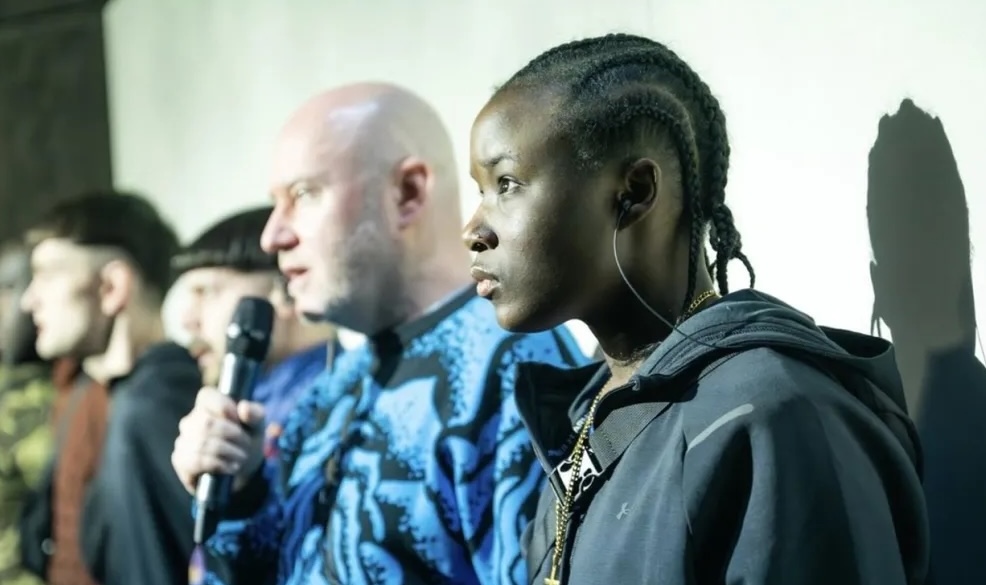
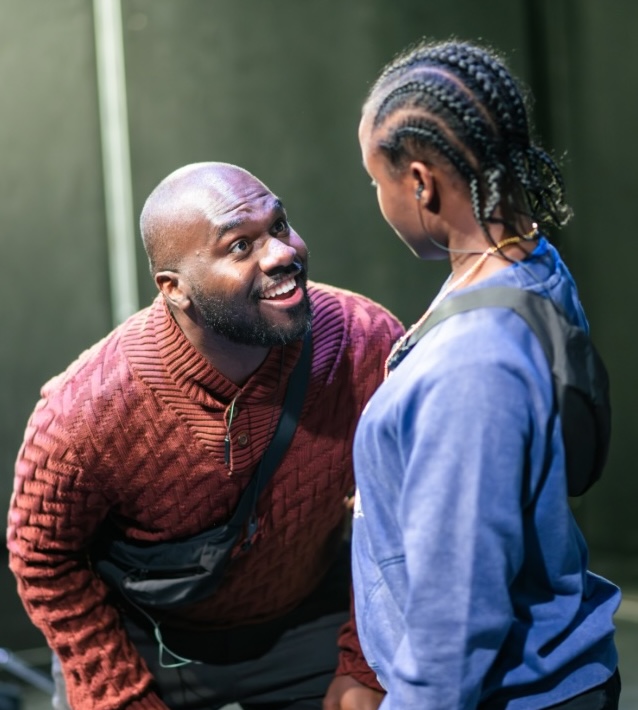
The piece is initially narrated by Chorus (Martin O Connor) as a series of action lines, inviting the audience to picture the scenes as they unfold. Joan (Mandipa Kabanda, in her theatrical debut), a sixteen-year-old peasant girl, turns up unexpectedly at the farm of Robert de Baudricourt (Thierry Mabonga), insisting that she be given a horse and a suit of armour. (Well we’ve all been there!) Voices in her head have told her that she must ride to the rescue of the city of Orléans, which is currently under siege by the English army. Those same voices assure Joan that not only can she save the city but, furthermore, she’s destined to be the one to crown the Dauphin in Rheims Cathedral.
Against all the odds, Robert is convinced by Joan’s visions and grants her request. The ensuing carnage in Orléans does appear to have a seemingly miraculous outcome with the French defeating the English, providing a turning point in the 100 years war. But of course, as we all know, history doesn’t have a happy ending planned for Joan – and all too soon, she finds herself on trial for witchcraft, judged and assessed by a bunch of toxic males, who feel threatened by her seemingly supernatural abilities. Only Ladvenu (Lewis MacDougall) finds some sympathy for her plight, but he is shouted down in the general chorus of ‘burn the witch!’
As I said earlier, it’s stripped-back and spare, but the harsh declamatory style of the dialogue sometimes makes it hard to follow proceedings – and it seems ironic that a huge blank screen standing onstage throughout is barely utilised as anything more than a handy barrier to conceal costume changes. There’s one brief sequence with a few static images and music by Charli XCX – and a longer filmed epilogue, created by Adura Onashile, which features a tarred-and-feathered Joan speaking directly to camera, evoking comparisons between her mission and the work of protestors against the current conflict in Palestine. Are social media activists channelling Joan as a prototype? This seems to suggest that they are – but, the inevitable effect is to make those earlier scenes seem even starker by comparison – and wouldn’t Joan’s immolation benefit from some suitably fiery visuals? I can’t help feeling this is a missed opportunity.
Still, this is a serious, thought-provoking performance piece with the six-strong cast moving from character to character with total commitment. MacDougall is particularly compelling as Ladvenu and Ross Mann manages to imbue elements of humour into the bullish, vengeful Chaplain. A four-way production between Raw Material, Perth Theatre, Aberdeen Performing Arts and Citizens Theatre, Saint Joan in at the Traverse until the 21st of March.
3.4 stars
Philip Caveney


 Bouquets & Brickbats