
The Traverse Theatre Edinburgh

Run, Rebel

07/11/24

Traverse Theatre, Edinburgh

Theatre productions are always a team effort but I’ve rarely been so aware of the fact as I am watching this sprightly offering from Pilot Theatre, written by Manjeet Mann and directed by Tessa Walker.

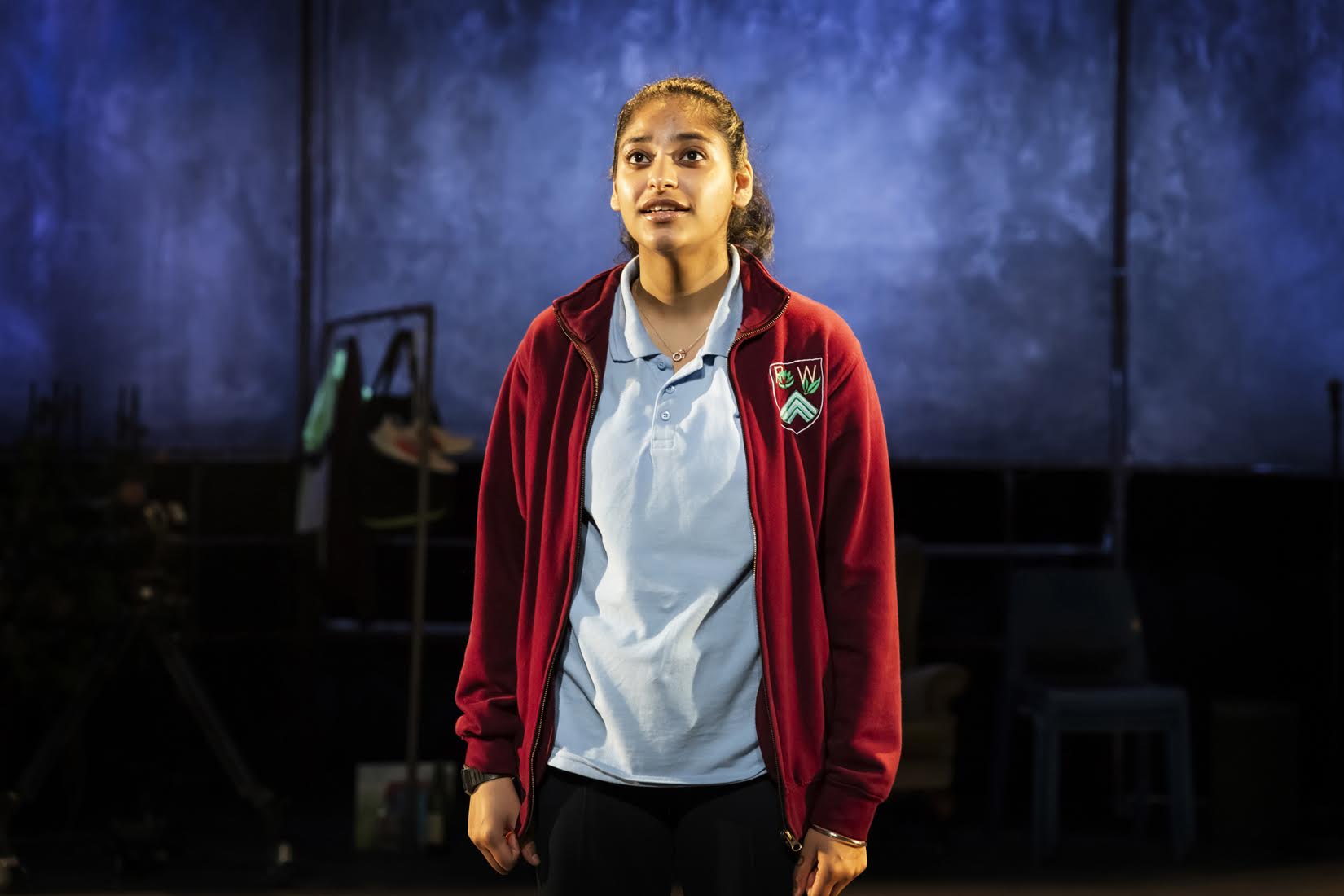
Amber (Jessica Kaur) is a fifteen-year-old Punjabi girl making her way through a world that seems determined to put obstacles in her path. She is nursing a serious crush on her friend David (Kiran Raywilliams) and is somewhat disconcerted that he is spending a lot of time with her other close friend, Tara (Heather Forster). Meanwhile, Amber is a talented athlete, always leading the field for her school running team, and her coach is talking seriously about the possibility of her one day qualifying for the Olympics…

But Amber’s controlling father, Harbans (Pushpinder Chani), keeps telling her that it’s time for her to think about settling down and accepting a husband, like her older sister, Ruby (Simran Kular). Meanwhile, their mother, Surinder (Asha Kingsley), is trapped in a violent, loveless marriage, unable to read or write a word of English. It doesn’t help that Harbans is a hopeless alcoholic, who spends nearly every penny that comes in on drink…

If the plot of Run, Rebel occasionally feels a little over-familiar, Mann’s script is sure-footed enough to keep me hooked throughout, while Walker’s direction moves the players from scene-to scene with absolute authority. Kaur is compelling in the lead role, and her co-stars move effortlessly through a selection of different characters, all of whom have enough individual quirks to make them feel real.

Debbie Duru’s fabulous set design features ramped edges, so that the running sequences are suitably propulsive as the actors literally race back and forth through Kuldip Singh-Barmi’s cleverly-choreographed sequences. Daniel Denton’s atmospheric video designs lend the story added depth and I particularly relish the moments when Amber steps out of the action to replay those scenes that go particularly well for her.

Only the most impassive viewer will fail to be thrilled as Run, Rebel races headlong to the finish line. It will be at the Traverse until Saturday 9th November, so anybody in search of an uplifting couple of hours in the theatre should grab some tickets without delay.

Ready? On your marks, get set, GO!

4 stars

Philip Caveney

Weer

07/08/24

Traverse Theatre, Edinburgh

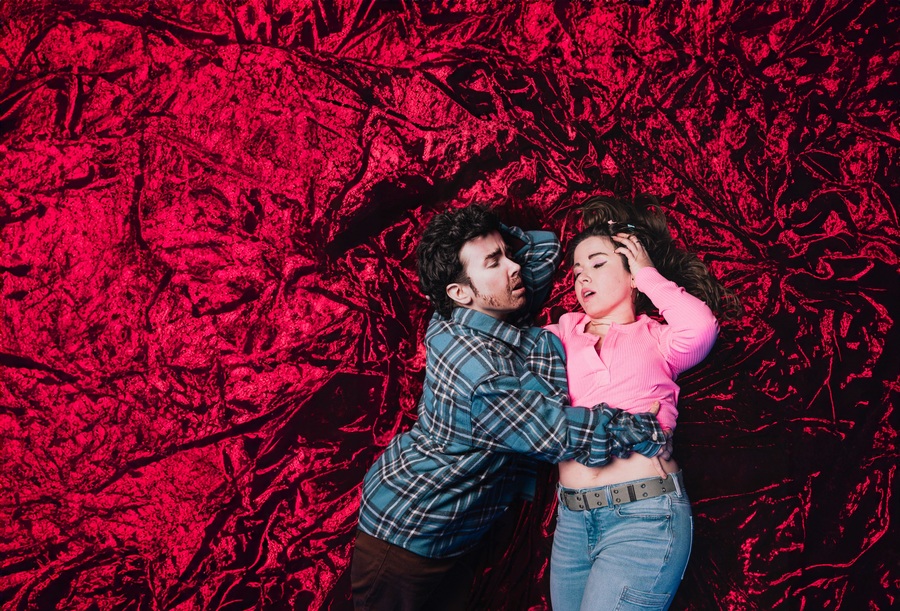
Natalie Palamides’ burgeoning reputation has evidently preceded her. Traverse One is packed to the gills with an exuberant crowd, many of whom have clearly seen her Netflix special. I have to admit that thus far her name has eluded me, so I really don’t have the first idea what to expect. But whatever wild imaginings I might have had beforehand are nothing like the slice of unhinged genius that I witness onstage tonight.

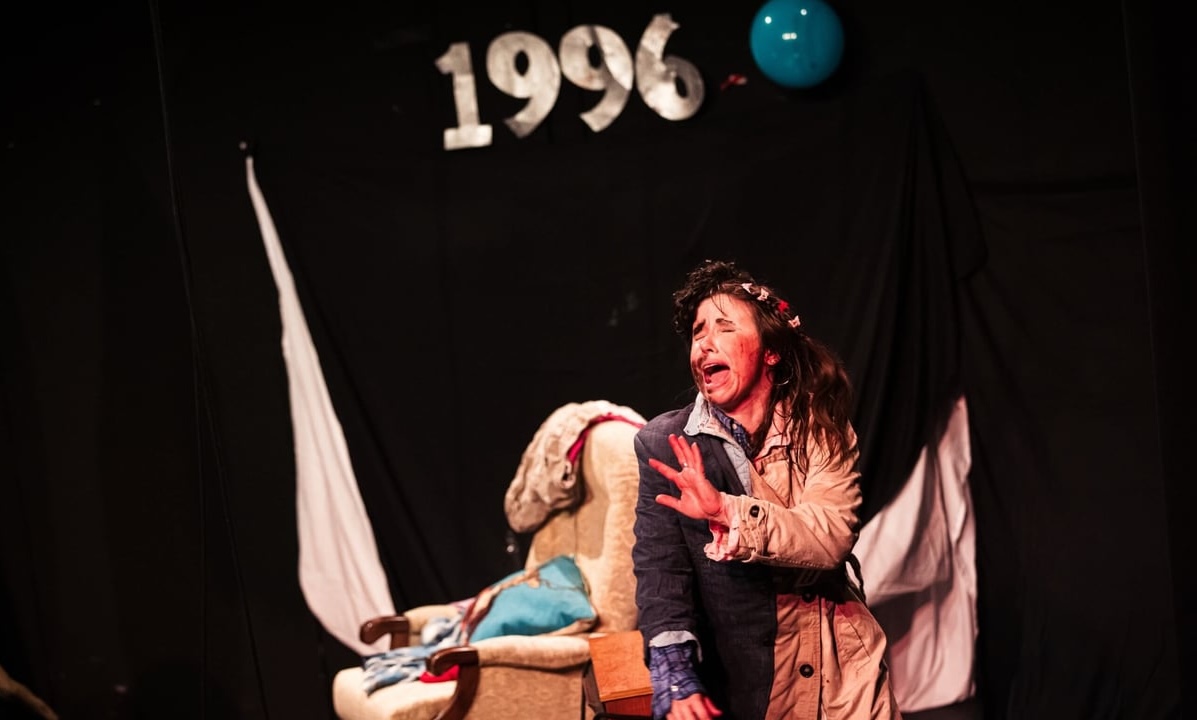
Weer (the name is explained somewhere in the chaos) is the tumultuous tale of Mark and Christina, two star-crossed lovers, who have been falling in and out of lust with each other since 1996. Now it’s New Year’s Eve 1999, the world is poised for the ensuing havoc and the two of them are having a violent altercation, mostly prompted by Mark’s inability to fully commit to Christina. Palamides plays both Mark and Christina, using the old music hall technique of donning a series of bisected costumes, and presenting the resulting interchanges by twisting from side to side. On paper, it sounds a bit hack and it shouldn’t work for a full-length play… and yet, against all the odds, it really does.

The opening events are simply an introduction to a whole series of demented scenes, Palamides racing back and forth across an increasingly cluttered stage, using weird Heath Robinson-like props to help tell the story. There are chases and spills, rampant love making (in an actual shower at one point!). There’s bloodshed and slapstick, a loaded gun with a penchant for discharging bullets – even though it isn’t loaded. There are spurts of bodily fluids, frantic costume changes, audience interaction, meaningful sideways glances, tears, laughter, death – and a great big fucking deer.

I – like most of the others in the theatre – spend large amounts of my time alternately laughing uproariously and staring in wide-eyed astonishment at Palamides’ next unexpected rug pull. Essentially, Weer is a just a great big slice of the absurd, expert clowning performed with such reckless abandon that you can’t help loving it. Palamides is now well and truly on my radar and I’m already looking forward to what she does next.

Meanwhile, those in need of some laughter should get the to The Traverse to see Weer and be grateful that you’re not one of the team of people who have to clean up the stage after the show.

5 Stars

Philip Caveney

The Sound Inside

04/08/24

Traverse Theatre, Edinburgh

The Sound Inside begins with an engaging example of fourth wall breaking, as Bella (Madeleine Potter), a creative writing professor at Yale, ambles onto the stage to introduce herself and her story. Her relaxed, sardonic tone is engaging, sometimes laugh-out-loud funny, and is liberally crammed with a succession of literary references.

And then in comes Christopher (Erik Sirakian), a garrulous Freshman in one of Bella’s classes, who has a propensity for impulsively saying all the wrong things. He’s arrived at Bella’s office without actually making an appointment and is clearly intent on knowing more about her, wanting to locate the real person hidden behind the curated image she presents in class. Bella is understandably cautious about engaging with him, suspecting that he’s some kind of weird stalker. But when he confides that he has started work on a novel, that he will have no rest until it’s completed, her curiosity is aroused.

She herself published a novel, seventeen years ago, and though it received promising reviews at the time, it has hardly set the literary world alight. Any thoughts of a new project have been stalled by recent worries about her health. She forms a tentative friendship with Christopher, uncertain of what might ensue, but prepared to see where this new path takes her…

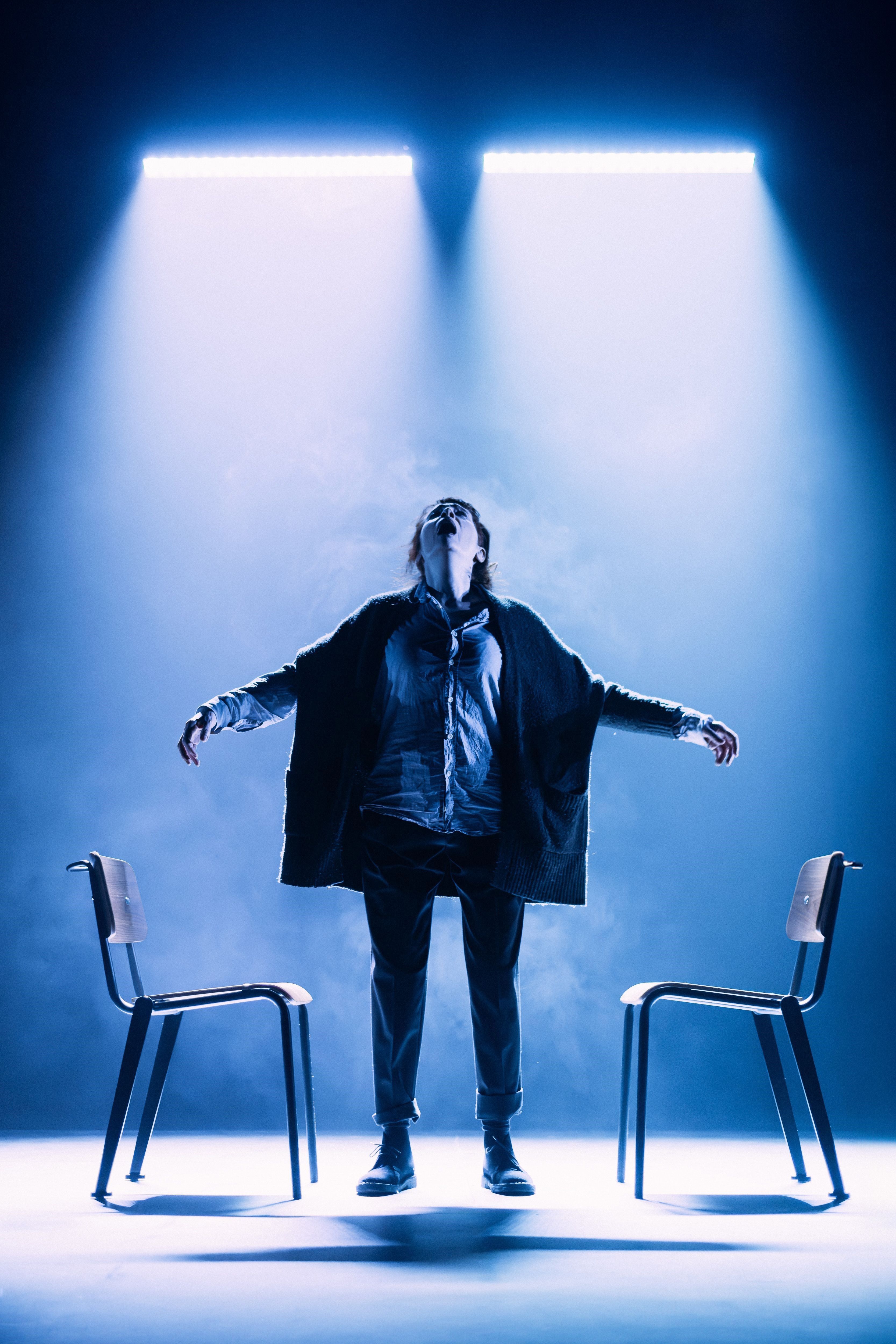
Adam Rapp’s exquisite play has all the qualities of a great novel, pulling me deeper and deeper into its labyrinthine heart, providing the audience with puzzles to solve and mysteries to ponder. The two actors inhabit their respective characters with absolute authority, capturing all of their strengths and subtleties. Both of them are loners; both are driven by their inner desires. I love James Turner’s spare set design, which, combined with Elliot Griggs’ lighting and Gareth Fry’s soundscapes, helps to emphasise the twosome’s inner yearnings, their hopes and regrets.

More than anything else, this is a play about the nature of fiction: that elusive ephemeral beast that so many people long to capture. Director Matt Wilkinson handles the various elements of the play with skill and guides it to a poignant conclusion, which – much like Christopher’s novel – ends with an ellipsis.

The team at the Traverse seem to have an unerring ability to find great theatre and The Sound Inside, already a success in the USA, has everything I look for in this medium. It’s a mesmerising piece and should be on every Fringe visitor’s bucket list this year.

5 stars

Philip Caveney

The Scaff

02/04/24

Traverse Theatre, Edinburgh

For someone who has always maintained a complete indifference to the game of football, I do seem to be watching a lot of plays about it lately, all of them at the Traverse. And the thing is, the standard has been incredibly high. First up, there was the five-star masterpiece that was Moorcroft. Then there was the wonderful Same Team, which also found a fresh approach to its chosen subject. Now here’s The Scaff, the final offering in the A Play, A Pie and A Pint spring season, which I approach with some trepidation.

Can the Traverse really hope to pull off a hat trick?

Happily, it turns out that they can. Written by Stephen Christopher and Graeme Smith, this is an assured and acerbically funny play, centred around a school football team. Jamie (Bailey Newsome) and Frankie (Stuart Edgar) live and breathe for the game. They spend most of their time out on the pitch, helping the team’s star player, Coco (Craig McClean), to rack up the goals. They’re also friends with Liam (Benjamin Keachie), but one day Jamie overhears Coco referring to Liam as ‘a scaff’. And while there may be some truth in the accusation – Liam’s Mum does buy own-brand crisps and Liam is forced to play in Mitzuma football boots, for God’s sake – Jamie encourages Liam to take his revenge on Coco by unleashing a hard tackle in the next game.

Liam takes his friend’s advice with disastrous consequences. Coco’s resulting injury means that the team will be without their top scorer as they approach the school cup final. Liam is in disgrace – and can Jamie and Frankie even admit to being friends with a boy who is now little more than a pariah?

Of course, The Scaff is about so much more than football. It concentrates on the subject of friendship and the difficulties that life can throw into its path. It’s also about the the constant longing to be liked and the awful fear of thinking that you are hated for things you have no control over. And mostly, it’s about the difficulties of escaping from an identity that others have bestowed on you, a term that is as degrading as it is dismissive.

The performances of the four leads are strong, each actor convincing in his respective role. I particularly enjoy Keachie’s physicality as a boy almost crippled by anxiety, forever giving sidelong glances to his companions, beseeching them for support and also forgiveness. Director Jordan Blackwood handles the tricky problem of making a quartet of actors on a bare stage convince as team players, and the performers give it their best, leaping, twirling and launching savage kicks at an imaginary ball. They manage to pull off the illusion, with the audience reacting delightedly to each successive goal. I find myself yelling and clapping along with them, something that no actual football match has never managed to make me do.

It’s been another strong season for A Play, A Pie and A Pint, and The Scaff provides a winning finalé that scores on just about every level.

4.6 stars

Philip Caveney

Dead Dad Dog

02/11/23

Traverse Theatre, Edinburgh

John McKay’s quirkily titled play originally debuted at the Traverse in 1988, before transferring to the Royal Court Theatre in London – so it’s great to have the opportunity to see it back in its original home. This deceptively simple two-hander takes the form of a series of titled vignettes punctuated by snatches of classic 80s pop songs.

It’s early morning in Edinburgh and ‘Ek’ (Angus Miller) is preparing breakfast and psyching himself up for an interview at BBC Scotland, where he hopes to start a new career. He’s ill-prepared for the arrival of his father, Willie (Liam Brennan), a quiet man in a loud suit. Ek’s surprise is understandable: Willie has been dead for twelve years. He explains that he’s been granted the opportunity to visit Ek so that the two of them can ‘reconnect’. “Heaven,” he tells Ek, “is OK.”

The visit comes with some awkward conditions. Ek and his dear-departed Dad must remain within a few paces of each other at all times (otherwise there are disastrous side-effects). What’s more, Willie can be seen – and heard – by all and sundry. Which is awkward to say the very least. But Ek is determined to attend his job interview anyway, and even goes ahead with a date with his latest crush. A bad idea? Well yes, but this is hardly a realistic story and much pleasure is derived from the absurd comedic situations that the duo are obliged to stumble through.

Both Miller and Brennan offer assured and likeable performances and I love the simplicity of the staging, where one wooden chair is the only prop, pressed into service to represent a whole range of different things. There’s a strangely old-fashioned feel to the piece – so much has changed since 1988 – and sadly, a planned second half, featuring a more contemporary sequel, Sonny Boy, is unable to go ahead due to illness in the cast. (The current foul weather conditions might be part of the problem too.)

This is a shame, because added pleasure would surely stem from seeing how things have metamorphosed over the intervening years. Nonetheless, Dead Dad Dog is an entertaining piece. Liz Carruther’s direction keeps the pot bubbling merrily away and McKay’s script provokes much hilarity (and the occasional touch of pathos) as we go. Fingers crossed we get to see that sequel.

4 stars

Philip Caveney

Things Hidden Since the Foundation of the World

17/08/23

Traverse Theatre, Edinburgh

Every Fringe offers at least one production that takes hold of your perception and gives it a thorough kicking. Things Hidden Since the Foundation of the World fits happily – if not exactly comfortably – into that category. Going in, I’m not quite sure what to expect and, coming out, not entirely sure what I’ve just witnessed… but I’m definitely thinking about it. A lot.

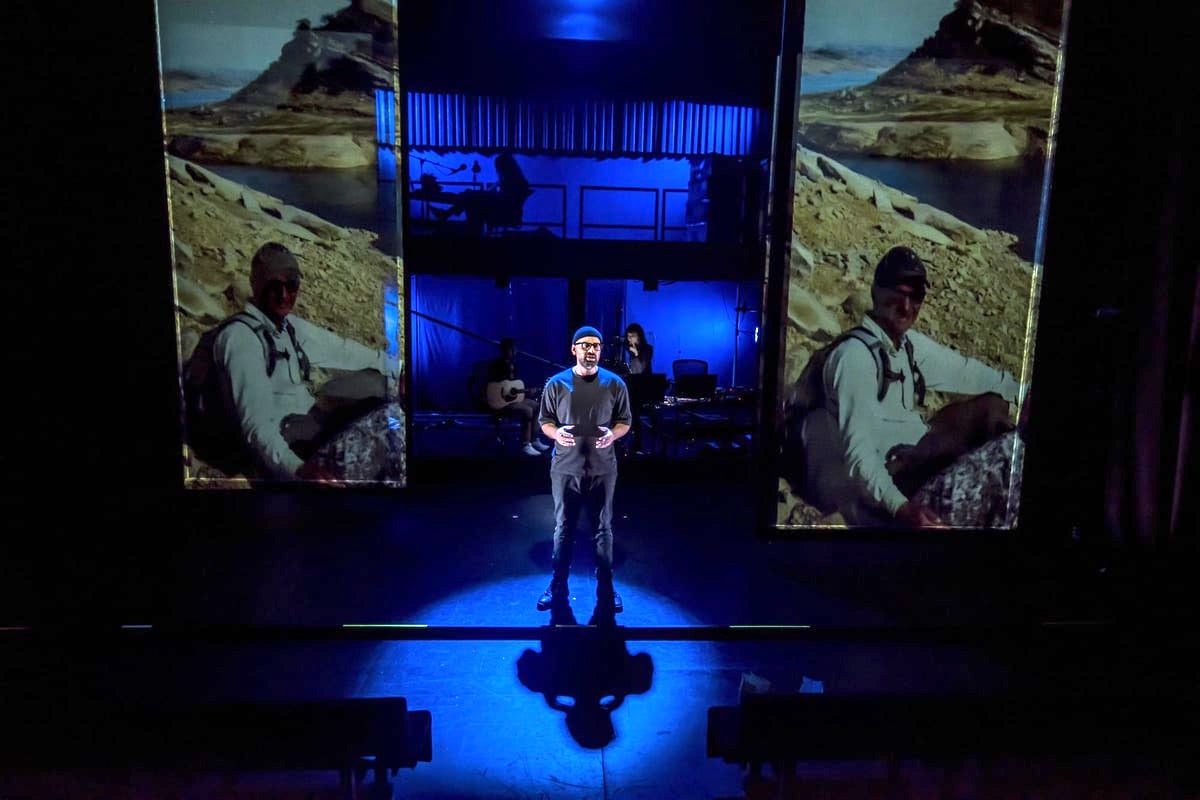
We begin with writer/director Javaad Alipoor walking out to deliver what I assume is a pre-show chat, but which actually turns out to be the beginning of the story. He tells us about the unreliability of Wikipedia searches, the way that everything in the world is subjective, open to different interpretations. He then mentions the unsolved murder of Iranian pop star, Fereydoun Farrokhzad at a flat in Berlin in 1992. Farrokhzad, we are told, was Iran’s answer to Tom Jones – but even that description is open to interpretation. As Alipoor talks, a dark grey wall behind him suddenly lights up with an image, a moustachioed man in a glittery jacket singing a pop song. Then, the walls slide aside and, projected onto a transparent screen, we see the image of another Iranian musician, King Raad (huge in Iran, unknown outside of it and now exiled to Canada). He talks about his own harrowing experiences, including the tragic death of his father.

Later, a compartment opens to reveal a room deeper within the set and we see that Raad is actually here in person, creating music with musician Mee-Lee Hay. The moment when he points out that now would be a propitious time to assassinate him is chilling.

The final piece falls into place as, up on a high platform, Asha Read hosts a podcast, asking questions about Farrokhzad’s murder, suggesting that perhaps the whole thing is a conspiracy, that the reasons for his death might be more complicated than we could possibly imagine. And as all these elements play out, the high-tech screens and various layers of the set begin to blossom into mind-blowing patterns, bursting with vivid colours, everything intermingling as Read’s questions become ever more complicated, ever more unfathomable.

The final sections are probably the closest I’ve ever come to experiencing an acid trip in the theatre. My head seems to be bursting with possibilities, my brain virtually turning itself inside out as it struggles to comprehend what’s happening. Actually, that makes the experience sound unpleasant, but I promise you it’s not. And I find myself falling back on that familiar cliché, that this production is like nothing I’ve ever seen before – but clichés exist for a reason. While I refuse to pretend that I know exactly what’s going on here, I’m happy to admit that I enjoy the cerebral workout it gives me.

If the Edinburgh Fringe is all about experimentation (and it really should be), then this intriguing and strangely compelling production has found its ideal home.

4.2 stars

Philip Caveney

Bloody Elle

09/08/23

Traverse Theatre, Edinburgh

Waiting to go into Traverse One, we hear a voice announcing that most dreaded of terms at the Fringe: technical difficulties. Uh oh! We’re told that there will be a slight delay before tonight’s performance can continue. Should we hang on and see what happens? Or will we leave and try to arrange another date? We decide to stay and thank goodness we do, because otherwise we’d have missed a brilliant show, with a mesmeric solo performance.

Elle (Lauryn Redding) is a straightforward Northern lass, proudly working class and doing nightly shifts at local takeaway, Chips ‘N’ Dips, along with an assorted bunch of colleagues. In her spare time, she’s a songwriter and performer, playing the odd slot at local clubs and hoping that she might take her talents further. And then a new employee arrives at the takeaway. She’s Eve, a girl from the posh side of town, moneyed, privileged and filling in the time before she heads off to university.

But it’s clear from the outset that something has sparked between the two young women, an attraction that quickly develops – and it begins to dawn on Elle what’s happening to her. Is she… falling in love?

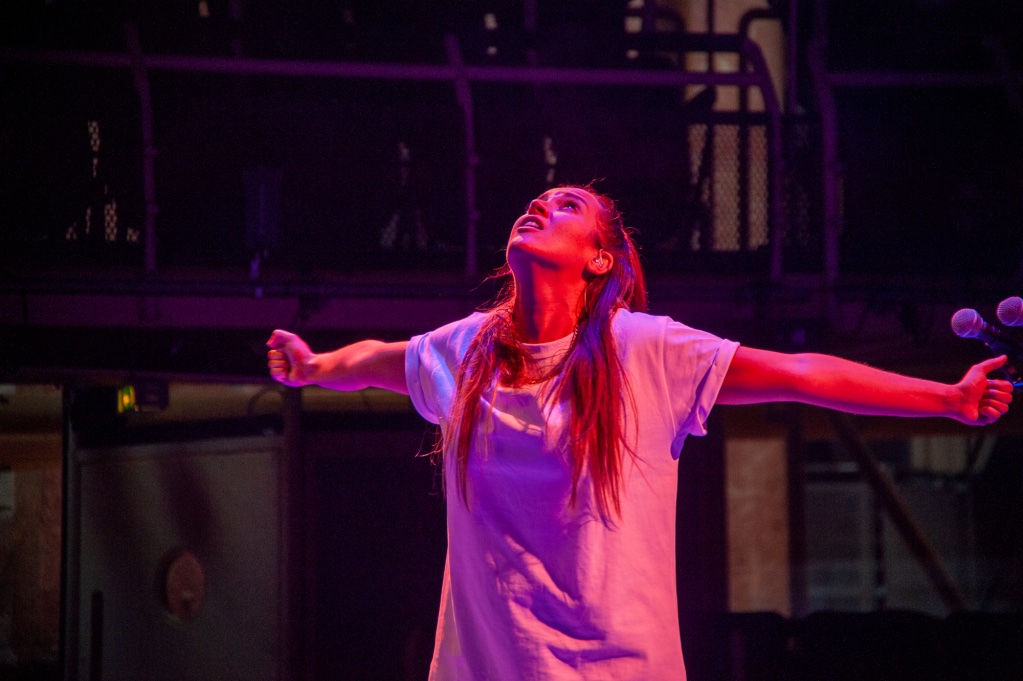
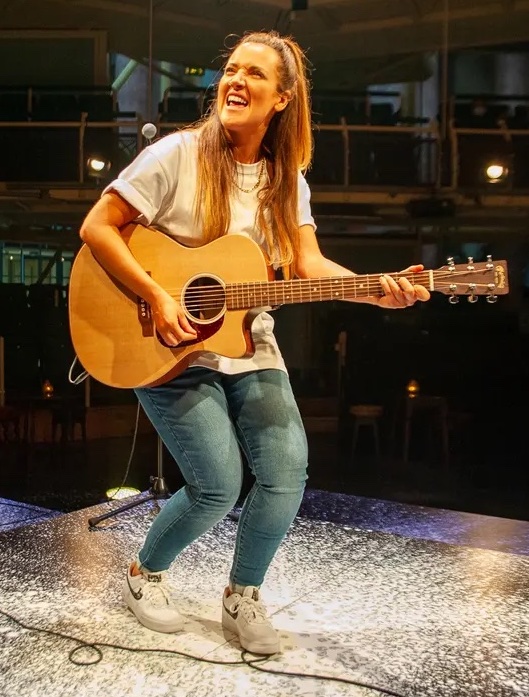
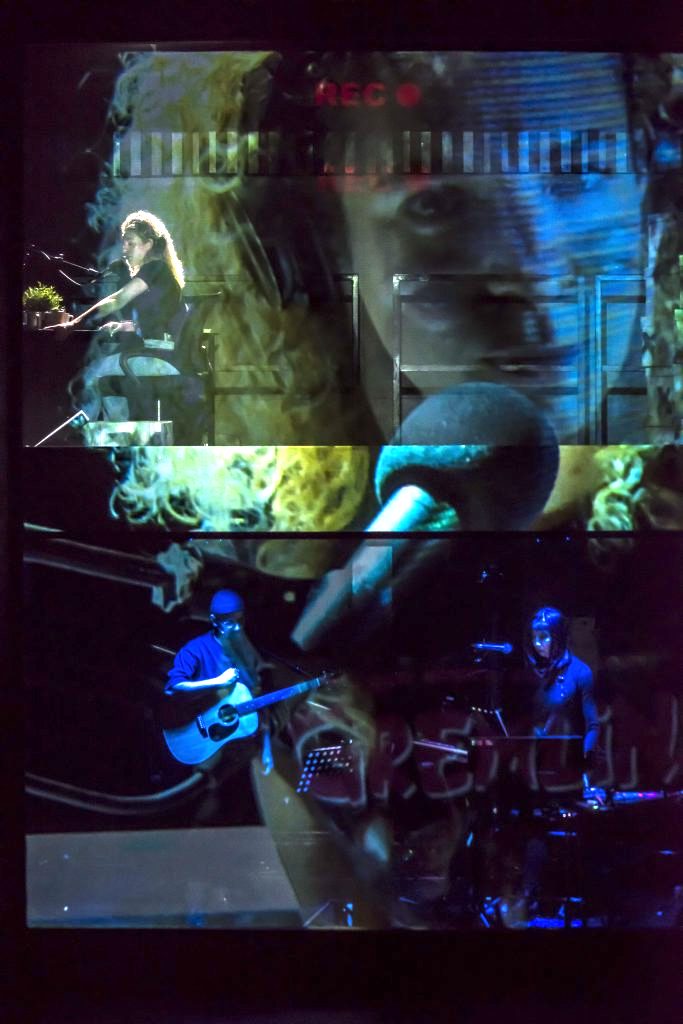
Bloody Elle is a fabulous piece of gig theatre, built around Redding’s irrepressible talent. Not only does she deliver a series of memorable songs, her vocals soaring effortlessly over the multi-layered backgrounds she creates using live looping; she also inhabits all the characters in the story, managing to change her persona with the merest physical gesture, a shrug, a wink, a cheeky grin. She’s also a gifted comic, making me laugh at every turn.

This queer love story offers a wonderful celebration of the affecting powers of first love and Redding takes us by the hand and leads us through the experience. Written, composed and performed by Redding, the show is directed by Bryony Shanahan and the lighting effects are by Mark Distin Webster. It’s a lovely, life-affirming and eventually rather poignant production, and you only have a few more chances to catch it in this limited run.

To put it simply, Bloody Elle is bloody fabulous. Go see.

5 stars

Philip Caveney
The Beauty Queen of Leenane

19/10/22

Traverse Theatre, Edinburgh

I’m a huge fan of Martin McDonagh, both as a playwright and a film director. In Bruges may just qualify as my favourite movie of all time and, on one memorable occasion, I travelled from Manchester to London to catch his play, Hangmen, where I very nearly witnessed the accidental hanging of actor Johnny Flynn. But somehow, in all my years of reviewing, I’ve never managed to see a production of McDonagh’s debut play, The Beauty Queen of Leenane. Until now. To say that I’m excited about seeing it would be an understatement. So… no pressure, Rapture Theatre.

Maureen (Julie Hale) is forty years old, and living with her elderly mother, Mags (Nuala Walsh), in a grubby cottage in the wilds of Connemara. It’s a thankless existence, forever mashing up her Ma’s daily Complan and preparing bowls of lumpy porridge, while listening to the stream of malignant chatter the old woman spews out. Then one day, their obnoxious neighbour, Ray (Ian O’ Reilly), drops by with what passes for exciting news in these parts. Ray’s older brother, Pato (Paul Carroll), is coming over from London to attend a family celebration, and Maureen and Mags are invited along.

Maureen has long had a soft spot for Pato. Could his presence offer the possibility of romance she’s always dreamed of? Decked out in a brand new dress and some high heeled shoes, Maureen makes her play for Pato and it begins to look as though all her prayers might be answered. But then there’s the awkward question of what will happen to Mags, should Maureen decide to leave Leenane…

This is a debut piece and, while it might not have the assuredness of some of McDonagh’s later works, it nonetheless displays all the hallmarks of an exciting new talent flexing his muscles. The influence of Harold Pinter is surely there in the awkward pauses, the repetitions, the elevation of innocuous comments to a weird form of poetry – and McDonagh’s ear for the Irish vernacular is already finely tuned. As if setting out his territory for future exploration, there’s a shocking moment of violence that comes out of left field in unflinching detail.

There’s also a moment of revelation, which obliges me to go back and reconsider something I thought I already knew…

The performances here are exemplary and it’s perhaps unfair to single out one in particular, though I do relish Walsh’s personification of Mags: forever watchful, sly, and secretive, simultaneously Maureen’s warden and her tragic victim. This is an elegy about loneliness and subjugation, the perils that lie in wait for those who seek to escape – and a warning to be very, very careful what you wish for.

For me, The Beauty Queen of Leenane has been a long time coming, but it is well worth the wait.

4.3 stars

Philip Caveney
Made in China

11/10/22

Traverse Theatre, Edinburgh

Janet (Jo Freer) lives in Wishaw, near Glasgow. Her daughter Tash’s birthday is fast approaching and Janet is frantically trying to procure the weird selection of fripperies Tash says she simply ‘has to have’ if her party is to be a success. When she demands some novelty lights in the shape of… er, aubergines, who is Janet to argue with her? She obligingly opens the Amazon app and clicks through her order.

Meanwhile, in China, Hui Ting (Amber Lin) is working long shifts at a factory, where such dubious items are produced and packaged, before being shipped all around the world. She has much to contend with, struggling to meet her targets and constantly being fined for trivial matters – even, in one case, for having her period at an inconvenient time. But she has a powerful motive for working around the clock: she doesn’t want her daughter to end up in the same position.

And then Janet discovers a scrap of paper in her latest order, something that Hui Ting has scribbled in a rare free moment and accidentally dropped into the box. Janet decides that she needs to find out what the note means. It takes her a while but, once she has an answer, she’s compelled to reappraise the way she lives her own life…

Made in China is a deceptively simple two-hander, the latest offering from A Play, a Pie and a Pint. On a stage festooned with cardboard boxes, the women appear to work side-by-side, their lives intertwined, even though they never interact. Playwright Alice Clark cleverly draws out the fascinating parallels between the two, and shows the kind of ripple effect that can be initiated by even the most innocuous form of Western consumerism. Both Freer and Lin make their characters utterly believable. I love Janet’s snarky, self-deprecating tone and I love too that Hui Ting is not presented as saintly, but as somebody who has her own agenda and is quite prepared to bend the rules in order to achieve her goals.

Clark’s eloquently written play alternates between harsh reality and the enduring allure of dreams. Philip Howard’s direction brings this prescient piece to a satisfying conclusion. As polemics go, it’s one of the best I’ve seen in quite a while.

4.1 stars

Philip Caveney

Beating McEnroe

beating_mcEnroe_5_460_689_95_s

27/03/15

The Traverse Theatre, Edinburgh

We enter the theatre to find a bearded man dressed in a tennis headband and a towelling bathrobe. He’s sitting cross-legged on the floor silently contemplating a pile of tennis balls. As the crowd continues to shuffle to their seats, he starts to throw the balls to people and urges them to throw them back. Then, once everyone is assembled, he gets us all to chant some kind of repetitive mantra.The man is Jamie Wood and the show is Beating McEnroe, a monologue about the infamous Wimbledon showdown between Bjorn Borg and John McEnroe in 1980. It’s also about how the young Jamie came to terms with always being whupped at tennis by his older brother. It’s about hero worship and the awful realisation that one day, all heroes must inevitably be bested, often by people who don’t seem to deserve the acclaim. Along the way there’s some slapstick, some dancing and some very funny visual jokes. Wood’s charming persona allows him to effortlessly manipulate the audience into helping him out, acting as his umpires, his ball boys and girls even at one point impersonating him (nice one Susan!) and his big brother. This is interactive theatre at its best and while it’s undeniably a piece of fluff, it’s fluff that’s performed with great skill and a disarming lightness of touch – enough to earn it a nomination for a Total Theatre Award at this year’s Edinburgh Fringe.

I had the task of tying a carton of table salt to Jamie’s head, which might sound decidedly odd, but which resulted in the funniest visual gag of the night. I felt as though somehow I had contributed to the evening and left feeling rather pleased with myself. We caught this performance at the end of it’s run at the Traverse, but those seeking a genuinely entertaining night at the theatre could do a lot worse than booking to see this at the Lowry in Salford where it plays for just one night on Saturday 28th of March. You’ll believe a man can become a human tennis ball!

4 stars

Philip Caveney