
Tennessee Williams

The Glass Menagerie

07/11/25

Royal Lyceum Theatre, Edinburgh

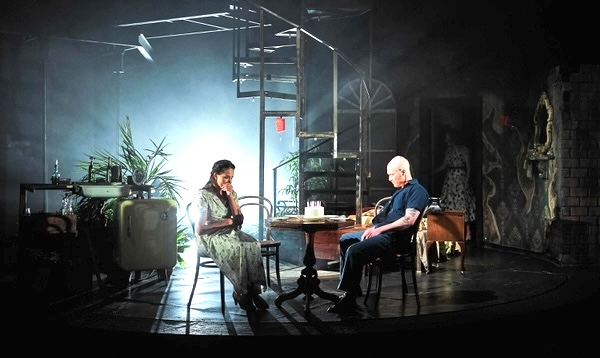
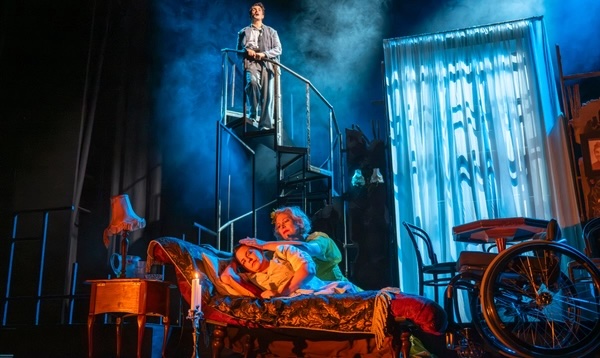
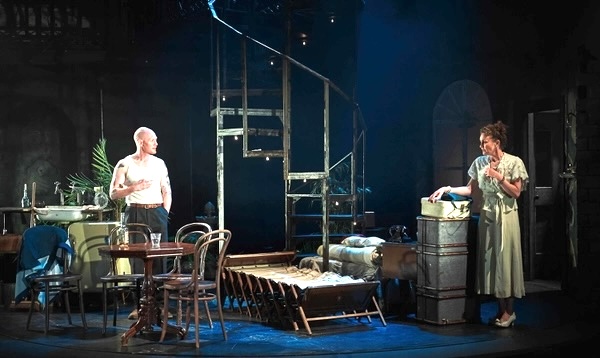
Directed by Andrew Panton, this production of The Glass Menagerie (from Dundee Rep, Citizens and the Royal Lyceum) is an altogether gentler and less histrionic affair than other interpretations I have seen – and all the more compelling for it. Emily James’ barely-there set echoes the characters’ fragility, underscoring the narrator’s opening assertion that the play “is not realistic.” The overt theatricality – the fourth-wall breaking; the exaggerated miming as the family eat a meal – paradoxically emphasises the underlying authenticity, the idea that this is “truth in the pleasant disguise of illusion”.

The time: 1937. The place: St Louis, Missouri. Our narrator is Tom Wingfield (Christopher Jordan-Marshall), and it’s no coincidence that he shares his initials with the playwright. The Glass Menagerie was described by Tennessee Williams as “a memory play,” a loosely autobiographical attempt to pin down his relationship with his emotional past – so it makes perfect sense that Tom should be an aspiring writer, desperate to escape the clutches of a dead-end job in a broken economy. He is consumed by the need for freedom in all its guises – creative, personal, sexual – bitterly resentful of his mother’s insistence that it is his duty to stay at home and provide for her and his sister.

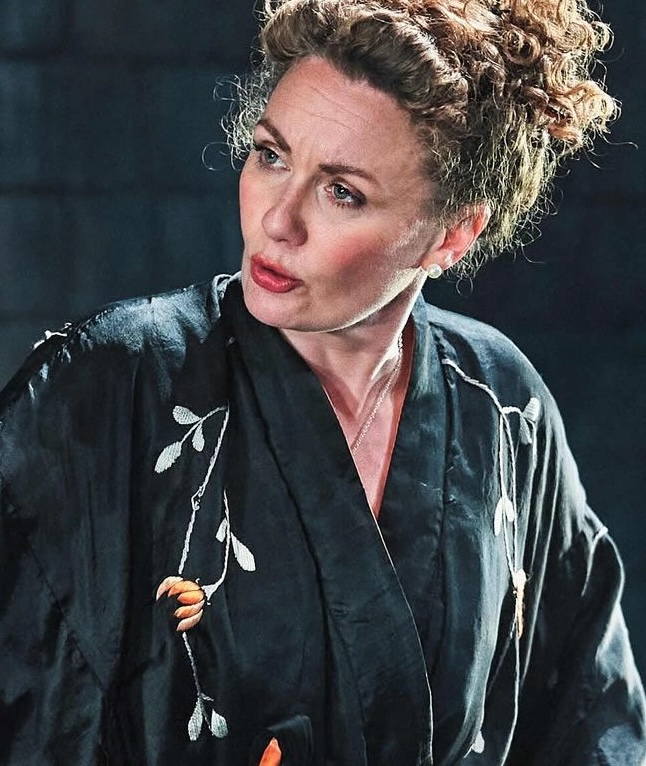
His mother, Amanda (Sara Stewart), is the kind of fading Southern belle Williams is famous for, but – at least in this iteration – she’s less monstrous than Blanche DuBois or Maggie the Cat. This Amanda reminds me more of Austen’s Mrs Bennett: a woman made ridiculous by her desire to find a husband for her daughter, even though her zealotry makes perfect sense in a society where women are financially dependent on men. Stewart imbues Amanda with warmth and likability, while also making clear exactly why Tom finds her so intolerable.

Amy Conachan’s Laura is irresistible. She is Tom’s older sister, but a combination of shyness and disability means that she is far less worldly-wise than him. In fact, they are opposites in almost every respect. While Tom finds the city too small and claustrophobic, Laura is agoraphobic, too terrified even to open the front door, let alone build a life for herself outside the home. Tom rails against his situation but Laura has ruefully accepted her lot in life, successfully side-stepping Amanda’s attempts to set her up on dates and dedicating herself to the care of her collection of delicate glass ornaments. So it’s all the more heartbreaking to see her open up to Tom’s kindly friend, Jim (Declan Spaine), only to have her hopes dashed by his smiling comment that he’d love to have a sister just like her. Exquisitely acted, the extended duologue between this pair is a real highlight for me.

The dreamy nature of the play is further emphasised by the music, liltingly performed by Spaine as the story unfolds, and Simon Wilkinson’s light design perfectly complements the ethereal atmosphere, at times illuminating the characters’ faces in such a way as to almost create cinematic close-ups, so that we’re forced to focus on their pain and misery.

This beautifully-realised production of The Glass Menagerie has only one more showing at the Lyceum, so you’ll have to be quick if you want to get yourself a ticket for tonight’s performance.

4.6 stars

Susan Singfield
A Streetcar Named Desire

26/10/24

Lyceum Theatre, Edinburgh

It’s sometimes hard to believe that Tennessee Williams’ A Street Car Named Desire was first performed in 1947. This powerful mixture of one man’s toxic masculinity overpowering a woman’s fragile mental condition feels somehow utterly contemporary in its telling, and this perfectly-pitched adaptation by Pitlochry Festival Theatre is compelling in every scene.

Stella (Nalini Chetty) and Stanley Kowalski (Matthew Trevannion) live in a cramped, two-room apartment in the French Quarter of New Orleans. Stella is pregnant and she’s understandably taken aback when her older sister, high school teacher Blanche DuBois (Kirsty Stuart), arrives unexpectedly, lugging a massive trunk and lacking the necessary funds to pay for a hotel room. Blanche announces that, after the death of their mother, the family plantation, Belle Reve, has been ‘lost to creditors,’ and Blanche has nowhere else to turn.

Stanley is immediately suspicious about Blanche’s rambling explanation for her presence, particularly when he hears about the loss of the DuBois family property, which he has always believed he is owed a share of. When Blanche begins a tentative romance with his card-playing buddy, Mitch (Keith Macpherson), he determines to do a little snooping…

Stuart is superb in the role of Blanche, nailing the woman’s ever-shifting moods with consummate skill, one moment critical and demanding, the next coquettish and playful. Sound designer Pippa Murphy adds to her disturbed moods by overlaying scratchy soundscapes as Blanche is haunted by something terrible that happened in her youth. As the loathsome Stanley, Trevannion has a field day, strutting and bellowing around the cramped environment like a rooster, asserting his dominance over everyone who has the bad fortune to come into pecking distance. Chetty, meanwhile, navigates the turbulent waters between Blanche and Stanley, seemingly unable (and unwilling) to resist her husband’s rapacious demands. No matter how many times he attacks her, she always goes back for more.

Designer Emily James has chosen to situate the Kowalski apartment on a huge turntable and this is a masterstroke. As it rumbles around, presenting different views of both the interior and exterior of the apartment, it increasingly resembles a deranged carousel with the players caught in its unhealthy embrace, unable to get off the ride until it arrives at its ghastly destination. Director Elizabeth Newman eschews the victim-blaming that so often blights interpretations of this play and turns up the heat on the sweaty, malevolent scenario, so that the play’s final half makes intense, disturbing viewing. Those who are triggered by scenes of sexual violence should be warned that there are some challenging moments here, but for me, it’s like passing a car wreck on the motorway – I cannot tear my gaze away.

If you’re thinking, ‘Well, I’ve seen this play before,’ perhaps you should think again. This is a mesmerising slice of theatre, that feels as important now as it ever did.

5 stars

Philip Caveney

Cat on a Hot Tin Roof

22/02/18

Once again, NT Live offers us the chance to see a noteworthy production we’d otherwise be consigned to reading about. For David Lan, who has stepped down from his role as the Young Vic’s artistic director, Cat on a Hot Tin Roof is a triumphant swan song, elegantly directed by Benedict Andrews, and beautifully performed.

The audacious casting certainly pays off. Sienna Miller’s Maggie is a standout, all bravado and desperation: strong but vulnerable; gorgeous but unloved. She really is like the titular cat, prowling the room, unsure how to function in a world where everything has changed. Brick refuses to acknowledge her, whatever she says, whatever she does. She talks incessantly, needling and provoking, removing her clothes, painting her face. Nothing works. She’s lost him. It’s a bravura performance, a faultless incarnation of a classic role.

Jack O’Connell also gives an impressive turn as Brick, the handsome football-star-turned-alcoholic, traumatised by his best friend, Skipper’s suicide, unable to accept his own homosexuality. Brick is a complex character, at once the most honest and the most duplicitous in the play. He refuses to indulge the ‘happy family’ façade, makes no secret of his drinking, doesn’t care who hears him rejecting his wife. But he lies to himself about his feelings for Skipper, even when Big Daddy offers him absolution; his own prejudices too ingrained to allow him to face the truth. O’Connell imbues Brick with dignity, despite his obvious descent; it’s a clever, nuanced portrayal of a truly tortured soul.

Colm Meany is suitably awful as the tyrannical Big Daddy, a Trump-like figure whose only redeeming feature is his willingness to accept his favourite son’s sexuality. But it’s Lisa Palfrey as Big Momma who really intrigues me: she plays the matriarch as an infantalised neurotic, who has to be protected from realities she can’t stand. Big Daddy openly despises her, calls her fat and stupid; she responds in a high-pitched, lilting, little-girl voice, her ‘He doesn’t mean it’ lines imbued with the rhythm of a fingers-in-the-ear-la-la-la denial. It’s a very different interpretation of the character from any I’ve seen before, but it absolutely works.

There’s not much to criticise here, although I do think more could be done to create the sense of sweltering heat and claustrophobia inside the house. It’s all there in the dialogue, but I never really feel it. The modern setting means there are none of the traditional plantation shutters and whirring fans, and that’s okay – I like the set – but I think I’d like the ice to melt, to know that the water in the shower is cold, to understand why Maggie is wearing tights when it’s so hot. Still, these are mere quibbles.

If you haven’t seen this yet, there’s sure to be an encore screening soon. I urge you to catch it.

4.9 stars

Susan Singfield