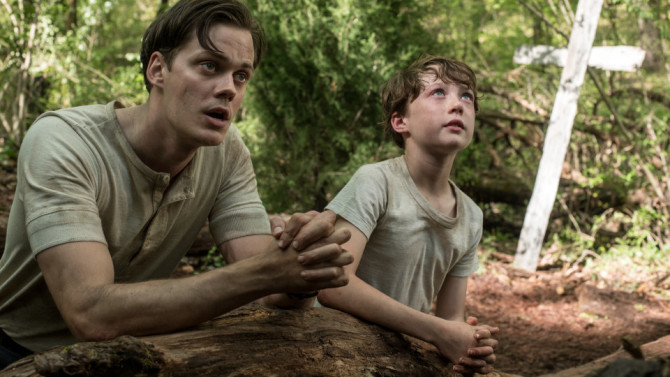
Sebastian Stan

Thunderbolts*

02/05/25

Cineworld, Edinburgh

I’ve been decrying Marvel’s deplorable lack of ambition for so long that, when the studio finally comes up with something that’s genuinely different from what’s gone before, I feel mean when I say that it’s still not quite enough. But more of that later.

Thunderbolts* – and no, that isn’t a typing error, there really is an asterisk in the title, though I honestly haven’t the faintest idea why – is a superhero movie with a difference. The team of players we are presented with are all misfits in one way or another. I guess you could argue that DC’s Suicide Squad offers a similar premise, but it’s more cleverly handled here. Chief among our pound-shop players is Yelena Belova (Florence Pugh), the sister of the now-deceased Black Widow. Once a larger-than-life adrenalin-junkie, Yelena spends all her time miserably doing the bidding of Valentina Allegra de Fontaine (Julia Louis-Dreyfus), a crooked politician with her eye on world-domination. (Hmm. I wonder where they got that idea?)

Yelena has lost touch with her father, Alexei (David Harbour), who now plies a trade as a chauffeur, and she longs for something that will make her feel like she’s actually doing some good. Sent out on yet another thankless mission – to destroy one of de Fontaine’s secret laboratories – Yelena discovers that two others have also been handed the same task. They are shape-shifter Ava Starr (Hannah John-Kaman), and John Walker (Wyatt Russell), a kind of below-parr Captain America knock-off. After a thankless skirmish, the three of them decide to join forces rather than continue to oppose each other and, before leaving, they rescue a seemingly ordinary guy called ‘Bob,’ (Lewis Pullman), who they find wandering about the place looking vaguely confused.

Once back in the real world, the ‘team’ quickly adds congressman Bucky Barnes (Sebastian Stan, last seen by B&B as the odious Donald T in The Apprentice) and, of course, Yelena’s dad, who has been itching for an excuse to ditch the new job and get back into his old Red Guardian outfit. It’s Alexei who comes up with the titular name for the assembly but it isn’t long before they are being pitched by the opportunistic de Fontaine as ‘The New Avengers.’

Thus far, Thunderbolts* feels rather ordinary: too many characters struggling for screen time and going through the same over-familiar tropes – but Bob, it turns out, is the film’s secret weapon in more ways than one, especially once he discovers his own hidden powers. He metamorphoses into a kind of alternate Superman, a dark, brooding figure whose actions are motivated by depression and paranoia and who is much more interested in destroying the world than saving it. He’s also not above rubbing out cute little children who get in his way – a move unthinkable in most superhero films.

While director Jake Schreier takes too long to reveal this trump card, once it’s out there, the proceedings pick up immediately and actually start to feel – dare I say it? – genuinely interesting, which is not a quality I’ve seen in a Marvel film for quite some time. And if nothing else, here’s proof that Florence Pugh is now a major box-office star, always capable of finding new depths in any persona she chooses to take on. Her Yelena is much more than a 2D comic brought to life.

For those who care about such things, there are two post-credit sequences. The first is brief and actually makes me laugh out loud. The second is more complex and offers a glimpse of upcoming Marvel release, The Fantastic Four, but you’ll need to stay in your seats until the bitter end if you want to catch it. It remains to be seen if that seemingly-doomed quartet can be rescued from the doldrums, but for now, Thunderbolts* is way better than expected.

3.6 stars

Philip Caveney
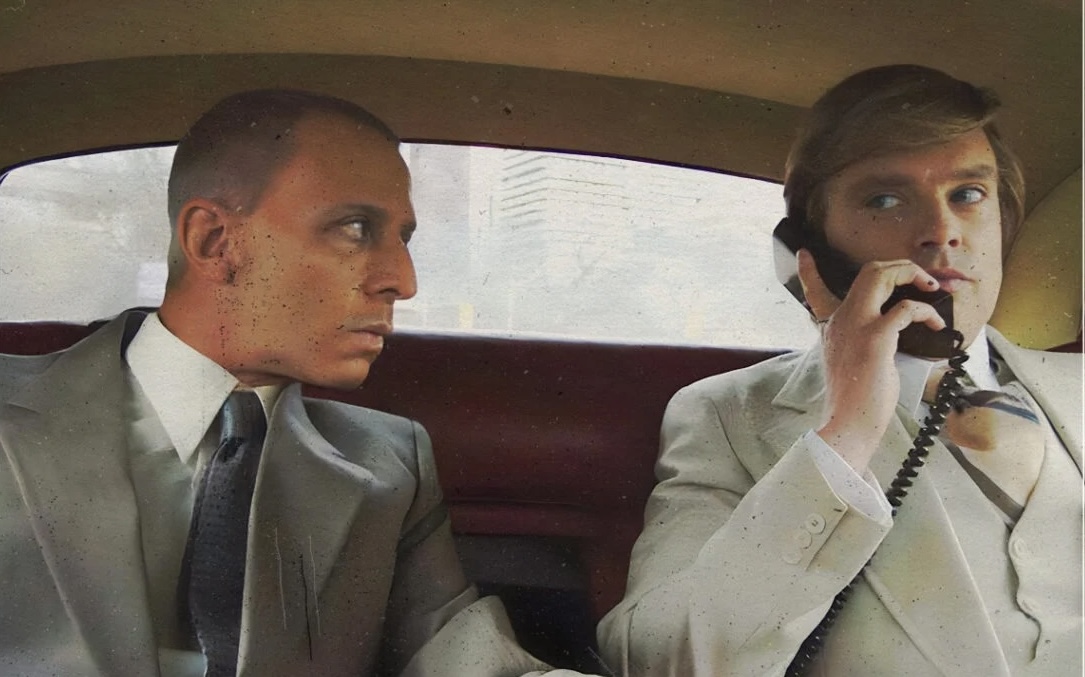
The Apprentice

19/10/24

Cineworld, Llandudno

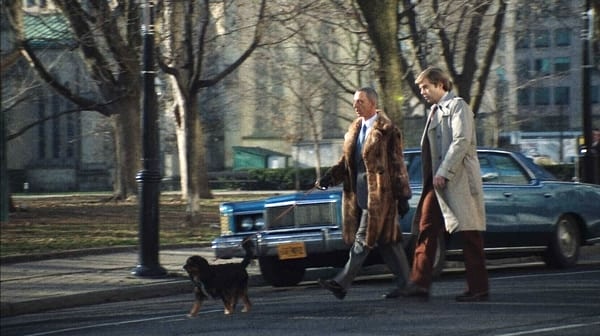
We’re in Wales, visiting Susan’s mum, but Brenda is a bit of an anti-Trump-obsessive and like us, she’s been eagerly awaiting the release of The Apprentice. It’s clearly time to flex the Unlimited card. Abi Abbasi’s biopic couldn’t have come at a more inopportune time for Trump. Of course he’s threatened legal action, though I’m pretty sure that Abbasi’s film doesn’t feature anything that isn’t already common knowledge to those who’ve read some of the numerous books about the man – but what it does, very effectively I think, is to illustrate how the Trump-monster was made and shaped.

Like most beasts, he’s learned his craft through imitation.

When we first meet Donald (Sebastian Stan) it’s 1973 and he’s essentially a slum landlord in New York City, trying his level best to please his ever-critical father, Fred (Martin Donovan), and deal with his alcoholic older brother Freddy (Charlie Carrick). The family fortune has already been made and the Trumps are currently fighting allegations that they have been discriminating against their African-American tenants – but Donald is looking for ways to better himself and has a vision of turning the long-derelict Gulf and Western building into a gleaming new construction called Trump Tower. But he knows he can’t do it alone.

Then he falls into the company of Roy Cohn (Jeremy Strong), a ruthless lawyer, best known at this point for securing the death penalty for the Rosenbergs, a man who will stop at nothing to get his own way. He takes Donald under his wing and quickly drills into him his personal mantra. Never admit defeat, the truth is what you say it is and always act as though you’ve won, even if you haven’t.

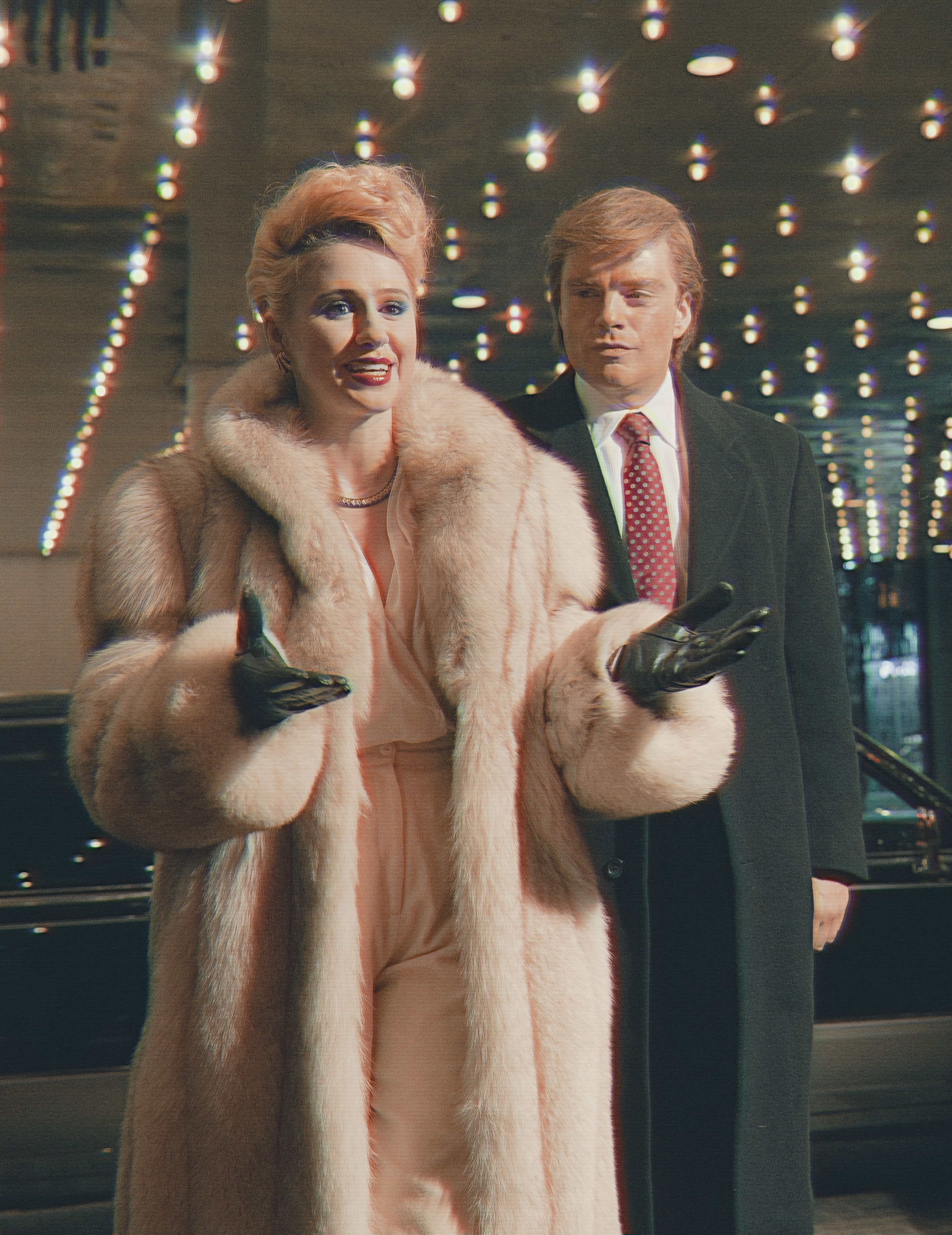
Pretty soon, Trump has become the perfect acolyte, copying all of Cohn’s traits and even doubling down on them. When Donald meets and falls for Ivana Zelničková (Maria Bakalova), there’s a moment where it seems as though the film might be about to let him off the hook. His clumsy attempts to seduce her make him seem almost… relatable – but the feeling is short-lived. The monster soon comes back to the fore and the scene where his affectations turn against his former love is shocking to say the least.

Sebastian Stan does a pretty good job of capturing Trump’s gradual deterioration into the beast we know. Holding back the man’s distinctive hand gestures and vocal affectations until the film’s final furlong, he literally grows into the role. Strong, meanwhile, submits an extraordinarily chilling performance as Cohn: lean, cadaverous, almost alien, he surveys everyone he meets with the same dead-eyed stare. Here is a man who hides his real identity behind a mask, who puts down his enemies with a barrage of verbal abuse, while secretly pursuing a dissolute life with complete abandon. He’s totally toxic and yet, his ultimate treatment by Trump, when he has outlived his use, is all the more shameful because of that toxicity – and it’s hard not to feel some sympathy for him.

Abas meanwhile, captures the look and feel of the changing decades with a skilful combination of found footage and reimagined scenes. His use of music is inspired. Using Yes Sir, I Can Boogie as Ivana’s unofficial theme tune is particularly effective.

Trump can (and surely will) protest that releasing The Apprentice when he is gearing up for the fight to become the US President for a second term is inexcusable – but, as this film so clearly portrays, when it comes to a dirty, underhand fight, this is a man with considerable experience of his own.

4.3 stars

Philip Caveney

A Different Man

05/10/24

Cineworld, Edinburgh

It’s not hard to imagine actor Adam Pearson’s delight on first reading the script for A Different Man. The film, a three-hander, was written expressly for him – and, my word, it gives him a chance to show what he can do. It also challenges our preconceptions and prejudices around disability and disfigurement – but not in any obvious, seen-it-all-before way.

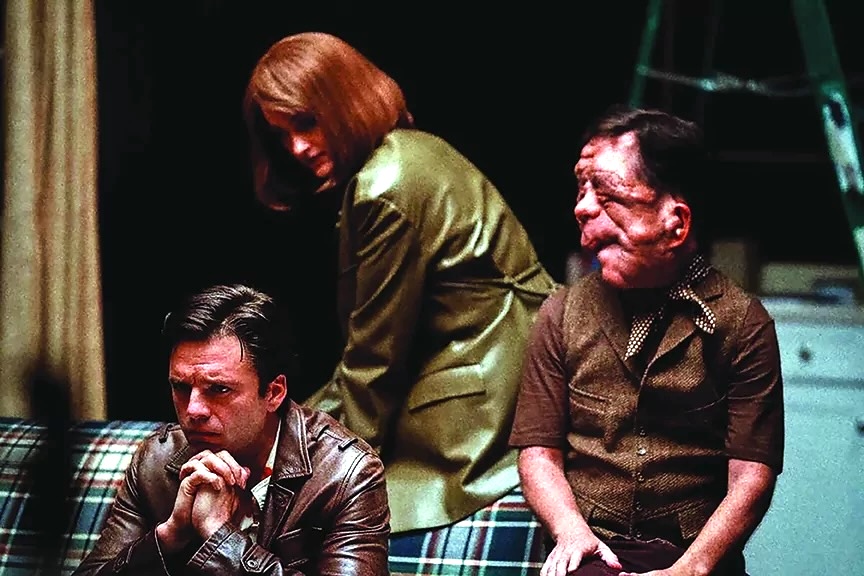
Writer-director Aaron Schimberg has a cleft palate, so he knows something of how it feels to look different. Pearson, meanwhile – along with his character, Oswald, and Sebastian Stan’s character, Edward – has neurofibromatosis, which is a lot more noticeable. Edward copes by keeping his head down and trying to make himself small. He’s quiet, unassuming, and sadly accepting of his lot. He is an actor, but he doesn’t get much work – unless you count condescending corporate training videos of the ‘how to behave around your disabled colleagues’ variety.

And then two things happen.

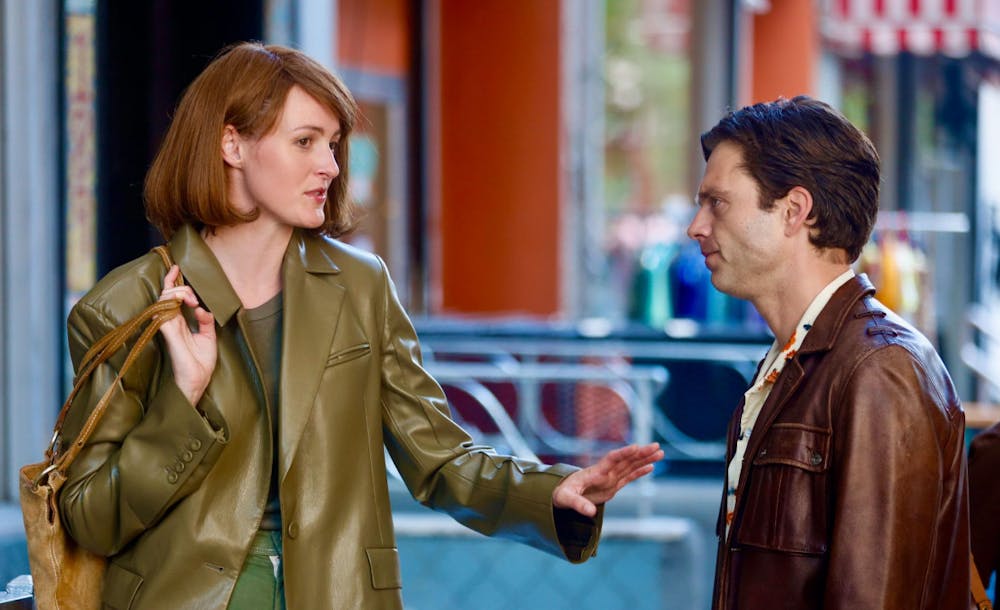
First, Edward is offered the chance to take part in a drug trial for a revolutionary new treatment that will transform his appearance. Next, he meets his new neighbour, aspiring playwright Ingrid (Renate Reinsve), and begins to develop feelings for her. She’s nice to him – but recoils when he makes a tentative move.

He decides to take the plunge.

As the tumours begin to literally fall from his face (courtesy of some pretty impressive prosthetics), a new Edward emerges, smooth-skinned and conventionally handsome. Keen to shuck off his old identity as well as his deformities, he informs everyone that Edward has committed suicide and rebrands himself as ‘Guy’. Before long, he’s living the dream, with a well-paid job, a luxury flat and an active sex life. What more could he want?

The answer, it turns out, is the starring role in Ingrid’s off-off-Broadway play, Edward, which is all about her friendship with her tragic neighbour. But she’s not sure about giving Guy the part – it wouldn’t be authentic and surely a disfigured actor ought to get the role? But, she has to admit, there’s something compelling about Guy, even if he does have to wear a mask on stage.

And then Oswald turns up, cheerily intrigued by the idea of the play with a central part he feels he was born for. He’s keen to see how Ingrid has written the character and what Guy brings to the role. He looks like Edward used to look, but that’s where the similarity ends. Because Oswald is no one’s victim. He’s a happy, talented, popular man, keen to grasp new opportunities, comfortable in his own skin. Edward can’t cope, his cocksure persona crumbling in the face of Oswald’s frank and open confidence. Before too long, he finds himself replaced…

The three central performances are all impressive, although Pearson is the one who shines. Stan is believably conflicted as the shy, awkward Edward, his true nature visible to the viewer even when he’s swaggering and trying to inhabit his brave new world. Reinsve, meanwhile, is perfect as the deluded Ingrid, convincing herself that she’s not only well-intentioned but also alert to discrimination, despite the self-serving nature of her work, and the fact that she keeps referring to Beauty and the Beast as her inspiration.

A Different Man is well-crafted on every level but, primarily, it is a clever piece of writing, as multi-layered as Stan’s prosthetics, unflinching in its examination of how non-disabled people view those with disabilities. Without offering any easy answers, it also explores the ideas of authenticity and appropriation, all the while avoiding anything resembling a cliché. This is the sort of script that sparks ethical discussions – akin in some ways to American Fiction, The Substance or Scottish playwright Kieran Hurley’s Mouthpiece.

Nuanced, shocking, intelligent and insightful, this is a memorable movie for all the right reasons.

4.7 stars

Susan Singfield

Fresh

17/06/22

Disney+

I have high hopes of this comedy-horror, where the feminist sub-text is right there on the surface. It promises to be a ‘fresh’ take on a well-worn trope, written and directed by two women (Lauryn Kahn and Mimi Cave respectively). So imagine my disappointment when I find myself watching an all-too familiar extended sequence: a beautiful young woman chained up in a cruel madman’s basement, crying and begging for her freedom. Surely I can’t be alone in thinking that it’s not enough to subvert the ending (spoiler: it’s not a man who saves the day)? That, actually, you can’t make a valid point about the exploitation of women by exploiting them further? Or that a film that lingers unironically on images of women’s suffering loses its claim to be a fucking comedy?

It starts off promisingly. Okay, so it’s not exactly subtle. Noa (Daisy Edgar-Jones) is single and sick of the dating scene. We see her out with a cartoonish man, all wafting scarf and pronouncements about how women just aren’t as feminine as they used to be. It’s mildly amusing: recognisably awful, but also (whisper) a bit hack. Later, she texts another guy, who immediately sends her a dick pic. Maybe love just isn’t for her, she tells her best pal, Mollie (Jojo T Gibbs). But then she meets Steve (Sebastian Stan), who seems too good to be true. He’s sweet, polite, engaging, kind.

And yeah, too good to be true. Because Steve is a cannibal, who butchers women. It’s an obvious metaphor for the romance meat market – and, sadly, the film’s charm wears off as quickly as Steve’s. The lengthy pre-credit sequence hints at something gentle and quirky; what follows is almost gore-by-numbers, albeit with some gorgeous cinematography (by Pawel Pogorzelski) and a banging 80s soundtrack.

Ach, I don’t know. It makes me weary. I hated rape-revenge movies The Girl With the Dragon Tattoo and Elle for the same reason: I don’t want to watch women being victimised, and then emerging, brutalised, to re-enact the same violence against men. That’s not redemption; it’s having your steak and eating it: a tone-deaf definition of a ‘strong woman’ – and we shouldn’t let the film-makers off the hook. Emerald Fennell nails feminist vengeance in Promising Young Woman, proving it can be done.

That’s not to say there’s nothing good about this film. The actors are all impressive, although Gibbs is criminally under-used as Mollie (of course she is, because Mollie is black and gay, only ever destined for a sidekick role alongside the straight, white heroine). I like the device of setting up Paul (Dayo Okeniyi) as a potential hero, and then deflating that hope. Stan is well-cast as the killer, plausibly likeable, so that his success in charming Noa seems credible enough. The initial meat-packing sequences are wonderfully stylised, hinting at the better movie this could have been.

In many ways, the whole thing works better as an analogy for farming, where animals live in captivity, and where ‘kindness’ only extends as far as keeping them warm and fed so that they’re tender and disease-free when we come to eat them. That’s not the intended message, but it’s the one I’m taking home.

This movie just doesn’t work for me: the ‘comedy’ never raises more than a small smile, and the ‘horror’ is nasty rather than scary. Sadly, in the end, Fresh is more than a little bit stale.

2.2 stars

Susan Singfield

The Devil All the Time

23/09/20

Netflix

Imagine the vibrant Americana of the Coen Brothers, twisted into a seething vat of venomous corruption and you’ll pretty much have the measure of The Devil All the Time. Directed and co-written by Antonio Campos and based on a novel by Donald Ray Pollock (who serves as our narrator), this is a multi-layered, labyrinthine slow-burner of a film, where a whole string of characters are linked by a series of weird coincidences. In Pollock’s bleak world view, the blame for most of the evil that plagues humanity can be laid squarely at the door of organised religion.

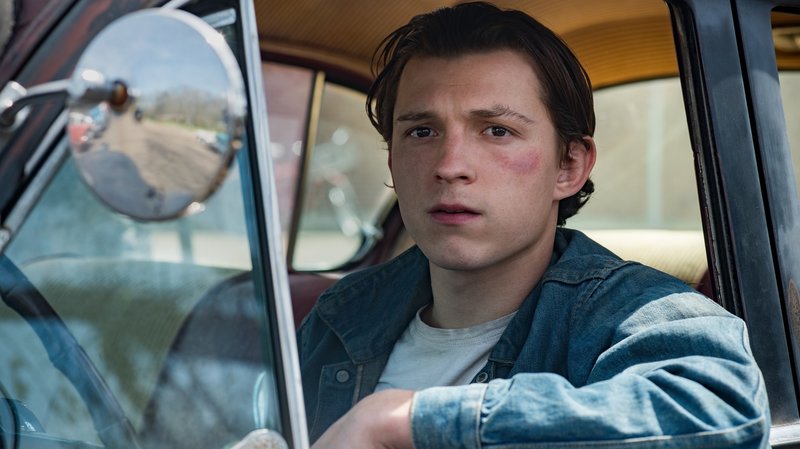
The central character, Arvon Russell (Tom Holland), is one of the few sympathetic human beings in this narrative, and even he is someone given to Old Testament levels of brutality towards anyone who wrongs his much-loved step sister, Lenora (Eliza Scanlen). Arvon’s violent tendencies stem from the treatment he received from his God-fearing Dad, Willard (Bill Skarsgard), who very much believed in the eye-for-an-eye approach and whose treatment of the family pet is particularly hard to stomach. Lassie Come Home, this really isn’t.  

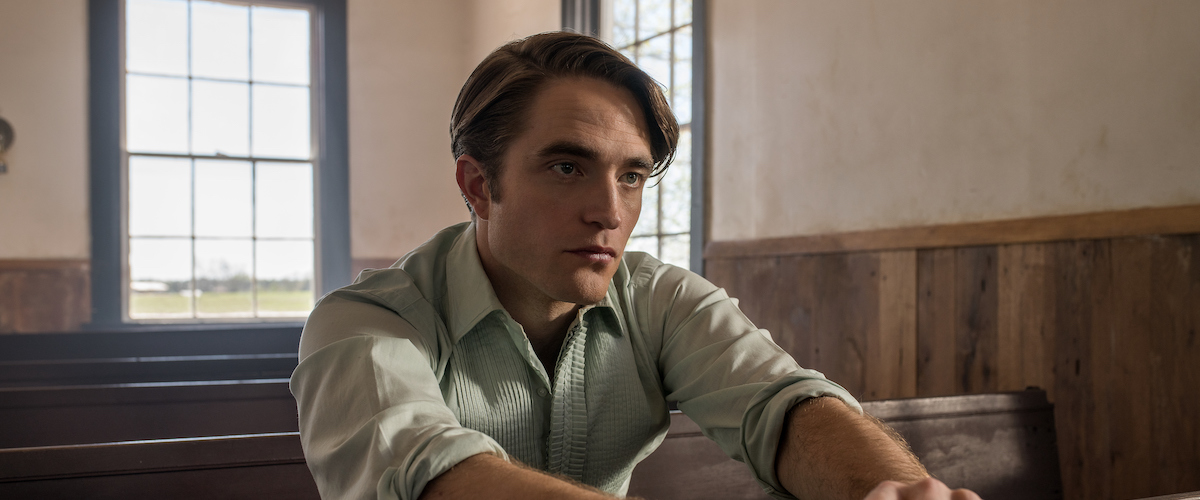
Elsewhere, we encounter the Reverend Preston Teagarden (Robert Pattinson), a sleazy preacher with a predilection for seducing young girls: crooked cop Lee Bodecker (Sebastian Stan) who’ll do whatever is necessary to further his ambitions, and a particularly vile couple, played by Jason Clarke and Riley Keough, who get their kicks from picking up young male hitchhikers…

On paper, it all sounds rather relentless but, unfolded as it is in a slow, measured narrative, it’s a surprisingly powerful brew. As Arvon is led inexorably deeper and deeper along the path to retribution, I find myself gripped right up to the final credits. It helps that a whole menagerie of talented actors submit nuanced performances here, particularly Holland who proves beyond a shadow of a doubt that there’s a lot more to him than slinging webs.

This may not be to everybody’s taste. As a vision of the United States, there’s little here resembling any kind of hope for the country’s collective soul. Indeed, it is a tale so excoriating, so morally bankrupt, that you can only feel a nagging worry for the society that spawned it. 

The Devil All the Time is a Netflix original, ready to watch whenever you have the time, or the nerve, to take it on.

4.2 stars

Philip Caveney

I, Tonya

18/02/18

Just when you think  the Oscar race can’t get any tighter, in swaggers I, Tonya, straight out of left field and hits you with a hefty sucker punch, right in the kisser. This noisy, brazen biopic is wonderfully enervating and it’s clear that its claim to be ‘the Good Fellas of figure skating’  isn’t so very wide of the mark. Indeed, the constant jumping from time-frame to time-frame, the fake interviews, the occasional deadpan remarks delivered straight to camera and, above all else, the wonderful classic rock soundtrack – all serve to remind you of Martin Scorcese’s finest movie. But it’s much more than just a pale imitation of that film. There’s so much to admire here, not least Margot Robbie’s incendiary performance in the title role.

Tonya Harding, it seems, had a fight on her hands from her earliest days. Knocked around by her hard-as-nails, chain-smoking momma, LaVona (Alison Janney, in brilliant Oscar-baiting form), beaten up by her ne’er-do-well husband, Jeff (Sebastian Stan), she manages to battle through, performing manoeuvres on the rink that no other skater has ever dared to try –  but her ‘wrong-side-of-the-tracks’ persona doesn’t stand her in good stead with the judges, who like to see a little more deportment doled out alongside the leaps, twirls and pirouettes.

Of course, we all know why she came to wider attention – through the notoriety of a vicious attack on her main rival, Nancy Kerrigan (Caitlin Carver), which left her hospitalised just as they were both preparing to skate in the Olympics. Despite being only tangentially involved in the incident – it was originally devised as a series of poison pen letters by Jeff and then pumped up out of all proportion by Tonya’s so-called ‘bodyguard,’ Shawn – Tonya ends up paying the highest price when Shawn decides to go a bit further with the plan and enlists the aid of some very dodgy people indeed. What follows is so bizarre, it can only be a true story…

Director Craig Gillespie handles the material with an edgy, almost experimental approach, throwing in slow-mo and jump cuts with glee – and the mesmerising skating sequences are so cleverly staged, you literally cannot see the joins. That appears to be Robbie on the screen, skating up a storm, but it can’t really be, can it? Like many other recent biopics, there’s a final sequence of interviews showing the real life protagonists, just so you can fully appreciate how close these characterisations keep to the originals, which is particularly surprising in the case of Paul Walter Hauser’s hilariously off-the-wall performance as the cartoonish Shawn. It’s an eye-opener.

Go and see this riotous, hard-hitting and occasionally hilarious film and enjoy what must qualify as one of the strangest sporting stories in recent history. And as for that rock soundtrack, if you can manage to sit in your seat without twitching and foot-tapping along in accompaniment, then you’re made of sterner stuff than me.

4.9 stars

Philip Caveney

Captain America: Civil War

NEsoFG6dA3s9vt_2_b

19/05/16

I’ve been going through a severe bout of spandex withdrawal recently, so I approached this film with extreme caution, despite having heard several favourable reports. The Marvel universe is becoming an out-of-control behemoth, which seems obliged to draw in more and more comic book characters as it trundles along, until there are so many costumed characters onscreen, it starts to overpower the story lines.

Having said that, Captain America: Civil War starts promisingly, roping in some surprisingly serious ideas that for once, do not seem aimed purely at its teenage fan boy audience. In Nigeria, to thwart an attempt by some bad guys to steal a dangerous chemical agent, Steve Rogers/Captain America (Chris Evans) and three of the other Avengers get a little carried away with the general kick-assery and in a scene that put me in mind of Team America: World Police, a whole bunch of innocent civilians are killed in the crossfire.

The United Nations decides to issue an edict that the Avengers are not to act off their own bat any more but only if and when granted permission to go into action. Half of the team, headed by Tony Stark/Iron Man (Robert Downey Junior) think this is a reasonable idea and elect to sign the necessary forms – but the other half, headed by Captain America, refuse to commit to it. And then, Bucky Barnes /The Winter Soldier (Sebastian Stan) is roused from his slumbers to undertake a mission on behalf of his Soviet puppet masters and the Captain finds himself torn between helping his old friend or hunting him down…

Up to this point, it’s all nicely done, but then, inevitably, the opposing sides in the United Nations squabble square up for a battle, enlisting extra help from other Marvel characters and the story buckles under the weight of servicing the antics of so many costumed characters – Ant Man, Hawkeye, Black Panther, Black Widow, War Machine, Vision… even Spider-Man (Tom Holland) is brought back into the proceedings as an eager-to-please teenage recruit (a single fun idea in the midst of the mayhem, though it’s nowhere near enough to rescue the film from what’s coming.) The resulting airport-based punch-up seems to go on for ever in that cartoonish 12A way that Marvel have perfected over the years and any hope of coherence goes straight out of the nearest window. Of course its all skilfully done, but it’s somehow distressing to witness so much expertise (and dare I mention, so many millions of dollars) wasted on what amounts to a souped-up brawl.

I appreciate that I’m not in the target audience for films like this, but honestly, Marvel need to understand that less is more. This feels like a great big, bloated exercise in extreme tedium. An accompanying trailer for X-Men Apocalypse appeared to offer another indigestible helping of the same sort of pudding.

Thanks, but I think I’ll pass.

2.5 stars

Philip Caveney