Sally Cookson

Cinderella: A Fairytale

29/11/25

Royal Lyceum Theatre, Edinburgh

Look, I love a good panto as much as the next drama queen. Still, I have to admit there is something very special about this chance to see a Christmassy rendition of one of the world’s most famous fairy-tales without the distraction of all the boo-hiss-he’s-behind-you-wink-wink-nod-nod stuff. Cinderella‘s plucky orphan narrative is a compelling one, not least because of its moral certainty, where the good are rewarded and the bad are well and truly punished: there’s vengeance at play here, as well as virtue. And, in this version by Sally Cookson, Adam Peck and the Original Company, that dichotomy is writ large.

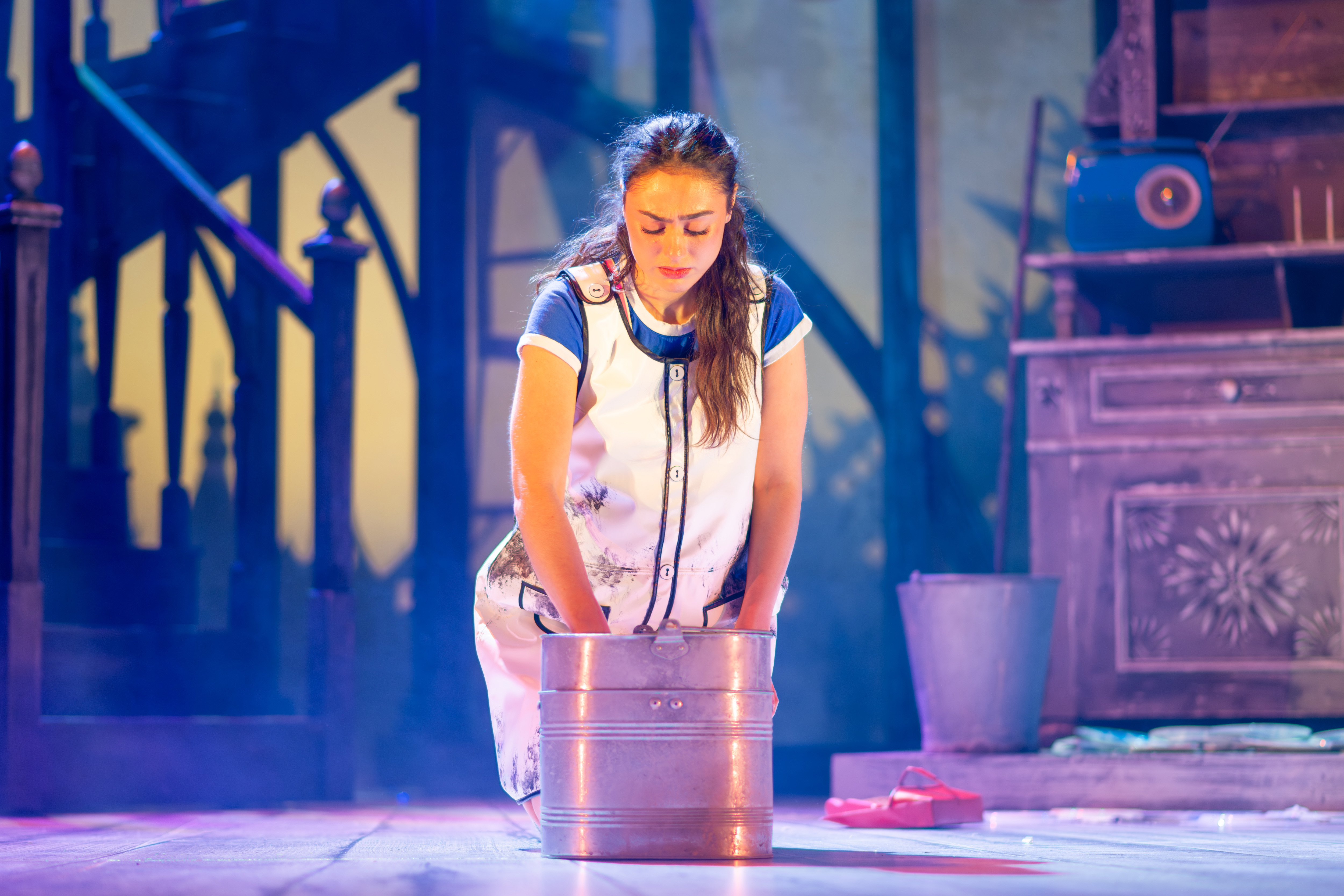
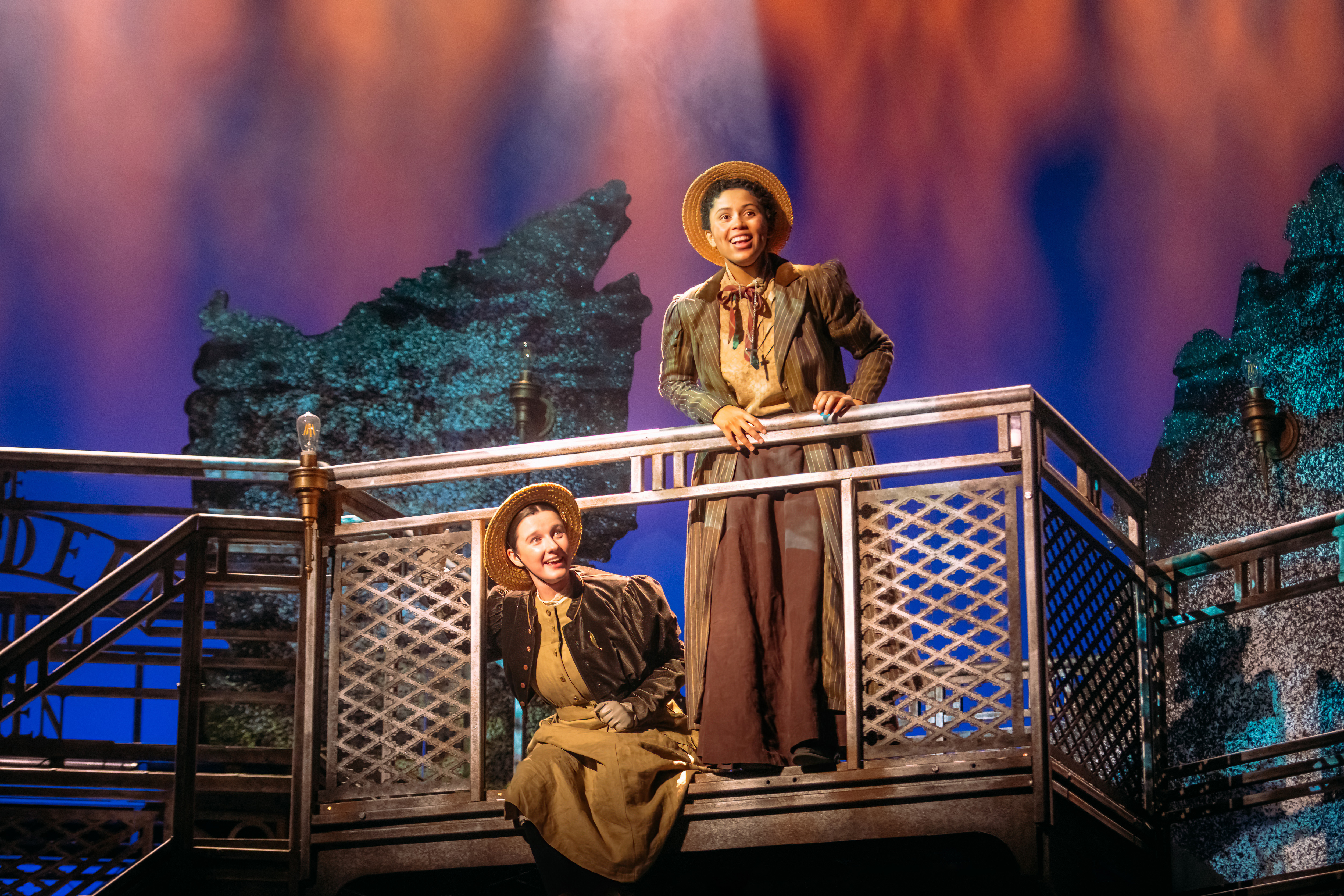
Ella (Olivia Hemmati) lives in a gloriously-realised enchanted forest, all dappled sunlight and multi-coloured birds. The home she shares with her dad (Richard Conlon) is one of those idyllic, romantically-ramshackle cottages where poor people live in story books, and she’s happy there. But when Father marries Mother (Nicole Cooper), everything changes: not only does her step-mum impose a whole raft of irritating rules, she also brings along her own two children, Sister (Christina Gordon) and Brother (Matthew Forbes), who are so priggish and uptight that Ella can’t stand them. And then, just as she’s getting used to the new regime, Father dies, leaving a grieving Ella at Mother’s mercy…

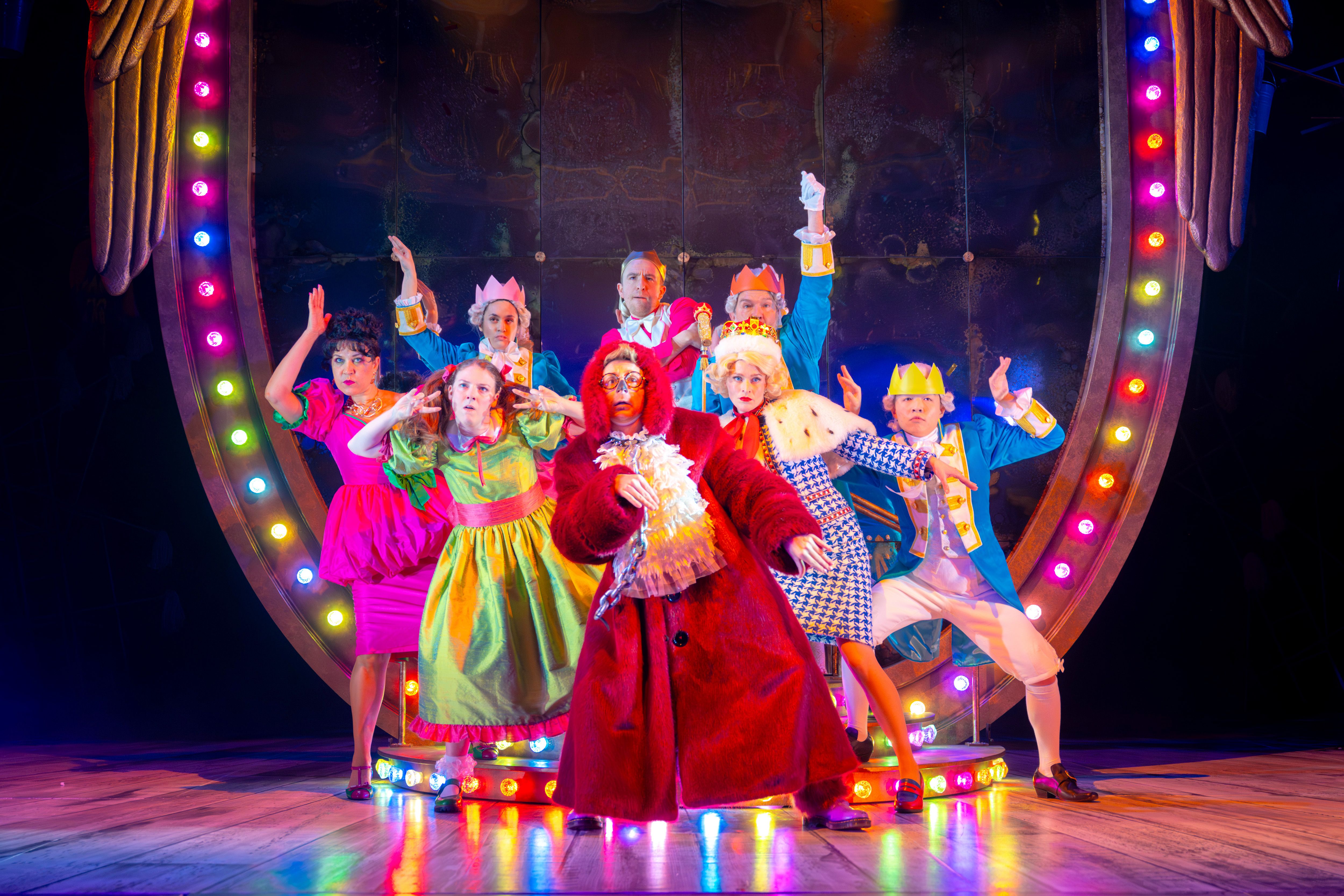
The strength of this show lies in its aesthetic: Francis O’Connor’s set and costume design evoke an ethereal other-worldliness, where magic feels eminently possible. The bird puppets (directed by Forbes and manned by Leo Shak, Stephanie Cremona and the cast) are fabulous, their rainbow plumes as appealing as they are fantastical. Even as a middle-aged woman, I’m completely captivated; how alluring must this staging be for the children in the audience?

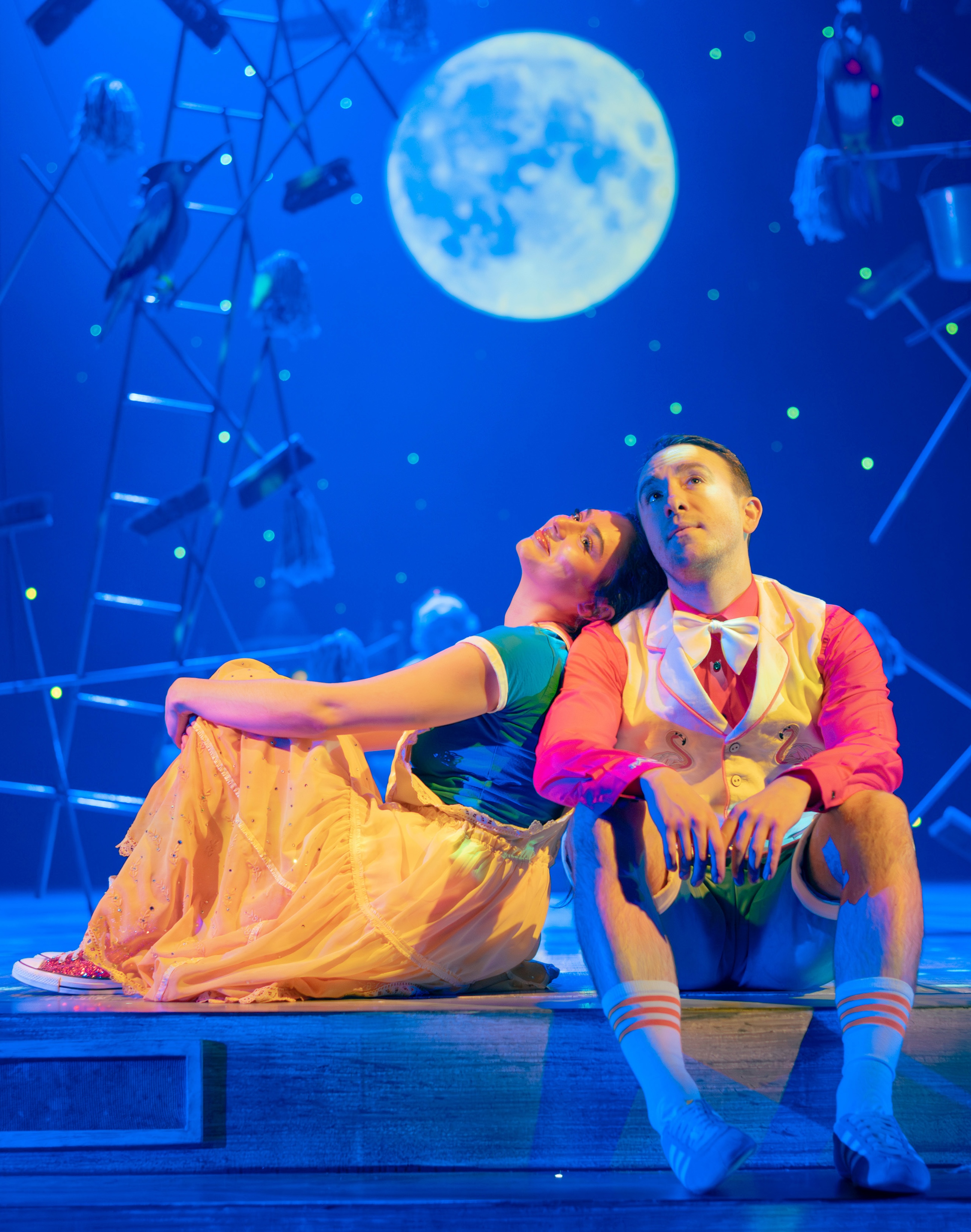
The love story element is underplayed: Prince (Sam Stopford) is a nerdy teenage ornithologist and he and Ella strike up such a lovely, convincing friendship that the idea of their marriage seems jarring and incongruous. Director Jemima Levick wisely eschews any overt wedding pageantry, but I do wonder if it would be better to remove the romance entirely, focusing instead on the simple affection between the pair. After all, it’s not as if there’s the same financial imperative for this Ella, who seems to be living in a whimsical approximation of the contemporary world, as there was for her Grimm progenitor, who needed a husband to escape her servitude.

Cooper is obviously having a whale of a time as the odious Mother, camping up her tantrums and cruelty to create a deliciously-devilish interpretation of the character. The protracted toe-chopping sequence – the production’s only real nod to the folk story’s dark heart – is a gruesome highlight. Meanwhile, Gordon and Forbes’ Ugly Siblings are more sympathetic and nuanced than their traditional counterparts, frightened and corrupted by their toxic mum – and clearly redeemable. Carly Anderson has less to do as Queen, who appears here as a slightly-sozzled, benignly-bemused socialite. It’s an interesting take on the role but she is under-used.

Jon Beales’ music and Emily Jane Boyle’s choreography complement each other perfectly, enhancing the story and ensuring the pace never flags.

All in all, this is a delightful production, and one that is sure to enthral audiences of all ages this festive season.

4.2 stars

Susan Singfield
Dracula: Mina’s Reckoning

11/10/23

Festival Theatre, Edinburgh

Bram Stoker’s Dracula is one of those novels, like Alice in Wonderland, that is more famous for its enduring imagery than for its story. Its iconic characters are part of the fabric of our culture, recognised instinctively, even by those who have never so much as picked up the book. Such tales are ripe for retelling, like ciphers waiting to be reshaped for our times.

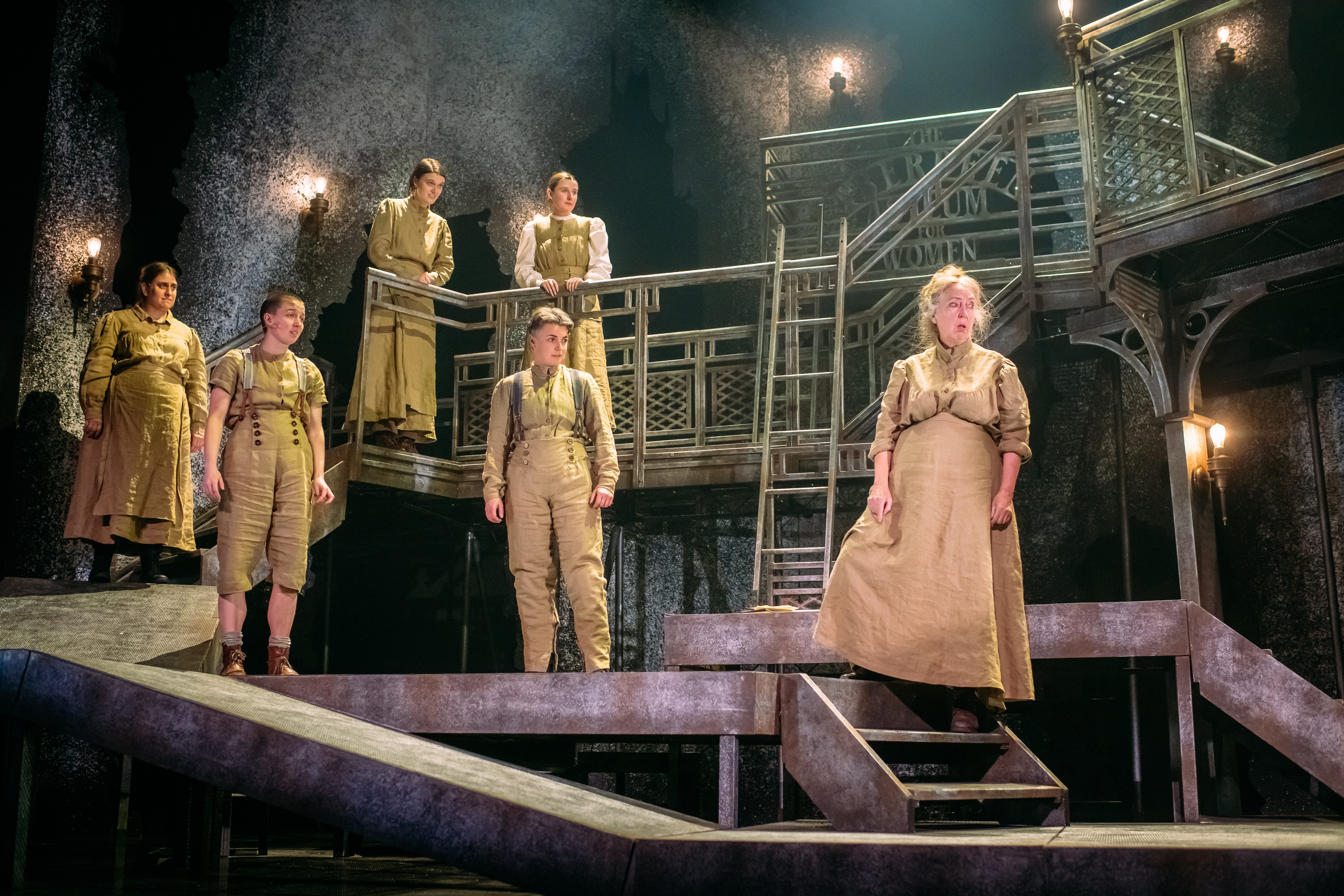
Into that space steps Mina’s Reckoning, a reimagining of the world’s most famous vampire, written by Morna Pearson and directed by Sally Cookson. This all-female and non-binary production redresses the gender imbalances in the source material: here, the women are elevated from mere victims and damsels-in-distress and are actually afforded some agency.

Whitby is out and north-east Scotland is in, justified by the fact that Scots writer Emily Gerard provided much of the inspiration for Stoker’s novel: it was from her work that he learned about the Romanian superstitions that inform some of the most compelling ideas in his book. More specifically, we’re in Cruden Bay, in a women’s asylum, where some of the characters speak in the Doric dialect. The Scots angle works well, the rhythms of the language creating an earthy poetry. The play opens with Mina (Danielle Jam) banging on the asylum door, demanding to be let in. She has Jonathan’s journals and wants Dr Seward (a wonderfully comic Maggie Bain) to help her ward off the evil that’s on its way.

The long first act sticks pretty closely to Stoker’s tale, albeit with more jokes and some judicious pruning (the boring suitor sequences are gone, thank goodness, and so are the details of Jonathan’s interminable journey). The second, shorter, act is much better, precisely because this is where the creative reimagining takes place, allowing Mina to come into her own. It’s a shame that the piece skews this way: it feels unbalanced. I’d like a shorter set-up and a longer unravelling.

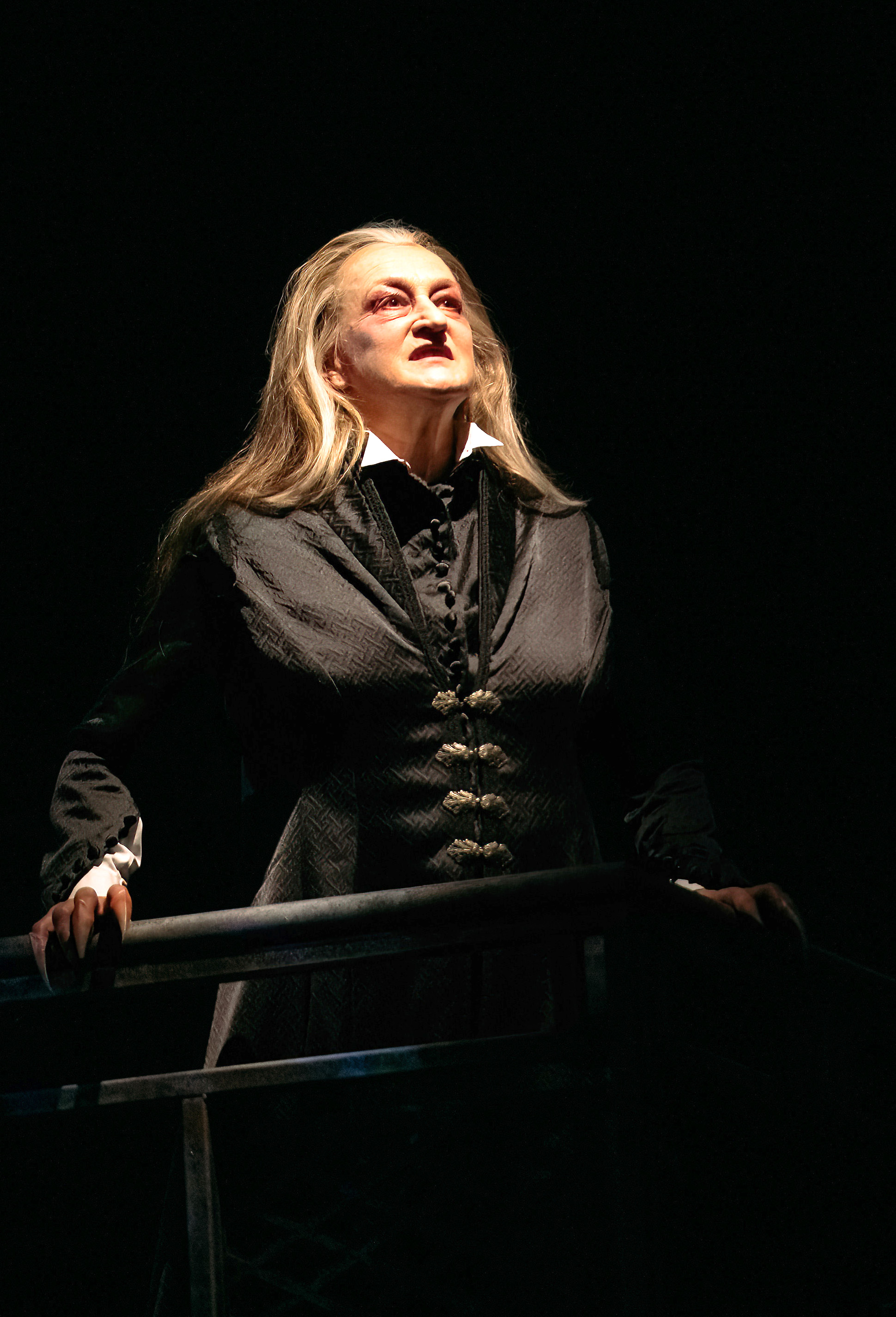
It’s a great idea to recast Dracula as a woman and Liz Kettle clearly relishes the role. She’s a bold presence, at once attractive and repellant, exactly as the Count should be. Here, the blood-sucker is more nuanced than her original incarnation, both supervillain and saviour. As Mina seals her Faustian deal, we recognise what Dracula is offering her, and understand exactly why she makes the choice she does.

Kenneth MacLeod’s set is both the production’s strength and its weakness. It’s clever and imposing, evoking the chillingly austere asylum as well as the grand gothic castle – all staircases and hidden corners – and I like the use of Lewis den Hertog’s video projections and Aideen Malone’s lights to stain the walls red with blood, turning them into journals, then night skies, then stormy seas. However, the set’s cage-like qualities – the bars and rails imprisoning the women – also create a sense of distance, so that it’s hard to feel close to the characters and to empathise with them. What’s more, it makes the whole play less scary because we’re not immersed in the ghoulish goings-on.

Benji Bower’s music is wonderfully eerie and evocative but the sound drowns out the dialogue at times, which is a shame, as it obscures some of the finer details of the plot. Likewise, the ensemble work is excellent, but comes at the expense of the individual characters, as the inmates of the asylum blend together.

Albeit a little uneven, there’s a lot to like about this NTS and Aberdeen Performing Arts production, in association with Coventry’s Belgrade Theatre. The powerful image of Kettle, striding the ramparts – grey hair flowing, coat tails billowing – is one that will stay with me for a long time.

3.8 stars

Susan Singfield

The Lion, the Witch and the Wardrobe

08/02/22

King’s Theatre, Edinburgh

And, we’re back!

After the disappointment of seeing the King’s Theatre close its doors shortly after the launch of the Christmas pantomime, it’s wonderful to return once more to the stalls of the ‘Old Lady of Leven Street’ – and what a fabulous offering to kick things back into motion! I’ve seen several adaptations of CS Lewis’s celebrated book over the years, but few have handled the material quite as skilfully as in this powerful show, directed by Michael Fentiman and based upon Sally Cookson’s original production.

The four Pevensie children – Susan (Robyn Sinclair), Lucy (Karise Yansen), Peter (Ammar Duffus) and Edmund (Shaka Kalokoh) – are sent away from home as evacuees and, in a brilliantly staged opening , find themselves whisked off by train to a remote house somewhere in the wilds of Scotland. Here they meet their host, Professor Kirk (Johnson Willis), the owner of a curious cat and an ancient wardrobe that provides a convenient portal to the forever-winter world of Narnia…

From the outset here is a production that dazzles with enchantment. There’s a big cast, all of whom are given their chance to shine as they dance, play music and slip from character to character with apparent ease. This isn’t so much a full blown musical as a play with songs and the occasional burst of foot-tapping music. Of course, all the familiar faces are in place. There’s the imperious white witch (Samantha Womack), the messiah-like lion (Chris Jared), the flute-tootling faun (Jez Unwin) and the two of rebellious beavers (Sam Buttery and Christina Tedders), intent on returning Narnia to the way it used to be, before the snow began to fall.

There are several moments here that actually make me gasp in surprise: simply but effectively staged flying sequences; genuinely mind-twisting magical effects; and a brilliantly engineered set, where circular panels move smoothly aside to reveal fresh wonders, looking for all the world like Renaissance paintings. The audience sits spellbound as the performers leap and whirl across the stage in a riot of sound, colour and spectacle. The character of Aslan, simultaneously a real actor and a huge puppet, is an absolute masterstroke.

If you’ve been missing the buzz of live theatre, The Lion, the Witch and the Wardrobe offers a feast of delights for all the family – and, if you’ve been waiting for just the right production to lure you back, this must surely be the one to do it.

4.6 stars

Philip Caveney

Jane Eyre

Unknown-3 333880_770_previewFullSizeRender

03/10/15

National Theatre, London

Jane Eyre is one of my favourite books, but I’ve been bitterly disappointed by most film and theatre adaptations, despairing of directors who interpret Jane as quiet and reserved. Thank goodness then for this collaboration between the National Theatre and Bristol’s Old Vic, devised by the company, which is by far the best I have ever seen.

It’s a dynamic interpretation, eschewing the rigid formula of a period drama, in favour of a more holistic view of the novel. This makes for a surprisingly faithful telling of the narrative: free from the confines of a naturalistic set and strict chronology, director Sally Cookson has created space for Jane’s whole story to be centre stage.

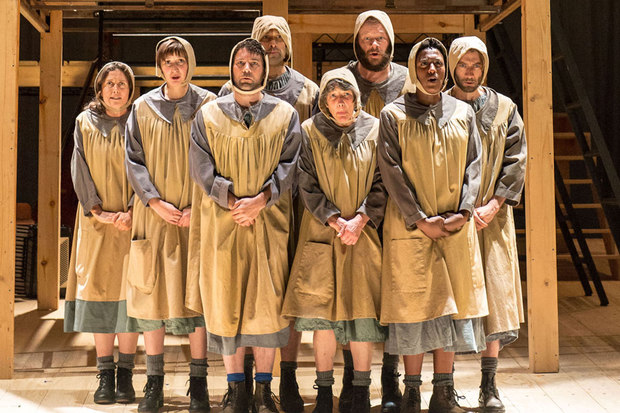
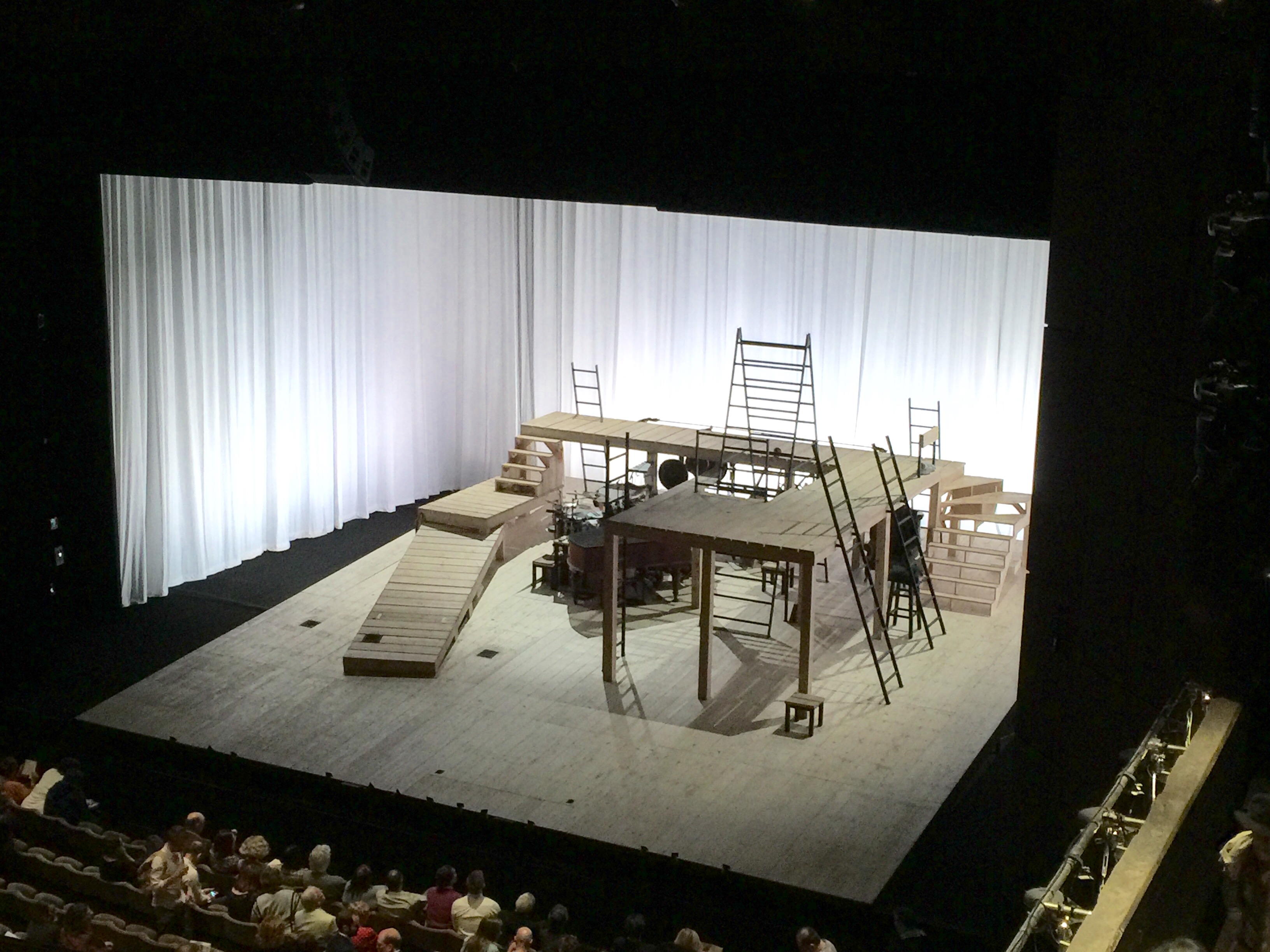
The set is functional: a series of wooden boards and platforms linked by steps and ladders. It works, each of the locations rendered believable by the way in which the actors interact with it. This is a very physical production, with actors hurtling up and down and all around. With less assured direction it could all seem chaotic; in these hands, it’s a lively, energetic delight, with all Jane’s feisty, angry, raging spirit spilling out over the stage.

Madeleine Worrall, as Jane, embodies that spirit perfectly, and Melanie Marshall’s musical Bertha, dressed in red and looming large throughout Jane’s life, is truly glorious: Jane’s inner self writ large, demanding both our attention and our care.

There is humour too. Craig Edwards’ Pilot is a triumph of physical theatre: a huge, enthusiastic, bounding dog brought convincingly to life. Laura Elphinstone’s Adele is equally engaging, a needy, sweet and funny child, just desperate for love.

But this is ensemble theatre, and the whole cast work together well. I can’t do justice here to the breadth of ideas sewn so seamlessly into this play. It’s an imaginative, exciting and innovative piece of theatre, breathing fresh life into a tale I thought I knew too well.

Do try to catch it if you can.

5 stars

Susan Singfield