Rosamund Pike

Inter Alia: NT Live

07/09/25

Cineworld, Edinburgh

What Suzie (Miller) Did Next was bound to garner a lot of attention. The mega-success of Prima Facie, starring the inimitable Jodie Comer, has catapulted the Aussie playwright into the limelight, and left the theatre world waiting with baited breath to see what else she has up her silk sleeve.

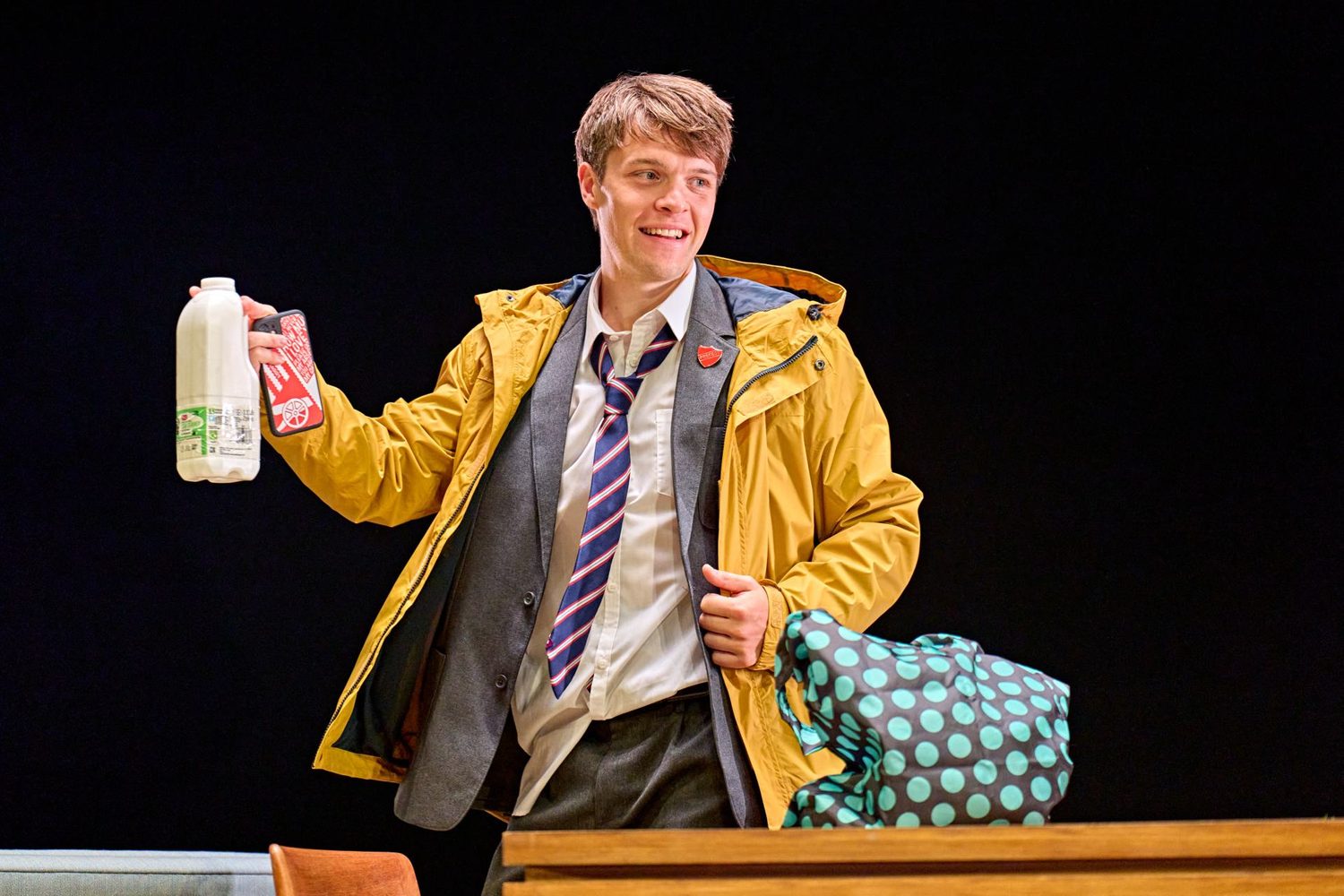
Inter Alia, a three-hander starring Rosamund Pike, serves as a kind of companion piece to the 2019 monologue, this time examining the legal system’s response to sexual assault from the vantage point of the Bench. Pike plays Judge Jessica Parks, a high-flying professional, juggling work and family life. She’s got the drive and energy to give both her all, but there’s no escaping ‘mom guilt’, however feminist you are. Still, she and her barrister husband, Michael (Jamie Glover), seem to be managing well: their teenage son, Harry (Jasper Talbot), isn’t exactly happy – he doesn’t really fit in at school and is the victim of some mild bullying – but he’s generally okay, mooching through his days and studying for A levels. He’s a gentle, sensitive boy, nothing like the entitled defendants Jess encounters in court, with their swaggering justifications for rape…

Until, one fateful night, when the ideals Jessica has long-espoused are suddenly called into question, along with her integrity. Who is to blame when a floundering young man commits a crime? And is it possible to be guilty and innocent at the same time?

Prima Facie‘s director, Justin Martin, is back on board for this follow-up polemic, and it’s just as gorgeously kinetic as the earlier piece, perfectly encapsulating the frantic nature of Jess’s life as she hurtles from conviction to kitchen, from case files to karaoke. The set, designed by Miriam Buether, is ingenious, a combination of the domestic and the professional, with props, costumes and doorways cunningly concealed in the kitchen units. At key moments, a wooded park is revealed beyond the dominant interiors, a glimpse into the outside world – both real and online – where Jessica isn’t in control, and which Harry has to learn to navigate for himself.

This is a gentler play than its predecessor, but no less audacious or thought-provoking. Pike is extraordinary in the lead role, and ably supported by her fellow actors. Miller doesn’t offer any easy answers or let anyone off the hook, but she expertly straddles the fine line between trying to understand assailants without diminishing their victims. Like those around us, we leave the cinema deep in discussion, trawling through our own experiences, trying to work out what we would do in Judge Jessica’s place.

I’m still not sure. But I do solemnly, sincerely and truly declare and affirm that Inter Alia is another searing commentary on our times, and – as such – another must-see from the National Theatre.

5 stars

Susan Singfield
Pride and Prejudice

24/05/25

Netflix

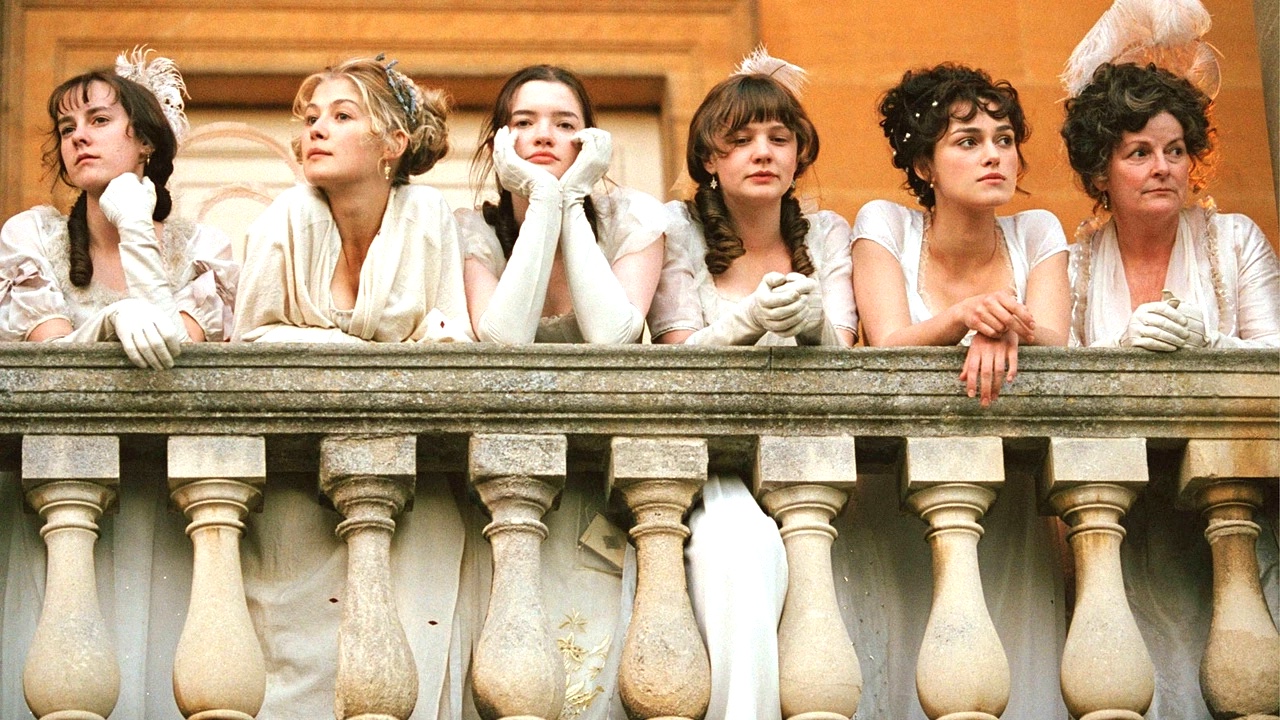
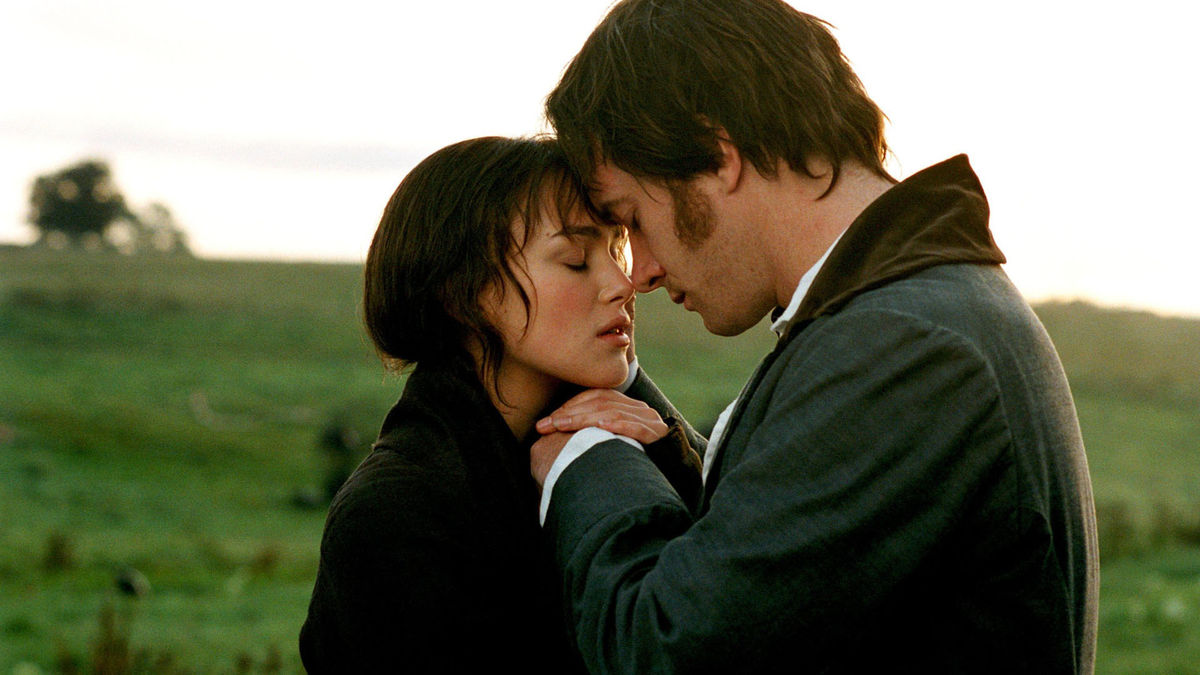
It’s hard to believe that Joe Wright’s adaptation of Pride and Prejudice is already twenty years old – and, while it’s been rereleased into selected cinemas to mark the occasion, it’s also right there on Netflix, all ready for re-examination at the touch of a button. I remember liking it back in the day and feeling that it was much more realistic than the widely-admired 1995 TV mini-series, which I found a little too chocolate-boxy.

Wright’s version, though offering a tranquil and bucolic adaptation of Jane Austen’s novel, actually succeeds in showing the slightly down-at-heel and ramshackle nature of the Bennet family. In this version, a viewer fully understands the mounting desperation of Mrs Bennet (a wonderfully scatty Brenda Blethyn) as she seeks to find suitable husbands for her daughters, aware all the time that the clock is ticking and the women of the family stand on the edge of penury. Mr Bennet (Donald Sutherland) is useless, looking on in mystified wonder as his wife goes about her earnest business.

As the wilful and opinionated Elizabeth, Keira Knightley is an inspired choice. Why so many critics have taken against her acting abilities is quite beyond me, but here she plays Lizzie with considerable skill, scathing in her early encounters with Mr Darcy (a deliciously-sombre Matthew Macfadyen) and loving and playful in her interplay with Jane (Rosamund Pike) and her other sisters (look out for an early appearance by Carey Mulligan as Kitty). There’s a splendid turn from Rupert Friend as the caddish Mr Wickham, while Judi Dench struts her inimitable stuff as the acid-tongued Lady Catherine and Tom Hollander is wonderfully obsequious as Mr Collins, the reverend with an earnest desire to impress her.

The source novel has been cleverly adapted by Deborah Moggach, with additional (uncredited) dialogue by Emma Thompson, who had already earned herself an Oscar for her work on Ang Lee’s version of Sense and Sensibility. Wright never lingers too long on a scene and consequently the running time of two hours and nine minutes seems to positively flash by.

There are so many simple yet effective moments that have stayed with me since my first viewing. I love the scene where the Bennets’ prize pig wanders through their living quarters as though it’s a perfectly natural state of affairs, and the scene where Elizabeth and Darcy, enacting a complicated dance routine in the midst of a frenetic party are, quite suddenly, dancing completely alone. Roman Osin’s lush cinematography makes every landscape look suitably ravishing yet never overplays its hand. A scene where a pensive Elizabeth is taken from bright morning sunlight into the dark shadows of evening in one slow take is so understated, it barely registers.

This is Wright’s debut full-length feature and yet it feels like the work of a more experienced director. He would go straight on from this to his adaption of Atonement, another extraordinary literary film, once again with Knightley in a key role.

Sometimes when you return to a film after a long interval, you wonder what made you like it so much on first viewing. In the case of Pride and Prejudice, I feel I enjoy it even more.

4.6 stars

Philip Caveney

Hallow Road

17/05/25

Cineworld, Edinburgh

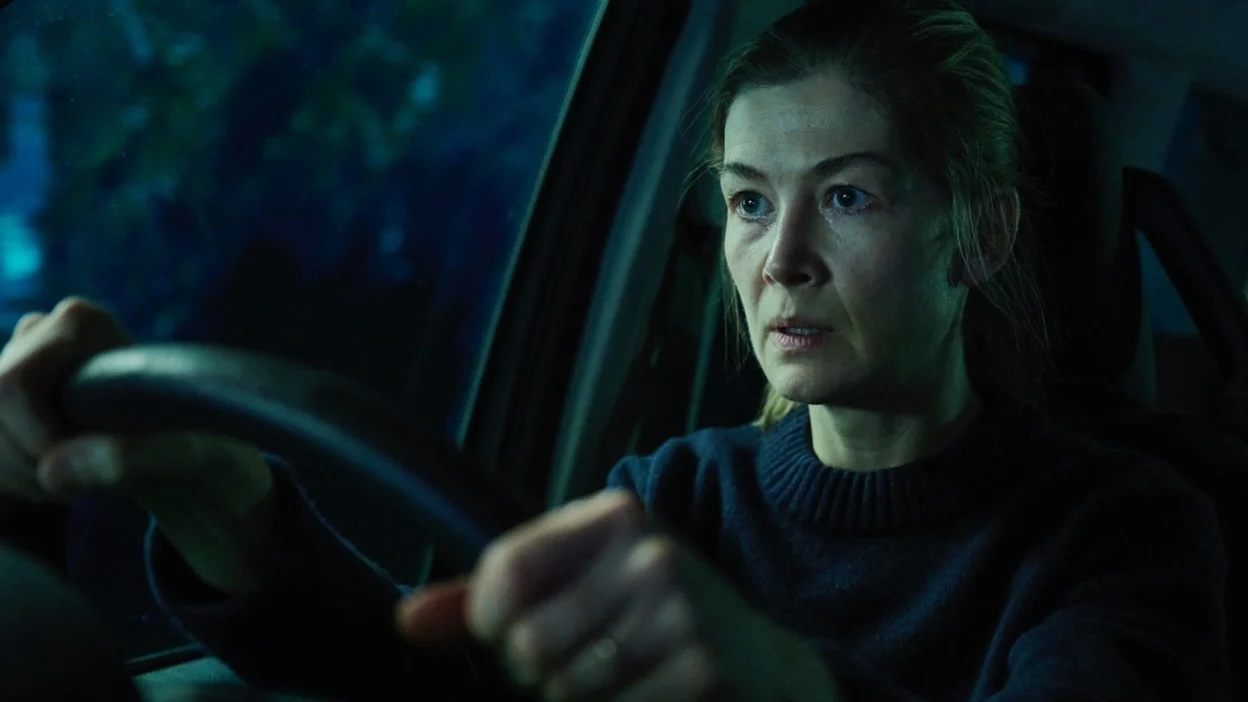
In an era where we’re increasingly led to believe that, to be successful, a motion picture requires a massive special-effects budget and a cast of thousands, Hallow Road provides solid evidence that this doesn’t have to be the case. Essentially a micro-budget two-hander, the drama unfolds almost entirely inside a moving car – and I’d need to go back to 2013’s Locke to find another film with comparable DNA.

But director Babak Anvari and debut screenwriter William Gillies have created a taut, compelling psychological thriller that has me hooked from the word go – and on the edge of my (driving) seat right up to the final scene.

We open on a series of clues: the aftermath of an interrupted dinner. Meals are left unfinished, glasses are still half full of wine. Then we meet Maddie (Rosamund Pike) and her husband, Frank (Matthew Rhys), and we learn that they sat down earlier that evening for a meal with their daughter, Alice (Megan McDonnell). There was a heated row and Alice left the house, jumped into Frank’s car and drove away into the night.

Now, in the early hours of the morning, Alice – who for the purposes of this drama is never more than a disembodied voice on the phone – calls Maddie in a state of absolute terror. Driving along Hallow Road, deep in a forest, she has hit – and possibly killed – a young woman. Frank and Maddie bundle frantically out into the night, in the family’s second car, start heading for their daughter at speed. Maddie, a trained paramedic, attempts to talk Alice through the complexities of CPR; Frank, on the other hand, wants to find a solution to the problem and is more than ready to take the rap for the accident, provided he can get there before anyone else.

The journey plays out, more or less in real time…

And no, this doesn’t exactly sound like the ingredients for a spell-binding narrative, yet Hallow Road ticks all the boxes, amping up the suspense with every passing mile, until I am almost breathless with anxiety. I can’t say much more about what happens from this point other than to mention that, in its latter stages, the film seamlessly achieves an intriguing genre-jump into the realms of folk horror and offers a conclusion that I really don’t see coming.

Both Pike and Rhys give wonderfully nuanced performances, pulling us in to this conceit with consummate skill, while McDonnell manages to convey a whole world of bewilderment and terror through her very effective voice performance. And if you’re thinking that a small-scale film like this will be just as effective on streaming, let me add that cinematographer Kit Fraser’s wonderfully atmospheric night-time visions deserve to be seen on the biggest screen you can find.

5 stars

Philip Caveney

Saltburn

22/11/23

Cineworld, Edinburgh

Emerald Fennell’s second film shares some DNA with her debut: they’re both stories of revenge writ large, of simmering grievance metamorphosing into violence. But, while Promising Young Woman was an out-and-out success, Saltburn is more of a mixed bag.

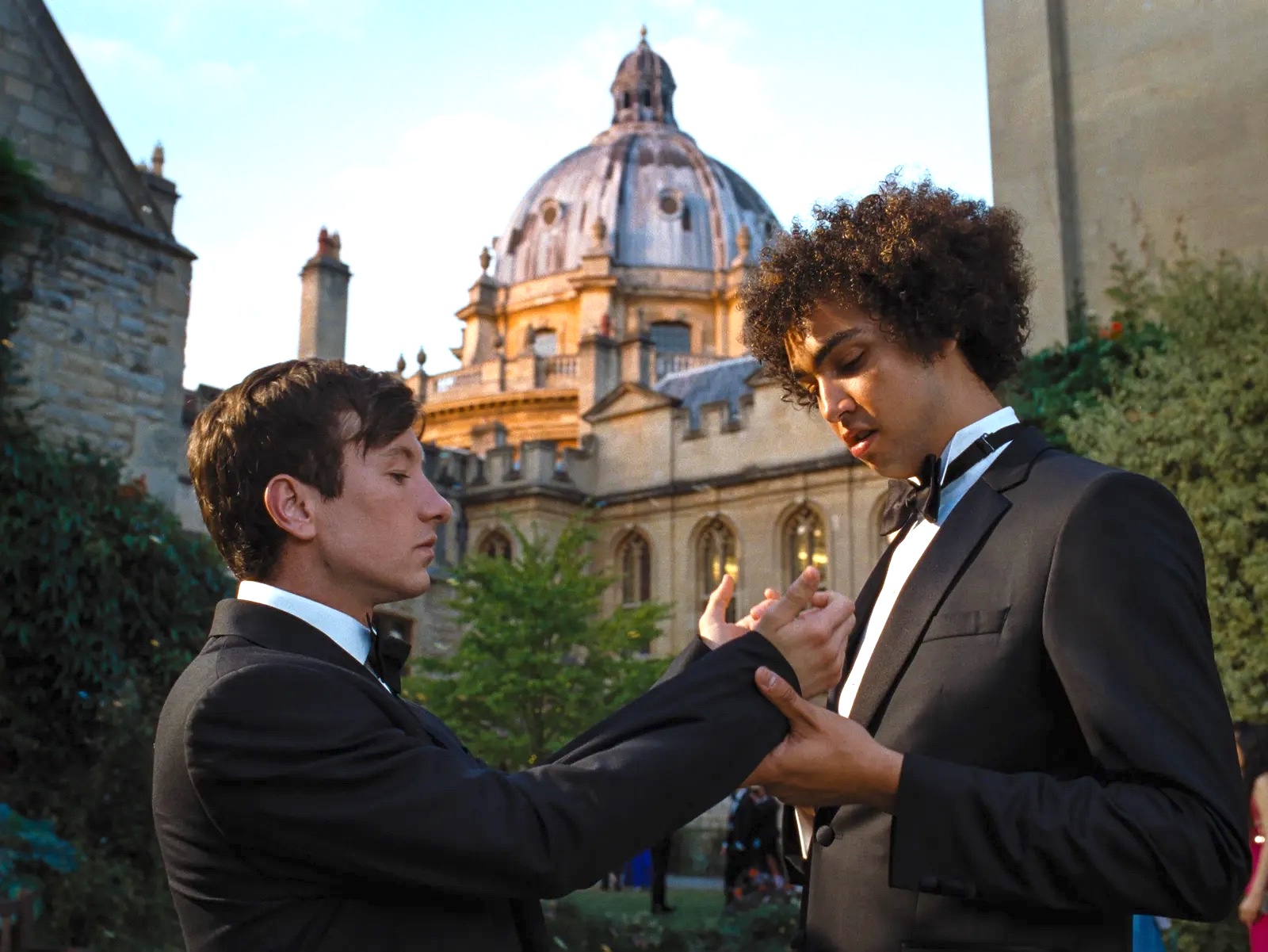
Oliver (Barry Keoghan) is a fish out of water at his Oxford college. Not only has he made the terrible faux pas of devouring every book on the summer reading list, he’s also got a Scouse accent and his tuxedo is rented. “The sleeves are too long,” sneers his tutorial-mate, Farleigh (Archie Madekwe). “Still, you almost pass.” Frustrated by his outsider status and bored rigid by Jake (Will Gibson), apparently the only other non-posh person in the city, Oliver becomes obsessed with Felix (Jacob Elordi), insinuating himself into the young aristocrat’s circle. Felix warms to Oliver, taking him under his wing and inviting him to spend the summer at his family home. Oliver is delighted: the titular Saltburn is a bastion of excess and he is more than ready to indulge himself. But, as the weeks slip by and real life looms, things begin to take a darker turn…

The first third of this film is anachronistic. It’s supposed to be set in 2006, but the Oxford we see here feels like a throwback to the 1920s. Although there’s no denying that the university is still disproportionately posh, by the time the movie’s events occur, about 50% of Oxford undergraduates came from state schools (the figure is 68% now) – and, even among those who were privately educated, only a tiny number were as privileged as Felix and his friends. I find myself rolling my eyes at the idea that Oliver and Jake might stand out amongst their peers, or that anyone would notice them enough to bellow “scholarship boy” as they pass by. It’s unnecessary too: Oliver’s desire to move in Felix’s orbit doesn’t need to be dependent on the absence of any other working or middle-class people.

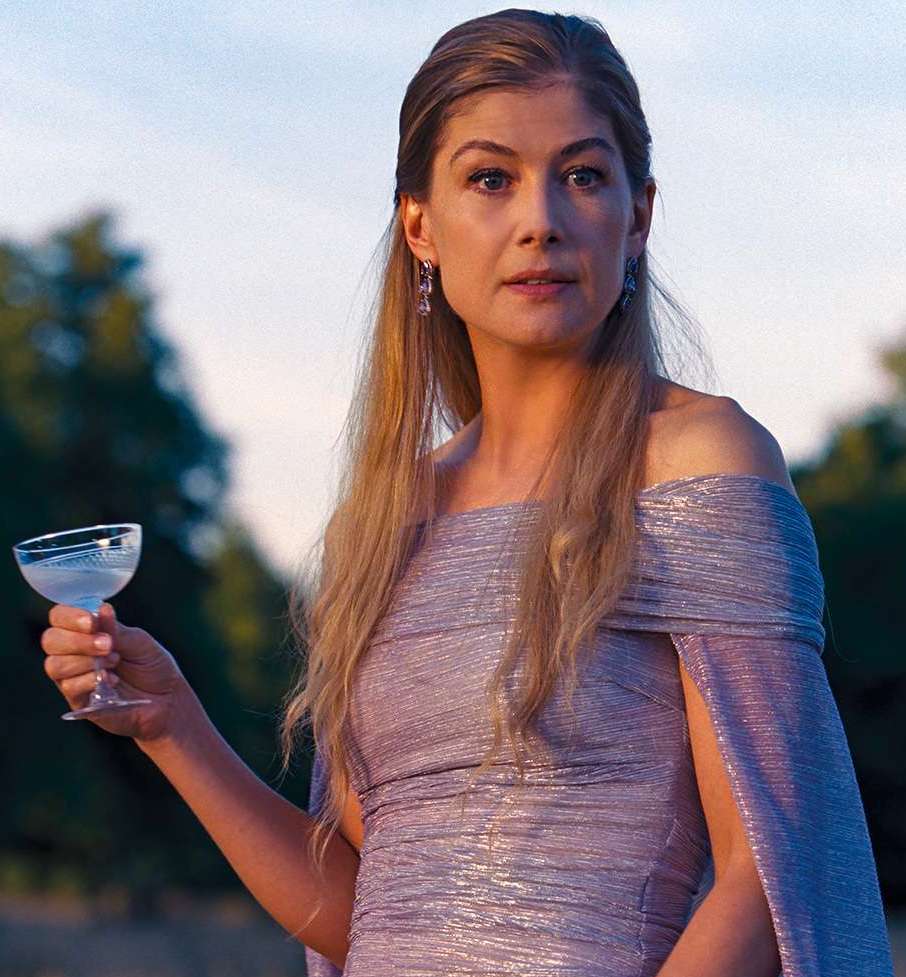
When the action moves to Saltburn, things improve dramatically – although the sense of stepping back in time might be heightened if Fennell were more effective in capturing the early noughties in the opening stretch. Here we meet Felix’s parents, Sir James (Richard E Grant, on top form) and Elspeth (played with obvious glee by Rosamund Pike). “Mummy” is the best thing about the whole movie, delightfully lacking in self-awareness, blithely callous in every word and deed. She gets the funniest lines too, and Pike delivers them with deadly precision: when Elspeth hears of her erstwhile friend’s death, for example, she responds with a scathing, “She’ll do anything to get attention.”

If the revenge, when it comes, is faintly ridiculous, then it’s found a suitable home in Saltburn, where everything is magnified, where there’s too much space, too many artefacts, too many people and too much money. The house and grounds provide a perfect backdrop for this illustration of careless privilege, and Linus Sandgren’s cinematography is almost hallucinogenic, reinforcing the sense of dislocation from the outside world.

Of course, there are many ways to read this sly, allusive story, with its Brideshead references and satirical tone. The most generous interpretation is that the joke is on the upper classes, depicted here as shallow and vacuous, playing games with other people’s lives to relieve their louche ennui. But it also comes across as a warning to the toffs to beware the pesky proles. Give us an inch and we’ll take a mile; we just don’t know our place. Fennell (whose own rarefied life is far closer to the Cattans’ than to Oliver’s) reveals an unfortunate blind spot when it comes to class. Elspeth references Pulp’s Common People early on, refuting the idea that the lyrics refer to her. “No, it wasn’t based on me. She had a thirst for knowledge. I’ve never wanted to know anything.” But there are a few lines later in the song that are perhaps more relevant: “Like a dog lying in a corner, they will bite you and never warn you. Look out! They’ll tear your insides out.” There appears to be an underlying (perhaps unconscious) snobbery at play.

Despite its dodgy subtext, Saltburn is a curate’s egg of a movie, with some very good parts indeed, and the final sequence – set to Murder on the Dancefloor – is utterly glorious. I look forward to what Fennell does next, albeit with some trepidation.

3.3 stars

Susan SIngfield

I Care a Lot

21/02/21

Amazon Prime

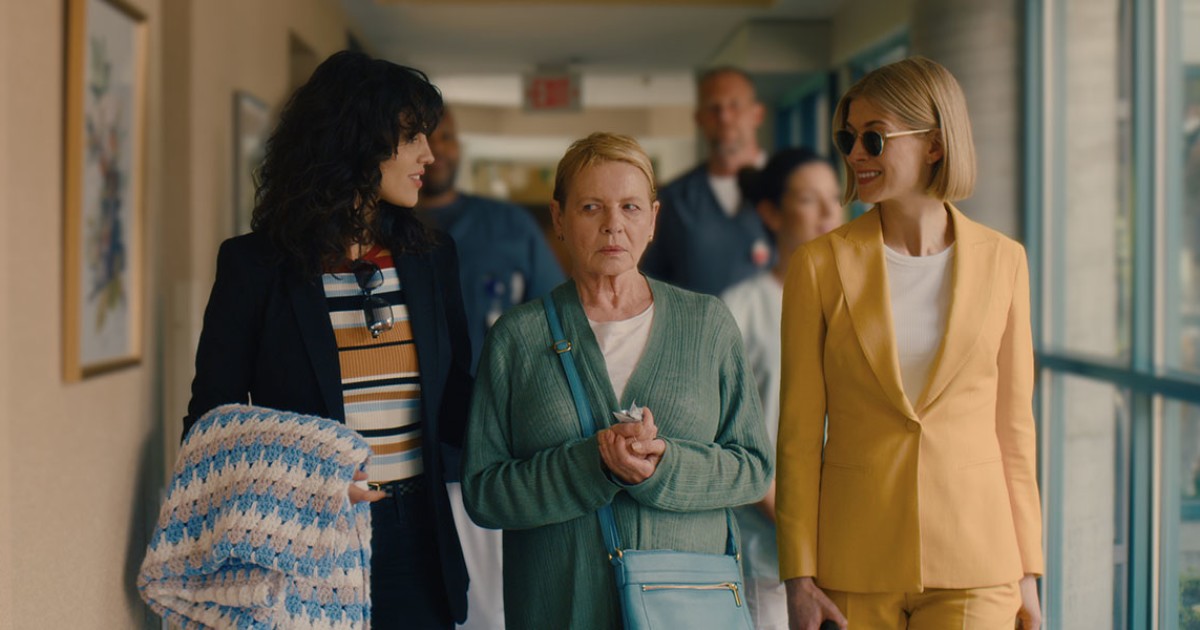
The ‘carer’ in this story is Marla Grayson (Rosamund Pike), a woman who – it soon becomes clear – cares only for herself and her lover, Fran (Eliza Gonzalez). Exploiting the law by bribing doctors, Marla has become adept at identifying vulnerable elderly people and getting herself appointed as their legal guardian, whereupon she is free to exploit them for her own profit. She gleefully sells off their homes, their possessions, the little treasures they have accumulated over the years, paying herself a healthy wage from the proceeds and siphoning off whatever she thinks she can get away with.

If it all seems a bit far-fetched, think again. In America, such shenanigans are perfectly permissible and writer/director J Blakeson has no hesitation in pointing up the iniquities of the system.

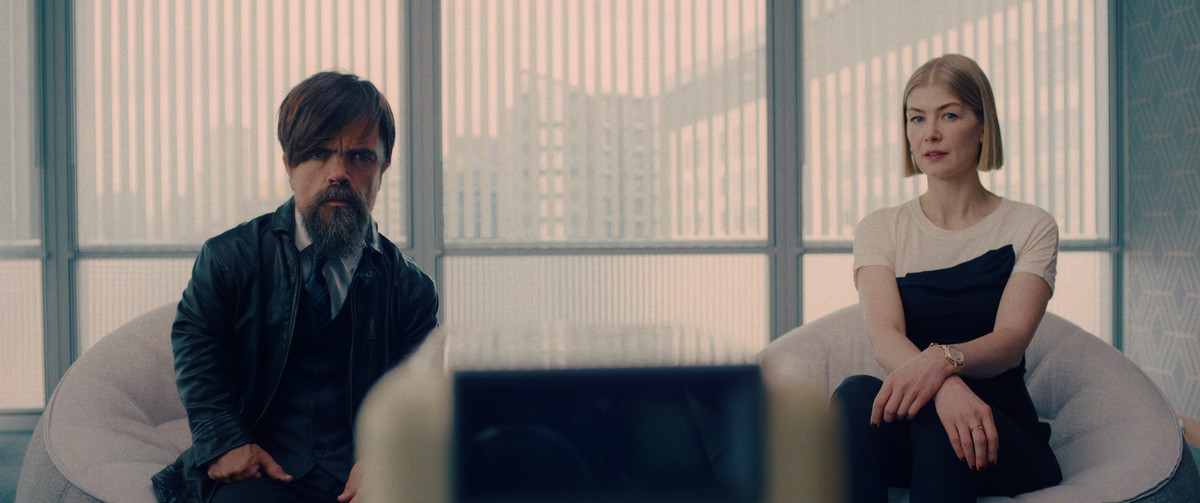
Marla sets her sights on her latest victim: rich loner, Jennifer Paterson (Dianne Wiest). Before Jennifer quite knows what’s happening to her, she is drugged up and incarcerated in a care home. It’s at this point that Marla realises she may have bitten off more than she can chew. The records state that Jennifer has no kin, but it turns out she actually has a secret son, Roman (Peter Dinklage), a man who – though small in stature – is a powerful and ruthless criminal, who will stop at nothing to get his beloved momma back.

I Care a Lot has a great deal going for it, not least what could be a career-best performance from Pike, whose portrayal of Marla is extraordinary. She paints her as a venomous, heartless machine, able to mask her raging avarice behind a dazzling smile and a haircut of such precision it looks like it’s been achieved using a set square. Wiest is pretty good too, but she’s criminally under-used here, which is a shame, because she has been gifted with the film’s finest one-liner. And Dinklage also convinces as a ruthless mafioso, a man you really don’t want to get on the wrong side of.

The main problem for me however, is that there’s really nobody in this story to root for, since every character I’m introduced to is as venal and self-centred as the last. Even Jennifer isn’t the innocent she at first appears to be. It really says something when the people on the right side of the law are even viler than those who are openly flouting it, but it’s not enough for me. I find myself wanting a character – just one – that I can actually relate to.

The film’s middle section boils down to a series of complicated tussles between Marla and Roman, both of them intent on beating the other at all costs. Though these scenes are cleverly staged, they are somehow less interesting than the film’s central tenet. However, just when I think it’s all going off the rails, Blakeson manages to snatch everything back with a conclusion that comes swaggering in out of left field and actually leaves me gasping. I really don’t see it coming.

I Care a Lot isn’t perfect, but when it’s good, it’s very good and – for the best part of its nearly two hours’ running time – it does manage to keep me glued to the screen. It also makes me rage with anger at what can happen to elderly people locked up in the moral maze of the American health care system.

4 stars

Philip Caveney

A Private War

17/02/19

Marie Colvin was an extraordinary woman, and Rosamund Pike, it turns out, is exactly the right actor to convey her strength and singularity. Her performance as the celebrated war reporter is gutsy and bold, nuanced and considered – quite possibly a career best.

A Private War is a biopic, detailing the last ten years of Colvin’s life, following her from war zone to war zone, highlighting the personal toll – both physical and mental – of uncovering and revealing so many unpalatable truths. It’s a worthwhile endeavour, but it doesn’t quite pay off.

Maybe it’s because Colvin is famous as an observer and interpreter of stories; as the central character, she seems misplaced. It’s as if the important stuff – the stuff she’d want to focus on – is happening off-screen, and we’re reduced to watching her reactions instead. Of course it matters what happens to those who chronicle events, but their narrative is inevitably secondary to the events themselves. Here, that order is subverted, and I don’t think it wholly succeeds. I feel curiously distanced, from the wars as well as Colvin, never emotionally engaged.

Still, there’s much to praise here too. Pike isn’t the only one to deliver a great performance: Jamie Dornan does a sterling job as Colvin’s sidekick, photographer Paul Conroy, and Tom Hollander injects warmth and like-ability into his portrayal of otherwise hard-headed newspaper editor Sean Ryan. Stanley Tucci provides the much-needed – both in the movie and, I imagine, in Colvin’s real life – light relief, as her London lover, the only person with whom we see her truly relax.

We are shown the horrors of war – a mass grave in Iraq, besieged towns in Syria – and the awful relentlessness of it all, the despair of those affected. But it never gets personal; we never learn enough about the individuals. ‘Find the people,’ Colvin tells rookie journalist, Kate Richardson (Faye Marsay), ‘and tell their stories.’

It’s a shame the movie doesn’t take its protagonist’s advice.

3.8 stars

Susan Singfield

A United Kingdom

maxresdefault

25/11/16

Amma Asante’s A United Kingdom tells the true story of Prince Seretse Khama of Bechuanaland (now Botswana), and the extraordinary international response to his marriage to Ruth Williams, a white, middle-class Londoner. Ruth’s father (Nicholas Lyndhurst) isn’t happy and vows to disown her; Seretse’s uncle, Tshekedi (Vusi Kenene), believes it renders his nephew unfit to rule. But their combined disapproval is nothing compared to the horror of colonial might, and the crushing forces of British and South African politics. It’s a disturbing account of late imperialism, laying bare some awful truths about our not so distant past.

David Oyelowo and Rosamund Pike are perfectly cast as the central couple, committed as much to their ideals as to each other. They are at once proud and humble, resolved and open-minded. The film’s focus on Khama’s emotional reactions personalises colonialism in a way I have never seen before, illuminating the brazen greed, hypocrisy and gross sense of entitlement of those seizing rule of lands that are not their own. Jack Davenport, as the brutal, arrogant Alistair Canning, embodies this with ease.

The post-war era is beautifully evoked, with both London and Botswana rendered real and immediate; the cinematography is very good indeed. If there’s a problem, it is perhaps in the feelgood cosiness that somehow permeates this film, despite its immersion in some very ugly deeds. Nevertheless, this is a mightily important tale, and definitely one worth going to see.

4 stars

Susan Singfield
Hector and the Search For Happiness

MV5BNTAzNTIyNDYzNV5BMl5BanBnXkFtZTgwNDg1NjYyMjE@._V1_SX214_AL_

20/07/15

The presence of Simon Pegg in a movie can usually be relied upon as some kind of quality control, but as Hector and the Search For Happiness proves all too readily, this can’t always be relied upon. Based upon the best selling self-help book by Francis LeLord, the film tells the story of Hector (Pegg) a successful psychiatrist, happily living in London with his girlfriend Clara, (Rosamund Pike.) But talking to a succession of depressed people on a daily basis eventually has an inevitable effect on him and he undergoes a bit of a mid life crisis; whereupon he tells Clara that he needs to go off and ‘find himself’ or more accurately, to find the essence of pure happiness.

To this effect, he visits China (for no apparent reason other than Chinese people are considered to be quite happy.) He  goes to work with an old college friend in Africa, and, in the final segment, he visits Los Angeles and his old flame, Agnes (Toni Collette) now a happily married woman with two children and a third on the way. Pegg tries hard to instil the proceedings with some degree of interest but is ill served by a story that despite involving so much travel is clearly going nowhere. It’s all a bit vapid to be honest. There’s some nice scenery to enjoy along the way and several serious actors appear in minor roles – Stellan Skarsgard, Jean Reno and Christopher Plummer to name but three, but apart from a few fridge magnet bon mots, there really isn’t an awful lot to be gleaned from the story, which eventually collapses into a conclusion that is so mind-numbingly predictable, we could have saved Hector the price of all those air fares.

2 stars

Philip Caveney

What We Did On Our Holiday

MV5BMzY4MDc4NDYyOV5BMl5BanBnXkFtZTgwODgzMTc2MjE@._V1_SX214_AL_

4/10/14

On paper, this looked rather promising. Created by the writing team that brought us Outnumbered, it seemed to belong in that same tried-and-tested arena of harassed parents vs precocious children. Doug (David Tennant) and Abi (Rosamund Pike) are taking their three young kids up to the Scottish Highlands to visit Granddad Gordie (Billy Connolly) to celebrate his birthday, but nothing here is as straightforward as it might appear. Doug and Abi have actually separated after his infidelity with one of his students, while Granddad Gordie isn’t going to be celebrating any more birthdays, as he’s suffering from terminal cancer. So rather than upset him, everyone (kids included) is told to pretend that it’s business as usual.

The film starts well, following the established Outnumbered formula, as the two parents struggle to control their fractious offspring in a variety of picturesque locations on the long drive up to Scotland and there are plenty of laughs, expertly mined. But all too soon they arrive at their destination and we are introduced to Granddad Gordie, who unfortunately turns out to be one of those all-wise creations who wander around spouting lines that would be better placed on a series of novelty fridge magnets. On the morning of the birthday bash (an overly elaborate and expensive affair orchestrated by Doug’s pompous brother, Gavin (Ben Miller) and his depressive wife, Agnes (Amelia Bulmore), Gordie decides to take the three kids on a fishing trip and at this point, the story takes an abrupt left turn into much darker (and it has to be said, faintly unbelievable) territory. The three children take centre stage and matters aren’t helped one jot by the fact that they are considerably less appealing than their TV counterparts – the little girl in particular is profoundly irritating.

Having served up a mostly laughter-free middle section, the writers decide that what we really need to round things off is a syrupy, optimistic conclusion, which they duly deliver complete with a cliff top Highland Fling at sunset. This is a pity, because the film promised so much in its first half hour, that the dismal ending somehow rings even more hollow. Though there are decent performances from most of the adult actors, this can only count as a missed opportunity.

1.8 stars

Philip Caveney

Gone Girl

MV5BMTk0MDQ3MzAzOV5BMl5BanBnXkFtZTgwNzU1NzE3MjE@._V1_SY317_CR0,0,214,317_AL_

4/10/14

David Fincher’s adaptation of Gillian Flynn’s twisted page-turner is a classier affair than the actual book – but as with Before I Go To Sleep, having read the work beforehand is a definite disadvantage, because this is a story that gets its chops from the big reveals it occasionally drops into the proceedings.

On the day of his fifth anniversary, bar owner Nick Dunne (Ben Affleck) comes home to find that his wife, Amy (Rosamund Pike) has gone missing. Signs in the house suggest that she has been abducted. A police investigation ensues and as it unfolds, Nick begins to look more and more suspicious… does he actually know more about Amy’s disappearance than he is letting on? It would be a crime to reveal too much of the plot machinations here because Gone Girl is all about plot. Indeed, Flynn pushes the various twists and turns to such an extent that, in book form at least, the story starts to seem somewhat risible. But Fincher is so adept at creating atmosphere, it’s easier to overlook such shortcomings on the big screen. What’s more he has cast the film so shrewdly, that we believe in characters that on paper seem flimsy.

The book’s conclusion was a particular disappointment for me, but again, Fincher manages to make it work. This is an assured production that never loses momentum and which serves its source material well. If you haven’t already read the novel, maybe you should wait until after you’ve seen the film.

4.2 stars

Philip Caveney