Ridley Scott

Gladiator 2

17/11/24

Cineworld, Edinburgh

Back in the year 2000, Gladiator was a significant game-changer. Ridley Scott’s sword and sandal epic, starring a lean, mean Russell Crowe, wowed audiences and critics alike. It was nominated for twelve Oscars and actually won five, including Best Picture and Best Actor for Crowe. Over the intervening years, Scott has often stated his intention of doing a sequel, if only he could find the right story. And finally, nearly twenty-five years later, I’m sitting in front of an IMAX screen, eager to see what he’s come up with.

I seriously doubt that Gladiator 2 will be picking up any awards (except perhaps for special  effects) because I suspect that galley has sailed. And to be honest, in most respects it plays more like a re-run of the original than an honest-to-goodness sequel. But don’t let that put you off.

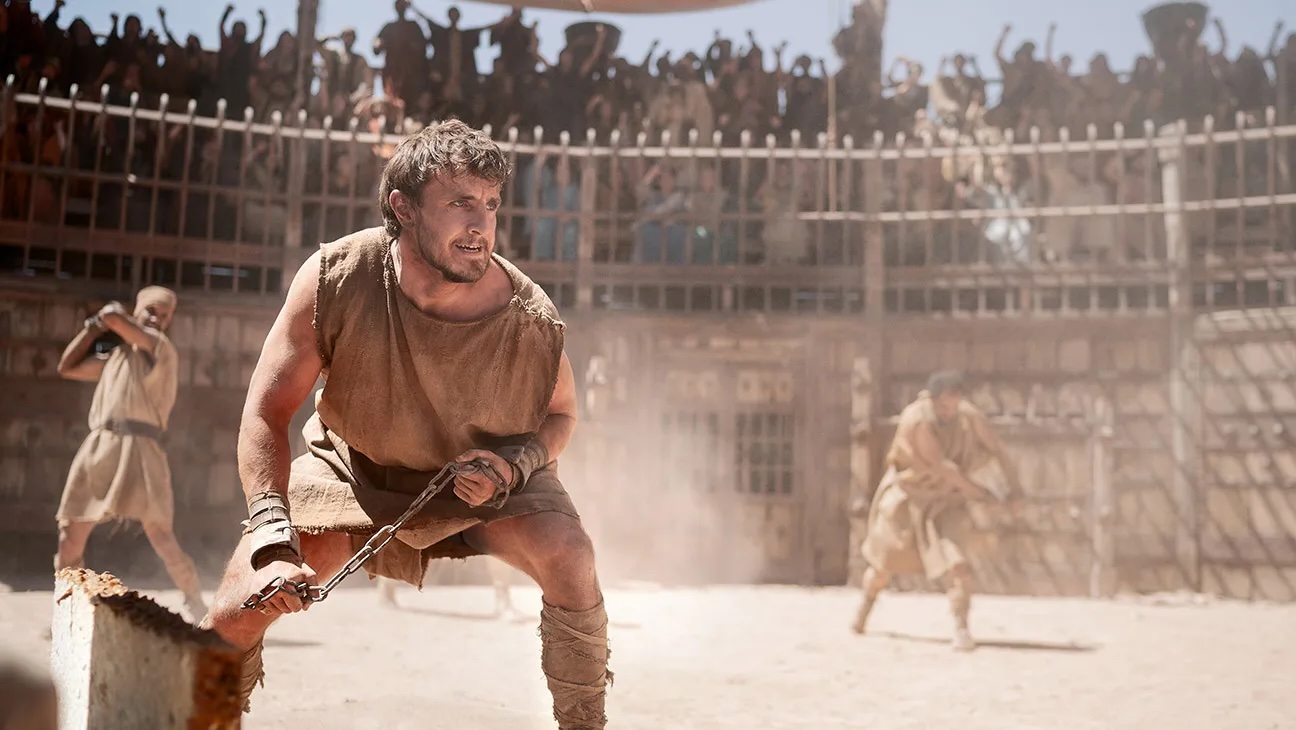
It’s some thirty years after the death of Maximus when we first meet Lucius (Paul Mescal), a soldier living and working in Numidia, alongside his wife, Arishat (Yuval Gonen.) But it isn’t long before a huge fleet of Roman warships, led by General Marcus Acasius  (Pedro Pascal), appears on the horizon. As ever the Romans are looking to extend their empire and this is just the next step in their bid for world domination. An epic battle ensues, replete with giant trebuchets and fusillades of arrows. In the carnage, Arishat is killed and Lucius taken prisoner and ferried back to Rome. On the long sea voyage he (understandably) nurtures a desire for revenge on Acasius. 

Rome is no longer the glorious empire it once was. Ruled by despotic brothers, Geta (Joseph Quinn) and Caracalla (Fred Hechinger), it’s become a place where corruption holds sway and where cunning players like gladiator-master, Macrinus (Denzel Washington), can rise to positions of influence. Does the latter have bigger ambitions than buying and selling gladiators? Well, naturally he does.

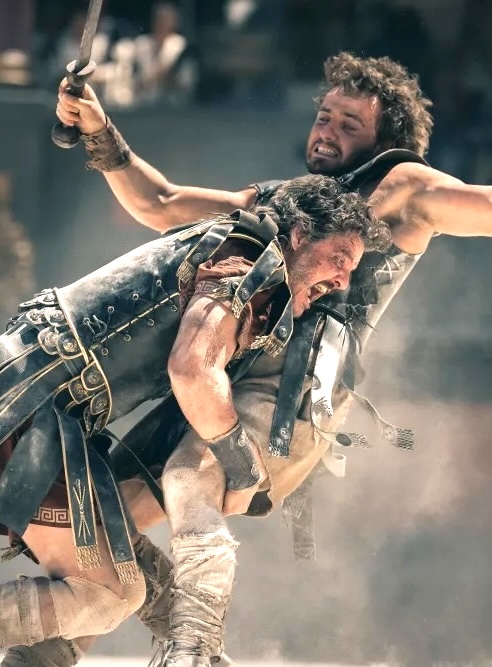
Macrinus quickly spots a quality in Lucius that he feels he can exploit and gets him into the arena at the earliest opportunity. Lucius, it turns out, has the ability to pulverise all who oppose him, even if he does pause every so often to quote Virgil. Could it be that he has some connection to the late Maximus? When we learn that Acasius’s wife is Lucilla (Connie Nielsen – the only major character to return from the original film), it soon becomes clear where this story is headed…

Gladiator 2 could justifiably be criticised for failing to explore new ideas, but this film’s DNA is all about its sheer sense of scale. Scott has always been a master of battle scenes, and lovers of spectacle can hardly complain about being short-changed in that department. Deep into his eighties now, Scott is a director who knows how to capture massive action set-pieces at testosterone-fuelled levels that are rarely even attempted these days. Wherever possible, he utilises real sets and thousands of extras in order to convey their magnitude.

There are some call-backs to the first film – scenes featuring wheat, whole lines of dialogue lifted from Gladiator 1 and that trope of stooping down to pick up a handful of earth, as though such actions can be inherited. And screenwriter David Scarpa even throws in a cheeky ‘I am Spartacus’ moment, which I think is fair enough under the circumstances. A suitably beefed-up Mescal effortlessly places a sandal-clad foot onto the A list while Washington is clearly having a whole ton of fun, camping it up as a devious player, who will seemingly let nothing get in the way of his rise to power.

There are a couple of missteps. An early dust-up in the Colosseum has Lucius and his fellow-captives pitched against a tribe of what appear to be shaved baboons, CGI creations that seem to have wandered in from some kind of demented science-fiction movie – and quite how the skinny, blonde-haired kid from the flashbacks has grown up to be Paul Mescal is one for the geneticists of the world to figure out.

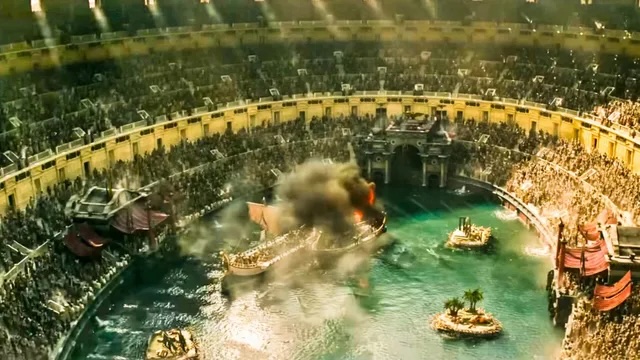
But if the aim of this film was to go bigger and louder than what came before (and I suspect that was exactly the object of the exercise) then it has succeeded in spades. The sequence where a pitched sea battle is enacted in the flooded coliseum is an extraordinary slice of action cinema (and, before you Google it. let me assure you such things did actually happen – though the addition of sharks might be a touch of artistic license). Likewise, Scarpa’s cast of characters is, for the most part, loosely based around real historical figures.

I know I say this a lot but don’t wait for streaming. See this on the biggest screen available and, as you watch, ask yourself that all important question:

“Am I not entertained?” For me, the answer is, most definitely a resounding, “Yes, I am entertained!”

4.5 stars

Philip Caveney
Alien: Romulus

16/08/24

Cineworld, Edinburgh

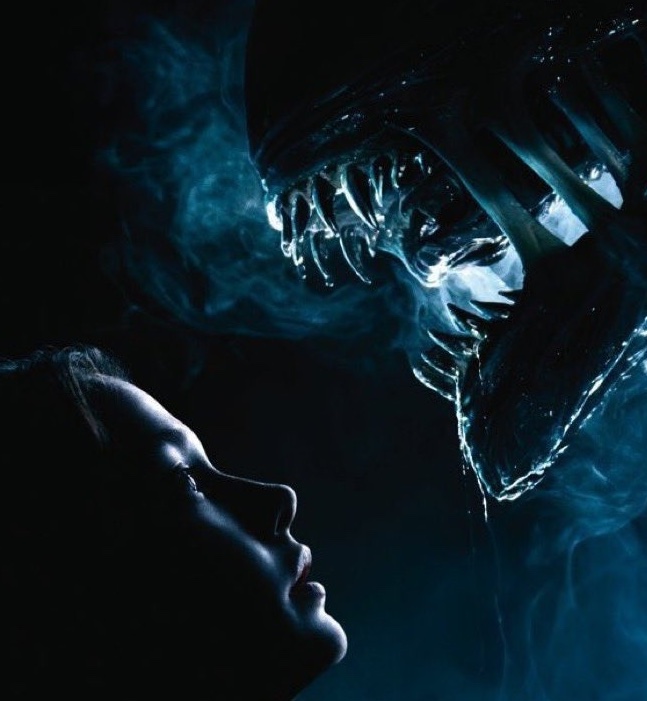
The cinema generally takes a back seat for us in August when the Edinburgh Fringe takes up so much of our time. But a new addition to the Alien franchise has to be an honourable exception. Like most people who say there are Alien fans, it really only applies to the first two films: Ridley Scott’s iconic original and James Cameron’s (IMO) superior sequel, which qualifies as one of my all-time favourites. Since then, it’s been an irritating game of misfires. Even Scott’s two attempts to rekindle the series have been well-intentioned disappointments.

But Fede Alvaraz seems like a decent bet to attempt a reboot. After all, he somehow managed to breathe some fresh er… death into the Evil Dead films. So when I spot a two-hour slot in my schedule, I’m off to the multiplex with high hopes.

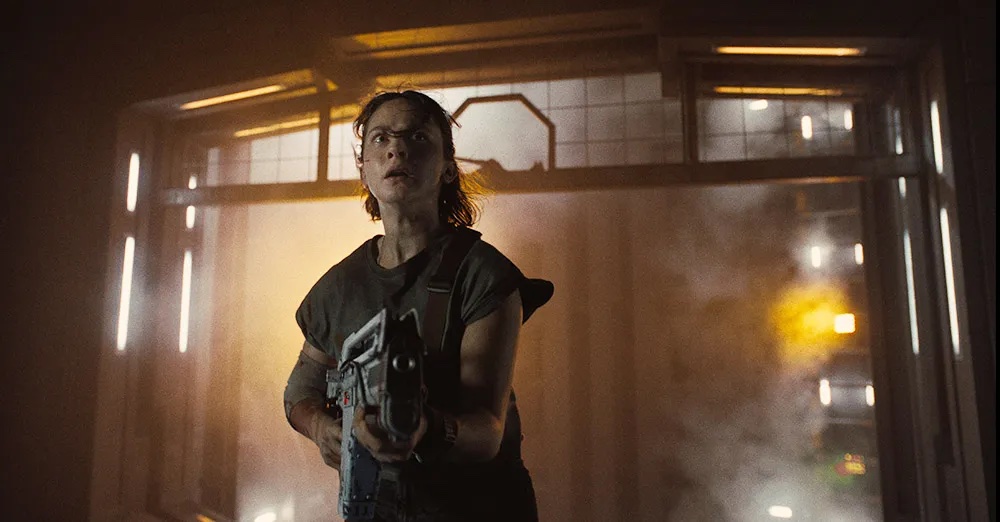
It starts well. Rain (Cailee Spaeny) lives and works on a horrible planet where it’s eternally dark. Her adopted brother, Andy (David Jonsson), does his best to look after her. He’s a synthetic, rescued from a rubbish dump by Rain’s father, but his aging technology means that he has a tendency to glitch and he is regarded with suspicion by a lot of the planet’s inhabitants. When Rain tries to get permission to leave – she’s desparate to get some sunshine – she’s denied the chance and told she’ll be transferred to the mines, so when her friend Tyler (Archie Reneux) suggests an alternative, it’s timely to say the very least.

It turns out that there’s a decommissioned Weyland-Utani space station in the sky above them and Tyler reckons they can gain access to it using Andy (who is a Weyland-Utani creation) to get aboard. There are just thirty-six hours left before the station hits an asteroid belt but it will almost certainly have sleep pods aboard, which the threesome – and their accomplices – can use to make the nine-year journey to the nearest inhabited planet. What can possibly go wrong? Rain reluctantly agrees to give it her best shot and it isn’t long before the gang are approaching their destination…

I like the fact that the protagonists are young. If the mature astronauts of Alien: Covenant seemed to constantly make stupid decisions, the recklessness of youth makes for a much more acceptable premise – and, once aboard the ship, which of course features more face-huggers and chest-bursters than you could shake a stick at, Alvarez and co-writer Rodo Sayagues manage to keep the pot of suspense bubbling nicely. There are visual references to the earlier films and the audacious decision to bring back a character from the first film – or rather, half of him – just about pays off. What’s more, Andy is given an upgrade which makes him faster and better – but way more logical, a development that means his loyalties now lie with the corporation that owns him rather than with Rain.

There are some new ideas in here too. A situation where the space station’s gravity keeps switching off in order to reboot really ramps up the torment, while a solution to all that acid blood flying around is an interesting development. Spaeny is terrific in the lead role, managing to fill Ripley’s action boots with aplomb and Jonsson (who made such a good impression in Rye Lane), is also memorable as her unreliable sidekick.

It’s only as the film thunders into the home straight that it takes a wrong turn. I almost stand up and shout at the screen, as Alvarez makes the baffling decision to homage Prometheus and all those hard-won plus points make a swift exit through the nearest escape hatch. It’s a shame, because it is so nearly home and dry.

Overall, Romulus is a decent addition to the canon, certainly the third best offering in the series, but still light years behind films one and two.

3.8 stars

Philip Caveney

Napoleon

25/11/23

Cineworld, Edinburgh

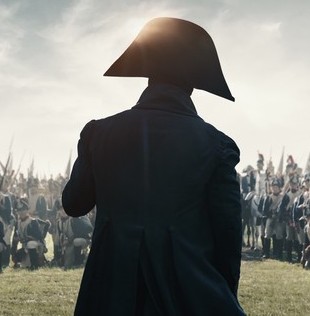
Over his long career, Ridley Scott has taken on all manner of subjects, in pretty much every genre you can name. It’s interesting to note that his very first feature film, The Duelists, was set during the Napoleonic era, so perhaps it was only a matter of time before he returned to the period and took on the story of the little Corsican – a subject that has brought many other directors to their personal Waterloo. In this particular case, it’s taken forty-six years to get there.

Some cinephiles will tell you that the ultimate Napoleon movie has already been realised way back in 1927, when Abel Gance produced a staggering version of the great man’s life under the same title. It was certainly remarkable and I speak as someone who sat through one of Kevin Brownlow’s restorations of the film in the early 80s – all five and a half hours of it (complete with a live symphony orchestra and several judicious toilet breaks). Compared to that, Scott’s two hours and thirty-eight minutes seems relatively jaunty.

Those who have complained that this version is historically inaccurate may be missing the point. Scott is clearly far more interested in the legend than the reality. It’s a matter of record, for instance, that Napoleon probably owes his defeat at Waterloo to the fact that he suffered from bleeding haemorrhoids and couldn’t sit on his horse – but that’s a film that nobody wants to see.

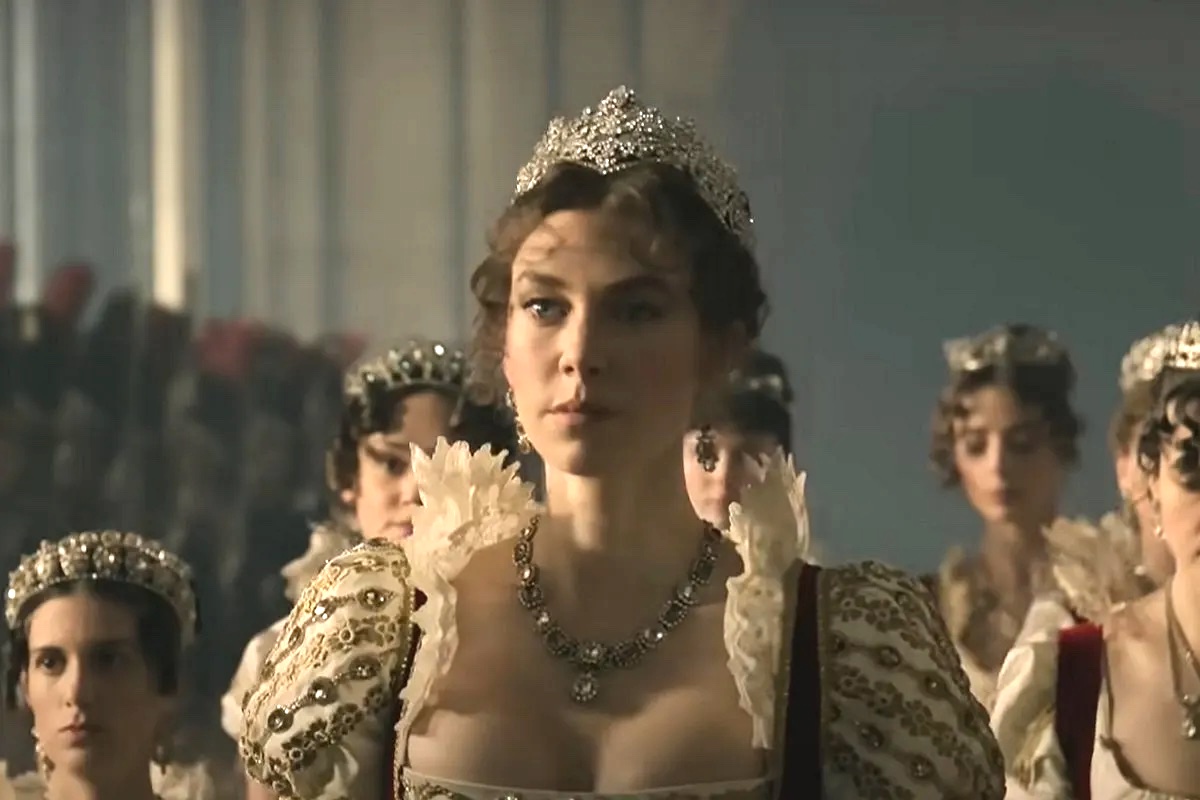
And yes, Joaquin Phoenix may be too old for this role, and surely needed some de-ageing for those early scenes, but he makes a great job of it, mining the man’s hubris and determination to the core, even descending into brattishness when taunted with the spectre of England’s superior navy. Vanessa Kirby offers up a more opaque Josephine, playing everything so close to her bosom that we’re never entirely sure if she actually loves her husband or merely sees him as her personal plaything. Their complex relationship is at the beating heart of this film and perhaps it would have been more fairly titled Napoleon and Josephine.

The inevitable result is that pretty much everybody else in the film is reduced to cameo roles, including Rupert Everett as the Duke of Wellington and an unusually hirsute Mark Bonnar as Napolean’s early confidante, Junot. David Scarpa’s screenplay makes a determined attempt to find some humour amidst all the pomp and misery.

But of course, Scott is the king of spectacle and if it’s battle scenes you’re looking for, there are plenty of them here, so thrillingly recreated that I find myself wincing at every explosion, every visceral thrust of a sabre. Each of the major confrontations is depicted in a different way and I particularly relish the scenes set in the Russian winter, where Napoleon is left bewildered by the fact that his adversaries refuse to meet him on the battlefield, even choosing to torch Moscow rather that surrender it to him. This is stirring stuff, the awful choreography of destruction played with absolute conviction and I cannot think of a director who could have made a better job of it.

Producers Apple Films have already announced that a four hour plus director’s cut of Napoleon is waiting somewhere down the line, and while this has worked for Scott before with Kingdom of Heaven, I’m not convinced that a longer film can hope to add much to the exhilarating theatrical release, which has me gripped pretty much from start to finish.

4.4 stars

Philip Caveney

Thelma & Louise

07/06/23

Cineworld, Edinburgh

I bloody love Thelma & Louise. Doesn’t everyone? I live by Louise’s famous mantra, “You get what you settle for.” So now, thirty-two long years after its initial release, I’m beyond excited to finally get the chance to see it on the big screen (I was living in Germany when it first came out, and only had it on a grainy VHS). This 4k restoration is an absolute treat, the vast American landscapes bathed in sunlight and glorious in their bleak beauty.

The eponymous duo have planned a weekend away. Louise (Susan Sarandon) is pissed off with her boyfriend, Jimmy (Michael Madsen), and wants to shake him out of his complacency, while Thelma (Geena Davis) is desperate for a break from the shackles of her unhappy marriage to pig-about-town, Darryl (Christopher McDonald). It’s just supposed to be a couple of nights at a friend’s cabin – fishing, swimming, chilling out. But when a pitstop turns ugly and a thug called Harlan (Timothy Carhart) tries to rape Thelma, Louise sees red and shoots him. From then, they’re on the run.

The genius of Ridley Scott’s film lies in the ordinariness of its two heroines. They’re not high-flyers or especially skilled, and neither of them has ever asked for much. But Harlan’s transgression is the final straw: like most women, these two have endured a lot from men, and they know the law won’t help them. And, having crossed the line, they’re surprised by how much fun there is on the other side. As Thelma puts it, “Everything looks different now. You feel like that? You feel like you got something to live for now?”

In a way, it’s a shame that Callie Khouri’s magnificent script stands the test of time so well. I had hoped it would feel dated, that I wouldn’t feel the need to cheer for women calling out catcalls, or find myself nodding at the frustrating truth that nobody is going to find a man guilty of assaulting a woman who’s been seen dancing with him. But here we are in the future – and when a woman’s crying like that, she still isn’t having any fun.

Despite all the serious stuff, I’d forgotten just how funny this film is, with scores of laugh-out-loud moments. Thelma and Louise are both wonderfully sassy and unabashed, and there are likeable men here too, in the form of avuncular cop, Hal (Harvey Keitel), and the world’s most handsome and politely-spoken armed robber, JD (Brad Pitt).

This re-release is every bit as much of a treat as I hoped it would be, and I can’t recommend it highly enough. For a deeper dive into its magic, you could also listen to Episode 4 of the latest series of Karina Longworth’s excellent podcast, You Must Remember This: Erotic 90s, where she shines a light on its enduring legacy.

5 stars

Susan Singfield

House of Gucci

02/12/21

Cineworld, Edinburgh

A talented young man is motivated by his manipulative wife to take hold of the power that lies within easy reach. He just needs to be ruthless in order to obtain it. Despite his qualms, he follows her advice and is led onwards to his own destruction.

This is, of course, the plot of Macbeth, but it’s also one that fits House of Gucci like a perfectly designed leather glove. Ridley Scott’s film, based on the book by Sara Gay Forden, relates the true life events that led up to the assassination, in 1995, of Maurizio Gucci, the major shareholder in one of the world’s most successful fashion brands. If proof were ever needed that real life can be weirder than fiction, then here it is, writ large.

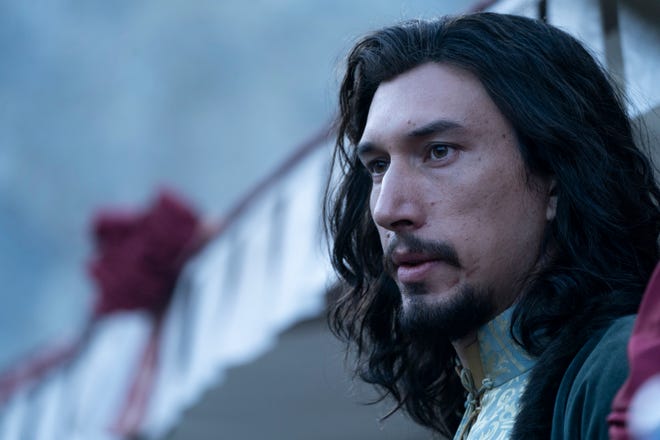
When we first meet Maurizio (Adam Driver) it’s the 1970s and, though he’s well aware that he’s the potential heir to the Gucci fortune, he’s already decided he wants none of it and is training to be a lawyer. Then, at a party, he meets Patrizia Reggiani (Lady Gaga), who – having recognised the possibilities that Maurizo’s surname offers – has soon romanced him to the point where he wants to marry her.

Maurizio’s sickly father, Rodolfo (Jeremy Irons), decides she’s a ‘gold-digger’ and advises his son to steer clear, but Maurizio is smitten enough to renounce the family fortunes in order to be with her. It isn’t long before Maurizio and Patrizia are married and a baby daughter is on the way. Meanwhile, she keeps reminding Maurizio that he needs to step up to the plate and take control of his inheritance…

After the assured (but sadly unsuccessful) The Last Duel, this film feels like another Ridley Scott body- swerve. He’s always been a director that refuses to be pigeon-holed and this really couldn’t be more different from its predecessor, but where TLD felt perfectly judged, HOG is just flabby and unfocused, a parade of caricatures cavorting in a series of fancy locations. It rarely feels like these people are real and have actual lives.

While Lady Gaga certainly puts in a game performance as the success-obsessed Patrizia, even Al Pacino as Maurizo’s Uncle Aldo struggles to rise above the clunky dialogue he’s been given.

And then there’s the enigma of Jared Leto as Aldo’s deluded son, Paolo, who fancies himself as a fashion designer but has no evident talent to back him up. It’s panto season, so perhaps that explains why Leto feels the need to deliver his lines in a kind of high pitched sing-song fashion, but it just seems… really odd. What’s more, with a two-hour-thirty-eight minute running time, there’s a lot here that should have been cut back. The film doesn’t really find its mojo until the final third, but by then it feels like a case of too little, too late. There’s a welcome appearance by Call My Agent‘s Camille Cottin as the new woman in Maurizio’s life, but she’s not given enough to do.

It certainly doesn’t help that most of the people involved are venal, unscrupulous capitalists and it speaks volumes when Pacino’s Aldo – an unapologetic tax dodger – emerges as the film’s most sympathetic character.

In the end, this is something of a disappointment.

3 stars

Philip Caveney

The Last Duel

16/10/21

Cineworld, Edinburgh

You have to hand it to Ridley Scott. At an age when most people are seeking nothing more than a mug of Horlicks and a pair of comfy slippers, he’s still creating big, powerful movies at a rate that would make most younger directors quail. Lurking just over the cinematic horizon is The House of Gucci, but meanwhile there’s The Last Duel, a powerful slice of true history, that unfolds its controversial story over a leisurely two hours and thirty-two minutes. Set in France in the fourteenth century, it relates the story of the last official duel ever fought there.

After years of military service in various wars under the sponsorship of Count Pierre d’ Alençon (Ben Affleck), Sir Jean de Carrouges (Matt Damon) is struggling to maintain his house and lands, after the death of his wife. So he marries Marguerite de Thibouville (Jodie Comer), the daughter of a disgraced but prosperous landowner. As part of the dowry, Jean is promised an area of land he’s long coveted, so he’s understandably miffed when Pierre takes control of it and gifts it to his squire, Jacques le Gris (Adam Driver), a former friend of Jean’s.

A powerful rivalry develops between the two men – a rivalry that finally culminates in Jacques visiting Jean’s castle in his absence and raping Marguerite. Jacques denies the allegation – in his self-aggrandising mind, Marguerite was attracted to him and therefore there was no rape. She meanwhile insists on speaking out against her assailant in an age when women in such situations were advised to keep quiet about such matters for their own safety.

Jean demands that Jacques meets him in mortal combat, and that God should decide who is telling the truth – but the consequences of him losing the fight are severe to say the very least. Marguerite will be burned alive if God judges her to be a liar.

The message here is inescapable. In a world where toxic masculinity holds sway, a woman’s word is worth nothing. She is expected to obey her husband in all matters and keep her mouth firmly shut, just as Jean’s mother, Nicole (Harriet Walter), had to when she was younger. It’s sad to observe that, many centuries later, this situation hasn’t improved as much as it should have done. Only recently, certain commentators in America have insisted on holding to the medieval belief that a woman cannot become pregnant through rape. It beggars belief but it’s still out there.

The Last Duel is told, Rashomon style, in three separate chapters, each one seen from the point of view of one of the leading characters. Often we see the same scene replayed with sometimes subtle, sometimes jarring differences. It’s not until we reach the final stretch that we witness Marguerite’s account of what actually happened to her and there’s no doubt in our minds that hers is the one we ought to believe. The script by Damon, Afflick and Nicole Holofcener, based on the novel by Eric Jager, is perfectly judged and a quick perusal of the actual events reveals that the writers have been assiduously faithful to what happened. Both Damon and Driver excel as men driven by their own overbearing sense of privilege, while Comer dazzles in every frame, clearly a woman on the verge of becoming a major star of the big screen. Little wonder that Scott has lined her up to play Josephine in his upcoming Napoleon biopic.

This is serious, grown-up filmmaking of a kind that’s sadly all too rare in a cinema dominated by cartoonish fantasy films. Scott has always excelled in recreating history on an epic scale and The Last Duel doesn’t disappoint. The big screen virtually explodes with a whole series of magnificent set pieces. Here is a medieval world that convinces down to the final detail, one that looks and feels thoroughly believable. And is there any other director who can depict medieval warfare in such brutal, unflinching detail? For once, the film’s 18 certificate feels entirely appropriate. I find myself gasping at just about every sword, axe and hammer blow.

The Last Duel won’t be for everyone, but for me it provides a visual feast with a compelling and fascinating story – and reinforces my belief that Ridley Scott is one of cinema’s most enduring and most versatile talents.

4.6 stars

Philip Caveney
All the Money in the World


06/01/18

You have to admire Ridley Scott. At eighty years old, he seems to have levels of energy and commitment that would put younger directors to shame. Having emerged from the disappointment that was Alien Covenant, he threw himself headlong into his next project, the stranger than fiction tale of the abduction of Paul Getty III, nephew of multi-millionaire J Paul Getty. The film was in post-production when the allegations about Kevin Spacey (who was playing J Paul Getty) emerged, and Scott went to the unprecedented lengths of reshooting all of his scenes with a new actor, Christopher Plummer. The fact that Plummer is now being talked up for Oscar nominations speaks volumes about how successfully he has been assimilated into the final product.

It’s 1976 and sixteen year old Paul Getty III (Charlie Plummer) is wandering around Rome, enjoying life, when he is unceremoniously bundled into a van and driven to a remote location in the wilds of Italy. His mother, Gail (Michelle Williams in her latest onscreen transformation), receives a phone call saying that the kidnappers are demanding a ransom of seventeen million dollars and that Gail should approach her father-in-law for the money.

But there’s a problem. J Paul Getty isn’t your usual sort of millionaire. He may be the richest man in history but he still launders his own underwear when he stays in hotels and has even had a coin-operated red telephone box installed in his British mansion for whenever guests wish to use the phone. He outright refuses to pay the ransom and brings in Fletcher Chase (Mark Wahlberg) to handle negotiations with the kidnappers. As time slips by, Paul’s situation begins to look more and more precarious… and it’s only a matter of time before blood is shed.

Screenwriters David Scarpa and John Pearson have crafted a sprawling, but fascinating story, with details so weird that they really couldn’t pass for fiction. Okay, so some elements have been tweaked for the sake of building suspense – the conclusion of the case was certainly not as nail-bitingly dramatic as it’s portrayed here and occasiona liberties have been taken with the chronology of the story – but it all makes for a compelling narrative and, naturally, Scott makes every frame look gorgeous. Michelle Williams seems to completely reinvent herself from film to film and Plummer is good enough to make you stop caring what sort of a job Spacey might have made of so meaty a role.

Ironically of course, the reshoots have helped to bring this film to wider public attention and, judging by the packed afternoon screening we’re attending, All the Money in the World is destined to do a lot better than its predecessor. It absolutely deserves to.

4.6 stars

Philip Caveney

Film Bouquets 2017

unknown-18

unknown-18

unknown-18

All things considered, 2017 was a pretty good year for film – so much so that we’ve decided to award twelve bouquets – and it still means leaving out some excellent movies. Here, in order of release, are our favourite films of 2017.

Manchester By the Sea

manchester-by-the-sea-001

This bleakly brilliant film got the new year off to a great start. Powered by superb central performances by Casey Affleck and (especially) Michelle Williams, it was a stern viewer indeed who didn’t find themselves reduced to floods of tears.

Moonlight

Unknown

An affecting coming-of-age movie chronicling the life of a young black man as he gradually came to terms with his own sexuality, this film, of course, beat La La Land to the best movie Oscar in unforgettable style. It absolutely deserved its success.

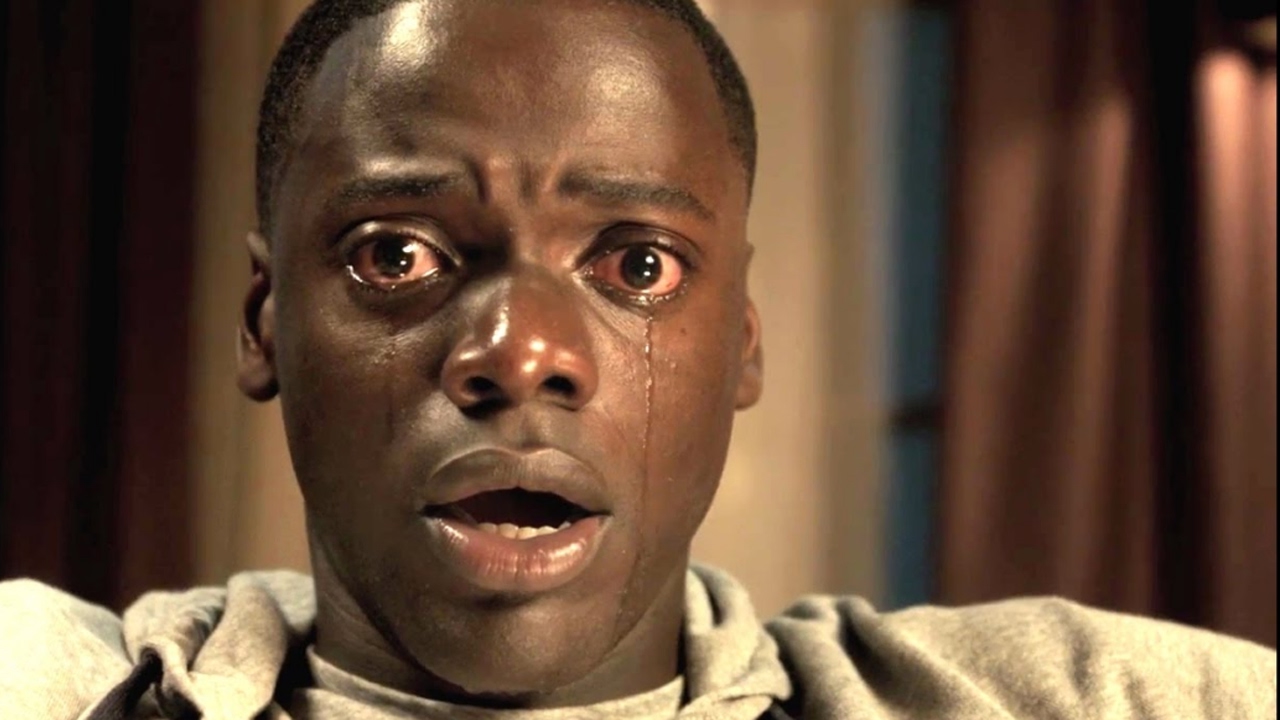
Get Out

Get Out

A ‘social thriller’ that, despite it’s serious message, enjoyed a lightness of touch that made it a joy to watch. There were shades of The Stepford Wives and this witty calling card from director Jordan Peele suggested that cinema had found a hot new talent.

The Handmaiden: Director’s Cut

the-handmaiden-2016-movie-review-chan-wook-park-south-korean-film

Park Chan-wook’s masterpiece, loosely based on Sarah Water’s novel, Fingersmith, took us into the Korea of the 1930s and kept us spellbound for nearly three hours. Lush cinematography, a genuine sense of eroticism and fine performances from an ensemble cast – what’s not to like?

The Red Turtle

RedTurtle

This stunning animation from Michael Dudok de Wit, co-produced by Japan’s Studio Ghibli,  exemplified the best artistic traditions of east and west – a beautiful allegory about life and love and relationships. A delight to watch and a story that we couldn’t stop thinking about.

Baby Driver

Ansel Elgort

Edgar Wright’s adrenaline-fuelled chase movie ticked all the right boxes – a great soundtrack, breathless pacing and an intriguing central character in Ansel Elgort’s titular hero. It all added up to an unforgettable movie experience.

God’s Own Country

GodsOwnCountry

This extraordinarily accomplished debut by writer/director Francis Lee played like ‘Brokeback Yorkshire’ but had enough brio to be heralded in its own right. Beak and brutal, it told the story of two farm hands slowly coming to terms with their growing love for each other. Magnificent stuff.

Mother!

Mother

Darren Aronfsky’s absurd fantasy alienated as many viewers as it delighted, but we found ourselves well and truly hooked. From Jennifer Lawrence’s great central performance to the film’s bruising finale, this was definitely a film not to be missed – and one of the year’s most discussed films.

Blade Runner 2049

blade-runner-2049

We waited thirty years for a sequel to Ridley Scott’s infamous film and I’m glad to say it was worth the wait – a superior slice of dystopian cinema that dutifully referenced the original whilst adding some innovative ideas of its own. Denis Villeneauve handled the director’s reins expertly and Hans Zimmer’s score was also memorable.

The Killing of a Sacred Deer

the-killing-of-a-sacred-deer-ksd_02198_rgb-3000

Another piece of eerie weirdness from director Yorgos Lanthimos, this film also managed to divide audiences, but for us it was a fascinating tale, expertly told and one that kept us hooked to the final, heart-stopping scene. A unique cinematic experience.

Paddington 2

paddington2

Yes, really! The sequel to the equally accomplished Paddington was an object lesson in how to effortlessly please every single member of an audience. Charming, funny and – at one key point – heartbreaking, this also featured a scene-stealing turn from Hugh Grant.

The Florida Project

the-florida-project

Think ‘Ken Loach does Disney’ and you’re halfway there. Sean Baker’s delightful film might just have been our favourite of 2017, a moving story about the tragic underbelly of life in contemporary America. Brooklyn Prince’s performance as six-year-old Moonee announced the arrival of a precocious new talent.

Philip Caveney & Susan Singfield

Blade Runner 2049


05/10/17

The original Blade Runner (1982) is widely regarded as a classic of the sci fi genre. People forget that on its release, it didn’t receive much acclaim. The critics were distinctly sniffy about it and, for that matter, it didn’t exactly pack out the multiplexes. But, over the intervening years, its stature has grown, especially as original director Ridley Scott couldn’t seem to stop tinkering with it. This must surely be the only film where the Director’s Cut is actually shorter than the theatrical release?

When the news broke that there would be a sequel – and furthermore, that Scott would only be producing, rather than directing, expectations plummeted. But the appointment of Denis Villeneauve to the director’s seat definitely helped to bolster confidence; (his Arrival was one of the most acclaimed films of last year) and besides, Scott’s recent return to another of his franchises, with Alien Covenant, hadn’t exactly been the massive success everybody had predicted. Maybe it was the right thing to go forward with a new hand on the helm. Then the advance reviews for Blade Runner 2049 broke and it was, apparently, a masterpiece, a jaw-dropping work of staggering genius. The truth of course, is that it isn’t quite that, but it is an assured and credible sequel to the original film, which is pretty much all we could have hoped for.

It’s thirty years since the events of Blade Runner and a new generation of replicants – ones that are supposedly incapable of insurrection, are now taking on the work that humans disdain, including hunting down and ‘retiring’ the last remaining Nexus 6 models, who are still insisting on going about their business. ‘K’ (Ryan Gosling) is one of the new breed of ‘skin job’, working as a Blade Runner for the LAPD, under the direction of Lieutenant Joshi (Robin Wright). While hunting down renegade replicant Sapper Morten (Dave Bautista), K makes an unexpected discovery. Buried in a box beneath one of the world’s last surviving trees, are the remains of a woman. The pathology department soon establishes that she died in childbirth. The problem is, a serial number hidden in her bones identifies her as a replicant. And replicants are supposedly incapable of procreation. This is news that threatens to have world-changing repercussions and one, when you think about it, that is the basis for most religions.

If Villeneauve’s brief was to mirror the look and feel of the original movie, then this has to be regarded as a success. The squalid grandeur of the cityscapes are breathtakingly realised, the recreation of a smog laden, overcrowded dystopian Los Angeles is perfectly achieved – even Hans Zimmer’s eerie score manages to echo the feel of the Vangelis original while still somehow managing to be its own beast. The references to the first story are all cleverly integrated. Nothing ever feels tacked on.

But this is more than just an accomplished rehash. I particularly liked the concept of Joi (Ama de Armas), K’s virtual reality companion, which gives you an idea of where the likes of Siri and Alexa are eventually going to wind up. A VR creation capable of feeling love for its owner? This element is the film’s strongest card, (and a scene where Joi ‘borrows’ the body of another woman in order to make love to K is a standout); but there are plenty of other thought-provoking ideas in here, much more than the usual cartoonish ones we’ve become used to in this genre. They will have you discussing their implications long after the credits have rolled.

What exactly does it mean to be human? How important are memories to our evolution and to what degree can we trust them? And perhaps, most baffling of all… why does Harrison Ford never seem to get any older?

Okay, so the film isn’t quite perfect. Jared Leto’s Niander Wallace  – the man who has inherited and improved upon the Tyrell Corporation’s achievements – is a bit wearisome, to tell you the truth, given to intoning his lines like an Old Testament prophet; and while I appreciate that there must be fight scenes in a film like this, the climactic punch up between K and a supercharged female adversary seems to go on for just about forever. But the ending is cool. I really didn’t see that coming…

Inevitably, arguments will rage about this one. Some people are going to hate it. Some are going to insist that it’s way better than the original. But for me that will always be a solid gold five star picture, while this one? Close, but no cigar. Maybe just a slim panetella.

4.6 stars

Philip Caveney


Alien: Covenant

13/05/17

Prometheus was one of the biggest cinematic disappointments of recent years. After several underwhelming Alien sequels, fans of the series were eagerly anticipating Ridley Scott’s return to the world that he originated in 1979, but what we actually got was some distance away from that premise – perhaps a few steps too far. So Covenant is very much Scott’s attempts to make amends for that misstep and to some degree, he’s been successful in his ambitions – even if too much of the film riffs on earlier ideas. Oddly, this one feels closer to James Cameron’s brilliant second instalment, Aliens – which Scott still feels was arranged ‘behind his back.’

This film is set ten years after Prometheus and the colony ship Covenant is making its way towards a new planet where the passengers hope to start a whole new world. While the crew are deep in hyper sleep, the day-to-day running of the ship is left to ‘synthetic’ Walter (Michael Fassbender). But an unexpected incident means that the crew are woken seven years too early and, even worse there are a couple of fatalities – including the Captain, the husband of Daniels (Katherine Waterston). The new captain, Oram (Billy Crudup) isn’t exactly relishing the idea of getting back into those unreliable pods, so when the crew happen upon an inexplicable signal issuing from what appears to be a nearby habitable planet, he feels it’s worth going in to investigate…

Sound familiar? Well, yes, very. Pretty soon an advance party are making a landing on the planet and realising that it really isn’t a safe place to try and make a new home – and Walter meets an earlier model of himself, David, who has been surviving alone on the planet since the events of Prometheus. But can the advance party make it back to their spaceship alive?

Ridley Scott’s films are nearly always good to look at and he manages to crank up enough tension to keep you on the edge of your seat through much of this. The planet locations are beautifully set up, Waterstone steps gamely into Ellen Ripley’s boots and there are enough chest-bursters, face-huggers and Xenomorphs to keep the fans happy. There’s also an interesting trope set up between caring, artful David and his cooler, less compassionate successor, Walter. I’m delighted to see that the project has finally gone back to the designs of creature-creator H.R. Giger for its look. But there remains the conviction that we’re simply revisiting territory that has already been well and truly trodden flat. The news that Scott is planning to expand the Alien universe with another three films does not exactly fill me with excitement. He’s done what he should have done last time out. Surely now, he should let this idea rest and move on with his many other projects. After all, at 79, who knows how many more he will achieve?

For my money, Alien: Covenant would make a decent swan song for the franchise. Leave it, Ridley. Step away from the franchise. There’s nothing new to see here.

4 stars

Philip Caveney