Ralph Fiennes

The Choral

09/11/25

Cineworld, Ediburgh

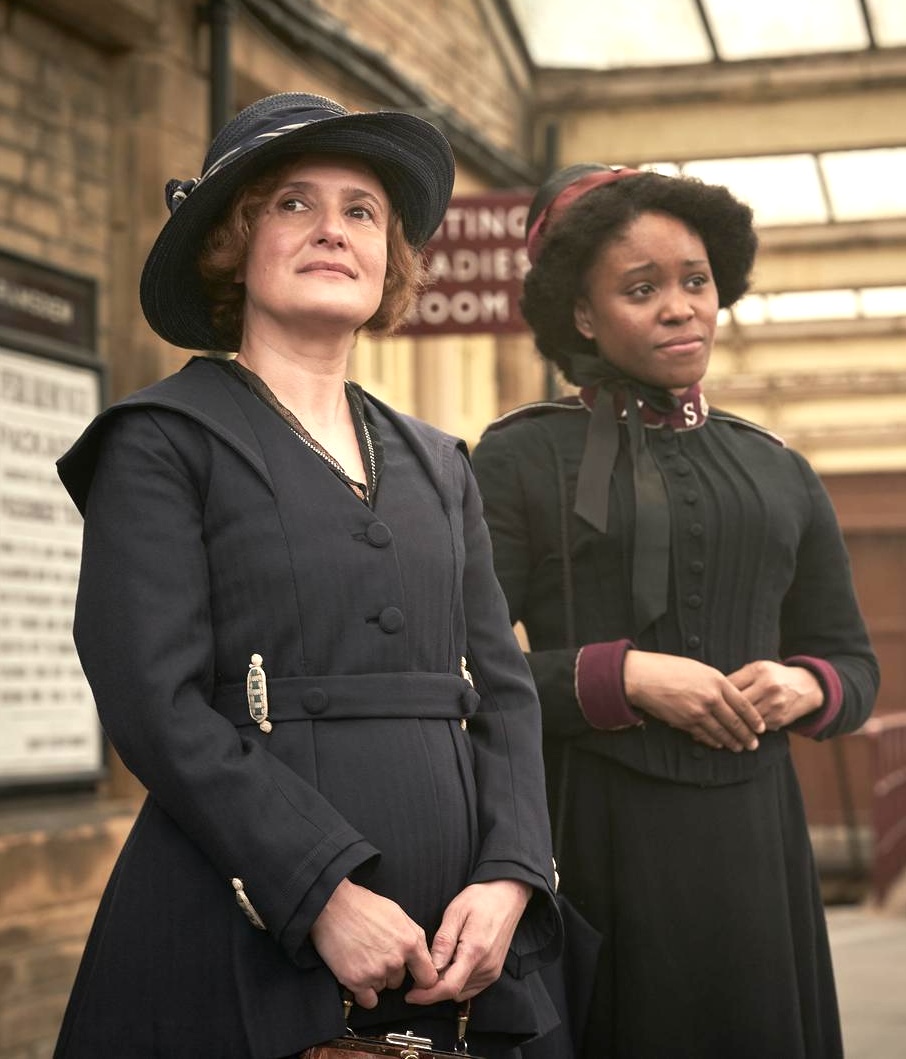
The year is 1916 and in the fictional Yorkshire town of Ramsden, the local choral society is drawing up plans for its next production – but the depredations of war have taken their inevitable toll. Most of the village’s males are either away fighting or already dead. Yet, ironically, with so many of them buried on the Western Front, the most under-employed person on the society’s committee is Mr Trickett (Alun Armstrong), the local undertaker.

The choral’s leader, Alderman Bernard Duxbury (Roger Allam), is painfully aware that his own voice is at best, average but, as the man who provides most of the funds for these productions – and who badly needs distraction after the death of his own son in the trenches – he presses ahead with his plans for the next show, in which he fully expects to sing the lead. 

With the former musical director recently enlisted, Duxbury is keen to acquire the services of Dr Henry Guthrie (Ralph Fiennes) as his replacement, but here too lie problems. Guthrie makes no secret of the fact that he lived and worked for several years in (whisper it) Germany! There are many locals who feel this taints him irrevocably – and why does he spend so much time in the library checking out news articles about the German navy? But other members of the committee, Mr Fyton (Mark Addy) and Mr Horner (Robert Emms), have to grudgingly admit that the man is a real talent.

But once they have him on board, what piece of music can the society possibly perform? Nearly every title they come up with has been written by a German! Eventually, Guthrie alights upon The Dream of Gerontius by Edward Elgar, a suitably British composer. Duxbury gives the title role his best endeavour, but it’s clear that something’s not working…

This original screenplay by Alan Bennett, directed by Nicholas Hytner, could so easily be one of those traditional feel-good features, with the plucky inhabitants of Ramsden coming together to create a masterpiece and performing it to a packed auditorium of spellbound locals – and, while this isn’t so very far from what’s actually delivered here, the telling steers clear of schmaltz and offers something more gritty, nuanced and realistic. 

Guthrie enlists many of his performers from the local hospital where soldiers, recovering from their injuries, are happy to have something else to concentrate on. And for the role of Gerontius, how about young soldier, Clyde (Jacob Dudman)? He has returned to his hometown minus his right arm, only to find that the girl he loves, Bella (Emily Fairn), has fallen for another boy in his absence. If ever there was someone with a real understanding of loss, here he is – and luckily, he has a decent voice.

The production gradually starts to come together. When Salvation Army worker, Mary (Amara Okereke), innocently invites Sir Edward Elgar (Simon Russell Beale) along to see a rehearsal, nobody expects that he’ll actually turn up… or that he will turn out to be such a self-aggrandising bellend, maybe the one man who can stop the show in its tracks. There’s a genuine sense of jeopardy as realisation dawns.

But the element of The Choral that I find the most affecting is the depiction of the youths of the town, who use the whole enterprise as a means to meet members of the opposite sex, to have some fun and enjoy a laugh, all the time painfully aware that the clock is ticking, and that their 18th birthdays are fast approaching… along with their call-up papers.

The Choral is an engaging and melancholic piece that serves as a reminder of the awful injustice of war, and the healing power of communal art in times of tribulation.

4 stars

Philip Caveney
28 Years Later

22/06/25

Cineworld, Edinburgh

The release of 28 Days Later in 2002 was something of a game-changer. A ‘sort of’ zombie movie, it made the idea of a powerful, rage-inducing virus – accidentally released from a secret laboratory – seem queasily credible, and was a monstrous hit at the box office. Director Danny Boyle and star Cillian Murphy were too embroiled in their sci-fi epic, Sunshine, to take on the 2007 sequel, 28 Weeks Later – so they handed the directorial reins to Juan Carlos Fresnadillo. I missed that film on first release, but caught up with it earlier this week and thought it was actually pretty decent. It introduced the idea of a quarantined UK, taken over by American military forces, who act with brutal force when everything goes tits-up – which, given recent world events at the time of viewing, has a chilling new sense of prescience.

So, what’s left for part three? Plenty, as it turns out, with Boyle and original screenwriter Alex Garland stepping back into the proceedings with fearless assurance. The time-honoured tradition with long-running franchises is to retread familiar territory, thus ensuring that original fans will stay on board. But Boyle and Garland have clearly had plenty of time to develop a new story arc, and – provided this opening instalment puts the requisite number of bums on seats – have two sequels waiting in the wings.

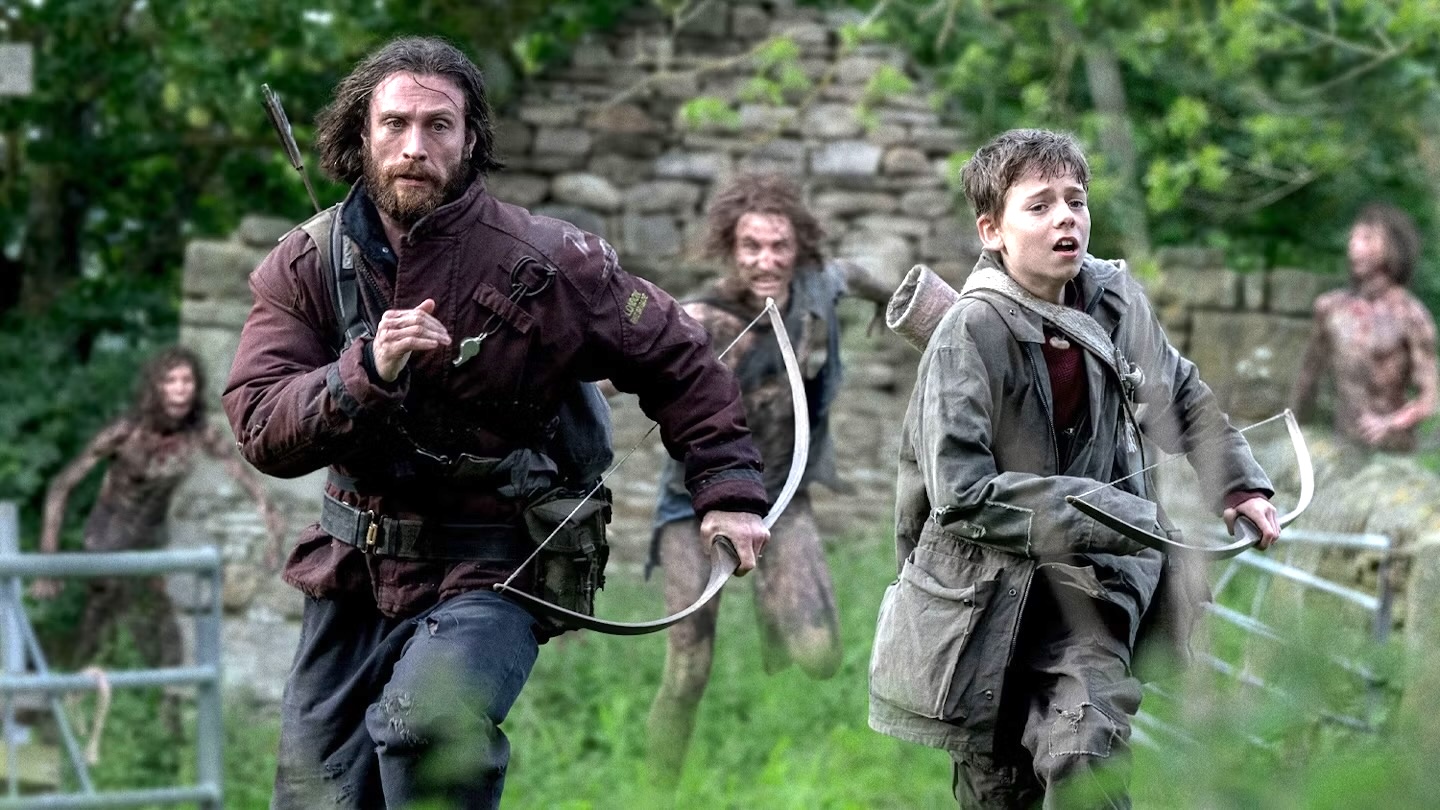
Time has moved on – by 28 years to be exact – and a community of survivors has been established on a remote island in the North East, connected to the mainland by a narrow causeway. This can only be crossed for a few hours each day at low tide, and the entrance gates are guarded around the clock. Spike (a strong performance from newcomer Alfie Williams) is thirteen years old and his father, Jamie (Aaron Taylor-Johnson), is preparing to take him to the mainland, where, in a long-established custom, he will kill his first ‘Infected’ with a bow and arrow. Spike goes along with the plan, even though he’s desperately worried about his mum, Isla (Jodie Comer), who is afflicted by a strange illness that makes her prone to forgetting who (and where) she is.

When Alfie hears talk of a mysterious doctor living somewhere out on the mainland, he decides to take his mum off the island in search of a cure…

This is a fabulous piece of cinema, shot almost entirely on iPhones, and crammed with so many references and allegories that it’s hard to take them all in with just one viewing. The community of uncompromising Geordies, proudly waving their St George flags and getting on with the basics of everyday life have completely shut themselves off from everything that’s happening over the water – and the filmmakers have taken considerable pains to establish the world building, making it all seem entirely credible. It’s very hard not to read this as a searing condemnation of Brexit and, in my opinion, that’s the filmmakers’ intention.

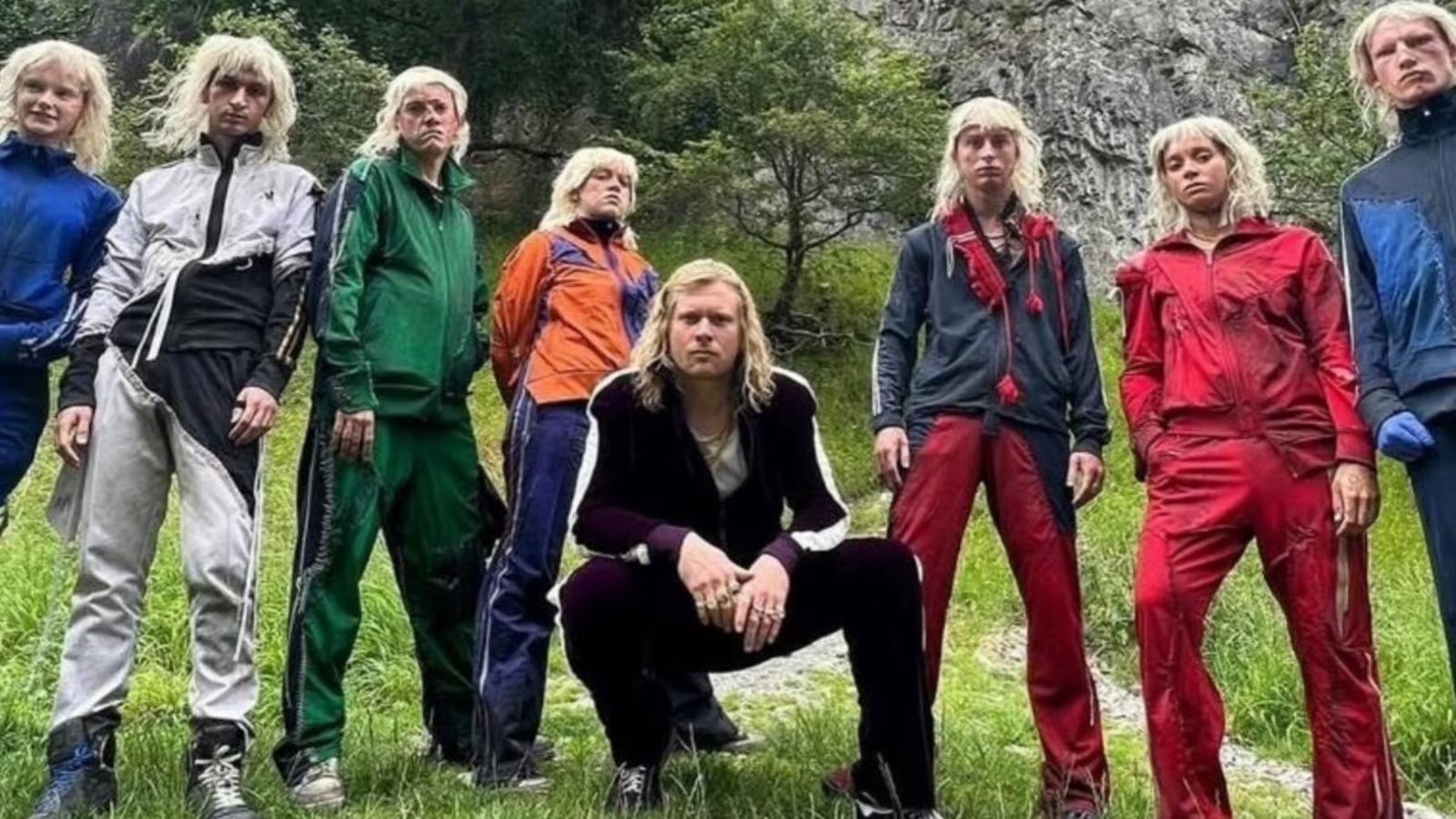
There are elements of folk horror woven into the script and the eerie atmosphere is beautifully accentuated by the music of the Young Fathers and the use of an old recording of Rudyard Kipling’s militaristic poem, Boots.

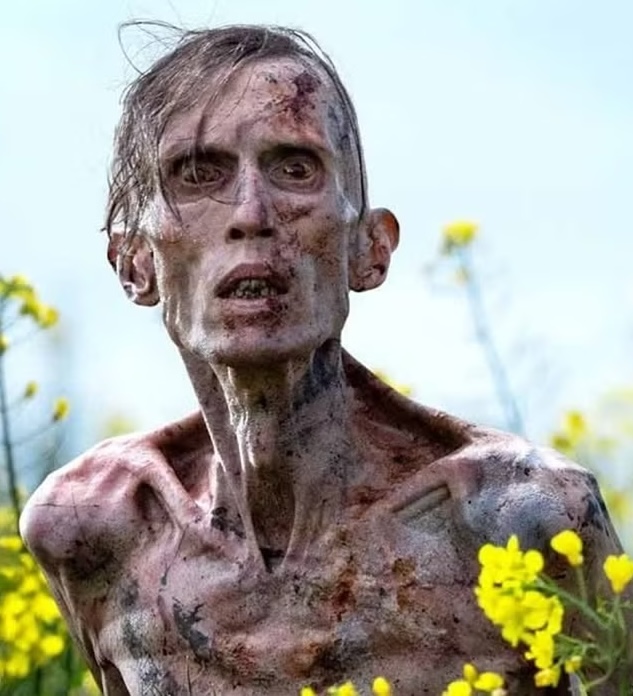
The first part of the story feels the most familiar. That hunting trip on the mainland gets out of hand and plunges Spike and Jamie headlong into the terrifying world of the Infected, where a new, faster, more powerful breed – The Alphas- are ruling the roost. These scenes are brilliantly handled with the suspense ramped up to almost unbearable levels. However, the second section heads off in an entirely different direction, introducing a detachment of Swedish Navy troops, who have been patrolling the UK coastline, and whose boat has run aground nearby. When Spike and Isla bump into young soldier, Erik (Edvin Ryding), the only survivor of his group, he provides some much-needed weaponry to help them to their destination.

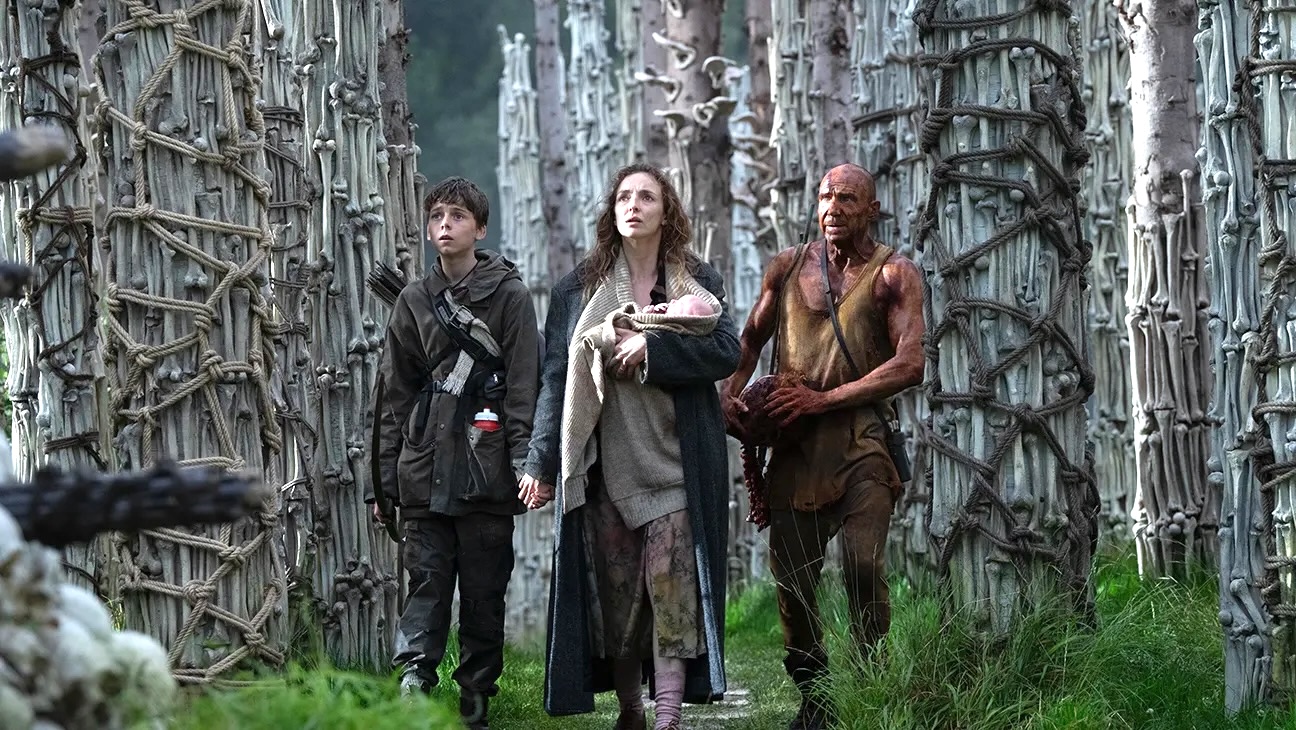
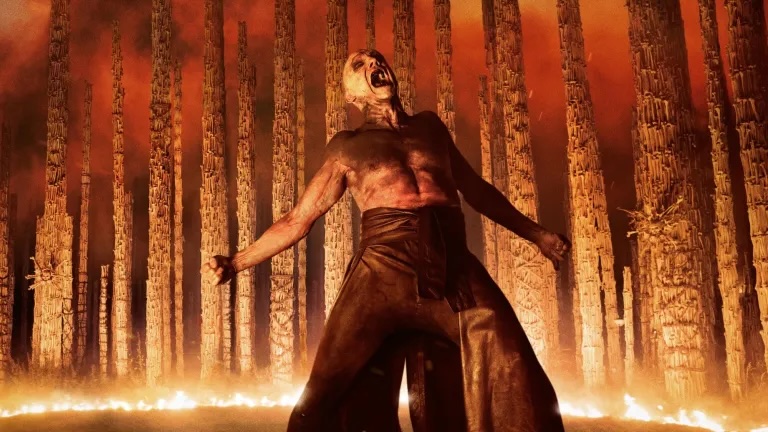
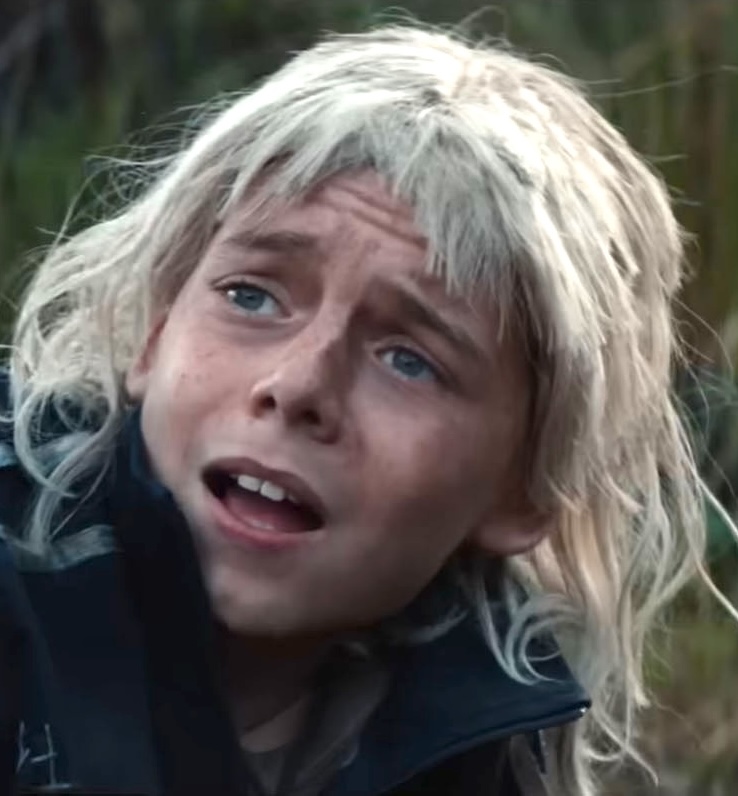
The film’s third section adds a plaintive and poignant note to proceedings as Isla’s plight becomes ever-more heartbreaking. When she and Spike finally encounter Dr Kelson (Ralph Fiennes), he’s living a monastic existence in the midst of a self-constructed homage to death, which he calls his memento mori. The character’s powerful resemblance to Captain Kurtz (from Apocalypse Now) is too marked to be accidental and Fiennes gives the character a calm, solemn dignity amidst all the madness.

And then we’re handed a conclusion so off the charts that it is sure to be divisive. It immediately solves a puzzle, established in the film’s opening scenes, while also offering disturbing questions about a character who has (quite literally) somersaulted into the storyline.

28 Years Later is a dazzling, uncompromising slice of horror cinema, that does the seemingly impossible: both continuing an established franchise and simultaneously reinventing it. I can only say that I can’t wait to see where this goes next.

5 stars

Philip Caveney

Conclave

01/12/24

Cineworld, Edinburgh

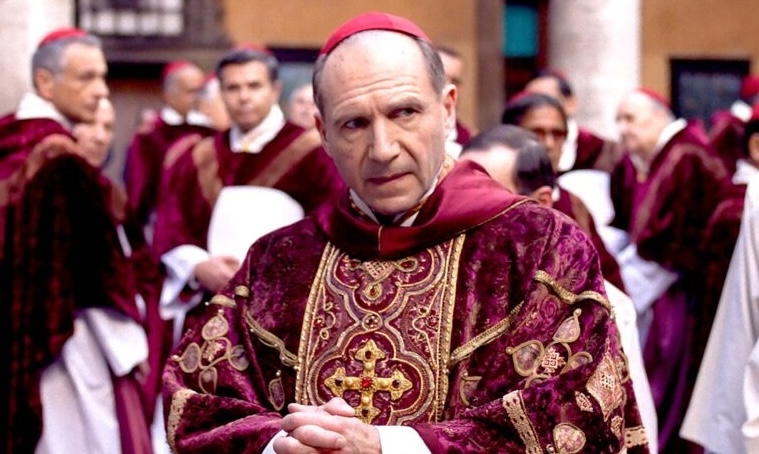
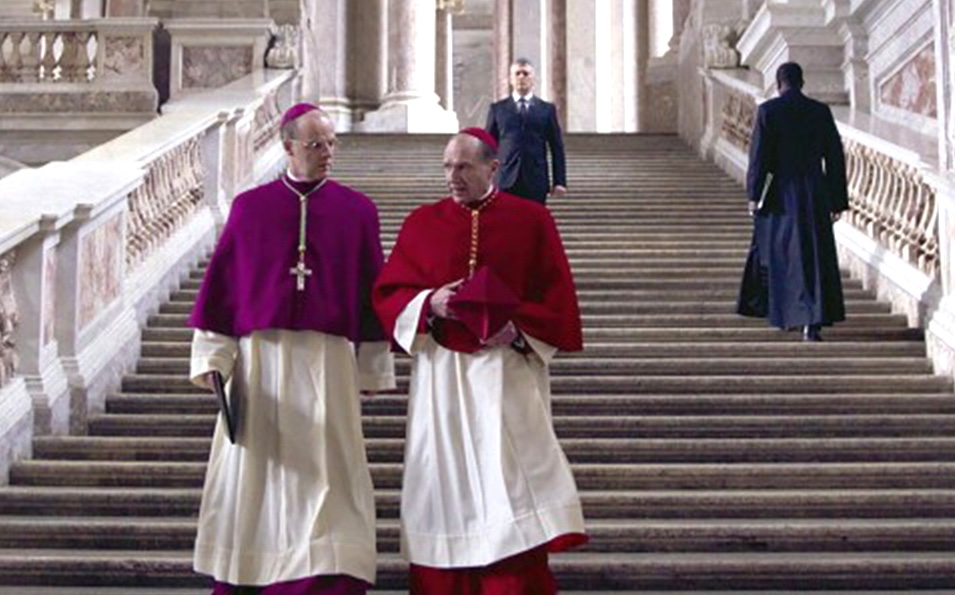
The Pope has died peacefully in his sleep and, following the long-established conventions of the Catholic church, archbishops and cardinals from across the world gather in The Vatican to undertake the complicated ritual of choosing a successor. The task of organising the ensuing (and highly secretive) process falls to Cardinal Lawrence (Ralph Fiennes), the dean of the college of cardinals, who must put aside his personal grief in order to referee the resulting contest. But who will claim the coveted role?

Will it be Italian hardliner (and notorious racist) Tedesco (Sergio Castellitto)? How about the reserved but highly respected African contender, Adayemi (Lucian Msamati)? Might the prime slot fall to the influential and oleaginous American, Tremblay (John Lithgow), whose recent activities seem to suggest he’s not entirely trustworthy? And let’s not forget the wild card, newly arrived from Kabul, Benitez (Carlos Diehz), a bishop that none of the main players even knew existed, until now.

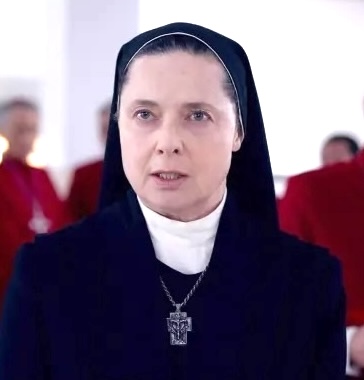
Meanwhile, one of the few women here with any influence, Sister Agnes (Isabella Rosselini), seems to be holding back on some important nuggets of information…

Lawrence is rooting for his old friend, Bellini (Stanley Tucci), a man determined to bring Catholicism into his more liberal worldview but an unexpected rivalry springs up when Lawrence finds himself also emerging as a potential candidate, something he most certainly does not want. After suffering doubts about his own faith, he’s been looking for an excuse to step quietly away from the church of Rome…

After his epic remake of All Quiet on the Western Front, director Edward Berger has turned his skills to a much more intimate story. Conclave, adapted by Peter Straughan from the novel by Robert Harris, generates its own, claustrophobic grip as the conclave moves through vote after vote, the various candidates jockeying for supremacy. This is serious, grown-up filmmaking and has about it all the mystery and intrigue of a superior crime drama. It’s heartening to note that a big crowd has turned out for this Sunday afternoon showing, a situation that these days is too often the preserve of more lightweight family fare.

It’s probably true to say that those who are already familiar with the novel are not going to be quite as blown away as I am by the film’s head-scrambling outcome, which I really, REALLY don’t see coming. (Those in the know, please keep the information to yourselves.)

Conclave is a compelling film, that has something revelatory to say about one of the most powerful and oppressive religions on the planet. It’s a film, moreover, that ingeniously encapsulates its most fundamental premise into a deceptively simple final shot.

4. 4 stars

Philip Caveney

Macbeth

02/05/24

Cineworld, Edinburgh

Oh, the irony!

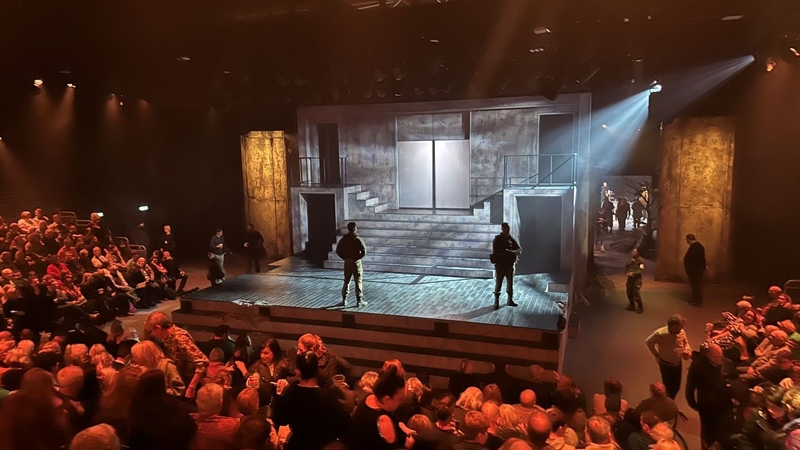
This touring production actually came to Edinburgh, the city where we live. But, for reasons far too tedious to go into, we failed to secure tickets for it – and now a screening of the live show at Cineworld offers us an opportunity to catch it after all.

I still haven’t given up on the hope that one day, somebody out there will put on a version of the Scottish Play in which the Macbeths are in their twenties. I’ve always felt that the hubristic actions of the Macbeths would make so much more sense if the duo were little more than reckless kids – and great actors though they are, Ralph Fiennes and Indira Varma hardly qualify in that department.

But a large helping of humble pie awaits me, because this sweaty, immersive interpretation of Shakespeare’s most ubiquitous play is one of the best versions I’ve seen. While it throws in some unexpected twists in the telling, they are never allowed to feel like gimmicks. Three feral-looking witches (played by Lucy Mangan, Danielle Fiamanya and Lola Shalam) appear in the background of scenes I wouldn’t usually expect to see them in, and lend a wonderfully sinister quality to the proceedings.

I won’t bang on about the story, which just about everybody in the world knows by heart (indeed, there are moments when I feel I could find work as a prompt for this play); suffice to say that both Fiennes and Varma acquit themselves admirably, Fiennes mining the seam of dark humour that underpins the mayhem and Varma absolutely nailing Lady M’s vaulting ambition. I’ve seldom seen the couple’s aspirations spelled out with such absolute clarity.

Ben Turner’s portrayal of MacDuff is riveting, particularly in the scene where he’s told by Ross (Ben Allan) of the murder of his wife and two children, the enormity of the revelation spelled out in Turner’s grief-wracked face. This is such an affecting moment that my own eyes flood with tears.

Finally, there’s the violent confrontation at the end, the warriors dressed in contemporary body armour. So often this play is let down by the sight of actors swiping half-heartedly at each other with rapiers, but the deadly looking machetes brandished in this confrontation are swung around with enough abandon to make me flinch in my seat. All in all, this is a faultless production and the mere glimpses I receive of its atmospheric setting make me wish I’d tried harder to hunt down tickets to the original performance.

If this comes to a cinema near you, I’d advise you to grab a seat at your earliest opportunity.

5 stars

Philip Caveney

Roald Dahl/Wes Anderson

29/10/23

Netflix

A new film by Wes Anderson is always an interesting proposition. Four new films – the longest of which has a running time of just thirty-seven minutes – is a downright intriguing one.

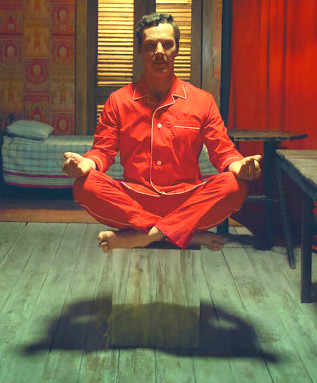
It must be said from the start that these are less motion pictures than illustrated stories (imagine, if you will, a kind of turbo-charged Jackanory and you’ll get the general idea). First up, there’s the aforementioned longest entry in the quartet, The Wonderful Story of Henry Sugar, which – to begin with – is told by Dahl himself (uncannily impersonated by Ralph Fiennes). The author begins to relate the story of the mysterious Imdad Khan (Ben Kingsley), a man who can see without using his eyes. Khan’s story is then picked up by two doctors (Dev Patel and Richard Ayoade) and they, in turn, transfer their attention to the titular character (played by Benedict Cumberbatch), a man who becomes obsessed with the notion of becoming an expert card cheat. (As you do.)

It’s all delivered as narration (at a breakneck pace) and, of course, the set dressing has the usual Anderson style: a series of exquisite puzzle-boxes, expertly linked together, opening and closing as the tale unravels. It’s beautiful to watch, but ultimately the story leaves me with a powerful sensation of so what?

The Swan (narrated by Rupert Friend) is, for me, the strongest narrative here, the distressing tale of a young boy called Peter (Asa Jennings), who is horribly bullied by a couple of local lads with access to a rifle (always a recipe for trouble) and which culminates in a poignant and rather distressing conclusion. The story is delivered by Friend as he wanders along a series of labyrinthine passageways and this is perhaps the most kinetic of the films.

The Rat Catcher features Fiennes as the central character, a rather creepy individual who visits a garage and offers his services to the proprietor (Friend again), while the tale is told by a narrator (Ayoade). The subtext of this one is rather less straightforward, as is the style. I can’t remember ever seeing an actor miming invisible objects in a film before! The rat catcher has assimilated all the qualities of the creatures he’s supposed to be eradicating and, when he fails in his attempts to locate them (in a haystack), he tries to make up for his failure in a demonstration of unpleasantness. Again, I feel that the story’s conclusion is rather underwhelming.

Finally there’s Poison, an account set in post-colonial India, in which Harry (Cumberbatch) lies in bed convinced that a krait (a venomous snake) is lying asleep on his chest and that the slightest move will cause it to bite him. A local police officer (Patel) and a doctor (Kingsley) are enlisted to resolve the situation and, to give them their fair due, they do their level best. The story culminates in a short and rather shocking demonstration of racism, which some viewers will find unsettling, but is surely the whole point of Dahl’s story – that former white rulers will always refuse to acknowledge their own failings. Strangely, Poison seems to have a similar theme to its predecessor.

With such brevity, it seems fairest to judge the four films as a whole – and indeed, Anderson has said that what attracted him to the idea is the notion that they comprise a kind of interlocking narrative. While this quartet is always visually compelling, I can’t help wishing that this inimitable director had settled on some better examples from Dahl’s extensive back catalogue. There are plenty to choose from.

If you have Netflix, they’re certainly worth clicking through. If nothing else, you’ll be charmed by their quirkiness and the uncompromising style that exemplifies Anderson’s approach to cinema.

3.4 stars

Philip Caveney
The Menu

06/12/22

Cineworld, Edinburgh

This dark and malevolently funny film, directed by Mark Mylod, expertly skewers the pretensions of fine dining and the people who indulge in it. It’s an assured piece of work, but, as somebody who enjoys the occasional bit of haute cuisine, I take its final assertion – that the only food worth getting worked up about is cheeseburger and fries – with a large pinch of smoked paprika.

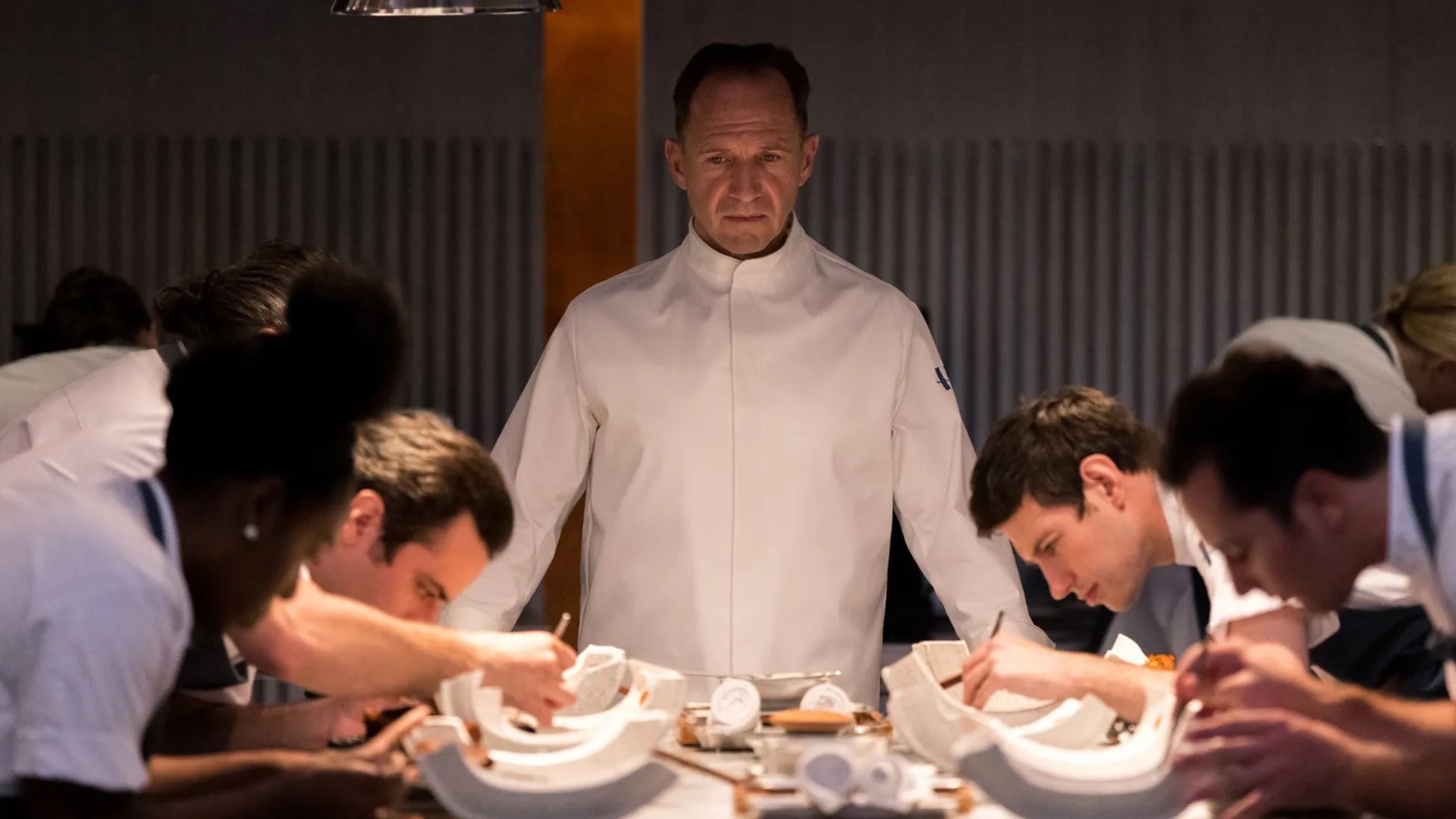
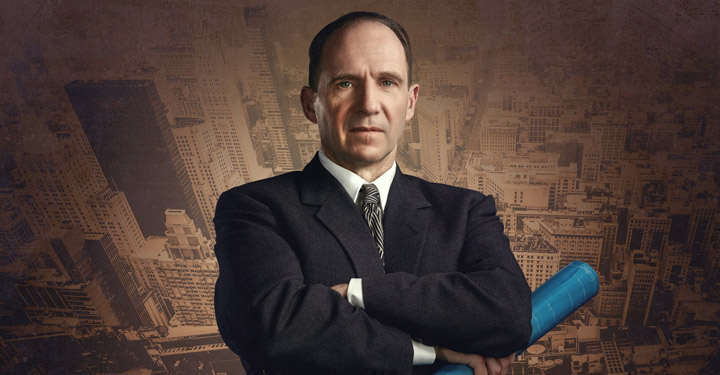
Tyler (Nicholas Hoult) is a lover of good cooking, sycophantically devoted to the work of culinary genius, Chef Slowik (Ralph Fiennes), about whom he has an encyclopaedic knowledge. When we first encounter Tyler, he’s waiting impatiently at a quayside with his date, ‘Margot’ (Anya Taylor-Joy), for the boat that will take the two of them over to Slowik’s private island. Once there, along with a group of other specially invited guests, the couple will experience the great man’s latest menu. Their dinner companions include a couple of influential food critics, a trio of investors, a B-list movie star and even Slowik’s mother, who appears to be hopelessly drunk as the guests take their seats.

Slowik’s devoted staff hurry obey his every word, while his second in command, Elsa (Hong Chau), wanders around the restaurant politely insulting the diners to their faces.

The ensuing events are presented as a series of courses, complete with onscreen descriptions and, as the time slips by, Slowik’s offerings become ever more absurd. (I particularly love the course that consists of a selection of accompaniments for bread that neglects to include any actual bread, no matter how vociferously the diners demand it.) But soon violence and bloodshed become major ingredients and the diners are fast losing their appetite. It’s clear that this is going to be Slowik’s swan song, a rebuke to a way of life that he has increasingly come to despise – and that it’s going to take considerable ingenuity to survive the final course.

An inventive satire packed with scenes of cruelty and humiliation, The Menu seems to take great delight in settling scores. There are some clever plot twists here – though not everything stands up to close scrutiny – and Fiennes excels as a man who has let his own burgeoning success push him to the very edge of sanity. Taylor-Joy is terrific too, as the only character in the film prepared to tell Slowik exactly what she thinks of his food.

It won’t be to everyone’s taste, but I thought The Menu was delicious. Bon appetit!

4 stars

Philip Caveney

Straight Line Crazy

26/05/22

National Theatre Live, The Cameo, Edinburgh

The NT Live broadcasts are a wonderful innovation, an opportunity for viewers across the country to watch live performances beamed direct from the stages of London. We’ve seen some excellent productions in this way and, on paper, Straight Line Crazy sounds really promising. A new offering direct from the Bridge Theatre, written by David Hare, directed by Nicholas Hytner and starring Ralph Fiennes. What can go wrong?

Well, plenty, as it happens. ‘Show, don’t tell’ may be something of a cliché, but these are the three words that are repeatedly drummed into every writer of fiction from the word go. So how has somebody as seasoned as Hare managed to create a play that tells us next to nothing but shows us even less?

The play’s first act is set in 1926, and influential urban planner, Robert Moses (Fines) is working to push through his plans for Long Island, where the various roads and bridges he envisions will allow the masses to travel to what have previously been exclusive beaches. To this end, he has enlisted the likeable Governer Al Smith (Danny Webb), and their resulting banter is overseen by Moses’ employees, Finnuala Connell (Siobhán Cullen) and Ariel Porter (Samuel Barnett). The two men bluster amiably over glasses of bootleg whisky but we learn precious little about them, other than the fact that Moses is prepared to bend the rules in order to see his concept through.

The second act is set thirty years later, when the tide of popular opinion is beginning to turn against Moses. Here at least, the action is opened up beyond Moses’ headquarters, to a public meeting where people have the opportunity to speak out against his single-minded obsession with offering Manhattan up to the dominance of the motor car – but once again we learn very little and, all too soon, we’re back to Moses’ office for more bluster.

And that’s pretty much what you get. Fiennes, to his credit, is a terrific actor, and of course he does his best to imbue Moses with some depth, but we’re reliant on Connell’s character to occasionally step in and tell us key facts about the man – in some cases to actually remind him about things he must already know. It’s all curiously inert and unengaging and, by the play’s conclusion, which points out that Moses is still set in his ways and not about to change anytime soon, I’m left with the conviction that there must be a better story in there somewhere.

Straight Line Crazy might just as well be a radio play – and it doesn’t help that I’m fresh from seeing Wise Children’s Wuthering Heights, an endlessly inventive adaptation that seems to rejoice in finding fresh ways to show an over-familiar narrative. This seems to be its polar opposite, masking rather than illuminating a potentially interesting character.

File this one under D for ‘disappointing.’

2.8 stars

Philip Caveney
The King’s Man

02/01/22

Cineworld, Edinburgh

I enjoyed Matthew Vaughn’s two Kingsman movies. A refreshing take on the spy genre, written with a nod and a cheeky grin, they provided easy, if undemanding, entertainment. After long delays caused by the pandemic, we finally get to see The King’s Man, a sort of origins tale, which explains how the Kingsman Agency came into being.

And, not to put too fine a point on it, this is a very different kettle of fish – some of which is well past its sell-by date. It isn’t that Vaughn’s screenplay (written this time without Jane Goldman) is short on ideas. There are just too many of them, fighting with each other for breathing space and frankly as risible as the proverbial box of frogs.

After the violent death of his wife in South Africa, Lord Oxford (Ralph Fiennes), a rich pacifist do-gooder swears to shield his young son from any possibility of warfare. Twelve years later, Conrad (Harris Dickinson) has grown to be a young man and, with the world hurtling headlong towards the conflict of the First World War, he decides he wants to be involved. He’s blissfully unaware that, over the intervening years, his father has created a special network of spies, working alongside two of his trusted servants, Polly (Gemma Arterton) and Shola (Djimon Hounsou). Working with other ‘domestics’ across the world, all with access to centres of government, the trio are able to gather evidence of any approaching catastrophe and take steps to avoid unnecessary lives being lost… yes, that really is the premise!

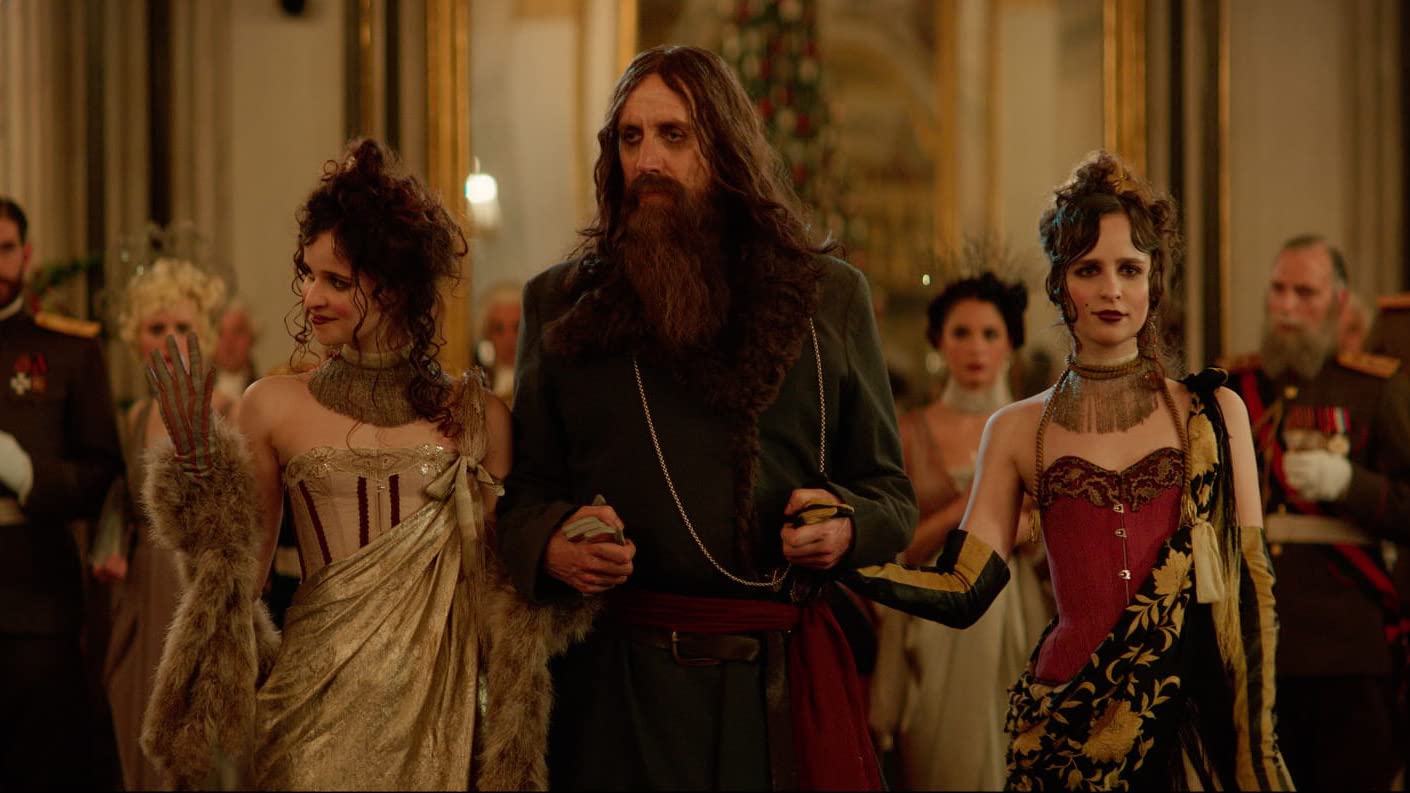
Cue a series of unlikely adventures, with Oxford and son working alongside Lord Kitchener (Charles Dance), being present at the assassination of Duke Franz Ferdinand and even taking on Grigori Rasputin (Rhys Ifans) in a martial-arts infused punch-up (actually one of the films better sequences). Meanwhile Tom Hollander struggles with a triple role as three of history’s most famous cousins – King George, Kaiser Wilhelm and Czar Nicholas – and ultimately, we learn that the entire war has been engineered by… No, I can’t tell you. Not without being embarrassed by the sheer absurdity of it. Put it this way. I seriously doubt you’ll see it coming.

While it’s true there are a couple of excellent action set-pieces in the later stretches of the film, there’s a long grim wait before we get to them, during which we are treated to a parade of caricatures that wouldn’t seem out of place in a Carry On film. There are also some conspiracy theories that frankly beggar belief. The final straw is the use of Dulce et Decorum est to pass comment on the senseless slaughter of the First World War. While Fiennes reads it beautifully, it’s hard not to imagine Wilfred Owen spinning in his grave as Vaughan makes a desperate attempt to have his Bakewell Tart and eat it.

The overall message here seems to be that humanity always depends on rich toffs to step in and bail them out of trouble when, once again, the rest of us make a mess of things. Fiennes, a superb actor, is worthy of better material than he’s given here and I’m not referring to the tailoring.

It’s a great shame, because clearly a lot of time, effort and money has been expended on this production. Released on Boxing Day in an apparent attempt to hoover up the Christmas market, I seriously doubt this will recoup what must have been a considerable investment.

Even during the festive season, there’s only so much cheese an audience can swallow.

2.8 stars

Philip Caveney

The Dig

30/01/21

Netflix

The Dig sounds fairly unpromising on paper. It’s based around the excavation of the Sutton Hoo horde – one of the most significant discoveries in British archeological history – and, since we know the eventual outcome of the tale before a single sod of earth has been lifted, it’s all too easy to surmise that this will be a story bereft of any suspense. However, as written by Moira Buffini (based on a novel by John Preston), and directed by Simon Stone, this is nonetheless a compelling story that never fails to hold the attention and, in one particular sequence, will have you holding your breath and crossing your fingers.

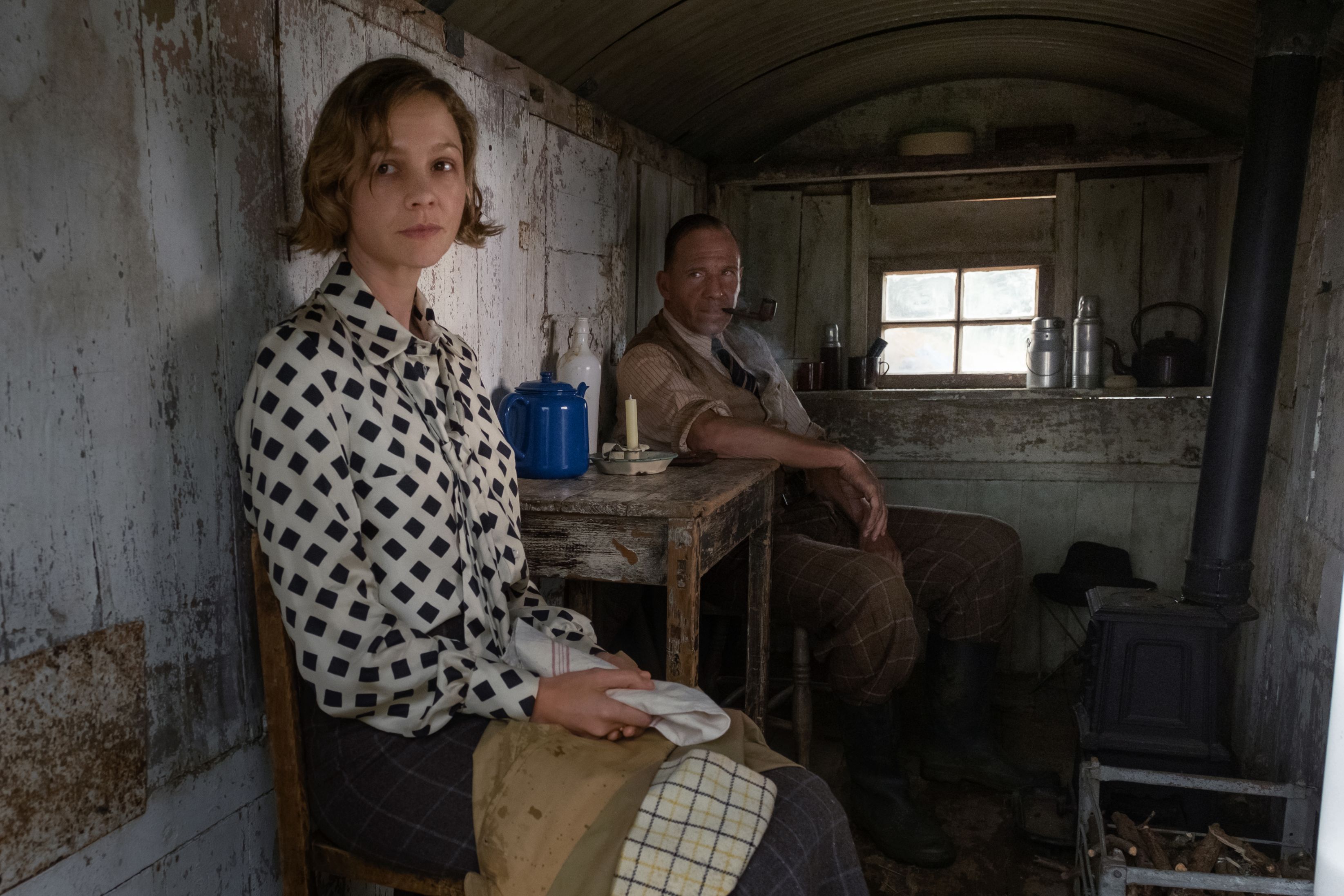
It’s 1939 and Great Britain is hurtling irrevocably towards World War 2. Suffolk landowner Edith Pretty (Carey Mulligan) has long wanted to explore three ancient burial mounds in one of her fields and, to this end, she decides to hire local man, Basil Brown (Ralph Fiennes). Brown has years of practical experience in excavation, but not much in the way of qualifications. However, once the little matter of payment has been finalised, he sets to with gusto.

When the excavation begins to yield some promising results, the glowering, overbearing Charles Phillips (Ken Stott) is dispatched by the British Museum to stake their claim on the gradually emerging treasures. Soon, more hands are called to help out with the donkey work. These include Peggy Piggot (Lily James), recently betrothed to Stuart (Ben Chaplin), who, it turns out, isn’t ideal husband material – and Edith’s cousin, Rory Lomax (Johnny Flynn), fills in some time while waiting to take up his commission with the RAF. The various characters make up a volatile mixture, and there is an added shot of tragedy when Edith discovers that time is running out in more ways than one…

This is a handsomely-mounted production – the English countryside, thanks to cinematographer Mike Eley, has rarely looked more sumptuous – and Mulligan and Fiennes make a memorable on-screen partnership, she playing her vulnerability for all its worth, and he portraying the kind of stoic, no-nonsense personality that seems to go hand-in-hand with the era. There’s no actual romance between them – Brown is married to the equally steadfast May (Monica Dolan) – yet Pretty and Brown eventually establish a relationship based on mutual respect. Brown does forge a friendship with Edith’s young son, Robert (Archie Baines), built around a mutual interest in star gazing, and the scenes where he counsels the troubled boy are beautifully handled.

Those looking for something to transcend the current glum realities of life, could do a lot worse than clicking the Netflix button, but be warned, there’s a poignant conclusion here that may have some of you reaching for the tissues.

4 stars

Philip Caveney

Official Secrets

20/10/19

Official Secrets is based on a true story; the fact that it’s one of the most shameful events in our recent history makes it worth seeing, even if the film itself doesn’t quite match up to Keira Knightley’s sterling performance in the central role.

She plays Katharine Gun, a translator at GCHQ in Cheltenham, a British intelligence agency. She’s paid to snoop on emails and recorded phone calls, in order to seek out those individuals who might represent a danger to the people of Great Britain – but what she stumbles upon emanates from a close ally and fills her with dismay.

It’s 2003 and the western world is moving ever closer to armed conflict with Iraq. Katharine spots an email from somebody called Frank Koza of the American-based National Security Agency, who is masterminding a (clearly illegal) plan to bug the offices of the United Nations in order to put pressure on politicians, ‘encouraging’ them to vote for an invasion of Iraq. Appalled by the thought of so many people dying in the ensuing conflict, Katharine secretly makes a copy of the email and passes it on to an anti-war activist she knows. The email eventually finds its way into the hands of Observer journalist Martin Bright (Matt Smith), who publishes the piece. But when MI6 come looking for the whistleblower, it’s soon apparent that Katherine has put herself – and her Muslim husband, Yasar (Adam Bakri) – in terrible jeopardy.

The central message of Gavin Hood’s film is all too evident. We cannot trust the institutions that purport to have our best intentions at heart; too many of them are ready to cover up their dodgy deals by any means possible and throw to the wolves all who oppose them.

As I said, Knightley gives a remarkable performance here, but the bitty screenplay means that a whole procession of top-notch character actors are reduced to what amount to little more than cameo appearances. It says something when Ralph Fiennes, playing Kathrine’s defence lawyer, Ben Emerson, has little to do other than stand on a beach gazing mournfully at his fishing rod; throw in fleeting appearances from the likes of Rhys Ifans, Matthew Goode and Tamsin Greig to name but three, and it’s clear that something is amiss.

Furthermore, the rather dry nature of the ensuing events occasionally prompts the writers to sex things up a little: it seems unlikely, for instance, that Yasar would have come quite so close to deportation as is depicted here – but nevertheless, this is an important story, one that should serve as a warning to anyone who believes in the sanctity of democracy. As the film points out, thousands of innocent people died because of the conflict in Iraq – a war that is now widely seen as an illegal violation of human rights. Katharine Gun was trying, in her own way, to prevent it from happening.

Tony Blair is not going to like what’s depicted here – and his is not the only political name that’s given a thorough kicking. Furthermore, recent developments in Syria make this all too prescient.

3.9 stars

Philip Caveney