Penelope Cruz

Ferrari

04/01/24

Cineworld, Edinburgh

Director Michael Mann has been plying his trade since the late 60s, with varying degrees of success, occasionally coming up with pure gold with films like The Last of the Mohicans and Heat. Recently, he’s concentrated on more personal works and Ferrari is very much a passion project, something he’s been tinkering with for years, based on a screenplay by the late Troy Kennedy Martin.

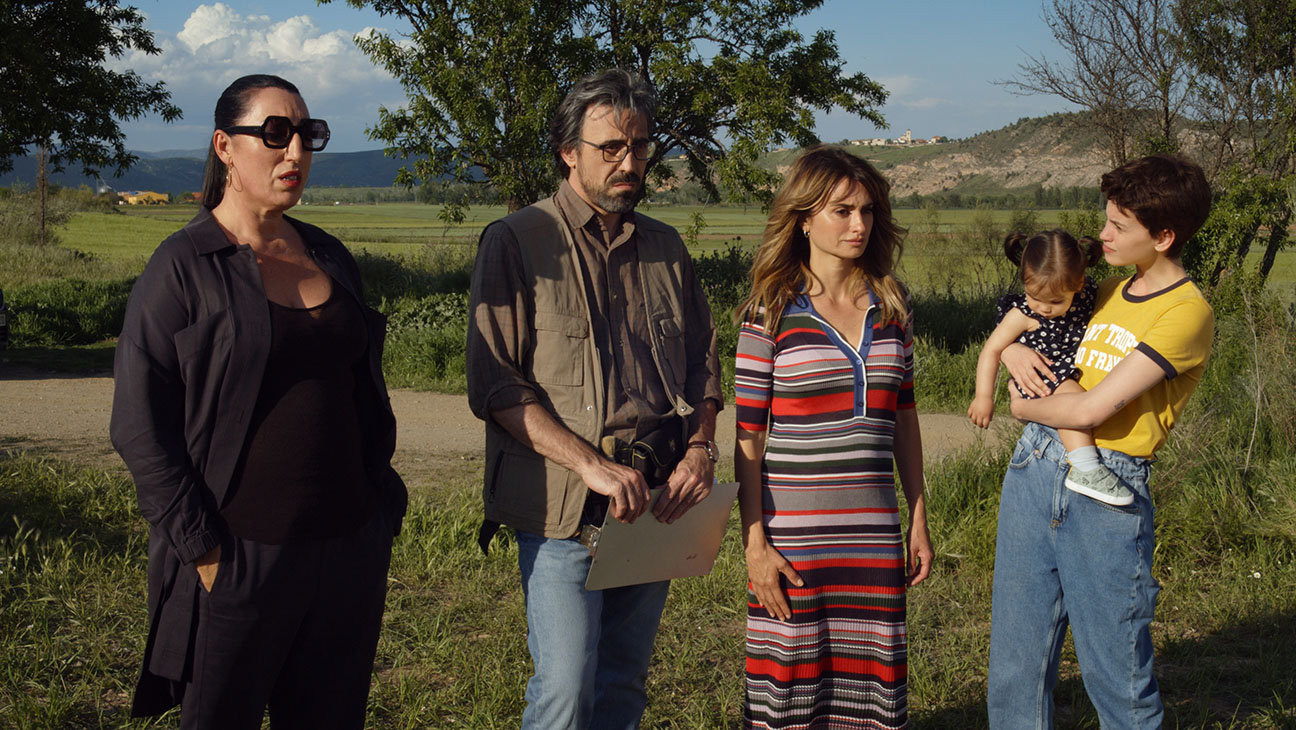
It’s not the kind of biopic we might have expected, but instead focuses on a single turbulent year in Enzo Ferrari’s life(1957), when his iconic sports car company is speeding dangerously close to extinction, mainly because Enzo (a convincingly-aged Adam Driver) is much more interested in his cars winning races than he is in selling them.

Meanwhile, his domestic life is also a holy mess. Since the untimely death of his much-loved son, Enzo has become estranged from his wife, Laura (a smouldering Penélope Cruz, threatening in every scene to steal the film from its titular hero). Enzo is spending much of his spare time in the company of his mistress, Lina (Shailene Woodley), with whom he has another son. This seems to be an open secret in Enzo’s neighbourhood of Modena, but Laura is yet to find out – and there are sure to be fireworks when she does.

And then Enzo’s business manager gives him an ultimatum. If he wants to sell enough cars to save the company, he must enter – and win – the gruelling Mille Miglia road race, at the same time seeing off his main competitor, Maserati. If he fails, it will be game over.

So, no pressure.

Ferrari is a handsome production, the 1950s era convincingly evoked right down to the last detail. Despite the nominative determinism, Driver doesn’t get to sit behind a steering wheel unless you count the knackered old jalopy in which he putters around the countryside. It’s left to younger men like the ambitious Alfonso de Potago (Gabriel Leone) or old hand Peter Collins (Jack O’Connell) to climb into those vintage cars and send them roaring around the track.

The racing scenes are perhaps the film’s strongest suit, the cars screaming along country roads with such visceral intensity you can almost smell the petrol, feel the wheels juddering beneath you. Incredibly, the cars had no roll bars back then, not even seat belts, so accidents were generally disastrous. One such scene is so brilliantly staged it actually has me exclaiming two words out loud (the first of them being ‘Oh!’). In another sequence, a nerve-wracking race is intercut with scenes of Enzo at a church service, amplifying the point that, in Modena, sports car racing is perceived as a kind of religion. And I Iove the scene on the eve of Mille Miglia where drivers write letters to their partners, for all the world like soldiers about to go into battle.

There’s plenty to enjoy in Ferrari but it won’t be for everyone. Petrolheads will doubtless feel that there isn’t enough actual racing to keep them happy, while the many scenes of marital discord and the various wheelings and dealings behind the scenes can sometimes feel suspiciously like padding. But there’s no doubting Mann’s obsession with his subject and his ability to capture every detail with considerable flair.

Ferrari offers a distinctly bumpy ride, with no opportunity to strap in.

3.6 stars

Philip Caveney
Parallel Mothers

28/01/22

Cineworld, Edinburgh

Pedro Almadóvar’s latest film is as fascinating as you’d expect; the veteran director is no stranger to serious stories, improbably furnished with lush images and unlikely melodrama. In this sense, Parallel Mothers is more of the same. But it is, of course, gloriously original too, and very much its own film.

Actually, maybe that’s not quite right. Maybe this is really two different films, because the two main strands are very disparate and never really converge. They’re parallel, if you like.

We open with the first – and arguably most interesting – strand. In a studio in Madrid, Janis (Penélope Cruz) is taking photographs of Arturo (Israel Elejalde), an eminent archaeologist. She seizes the opportunity to ask for his help: she wants him to excavate a potential grave-site, where, she believes, her great-grandfather is buried, along with nine other early victims of the  Franco regime. The impact of the past on the present is superbly realised, and reinforces the importance of Spain’s Law of Historical Memory, which – shockingly – only began the process of identifying and exhuming mass graves in 2007. I’m embarrassingly ignorant about the Spanish Civil War; this movie has already made me read up on the basics, and I’m keen to learn more, so – for me, at least – it’s proved successful in raising awareness, which is clearly part of Almadóvar’s aim.

The second strand is more domestic. Janis and Arturo have a casual relationship, which results in a very-much-unplanned pregnancy. She’s delighted; he’s not. He’s married; his wife has cancer; he doesn’t want to start a family. They part amicably. Janis doesn’t mind the idea of raising a child on her own; after all, her own mother did it, and her grandmother too.

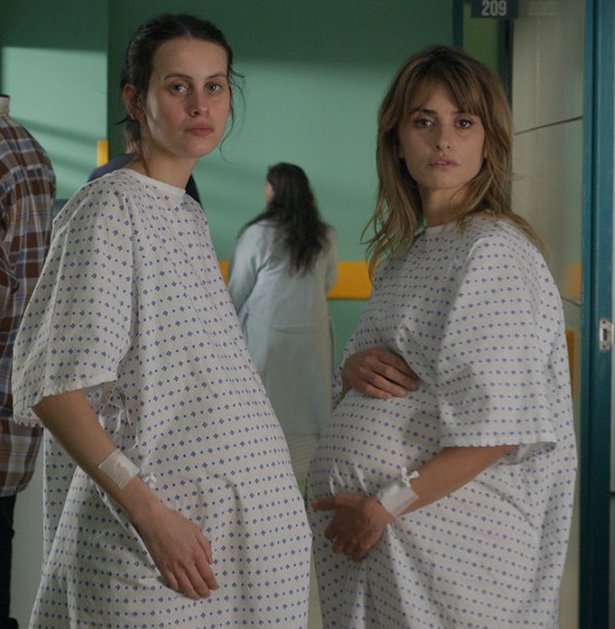
In the maternity hospital, Janis’s roommate is a frightened teenager. Ana (Milena Smit) doesn’t want a baby. She’s got all the material support she could need: her mother, Teresa (Aitana Sánchez-Gijón), is a wealthy actress with a big house, and there are staff too: a housekeeper and a nanny. But the emotional support is lacking, and she turns to Janis for comfort. The two women are very different, but their situations similar enough to allow them to bond.

Until something unforeseen happens…

The film ends with a quotation from Eduardo Galeano: “No history is mute. No matter how much they own it, break it, and lie about it, human history refuses to shut its mouth.” This is true of the bodies piled in anonymous graves, and it’s true of the contemporary secret Janis uncovers too.

There are more parallels: between Lorca’s exposé of “the grotesque treatment of women in Spain” in Doña Rosita the Spinster (Teresa’s latest role) and Ana’s tragic backstory; between Janis and her own free spirit of a mum, dead at twenty-seven from an overdose.

There is also humour, and beautiful domestic scenery. Ana and Janis bond over stereotypical ‘women’s work’ – the food imagery is very evocative, and I leave the cinema feeling hungry.

And yet…

This film is gorgeous to watch, thanks to José Luis Alcaine’s cinematography, but there’s no getting past the fact that some plot points are skated over. Without giving any spoilers, I can’t say too much, but there’s a gaping hole where officialdom and bureaucracy should be, and perhaps the tying up of the ‘mothers’ strand feels a little glib.

There’s no glibness in the final shot though; that’s as profound as they come. I’d have liked a better balance between the two strands, I think: the domestic story overshadows the historical one.

But, without doubt, this is a film to watch.

4.1 stars

Susan Singfield

The 355

08/01/22

Cineworld, Edinburgh

The 355 is a lot of fun. It’s a wet afternoon in Edinburgh, and we’re in the mood for some light-hearted distraction, and these female secret agents tick that box expertly. This film is a lively addition to the action-spy pantheon.

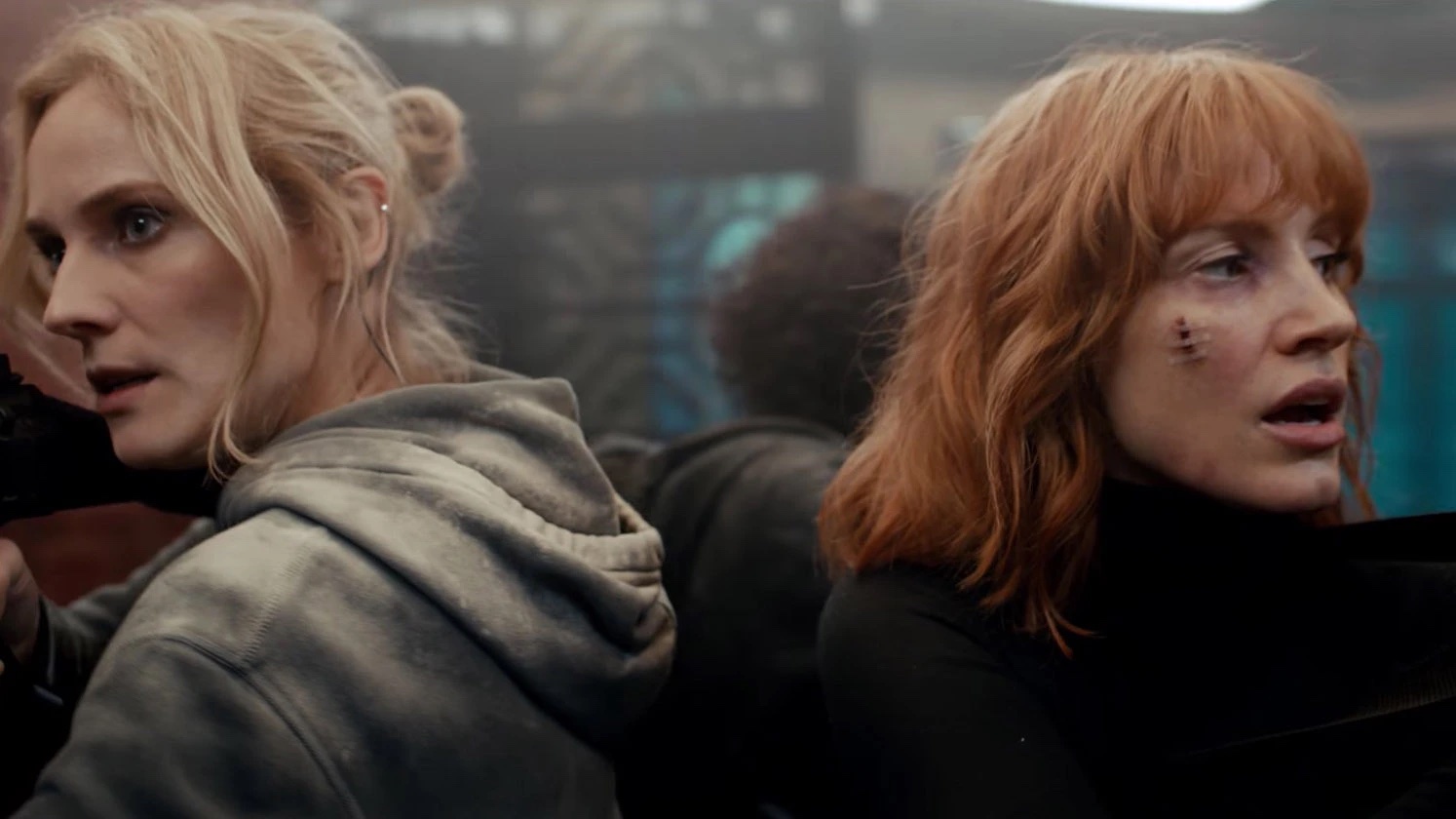
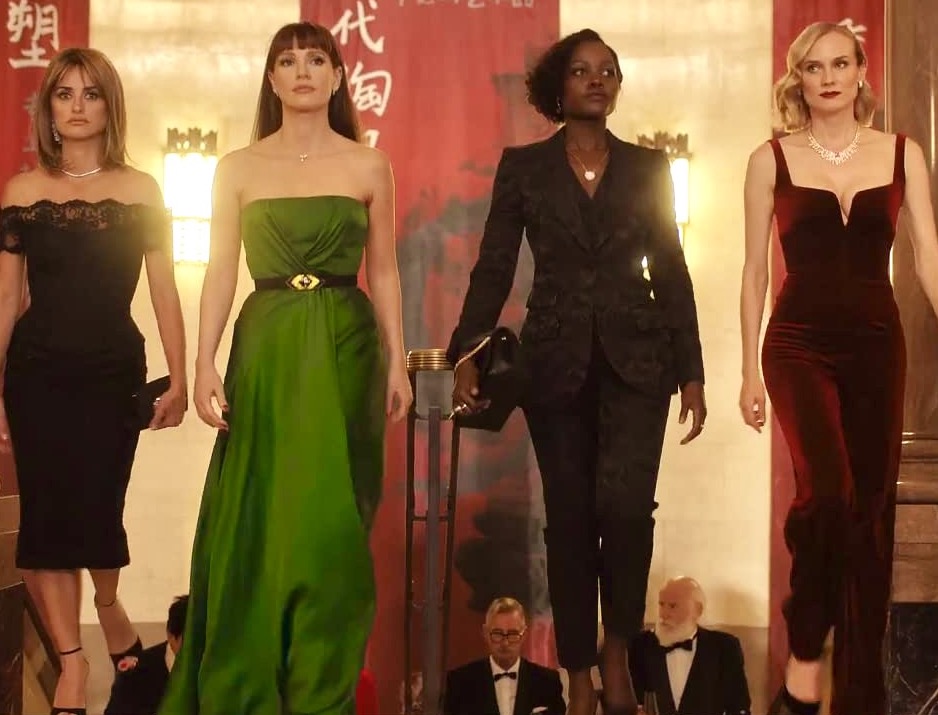
It’s an international affair, with operatives from the UK (Lupita Nyong’o), the USA (Jessica Chastain), Germany (Diane Kruger) and Colombia (Penélope Cruz) teaming up to find a hard-drive with the power to destroy the world. Okay, so the stakes are ludicrously high, but they always are in this genre, and director Simon Kinberg does enough to persuade me to suspend my disbelief. It’s not ground-breaking – in fact, it’s pretty generic – but I don’t mind that. I think it’s okay to do ‘James Bond, but with women’ – because, well, why not? This film is both accomplished and diverting, and the performances are universally strong.

The pace is furious, so we’re never given time to dwell on any of the more outré details, which is probably a good thing. We’re in Colombia, then Washington DC, then Paris; Berlin, London, Paris again, Marrakesh, Shanghai. It’s a frantic journey around the globe, the team an object lesson in international relations.

The action scenes are nicely choreographed, and always feel fresh, the standouts being shot in a fish market and the Paris Metro. I’m not sure why Mace (Chastain) wears heels to the former shootout (this isn’t a film that focuses on what the women wear, nor are there any silly sexist jokes about inappropriate footwear), but that’s just a small detail. Some of the dialogue is a little clunky in places but, for the main part, the writing is sprightly and engaging.

In short, The 355 isn’t going to change the world its protagonists save, but it might just brighten up your day.

3.5 stars

Susan Singfield

Pain and Glory

01/09/19

Pedro Almadóvar’s twenty-first movie is his most openly autobiographical work to date. It’s the story of aging film director, Salvador Mallo (played by Almadóvar’s old muse, Antonio Banderas), who, after years of suffering from various crippling ailments, has lost his way and feels unable to continue with his stellar career.

When his 80s hit movie, Sabor, gets a re-release, he’s asked to attend a screening in Madrid alongside the film’s star, Alberto Crespo (Asier Etxeandia). Salvador hasn’t spoken to his former friend for thirty years, since a spectacular bust-up at the film’s première. But Salvador gamely visits Alberto, who is now in the throes of heroin addiction, and the two men soon end up ‘chasing the dragon’ together. This is the trigger that unleashes a series of childhood memories for Salvador: of his much put-upon mother, Jacinta (played both by Penelope Cruz and Julietta Serrano); of his eccentric schooling at a seminary in Madrid; and of his first sexual awakening, kindled by the presence of a young workman who visits the family home.

Pain and Glory is a gentle and charming film that takes on the tragedy of aging and the illusory nature of creativity with wisdom and panache. While the tone seems to veer alarmingly from scene to scene, and at one point even prompts questions about the wisdom of Almadóvar’s casting decisions, everything is brilliantly resolved in a final shot, where I suddenly realise that the story I am watching is not exactly what I think it is…

It’s the final piece in a complex cinematic puzzle composed by a genuine auteur.

This may not match the bravura delights of Women On the Verge of a Nervous Breakdown or Volver, but it’s nonetheless an assured work from one of contemporary cinema’s most accomplished directors.

4.2 Stars

Philip Caveney

Murder on the Orient Express

03/11/17

Let’s face it, we know what we are going to get with this one. Agatha Christie’s story is a classic of its kind, and Poirot’s style of detection a thing of wide repute. The trailer makes it clear that this incarnation doesn’t stray far from the cosy murder-as-family-entertainment tradition, so we settle in for a glossy, star-studded slice of nostalgia; we know it won’t be challenging but we think it might be fun.

And it is fun, to a point. It’s handsomely done, with glorious vistas, and the opening scenes in Istanbul are wonderfully vibrant, teeming with life and energy. Kenneth Branagh is convincing as Poirot, as pedantic and idiosyncratic as Christie paints him in her books. And the unthinking decadence of the upper classes is beautifully clear, their sumptuous surroundings barely noted, the train’s luxury accepted and dismissed.

It’s a shame, then, that we never feel any sense of claustrophobia, even when the train breaks down, and everyone is trapped in the middle of nowhere, even when the sleazy Edward Ratchett (Johnny Depp) is murdered. I won’t give any spoilers here, just in case,  although I imagine most people know the plot; suffice it to say, I know there are reasons why the suspects’  reactions are not as we might initially expect, but still… No one really mixes; no one seems irritated with anyone else; they’re all so separate, as if they’re not in close proximity. It’s all plot and no character, despite the starry cast.

The starry cast is a problem too. They’re all magnificent, but I only know that from their other work, not from what they do here. There’s nothing for them to do. Michelle Pfeiffer, as Caroline Hubbard, is perhaps the luckiest; there’s some substance here, so she can milk her role. But to under-use actors as fine as Olivia Colman, Judi Dench, Daisy Ridley, Leslie Odom Jr., Penelope Cruz et al is criminal: these are all essentially cameos.

In the end, sadly, this is just a pointless remake of what is – sorry, Agatha fans – a silly story. It’s not awful – everything is bigger here, including Poirot’s moustache – it’s just not very good.

3 stars

Susan Singfield