24/04/26
Tech Cube, Summerhall
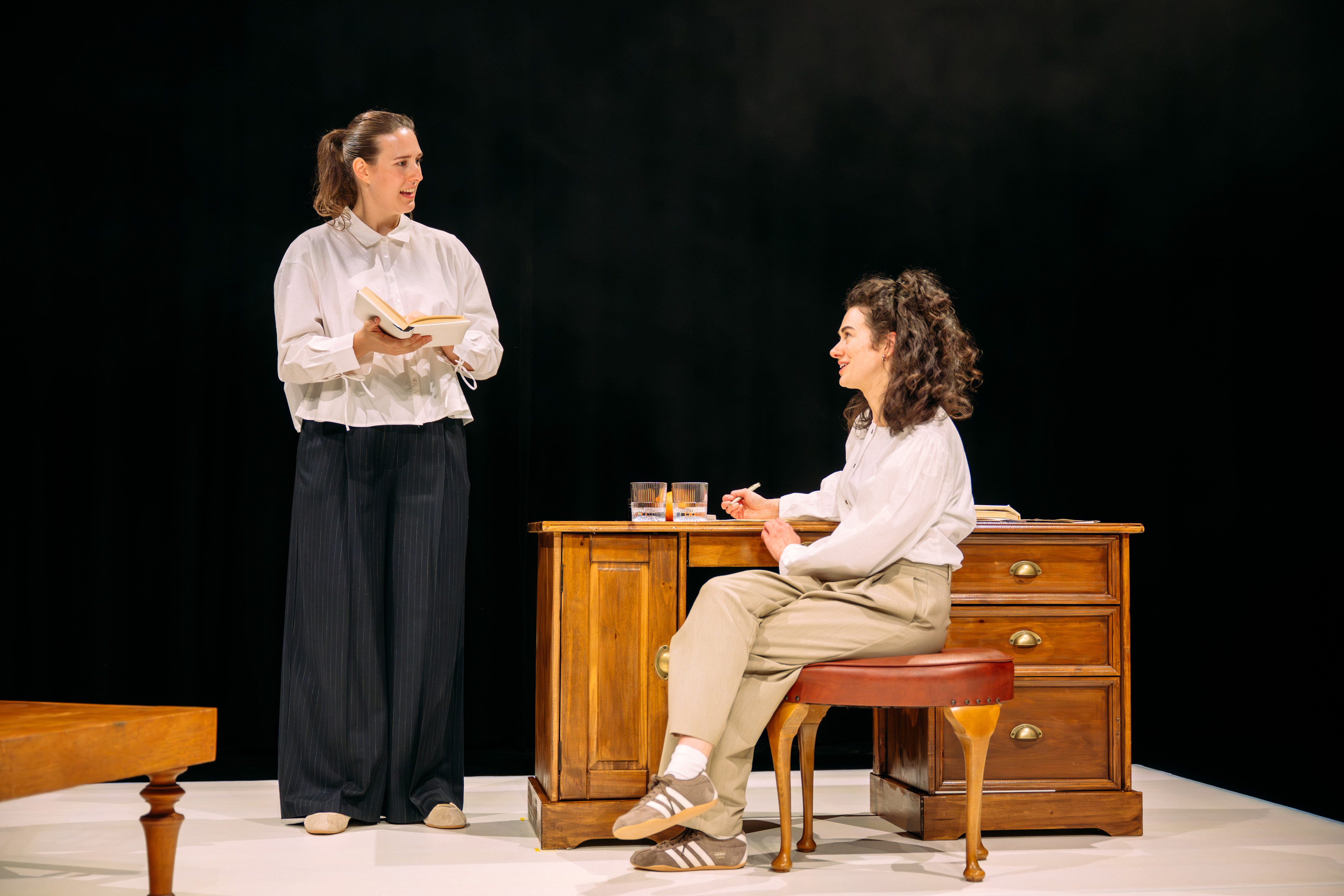
We’re in Vienna in the 1890s (well, we’re really in the Tech Cube, Edinburgh, but you get the idea), where Sigmund Freud (Claire Macallister) is fast becoming the most prominent name in the field of psychoanalysis. His first meeting with new patient, Emma Eckstein (Becca Robin Dunn), is initially clumsy and awkward but they soon get the measure of each other and Emma becomes a regular visitor to his office, both as a patient and as a contributor to his research. Indeed, as the years roll by, she begins to contemplate a future in the same line of work.
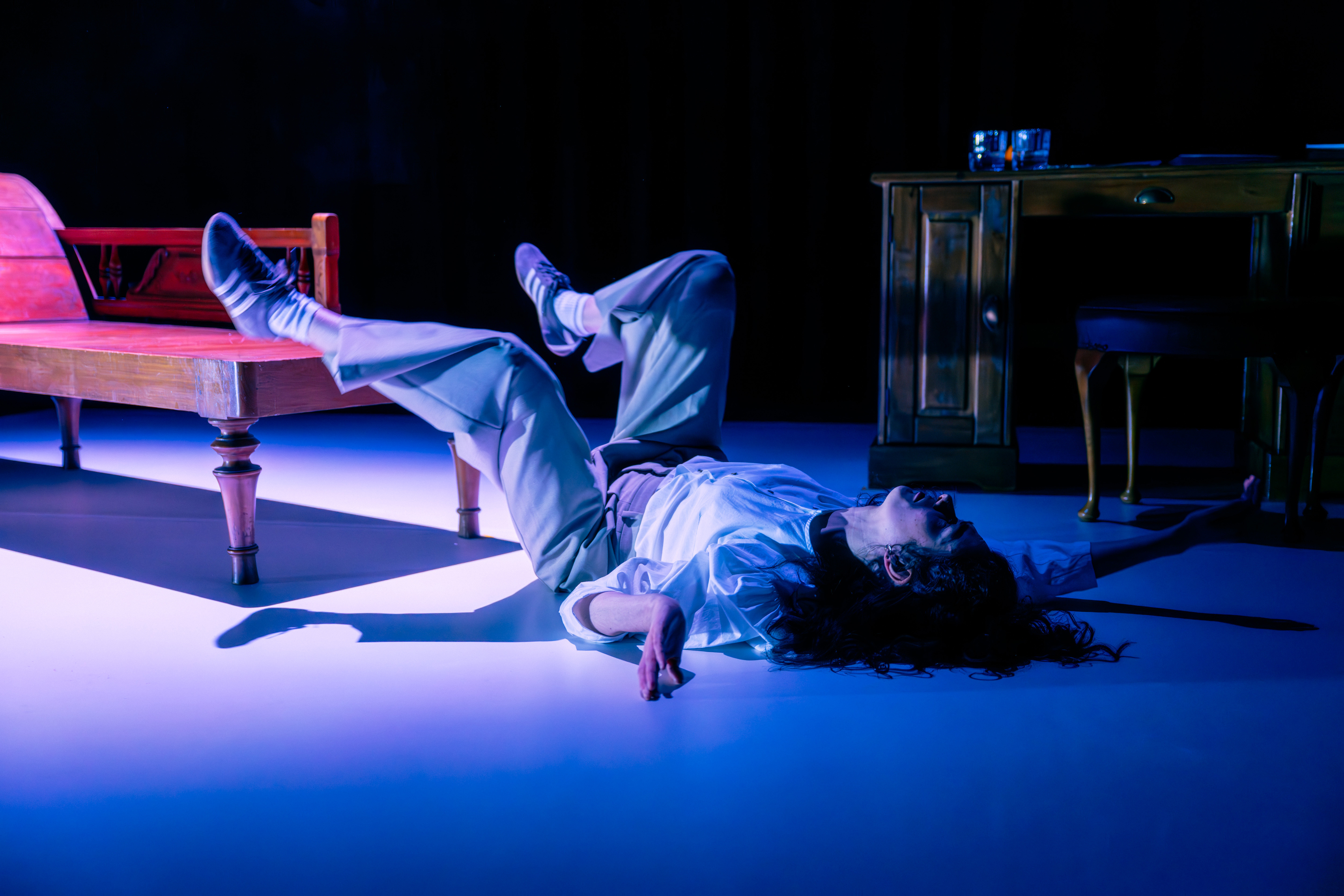
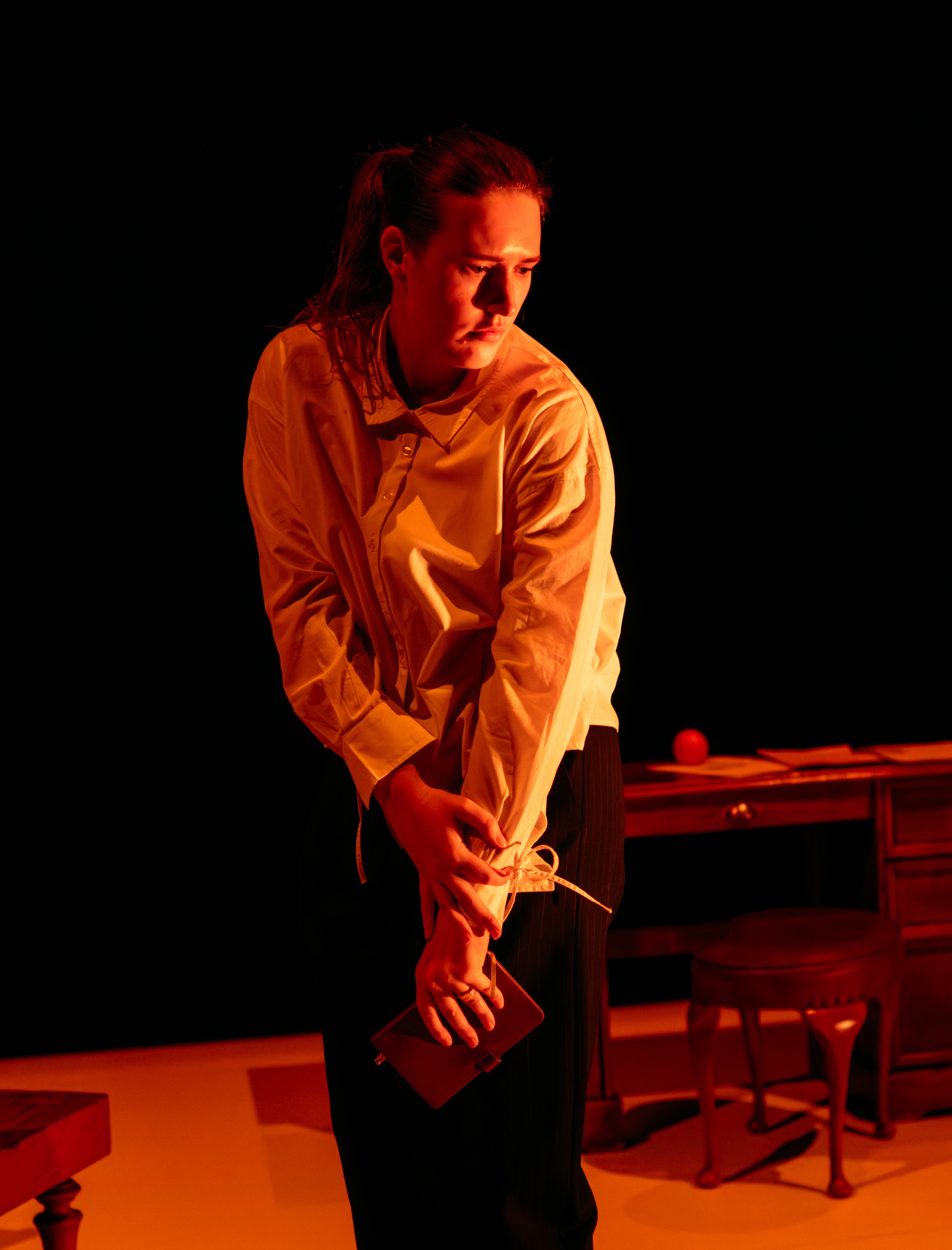
When they first meet, Emma is prone to bleeding copiously, a symptom we now know is caused by endometriosis but which in that era was identified – mostly by Freud – as an inevitable result of ‘hysteria.’ But when he brings in his friend, surgeon Wilhelm Fleiss (also played by Dunn), to perform a nasal operation on Emma, he unwittingly initiates the key event that will essentially end their friendship and leave Emma scarred for life…
Written by the two performers and directed by Olivia Millar-Ross, Jackals is an engrossing and often unexpectedly funny piece of work. The two actors handle their roles with skill. Macallister captures Freud’s pomposity and his tendency to claim other people’s ideas as his own, while Dunn also excels as the contradictory Emma, a woman at once fragile and fierce. In one key scene, Dunn slips on a black waistcoat and makes a confident switch to the swaggering, self-aggrandising Fleiss, urging Freud to pursue his dreams to the bitter end, to take advantage of his new-found fame.
Niroshini Thambar’s sound design is eerily haunting and Melanie Jordan’s short movement pieces, punctuating the various acts as five years unroll, are nicely judged transitions. A moment when Macallister eviscerates an orange to depict Eckstein’s surgery is a particularly effective touch and I also love the scenes where the two performers crouch on a desktop, glaring balefully into the audience like the creatures of the title.
I leave the theatre outraged by what happened to Eckstein and determined to find out more about her, which I suppose must surely be one of the main objectives of the play. It’s eye-opening.
There are just a couple more opportunities to catch Jackals at Summerhall before it moves on, so book your tickets now.
4.2 stars
Philip Caveney