Netflix

Rebel Ridge

01/01/25

Netflix

Rebel Ridge wrong-foots me. Thanks to the title and blurb, I am anticipating a standard vigilante-revenge flick, but writer-director Jeremy Saulnier has created something far more interesting: a horrifyingly credible tale of police corruption and the suffering it creates.

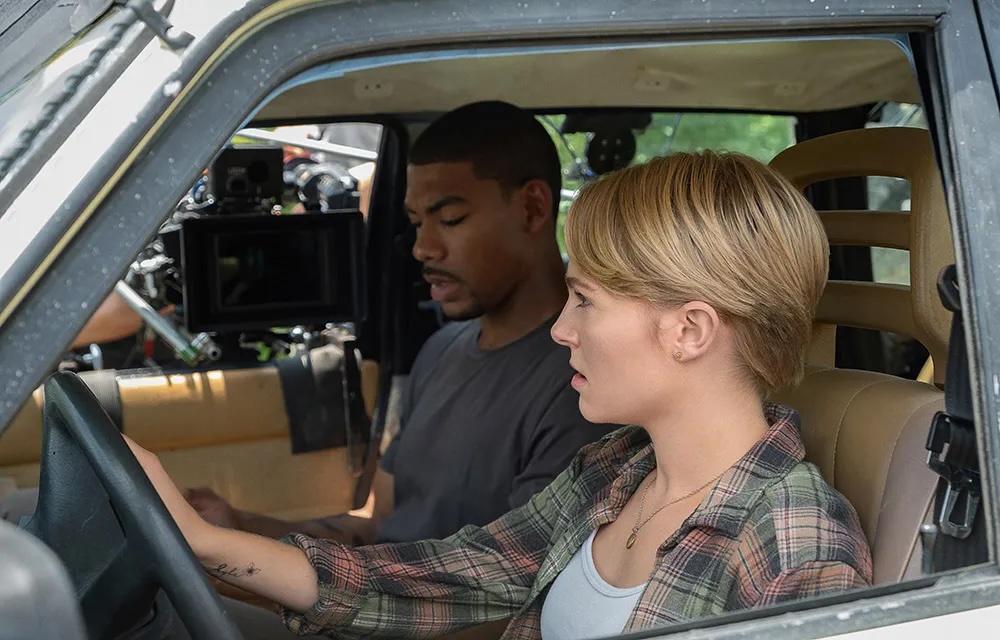
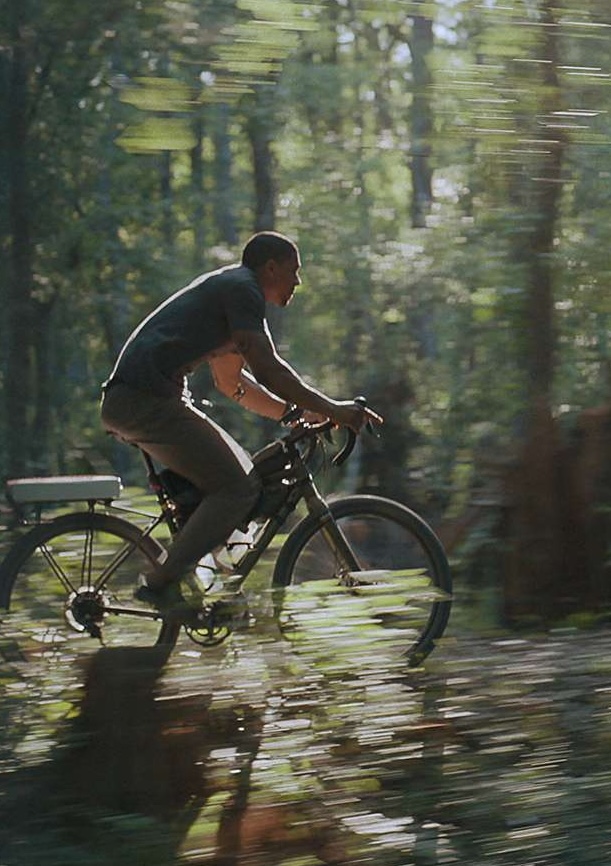
When ex-Marine Terry (Aaron Pierre) cycles into Shelby Springs with a backpack full of cash, local cops Marston and Lann (David Denman and Emory Cohen) spy an opportunity to simultaneously throw their weight around, impress their Chief (Don Johnson) and boost their small town’s coffers. The image is all too familiar: a couple of thuggish white officers initiating a spurious stop and search and threatening an innocent Black man’s life. Only this time they’ve chosen the wrong guy.

Because Terry isn’t just the kind of person who serves as a role model – strong and self-assured, calm and intelligent, driven by a strong sense of right and wrong – he’s also a martial arts expert. He doesn’t want vengeance but he does want his hard-earned money back so that he can bail his hapless cousin out of jail. However, there’s something rotten at the heart of Shelby Springs, and local court clerk Summer (AnnaSophia Robb) needs his help to root it out…

Despite its premise, Rebel Ridge isn’t a very violent film. In fact, Terry actively avoids physical conflict, using his combat skills only when absolutely necessary. Instead, the focus is on the insidious damage caused by a legal system more focused on protecting itself than the public it’s supposed to serve – an exposé of the way that self-interest trumps morality, leaving carnage in its wake.

David Gallego’s cinematography evokes the Wild West, underscoring the sense that Shelby Springs is a tyrannous and untamed place. Meanwhile, Terry is reminiscent of the ‘good cowboy’, the quiet hero who rides into town and restores order. Pierre is perfectly cast in this role, exuding dignity and strength as well as real emotional depth. When it comes, the final battle feels well and truly earned.

A clever hybrid of action movie and social commentary, Rebel Ridge gets 2025’s film viewing off to a flying start.

4 stars

Susan Singfield
Carry-On

16/12/25

Netflix

Apart from that unfortunate title – which inevitably calls to mind a series of vintage comedies starring the likes of Sid James and Hattie Jacques – Carry-On is a tense, propulsive thriller, anchored by a dramatically beefed-up Taron Egerton. It’s directed by Jaume Collet-Serra, the man who put Liam Neeson on the train journey to hell in The Commuter.

This is a Christmas movie in the same way that Die Hard is a Christmas movie. That is to say, the action of the film takes place on Christmas Eve and there are some strategically-placed seasonal songs. But it must also be mentioned that, in this story of an evil man trying to explode a case containing Novichok on a packed holiday airplane, love and peace are in decidedly short supply. Which is not to say this isn’t great fun. I personally had a ball with it, but I appreciate it won’t be to everyone’s taste.

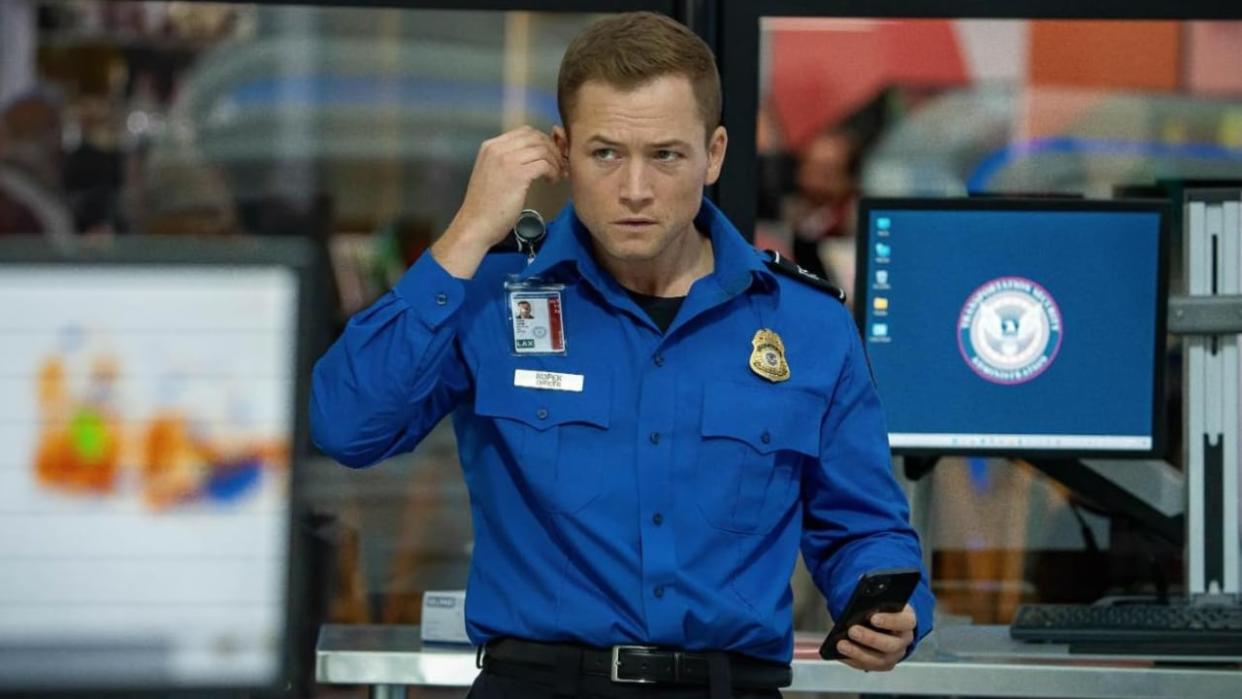
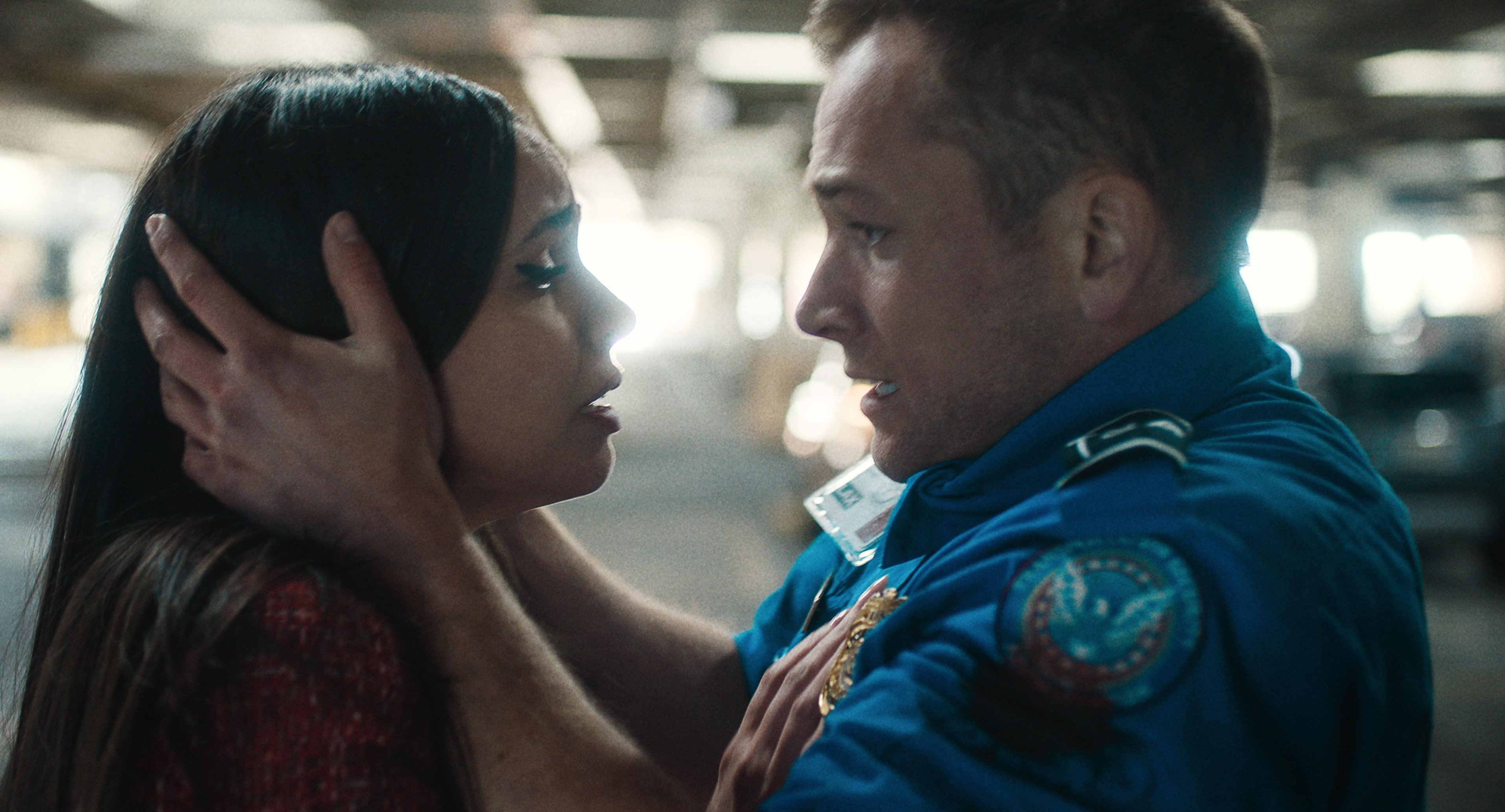
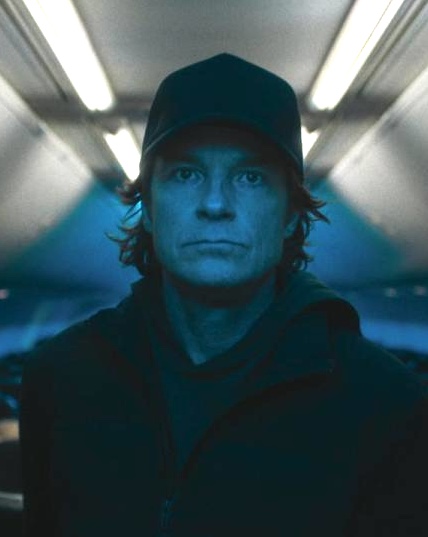
Ethan Kopek (Egerton) works at LAX Airport in security. He and his partner, Nora (Sofia Carson), are soon to have an addition to their family, so Ethan understandably has promotion on his mind. To this end, he manages to persuade his boss, Phil Sarkowski (Dean Norris), to let him take a post in the baggage-scanning lane, which carries extra responsibility. Which is an understatement, because Ethan has unwittingly upset the meticulously-laid plans of ‘The Traveller’ (Jason Bateman). He has planned to get the aforementioned Novichok aboard a New York-bound flight and explode it, killing the two hundred and fifty passengers aboard. His excuse for doing so? Somebody is paying an awful lot of money for his services. (The Traveller appears to regard his fellow human beings as disposable items.)

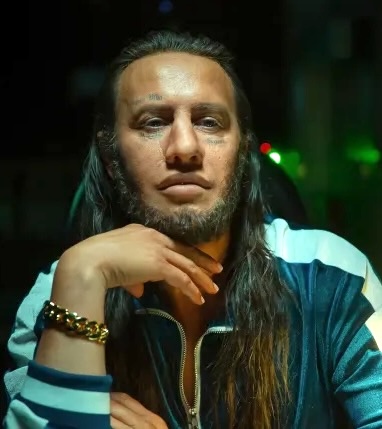
Ethan soon has a stranger’s voice in his ear, instructing him to allow the lethal suitcase onto the plane or risk having Nora murdered. The Traveller’s equally loathsome partner, The Watcher (Theo Rossi), has his eye on her and a sniper rifle loaded and ready to go. Meanwhile, elsewhere, plucky cop Elena Cole (Danielle Deadwyler) has picked up the faintest trace of a clue at the scene of a recent murder and begins to think that something dodgy might be about to go down.

But it’s Christmas Eve and nobody wants to listen…

What ensues is Ethan desperately trying to outmanoeuvre the two villains by any means at his disposal, without incurring his partner’s death (so no pressure there). Elena gradually works out the clues that bring her closer and closer to the airport. But time is ticking steadily away. Is it already too late to stop this frightful incident from occurring?

Collet-Serra and writer T.J. Fixman provide a tale that has more twists than a python on itching powder and the many Christmas references are almost mockingly thrown at the viewer as the story unfolds. (A particular highpoint for me is a no-holds-barred punch up in a speeding automobile as Wham’s Last Christmas pumps out of the car stereo.) Buckle-up for a wild ride!

If some of the elements are a little too familiar – Ethan desperately trying to defuse a bomb as the timer counts steadily down to zero – the presentation always feels fresh enough to make you forgive these occasional transgressions. Is it believable? Well, no, not really, but that’s hardly the object of the exercise. I do like the fact that Fixman has the good sense not to push my credulity too far. People get shot/stabbed/poisoned here and they don’t keep reviving and coming back for more. Which makes for a welcome change.

Meanwhile, Egerton, who has never really convinced in his previous attempts to fill an action-hero role, is utterly convincing in Carry-On and, since this is a Netflix original, it’s there to watch whenever you’re ready to hit the start button.

Those who favour a heart-warming seasonal tale might prefer to wait for Wallace and Gromit.

4.2 stars

Philip Caveney

Emilia Pérez

11/12/24

Netflix

Jacques Audiard has always been an interesting and experimentlal writer/director, seeming to choose his projects at random and rarely sticking to a particular genre, throughout a career that began back in the early 90s. Emilia Pérez deals with the kind of subject matter that would frighten off many respected filmmakers. It’s a bizarre soap opera/fable about crime cartels, gender reassignment and the plight of ‘The Disappeared,’ the millions of people murdered by Mexican cartels. 

Oh, and did I mention that it’s also a musical?

Audiard throws himself headlong into the process with his usual glee and the upshot is that the film is being garlanded with nominations for all the big movie awards – and this at a time when many veteran directors are struggling to get their new projects even funded. If the object of the exercise is to get yourself noticed, Audiard is finally doing it big time. (His last film, The Sisters Brothers, an intriguing offbeat western, came and went with barely a ripple.)

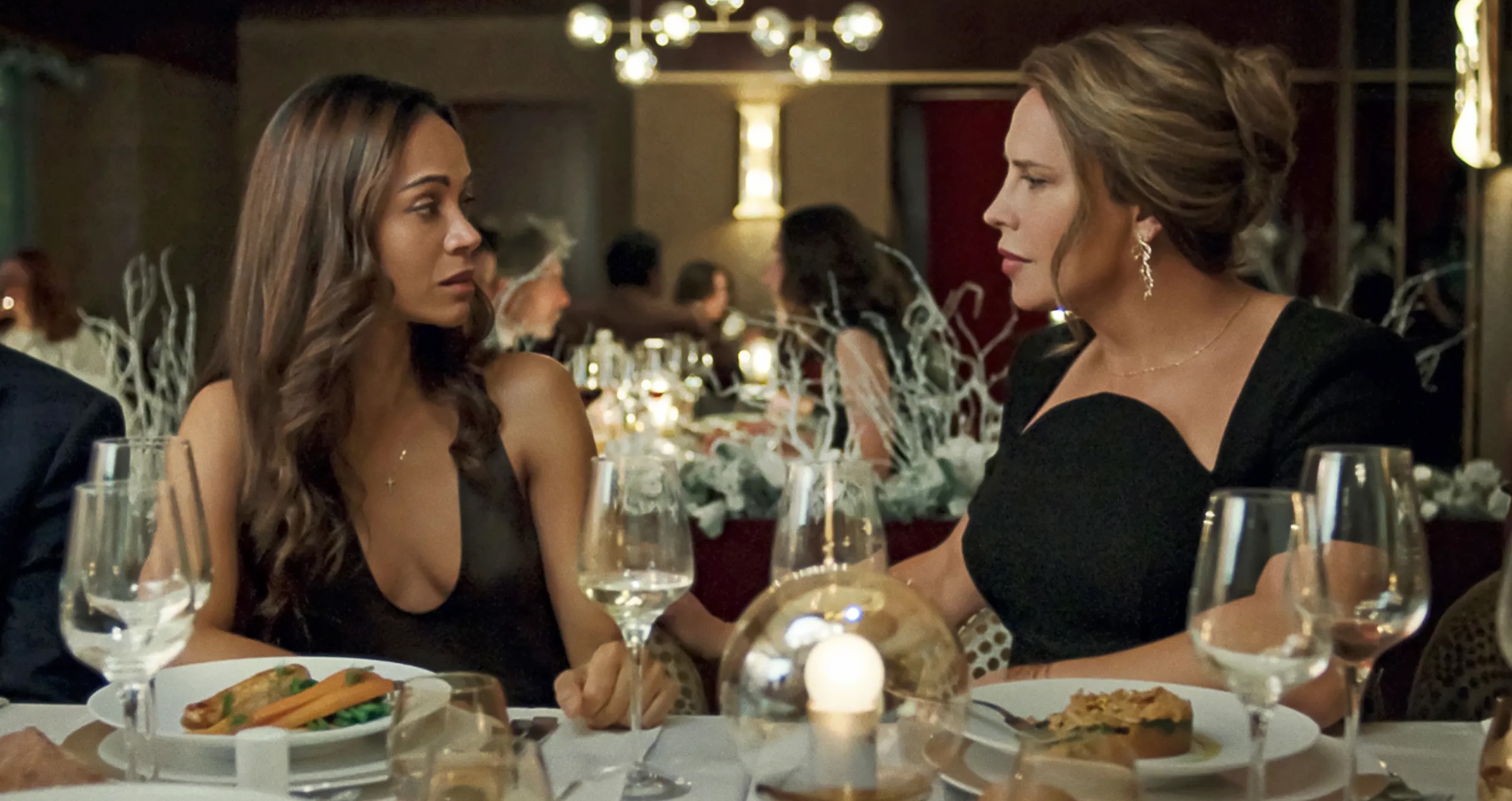
Rita (Zoe Saldana) is an under-appreciated Mexican lawyer, who spends most of her time penning eloquent pleas to get the guilty off the hook. Out of the blue, she is contacted by notorious crime cartel boss. Manitas del Monte (played by trans actor, Karlas Sofia Gascón), a man so steeped in violence he now feels he has only one way of escaping an inevitable fate. He has always longed to be a woman, and wants Rita to secretly arrange gender reassignment for him. In return, he will make her fabulously wealthy and she can choose whatever future she wishes for herself. But Manitas will have to fake his own death and his wife, Jessi (Selena Gomez), and his two young boys can know nothing of their father’s new life.

Four years later, Rita meets Manitas again, but now she’s the titular Emilia, looking to reconnect with her wife and children by posing as the cousin they never knew they had. What’s more, Emilia wishes to atone for all the killing she instigated when she was Manitas…

Is Emilia Pérez a good film? Well, for me it has flashes of brilliance, but there are also some sizeable missteps. The songs, composed by Clément Ducol and Camille range from upbeat dance tunes to quirky half-spoken, half-sung observations about anatomy that sometimes veer close to the absurd. While these serve to highlight the fairytale unreality of the piece, the constant shifting of tone makes the film feel uneven. The ‘Mexican’ locations are pretty convincingly recreated (in France) by cinematographer Paul Guilhaume and I think the elements dealing with The Disappeared are genuinely moving. On the performance front, Saldana is an absolute powerhouse as the very adaptable Rita, singing and dancing up a storm – and it’s great to see her performing as a human being rather than as a green-skinned, spandex-clad alien!

As a cis male, I might have missed some of the nuances around the transgender elements of the story – and Gascón certainly delivers a compelling and heartfelt performance – but the process of transition seems to be used here as a metaphor for wiping the slate clean and beginning a new life, untainted by the past. However, the lesson Emilia ultimately learns is that this is impossible, and she has to do more than change the way she lives if she wants to atone for her earlier crimes. This makes the underlying message a little muddled.

But again, I feel I must tip my hat to Jacques Audiard who, at seventy years of age, is fearlessly going where few other directors would dare to tread. Long may he continue to thrive!

3.6 stars

Philip Caveney

Joy

23/11/24

Netflix

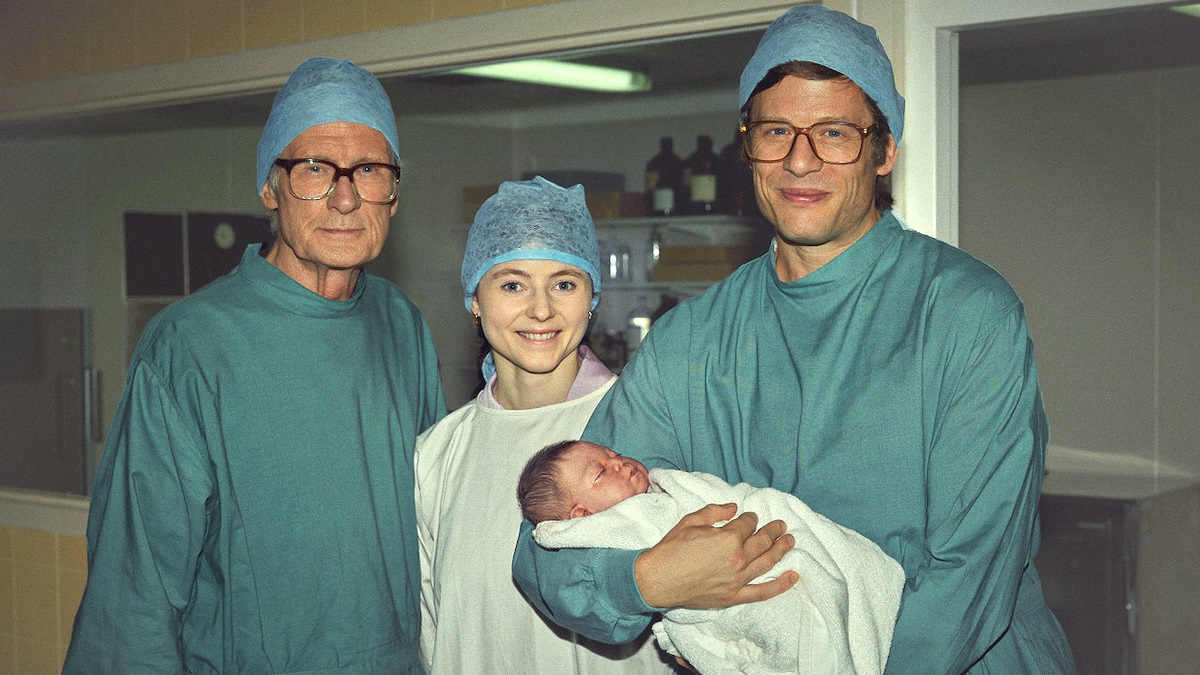
For people of a certain vintage, the name of Bob Edwards might ring a bell. He was, of course, the doctor who came up with the concept of Invitro Fertilisation and who, after years of tireless work, was behind the birth of Louise Brown – the first ‘test-tube baby’ as the press of the era dubbed her. You’ll probably also have heard of Patrick Steptoe, the surgeon whose advances in keyhole surgery made the whole process a possibility.

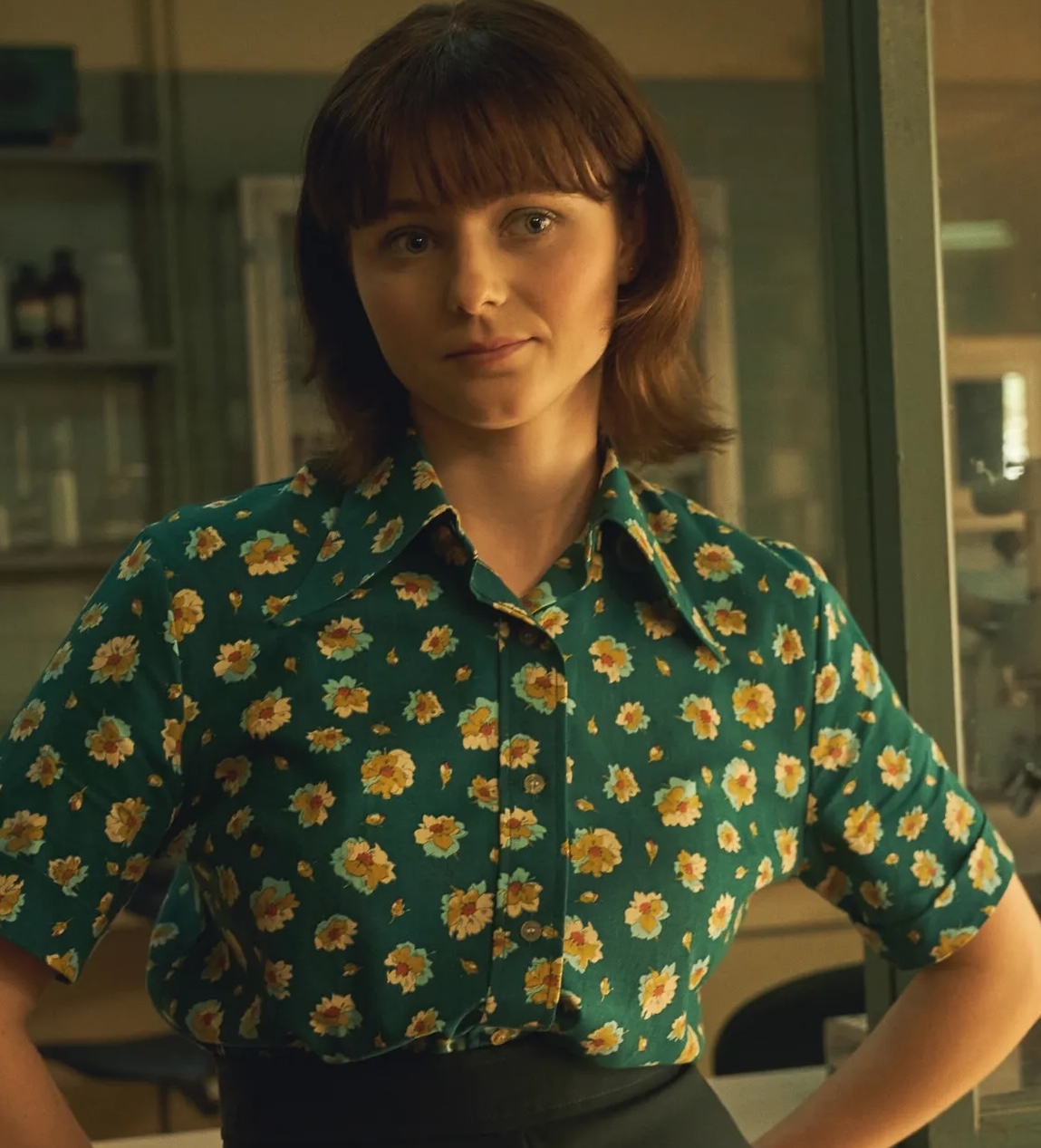
But the name Jean Purdy is certainly not as familiar. The third member of the team, an embryologist, Purdy worked alongside the two men (and, indeed, as this film suggests, was ultimately the driving force that brought their work to completion). And yet, to a great degree, her contribution has been largely airbrushed from history. She didn’t even merit a mention on the memorial plaque at Oldham General Hospital (Louise Brown’s birthplace) until 2015.

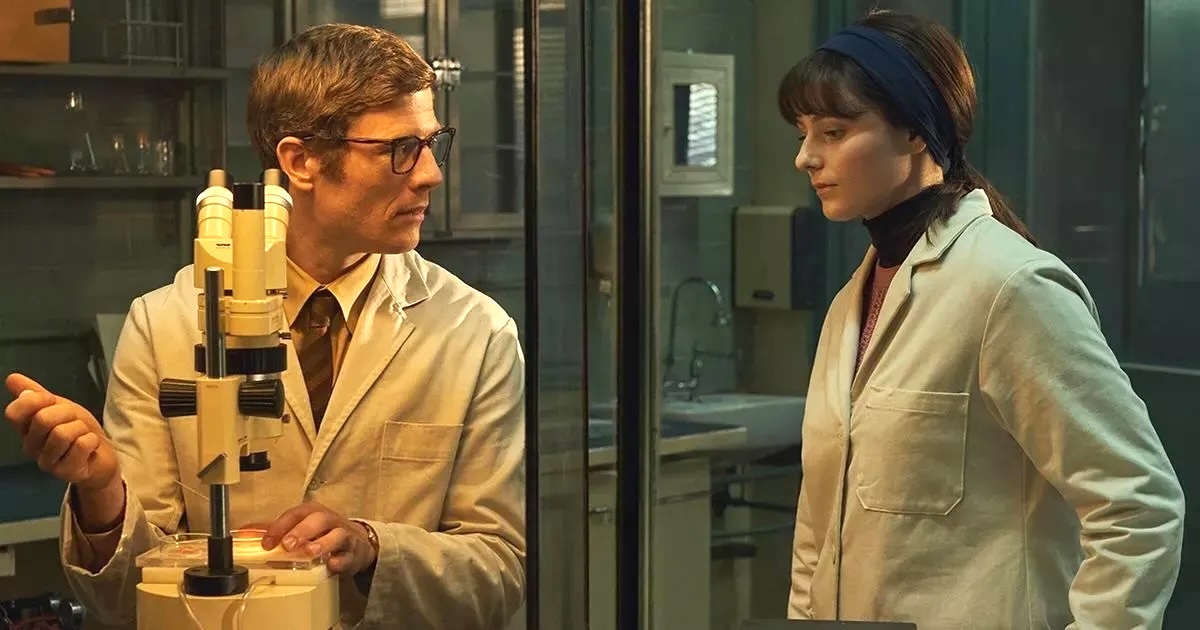
This story begins in 1965 when we meet Purdy (Thomasin McKenzie), freshly graduated from nursing school, being interviewed by Edwards (James Norton), who has recently embarked on the project that will occupy him for many years. His aim is simple: to provide an answer to all those would-be parents who have been prevented from having children because of a simple quirk of nature. Edwards and Purdy quickly become a duo. But their first goal is to enlist the help of Steptoe (Bill Nighy), who – though brusque and dismissive at first – is soon won over, largely by Purdy’s direct, no-nonsense approach.

The trio duly embark on years of experimentation as they work towards their ultimate goal. Underfunded and mocked by the tabloid press (who dub Edwards ‘Doctor Frankenstein’), it’s a long hard road – and it’s not until 1978 that their years of work finally bear fruit. Along the way, Jean’s relationship with her own mother is broken. Gladys (Joanna Scanlon) is deeply religious and sees this whole endeavour as ‘sinful’ and ‘unnatural.’ She cuts her daughter out of her life and even asks her not to attend the church they have both gone to for years. It’s only when Gladys falls ill that an uneasy alliance is finally established.

Purdy also nurtures a secret: she herself suffers from endometriosis and is unable to have the child that she has always longed for…

Jack Thorne’s screenplay is beautifully understated, as is Ben Taylor’s direction, which effortlessly catches the drab look and feel of the 60s and 70s. The three leads handle their roles with considerable aplomb and McKenzie in particular is wonderfully affecting, managing to convey her character’s inner turmoil with little more than a wistful look and a sidelong glance. As somebody who has personal experience of the benefits of IVF in the form of my much-loved daughter (and I fully appreciate how easy it was for me as the male in the relationship), I don’t mind admitting that some of the scenes here have me filling up.

Joy is a ‘small’ film, which probably accounts for the fact that it’s not competing with the likes of Gladiator 2 at your local multiplex and, instead, has gone straight to streaming. But it’s really worth the watch. It tells a fascinating true story of courage and determination.

And in its own quiet way, it’s a remarkable film.

4.3 stars

Philip Caveney

His Three Daughters

01/10/24

Netflix

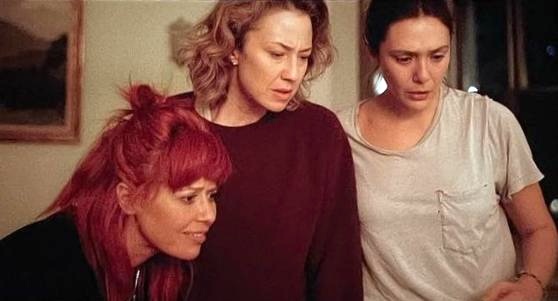
Vincent (Jay O’Sanders) is rapidly approaching the end of his life and his daughters have come to his Manhattan apartment to be with him when he finally expires. Katie (Carrie Coon) is the eldest of them, a natural organiser, working alongside hospice worker, Angel (Rudy Galvan), to ensure that all loose ends are securely tied up. She’s trying to ensure that the Do Not Resuscitate order that Vincent wanted is in place. She’s also trying to write her father’s obituary.

The youngest daughter, Christina (Elizabeth Olsen), a slightly dippy Grateful Dead fan, spends much of her time singing to Vincent and making needy phone calls to her husband and young daughter.

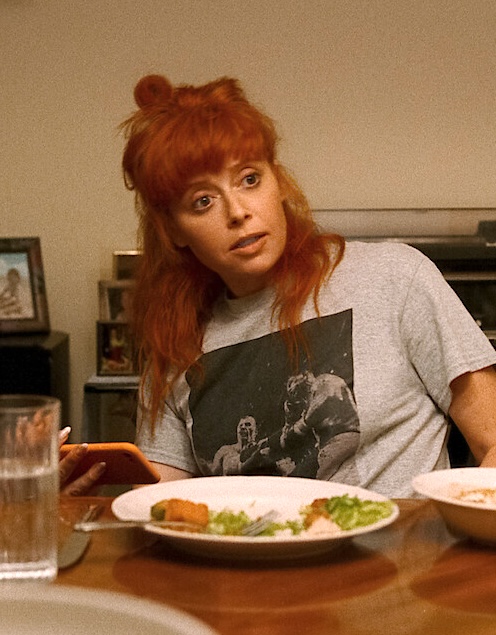
And then there’s step-sister, Rachel (Natasha Lyonne). Though not Vincent’s biological daughter, she has actually lived in his apartment for years and in some ways seems to be the most profoundly affected by his approaching death. She’s clearly determined to be as blitzed as humanly possible when the end arrives, courtesy of the seemingly endless supply of spliffs she smokes at every given opportunity.

This gentle and quirky film, written and directed by Azazel Jacobs, is essentially a character study, which plays the three very different women against each other, as they chat, reminisce and argue. Sparks fly when they finally address long-held grudges and feuds. Confined entirely to Vincent’s apartment, this could easily feel claustrophobic, but all three performances are strong enough to carry the feature along. Lyonne perhaps gets the most interesting role, drifting through the situation with a manic grin and a WGAF attitude, as the clock inexorably ticks through the closing hours of Vincent’s life.

There’s an unexpected revelation in the final furlong that initially makes me think that Jacobs has just ruined everything he’s spent so much time building – but happily that feeling is short-lived and it quickly becomes clear that he knows exactly what he’s doing.

His Three Daughters is a delightful and affecting film that has many insightful things to say about the human condition and our attitude to death. And if that sounds grim, don’t worry. There’s plenty here to make you smile. Don’t be surprised if, like me, you come away from this singing Five Little Ducks.

Just saying.

4.2 stars

Philip Caveney

In the Land of Saints and Sinners

07/04/24

Netflix

In recent years, Liam Neeson’s film output seems to have evolved into a series of geri-action brawls, so In the Land of Saints and Sinners comes as something of a breath of fresh air. Not that it doesn’t feature plenty of action – it does. But it’s also a deceptively gentle, almost pastoral, sort of film that has the good sense to show us enough about its many characters to make us care what happens to them.

Written by Mark Michael McNally and Terry Loane, the story takes place largely in the tranquil setting of Glencomcille, County Donegal. It’s 1976 and Finbar Murphy (Neeson) is a pillar of the community, kind, gentle and always ready to help anyone in trouble. He’s best friends with the local garda officer Vinnie (Ciarán Hinds) and enjoys a chaste but tender relationship with his neighbour, Rita (Niamh Cusack). But like many freelancers, Finbar has hidden depths.

Since the death of his wife, he’s worked for local crime kingpin, Robert McQue (Colm Meaney), helping to rid him of his enemies by taking them to a tranquil nook, despatching them with his trusty shotgun and burying them deep. He always plants a tree to commemorate each shooting and there are a lot of saplings in evidence.

But his latest victim (another contract killer)’s final words strike a chord with Finbar and make him think wistfully about abandoning this lucrative sideline and doing something less stressful. He asks McQue to pass on his cleaning-up duties to eager young hotshot, Kevin (Jack Gleeson), and McQue reluctantly agrees. But it isn’t long before the actions of nasty piece of work, Curtis June (Desmond Eastwood), recall Finbar to his former endeavours. Curtis is the brother of Doireann (Kerry Condon), a member of the provisional IRA, who, with two other members of her unit, is currently hiding out in in Glencomcille after fleeing a bombing incident in Belfast. Doireann is a force to be reckoned with and it’s clear that the tranquility of this sleepy suburb is soon to be rudely interrupted…

Though the ever-present threat of violence does inevitably build to a bloody conclusion, what really works for the film are the moments that lead up to it. Neeson is great here, as a kind, caring and avuncular character, always ready to do what has to be done when the situation demands it. He’s surrounded by the cream of Irish talent, not least Condon (a recent Oscar-winner, lest we forget, for The Banshees of Inisherin), who imbues Doireann with a fierce and unrelenting determination to destroy anyone reckless enough to stand in her way. Gleeson’s Kevin is also a revelation, a kid who’s never been treated kindly and who nurtures a hopeless ambition to go to California where, he’s been told, peace and love are currently in the air. Mind you, all the characters in this drama have the resonance of real people and that’s one of the elements that makes it work so effectively.

Director Robert Lorenz uses the majestic landscape of Donegal to the film’s advantage, counterpointing scenes of stark violence with the beauty and serenity of nature. It all makes for something far more nuanced than I’d normally expect to find in this genre – and ensures that the tragedy of its brutal conclusion is all the more affecting.

4.2 stars

Philip Caveney

Spaceman

06/03/24

Netflix

Adam Sandler. There, I said it.

Sandler is, of course, best known for his comedies, though these can most politely be described as ‘variable’. More often than not, they seem like an elaborate excuse for Sandler to team up with a bunch of mates and improvise something that feels like it has been literally thrown together. And then, every now and again, out of the blue, he decides to star in something more substantial for a quality director. I’m thinking of the likes of Punch Drunk Love, which he made with Paul Thomas Anderson, and the stone cold masterpiece Uncut Gems, written and directed by the Safdie Brothers, which possibly qualifies as the most stressful couple of hours I’ve spent in the cinema.

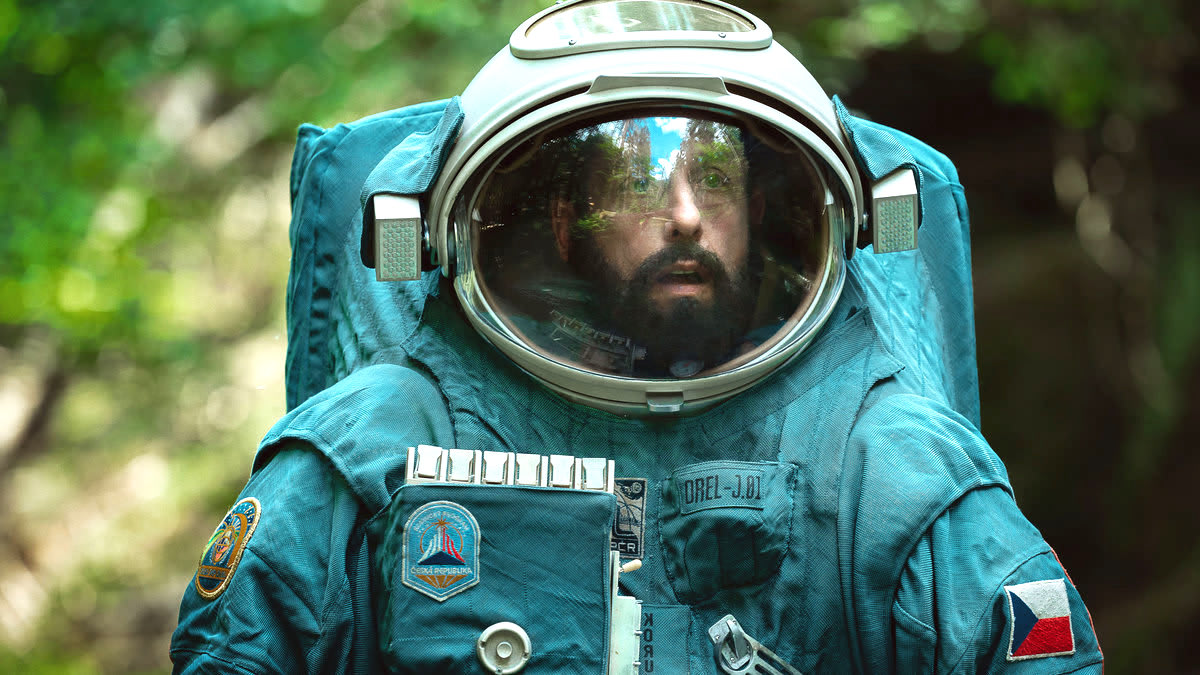
Spaceman, directed by Johan Renck and adapted by Colby Day (from a novel by Jaroslav Kalfar), is not in the same league as those two films and yet it’s a sizeable step up from Sandler’s usual offerings, a slow-moving, thoughtful allegory about the distance that can exist between a man and his wife, even when they are physically together.

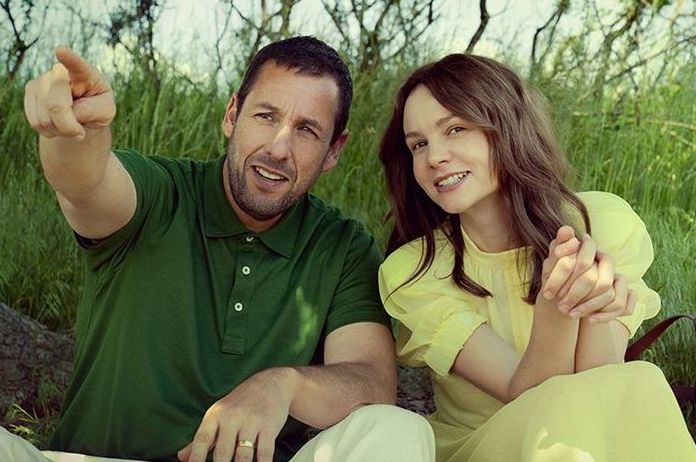
The Spaceman of the title is Jakub, a Czech cosmonaut, currently on a six-month mission to visit (and take samples from) the mysterious Cloud of Chopra, somewhere beyond Neptune. At home, his pregnant wife, Lenka (Carey Mulligan), is falling out of love with him, because he’s been distant in so many ways -even before he set off on his current voyage.

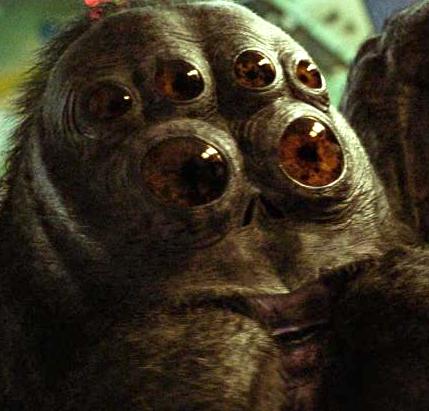
Jakub is nonplussed to discover that his regular calls to Lenka are going unanswered. He’s even more bewildered to learn that he has a stowaway aboard his spaceship – a huge alien spider, who can talk and is memorably voiced by Paul Dano. (Arachnophobes, take note: this film may not be for you!)

Most movies of this kind would pitch the alien as a voracious predator, with no higher motive than to chow down on the spaceship’s other occupant, but this creature (whom Jakub names Hanûs) turns out to be a gentle and communicative beast, who soon takes on the role of a kind of life coach, offering Jakub advice about all manner of things, including his failing marriage. It’s the sheer unexpectedness of this approach that grabs me most. As the mission steadily unfolds, we begin to learn more about the event that caused the rift between Jakub and Lenka. Can it ever be repaired?

Spaceman won’t be for everyone. For one thing, it moves at a glacial pace, Jakub’s journey interspersed with flashbacks to his courtship of Lenka and occasional cutaways to her present day conversations with her mother, Zdena (Lena Olin). There’s a lot of footage of the mysterious Cloud of Chopra, which – though pleasant enough to look at – soon starts to feel suspiciously like filler.

I will also confess to being initially confused by the ending, but with a little thought it soon makes perfect sense. Overall, Spaceman is an interesting little film with a fascinating premise. Though flawed, it’s light years ahead of Sandler’s customary output.

3.6 stars

Philip Caveney

Society of the Snow

11/01/24

Netflix

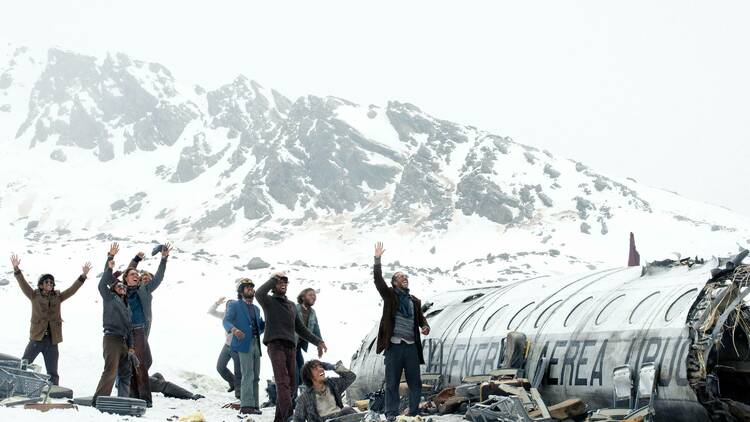
The story of the Andes ‘miracle’ plane crash is something I’ve been interested in since reading Piers Paul Reed’s book on the subject, when it was published just a couple of years after the event. Like a lot of people, I also watched Frank Marshall’s 1993 film, Alive, and thought he’d made a decent fist of it, given that the setting was mostly recreated using green screens, and that North American actors like Ethan Hawke and Vincent Spano took the main roles.

So I was initially surprised to learn that JA Bayona had, for a long time, been planning his own take on the story. For Society of the Snow, he also acts as co-screenwriter, using Pablo Vierci’s book of the same name as his source. He’s shot the film in Spanish and filmed much of the story in the actual location where the crash occurred, which must have presented a logistical nightmare for him and his team.

But I’ve loved Bayona’s previous work – The Orphanage and The Impossible are two particular highlights. So I popped a note in my mental diary, promising myself I’d watch it on the big screen at my earliest opportunity. But of course, this is a Netflix production, afforded a limited theatrical release from the 22nd December, a time when I would be far from a cinema, which is why I eventually settle (once again) for watching it on streaming.

Two hours and twenty-four minutes later, I’m a blubbering wreck and fully aware that, if I’d managed to see this when it first came out, it would have been one of my top ten films of 2023, no question.

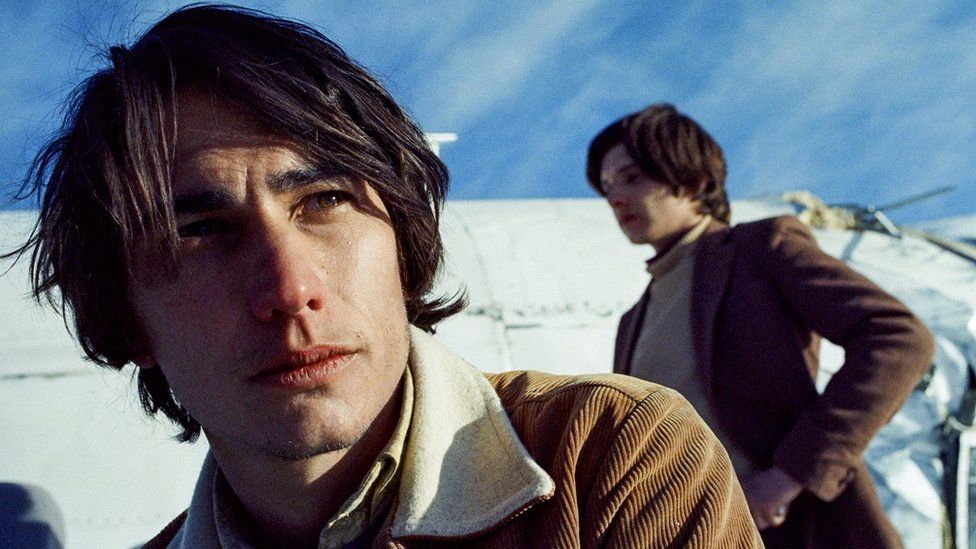
The film opens in October 1972, when a team of young rugby players, together with members of their family and some friends and supporters, are preparing to climb merrily aboard a charter plane in their home town of Montevideo, Uruguay. They are planning to make the relatively short flight across the Andes to Santiago, Chile, where they are due to play a match. But things go disastrously wrong and – in one of the most brutal and horrifying sequences I’ve seen in a long while – crashes onto a remote mountainside. 

Three crew members and nine passengers die in the impact and, for the twenty-three survivors, there’s the awful realisation that they are trapped in sub-zero temperatures, with no source of heating and just a few scraps of food foraged from suitcases.

Hopes of rescue soon fade as the planes searching for them fail to spot a trace of wreckage in the thick snow. The survivors hear a heartbreaking radio broadcast: the search has been called off until the spring. A dreadful  realisation begins to set in. They are going to have to try to survive until the weather improves. Meanwhile, they are horribly aware that the only source of nutrition available to them is the frozen bodies of their friends and family, lying just a short distance from the plane’s fuselage…

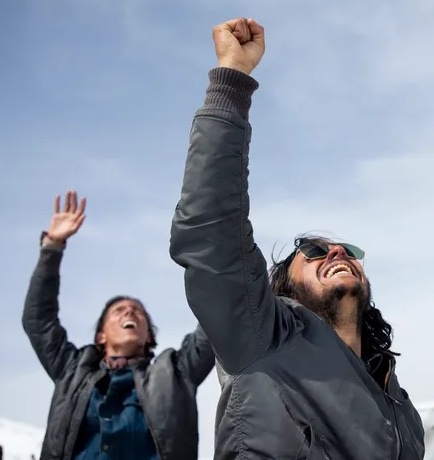
Society of the Snow is a powerful and thought-provoking account of humanity’s impulse to survive, told in unflinching detail, but it is never allowed to become merely the horror story that the media is so keen to promote (try to find an account of the story that doesn’t trumpet the word ‘cannibal’). On the contrary, it’s a testament to the team spirit of the young men who manage to keep themselves alive and motivated in that wilderness for seventy-two days, never accepting their fate, even when nature seems intent on sending them to their doom at every opportunity. 

The story is told from the point of view of Numa (Enzo Vogrincic), a charismatic young lawyer, who is instrumental in inspiring his friend, Nando (Augustin Pardella), to step up and become the team’s leader. That said, this is very much an ensemble piece, with every actor performing their respective roles to with convincing authenticity. There are some heartbreaking exchanges between the survivors and it’s at these moments that the screen in front of me keeps blurring as my eyes fill with tears.

Amidst the bleakness of the story, Pedro Luque’s exquisite cinematography explores the majesty of the location and Michael Gicchino’s score provides an emotive backdrop to the suffering and the eventual hard-won triumph of rescue. This is an immersive film in every sense of the word and watching it makes me fully appreciate the hardship and suffering that the protagonists experienced, but their refusal to capitulate to the slings and arrows that assail them is also inspiring.

Some of the films on Netflix can be underwhelming, but Society of the Snow is an extraordinary achievement and confirmation, if ever it were needed, that Bayona is an exceptional talent. Don’t miss it.

5 stars

Philip Caveney

Chicken Run: Dawn of the Nugget

24/12/23

Netflix

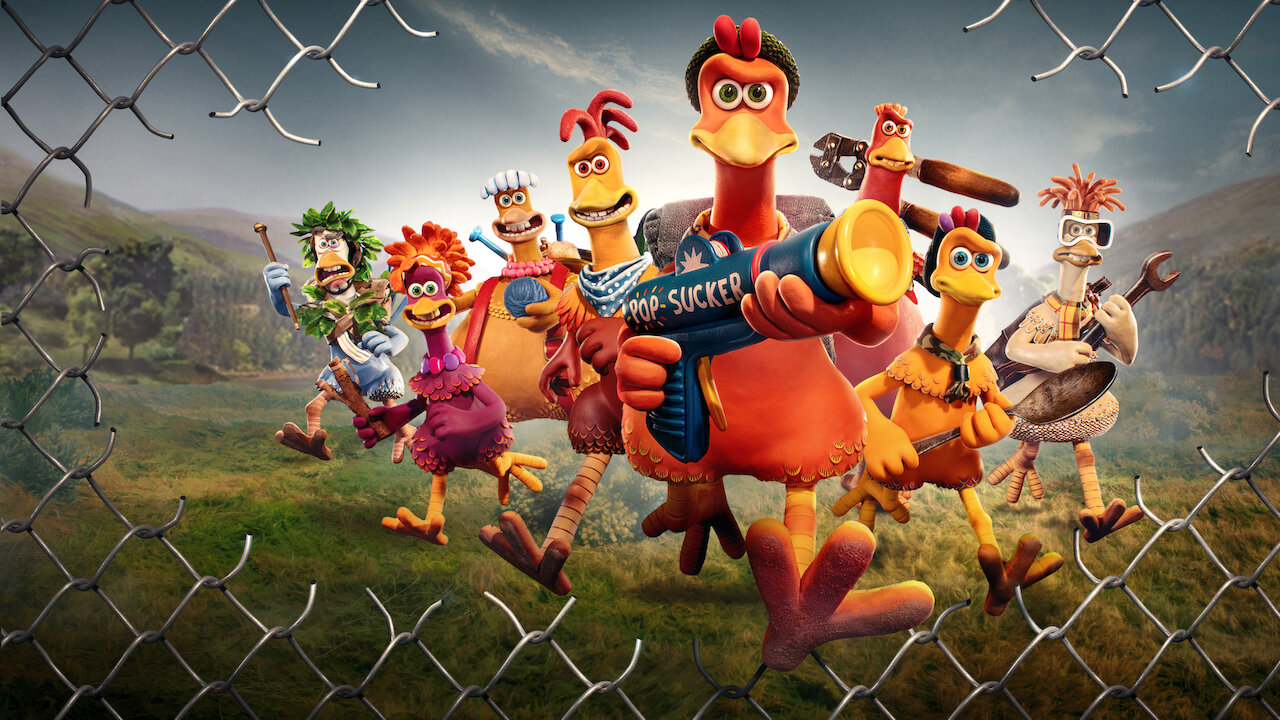
The trend for films being financed by (and galloping with indecent haste to) Netflix continues. Aardman Animations’ tardy sequel to Chicken Run is just the latest example of something that would have looked so much more impressive on a giant screen than it does on the average telly.

Dawn of the Nugget follows on from the first film with the escapee chickens living their best lives on a small island, where they grow their own food and work together as a team. Rocky (Zachery Levi, replacing Mel Gibson) and Ginger (Thandiwe Newton, replacing Julia Sawalha for less obvious reasons), are now the proud parents of an egg. This quickly hatches into Molly (Bella Ramsey), who has clearly inherited all her mother’s fearless qualities.

When workmen begin to clear some land on the other side of the water and new factory buildings are set up, Molly is eager to go across and investigate what’s going on, but Ginger urges her to be cautious. Of course she sets off on her own and, once on the far side, she bumps into Frizzle (Josie Sedgwick-Davies), a Scouse chicken who has heard great things about the new factory.

At first  it seems the twosome have discovered a place of refuge. But sinister happenings ensue before an old enemy reappears…

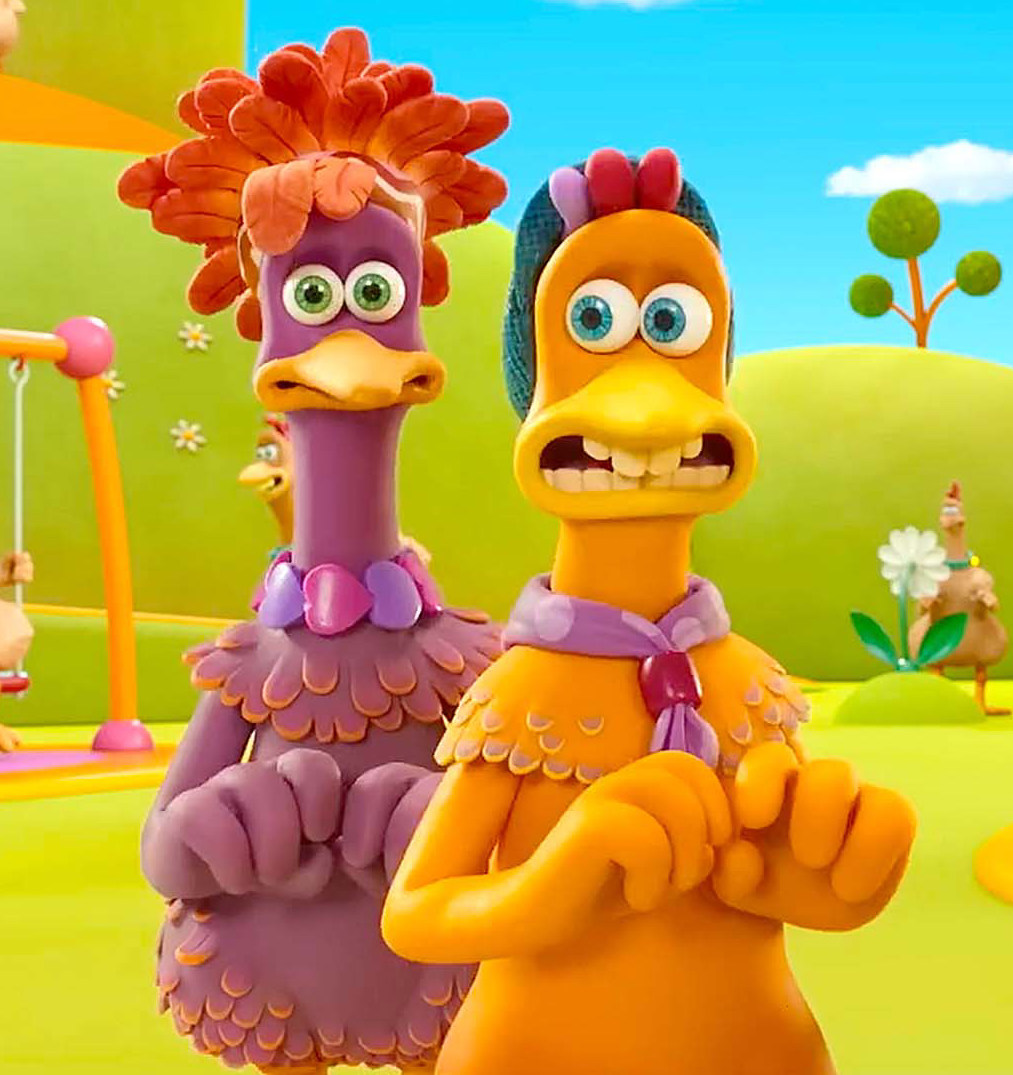
Dawn of the Nugget offers all the familiar tropes that the first film featured to such winning effect. No pun is left unspoken and several favourite characters make a welcome reappearance, including Jane Horrocks as the delightfully dim Babs and David Bradley as addled old rooster, Fowler.

The animation is beautifully handled and there are chases and spills aplenty, while the humour is innocuous enough to appeal to all age groups. But be warned, some viewers may find it hard to sit down to enjoy a chicken dinner after spending time in the company of this team of feathered lovelies. 

And if it seems a little late in the day to follow up that first film – twenty-three years to be precise – it matters not. This is great fun.

4 stars

Philip Caveney

Roald Dahl/Wes Anderson

29/10/23

Netflix

A new film by Wes Anderson is always an interesting proposition. Four new films – the longest of which has a running time of just thirty-seven minutes – is a downright intriguing one.

It must be said from the start that these are less motion pictures than illustrated stories (imagine, if you will, a kind of turbo-charged Jackanory and you’ll get the general idea). First up, there’s the aforementioned longest entry in the quartet, The Wonderful Story of Henry Sugar, which – to begin with – is told by Dahl himself (uncannily impersonated by Ralph Fiennes). The author begins to relate the story of the mysterious Imdad Khan (Ben Kingsley), a man who can see without using his eyes. Khan’s story is then picked up by two doctors (Dev Patel and Richard Ayoade) and they, in turn, transfer their attention to the titular character (played by Benedict Cumberbatch), a man who becomes obsessed with the notion of becoming an expert card cheat. (As you do.)

It’s all delivered as narration (at a breakneck pace) and, of course, the set dressing has the usual Anderson style: a series of exquisite puzzle-boxes, expertly linked together, opening and closing as the tale unravels. It’s beautiful to watch, but ultimately the story leaves me with a powerful sensation of so what?

The Swan (narrated by Rupert Friend) is, for me, the strongest narrative here, the distressing tale of a young boy called Peter (Asa Jennings), who is horribly bullied by a couple of local lads with access to a rifle (always a recipe for trouble) and which culminates in a poignant and rather distressing conclusion. The story is delivered by Friend as he wanders along a series of labyrinthine passageways and this is perhaps the most kinetic of the films.

The Rat Catcher features Fiennes as the central character, a rather creepy individual who visits a garage and offers his services to the proprietor (Friend again), while the tale is told by a narrator (Ayoade). The subtext of this one is rather less straightforward, as is the style. I can’t remember ever seeing an actor miming invisible objects in a film before! The rat catcher has assimilated all the qualities of the creatures he’s supposed to be eradicating and, when he fails in his attempts to locate them (in a haystack), he tries to make up for his failure in a demonstration of unpleasantness. Again, I feel that the story’s conclusion is rather underwhelming.

Finally there’s Poison, an account set in post-colonial India, in which Harry (Cumberbatch) lies in bed convinced that a krait (a venomous snake) is lying asleep on his chest and that the slightest move will cause it to bite him. A local police officer (Patel) and a doctor (Kingsley) are enlisted to resolve the situation and, to give them their fair due, they do their level best. The story culminates in a short and rather shocking demonstration of racism, which some viewers will find unsettling, but is surely the whole point of Dahl’s story – that former white rulers will always refuse to acknowledge their own failings. Strangely, Poison seems to have a similar theme to its predecessor.

With such brevity, it seems fairest to judge the four films as a whole – and indeed, Anderson has said that what attracted him to the idea is the notion that they comprise a kind of interlocking narrative. While this quartet is always visually compelling, I can’t help wishing that this inimitable director had settled on some better examples from Dahl’s extensive back catalogue. There are plenty to choose from.

If you have Netflix, they’re certainly worth clicking through. If nothing else, you’ll be charmed by their quirkiness and the uncompromising style that exemplifies Anderson’s approach to cinema.

3.4 stars

Philip Caveney