Naomi Stirrat

Sunset Song

30/05/24

Lyceum Theatre, Edinburgh

Lewis Grassic Gibbon’s Sunset Song is widely regarded as one of the most important Scottish novels of the 20th century. There are many who first encountered it as a set text in school and have carried it in their hearts ever since. Playwright Morna Young was evidently one such teenager and this is her adaptation of the tale in collaboration with Dundee Rep. I’ll confess that I’ve never got around to reading the book myself. Set in the 1900s, it’s a dour and sometimes bleak story based around the misadventures of the Guthrie family, farmers who live and work in (the fictional) Kinraddie in the wilds of Aberdeenshire.

When we first meet Chris Guthrie (Danielle Jam), she’s young and ambitious, a keen reader and already planning to seek a career as a teacher. In this, she has the grudging support of her father, John (Ali Craig), though he’s a hard taskmaster, never slow to hand out physical punishment to Chris and her siblings whenever they step over what he perceives as ‘the line.’ 

Chris’s much-loved mother, Jean (Rori Hawthorn), mentally broken by the recent birth of twins, takes matters into her own hands, killing herself and her new babies. Two younger children decide to flee  the family home to start a new life in Aberdeen and it isn’t long before Chris’s older brother, Will (Naomi Stirrat) follows their example and heads off to seek his own fortune in Argentina. This leaves Chris to run the farm with her father and, after he suffers a debilitating stroke, to fend off his sexual advances. When tragedy strikes yet again, Chris finally has an opportunity to start over but (maddeningly) she decides to stay where she is and marry local boy Ewan (Murray Fraser). But by now, the world is heading into a massive global conflict and it’s hardly a spoiler to say that more heartbreak is looming on the horizon…

While it does of course feature more than its fair share of harrowing occurrences, it’s to this production’s credit that it manages to convey difficult themes without ever feeling too prurient. Young’s adaptation remains true to the novel’s Doric dialogue, though occasionally I feel I’m told things that I would rather see – and the decision to have no costume changes when actors embody several different characters does mean that I’m occasionally confused as to who is who.

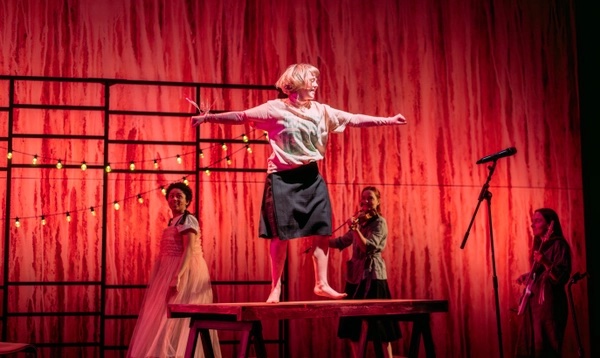
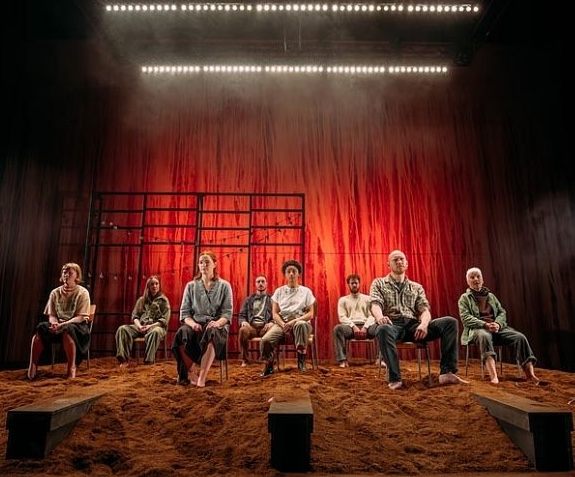
Emma Bailey’s simple but effective set design is based around a large rectangular section of soil, across which the characters walk barefoot, fight, make love and celebrate. The story’s central theme couldn’t be more evident. To the Guthries, the earth is all-important. It provides sustenance, a wage and a reason to go on living. And of course, it is also the place to which they will eventually return. As if to accentuate this, the backdrop is a closeup of a field of wheat.

On either side of the soil, musical instruments are arranged and the cast occasionally break off to deliver Finn Anderson’s evocative songs, singing in plaintive harmonies, pounding propulsive drums, strumming electric guitars and at one point even launching headlong into a spirited wedding ceilidh. These elements offer a welcome respite from the unrelenting bleakness of the story.

Finn de Hertog’s direction is assured and I particularly enjoy Emma Jones’ lighting design, which manages to convey that simple slab of soil in so many different ways. I like too that many of the props the actors require are clawed up out of the ground like a strange crop.

But much as I’d like to, I can’t really warm to the story, which at times feels uncomfortably like a series of disasters unleashed upon one luckless family.

3.6 stars

Philip Caveney
The Snow Queen

25/11/23

Lyceum Theatre, Edinburgh

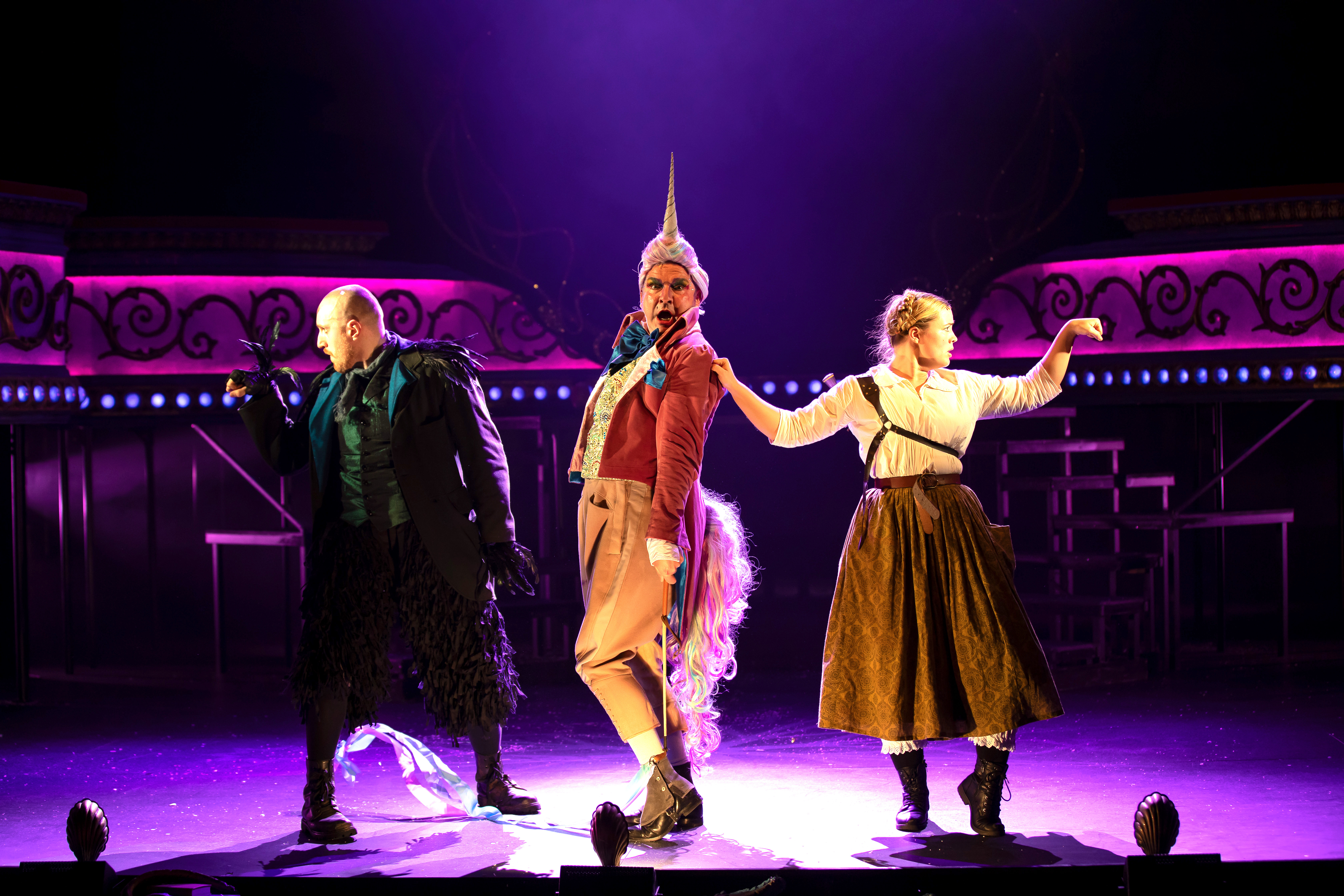
Hans Christian Andersen’s The Snow Queen has never been my favourite fairytale. Although there are plenty of gloriously memorable images – and the book I had as a child was beautifully illustrated – I’ve always found the plot unwieldy. Happily, in this very Scottish adaptation, Morna Young does an excellent job of clearing the dead wood, jettisoning some of the unnecessary complications and illuminating the story’s season-appropriate warm heart.

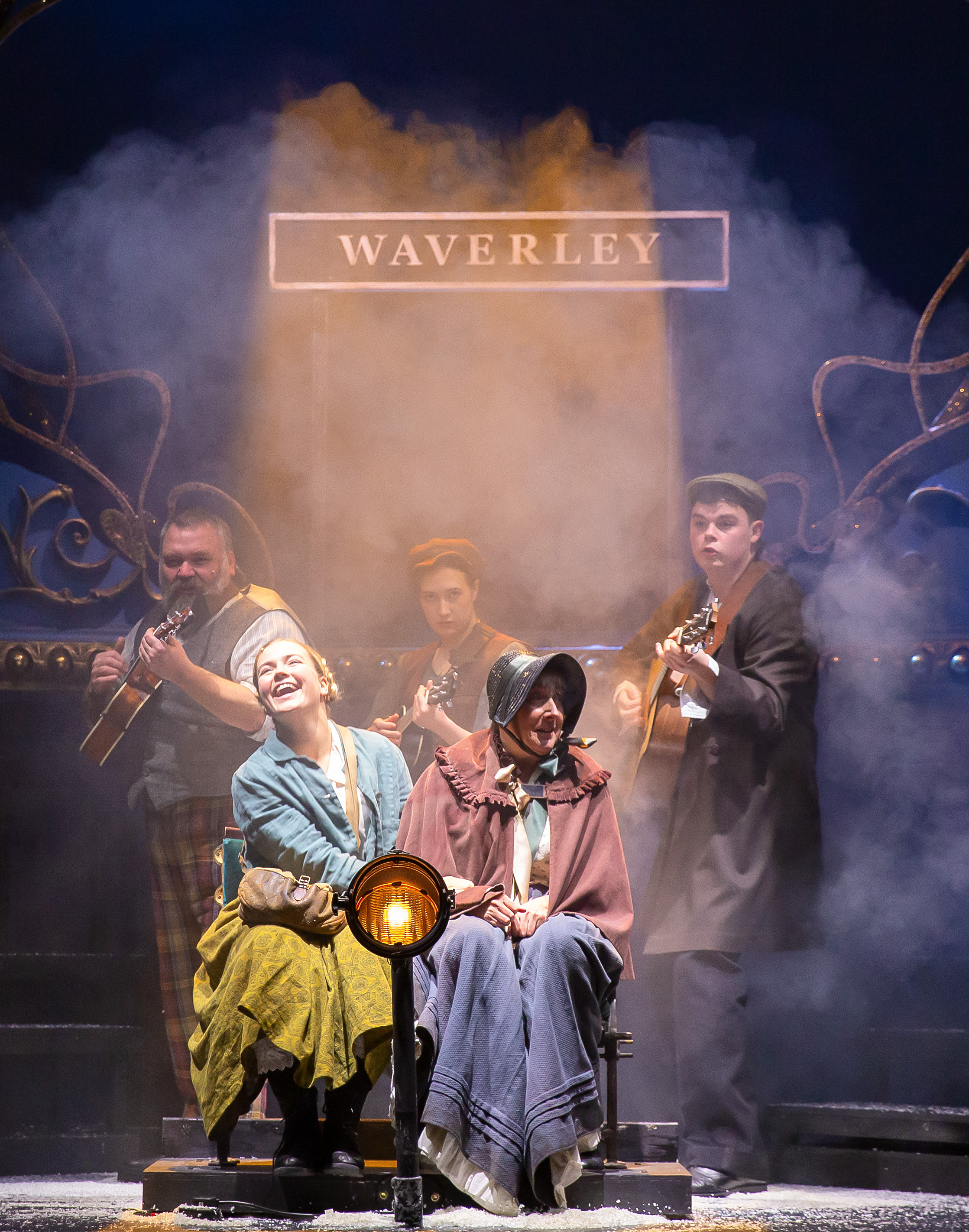
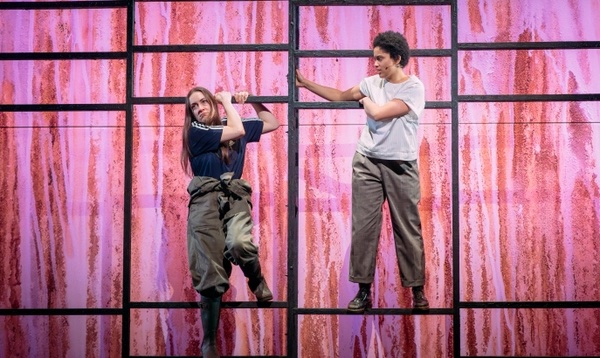
We start off in Victorian Edinburgh, where we were for last year’s An Edinburgh Christmas Carol. But we don’t stay there long: The Snow Queen is about a quest, so of course there’s an epic journey to be made. Best friends Gerda (Rosie Graham) and Kei (Sebastian Lim-Seet) are orphans, living with their respective grandparents. Every evening, they climb up onto the roof of their tenement to tend to their pot plants and plan for the future. Kei dreams of going to university, while Gerda wants to see the world.

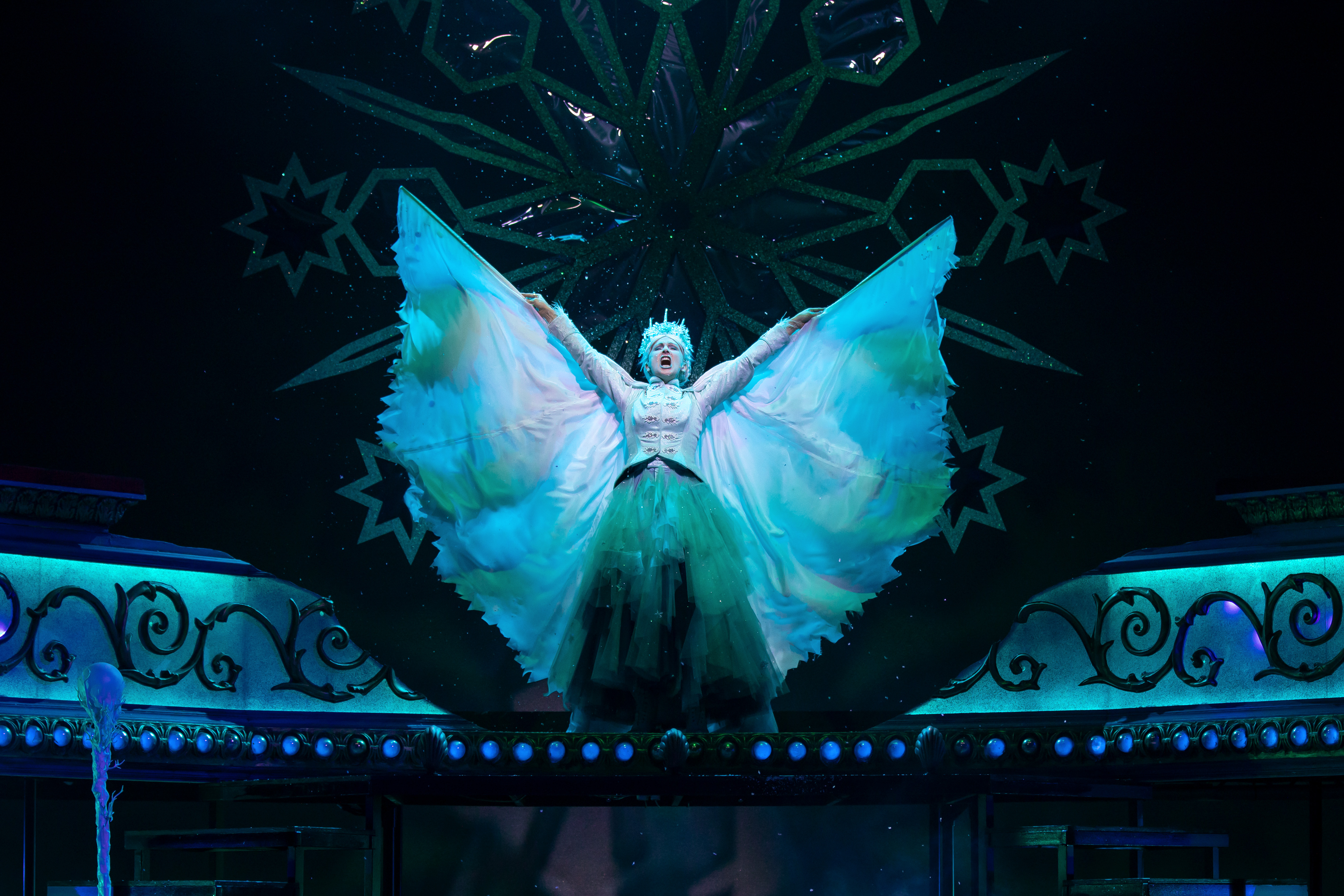
Meanwhile, in another realm, some trolls have broken a magic mirror and its shards have caused havoc, turning Beira, the Scottish Queen of Winter, into the evil Cailleach Bheur (Claire Dargo), determined to reign forever, and never relinquish her power to Bride, the Queen of Spring. Bride (Naomi Stirrat) isn’t strong enough to overpower the Snow Queen, but she does manage to slow her down – by planting five seeds of spring inside five human beings. So far, the Snow Queen has tracked down four… and now she thinks she knows where the fifth one lies. Kei doesn’t stand a chance. Corrupted by the magic mirror, he turns against Gerda and follows the Cailleach Bheur to her icy lair. But the Snow Queen has reckoned without Gerda, and underestimated the power of true friendship…

With a lively score by Finn Anderson and some very memorable songs – including Quines Gotta Fight and the innuendo-rich A Horse with a Horn – this production is as bold and vivacious as everything we’ve seen Cora Bissett direct. Graham and Lim-Seet convince as sweet and wholesome children, while Dargo’s white witch is suitably scary. Samuel Pashby – who plays Corbie, the Snow Queen’s corvid assistant – is an excellent clown, his gymnastic capers always engaging. But it’s Hamish the Unicorn (Richard Conlon) who steals the show, which does unbalance things a little – but, honestly, it doesn’t matter a jot. After all, this is a piece of festive family fun, and it’s hardly surprising that a rainbow-farting magical beast should be the mane (sorry) attraction.

I’m a little bit in love with Emily James’ set, which mirrors (and thus closes) the Lyceum’s dress circle, reflecting the theatre back at us. It’s huge and imposing and difficult for the actors to negotiate – and therein lies its beauty. The image is as in-your-face as it gets, too direct to count as subtext, and I admire its audacity. It’s impossible to ignore. James’ costumes are wonderfully opulent too: I’m drawn to the bright colours of the flowers in the fairy garden, and to the Cailleach Bheur’s shimmering pastels.

The Snow Queen straddles the line between theatre and panto, Hamish’s broad humour contrasting with the more serious underlying themes. For the most part, I think this works, although some of the jokes don’t land as well as they might, eliciting titters rather than belly laughs. Perhaps it would be an idea to have Hamish and Corbie engage more directly with the audience, signalling the tonal change. Nonetheless, the enthusiasm with which the final rendition of A Horse with a Horn is sung suggests that even the youngest attendees are fully on board.

A sparkling delight.

4 stars

Susan Singfield

The Stamping Ground

24/05/23

Festival Theatre, Edinburgh

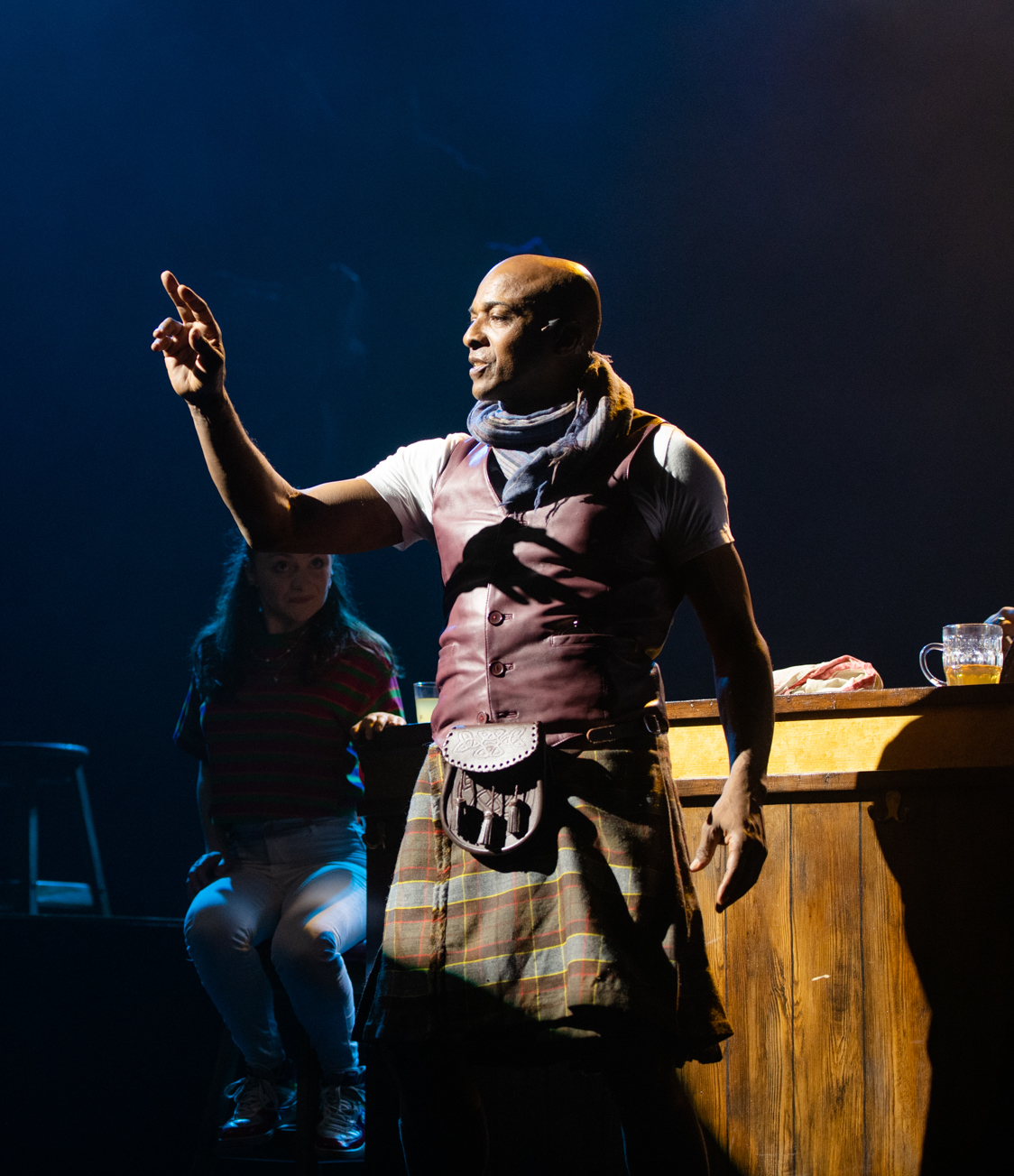
As jukebox musicals go, The Stamping Ground – inspired by the back catalogue of the near legendary (and now, sadly defunct) Gaelic rock band, Runrig – is more coherent than most. Writer Morna Young has skilfully repurposed twenty of the band’s songs into the story of a community of contemporary villagers struggling to save their way of life.

Euan (Ali Watt) is the author of a series of bodice-ripping novels set in the Scottish Highlands, but his career has stalled. After his teenage daughter, Fiona (Caitlin Forbes), is beaten up by a gang of bullies, he and his wife, Annie (Jenny Hulse), decide to relocate from their home in London to Glenbeag, (‘Little Valley” in Gaelic), the remote village where they were raised, and where his widowed mother, Mary (Annie Grace), still lives. But Euan is horrified to discover that Mary is now close friends with Summer (Naomi Stirrat), the daughter of the man who, years ago was responsible for Euan’s father’s death.

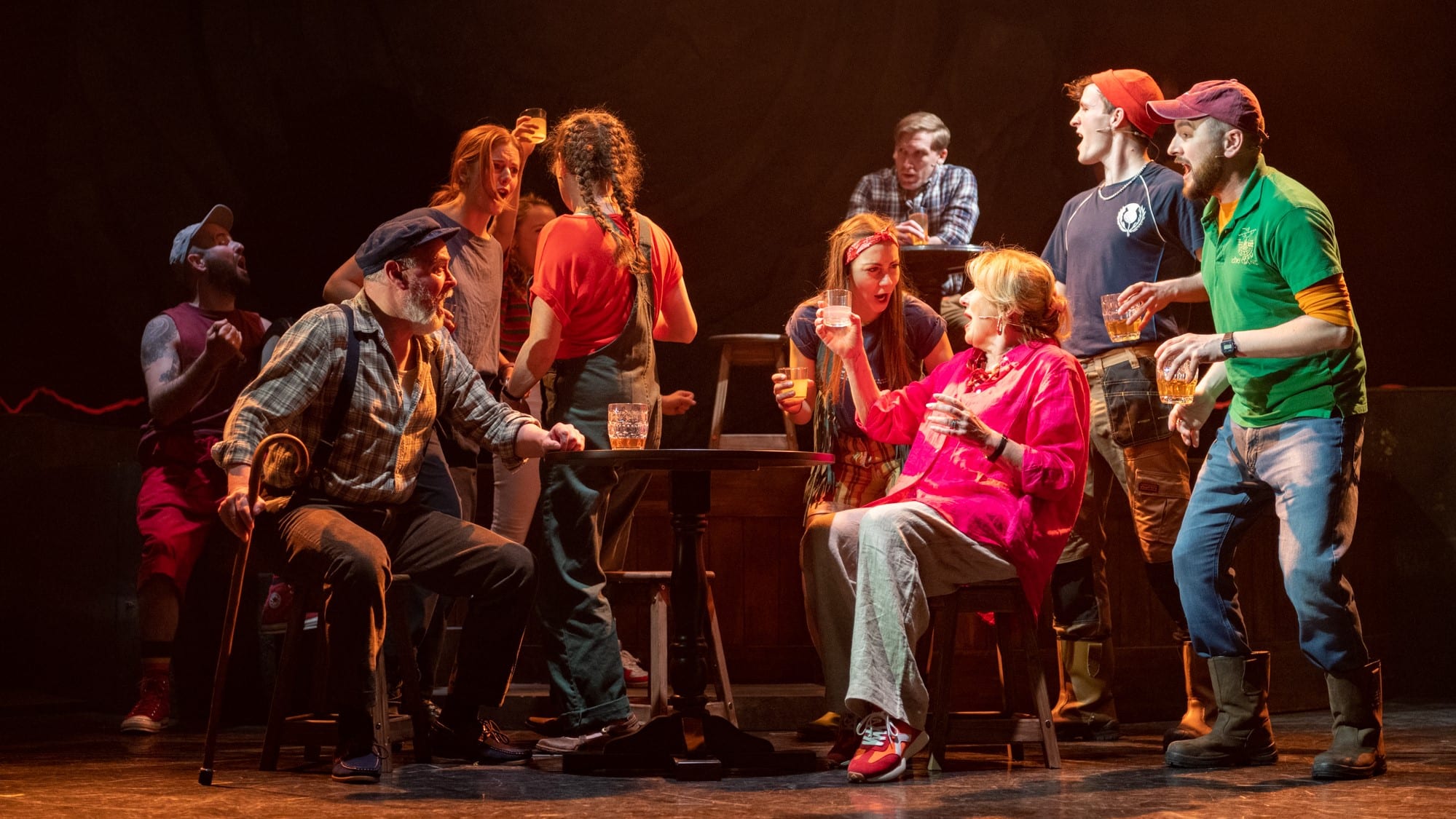
The family have arrived at a turbulent time for the village. The local inhabitants, who have already lost their cafe and post office, are now reeling from the news that their beloved pub may be the next thing to go, repurposed into holiday flats for visiting tourists. They all put their heads together to think of ways to raise money and it’s Annie who comes up with the idea of hosting a harvest festival. But when bad weather intervenes, its clear that a solution to the problem is not going to be easily found…

The Stamping Ground is, quite simply, a love letter to Scotland, a paean to the concept of people’s relationship to the land in which they live. It’s bold and vivacious, filled with likeable characters and fuelled by a mixture of plaintive melodies and rousing reels powered along by Stuart Semple’s propulsive drumming, John Mckenzie’s guitar and John Kielty’s keyboards. Members of the talented cast regularly grab other instruments to augment the songs as the story unfolds. While events occasionally come perilously close to sentimentality, I’d be lying if I denied filling up during Summer’s emotive ballad about leaving her friends – and, likewise, if I denied laughing out loud at some of the villager’s mischievous banter.

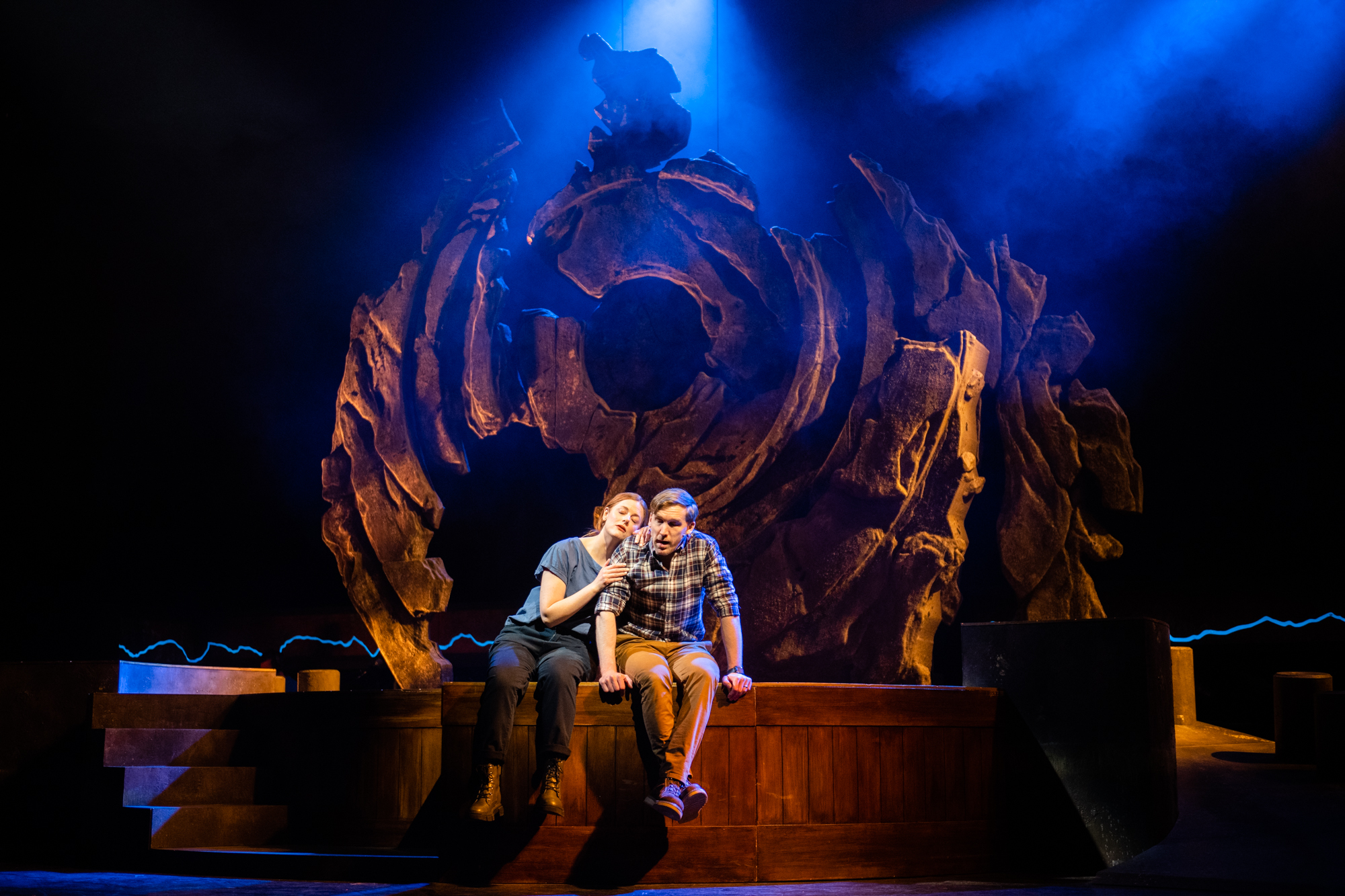
There’s a lot more here to enjoy. Kenneth McLoud’s fabulous set design, centred around the broken remains of an ancient standing stone, is a particular delight, while Jade Adams choreography and Luke Kernaghan’s direction keeps the whole enterprise bubbling to its stirring conclusion. By the end of the night the audience is on its feet clapping joyfully along to a rousing rendition of Loch Lomond.

The Stamping Ground is Scottish to its roots and never shies away from proudly saying so.

4 stars

Philip Caveney

The Stornoway Way

12/10/19

Studio Theatre, Edinburgh

Adapted by Kevin MacNeil from his 2005 novel, The Stornoway Way is the story of Roman (Naomi Stirrat), a would-be singer-songwriter living on the remote Isle of Lewis. Roman dreams of making the big time, but can’t seem to prise himself away from the whisky bottle long enough to put any constructive plans into action.

When his best friend Eilidh (Rachel Kennedy) offers to fund a trip to Edinburgh so Roman can spend time in a recording studio, he happily goes along with the scheme – but then he meets Hungarian student, Eva (Chloe-Ann Taylor), in an Edinburgh bar, and things become more complicated. And the whisky bottle is still exerting its tenacious pull.

The three actors put in spirited performances here but are hampered by a script that never manages to rise above the inescapable fact that the central character is a self-pitying wreck of a man. It’s usual in such stories to expect a little redemption along the way, but it’s in short supply here.

Still. it’s not all bad news.

There are pleasing elements: the folky songs featuring Gaelic lyrics (with an onscreen English translation) give proceedings an occasional lift, and the sly quips exchanged by the Lewis islanders in the first half elicit knowing laughter from the audience. Matthew Zajac’s direction is nicely done and there’s a handsome set courtesy of Ali Maclaurin. But it’s puzzling that, despite its title, most of the story unfolds not on the Isle of Lewis, but in Edinburgh. And in the second half, Roman’s relentless journey towards self-destruction begins to pall.

I’ve no doubt that the novel, written from the lead character’s cynical point of view, works a good deal more successfully than this rather scattershot adaptation. And, no matter how spirited a performance Stirrat gives us, she cannot convince me that anybody would offer this toxic male the time of day.

3 stars

Philip Caveney