18/01/24
Royal Lyceum Theatre, Edinburgh
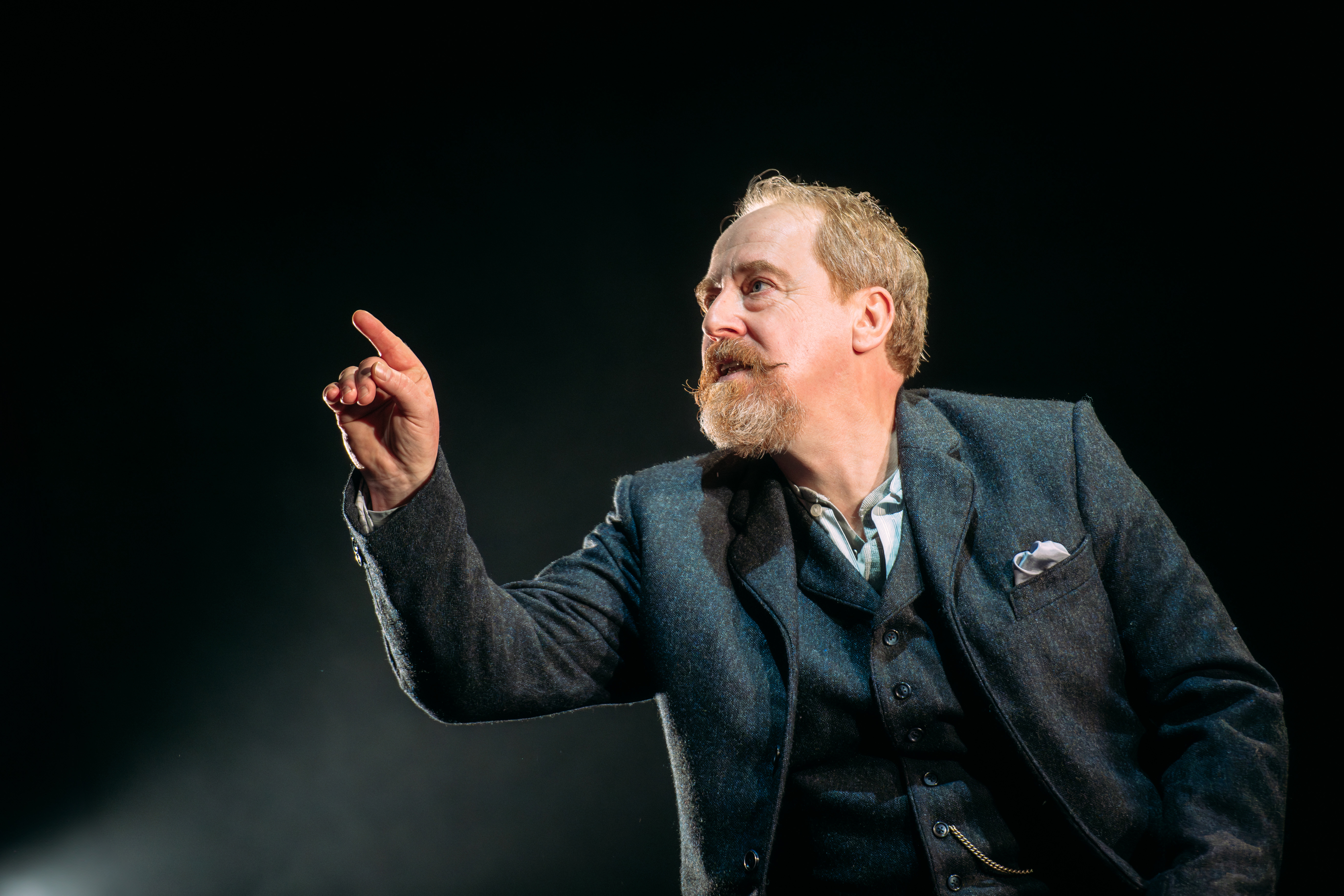
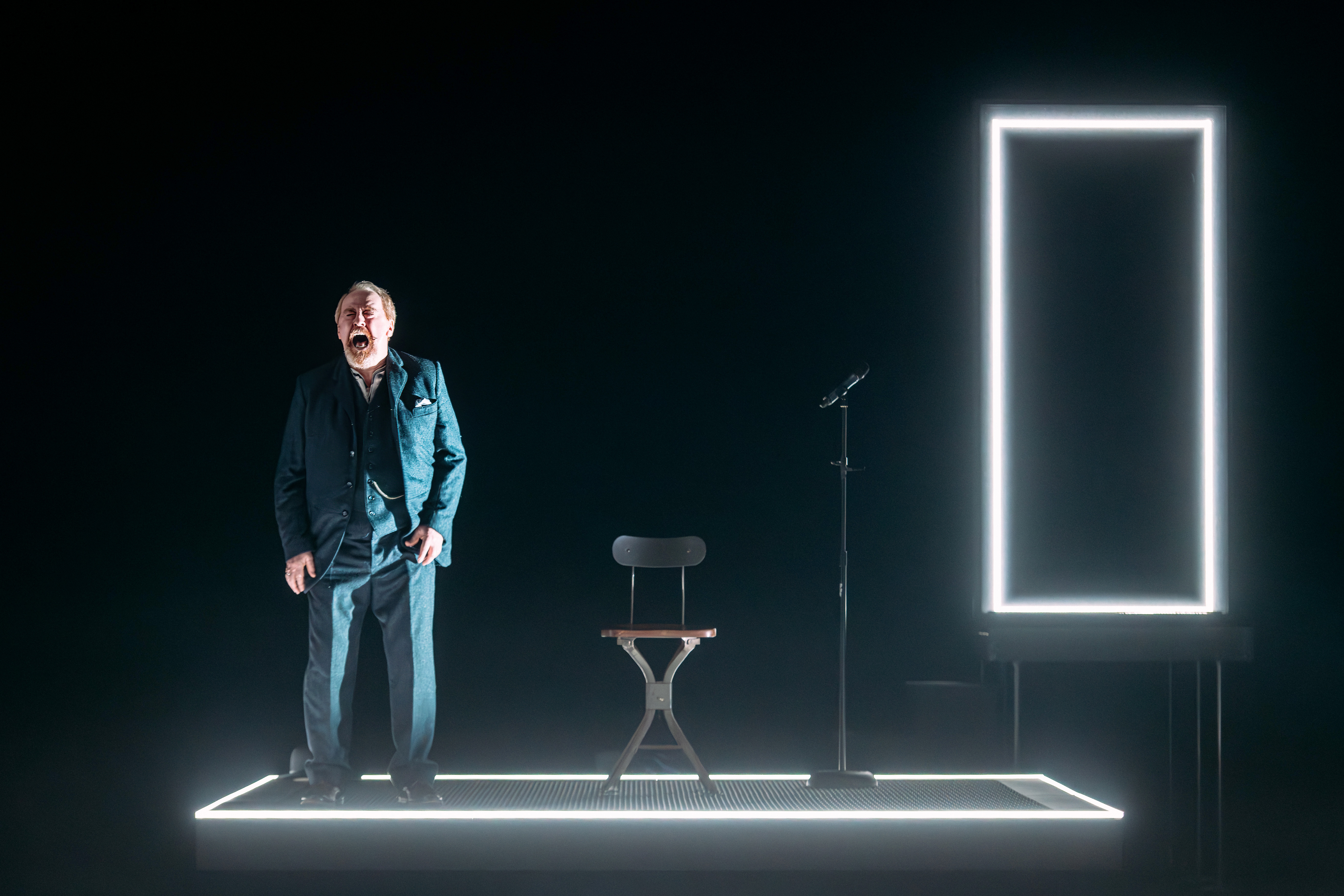
I’ve always thought of Jekyll and Hyde as the quintessential Edinburgh story, so it never fails to come as a surprise when I’m reminded that the original novella was based in London. (And written in Bournemouth to boot!) Gary McNair’s astute adaptation of Robert Louis Stevenson’s iconic story uses the same setting as its illustrious predecessor and strips the story back to its bare essentials. It’s a monologue, performed with gusto by Forbes Masson. Everything about the production feels taut and fleet, a straight seventy-five minute run with no interval.
Masson wanders onstage as the story’s narrator, lawyer Gabriel Utterson, who warns us that he’s not ‘the good guy’ in this tale. With this idea firmly planted, he begins to relate his story: how he learns from his cousin, Richard Enfield, of a brutal attack on an innocent eight-year-old girl by a man called Edward Hyde, whom he describes as “downright detestable.”
Utterson’s suspicions are instantly aroused because one of his oldest friends and clients, the mild-mannered Dr Henry Jekyll, has recently changed his will in favour of a man with that same name. Utterson soon becomes obsessed with Hyde and spends much of his time hanging around the man’s doorway without ever managing to spot him…
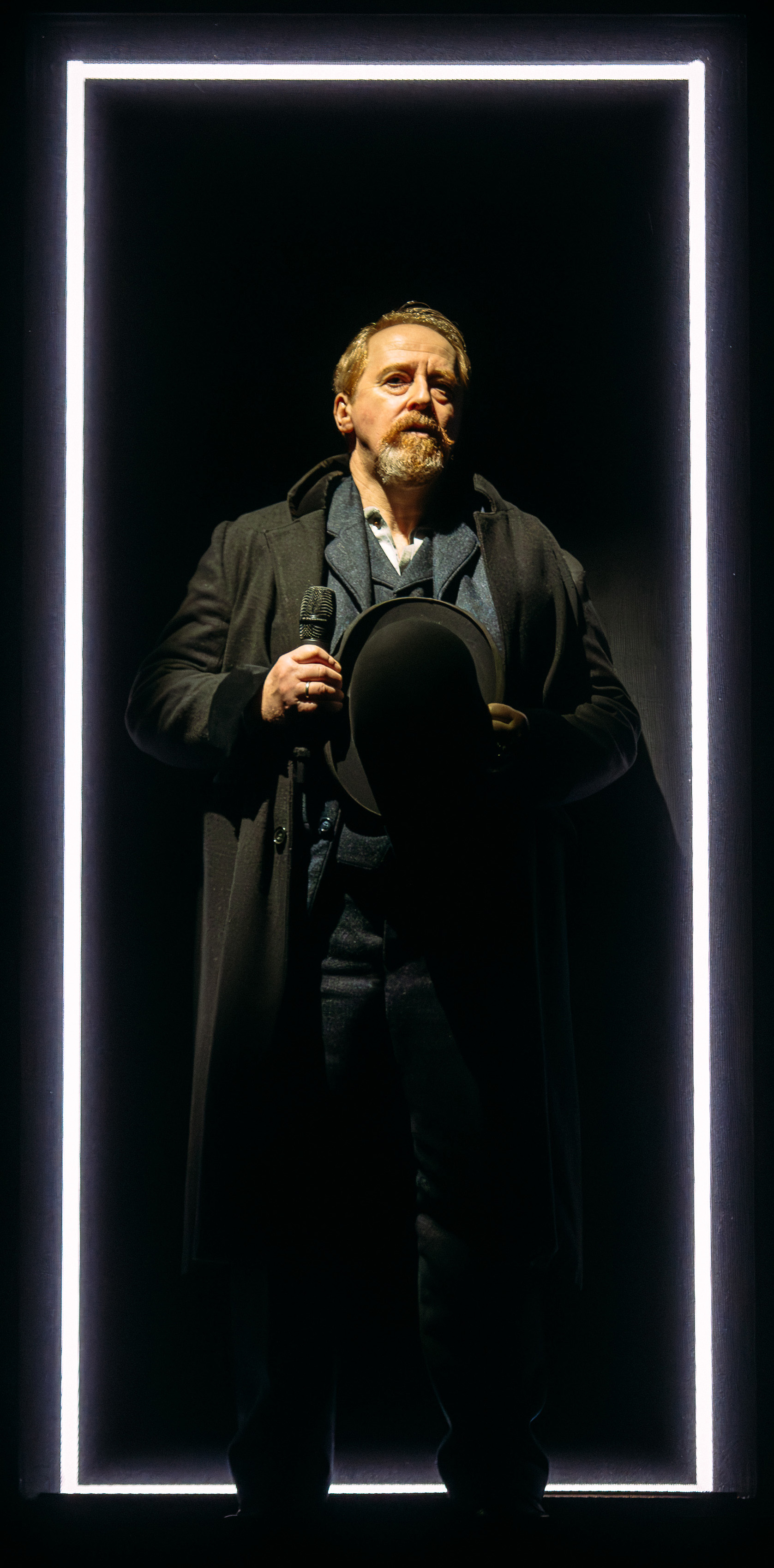
The problem with adapting such a familiar story is, of course, that there can be few real surprises. I admire Michael Fentiman’s direction, Max Jones’ spare set design and particularly Richard Howell’s startling lighting effects, which – combined with the Richard Hammarton’s eerie soundscapes – accentuate the disturbing psychological aspects of the story. I applaud the fact that McNair has dispensed with the mysterious ‘serum’ swigged by Jekyll in order to transform himself into Hyde, an element that has always seemed corny to me. I note too that the plot’s most unbelievable strand – that despite so many visits to Hyde’s doorway, Utterson fails to notice that it connects directly to Jekyll’s house – has been left intact.
Of course, none of this could fly without Masson’s confident performance and he rises to the occasion admirably, inhabiting every character with consummate skill, switching from one to the other, seemingly without effort. A sequence where he passes a bowler hat from hand-to-hand as he conducts a lengthy conversation with himself feels suspiciously like observing a masterclass in acting. It’s an absolute pleasure to behold.
It’s only in the production’s final moments – when Utterson’s introductory words are re-echoed – that this adaptation’s true strengths are actually revealed. There is, I think, a suggestion here that hasn’t been fully explored before. And that’s reason enough for its existence.
4 stars
Philip Caveney


 Bouquets & Brickbats