
Matthew MacFadyen

Pride and Prejudice

24/05/25

Netflix

It’s hard to believe that Joe Wright’s adaptation of Pride and Prejudice is already twenty years old – and, while it’s been rereleased into selected cinemas to mark the occasion, it’s also right there on Netflix, all ready for re-examination at the touch of a button. I remember liking it back in the day and feeling that it was much more realistic than the widely-admired 1995 TV mini-series, which I found a little too chocolate-boxy.

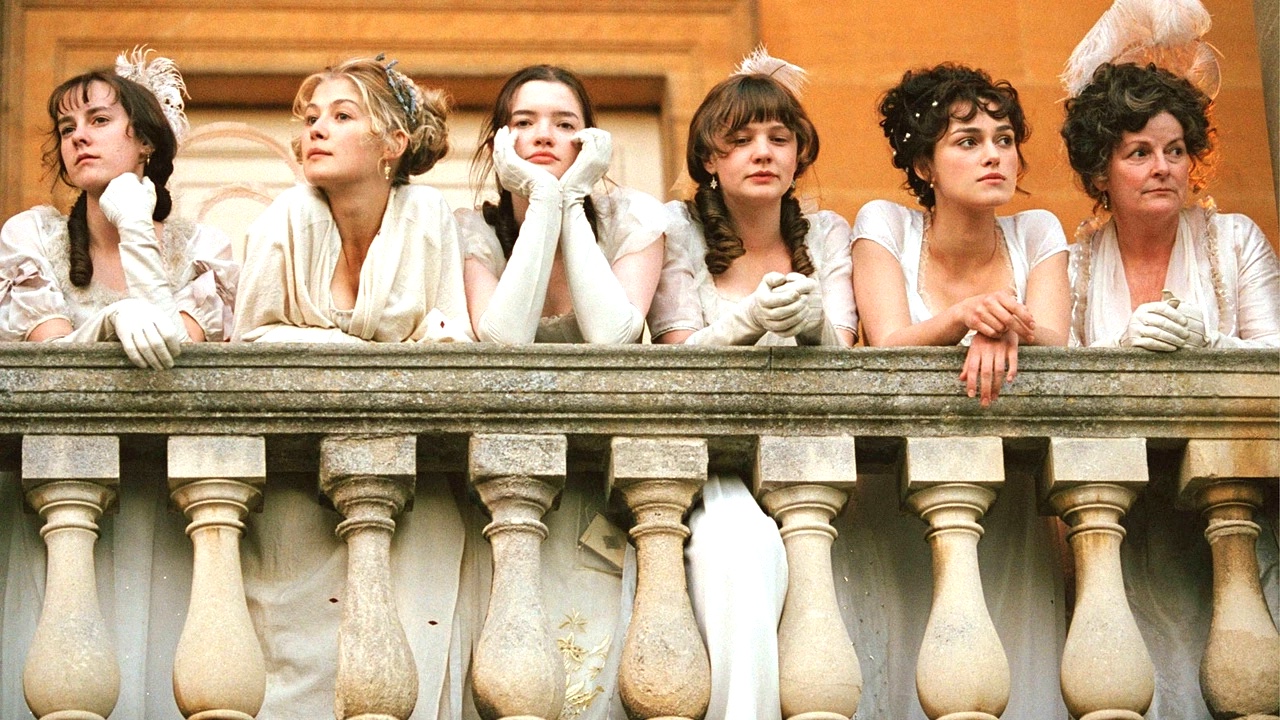
Wright’s version, though offering a tranquil and bucolic adaptation of Jane Austen’s novel, actually succeeds in showing the slightly down-at-heel and ramshackle nature of the Bennet family. In this version, a viewer fully understands the mounting desperation of Mrs Bennet (a wonderfully scatty Brenda Blethyn) as she seeks to find suitable husbands for her daughters, aware all the time that the clock is ticking and the women of the family stand on the edge of penury. Mr Bennet (Donald Sutherland) is useless, looking on in mystified wonder as his wife goes about her earnest business.

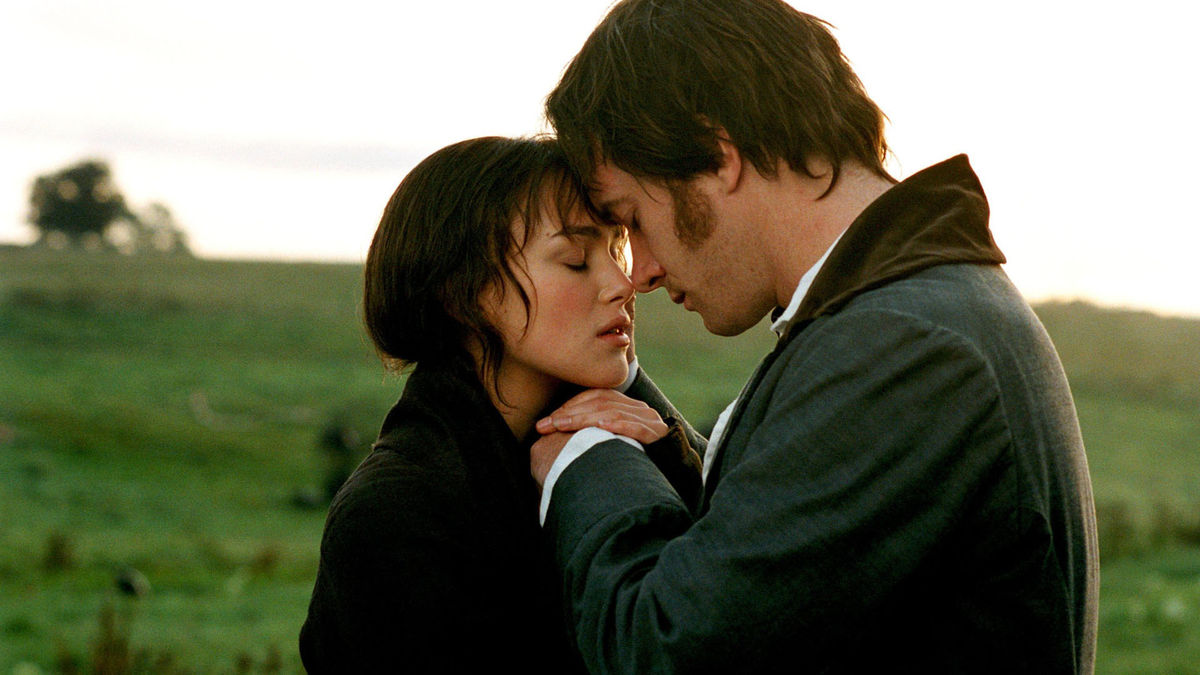
As the wilful and opinionated Elizabeth, Keira Knightley is an inspired choice. Why so many critics have taken against her acting abilities is quite beyond me, but here she plays Lizzie with considerable skill, scathing in her early encounters with Mr Darcy (a deliciously-sombre Matthew Macfadyen) and loving and playful in her interplay with Jane (Rosamund Pike) and her other sisters (look out for an early appearance by Carey Mulligan as Kitty). There’s a splendid turn from Rupert Friend as the caddish Mr Wickham, while Judi Dench struts her inimitable stuff as the acid-tongued Lady Catherine and Tom Hollander is wonderfully obsequious as Mr Collins, the reverend with an earnest desire to impress her.

The source novel has been cleverly adapted by Deborah Moggach, with additional (uncredited) dialogue by Emma Thompson, who had already earned herself an Oscar for her work on Ang Lee’s version of Sense and Sensibility. Wright never lingers too long on a scene and consequently the running time of two hours and nine minutes seems to positively flash by.

There are so many simple yet effective moments that have stayed with me since my first viewing. I love the scene where the Bennets’ prize pig wanders through their living quarters as though it’s a perfectly natural state of affairs, and the scene where Elizabeth and Darcy, enacting a complicated dance routine in the midst of a frenetic party are, quite suddenly, dancing completely alone. Roman Osin’s lush cinematography makes every landscape look suitably ravishing yet never overplays its hand. A scene where a pensive Elizabeth is taken from bright morning sunlight into the dark shadows of evening in one slow take is so understated, it barely registers.

This is Wright’s debut full-length feature and yet it feels like the work of a more experienced director. He would go straight on from this to his adaption of Atonement, another extraordinary literary film, once again with Knightley in a key role.

Sometimes when you return to a film after a long interval, you wonder what made you like it so much on first viewing. In the case of Pride and Prejudice, I feel I enjoy it even more.

4.6 stars

Philip Caveney

Deadpool & Wolverine

26/07/24

Cineworld, Edinburgh

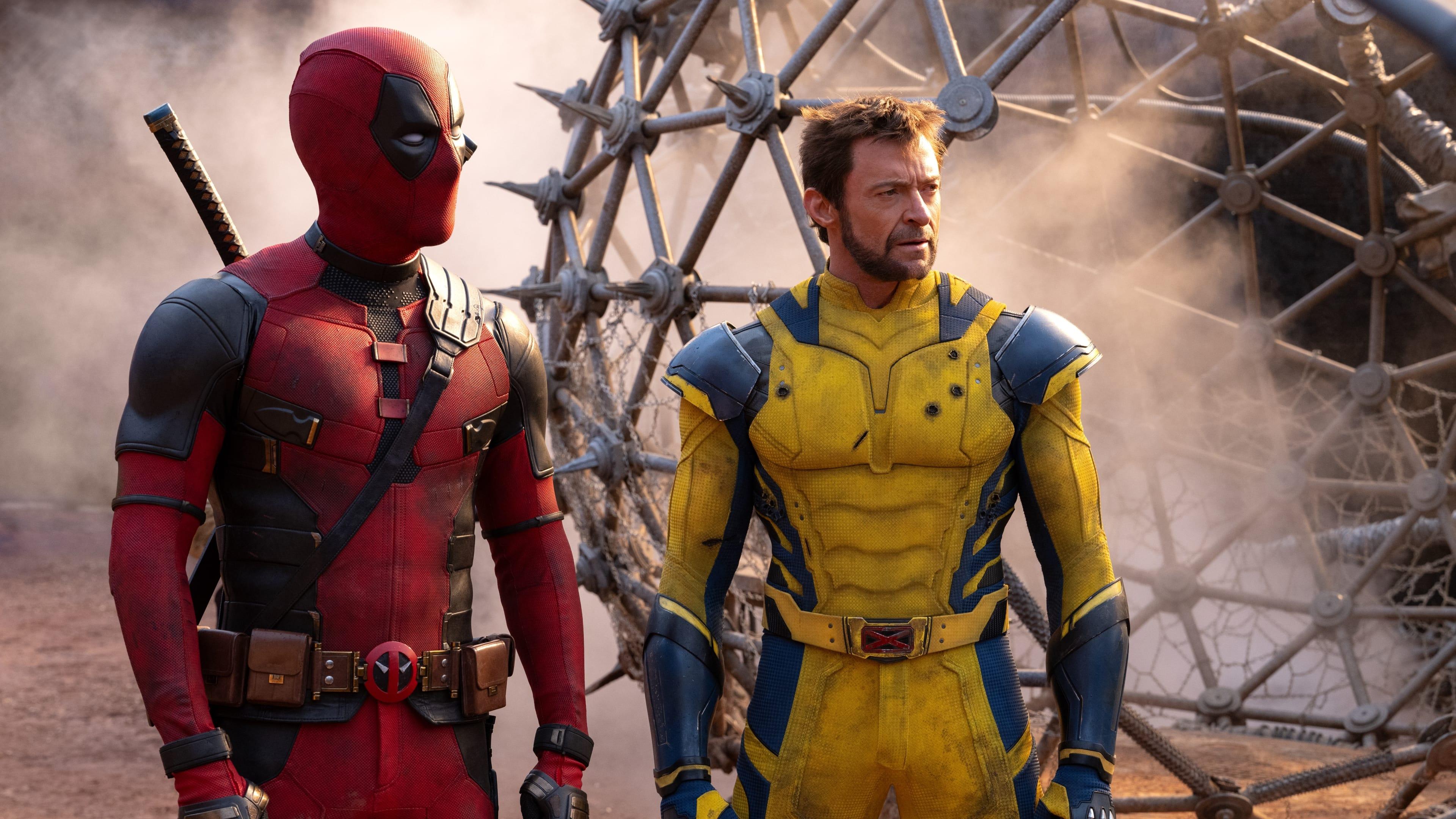
The Marvel Cinematic Universe has been going through a bit of a rough patch of late. Since the heady days of the Russo Brothers and The Avengers, where every film seemed to grab the box office by the jugular and shake all the money out, there’s been a distinct lack of focus, an inability to home in on a winning formula. Big changes are pending but, in the meantime, there’s Deadpool & Wolverine, the (ahem) 34th film in the MCU, which, like its two predecessors, is R rated. This means that there are plenty of expletives flying out of the screen and that the extended fight sequences are much bloodier than we might usually expect.

After failing auditions to join The Avengers and The X Men, Deadpool (Ryan Renolds) – or Wade Wilson, to use his off-duty name – has made an attempt to go straight. He now works as a used car salesman, wearing a toupee and favouring Hawaiian shirts in his leisure time. But he’s dragged back into the superhero world by Mr Paradox (Matthew Macfadyen, riffing outrageously on a version of his character from Succession). Paradox works for the Time Variance Authority and is a sort of snarky Dr Who figure. He announces that Wade’s strand of time is deteriorating fast due to the death of Logan – or Wolverine – and that it is all going to come crashing down fairly soon, which means that Wade and his eight friends are going to die.

Unless of course, he can do something about it.

Wade manages to steal Paradox’s tempad and heads into the Marvel Multiverse (as you do), looking for another Wolverine to take Logan’s place. For some inexplicable reason, he settles on the one who’s a miserable alcoholic, who feels he has nothing to live for. Well, things can only get better, right?

It would be pointless to try and relate any more of the plot because, frankly, it’s incoherent, a thinly-veiled excuse for our two heroes to fight with each other (and occasionally enjoy a bit of a bromance) as they travel to a variety of different locations – including one that looks very much as though it’s been ripped off from Mad Max. (Naturally Wade mentions this. “Hey, looks a bit Mad Maxy, huh?”) As they travel, the duo repeatedly break the fourth wall, chatting directly to the audience, dropping references to various franchises, film studios and Marvel characters past and present. Much of this means very little to me (though a bunch of superfans in the screening I’m at laugh uproariously throughout, perhaps to demonstrate how multi-versed they are in all things Marvel.)

There are A LOT of cameo appearances by various actors, some of whom I recognise but most of whom I don’t. And there’s A LOT of fighting. The biggest problem for me with the latter is that the many protracted punch-ups I’m obliged to sit through are rendered utterly pointless by the fact that none of the characters can be killed, which neatly removes any sense of jeopardy there might have been.

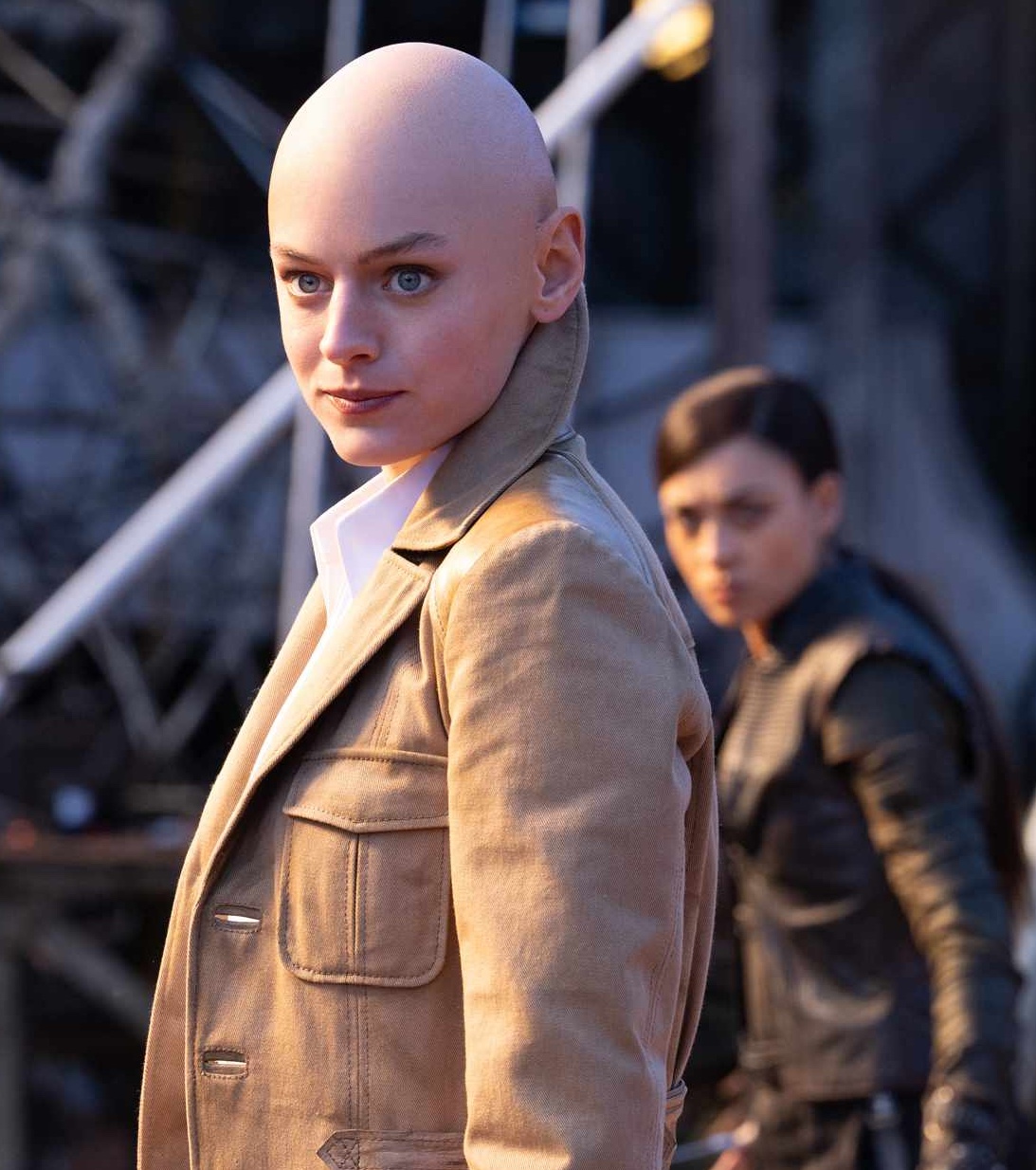
It’s not all terrible. I actually chuckle at some of the one-liners and there’s an impressive performance by Emma Corrin as Cassandra Nova, the twin sister of Charles Xavier, who has an unfortunate habit of sticking her hands directly into people’s heads in order to er… read them. Of course, there’s the inevitable, supposedly nail-biting finale as Deadpool and Wolverine attempt to do… something… with a bunch of timey-wimey… things but, by this stage, I’m mostly looking at my watch wondering if the film is ever going to finish.

Maybe it’s just that I ran out of patience with Marvel a long while back, but I’m sure I’m not the only one who wishes that the Multiverse had never been invented. Apart from a couple of glorious animated exceptions, any film that ventures into those uncharted waters appears to founder and sink. That said, this screening is fairly well attended and we’ll see how much money Deadpool & Wolverine manages to pull in.

And we’ll wait to see what comes next. Kevin? Take your time.

3 stars

Philip Caveney

The Assistant

06/05/20

Curzon Home Cinema

Writer/director Kitty Green’s The Assistant is a quietly troubling movie, a queasily believable insight into the machinations of the film industry, where venerated individuals are afforded too much power.

Julia Garner is Jane, a high-flying graduate who aspires to become a producer. For now, she’s stuck in an entry-level post, a lowly assistant to a movie mogul. Her duties include making coffee, photocopying, and removing evidence of his excesses. She throws away used syringes, wipes white powder off his desk, returns a stray earring to his lover, babysits his children and placates his crying wife. Her colleagues collude; they’re all fully versed in the kind of apologetic email she should send in response to being screamed at by the un-named boss, and a meeting with HR manager, Wilcock (Matthew Macfadyen) – sought because of Jane’s concern for a ‘very young’ and naïve new recruit – reveals the unsurprising fact that there’s absolutely no support available. There are four hundred other people waiting to take her job, Wilcock tells Jane. She needs to put up and shut up – or she’s out.

The cleverness here is all in the understatement. We see how tedious and soul-destroying Jane’s role is: the brutal pre-dawn commute, the punishingly long hours, the personal nature of much of what she’s asked to do. She orders lunch for the whole office but doesn’t get a break herself; indeed, we’re always aware of how hungry she is, never managing more than a single bite of anything she tries to eat. Garner conveys Jane’s anxiety and brittle desperation most eloquently, despite  saying very little. We can feel her gritting her teeth, determining to get through this phase so that she can, eventually, have the career she wants. What’s less clear is whether she’ll be able to endure, and, if she does, what she will lose in the process.

The movie is claustrophobic and tense; there is little action but much revelation. I like that we never see the boss. His absence makes him universal – not a capricious individual who needs to be replaced, but a symbol of a rotten system that’s ripe for revolution.

And the Janes are starting to speak out.

#MeToo.

4 stars

Susan Singfield

The Current War

26/07/19

This biopic concentrates on the rivalry between two famous inventors and their race to be the first to give America the ‘miracle’ of electric light. The film starts in the year 1800, with Thomas Edison (Benedict Cumberbatch) on the verge of a breakthrough with his direct current system. But then up pops George Westinghouse (Michael Shannon), already a rich man from the gas industry, who proposes an alternating current version, which, he insists, will provide a cheaper and more powerful solution to the problem.

In the ensuing struggle to win the contract to light up America, fair play falls by the wayside; meanwhile, a Croatian genius by the name of Nikola Tesla (Nicholas Hoult) struggles to make waves with a series of inventions that have the potential to eclipse the achievements of both Edison and Westinghouse combined.

It’s a fascinating but incredibly complex story, and Michael Mitnick’s script intially feels scattershot as it leaps frantically from location to location in an attempt to nail down all its disparate elements. But it’s worth sticking with, because – after a rather shaky start – the film hits its stride and becomes genuinely compelling, with director Alfonso Gomez-Rejon doing a creditable job of capturing the period. The film highlights a fascinating conundrum when Edison is approached to use his technology to create a ‘humane’ way of executing criminals.

There’s a starry cast here with the likes of Tom Holland, Katherine Waterston and Matthew Macfadyen relegated to supporting roles.

It’s clear where the filmmakers’ loyalities lie. Edison is exposed as a hypocrite, a man obssessed with winning at all costs, at first opposed to using his technology as a weapon, next electrocuting animals willy nilly in order to cast his rival in a bad light. Westinghouse, on the other hand, is portrayed as a much more reasonable type, a man willing to step aside from the glory in order to achieve the greater good. It’s also clear (correctly in my opinion) that Tesla is held up here as the true genius, a man who constantly found his ideas appropriated by his rich financiers and who died destitute, without ever achieving his extraordinary potential.

The Current War isn’t exactly a perfect film, but it does illuminate the difficult birth of something that we now all take for granted, an invention that genuinely transformed the world as we know it. It also depicts the depths that people will sink to in order to see their names go down in history.

4 stars

Philip Caveney

The Nutcracker and the Four Realms

11/11/18

It’s early November and I’ve just been to see what is, for me, the first Christmas-themed movie of the year. Perhaps it’s more of a reflection on me than the season in question, but it still feels much too soon. However, I buckle myself in and watch Disney’s latest release, The Nutcracker and the Four Realms. The first thing to say about the film is that it’s undeniably opulent. The screen virtually pulsates with light and colour and general sparkliness. Overall, however, it puts me in mind of a gigantic glittering Christmas bauble, delightful to look at – but completely empty at its core.

This is the story of Clara Stahlbaum (McKenzie Foy), a teenage girl still mourning the recent death of her mother and feeling somewhat aggrieved when her gloomy father (Matthew MacFadyen) expects her to attend the huge Christmas ball they go to every year and look as though she’s enjoying herself. Before they leave for the ball, Mr Stahlbaum hands out presents to Clara and her siblings, gifts that have been left for them by their mother, who, it turns out, was an inventor. Clara is bequeathed some kind of a jewelled egg with a lock on it – but alas, there’s no key. However, if anyone knows how to unlock the egg’s secret, it’s the mysterious toymaker, Mr Drosselmeyer (Morgan Freeman), who’s hosting the ball tonight.

At the party, there’s a hunt for the various gifts that Mr Drosselmeyer has created for the visiting children. In search of her own present, Clara follows a length of ribbon out into the garden, through a maze and into a mysterious alternate world, where lie the Four Realms of the title. She soon discovers that her late Mother once ruled as Queen here. Now, with the help of Nutcracker Soldier, Philip (Jaden Fowara-Knight),  ‘Princess Clara’ has to resolve a quarrel that has plunged the different realms in to war.

There’s a ridiculously starry cast involved in these shenanigans  – Keira Knightly as Sugarplum, Helen Mirren as Mother Ginger and Richard E Grant as er… Shiver. Lots of other big names make fleeting appearances too, albeit for no good reason. The special effects are, of course, beautifully realised, but there’s little contrast between the magical world and the one that Clara has recently vacated. Furthermore, there’s no disguising the fact that this is just sumptuous fluff that doesn’t manage to field one single, original idea, repeatedly falling back on over-used fridge magnet messages – ‘the power is within you, Clara… you just need to learn to love yourself…’ and so on and so forth. Ad infinitum.

Look, I fully appreciate that this film isn’t aimed at somebody like me and, if I were an eight-year-old child, it’s quite possible I’d emerge from this feeling that I’d been thoroughly entertained. As it stands, I find TNATFR as tedious as its overworked title. There is a nice ballet sequence to accompany the end credits but, since members of the audience decide to chatter all the way through it, that’s a little squandered too.

A treat for young children only. Accompanying adults (and even discerning teens) might prefer to seek out something more original for their festive entertainment.

2.8 stars

Philip Caveney