Mark Gatiss

Inside No. 9: Stage/Fright

27/11/25

Playhouse Theatre, Edinburgh

I’m rarely excited to see theatre inspired by television but I was keen to secure tickets for Inside No. 9 as soon as this tour was announced. Like so many others, I’ve been an avid fan of Reece Shearsmith and Steve Pemberton ever since I first saw them (along with Mark Gatiss) in 1999’s The League of Gentlemen. And, more recently, No. 9 has been one of the few television series I’ve watched avidly, through all nine of its seasons, marvelling at the sheer ingenuity of these two men, who are masters of the tricky art of horror comedy.

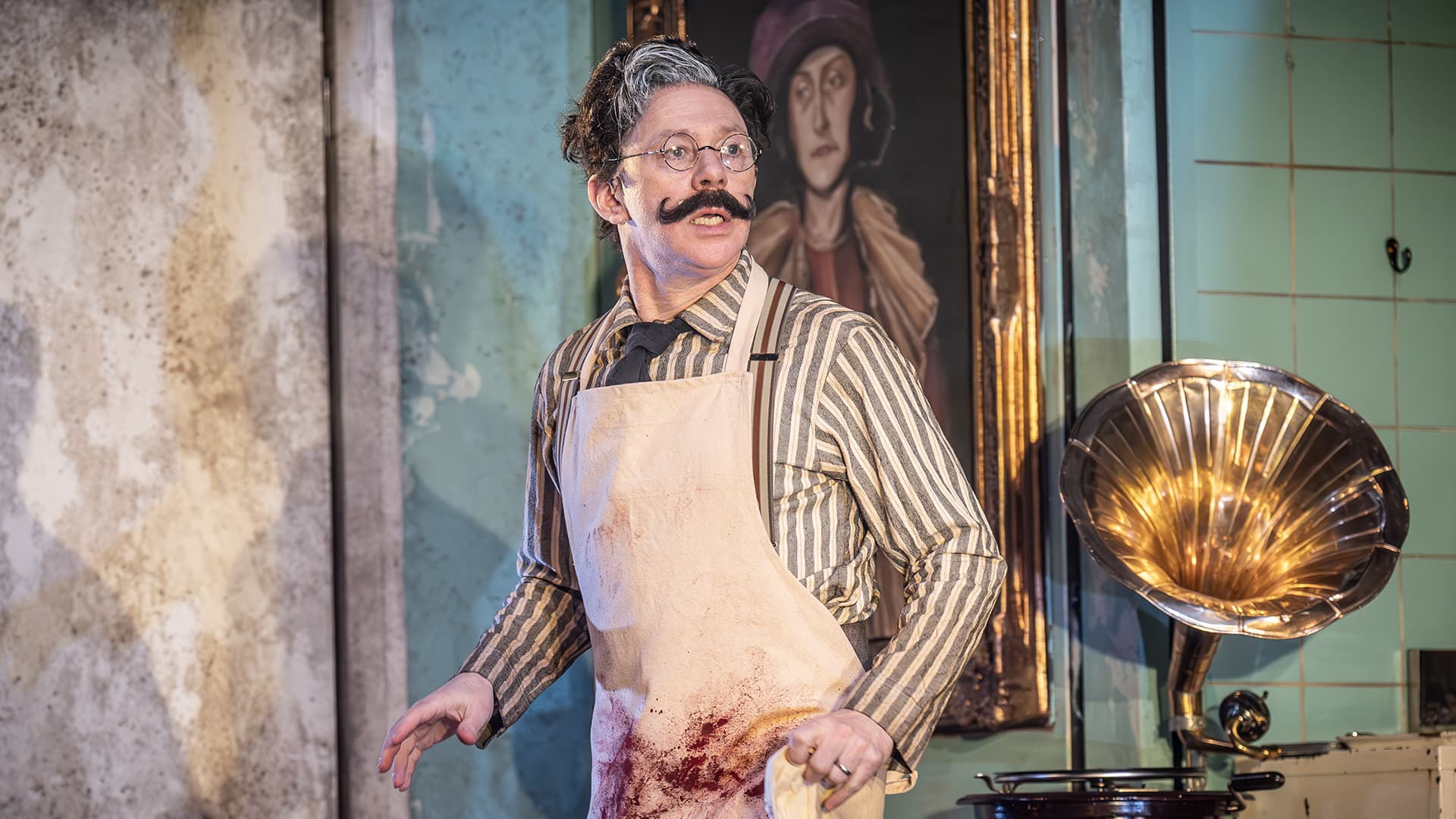
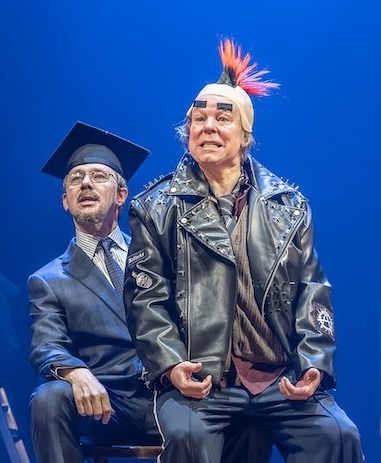
It’s clear that they have many other faithful followers because the capacious Playhouse is a complete sell-out tonight. The audience is somewhat restless so the opening sketch, in which we are confronted by rows of theatre seats looking straight back at us, is an inspired choice, while the subject – the ways in which noisy audience members can incur the wrath of somebody trying to watch a play – is doubly so. And even if a large section of the first act is overly-familiar – based around the classic TV episode Bernie Clifton’s Dressing Room – well, that’s only like your favourite rock band smashing out some of their established hits before introducing you to their new material.

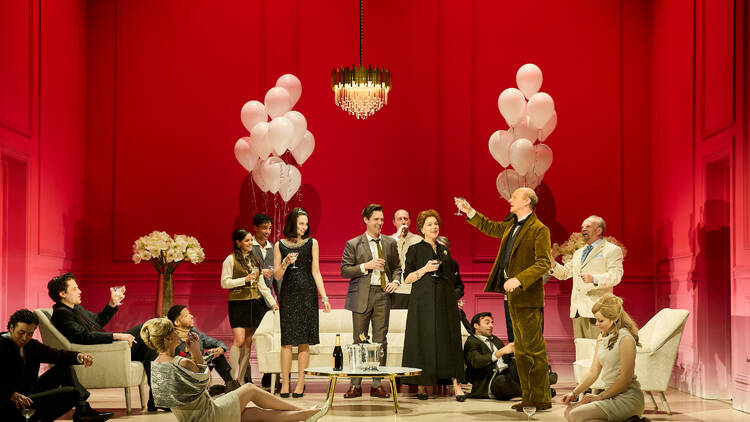
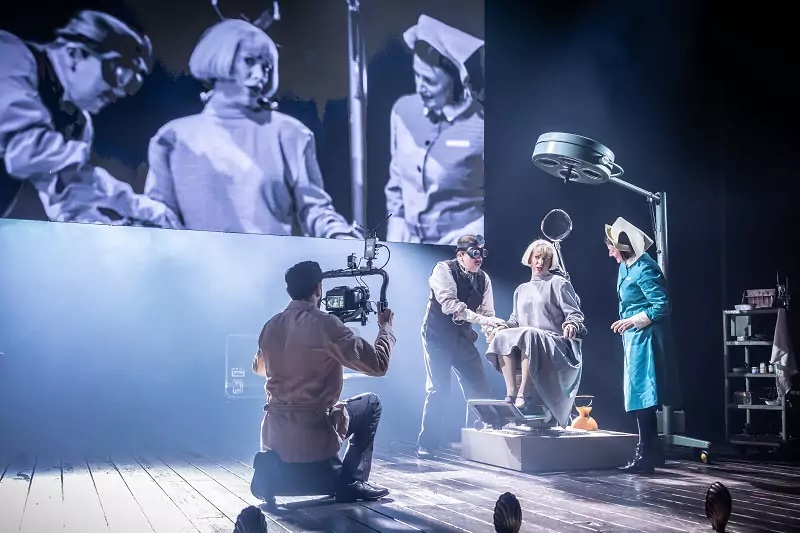
In the second act, the duo, assisted by a sizeable cast, do exactly that. What initially appears to be a group of characters enacting a delicious slice of grand guignol theatre in a Victorian asylum is revealed to be… ah, but that would be telling. Like so much of their output, Shearsmith and Pemberton have woven elements of surprise into the piece and it would be a crime to reveal too much. Suffice to say that this extended sketch utilises cinematic elements, somehow blending the two distinct disciplines of theatre and film into one satisfying whole. While there’s much here that is deliciously, darkly funny, there are also moments of extreme tension and some genuinely effective jump-scares.

A word of warning: don’t be like those members of tonight’s audience who leap up from their seats the moment the house lights come up and race for the exits – because there’s more to come and you don’t want to miss the further revelations that unfold.

This is yet another assured collaboration from the gruesome twosome. Where will Shearsmith and Pemberton venture next? Your guess is as good as mine, but wherever it is, bring it on! I’m keen to see whatever they’ve got up their sleeves.

4.6 stars

Philip Caveney
The Fantastic Four: First Steps

24/07/25

Cineworld, Edinburgh

The world of superhero movies has become an unpredictable place. DC’s recent Superman film was dismissed as a sprawling mess by the majority of critics (me included), but proved to be a palpable hit with the public – which makes me somewhat nervous to announce that, for my money, Marvel’s latest offering is the studio’s best effort since Guardians of the Galaxy. Which probably earns it a one way ticket to ignominy.

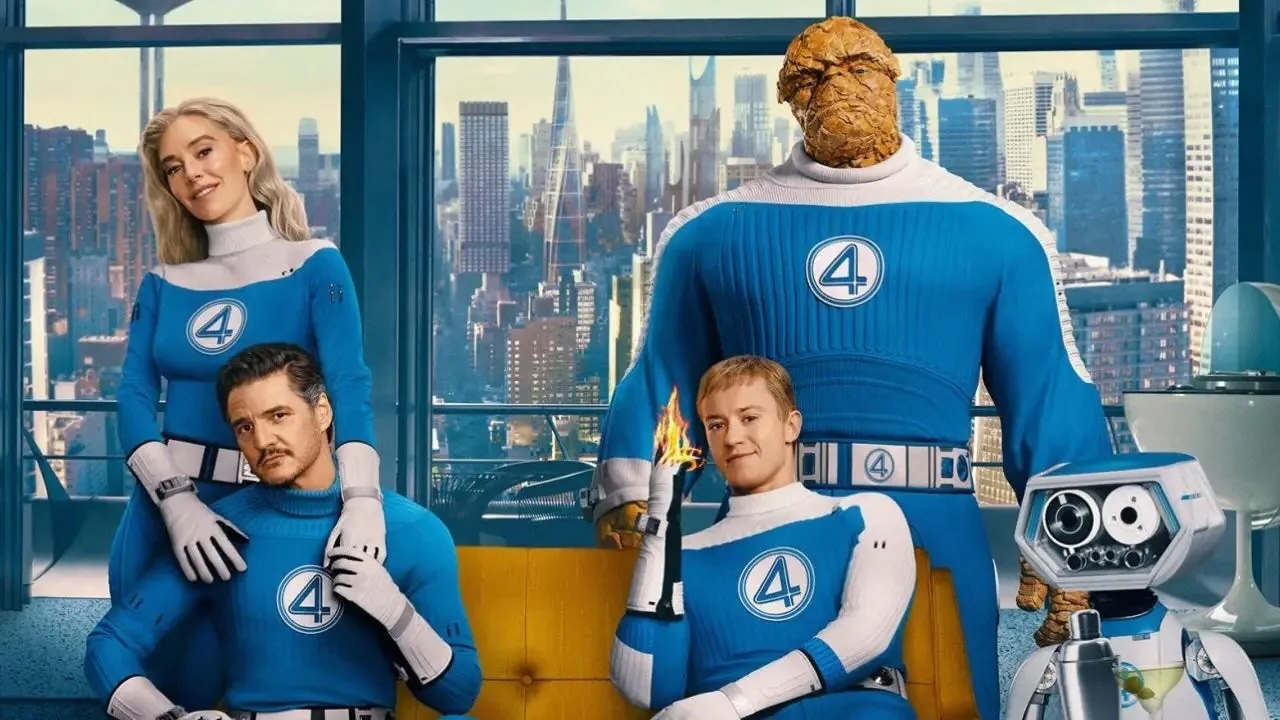
Stan Lee and Jack Kirby’s first superhero team, The Fantastic Four, have had a pretty rocky ride on the big screen. Previous attempts to capture their antics have been met with howls of derision from Marvel fans and a distinct lack of bums on seats at the box office. First Steps might suggest an origins movie, but this film begins four years after the space flight that dramatically changed the lives of its four crew members. That mission is only alluded to in a brief television interview, introduced by Ted Gilbert (Mark Gatiss). Now, Reed Richards (Pedro Pascal), Sue Storm (Vanessa Kirby), Johnny Storm (Joseph Quinn) and Ben Grimm (Ebon Moss-Bachrach) have been widely accepted as the Earth’s protectors. But, in a shot of realism rarely seen in this genre, married couple Reed and Sue are about to have their first child and are going to have to learn to go about their super-business with a baby on board.

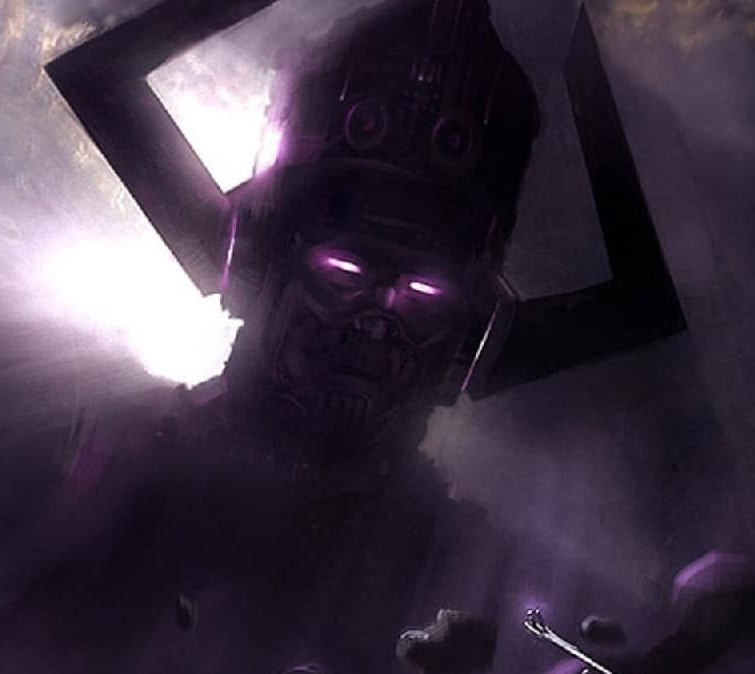
New York City receives an unexpected visit from Shalla-Bal (Julia Garner as the ex-girlfriend of The Silver Surfer, Stan Lee’s oddest hero), who points out that Earth is soon to be… ahem… eaten by Galactus (Ralph Ineson). He’s a suitably gargantuan alien, who has already gobbled up several other luckless planets and has made sure to leave room for pudding. It’s up to the four superheroes to devise a plan to save the world and carry it out, whilst taking care of new arrival, baby Franklin.

So… no pressure.

While the storyline is as batty as we’ve come to expect from Marvel, what really works here is the film’s overall aesthetic, which locates the story in an alternate nineteen-sixties (the era in which the source comics were conceived and created). The ensuing world-building is delightful, with that kooky style applied to every last detail. This results in a futuristic world where, for instance, mobile phones don’t exist. Cinematographer Jess Hall ensures that everything is filmed in vivid, eye-popping hues, while director Matt Shakman keeps the action propulsive enough to ensure that audiences don’t have time to consider how silly the storyline is.

The characterisations of the four leads are nicely handled, particularly by Pascal, who makes his Reed Richards a nerdy number-cruncher, who loves nothing better than scribbling equations on a chalkboard. The dialogue achieves just the right mix of funny and heartfelt, even if it did take seven writers; and for once, there aren’t too many characters to get a handle on. While I generally complain when everything comes down to a climactic punch-up – and this film is no exception to the rule – this one doesn’t overstay its welcome and, in its final furlong, manages to crank up some genuine moments of suspense. Mission accomplished.

So yes, it’s been a while since I enjoyed a Marvel movie to this degree. We’ll see how it fares over the following weeks but, in my humble opinion, First Steps deserves to succeed. Make sure you stay in your seats for the mid-credit sequence announcing… well, you’ll have to go and see for yourselves.

4.2 stars

Philip Caveney

The Motive and the Cue

21/03/24

Cineworld, Edinburgh: National Theatre Live

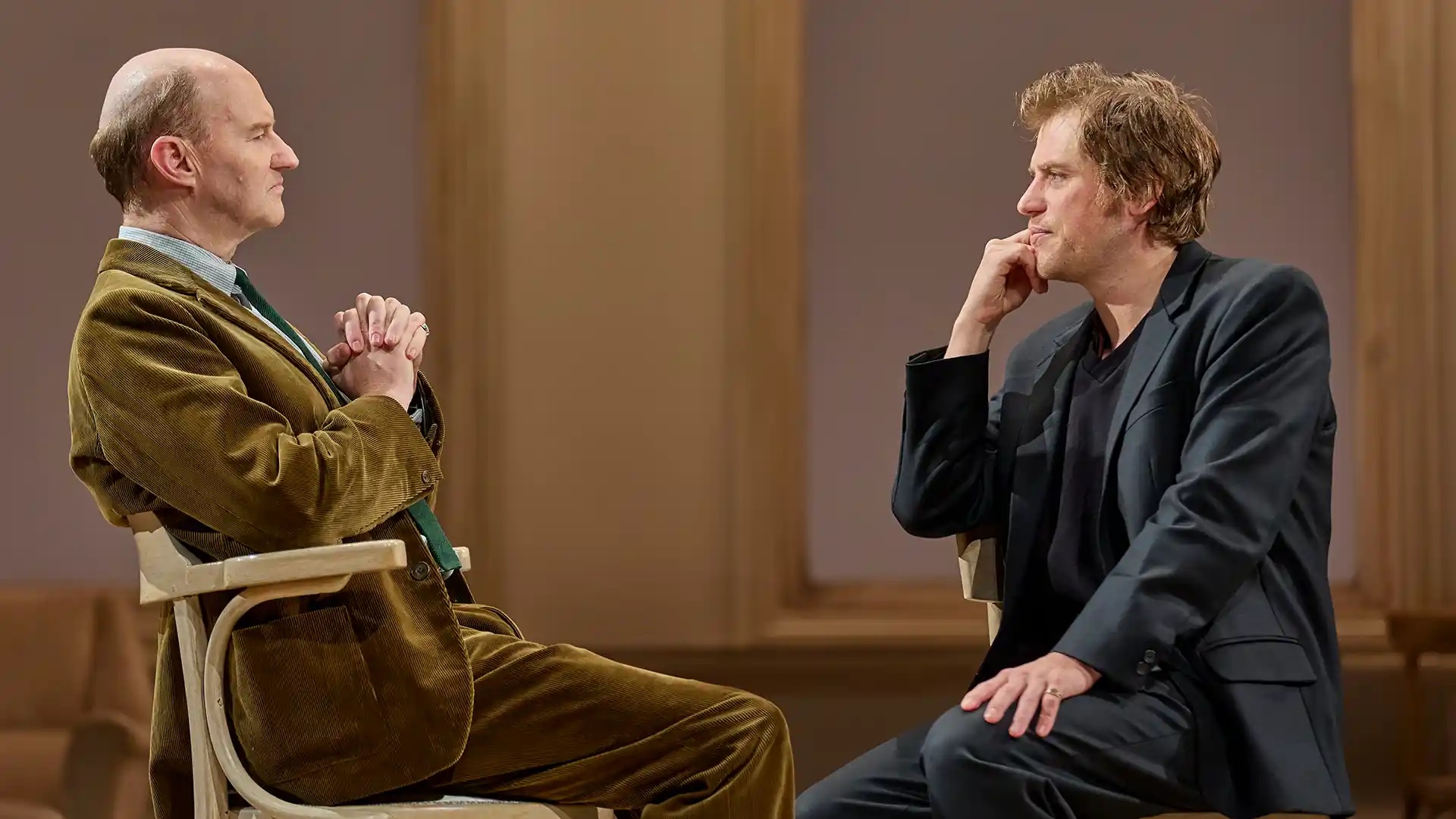
It’s 1964 and Welsh superstar Richard Burton (Johnny Flynn) has decided to turn down some lucrative film offers in order to perform Hamlet on Broadway. (We’ve all been there.) He’s decided that the director should be John Gielgud (Mark Gatiss). Now in his sixties and considered something of a has-been, he famously played the Danish prince to great acclaim as a young actor.

To complicate matters, Burton has recently married Elizabeth Taylor (Tuppence Middleton) – for the first time – and she reluctantly accompanies him, but finds herself banished from the rehearsal space and sequestered in a swish hotel room with an endless supply of alcohol, while her husband grapples with his role.

Jack Thorne’s fascinating play, beautifully directed by Sam Mendes, never shows us the finished production but lingers instead on successive rehearsals as director and star bicker and feud their way to a fresh vision of Shakespeare’s most-performed play. There’s a large ensemble cast at work – some eighteen of them – but most of the other actors are relegated to supporting roles, though both Allan Corduner as Hume Cronyn and Luke Norris as William Redfield manage to make an impression. Meanwhile, Gatiss and Flynn joust entertainingly with each other to sometimes hilarious effect, Gatiss perfectly embodying Gielgud’s sly and snarky manner, while Flynn turns up the bombast as the hubristic Burton, his working-class-lad-made-good bluster deliciously rendered.

Middleton too does well with her character, capturing Taylor’s earthiness and her uncanny ability to cross all boundaries, particularly in the scene where she acts as a kind of intermediary when Gielgud and Burton (inevitably) end up at each other’s throats. I love the scene where Gielgud reflects on the tragedy of achieving stardom at twenty-three, to which Taylor points out that she was just twelve when National Velvet became a runaway hit.

The production is also blessed with an extraordinary set by Ed Devlin, where scene changes are revealed using an ingenious expanding letterbox arrangement. I have no idea how this is achieved, but the effect is remarkable, the transformations so slickly done it feels almost like a series of magic tricks.

This is a play that will delight anyone who loves theatre and the way it works, a glimpse at the nuts and bolts that lie behind the glittering façade. It’s fascinating to see the players experiment with the source material as they gradually inch their way to what will eventually become one of the most successful theatre productions in history.

4.6 stars

Philip Caveney

The Father

11/06/21

Cineworld

It’s been over a month since the 2021 Oscars, where The Father won awards for best male actor and best adapted screenplay, but somehow it seems I’ve been eagerly awaiting its arrival for much longer than that. It’s finally here, available to view on the big screen, where its powerful narrative pulses from every frame.

Anthony Hopkins is, it seems, the oldest recipient of the best actor award and we know, don’t we, that sometimes such honours are handed out because it’s late in an actor’s career and there might not be another chance to reward him? But make no mistake, his performance in the lead role is a genuine tour de force. As ‘Anthony,’ a widowed man enduring the terrifying, mind-scrambling rigours of Alzheimer’s, he pulls out all the stops, taking his character through a range of moods and manifestations – from grandstanding showoff to sly insinuator – before delivering a final, desperate scene that is absolutely devastating.

Those seeking a rollicking, sidesplitting comedy should be warned: this is not the film for you.

Anthony – when we first encounter him – is living alone in his spacious London apartment, where he’s receiving regular visits from his compassionate daughter, Anne (Olivia Colman). Anthony has recently dismissed his paid carer, claiming that she’s stolen his watch, and he’s adamant that he will not, under any circumstances, move out of the place that he has always regarded as home. But as the story progresses, the touchstones of his life crumble one by one as the familiar things around him begin to change at a terrifying rate. The place doesn’t look the same… items have been moved, rearranged. Anthony’s favourite painting is missing… and why does somebody by the name of Paul (Mark Gatiss) parade around saying that this is actually his apartment? Who is Paul exactly? Anne’s ex-husband? If so, who’s the other Paul (Rufus Sewell), and why does he act like he owns the place? And what’s all this nonsense about Anne moving to Paris?

Perhaps the new home help, Laura (Imogen Poots), might be able to put things in order, but why does she remind Anthony so much of his other daughter, Lucy, the one he seems to have lost touch with? And most bewildering of all, why is it that sometimes, even Anne appears to be a different person than she used to be?

Florian Zeller’s astonishing film, adapted from his stage play, unfolds almost like a psychological horror story, as Anthony struggles to take in what’s happening to him. While I expected this to be bleak, I’m not fully prepared for the power with which it hits me. There’s doubtless extra impact because, for the last ten years of her life, my own mother was afflicted by Alzheimer’s and I recognise many of the beats here as being absolutely authentic. Perhaps that’s why the tears are rolling so copiously down my face.

Despite being confined mostly to one set, The Father never feels stage bound, because so much of what I can see onscreen is in a constant state of flux and because, at times, I feel every bit as unsettled as Anthony does. I’m never entirely sure where a scene is taking place, when it it is set and who is present in it – and that’s not meant as a criticism, but as an observation about the story’s unsettling grip on me. While there was aways a danger of The Father being completely dominated by Hopkin’s extraordinary performance, Colman is as excellent as always, managing to kindle the audience’s sympathy with a mere glance. And Olivia Williams is also compelling as the film’s most enigmatic character.

I walk out of the cinema, bleary-eyed from crying and, if I still have a few unanswered questions, well, that feels exactly right. This is an assured film that handles its difficult subject with rare skill.

So, worth the wait? Most definitely. But maybe remember to take some hankies?

5 Stars

Philip Caveney

The Madness of King George

16/06/20

National Theatre Live

This adaptation of Alan Bennett’s acclaimed 1991 play, a co-production between The National Theatre and the Nottingham Playhouse, stars Mark Gatiss as George III, the much-loved and admired monarch whose reign was nearly destroyed by a protracted battle with mental illness. We now know that George suffered from porphyria, a condition that comes with a whole raft of punishing symptoms – and it’s clear from the outset that the illness itself is worsened by the ill-informed efforts of the court physicians, who set about inflicting a whole series of what can only be described as tortures on the luckless monarch. They bleed him, they ply him with laxatives, they even spill boiling hot wax onto his head and back, convinced that these remedies will drive out his ‘ill humours.’  Little wonder, then, that their efforts are instrumental in pushing the king deeper into delirium. Bennett’s script walks a perilous tightrope between hilarity and the full blown tragedy of watching a man degraded and humbled in front of his family and his courtiers. 

It’s only when Prime Minister William Pitt (Nicholas Bishop) engages the services of Doctor Willis (Adrian Scarborough) that a possible light appears on the horizon. Willis’s approach to the problem is a tough, rigorous routine that seems more appropriate to the breaking of a horse than the nurturing of a stricken human being but, against all the odds, it starts to pay dividends.

Meanwhile, the Whigs see the king’s situation as an opportunity to oust Pitt’s Tories by allying themselves to the ambitious Prince of Wales (Wilf Scolding), who longs for some kind of power and doesn’t mind how he gets it.

This is a handsomely mounted production, which takes off at a gallop and never allows the pace to flag. Each scene segues effortlessly to the next and there’s solid work from the supporting cast, but this is essentially an opportunity for Gatiss to shine and he rises to the challenge with considerable aplomb, managing to bring out George’s innate likeability even as he is reduced to a gibbering, gesticulating wreck by his steadily mounting symptoms.

This is an object lesson in how to present a period piece. Everything here – the costumes, the sets, the actors’ comic timing, the machinations of the various political players, is presented with absolute authority and skilfully directed by Adam Penford.

It’s often said that fact is stranger than fiction and The Madness of King George seems to illustrate this point perfectly. 

4.2 stars

Philip Caveney


Sherlock: The Abominable Bride

01/01/16

The recent small-screen success of the BBC television series, Sherlock has prompted its creators to try something a little different this time around; after successfully updating the concept, they’ve decided to present a standalone episode as a period piece and moreover, to simultaneously release The Abominable Bride in cinemas across the UK in a series of exclusive one-off screenings; all things, no doubt designed to generate excitement in the hearts and minds of its huge army of ardent followers.

The problem is, of course, we’re not quite sure how this switch in time has been achieved – (is it the result of one of Sherlock’s cocaine-adulterated dreams? Or are we simply inhabiting one of the scenarios dreamed up by Doctor Watson in his role as an author of detective fiction?) The fact that we’re never really sure is one of the blades that fatally stabs this enterprise, even as it sprints merrily out of the starting gate, but infinitely more worrying is the ensuing surfeit of intolerable smugness that seems to drip from every sly in-joke and ‘clever’ character interplay we’re presented with. Authors Steven Moffat and Mark Gatiss seem to be hovering in the background, proudly announcing how very arch they’ve been with Conan Doyle’s legacy, but I have to confess that after careful viewing and much consideration, I’m still really not sure what was supposed to be happening in the story and can’t help feeling that the writers have been rather less clever than they suppose.

Anyway, the plot revolves around the case of Emilia Ricoletti (Emily O’ Keefe) dressed in a bridal gown, who appears in a public place, indiscriminately firing pistols at passers-by before committing an apparent suicide; only to reappear shortly afterwards, complete with a large hole in her head, to murder her husband. She then promptly disappears. Baffling? Well, yes. Holmes (Benedict Cumberbatch) and Watson (Martin Freeman), go gamely into detection mode, but the eventual solution for the murder is so risible, it’s hard to believe that the authors thought it would pass muster as anything more than a joke. Blaming it on the Suffragettes? Oh, please… A late appearance by Professor Moriaty (Andrew Scott) at the Reichenbach Falls, has been crowbarred into the story with a total absence of subtlety, which just about puts the deerstalker hat on it.

Of course, Sherlock fans are usually a notoriously loyal regiment, so it must be extremely worrying for Moffat and Gatiss, that amidst the onslaught of social media pronouncements, posted shortly after transmission, only a very few scribes have arisen to defend this debacle and the ones that have, seem to be channelling a definite whiff of the Emperor’s New Clothes (take a bow Lucy Mangan of the Guardian). I’ll admit, I haven’t been a massive fan of the series before now, but this ‘event’ has pretty much put me off investigating further instalments. I’d have loved to have finished this review with the word ‘elementary,’ but sadly, that’s a quality that was missing here.

2 stars

Philip Caveney