Macbeth

Macbeth

16/08/25

Zoo Southside, Edinburgh

The last thing we need to see is another version of Macbeth. And yet, when Barden Party’s bluegrass adaptation is recommended to us, we somehow can’t resist. So here we are, coffee in hand, ready to spend our Saturday morning in the company of cowboy-witches, banjo players and a murderous would-be monarch.

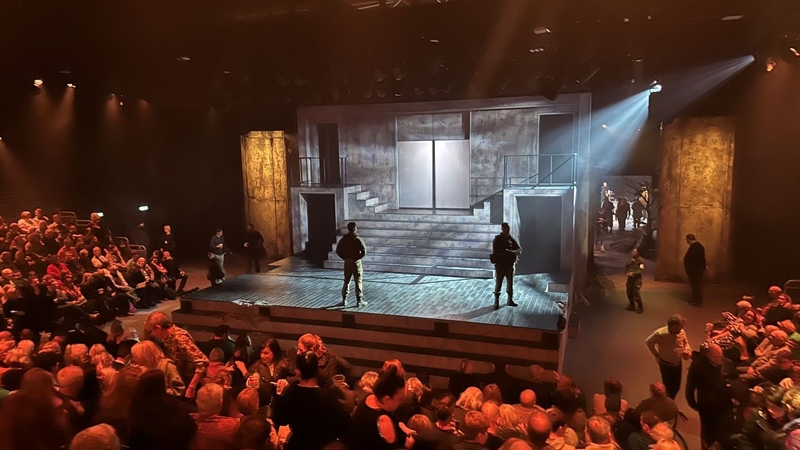
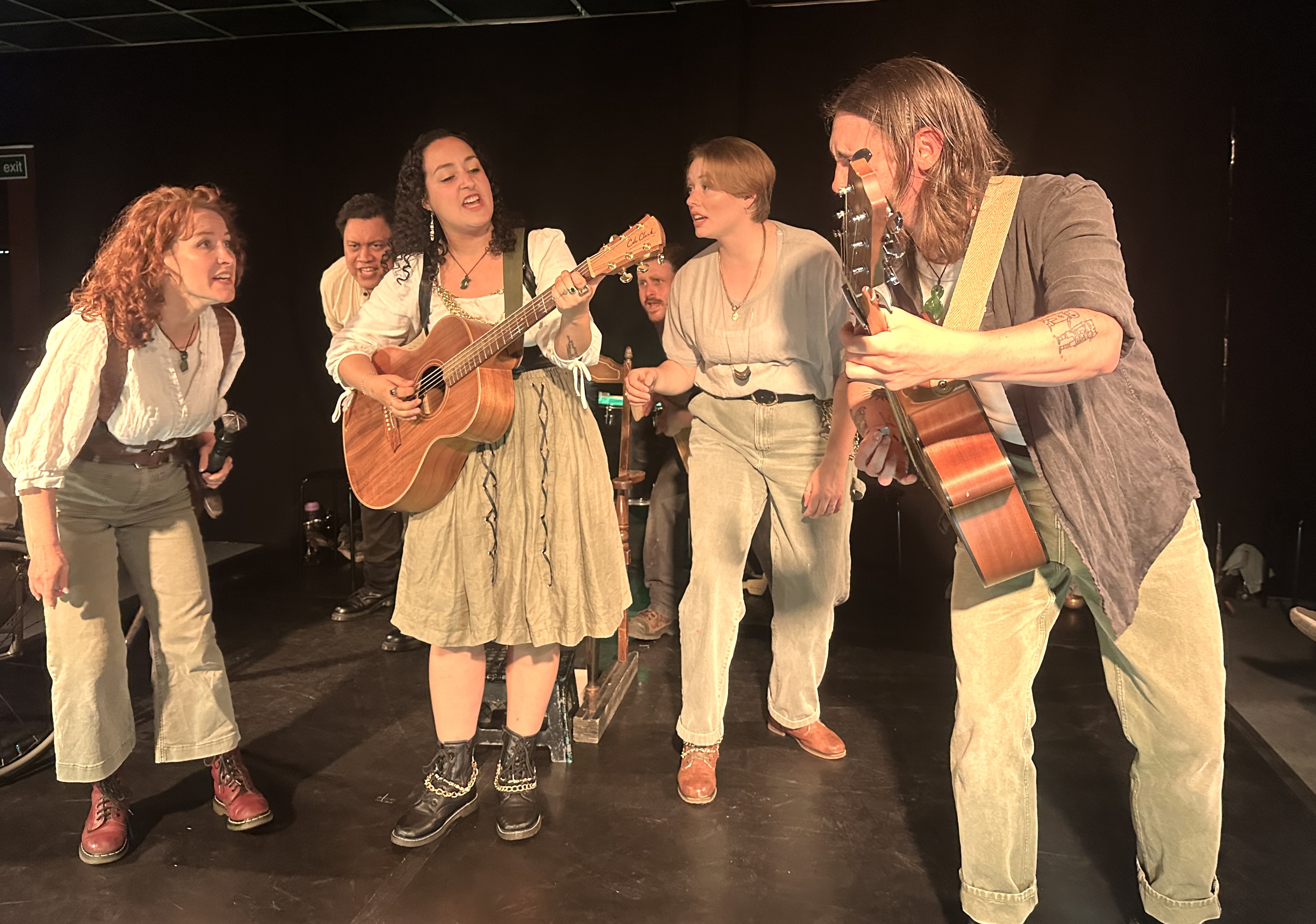
This is the most fun rendition of the Scottish play I’ve ever seen: it’s a rambunctious, in-yer-face musical, and the seven-strong cast are having a blast. The “travelling troupe from New Zealand” usually perform outdoors, often in people’s gardens, but they’re clearly very adaptable, making the most of Zoo Southside’s tiny black-box theatre space.

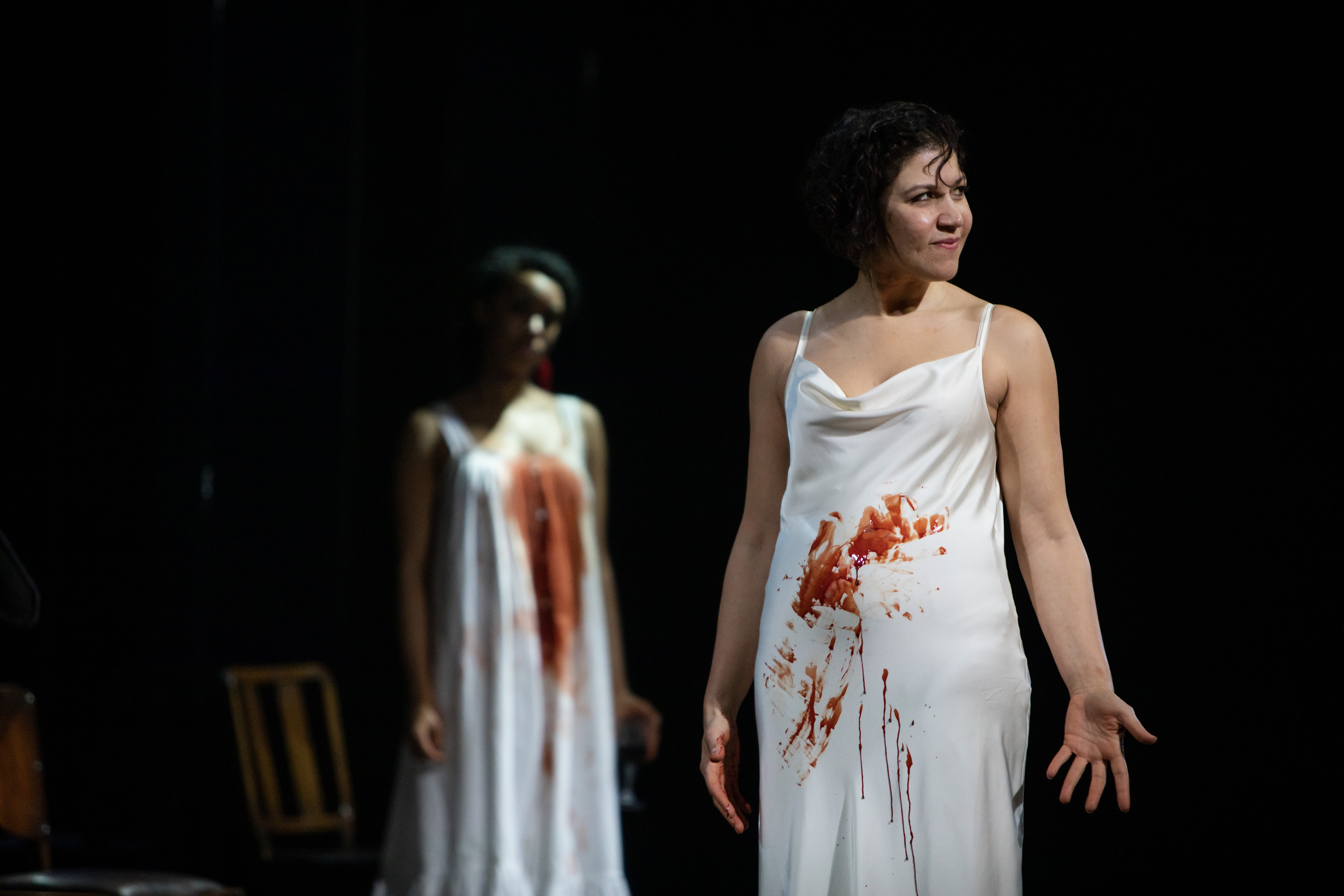
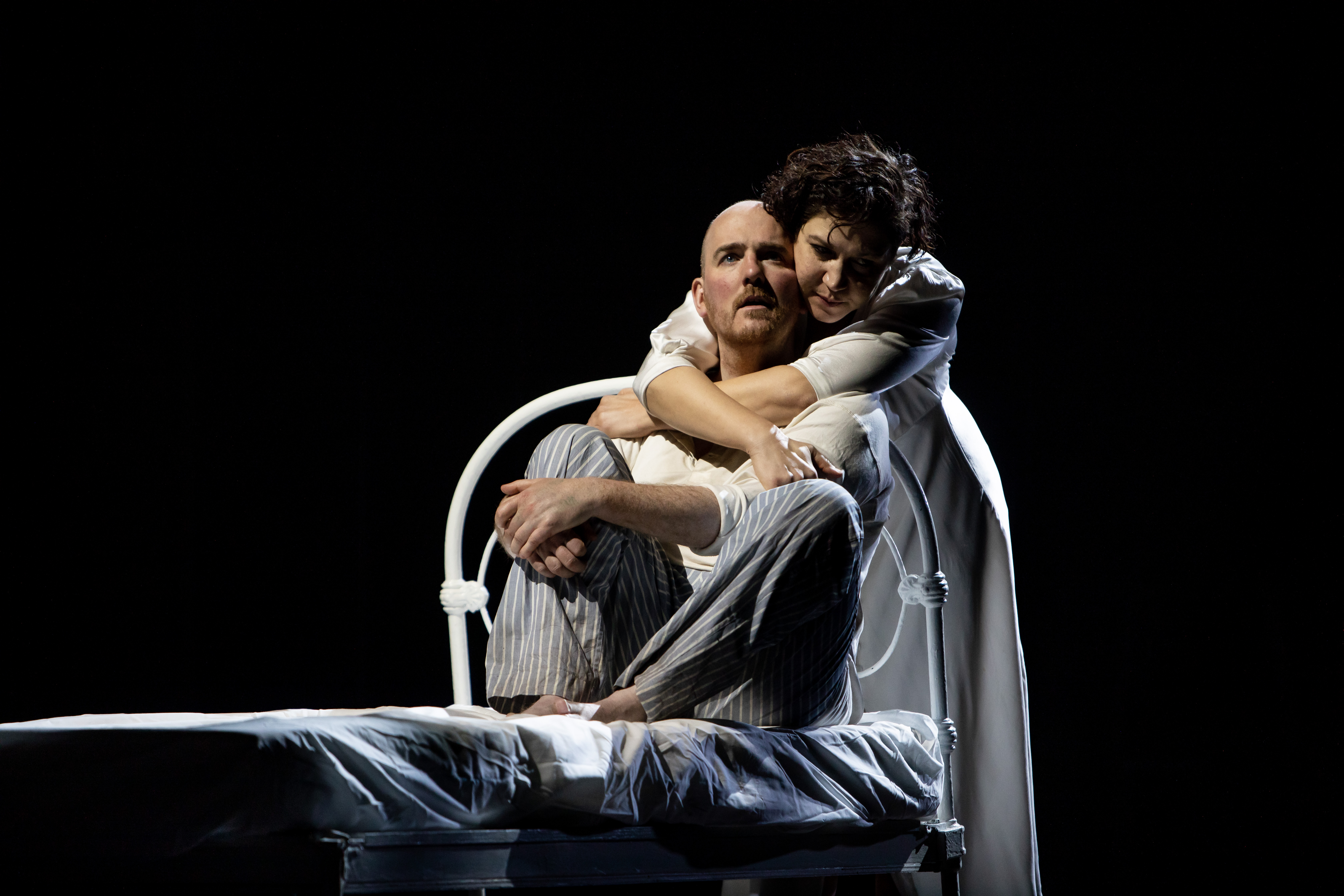
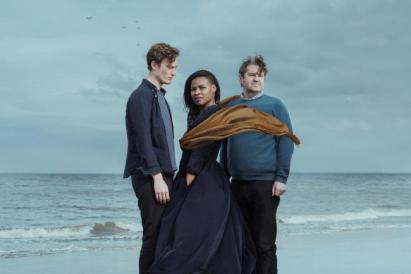
The genders are switched: Macbeth (Laura Irish) receives a prophecy from two weird brothers (Caleb James and Wiremu Tuhiwai). Egged on by her husband (Ollie Howlett), she murders Queen Duncan (Tara McEntee) and ascends to the throne. Frightened for her life, Duncan’s daughter, Malcolm (Kit Berry), flees to England but, although he is suspicious of Macbeth, Banquo (Criss Grueber) remains loyal to his friend – and we all know where that leads. The gender-swap doesn’t change anything much, but it does add to the feeling of irreverence: this production isn’t bound by any stuffy idea of what Shakespeare ‘ought’ to be. This is pure entertainment – and yet it remains true to the heart and spirit of the bard’s script.

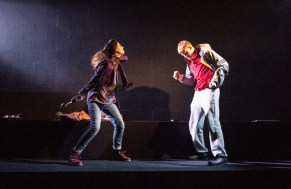
It’s great to see an actor who uses a wheelchair in such an active role: Grueber’s Banquo is a fierce soldier, celebrated for his prowess on the battlefield and more than ready to show off his fighting skills. Meanwhile, James and Boyle are terribly unsettling as the cowboy-hatted witches, writhing across the stage and screaming in our faces. (At one point, Philip screams back.)

This is very much an ensemble piece, but Irish and Howlett are compelling in the central roles, Irish’s intensity ensuring that we mourn the woman Macbeth might have been, before her corruption. I especially like the way that McEntee exaggerates Duncan’s ego, as she forces people to laugh at her jokes, i.e. the dodgy puns that proliferate in Shakespeare’s dialogue.

The music is lively and engaging, switching from propulsive up-tempo toe-tappers to plaintive ballads at the drop of a stetson.

Murder has never been so full of life.

4.8 stars

Susan Singfield

Lady Macbeth Played Wing Defence

09/08/25

Assembly George Square (Studio One), Edinburgh

The music’s pumping, the lights are flashing and the Dunsinane Hellhounds are warming up on the netball court. There’s no mistaking what kind of show this is going to be: high-octane, in-yer-face, Barbie-pink and lots of fun.

It’s Macbeth, but not as you know it: Macbeth without the monarchs, without the murder – without the men. Macbeth in an Aussie high school, where captaincy of the Year 12 netball team represents the seat of power, and where the Dagger Divas’ prophecies are streamed from Spotify.

“Mac” Beth (Orla Jean Poole) – wing defence – has always dreamed of leading the team. But Coach Duncan (Courtney McManus, who also wrote the book) has other ideas, and promotes Chloe Macduff (Shannon Rogers) instead. Mac is furious. Her best friend, Summer Banquo (Kate Sisley), tries to placate her, but Mac is too fired up to listen. She’ll do whatever it takes to ensure she gains the throne…

Crash Theatre Company’s Perth production pivots onto the Edinburgh scene via the House of Oz. Composer/director Bec Price’s electro-pop score is vibrant and lively, while the lyrics (co-written by McManus, Price and Ana Ferreira Manhoso) are a playful blend of Shakespearean verse and modern vernacular, with the bard’s most famous quotations all present and correct. The choreography (courtesy of Rogers) is suitably vigorous, while the bold costuming cleverly distinguishes the characters – no mean feat when they’re in matching uniforms.

This is a true ensemble piece, and I love the performers’ energy and vim. However, I do think there’s scope for the story to venture into darker territory, for Mac to engage in more nefarious deeds, as LMPWD stops a long way short of its progenitor’s “direst cruelty”. I’d also prefer a less saccharine ending, more akin to the original…

Nonetheless, there’s no denying the dynamic effect of this production: there’s a discernible buzz in the auditorium and plenty of people singing the catchy ‘Thunder, Lightning, Rain‘ on their way out (displaying the lyrics on the backdrop, karaoke-style, is an inspired idea). I find myself playing the score while I’m making dinner, and I’ve no doubt Lady Macbeth Played Wing Defence will prove especially popular with teens.

All hail, “Mac” Beth, that shalt be a blockbuster hereafter.

4 stars

Susan Singfield

Macbeth

05/02/25

Cineworld, Edinburgh

Macbeth is a ubiquitous play. Searching back through the B&B archive, I’m not entirely surprised to find that this is the ninth time we’ve reviewed a version of Shakespeare’s celebrated tragedy and I note too that there are three other related items that reference that infamous surname in the title. It’s easy to understand why it’s such a perennial. One of the bard’s most propulsive stories, it’s a lean, mean tale of aspiration and the overriding lust for power, which – in these troubled times – seems all too relevant. This Olivier-award winning adaptation, filmed live at London’s Donmar Warehouse, features David Tennant in the title role with Cush Jumbo as the manipulative Lady M. The screening we attend is sold out.

It’s a stripped-back production, freed from any issues with costuming or elaborate set design. The actors wear simple, monochrome outfits and the performance space is a stark white rectangular dais. It’s set in front of a transparent screened box, behind which other members of the cast occasionally gather, like a chorus of half-glimpsed ghosts, to comment on the action. Prominent among them is a young boy, who at one point hammers his fist repeatedly against the screen and also reappears in the midst of the final battle. His presence serves to remind me that the Macbeths have earlier lost a child – and that perhaps it is this loss that’s the driving force behind their callous bid to seize the throne and betray their former friends.

Tennant is extraordinary, speaking those familiar lines (often direct to camera, as though sharing confidential material) with such utter authority that I almost feel I’m hearing them for the first time. Jumbo is also compelling. She’s the only one here without a Scottish accent, which seems to emphasise her solitude and her distance from the other characters. Cal McCaninch is a stately Banquo, Nouff Ousellam smoulders powerfully as Macduff and it’s a delight to hear Benny Young’s cultured drawl delivering Duncan’s self-satisfied lines as he arrives at the castle where he is destined to die.

Ros Watt is a delightfully punky Malcolm and Jatinga Singh Randawa offers a rambunctious turn as the Porter. In the only scene that takes a wild swing away from what’s actually written on the page, the latter chats to members of the audience and displays all the symptoms of a man suffering from a raging hangover. It’s a gamble but it pays off. And the witches? In what might be the production’s bravest move, they are barely glimpsed in the first act, only heard in giggling off-stage asides as they arrive and depart with a flap of supernatural wings.

Gareth Fry’s sound design adds extra layers of suspense to the production (I note that the audience at the live performance all wear headphones for a truly immersive experience), while Alistair McCrae’s music offers jaunty reels, Celtic airs and, at one point, a spirited highland fling as a brief respite from that all-pervading air of menace. Director Max Webster brings all these disparate elements together to create a powerful and absorbing drama that dares to experiment with the source material. And, at the conclusion, designer Roanna Vize really does – magically – bring Birnam Wood to Dunsinane. 

The final confrontation doesn’t leave me wanting and the face-off between Macbeth and Macduff is unlike any version I’ve seen before. Of course, the only valid reason for doing this immortal story one more time is to offer audiences something new – an aim that this extraordinary production has clearly taken to its dark heart.

5 stars

Philip Caveney

Macbeth

02/05/24

Cineworld, Edinburgh

Oh, the irony!

This touring production actually came to Edinburgh, the city where we live. But, for reasons far too tedious to go into, we failed to secure tickets for it – and now a screening of the live show at Cineworld offers us an opportunity to catch it after all.

I still haven’t given up on the hope that one day, somebody out there will put on a version of the Scottish Play in which the Macbeths are in their twenties. I’ve always felt that the hubristic actions of the Macbeths would make so much more sense if the duo were little more than reckless kids – and great actors though they are, Ralph Fiennes and Indira Varma hardly qualify in that department.

But a large helping of humble pie awaits me, because this sweaty, immersive interpretation of Shakespeare’s most ubiquitous play is one of the best versions I’ve seen. While it throws in some unexpected twists in the telling, they are never allowed to feel like gimmicks. Three feral-looking witches (played by Lucy Mangan, Danielle Fiamanya and Lola Shalam) appear in the background of scenes I wouldn’t usually expect to see them in, and lend a wonderfully sinister quality to the proceedings.

I won’t bang on about the story, which just about everybody in the world knows by heart (indeed, there are moments when I feel I could find work as a prompt for this play); suffice to say that both Fiennes and Varma acquit themselves admirably, Fiennes mining the seam of dark humour that underpins the mayhem and Varma absolutely nailing Lady M’s vaulting ambition. I’ve seldom seen the couple’s aspirations spelled out with such absolute clarity.

Ben Turner’s portrayal of MacDuff is riveting, particularly in the scene where he’s told by Ross (Ben Allan) of the murder of his wife and two children, the enormity of the revelation spelled out in Turner’s grief-wracked face. This is such an affecting moment that my own eyes flood with tears.

Finally, there’s the violent confrontation at the end, the warriors dressed in contemporary body armour. So often this play is let down by the sight of actors swiping half-heartedly at each other with rapiers, but the deadly looking machetes brandished in this confrontation are swung around with enough abandon to make me flinch in my seat. All in all, this is a faultless production and the mere glimpses I receive of its atmospheric setting make me wish I’d tried harder to hunt down tickets to the original performance.

If this comes to a cinema near you, I’d advise you to grab a seat at your earliest opportunity.

5 stars

Philip Caveney

Macbeth (An Undoing)

08/02/23

Lyceum Theatre, Edinburgh

Unlike the monarchs he wrote about, Shakespeare has reigned supreme for more than four hundred years: his plays, rich with examples of human fallibility, are endlessly relevant. But you’d think, wouldn’t you, that we’d run out of different ways to retell the same stories? I mean, the first time I ever saw Macbeth, way-back-when on a sixth-form theatre trip, it was set in a concentration camp (courtesy of Braham Murray at Manchester’s Royal Exchange). Next, I fell in love with Penny Woolcock’s 1997 film, Macbeth on the Estate, which transported the action to a maze of contemporary council flats, and I even enjoyed TV’s ShakespeaRe-Told, where chefs James McEvoy and Keeley Hawes killed off their rivals to take over a restaurant empire. More recently, Flabbergast Theatre’s wonderfully physical, visceral adaptation had me hooked, and there’s been a slew of others along the way. What I’m saying is: I know Macbeth. We all know Macbeth. It’s been done, right? What else is there to say?

And then along comes Zinnie Harris with An Undoing – and the whole thing is turned on its head.

Macbeth (An Undoing) starts from a simple premise: what happens if Macbeth and Lady Macbeth follow their natural trajectories? Because, let’s face it, although Lady M is arguably the best of Shakespeare’s female characters, she’s also the most frustrating, initially a force to be reckoned with – an interesting, complex woman – before disappearing for an age and then returning broken, for a brief goodbye, with very little to tell us why. What if, asks Harris, it’s Macbeth who crumbles? What if it’s Macbeth – whose conscience troubles him from the start – who unravels, while his wife continues unabashed, for a while at least, determined to make their plan succeed? It makes perfect sense, given their starting points.

At first, when the curtains open on a blank stage, and we’re treated to servant/witch Carlin (Liz Kettle)’s fourth-wall-breaking opening gambit, I think perhaps this will be a relatively straightforward version of the play, with just a little mischievous tinkering here and there. After all, “This story will be told, the way it has always been told. What use is it otherwise? The hags on the heath. The woman who went mad. The man who became a tyrant,” she tells us. And, for the first half, that’s sort of what we get: Macbeth at a gallop, mostly in the Bard’s own words, step-by-step through the plot. There are a few changes: we’re in the 1920s, or the early 1930s perhaps; Ladies Macbeth and Macduff (Nicole Cooper and Jade Ogugua respectively) are reimagined as sisters, and share some revelatory new scenes (An Undoing easily passes the Bechdel test); Lady Macbeth and her husband (Adam Best) don’t just want power for power’s sake – they have a meticulously-planned vision for a utopian Scotland. But, in the main, it’s as it’s always been, so that, in the interval, I find myself musing aloud, “How can there still be an hour and a bit to go? There’s not much story left…”

But then we get to the undoing…

Harris’s adaptation is bold, daring and witty. I love the idea of the witches as servants: it makes perfect sense. They’re the eyes and ears of the house, privy to the paperwork the Macbeths have drawn up, witness to intimate moments and careless asides. Invisible. Ignored. These witches are also a family – in fact, Kettle and Star Penders, along with impressive young actor Farrah Anderson Fryer, form the most functional family we see on tonight’s stage, with clear bonds uniting them. I also like the depiction of Malcolm (Penders again) as a petulant youth, patently ill-equipped for leadership and ripe for exploitation by the ruthless Macduff (Paul Tinto).

But this is, without doubt, Lady Macbeth’s play. It’s the part of a lifetime, and Cooper makes the most of it, imbuing her with strength and vitality – and just a hint of vulnerability. She’s ambitious and single-minded, but never merely cruel or heartless. We believe in her love for her husband and sister, and we believe in her idealism too. She’s angry when the lairds misgender her, referring to her as the King because they can’t conceive of a woman behaving as she does (even though, to be fair, she does ask to be ‘unsexed’). In a well-aimed swipe at other interpretations of the role, she’s also angry at being reduced to her infertility.

The set (by Tom Piper) is simple but extraordinarily effective, with warped mirrors concealing as much as they reveal, offering us multiple perspectives, and highlighting the Macbeths’ interdependence and duality. We’re there too, shimmering in the background, complicit and agog, just as Carlin accuses at the start.

The Lyceum is busy tonight – some of the boxes have even been pressed into use – and deserves to be so for the next month. You’ve probably seen Macbeth, but I doubt you’ve seen anything quite like An Undoing before.

4.7 stars

Susan Singfield

The Tragedy of Macbeth

01/01/22

Filmhouse, Edinburgh

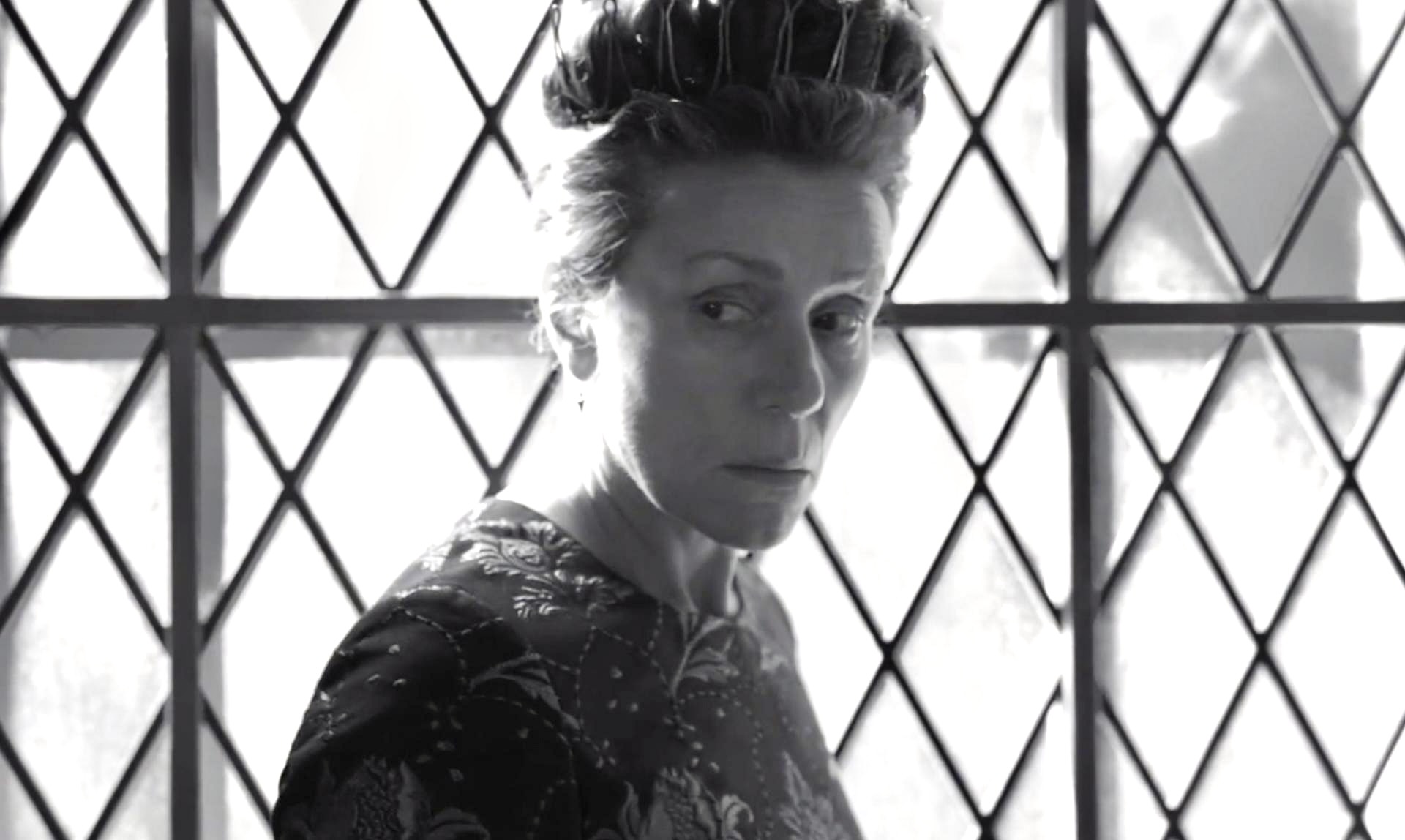
I’m not sure what to make of the writing credit for this latest adaptation of Macbeth. The wording – ‘written for the screen by Joel Coen, based on the play by William Shakespeare’ – seems a tad… hubristic. Because this is mostly Shakespeare’s work, albeit deftly sprinkled with some movie dust. Coen’s direction here is sublime, and his pared back adaptation works really well. It’s just, y’know. ‘Play by William Shakespeare; adapted for the screen by Joel Coen’ would sit better.

But it’s my only real gripe (if I overlook the absence of a single Scottish accent in the, ahem, Scottish play). This is the best movie version I’ve seen – and I have seen a lot. Although Shakespeare never specifies the Macbeths’ ages, I’ve tended towards the view that they ought to be young: all that swagger and ambition and impatience. When they’re portrayed as middle-aged, something seems to be lost. Here, both lord and lady are actually old: they’re in their sixties; nigh on retirement age. And it all starts to make sense again: this is a last-ditch attempt to fulfil their dreams. Time and place “have made themselves” and the Macbeths can’t resist the temptation to finally realise their desires.

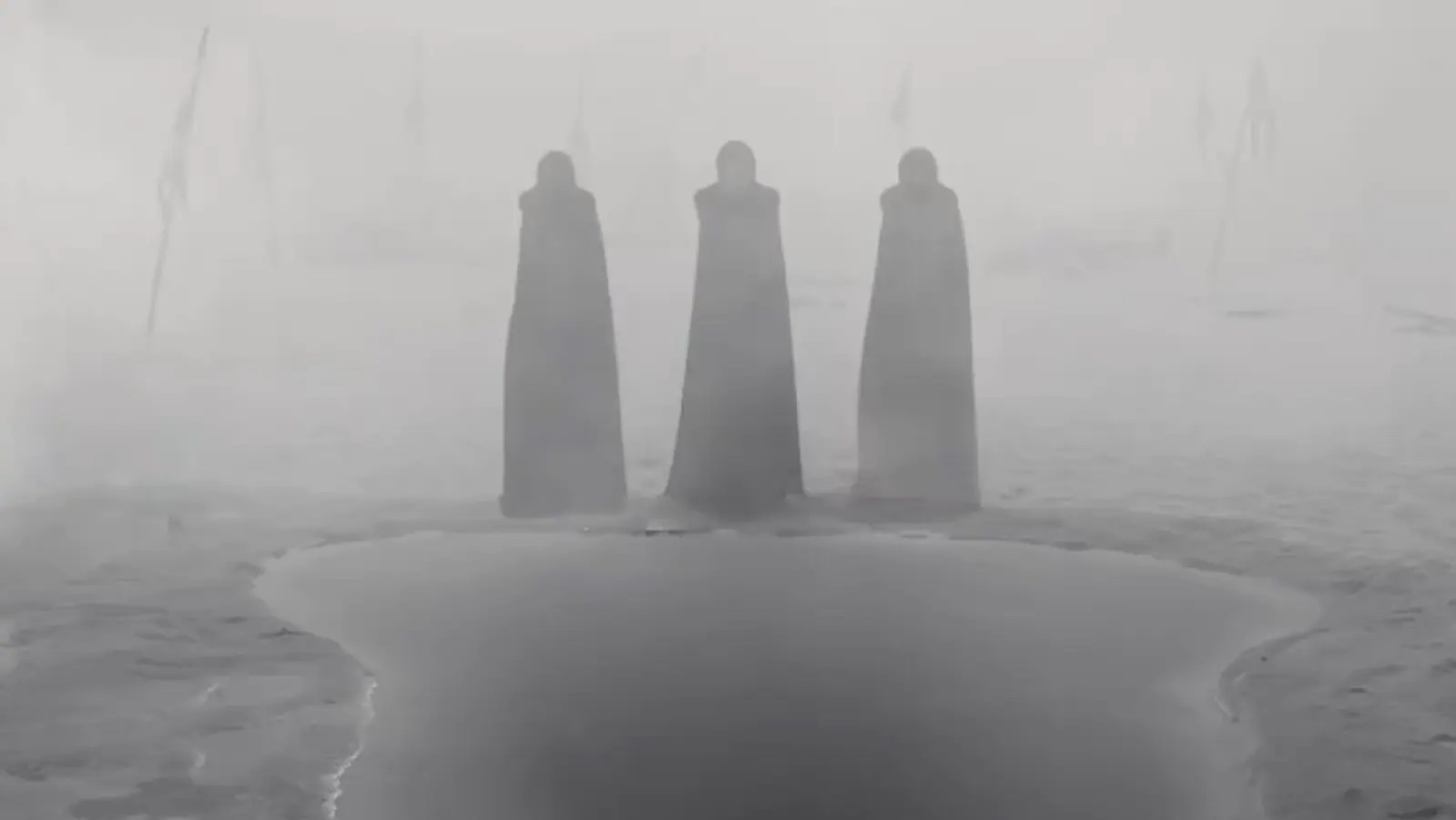
Shot in black and white, Coen’s Macbeth is a claustrophobic affair, with none of the epic battle scenes I’ve grown used to seeing in big-screen adaptations. Indeed, it feels very theatrical, the castle walls as contained and constraining as any stage could be. We rarely venture out of Macbeth’s castle; when we do, it’s into countryside so swathed in mist that very little is visible. This is a stripped back version of the play, shining a spotlight on the key elements and emotions.

Denzel Washington is magnificent as the flawed hero: this is a towering performance, at once imposing and accessible. We can believe in him as a good man corrupted by greed, unable to live with his own actions. Likewise, Frances McDormand gives us a Lady Macbeth we can understand: she’s not presented here as a temptress, leading Macbeth to his doom, but as his partner, his equal, persuading him to indulge in a shared fantasy. The consequences are as devastating to her as they are to him.

Kathryn Hunter – playing all three witches – is perhaps my favourite thing about this production. She’s a gifted physical performer, and lends the shape-shifting ‘weird sisters’ a wonderful unearthly quality. Again, Coen’s judicious employment of theatrical devices (it can’t be incidental that Hunter has worked extensively with Complicité) makes for a compelling and unusual movie; this is a successful hybrid.

Coen only deviates from Shakespeare when it comes to Ross (Alex Hassell). A minor character in the original play, he appears here as a Machiavellian schemer, sidling up to where the power is, with one eye always on what might happen next. He’s Iago; he’s Tony Soprano; he’s Dominic Cummings. The additional layer really works.

In short, this is a triumph. It lays bare the heart of Shakespeare’s play. So, proceed further in this business; be the same in thine own act and valour as thou art in desire, and get yourself to the cinema. This is too good to miss.

4.8 stars

Susan Singfield

Theatre Bouquets 2018

Bouquets&Brickbats

Bouquets&Brickbats

Bouquets&Brickbats

Another year, another plethora of exciting theatre. We’ve been moved, motivated and mesmerised by so much of what we’ve seen. And here, in order of viewing, are our favourites of 2018.

The Belle’s Stratagem – Lyceum Theatre, Edinburgh

bellesstrat1

This production looked ravishing, the brightly-hued costumes blazing against the simple monochrome set. Fast, furious and frenetic, this was a real crowd-pleaser.

Rhinoceros – Lyceum Theatre, Edinburgh

rhinocerous2.jpg

A truly glorious production, as witty and vivacious as it was prescient. There were some great comic turns, and the sensual, Middle Eastern-inflected music added to the mood of transformation.

Creditors – Lyceum Theatre, Edinburgh

creditors-1.jpg

We thought we’d seen all we wanted of Strindberg, but Creditors made us think again. Because this production was a prime example of the director’s art: the realisation of a vision that illuminated and animated the playwright’s words, breathing new life into old ideas.

Sunshine on Leith – King’s Theatre, Edinburgh

sunshine2.jpg

Sunshine On Leith was an absolute charmer. From the opening chords of the climactic I’m Gonna Be (500 Miles), the entire audience was delightedly clapping hands and stamping feet with a force that seemed to shake the beautiful old theatre to its very foundations.

Home, I’m Darling – Theatr Clwyd, Yr Wyddgrug

home-im-darling-1.jpg

A clever play, with a lot to say. Katherine Parkinson starred as Judy, a woman obsessed with the 1950s. Through her brittle fetishisation of the past, the script laid bare the problem with rose-tinted reminiscence and looked at the present with an eye that matched Judy’s gimlet cocktail.

Not in Our Neighbourhood – Gilded Balloon, Rose Theatre, Edinburgh

kopae2.jpeg

This powerful and compelling production, written and directed by Jamie McCaskill, tackled the difficult subject of domestic abuse and featured an astonishing central performance from Kali Kopae. We saw some superb acting at the Fringe this year, but this was singularly impressive.

Six the Musical – Udderbelly, Edinburgh

six1.jpg

An inventive and exuberant pop-opera, which felt like the most exciting, vibrant history lesson ever. The band and actors powered effortlessly through a whole range of different musical styles, from straight pop to power ballad, from soul to Germanic disco. The songs featured witty lyrics which related the women’s experiences in modern day terms – and we’ve been obsessed with them ever since.

The Swell Mob – Assembly George Square, Edinburgh

swell2.jpg

The most genuinely immersive theatrical experience we’ve ever been part of. We were free to wander the 1830s tap room, replete with a real bar, and mix with a whole host of extraordinary characters: a crooked American doctor, a fortune teller, a soldier, a card-player… The more we engaged, the more was revealed… Superb and truly innovative.

Macbeth – Festival Theatre, Edinburgh

macbeth3.jpg

We were relieved and delighted that this touring production was so good. We knew that this interpretation of the play had been quite controversial, but it really worked for us. It captured the very essence of Macbeth and illuminated the themes and characters with great clarity.

The Unreturning – Traverse Theatre, Edinburgh

unreturning2.jpg

A tale about young men and the shattering effect that war can have on them, simultaneously a requiem for the past and a chilling warning for our potential future. The haunting prose was augmented by incredible physicality as the actors ran, leapt, clambered and whirled around the stage in a series of perfectly choreographed moves.

Beauty and the Beast – King’s Theatre, Edinburgh

allanstewart.jpg

There’s panto – and then there’s panto at the King’s, where the ante is well and truly upped. Here, we were treated to an absolute master class in the form: there’s an art to making the precise look shambolic, the crafted seem accidental. And it was so funny – even the oldest, daftest jokes had us roaring with laughter.

Mouthpiece – Traverse Theatre, Edinburgh

neve-mcintoshlorn-mcdonald.jpg

Powered by searing performances from Neve Macintosh and Lorn MacDonald, Mouthpiece was, quite simply, an astonishing play. Kieran Hurley’s ingenious circular narrative eventually brought the two protagonists head-to-head in a brilliant fourth-wall breaking climax.

Susan Singfield & Philip Caveney


Macbeth

23/10/18

Festival Theatre, Edinburgh

We were awed by the original version of this production, which we saw at the cinema via NT Live earlier in the year (https://bouquetsbrickbatsreviews.com/2018/05/12/macbeth-3/). Still, marvellous as the National Theatre’s outreach programme is, it’s not the same as seeing a live show, and so we were delighted to learn that the Scottish play was heading out on tour. We wrote the Edinburgh date in our diary, and eagerly anticipated its arrival. How would director Rufus Norris and designer Rae Smith handle the transition from the Olivier Theatre with its drum revolve stage to the myriad regional venues and their proscenium arches? Would they be able to retain at least some of the stature of the set, the awful bleakness of the London show?

They would. They did. The bridge that arcs over the central wasteland is smaller, sure, and moved by hand, but its construction is ingenious. Homes – damaged, mostly, with bare concrete walls and broken furniture – are two-sides of a wheeled box, spun as we move from outside to in. The lighting (by Paul Pyant) is eerie and atmospheric, all mottled shadows and clear bright shafts.

Usually, I’m irked when Macbeth is played by a middle-aged actor: to me, the character exemplifies a ‘young pretender’ – not just ambitious but impatient and impetuous, careless of consequence, swaggering in self-belief. He’s a fine soldier, but newly recognised as such; I’d place him at twenty, tops. But here, in this post-apocalyptic vision of the Macbeths’ world, fifty-year-old Michael Nardone’s casting as the eponymous anti-hero makes perfect sense. This is a war-torn nowhere/anywhere, adrift in time, as much now as then, and it’s dog-eat-dog; he doesn’t have a lot to lose. There are indeed daggers in men’s smiles; only the fittest can survive. Kirsty Besterman makes a decent Lady Macbeth too – her husband’s equal, complicit in his downfall, but not the evil cause of it.

I like the depiction of the witches; in this war-torn landscape they seem more displaced than supernatural, feral rather than ethereal. There’s a telling contrast between the ramshackle, held-together-with-gaffa-tape body armour of the rebels, and the fit-for- purpose equipment of the English troops. And the sound design (by Paul Arditti) builds a pervading sense of unease; these are very troubled times.

I’m relieved and delighted that the touring production is so good. I know this interpretation of the play has been quite controversial, but it really works for me. I think it captures the very essence of Macbeth and illuminates the themes and characters with great clarity.

5 stars

Susan Singfield
Macbeth

10/05/18

Let’s face it, Macbeth’s biggest problem is its ubiquity. Easily the most accessible of Shakespeare’s plays – and arguably one of the most powerful – we’ve seen so many average versions of it over the years (amongst which I am inclined to include Justin Kurzel’s 2015 film adaptation) that a production really needs to do something very special with the source material in order to make it an enticing proposition. I’m therefore delighted to say that the National Theatre’s latest production, directed by Rufus Norris and seen here via a live cinema linkup,  does exactly that, giving us a Macbeth that rivals the very best of them.

It almost goes without saying that both Rory Kinnear (in the title role) and Anne Marie Duff (as his manipulative wife) submit exceptional performances, giving those oh-so-familiar lines enough oomph to make you feel as though you’re actually hearing them for the first time. No mean feat.  But it’s the production design that really shines. This version takes place in what might well be a post-apocalyptic world, where a civil war has just been bloodily disputed and where everything has a grungy ‘make do and mend’ look. Severed heads are proudly displayed in supermarket carrier bags, food is served in battered mess tins and even Macbeth’s armour is contrived from found items battered into shape, which have to be literally gaffa-taped onto him before each battle. Duncan (Stephen Boxer)’s royal regalia comprises an ill-fitting red velvet suit, that might have been salvaged from a charity shop. It provides the one splash of vibrant colour in an otherwise drab and scuffed world.

Production designer Rae Smith has created a huge wood and metal arch upon which much of the action plays out. It somehow contrives to be both heavily industrial yet strangely ethereal as it swings silently back and forth. It is poised over a revolving circular stage, so that each successive scene can glide effortlessly into position. In one sequence, the Weird Sisters move with the turning of that central wheel like the protagonists of a particularly disturbing nightmare. There’s some great use of regional accents: Trevor Fox’s Porter is a dour Geordie; Patrick O’ Kane’s MacDuff a pugnacious Irishman. Oh, and the element that lets down so many stage productions – that climactic battle – is delivered here with enough zeal and gusto to be truly convincing. You’ll believe that a head can be bloodily severed.

Of course, if you’re reading this and you weren’t at last night’s showing, you’ve already missed your chance to see the live broadcast, but the good news is that the production is heading out on a UK and Ireland tour from late September, so – if it’s showing anywhere near you – do take the opportunity to see it. It will serve to remind you that Shakespeare, when convincingly done, can be truly and utterly enthralling.

5 stars

Philip Caveney


Screw Your Courage (or The Bloody Crown!)

Screw-Your-Courage-700x455

27/08/16

Greenside@infirmary, Edinburgh

Ever since she was a little girl, Brooklyn-based actress Klahr Thorsen has been obsessed with the role of Lady Macbeth. In this cleverly constructed monologue, she shares key scenes in her life from childhood to the present day, highlighting her various attempts along the way, to achieve her heartfelt ambition of playing Lady M. She also impersonates a selection of colourful characters – her father, who first gives her the idea of being an actress, her troubled mother, obsessed with solving some mathematical problem, and the macho actor from college who was her first leading man. The whole piece is linked by a clever rewrite of Macbeth’s witchy opening, where Shakespeare’s poetry is modified to suggest that the character is actually commenting on Thorsen’s progress.

It’s confidently acted (particularly the speeches lifted directly from the Scottish play) and it’s also apparent that Thorsen really has explored every aspect of her chosen character. The story loses a little impetus when she encounters a mysterious (and oddly accented) Scotsman on a train, but soon regains its momentum, to take us on to a satisfying conclusion.

This is nicely done and offers an unusual twist on the plethora of Shakespearian pieces currently showing on the Fringe.

4 stars

Philip Caveney