
23/09/22
Cineworld, Edinburgh
Don’t Worry Darling. Well, it’s hard not to worry. Specifically, it’s hard not to worry about the missing comma. You know, the ‘direct address’ comma? I don’t like writing Don’t Worry Darling without it. It looks wrong, but I can’t add it in because it’s not there in the official title. Don’t tell me it’s not important or not to sweat the small stuff. I can’t help it. Punctuation matters, Grandma.
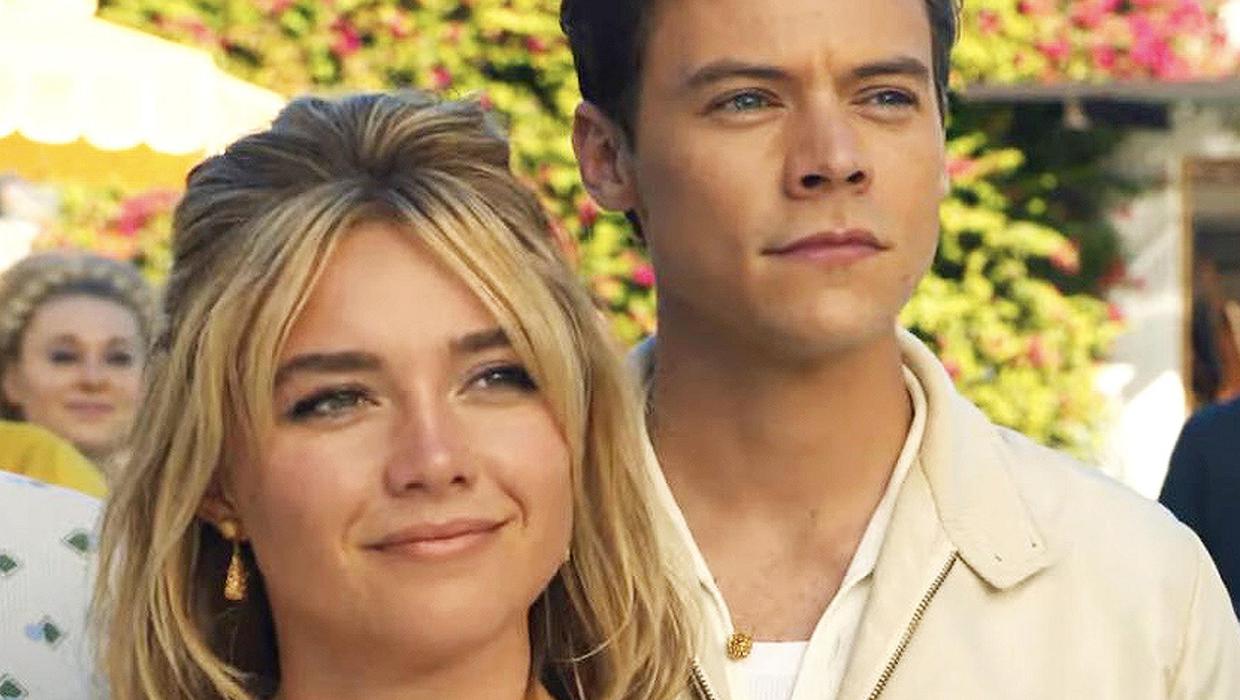
Still, taking a deep breath and moving past the title, Don’t Worry, Darling (sorry) is – for the most part – a very engaging film. Florence Pugh stars as Alice, a Stepford-style wife living in the Stepford-style town of Victory, an idyll in the middle of an unforgiving desert. That is, if your idea of an idyll is the sexist 1950s, where the men go to work (all at the same place, the – er – top secret Victory project) and the women stay at home, their daytime hours spent shopping, boozing and ballet dancing. Oh, and cooking and cleaning, which might sound like a downside, but these women really, really enjoy their household chores…
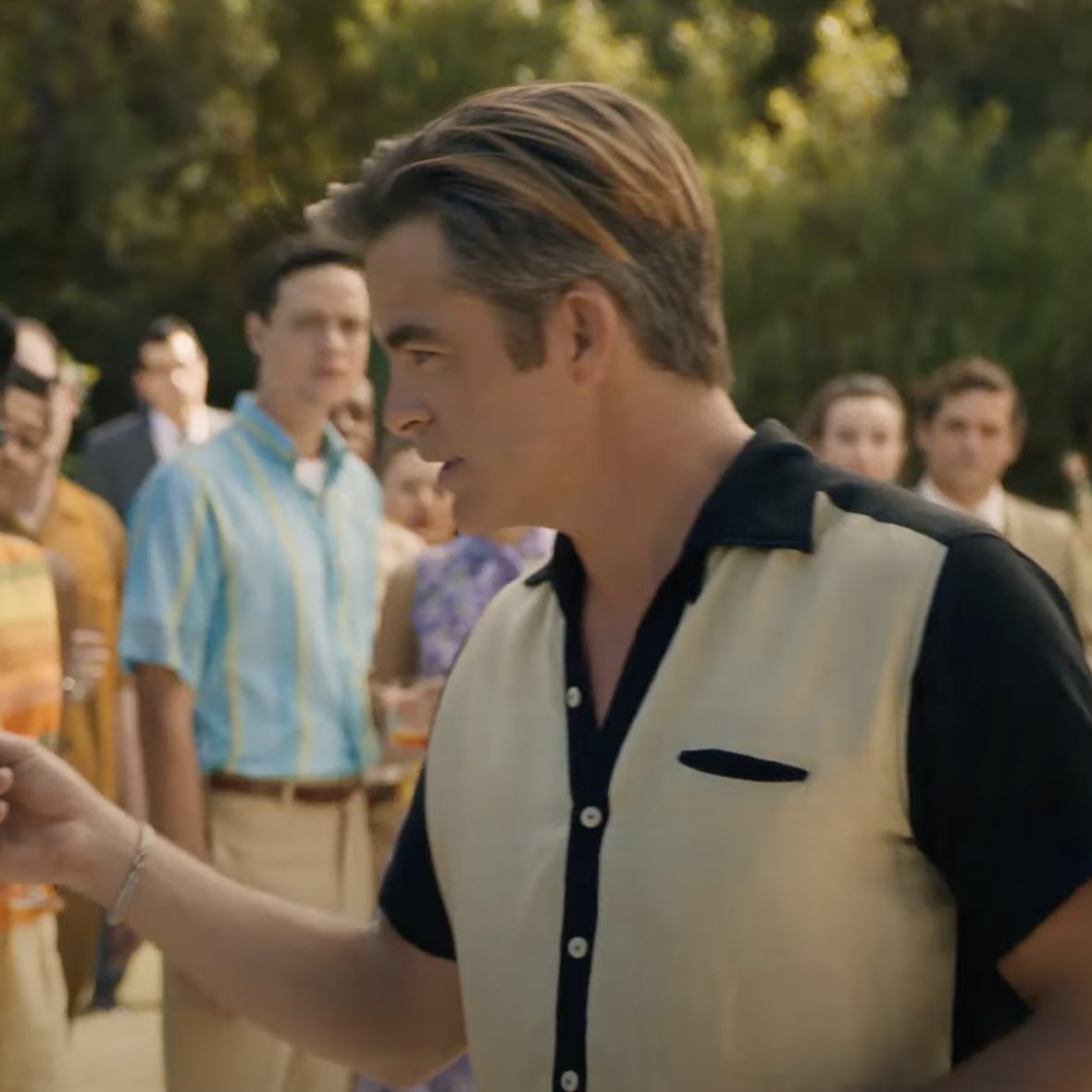
Alice and her husband, Jack (Harry Styles), seem even happier than all the other happy people – they can’t keep their hands off each other, and who cares if dinner ends up on the floor, when there’s frantic sex on the menu? Okay, so there are regular small earthquakes disrupting their peace, and Alice’s friend, Margaret (KiKi Layne) keeps trying to tell everyone that something’s wrong, but Dr Collins (Timothy Simons) assures them all that she’s not well; there’s nothing to worry about. Darling. Victory’s founder, Frank (Chris Pine), has everything in hand. Aren’t they lucky to be here? They can trust him. Can’t they?
But then Alice witnesses a plane crash, and – desperate to help – she ventures up to the forbidden Victory HQ. And what she sees there changes everything…
Olivia Wilde’s sophomore movie isn’t quite up there with Booksmart, but there’s a lot to admire here. It’s an ambitious project, riffing on The Matrix as much as the aforementioned The Stepford Wives, as well as The Truman Show and Valley of the Dolls. The script (by Katie Silberman) is also thematically close to Laura Wade’s similarly-titled stage play, Home, I’m Darling, in that it exposes the myth behind the glamorous image of the 1950s – the pastel colours, stockings and champagne cocktails (perfectly evoked by cinematographer Matthew Libatique) mask myriad miseries, particularly for women trapped in the domestic realm.
Pugh’s performance is flawless, and Styles does well in the supporting role. Pine is genuinely scary, his slick smile doing little to conceal Frank’s coercive nature, and Gemma Chan, as his wife, Shelley, is a suitably chilling accomplice. Wilde herself plays Bunny, a playful, hard-drinking woman, and Alice’s closest friend. It’s an interesting dynamic, and the set up is beautifully managed.
Unfortunately, the unravelling is less well-handled, and several gaping plot holes emerge along with the revelations. This is a shame, because the first two thirds promise so much, but the complex unveiling is too quick, too told. I am left with too many questions, and not in a good way.
Another half hour, a little more detail, some attention paid to the ‘but how?’ and Don’t Worry Darling could be much better than it is.
3.6 stars
Susan Singfield


 Bouquets & Brickbats