Josh O’Connor

Lee

14/09/24

Cineworld, Edinburgh

This biopic is as much a tribute to photojournalism as it is to its protagonist, Lee Miller. In an age where AI-trickery can make us doubt our own eyes, it is a timely reminder of why we need to document what’s really happening in the world. In the 1940s, no one wanted to believe in concentration camps or desperate, scapegoated women being hanged for collaboration. War photographers forced people to confront the grim realities, to understand the scale of the horrors that had been unleashed.

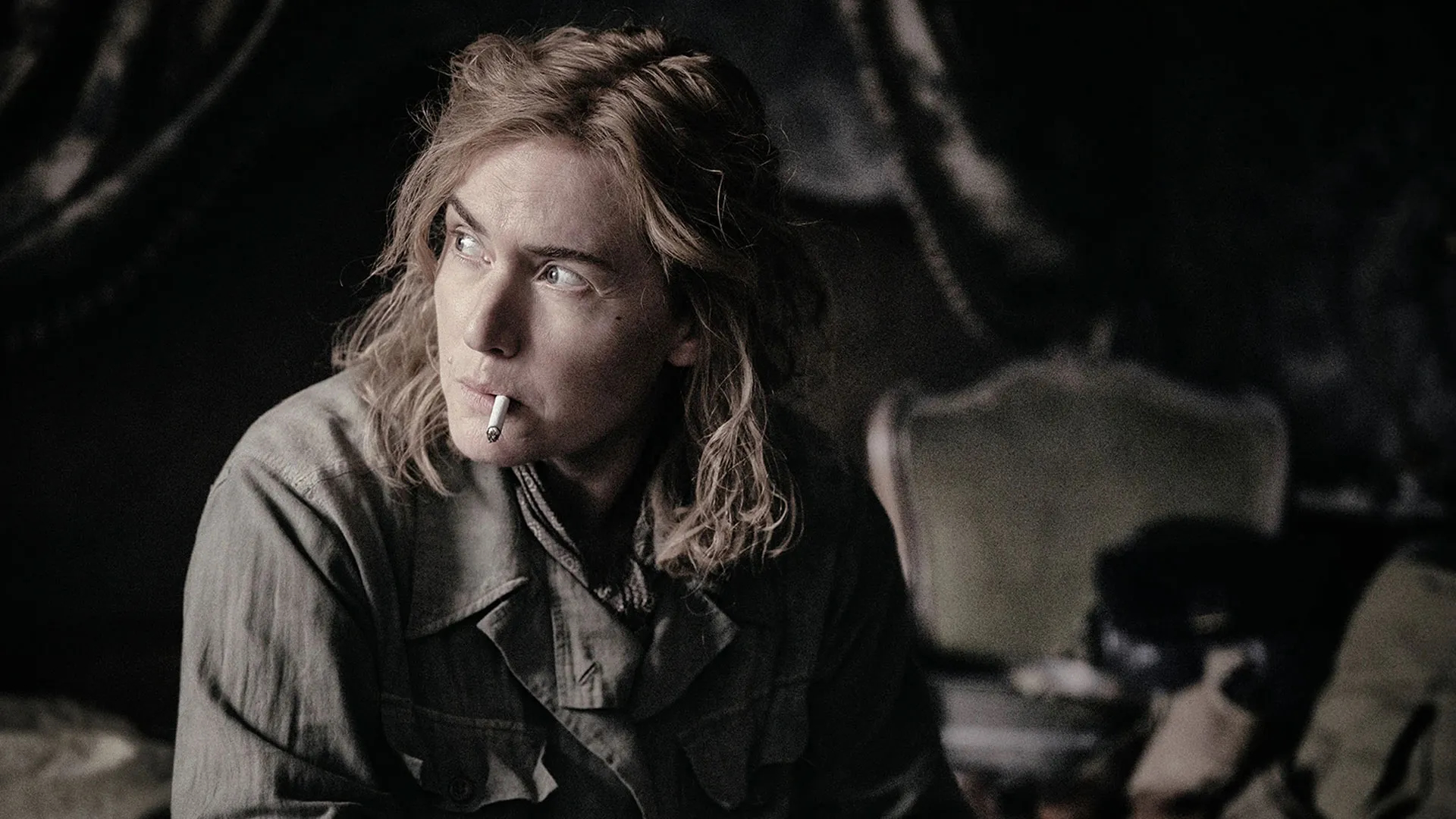
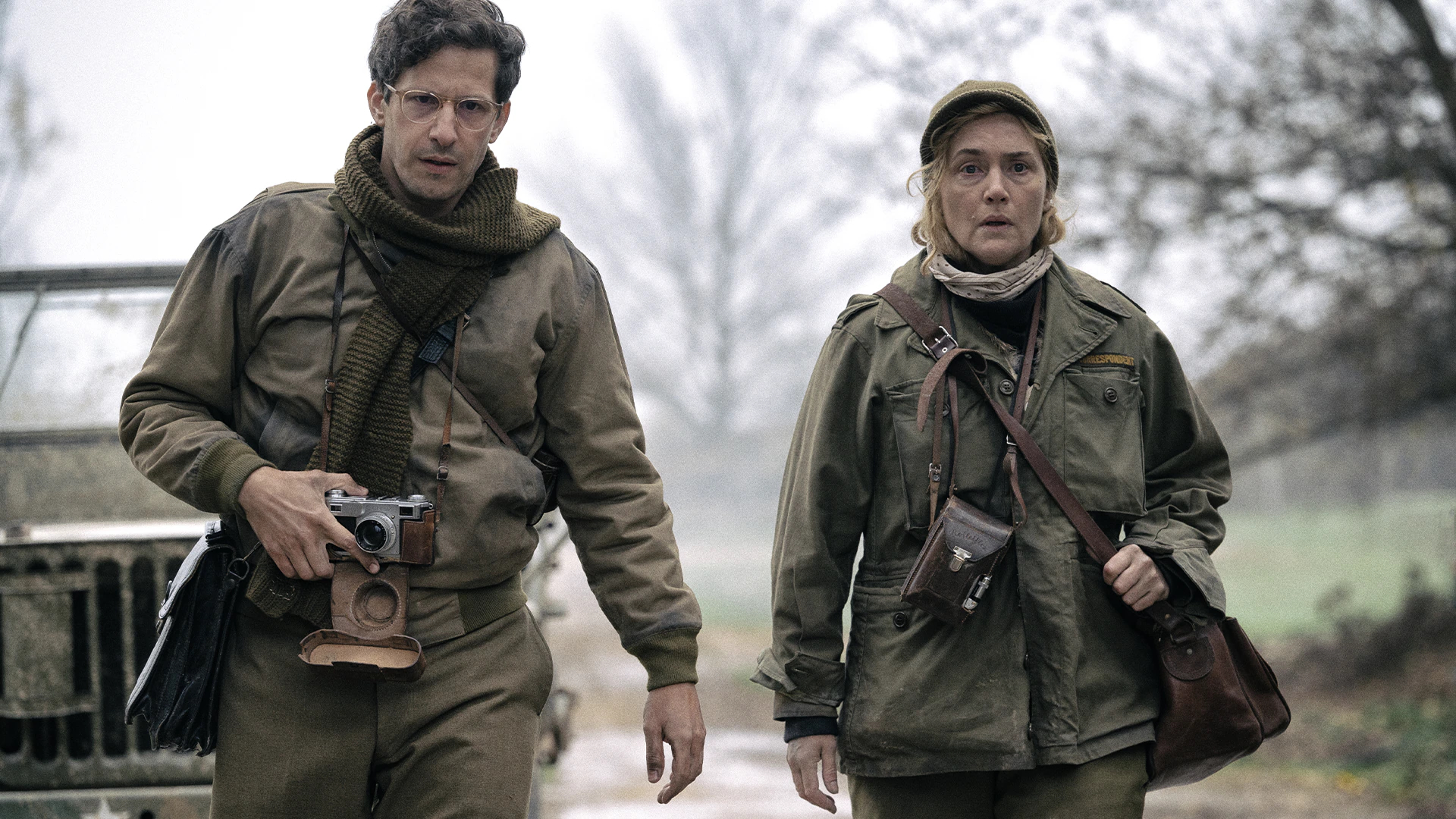
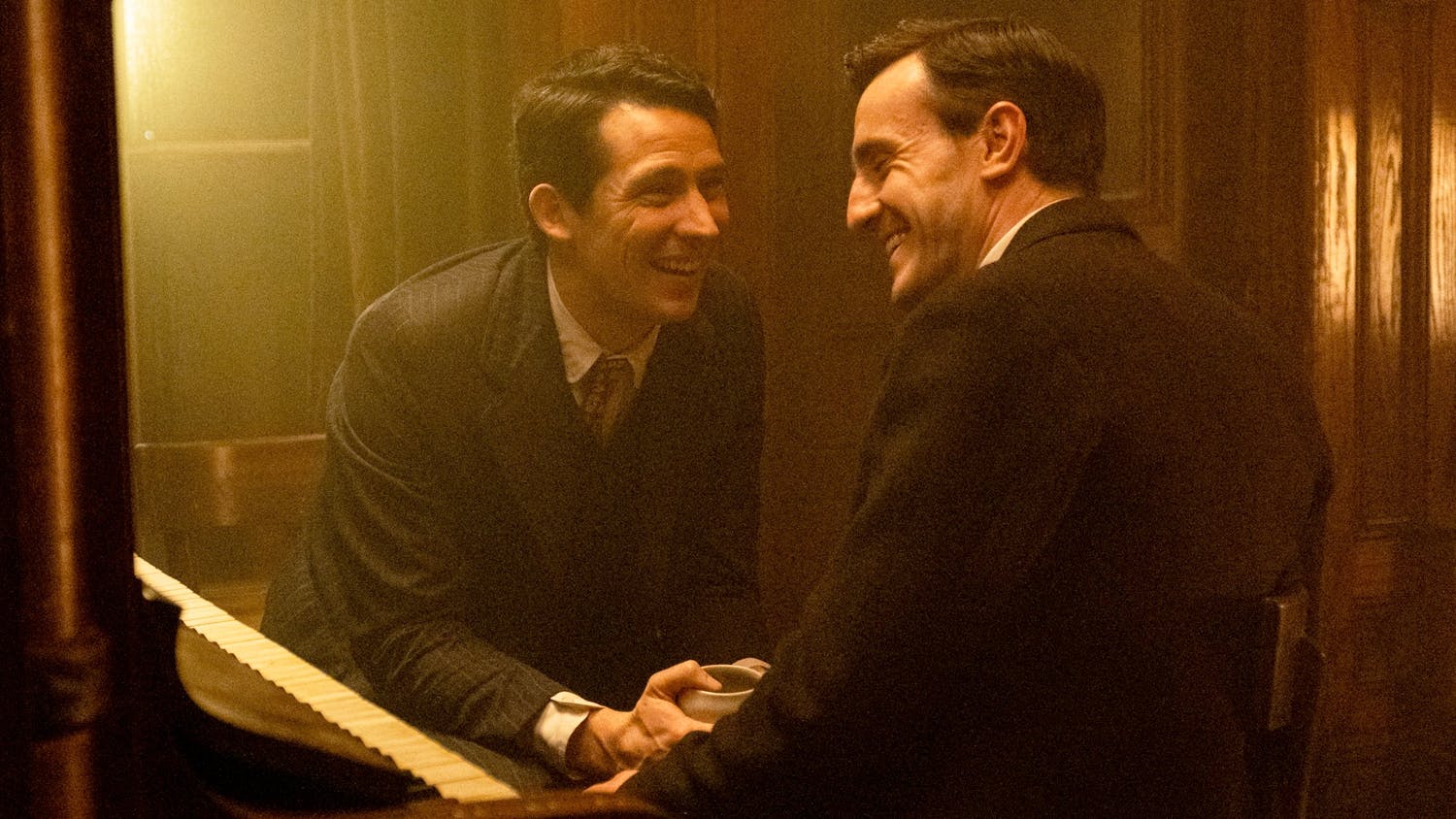
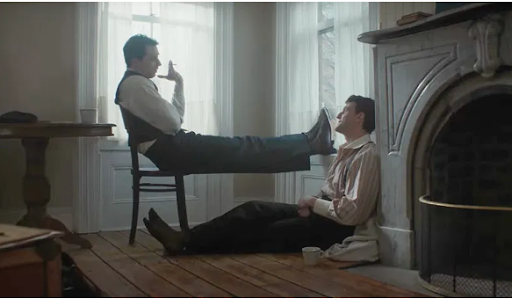
Miller trod a lot of paths in her life, but Lee, directed by Ellen Kuras, focuses on her work during the second world war. There’s a framing device: wannabe journalist Antony (Josh O’Connor) is interviewing the now elderly photographer, his questions evoking stories told in flashback. Her previous work as a fashion model and artists’ muse is acknowledged in a brief but revelatory early scene, where she wonders what on earth she’s going to do with her life now that she’s aged out of – and is bored by – all that. When she meets Roland (Alexander Skarsgård), marriage beckons but it’s not enough. Miller is a formidable woman and she needs to forge her own path.

Kate Winslet is marvellous as Lee, shimmering with pent-up energy and drive. Her Miller is motivated by righteousness as well as ambition: she’s a woman and, what’s more, she knows the camera from the other side; she can tell a different story from her male counterparts. If that means barging her way in and ignoring ‘no women’ regulations, then so be it. Her work is important. Not that she’s a loner: she’s sociable and enjoys working alongside her male colleague and friend, David Scherman (Andy Samberg).

The real Miller was indomitable, and Winslet absolutely does her justice. This is a powerful performance, harnessing the grit and determination that allowed Miller to capture such provocative and controversial images, many of which are recreated here.

Perhaps the biggest surprise for me is the realisation that Miller’s war correspondence work was done for Vogue magazine, then edited by Audrey Withers (Andrea Riseborough). I’ve never read Vogue; I thought it was all fashion and frivolity. Its serious side is a revelation, much like Miller’s shocking photos must have been for those who previously knew her only as a model.

The cinematography – by Pawel Edelman – captures the brutality of war: the scarred landscapes, chaos and traumatised faces. We also see how, ninety years ago, fascism trumpeted its arrival but still caught people by surprise. There’s a lesson here, and it’s not a subtle one.

Focus. Flash. Snap.

See.

4.3 stars

Susan Singfield

La Chimera

11/09/24

Amazon Prime

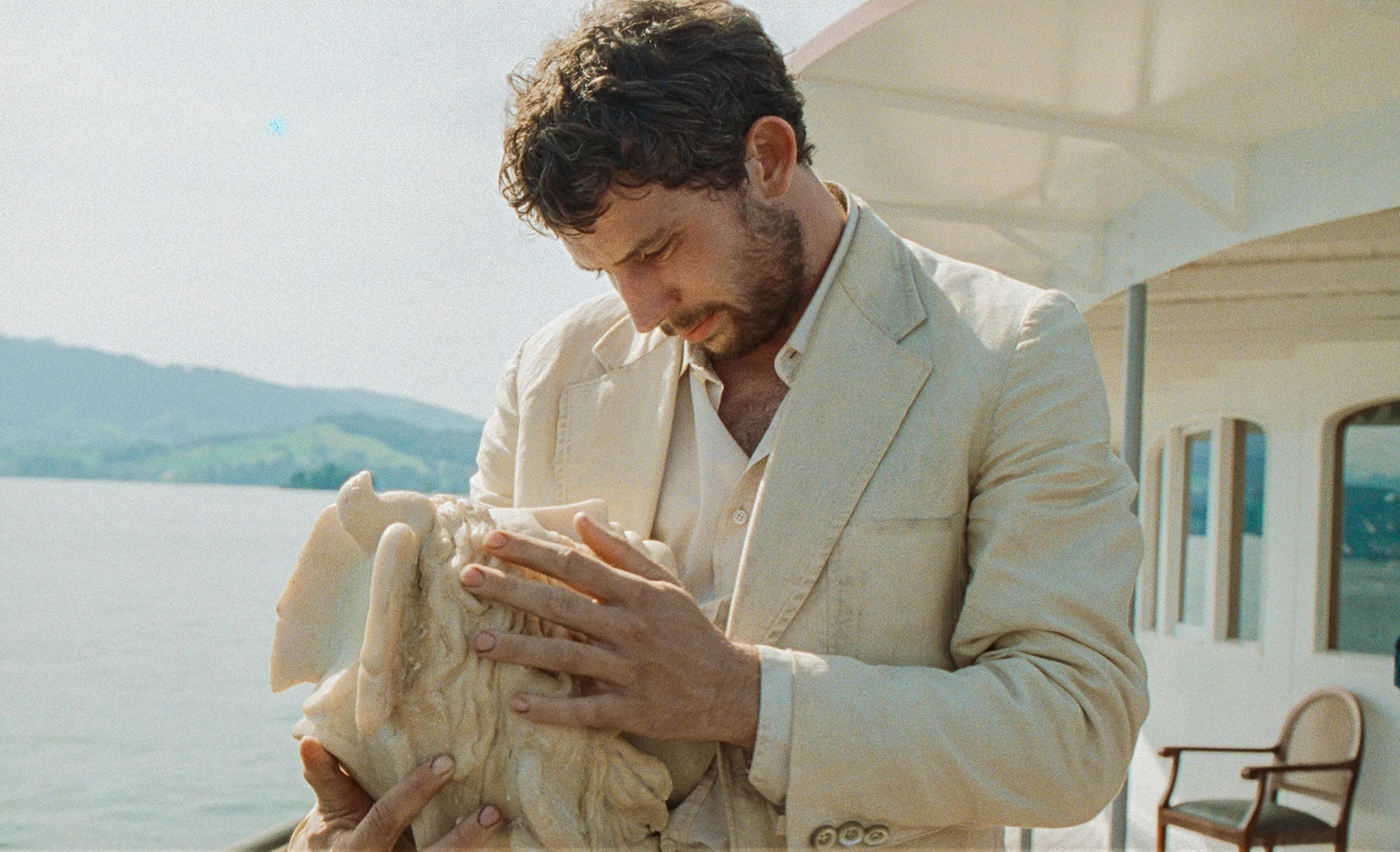
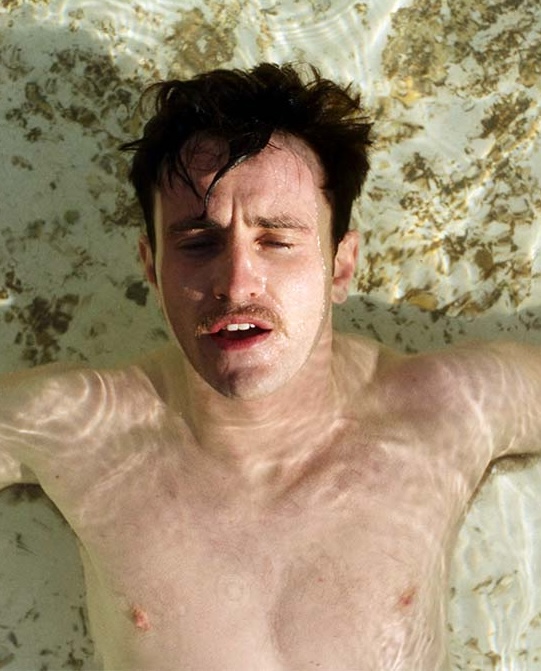
We’re in Tuscany, some time in the 1980s. Dishevelled Englishman Arthur (Josh O’Connor) is sensitive, clever, sweet and engaging. He’s also a grave robber, recently released from an Italian prison and about to head right back to his life of crime.

First though, he has an important visit to make – to the grand but crumbling estate that is home to the aged Flora (Isabella Rossellini). Despite her gaggle of adult daughters’ cacophonous protestations, Flora is Arthur’s biggest champion. Years back, when he was a respectable archaeologist, he was in love with her other daughter, Beniamina (Yile Yara Vianello), now deceased. The bereaved duo cling to their mutual connection.

In fact, Arthur’s yearning for Beniamina is so intense that it allows him to transcend the barriers between past and present. With a dowsing rod, he can pinpoint the long-lost tombs of the Estruscan dead with unerring accuracy. He’s the natural leader of this band of thieves.

The moral questions raised are unsettling. Stealing trinkets from corpses seems inherently wrong, but Arthur and his troubadour friends are homeless, living in poverty. What good are treasures lying in the ground? What’s wrong with living people using them to earn a crust? The rich buyers – whom we glimpse at an exclusive auction – will never go to jail, but they’re the ones profiteering from the poor men’s crimes, turning a blind eye to the items’ provenance. After all, in his old profession, Arthur’s findings were deemed legitimate and sold to museums. Is there really any difference?

But then Arthur begins to fall for Italia (Carol Duarte), Flora’s singing-student-slash-maid. The future is beckoning. Can he stop looking back?

Alice Rohrwacher’s film is a panoply of oxymorons: a firmly realistic supernatural tale; bleakly comic; slow and exciting. Driven entirely by its own logic, there are surprises at every turn, but they all make sense within the story. The Tuscan landscape is beautifully evoked by cinematographer Hélène Louvart, and there’s an unnerving folksy element, caught in the songs and celebrations of the tomb raiders.

But it’s O’Connor’s fine central performance that really makes La Chimera. He embodies the quiet desperation the title connotes, faithful to his impossible quest.

4.1 stars

Susan Singfield

Emma.

14/02/20

Some people bemoan their prevalence, but I don’t object to remakes of classics, so long as they’re done well. Little Women was one of my favourite films of 2019, with Greta Gerwig demonstrating exactly how worthwhile such revisitings can be. I like the vim and vigour that seems to be on-trend, the opening up of old favourites to a brand new audience.

Admittedly, I’m puzzled – and a little irked – by the addition of a full stop to Emma.. It seems affected, a bit try-hard. I’m hardly mollified by the explanations I find on-line either: there’s a ‘period’ because it’s a period drama (doh!) or – worse – this is the final, definitive version of the tale. (No, that would be the book.)

Still, I’m keen to see Emma., particularly as the poster, trailer and cast list hint at something sprightly and fun. I love Jane Austen’s novel, and have enjoyed a range of adaptations (Clueless, obviously, is the best). Eleanor Catton is also a writer I admire. But, sadly, neither her script nor Autumn de Wilde’s direction offer us anything more than a pretty confection.

Speaking of which, there is a lot of pretty confectionary in this film, with towering four or five-layer cakes present on almost every table (disappointingly, we never see them cut; I’d like to know what they look like inside). The dresses are gorgeous too, and the furnishings. In fact, it’s all rather ravishing, but there’s almost no substance – an empty edifice, just like the cakes.

It never feels real. Every emotion seems transient, every slight soon forgotten. Emma (Anya Taylor-Joy) is, as we know, handsome, clever and rich. She’s unbound by the need to marry, as she is financially secure, and anyway, her father (Bill Nighy) needs her at home. To stave off the boredom of wandering around a big posh house and wearing nice frocks, she decides to indulge in a spot of match-making. But it takes Emma some time to realise that other people aren’t as privileged as her, and that her meddling can cause them actual hardship. For a modern audience, this is a problematic narrative, with its underlying assertion that we should all know our place. But this is never addressed, not even obliquely; in fact, if I didn’t know the source material, I don’t think I’d be able to ascertain the social hierarchy at all. The costumes don’t make it clear, nor do the characters’ interactions. Just sometimes we are told that a character is poor, or that their prospects aren’t too good.

The characters aren’t defined enough, either, especially the men. The differences between Mr Knightley (Johnny Flynn), Mr Elton (Josh O’Connor) and Frank Churchill (Callum Turner) are barely perceptible; in the novel, the three are worlds apart. In fact, although Flynn performs well in the role, I don’t think the script even makes clear who Knightley is; I’ll wager many a newcomer to the story assumes he’s Emma’s brother at first.

Mia Goth is the standout, imbuing the unfortunate Harriet Smith with real charm and naïvety. Her nervous reverence for Emma is perfectly drawn. Miranda Hart also puts in a decent turn as Miss Bates, offering us the film’s only real moment of authentic emotion and poignancy.

All in all, this feels like an opportunity missed, a waste of talent and potential.

2.9 stars

Susan Singfield