Joe Wright

Pride and Prejudice

24/05/25

Netflix

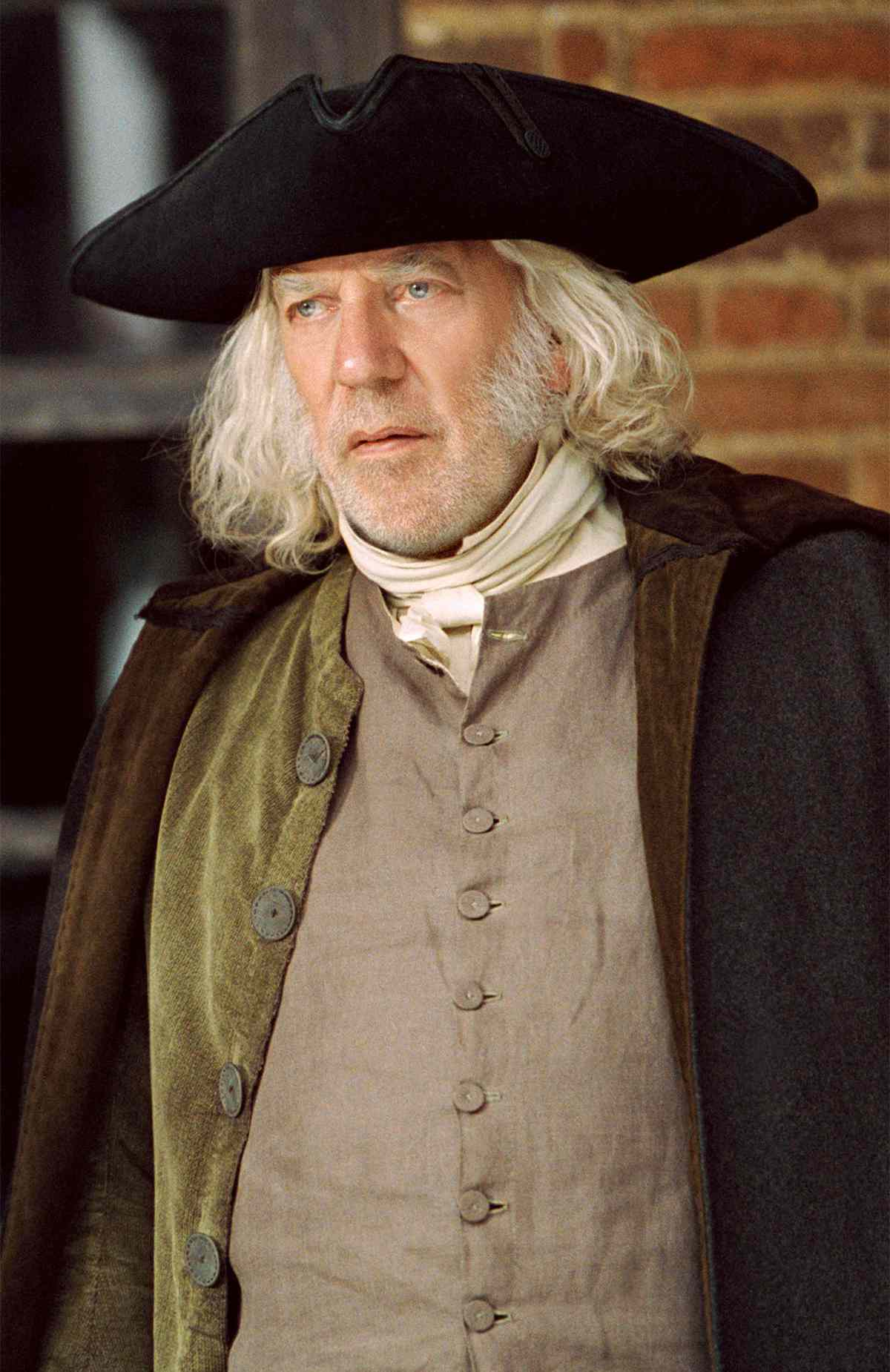
It’s hard to believe that Joe Wright’s adaptation of Pride and Prejudice is already twenty years old – and, while it’s been rereleased into selected cinemas to mark the occasion, it’s also right there on Netflix, all ready for re-examination at the touch of a button. I remember liking it back in the day and feeling that it was much more realistic than the widely-admired 1995 TV mini-series, which I found a little too chocolate-boxy.

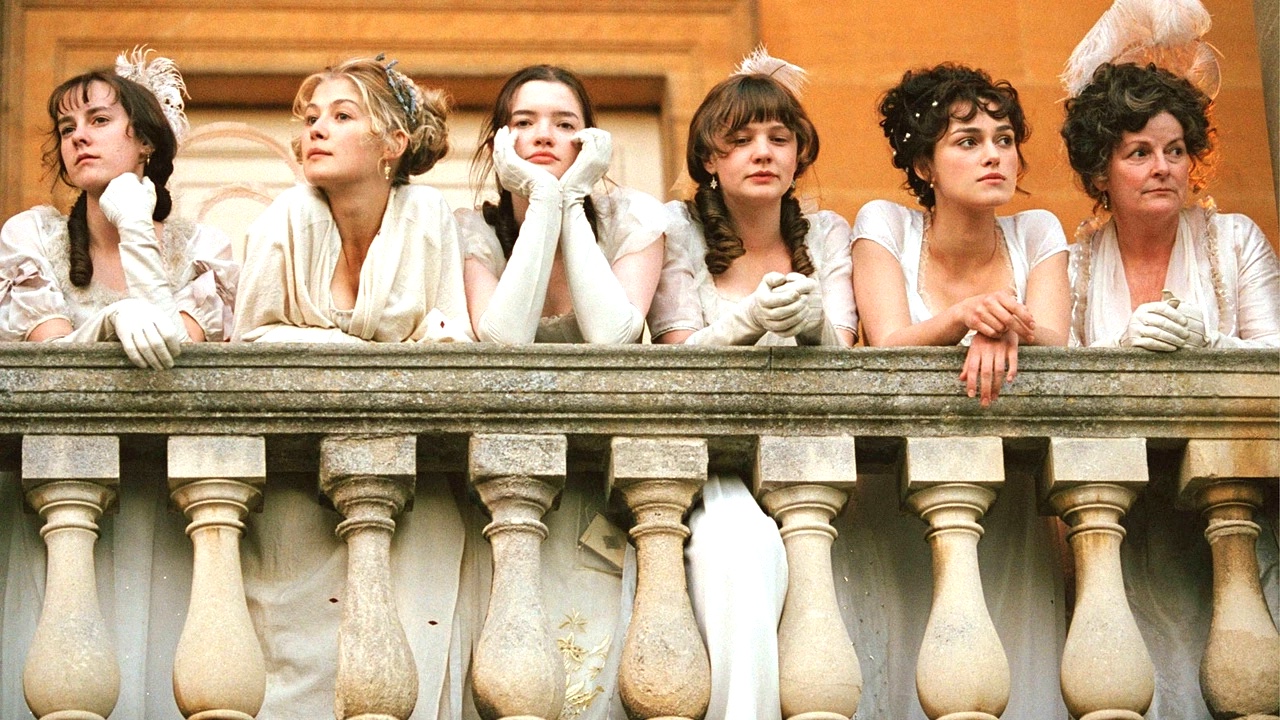
Wright’s version, though offering a tranquil and bucolic adaptation of Jane Austen’s novel, actually succeeds in showing the slightly down-at-heel and ramshackle nature of the Bennet family. In this version, a viewer fully understands the mounting desperation of Mrs Bennet (a wonderfully scatty Brenda Blethyn) as she seeks to find suitable husbands for her daughters, aware all the time that the clock is ticking and the women of the family stand on the edge of penury. Mr Bennet (Donald Sutherland) is useless, looking on in mystified wonder as his wife goes about her earnest business.

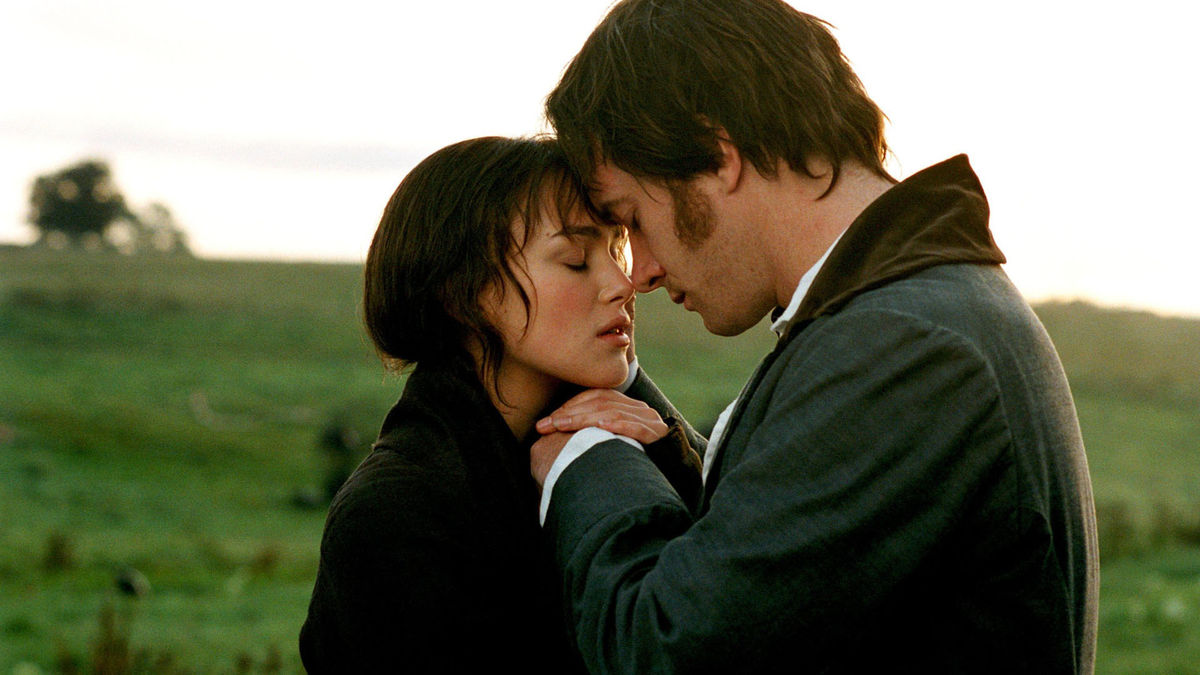
As the wilful and opinionated Elizabeth, Keira Knightley is an inspired choice. Why so many critics have taken against her acting abilities is quite beyond me, but here she plays Lizzie with considerable skill, scathing in her early encounters with Mr Darcy (a deliciously-sombre Matthew Macfadyen) and loving and playful in her interplay with Jane (Rosamund Pike) and her other sisters (look out for an early appearance by Carey Mulligan as Kitty). There’s a splendid turn from Rupert Friend as the caddish Mr Wickham, while Judi Dench struts her inimitable stuff as the acid-tongued Lady Catherine and Tom Hollander is wonderfully obsequious as Mr Collins, the reverend with an earnest desire to impress her.

The source novel has been cleverly adapted by Deborah Moggach, with additional (uncredited) dialogue by Emma Thompson, who had already earned herself an Oscar for her work on Ang Lee’s version of Sense and Sensibility. Wright never lingers too long on a scene and consequently the running time of two hours and nine minutes seems to positively flash by.

There are so many simple yet effective moments that have stayed with me since my first viewing. I love the scene where the Bennets’ prize pig wanders through their living quarters as though it’s a perfectly natural state of affairs, and the scene where Elizabeth and Darcy, enacting a complicated dance routine in the midst of a frenetic party are, quite suddenly, dancing completely alone. Roman Osin’s lush cinematography makes every landscape look suitably ravishing yet never overplays its hand. A scene where a pensive Elizabeth is taken from bright morning sunlight into the dark shadows of evening in one slow take is so understated, it barely registers.

This is Wright’s debut full-length feature and yet it feels like the work of a more experienced director. He would go straight on from this to his adaption of Atonement, another extraordinary literary film, once again with Knightley in a key role.

Sometimes when you return to a film after a long interval, you wonder what made you like it so much on first viewing. In the case of Pride and Prejudice, I feel I enjoy it even more.

4.6 stars

Philip Caveney
Cyrano

25/02/22

Cineworld, Edinburgh

The story of Cyrano de Bergerac is a rather unlikely one; nonetheless, over the years it has fired the imaginations of film and theatre directors alike, sometimes with spectacular results. In 1990, it brought director Jean-Paul Rappeneau and his lead actor, Gerard Depardieu, much acclaim in a movie adaptation of Edmond Rostand’s source play. And, a few years earlier than that, Steve Martin had already turned it into the much-admired contemporary comedy, Roxanne.

In both films, of course, Cyrano was a character with a comically oversized nose – something that his adversaries mentioned at their peril.

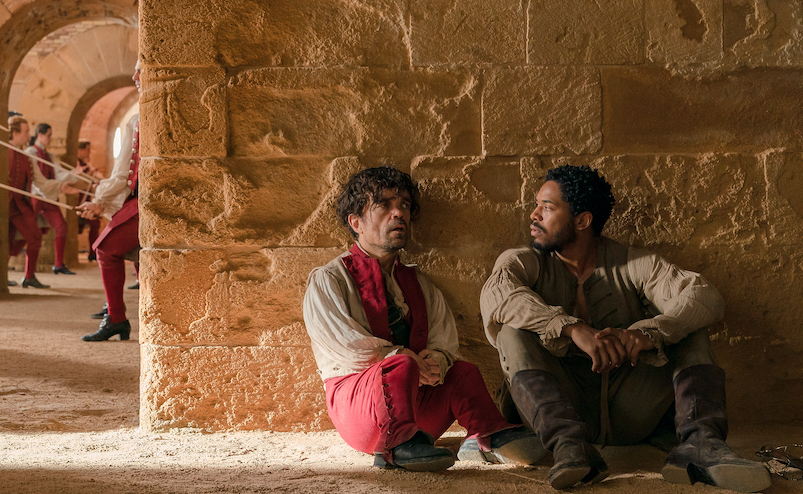
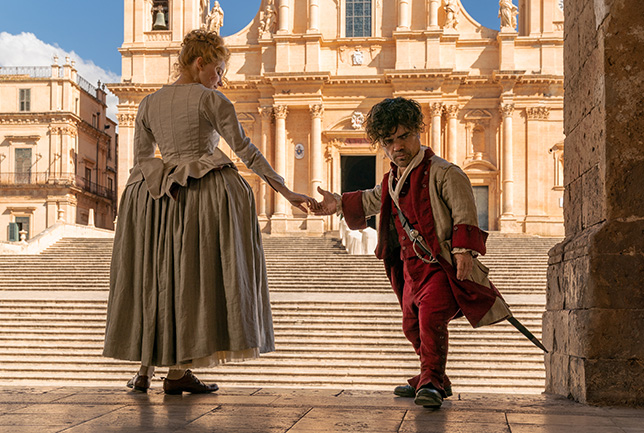
In Cyrano, director Joe Wright adopts a different approach. The hero of his story, though a brave and valiant soldier, is small of stature; and, as portrayed by Peter Dinklage, this simple premise turns out to be a masterstroke, the character’s inner turmoil told mainly through the cleverly nuanced expressions on his face. Everything else about the story stays pretty much the same – though I should probably add that this is a musical version, with songs by Aaron and Bryce Dessner.

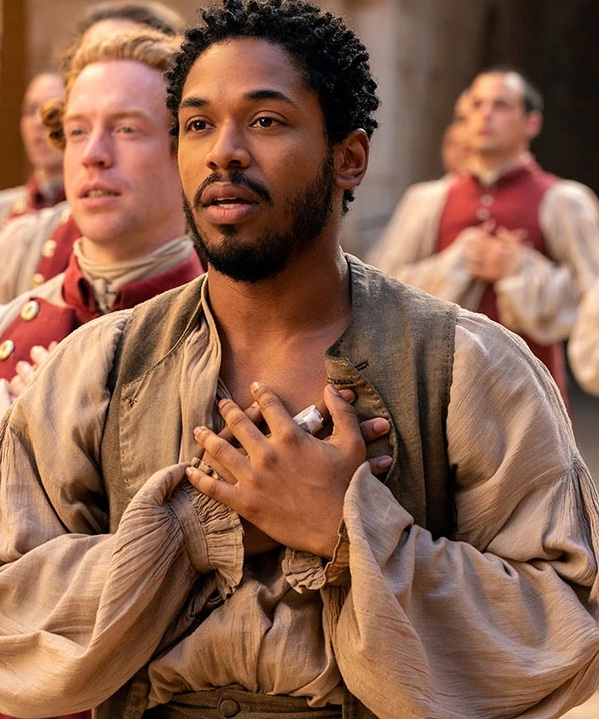
Cyrano is desperately in love with Roxanne (Hayley Bennett), a poor and (it must be said) somewhat shallow young woman, who is considered a great beauty in her home town. She is pursued by many men, among them the rich but odious De Guiche (Ben Mendelsohn). When Roxanne summons Cyrano to meet her in private, he dares to hope that she might have reciprocal feelings for him; instead she confesses that she has fallen in love with Christian de Neuvillette (Kelvin Harrison Jr), a handsome new recruit to Cyrano’s regiment. Could Cyrano keep an eye on Christian and protect him from any harm?

Cyrano is so enamoured of Roxanne that he reluctantly agrees to help – and, when it turns out that Christian isn’t very good with words, Cyrano becomes the man who writes the many love letters that ‘Christian’ regularly sends to Roxanne. As Cyrano unfurls the deluge of longing he has nurtured for so long, the task nearly unhinges him.

Filmed on location in Southern Italy, Cyrano makes few concessions to realism. Instead, Wright’s film plays out through a series of highly stylised backgrounds with garish costumes, masks and makeup used to create a vibrant world that seems to virtually pulse with colour. Soldiers practising with swords move gracefully into dance routines, while large stretches of the dialogue are spoken in rhyme. It’s only when the film reaches its later stretches (and the location switches to the snow-covered heights of Mount Etna) that the brutal reality of war seems to bleach all colour from the screen and the story descends headlong into tragedy.

The songs are distinctive, plaintive and affecting, particularly in the scene where three soldiers, about to go out to their deaths in battle, leave letters to their loved ones, singing the words as they hand the pages to a messenger. It would already have been the film’s most moving sequence, but thoughts of the current conflict in Ukraine seem to lend it extra poignancy, and my eyes fill as it unfolds. If you’re already familiar with the story of Cyrano de Bergerac, you’ll know that there’s also a coda to this tale that isn’t exactly the happy ending you might have wished for.

This is undoubtedly Dinklage’s film, revealing impressive new depths to his acting, but Bennett is good too and her final scenes with Dinklage will probably send you out into the night with tears running down your face. If I’m making it sound like something of an ordeal, it really isn’t. Wright is adept at making every scene look ravishing, as he did in his under-appreciated adaptation of Anna Karenina. It’s the very theatricality of the telling that makes this film so powerful – and, in its own way, unique

4 stars

Philip Caveney

Darkest Hour


12/01/17

Biopics can be a bit like buses. No sooner has Brian Cox’s Churchill drifted over the horizon than it’s Gary Oldman’s turn to don the homburg hat and wave a zeppelin-sized cigar in Joe Wright’s Darkest Hour. While Cox made a perfectly good fist of his portrayal of the infamous war leader, Oldman submits a simply astonishing performance, a stellar tub-thumping object lesson in how to act everyone else off the screen. Despite several nominations down the years, he’s never won an Academy Award, but this should surely be the role to rectify that situation.

It’s May 1940 and the British forces in France are being disastrously defeated by the might of Hitler’s Germany. The unpopular (and ailing) Neville Chamberlain (Ronald Pickup) opts to step down from the post of Prime Minister and a coalition government looks around for somebody to take his place. It’s a poisoned chalice and nobody on either side makes any secret of the fact that Winston Churchill is not their preferred choice, particularly after his key involvement in the military disaster that was Gallipoli. Nevertheless, he is chosen, and is faced with the almost impossible task of rallying the country to fight on, when most of his colleagues are intent on making a deal with Mr Hitler. Elizabeth Layton (Lily James, looking uncannily like a younger Gemma Arterton) is assigned to be Churchill’s secretary and so has an inside view on how he operates, often dictating his famous speeches from the toilet (why not, his initials are on the door?) and explosively losing his temper whenever she gets something wrong. Meanwhile, the British expeditionary force is surrounded and fleeing towards Dunkirk and it’s starting to look as though they are about to be completely annihilated…

Wright has already dealt with Dunkirk in Atonement, so that side of things is kept very much in the background – or, more often, glimpsed from aeroplanes as bombs drop on the British forces. Here, the director concentrates on a character study of a complex man, chronicling his struggles with depression, his occasional lapses into bluster and his almost overpowering sense of isolation. Again and again Wright shows him enclosed in small spaces – riding in a tiny elevator, framed by the outline of a window, making important phone calls from the smallest room in the house. As well as that stellar performance, Oldman is aided by an incredible transformation, achieved entirely by ace Japanese prosthetics artist Kazuhiro Tsuji. Even in extreme close up, his efforts are utterly convincing.

If there’s a price to pay for such grandstanding, it’s inevitably the fact that the rest of the cast – Ben Mendlesohn’s turn as King George VI aside – are relegated pretty much to the sidelines. Even the usually dependable Kristin Scott Thomas as Clementine is reduced to wandering on to give her hubby the occasional pep talk; it would have been nice to see her given a little more to do.

But, niggles aside, Darkest Hour is pretty enjoyable, and probably worth the price of admission just to see Oldman give that speech.

4.2 stars

Philip Caveney