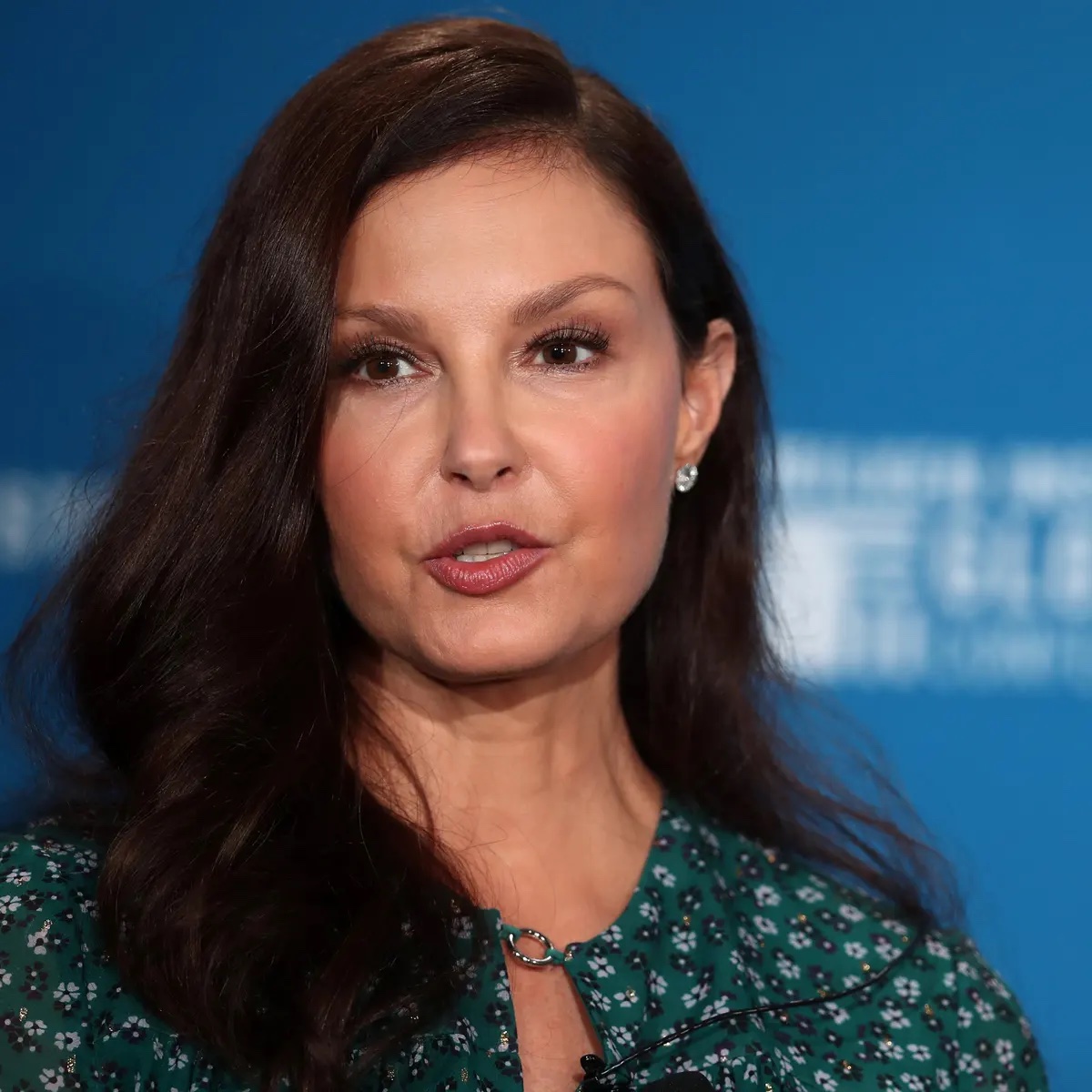
Jennifer Ehle

She Said

29/11/22

Cineworld. Edinburgh

She Said sets out its stall in the first few minutes. New York Times journalist Megan Twohey (Carey Mulligan) is about to publish a story about women being sexually abused by a presidential candidate, and the accused man calls to refute the claims. He’s boorish and threatening. The story is published, and the victims learn they were right to be afraid of speaking up. While they get death threats and envelopes of dog shit through the post, Donald Trump gets elected president.

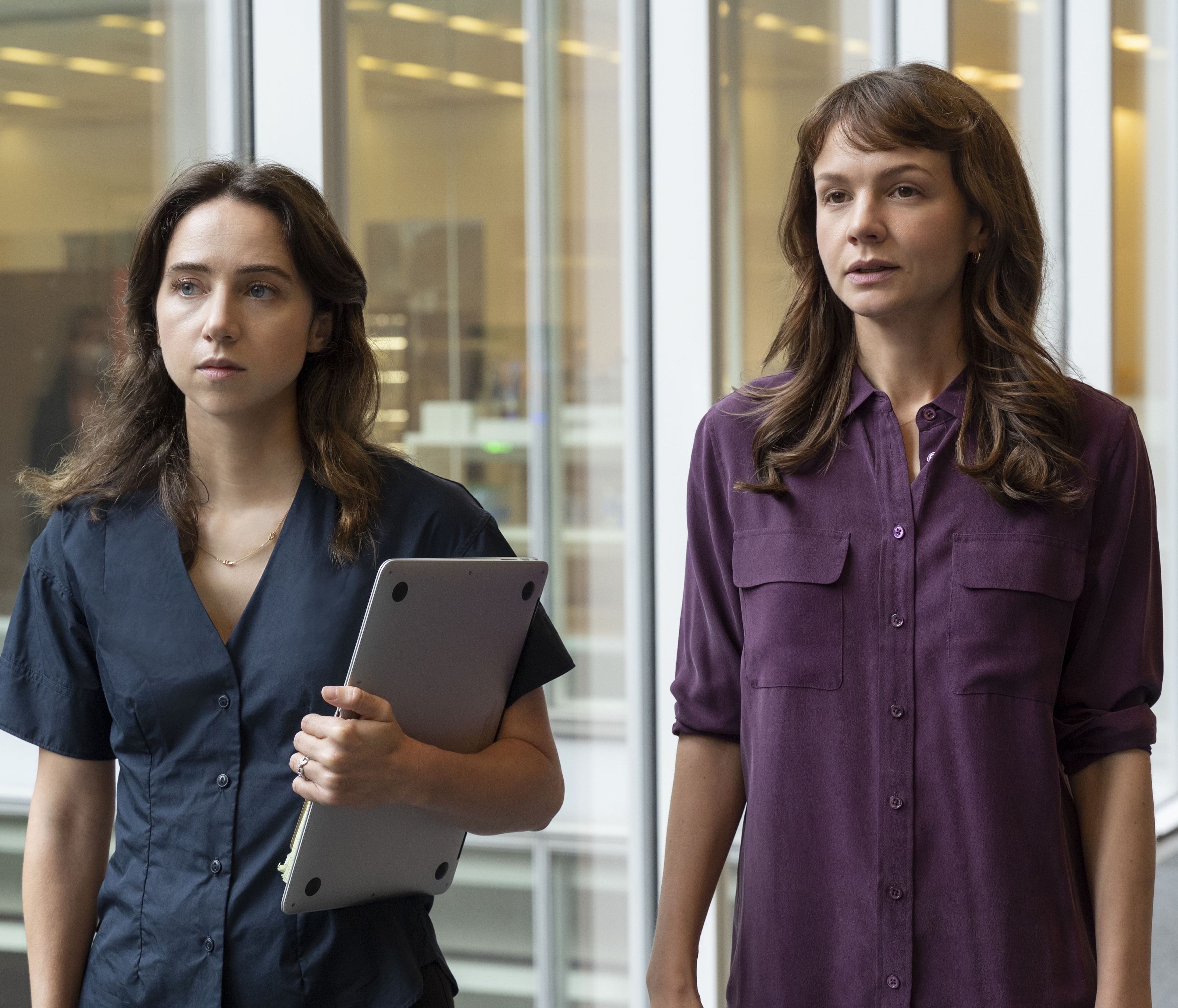
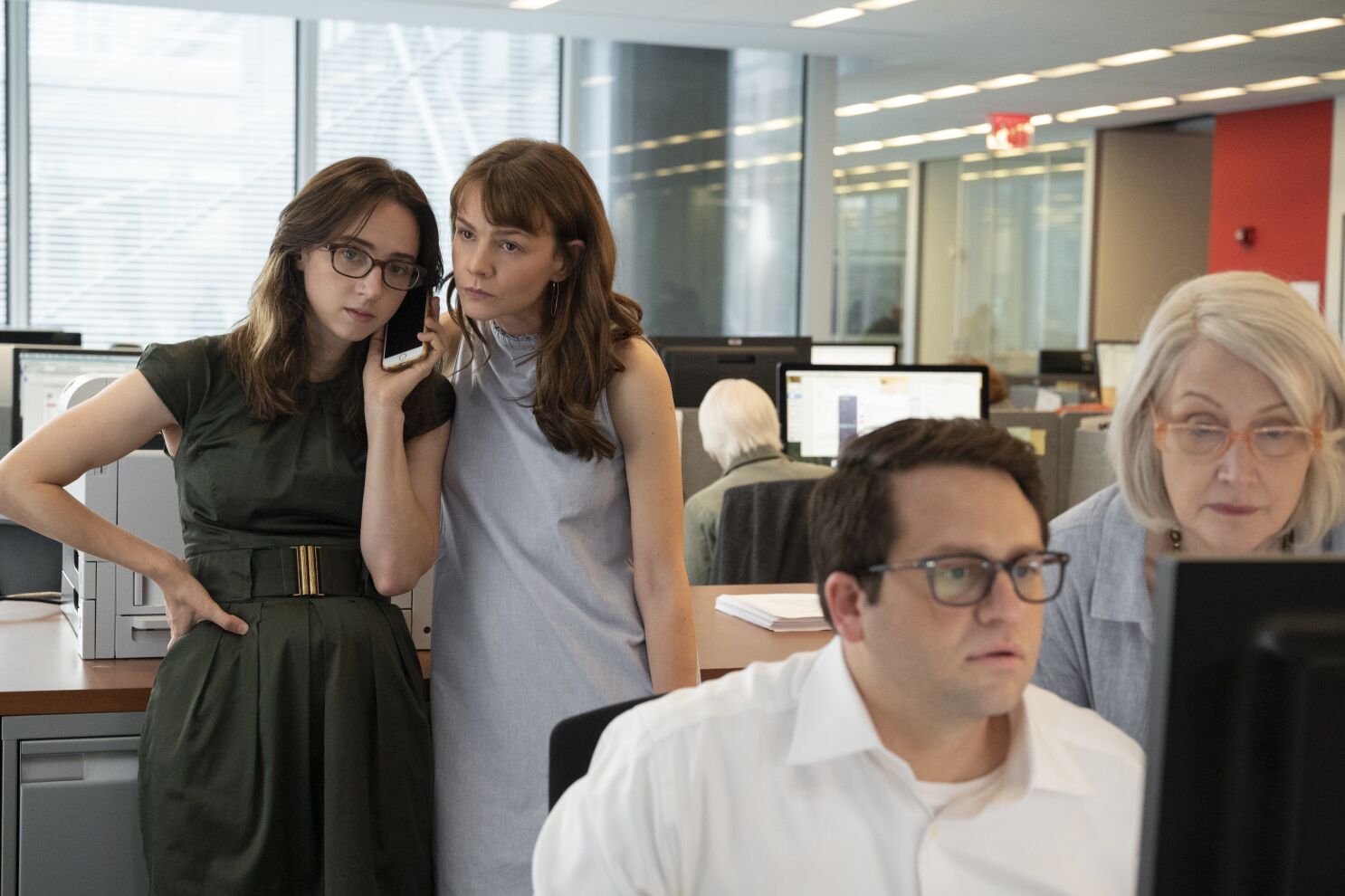
So when Twohey and her colleague, Jodi Kantor (Zoe Kazan), begin to investigate rumours about Harvey Weinstein, they know what an uphill battle they face. The system is skewed in favour of powerful men. Uncovering the truth is relatively easy; acquiring sufficient evidence to publish it is horribly complex. As if persuading understandably anxious women to out themselves to a global audience weren’t difficult enough, there are also NDAs to contend with. How are these malignant settlements even allowed to exist? They’re just get-out-of-jail-free cards for rich arseholes, who can easily afford to spaff megabucks on silencing the people they abuse. But Twohey and Kantor are tenacious, and refuse to give up. It’s not easy for either of them. Kantor has a young family, and Twohey is in the throes of post-natal depression. Calls come at all times of the day and night – both threats from trolls and revelations from sources – but still, they can’t let go. It matters too much. So they grit their teeth and crack on, relying on their partners to do the lion’s share of parenting. (It’s refreshing, actually, to see Ron Lieber and Tom Pelphrey in these peripheral, domestic roles that are usually reserved for women.)

Maria Schrader’s understated direction works well, illuminating the sheer grit required to bring a prolific sex offender to account. The screenplay, by Rebecca Lenkiewicz, draws on the book written by the two journalists, and focuses on the painful process rather than the assaults. This is one instance where telling is better than showing: we don’t need to see these women being abused. Instead, we see the aftermath. We see how, while Weinstein continued to live the high life, perpetuating his attacks over and over again, any woman who dared to reject him or, worse, complain about his behaviour, had her life turned upside down. From Ashley Judd (appearing here as herself) being blacklisted and branded ‘a nightmare to work with’ to Zelda Perkins (Samantha Morton) fleeing to Guatemala, the fallout was immense.

The performances are detailed and meticulous. Kazan and Mulligan both fizz with pent-up energy, and the supporting cast are just as committed. Jennifer Ehle stands out as Laura Madden, attacked by Weinstein back when she was a young assistant, naïve and excited to be working for him. Thirty years later, she has a double mastectomy to deal with, so speaking out seems urgent, not least to show her daughters that they don’t need to internalise abuse.

She Said does a good job of highlighting the inherent power discrepancies in our society, and how ‘consent’ is problematic if one party holds the other’s prospects in their hands. It also shows how we can fight back.

#MeToo.

4.6 stars

Susan Singfield
Monster

13/05/21

Netflix

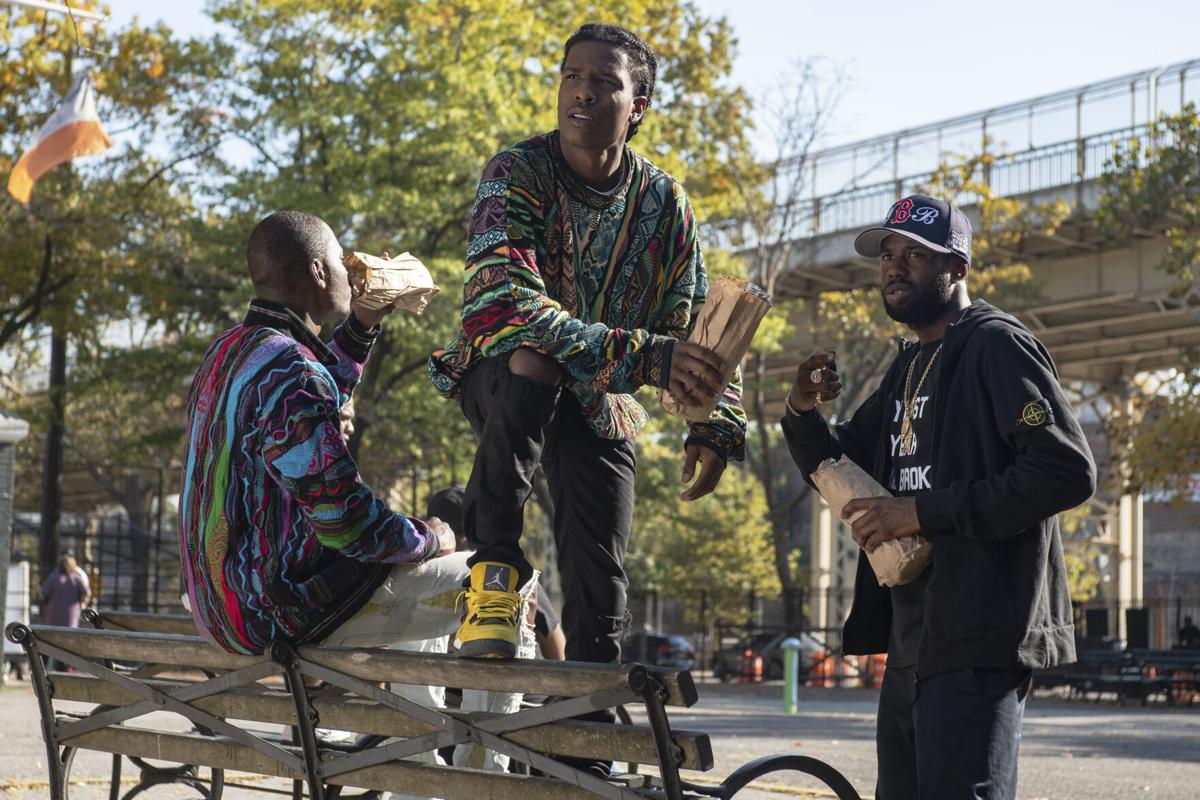
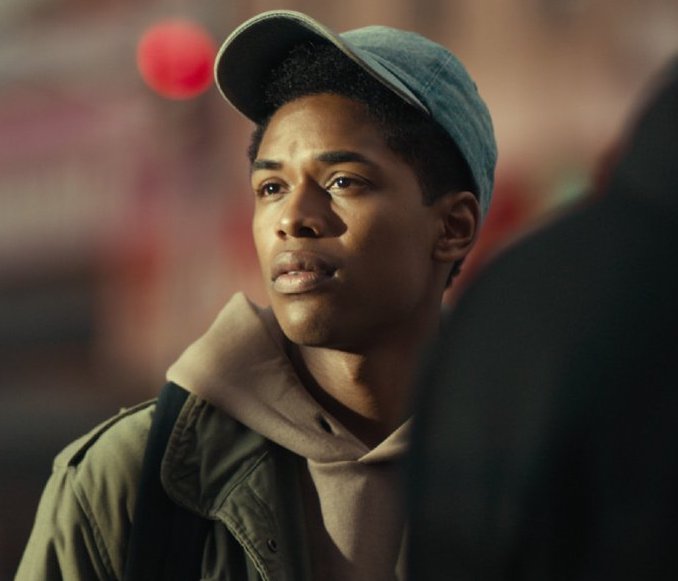
A courtroom drama with a difference, Monster stands apart, mostly by virtue of its artful direction. Anthony Mandler’s thought-provoking story centres around seventeen year old Steve Harmon (Kelvin Harrison Jnr), a film student with a promising future. With wealthy parents and a place at a prestigious college, Steve’s a regular golden boy. But a recent robbery in a Harlem bodega has gone horribly wrong, a shopkeeper’s been murdered and Steve stands accused of acting as lookout for the perpetrators, James King (ASAP Rocky) and ‘Bobo’ Evans (John David Washington). A witness has placed Steve at the scene of the crime and he soon finds himself arrested.

It’s an unlikely fit. King and Evans are streetwise villains with previous form, but Steve has never been in trouble in his life. How can he possibly have become involved in something like this? As his lecturer, Leroy (Tim Blake Nelson), points out, this is a kid who inspires trust in everyone he meets. And yet… he’s been identified.

The conceit here is that all the events of the story are filtered through Steve’s distinctive point of view. As a filmmaker himself, he cannot resist presenting them as a sort of screenplay, complete with titles and camera directions. (Don’t worry, this is way better than I’ve made it sound – it’s an assured marriage between style and content, neither element allowed to outweigh the other.)

We follow him through his arrest, his subsequent incarceration and on to his trial, where his appointed defence attorney, Maureen O’ Brian (Jennifer Ehle), does her best to guide him through the pitfalls of a court appearance and keeps reminding him that the way he presents himself to the jury will be of paramount importance. In flashbacks, we also witness his interactions with King and Evans, the way he is drawn to them as subjects for a film project he’s working on, how he’s caught up in their ‘outlaw’ attitude. But he knows there’s a line between him and them, doesn’t he? And he’s surely never going to cross it…

Monster is ultimately about the allure of the forbidden, the different choices we face in our lives. It also has a lot to say about class – it effortlessly demonstrates how Steve’s privileged lifestyle affords him opportunities that many of his peers will never experience – and how it might be the single factor that stands between him and the unthinkable. Harrison Jnr is compelling in the lead role and Ehle provides a calm, but steely presence as the defender who believes in his innocence. Originally filmed in 2018 and showcased at the Sundance Festival the same year, Monster has had a long wait to find its audience, but it’s been worthwhile.

This is an assured and original drama with plenty to recommend it.

4.2 stars

Philip Caveney

St Maud

03/02/21

Amazon Prime Video

St Maud is another movie that got away. Released just before cinemas across the country closed their doors, we’ve been literally counting the days to its release on streaming networks. Finally, it’s available and though, inevitably, some of its visceral power must be diluted by viewing it on a smaller screen, it’s nonetheless an assured and confident debut from writer/director Rose Glass.

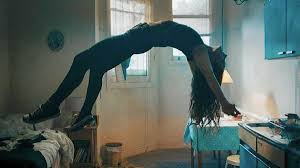
In a taut one hour, twenty-four minutes, the film manages to keep me guessing right up to the final shocking frame: is Maud simply deluded? Or is there something more to the series of religious ‘visions’ that afflict her on a day-to-day basis? The result, though unremittingly bleak, is undeniably compelling.

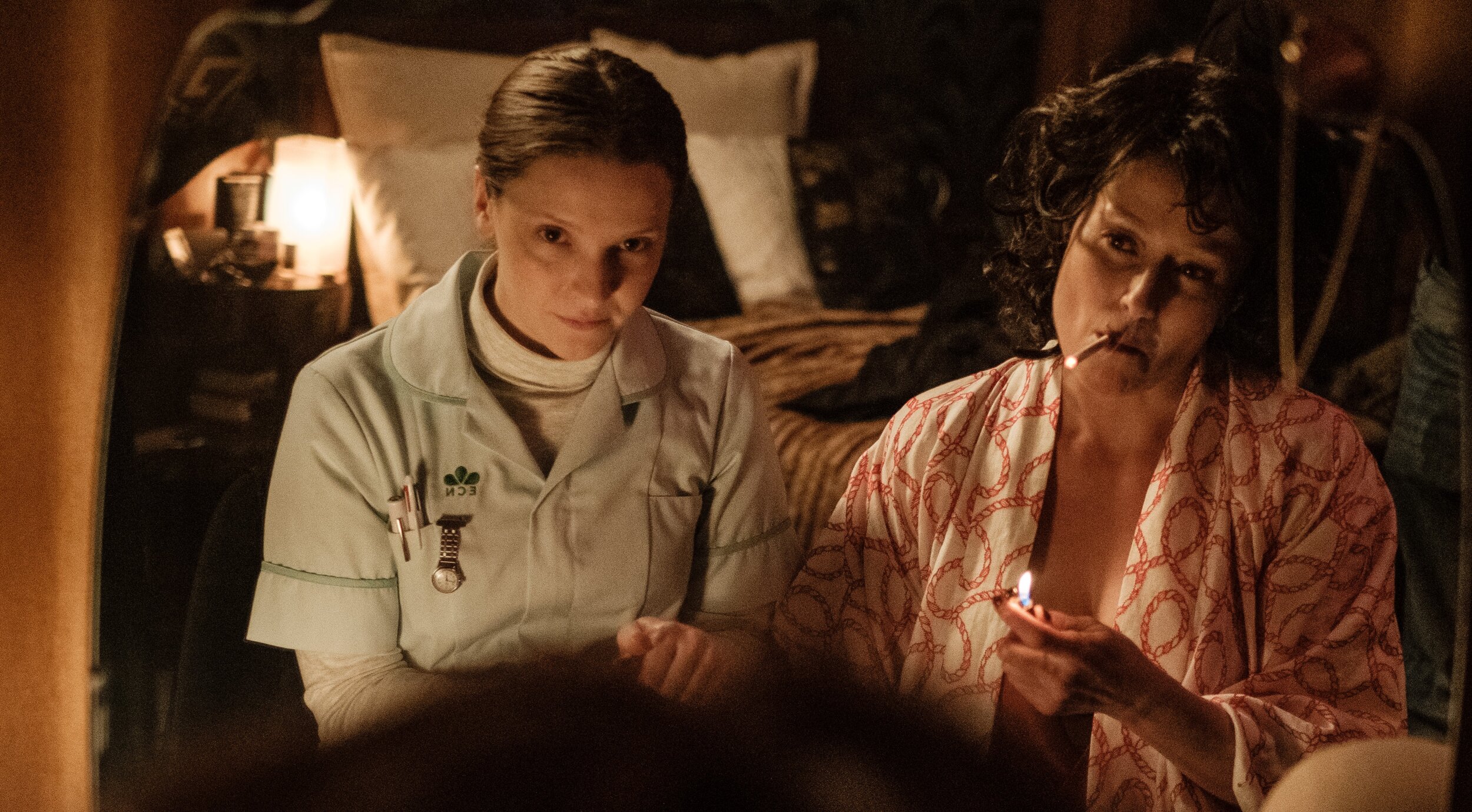
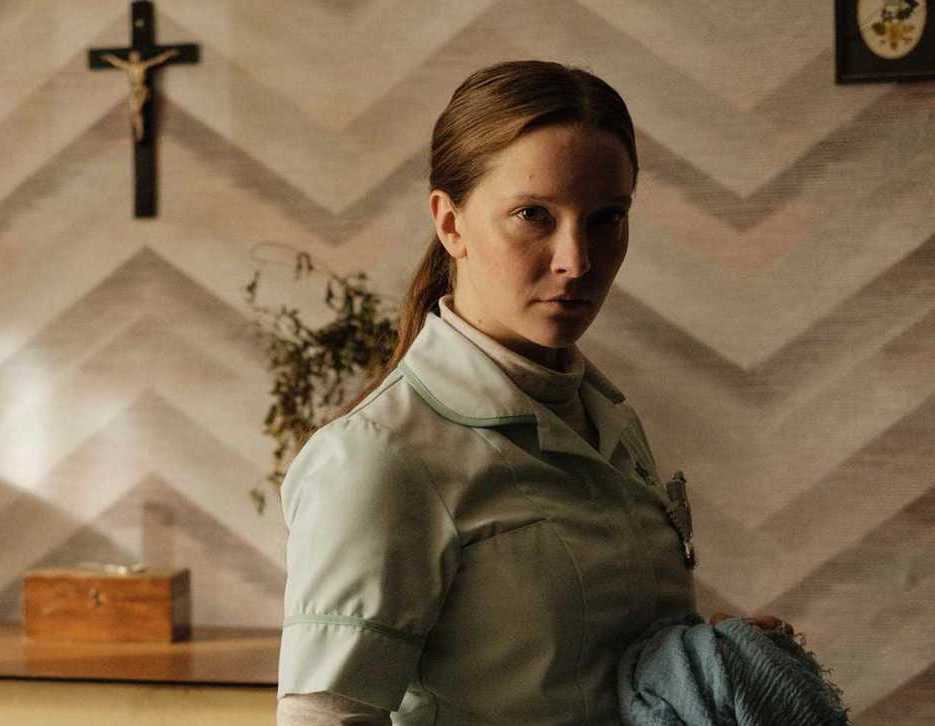
Maud (Morfydd Clark) is a former nurse, banished from the hospital where she formally worked for reasons that are only hinted at. We soon learn that ‘Maud’ isn’t even her real name, which explains how she comes to be working in the private sector, caring for the tragic Amanda (Jennifer Ehle) in her home. Amanda is a former dancer and choreographer, a leading light of the theatrical world, now gradually succumbing to the ravages of cancer of the spine, unable to stand, let alone perform a pirouette.

At first, Maud seems like the perfect carer – polite, attentive and gentle – but, as she and Amanda become closer, so Maud is increasingly convinced that Amanda is transgressing God’s laws. Initially, this merely encourages Maud to overstep the mark as a carer, meddling in Amanda’s personal life – but it’s only a matter of time before the mounting conflict results in tragedy.

Set in a sleazy, rain-splashed Scarborough, Glass takes every opportunity to depict the seaside resort as some kind of hell on earth, employing skewed perspectives, even turning the camera lens upside down at key moments in the narrative. The extended sequence where Maud attempts to go out for a ‘night on the town’ is unlikely to put the place on the tourist maps. Clark is phenomenal in the lead role, depicting Maud as an uneasy mixture of smiling geniality and twisted anxiety. I never know which aspect is going to emerge at any given moment, and it’s this uncertainty that keeps me on the edge of my seat throughout.

For Rose Glass, the timing has been disastrous, but it’s interesting to note that, despite everything, St Maud managed to find its way onto many critics’ top-ten films for 2020.’ I’m late to the game but have to agree: this is an astonishing first flight for a director. I look forward to seeing where she goes next.

4.4 stars

Philip Caveney

The Miseducation of Cameron Post


11/09/18

Based on Emily M Danforth’s 2012 novel, The Miseducation of Cameron Post is the perfect teen movie for our times. Sure, it’s set in 1993, but it feels particularly prescient. On the one hand, society has become far more ‘woke’ about sexuality, with same-sex marriage widely accepted, for example; on the other, extremism is on the rise, and hard-won rights are being challenged once again. This film is a timely reminder of what we stand to lose.

It’s much more than that, of course. It’s also a heart-warming, heart-breaking coming-of-age tale, with a troubled teenager as its protagonist. Chloë Grace Moretz is the titular Cameron Post, an orphan raised by her evangelical Aunt Ruth (Kerry Butler). Ruth is a kindly woman, and she and Cameron are close. But when Cameron is discovered having sex with her best – female – friend, Coley (Quinn Shephard), she’s packed off to God’s Promise, a gay-aversion camp-cum-boarding-school, deep in the heart of Nowhere, Montana, where, it is hoped, she will learn to recognise her homosexuality for the heinous sin the church believes it is.

The camp is as bonkers as it sounds: whoever thought that bringing all the gay kids together and isolating them with same-sex room-mates would help them to avoid temptation? It’s all tragically well-meant: the leaders, Dr Lydia Marsh (Jennifer Ehle) and her brother, Reverend Rick (John Gallagher Jr) truly believe they are saving souls. The reverend himself is ex-gay, he says; he understands the teens’ troubles. Dr Lydia isn’t quite as compassionate, taking a cruel-to-be-kind approach, completely unaware of how tone-deaf she really is. “You have no idea what you’re doing, do you?” realises Cameron, in despair. “You’re making it up as you go along.”

Moretz is delightful in this role, all understated rebellion and silent agony. We never really know, until the end, if she will submit to the camp’s teachings, because she’s so uncommunicative and unsure. She doesn’t want to let people down; she doesn’t want to hate herself. But she can’t be someone other than who she really is. Being gay hurts her – isolates her from those she loves; it’s not easy for her to fathom what she ought to do. She gravitates instinctively though towards the cynical among her peers, Jane ‘Fonda’ (Sasha Lane) and Adam (Forrest Goodluck), with whom she smokes dope (smuggled in via Jane’s prosthetic leg) and mocks some of the nonsense they are made to spout. She finds real friendship here, and strength, and it’s a good thing she does. Because the camp is actually rather dangerous: the psychological damage might be inadvertently inflicted, but it’s just as ruinous as if it were intentional.

But these are sassy teens, with much spirit to spare, and even the sly manipulation of Dr Lydia (brilliantly conveyed by Jennifer Ehle) can’t suppress them forever. They’re bold and lively and they’re going to take on the world.

Bravo!

4.2 stars

Susan Singfield