Jemima Levick

Cinderella: A Fairytale

29/11/25

Royal Lyceum Theatre, Edinburgh

Look, I love a good panto as much as the next drama queen. Still, I have to admit there is something very special about this chance to see a Christmassy rendition of one of the world’s most famous fairy-tales without the distraction of all the boo-hiss-he’s-behind-you-wink-wink-nod-nod stuff. Cinderella‘s plucky orphan narrative is a compelling one, not least because of its moral certainty, where the good are rewarded and the bad are well and truly punished: there’s vengeance at play here, as well as virtue. And, in this version by Sally Cookson, Adam Peck and the Original Company, that dichotomy is writ large.

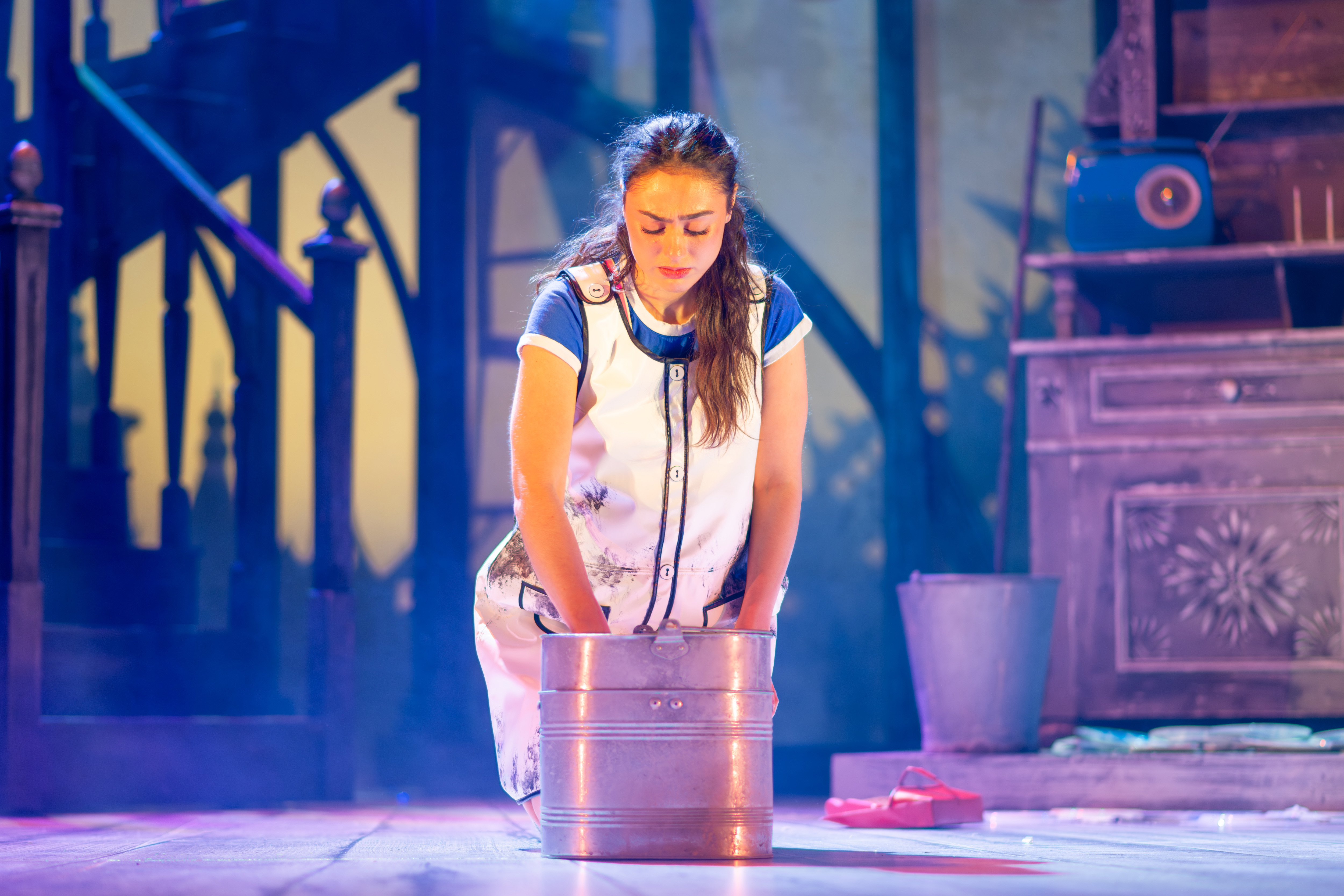
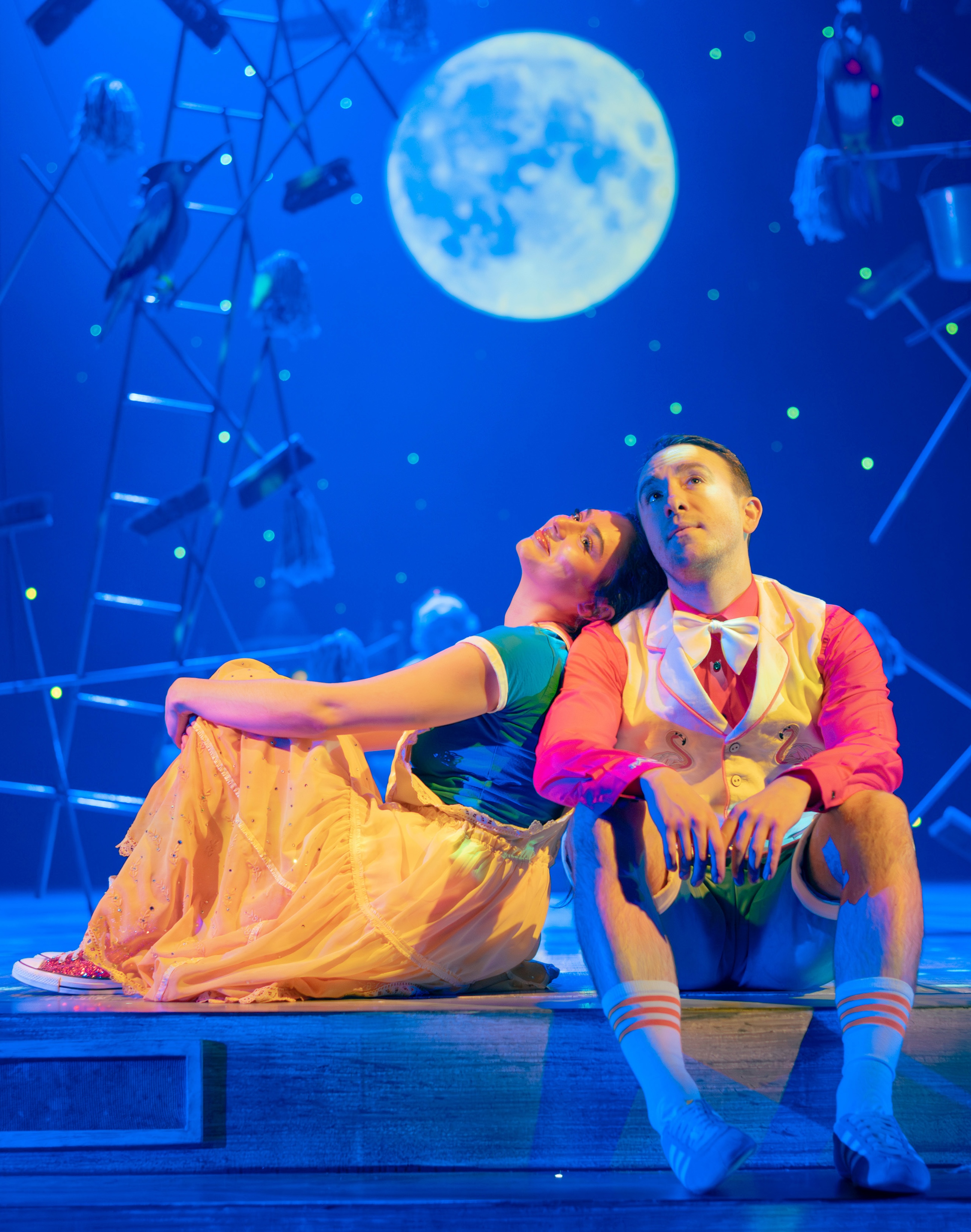
Ella (Olivia Hemmati) lives in a gloriously-realised enchanted forest, all dappled sunlight and multi-coloured birds. The home she shares with her dad (Richard Conlon) is one of those idyllic, romantically-ramshackle cottages where poor people live in story books, and she’s happy there. But when Father marries Mother (Nicole Cooper), everything changes: not only does her step-mum impose a whole raft of irritating rules, she also brings along her own two children, Sister (Christina Gordon) and Brother (Matthew Forbes), who are so priggish and uptight that Ella can’t stand them. And then, just as she’s getting used to the new regime, Father dies, leaving a grieving Ella at Mother’s mercy…

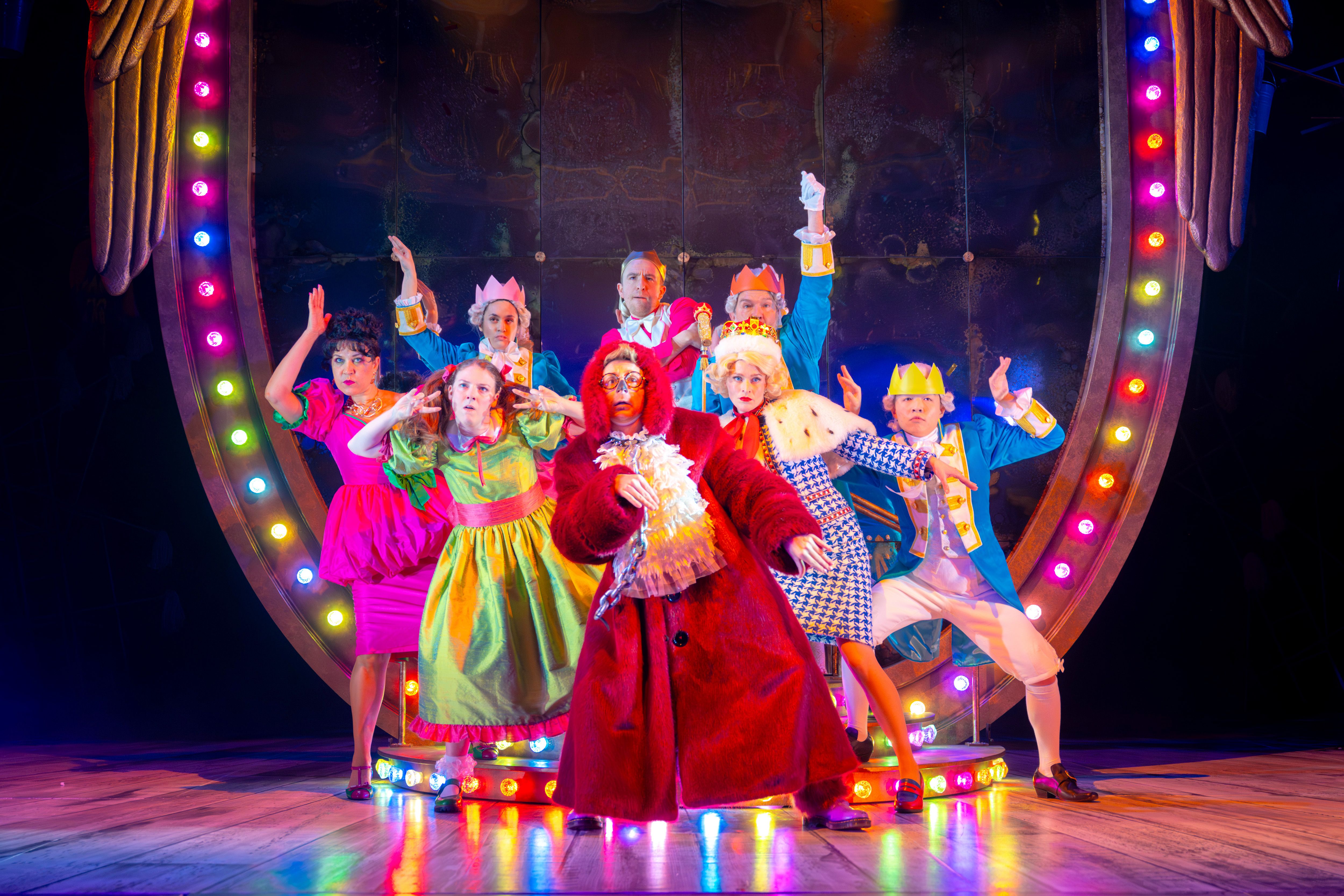
The strength of this show lies in its aesthetic: Francis O’Connor’s set and costume design evoke an ethereal other-worldliness, where magic feels eminently possible. The bird puppets (directed by Forbes and manned by Leo Shak, Stephanie Cremona and the cast) are fabulous, their rainbow plumes as appealing as they are fantastical. Even as a middle-aged woman, I’m completely captivated; how alluring must this staging be for the children in the audience?

The love story element is underplayed: Prince (Sam Stopford) is a nerdy teenage ornithologist and he and Ella strike up such a lovely, convincing friendship that the idea of their marriage seems jarring and incongruous. Director Jemima Levick wisely eschews any overt wedding pageantry, but I do wonder if it would be better to remove the romance entirely, focusing instead on the simple affection between the pair. After all, it’s not as if there’s the same financial imperative for this Ella, who seems to be living in a whimsical approximation of the contemporary world, as there was for her Grimm progenitor, who needed a husband to escape her servitude.

Cooper is obviously having a whale of a time as the odious Mother, camping up her tantrums and cruelty to create a deliciously-devilish interpretation of the character. The protracted toe-chopping sequence – the production’s only real nod to the folk story’s dark heart – is a gruesome highlight. Meanwhile, Gordon and Forbes’ Ugly Siblings are more sympathetic and nuanced than their traditional counterparts, frightened and corrupted by their toxic mum – and clearly redeemable. Carly Anderson has less to do as Queen, who appears here as a slightly-sozzled, benignly-bemused socialite. It’s an interesting take on the role but she is under-used.

Jon Beales’ music and Emily Jane Boyle’s choreography complement each other perfectly, enhancing the story and ensuring the pace never flags.

All in all, this is a delightful production, and one that is sure to enthral audiences of all ages this festive season.

4.2 stars

Susan Singfield
The Sheriff of Kalamaki

03/09/23

Traverse Theatre, Edinburgh

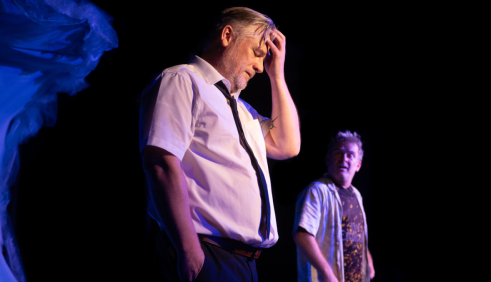
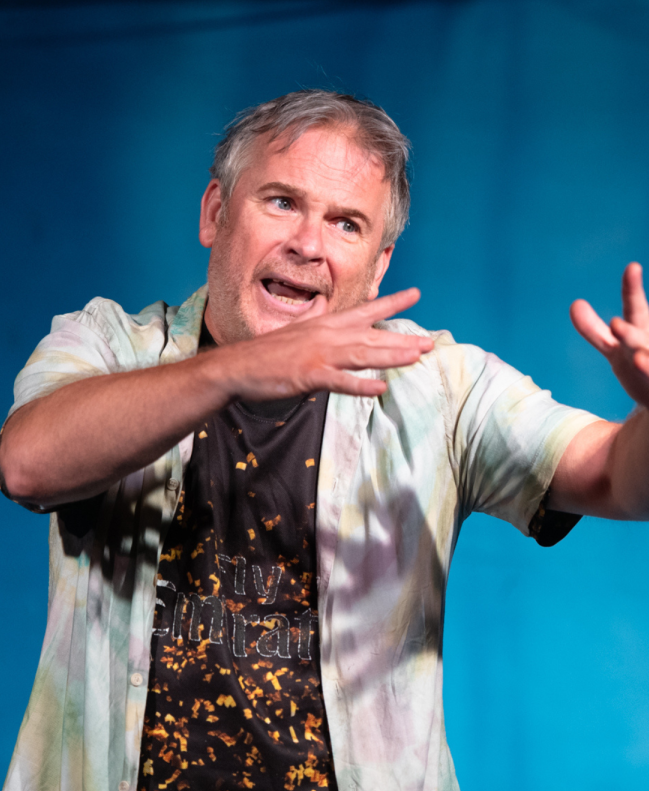
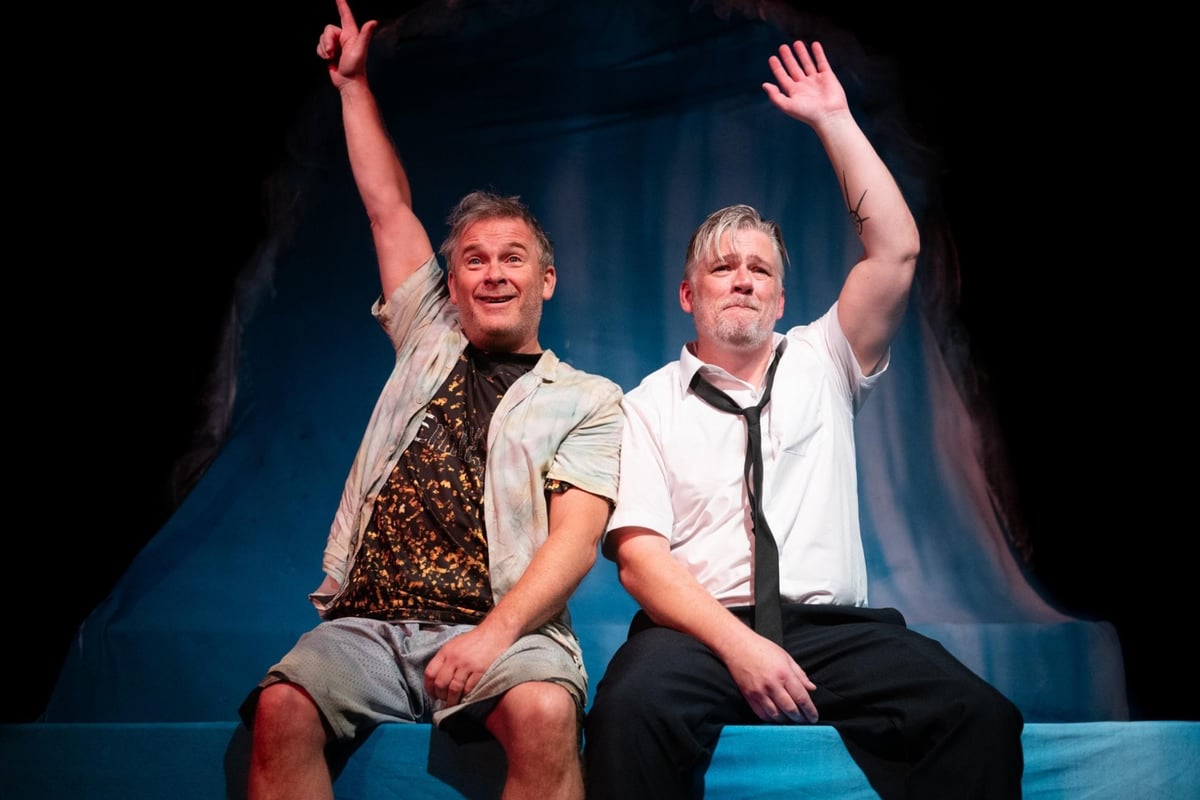
In this unusual two-hander by Douglas Maxwell, Paul McCole plays the eponymous law-keeper. It’s not an official role but alcoholic Dion is proud of the title, even if he did choose it himself. He swaggers (and staggers) his way through the bars and clubs of Zakynthos, seemingly unaware that he’s being used as a lookout by the local drug dealer. He’s a loveable character, his cheery bluster doing little to hide just how damaged and vulnerable he really is. His existence is precarious but he seems to be coping – until his apparently straight-laced brother, Ally (Stephen McCole), comes looking for him, after almost thirty long years…

Maxwell eschews a duologue in favour of two almost completely separate monologues, a structural device that mirrors the brothers’ estrangement. Dion, when we first meet him, is alone – as he has been since 1994. When Ally shows up, the ensuing conflict shows us how this situation began, and then it’s Ally’s turn to find himself bereft and isolated in Kalamaki, a solitary figure standing on a cliff, facing his demons, while in the town below him, everyone else is having fun. The script’s construction makes for an oddly unsettling experience, but I think it serves the story well.

Gemma Patchett and Jonny Scott’s set design is suitably stark: a raised platform, overshadowed by a huge, curved sheet that represents the sea and sky. This works well on a figurative level too, the brothers dwarfed by the natural world, the quarrel that once seemed so all-consuming now rendered petty and insignificant. After all, the planet’s burning: Ally’s plane is half-empty; tourists have turned their backs on the island’s unbearable heat and unpredictable wildfires.

Jemima Levick’s direction is lively and pacy, highlighting the superficial contrasts between the two men, while the real-life McCole siblings are both formidable performers, creating a convincingly acrimonious relationship. Their differences are slowly peeled away, revealing their essential similarities and exposing the myths we tell ourselves about what ‘a good life’ really is.

4 stars

Susan Singfield

Fibres

29/10/19

Traverse Theatre, Edinburgh

Fibres is Frances Poet’s ‘heath and safety’ play, an emotive response to her discovery that an acquaintance had lost both parents, six months apart, due to asbestos poisoning. Poet’s perception of asbestos as ‘something dangerous from the past’ was exposed as a fallacy; subsequently, she learned that more people die of asbestos-related illnesses each year than die in traffic accidents, that the NHS will be footing the bill for corporate greed/negligence until 2040. Mesothelioma takes between twenty and fifty years to develop, and even brief exposure is enough to kill.

Indeed, the brevity of exposure is a key feature of this play. Jack (Jonathan Watson) only works as a shipbuilder for a few days; he’s nervous about the asbestos dust he’s been warned about, so takes a pay cut and becomes an electrician. He thinks he’s dodged a bullet. His wife, Beanie (Maureen Carr), washes his overalls, a simple domestic act fraught with symbolism, as the fibres enter her lungs too.

As you might expect from Poet, there are many layers to be unravelled here; it’s not a simple polemic. There are parallels drawn between the asbestos fibres and the impact of traditional gender roles on a relationship: a slow, invisible poisoning.

Despite the subject matter, it’s not all doom and gloom. Jack and Beanie are a believable couple, muddling through as best they can. They’re facing the horror with fortitude and humour: Jack loves a bit of comedy, and has a catalogue of cringey jokes. Their daughter, Lucy (Suzanne Magowan), is struggling, but her breakdown is shown through a series of bleakly humorous, hide-your-eyes-behind-your-hands-while-your-toes-curl moments.

Breaches in health and safety protocol are given a human face, in the form of Lucy’s boss, Pete (Ali Craig). They work for a fibre optics company, and he’s up against it, trying to meet the demands of a contract while allowing his workers their requisite study days and sick leave. He’s fed up with the union rep’s ‘unreasonable’ demands, preventing him from getting the job done. We’re shown how it happens, how decent people can be pressured into repeating old mistakes. But Pete is given a chance to learn: his fondness for Lucy redeems him.

If this all sounds a bit po-faced, don’t be misled. This plays as a cleverly written domestic tragedy, with a window onto larger political issues. The actors switch between narration and performance; the set (by Jen McGinley) is a fluid, symbolic space, where the characters flit between life and death, the past and the present, dark humour and even darker anger. Jemima Levick’s assured direction ensures that there is no confusion: we always know where and when events are taking place, the pace allowing us time to digest what’s happening.

Fibres is a vital, heartbreaking play with an important message at its core.

4.1 stars

Susan Singfield


The Lover

23/01/18

Lyceum Theatre, Edinburgh

I was sold on this production from the moment I saw it featured Susan Vidler, whom I’ve long admired. (It’s 1997, there’s a TV movie everyone’s talking about: Macbeth on the Estate. Vidler gives the best portrayal of Lady Macbeth I’ve ever seen. There’s been a score of contenders since, but she still wears the crown.)

In The Lover, she plays a very different role. She’s The Woman, both mother and future self of The Girl (the child is mother of the woman, I suppose) and almost the sole voice of the play. To clarify, she live-narrates the story of her past, and also provides a recorded voice-over for other actors who mime flashbacks. In the flashbacks, she’s The Mother; Amy Hollinshead plays The Girl. And it’s all very clever and artful – perhaps too much so?

Still, based on Margeurite Duras’s novel set in 1920s Saigon, this co-production between the Lyceum, Stellar Quines and Scottish Dance Theatre was surely never aiming for the mainstream. It’s a complex tale of love and loss, of colonialism and privilege, of innocence and experience. If ever a tale were to lend itself to a dual-form adaptation, The Lover is surely it: its poetic language ripe for interpetation in this way.

Directed by Fleur Darkin and Jemima Levick, The Lover shows how dance and theatre are complementary arts. The literal and the metaphorical are interwoven in the telling, The [poor teenage French] Girl’s love affair with The [rich Chinese twenty-seven-year-old] Man (Yosuke Kusano) a slow, sensual unravelling of accepted social norms. The gulf that develops between her and her family; the way she is subsumed by her sexuality: these are beautifully conveyed.

But it’s not an easy watch. That voice-over – so intricately worked, so delicately spoken – has such a distancing effect that it renders all emotion mute. The very control and precision of the movement makes the sex scenes curiously staid, a notion that is heightened by the Ken and Barbie genitals suggested by flesh-coloured underwear. And perhaps I’m being a bit dense (I haven’t read the novel; this may be made clear there), but I’m not at all sure what the deal is between the girl and her big brother, Paulo (Francesco Ferrari).

There is artistry and skill a-plenty here; it’s a beautifully constructed piece. Will it be a big-hitter, a seat-filler? I’m not convinced on that score. A play to appreciate, maybe, rather than one to enjoy.

3.5 stars

Susan Singfield

The Last Queen of Scotland


12/08/17

Underbelly Cowgate, Edinburgh

This powerful production by Stellar Quines Theatre Company, commissioned and supported by the National Theatre of Scotland and Dundee Rep, is written by Jaimini Jethwa, and based on her personal experience. It tells the story of the Ugandan Asians, expelled by Idi Amin in 1972. With just ninety days’ notice, they were robbed of everything they owned and despatched to whoever would give them a home. Jethwa’s family ended up in Dundee. Her story is told by an unnamed young woman (Rehanna MacDonald), a character who has grown up in Scotland but who is still slowly coming to terms with what happened to her family when she was a baby.

MacDonald delivers an incendiary performance, pacing restlessly back and forth across the stage as she recalls her childhood memories, her teenage years running wild on the streets of Dundee and her recent trip back to Uganda to revisit the family home. She’s ably supported by Patricia Panther, who adds some resonant songs to the mix, providing a constant onstage presence, mostly watching in silence as the events unfold. (In truth, I would have liked to have heard a little more from her, but I guess you can’t have everything.)

This is a fascinating slice of history, brilliantly recounted and economically directed by Jemima Levick. Lovers of good theatre shouldn’t miss this one.

4.8 stars

Philip Caveney