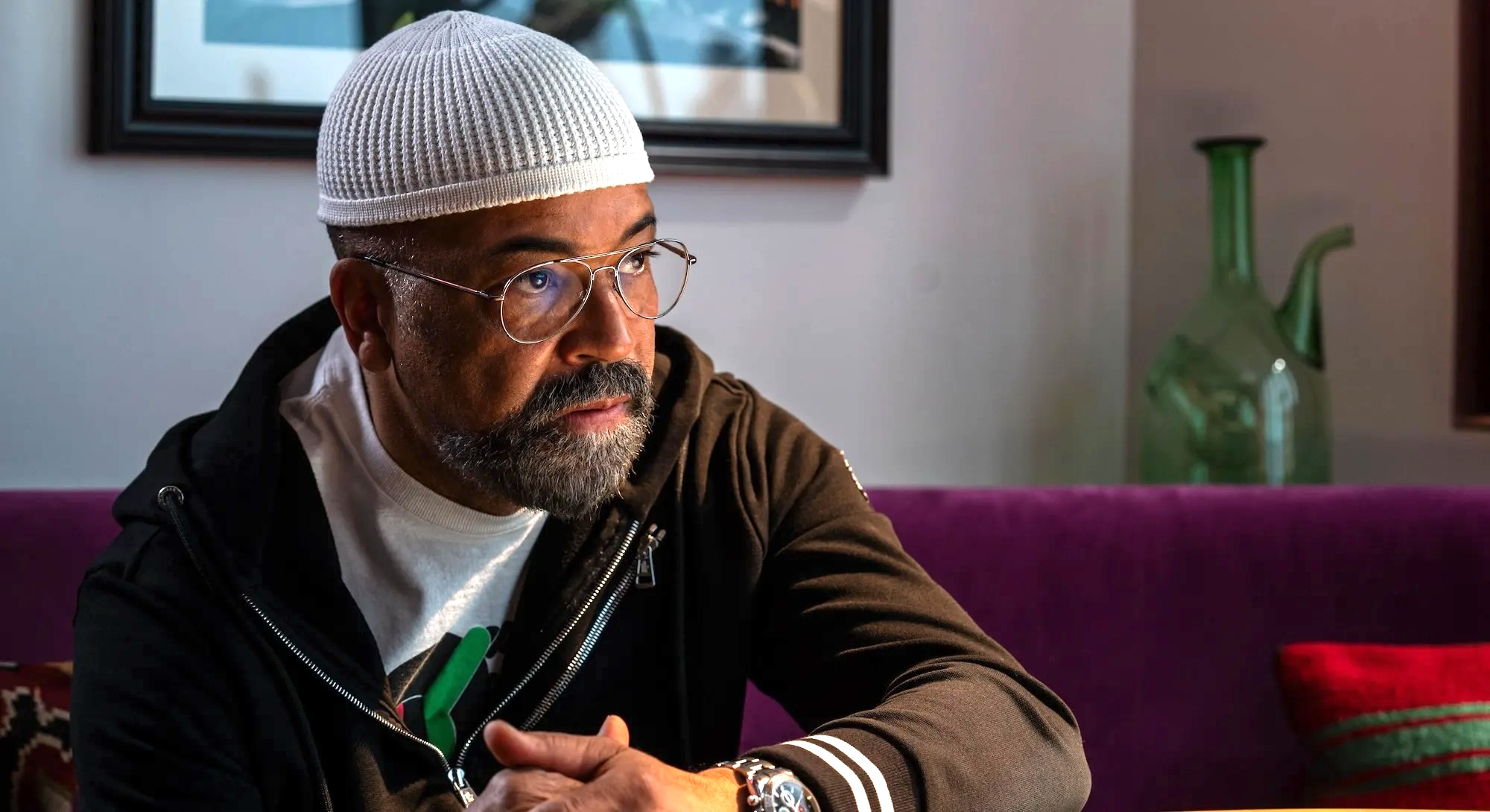
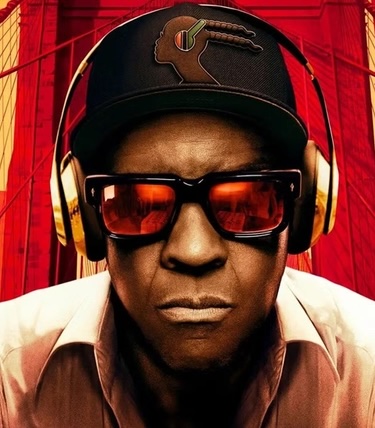
Jeffrey Wright

Highest 2 Lowest

13/09/25

Filmhouse, Edinburgh

I first became aware of the work of director Spike Lee way back in 1986 at the press launch for his second feature, She’s Gotta Have It, and subsequently followed his cinematic evolution with big hitters like Do the Right Thing and Malcolm X. But since 2018’s BlackKkKlansman, Lee increasingly seems to have struggled to find focus.

Highest 2 Lowest (a loose remake of Akira Kurosawa’s 1963 film, High and Low) represents a considerable step up – a big, brash love letter to New York City, to Black music and, in particular, to Lee’s favourite basketball team, The Knicks.

The film begins in grandiloquent style with a rendition of Oh, What a Beautiful Mornin as cinematographer Matthew Libatique’s cameras glide magisterially around the gleaming highrise apartment building that is home to near-legendary record producer, David King (Denzel Washington). He’s about to embark on a crucial bid to buy the record label that made his reputation, but his plans are rudely disrupted when he receives news that his son, Trey (Aubrey Johnson), has been kidnapped and held ransom to the tune of seventeen million dollars.

When it’s revealed that the kidnappers have mistakenly grabbed Trey’s best friend, Kyle (Elijah Wright), the son of David’s loyal chauffeur, Paul Christopher (Jeffrey Wright), things become very complicated indeed. David loves and respects Paul – but can he really be expected to pay an amount that will surely bankrupt him for the release of another man’s son?

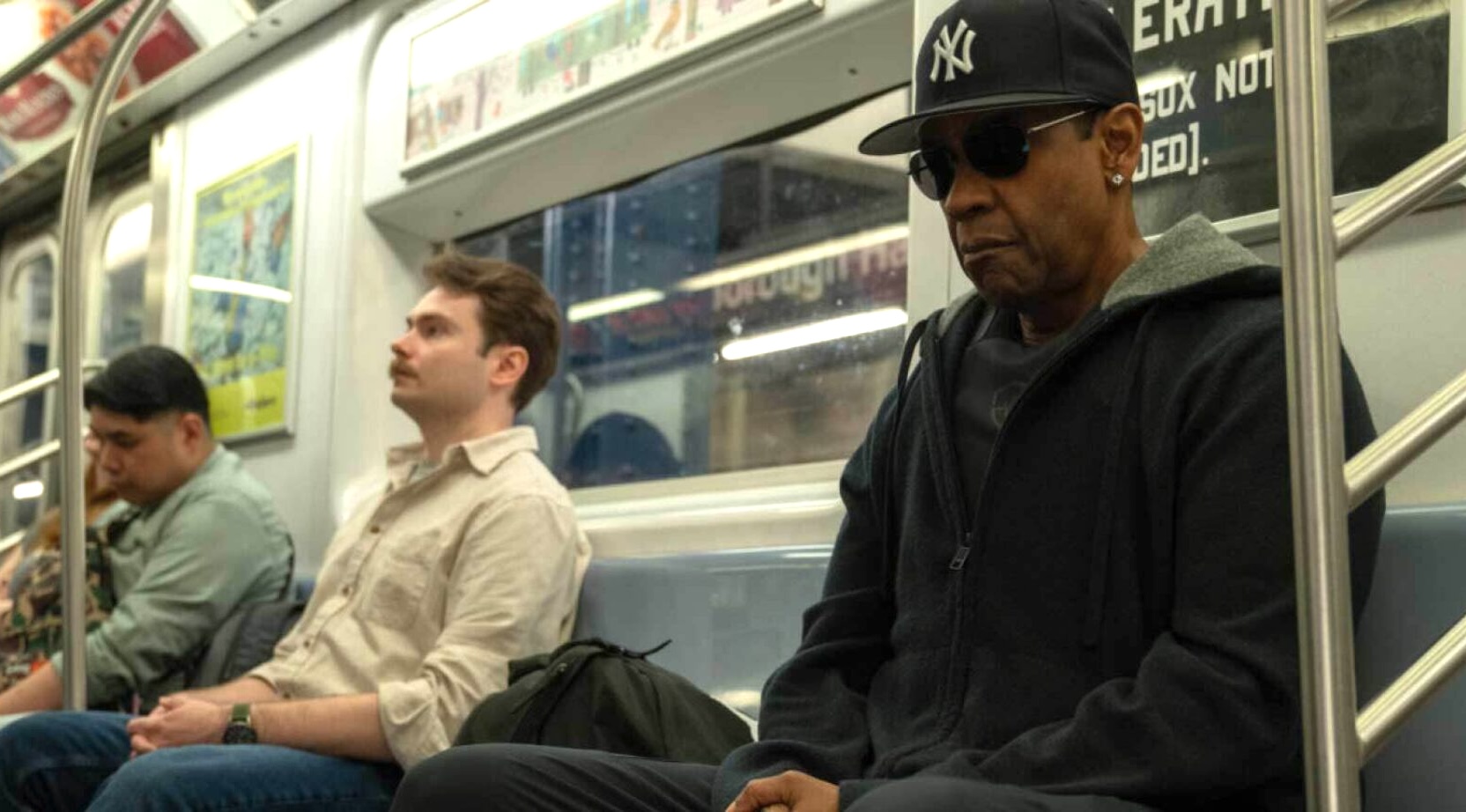
It would be criminal to reveal anything more about the plot, but Highest 2 Lowest is an ambitious undertaking that largely succeeds. Since David is so involved with music, composer Howard Drossin has been given full rein to create a mesmeric soundtrack and, though in early scenes it can occasionally seem intrusive – in places his keyboards and strings seem to run rampant behind really important lines of dialogue – in others it meshes perfectly with the action. An extended sequence on a subway train packed with very vocal Knicks fans, intercut with scenes filmed at New York’s Puerto Rican Mardi Gras, is masterfully done and is one of the film’s high points.

Washington shows once again why he is one of the greatest actors of his generation. David King has music at his core and Washington’s mood seems to evolve with whatever track he’s listening to. His hostile confrontation with ambitious young rapper, Yung Felon (A$AP Rocky), evolves into a kind of rap duel which might sound strange on paper, but is a genuinely thrilling progression. If I have an issue, it’s that David’s wife, Pam (Ilfenesh Hadera), seems unbelievably submissive, bowing to her husband’s every decision – even when the result might leave her homeless – as though she has no say in the matter.

Reservations aside, this is bold and adventurous filmmaking of the highest order, with the sheen and dazzle of a 50s technicolour extravaganza. It deserves to be seen on the biggest screen available and is proof, if ever it were needed, that veteran filmmaker Spike Lee still has plenty to offer.

4.6 stars

Philip Caveney

American Fiction

03/02/24

Cineworld, Edinburgh

If these first few weeks are anything to go by, 2024 is going to be a good year for film. Cord Jefferson’s debut feature is a long way from your typical bums-on-seats blockbuster, but the cinema is hearteningly busy tonight. We’re in for a treat.

American Fiction is a clever, cerebral film, exploring the reductive nature of the Black stories that are promoted by white-controlled media. Thelonious ‘Monk’ Ellison (Jeffrey Wright) is a Black writer and professor, earning more from teaching than he does from his highbrow books. But in a brilliantly satirical scene, we see his white students complaining that he is making them uncomfortable by explicitly referring to the racist language deployed by the period authors they’re studying. When his white bosses back them up, Monk bristles: he isn’t the sort to back down easily. Before long, he’s been practically ordered to ‘take a break’, and so he heads reluctantly to Boston for a long overdue visit to his family, his employment status decidedly shaky. Is this what happens to Black people when they don’t comply with liberal white people’s notions of how to address racism? Wow.

To add to Monk’s woes, his agent (John Ortiz), calls to say that his latest manuscript hasn’t found a buyer. “It’s not Black enough,” Arthur tells him. “What does that mean?” asks Monk, although he knows exactly what it means. It means that his literary novels don’t conform to the blaxploitation model that white people like to indulge in; it isn’t anything like Sintara Golden’s runaway bestseller, We’s Lives in da Ghetto. As a fawning TV interviewer heaps praise on Golden (Issa Rae), Wright imbues Monk with an understated and entirely credible fury. In Bialystock-Blum mode, he pseudonymously dashes off a ridiculous pastiche of a Black novel and then watches incredulously as it become a huge success. He’d like to take the opportunity to go public and make his point – but his mom (Leslie Uggams) is sick, and someone has to pay for her care…

This well-written and often laugh-out-loud funny script, based on the novel Erasure by Percival Everett, deftly punctures the self-aggrandising nature of allyship, as white people vie to show off their woke credentials, often at the expense of the actual Black people sitting next to them. It’s also a beautifully-observed depiction of complex family dynamics, as Monk and his doctor siblings (Tracee Ellis Ross and Sterling K Brown) struggle to deal with their fractured relationships and their mother’s decline. It’s bold, intelligent – and also very accessible. The fourth-wall-breaking final ten minutes are especially audacious, but the entire two-hour run is a joy to behold.

Both thoughtful and thought-provoking, American Fiction is an impressive piece of work, deftly straddling the highbrow/lowbrow chasm that so infuriates its protagonist.

5 stars

Susan Singfield

The Batman

04/03/22

Cineworld, Edinburgh

Director Matt Reeves’ modest ambition for The Batman was to make ‘the best Batman movie yet.’

Well, he hasn’t done that – but he’s certainly made the longest. Weighing in at a bum-numbing two hours and fifty minutes, it brings to mind the conviction that while ‘less’ is often ‘more’, ‘more’ usually equals ‘less’ when it comes to movies. And, while this just about scrapes four stars in its present bloated form, it would have scored much higher with some judicious editing. I mean, like, excising fifty minutes.

What is it about Batman that makes directors keep returning to that oft-plundered well? The fact that this is a comic-book hero who doesn’t have any super powers is always appealing, and there’s that delicious interplay between the vigilante who takes the law into his own hands and those misguided fools who see him as a hero. In this regard, The Batman feels a lot more nuanced than many of its predecessors, but it’s also sobering to think that the best film of the franchise is the one that he doesn’t even feature in.

Joker, thanks for asking.

Mind you if you thought Christopher Nolan’s depiction of Gotham City was dark, prepare to turn the palette down several notches. Reeves’ Gotham (shot in studios all over the UK) is filmed in tones of obsidian and anthracite. In this Gotham, it never seems to stop raining and the city is ruled by corrupt public officials, who gleefully take bribes and exploit the working classes for their own enrichment. (Remind you of anywhere?)

It’s Hallowe’en and a masked villain called The Riddler (brilliantly played by Paul Dano, though we don’t actually see his face until late on in the proceedings) is gleefully murdering those in power, who have allowed their standards to slip. Batman/Bruce Wayne (Robert Pattinson), though hated by most of the police force, is invited to investigate the crimes by Commissioner Gordon (Jeffrey Wright), the only cop who trusts him.

The Riddler is leaving cryptic clues at the scenes of the crime and Batman is good at deciphering them. In the course of his investigations, he comes into contact with Selina Kyle (Zoe Kravitz), crime kingpin, Carmine Falcone (John Turturro), and The Penguin (an unrecognisable Colin Farrell, hidden beneath layers of latex and sounding for all the world like Robert De Niro).

As the proceedings unfold, it becomes clear to Bruce that his own father, whose murder initiated Bruce’s transition into the Caped Crusader, might not have been as innocent as his son has always supposed. Batman also comes to realise that there are many people out there who follow his vigilante tactics with relish – and who would really like to be him.

And, as loyal butler, Alfred (Andy Serkis) is quick to point out, Bruce’s father might have done the wrong thing – but for very sound reasons.

There’s a lot here that I really like. It offers a much more interesting vision of DC’s premier hero than we’re used to seeing – but too much time is spent wandering along dark alleyways that don’t advance the plot enough. It’s only as I’m starting to grow impatient with the film that it finally coalesces and ramps up the suspense, as it heads into a vaguely apocalyptic climax that is weirdly prescient and also, in a strange way, uplifting. Reeves has already proven his worth with the likes of Cloverfield and his astute retooling of the Planet of the Apes trilogy – but, inevitably, The Batman just feels too long for its own good.

This is a shame because Pattinson really works in the lead role (for once, I actually believe that nobody would suspect his Bruce Wayne of being Batman, since the two personas are so different). Kravitz is also compelling in the Catwoman role, and I fully expect to see her return to it. A nifty coda shows us exactly where Reeves plans to go next and, given the projected casting for the next lead villain, I have to confess I’m suitably intrigued.

But please, Matt, next time around… can we just have a bit less?

4 stars

Philip Caveney

The French Dispatch

23/10/21

Cameo, Edinburgh

The word ‘quirky’ could almost have been invented for Wes Anderson. Since his breakthrough with Bottle Rocket in 1996, the director has relentlessly followed the path less travelled. Along the way, he’s dallied with stop-frame animation and, in his live-action features, has developed a visual style used by nobody else in the business. Take off a blindfold in a movie theatre and watch ten seconds of any one of his films and, chances are, you’ll recognise his style instantly.

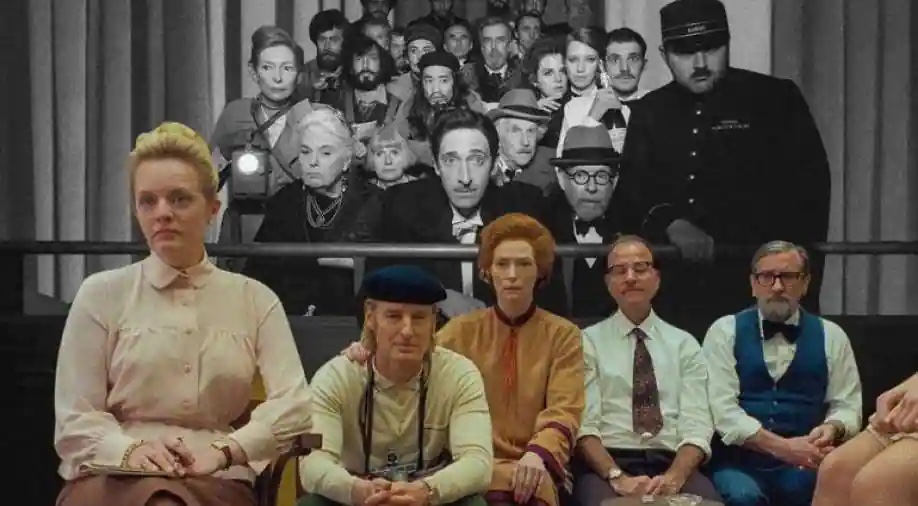
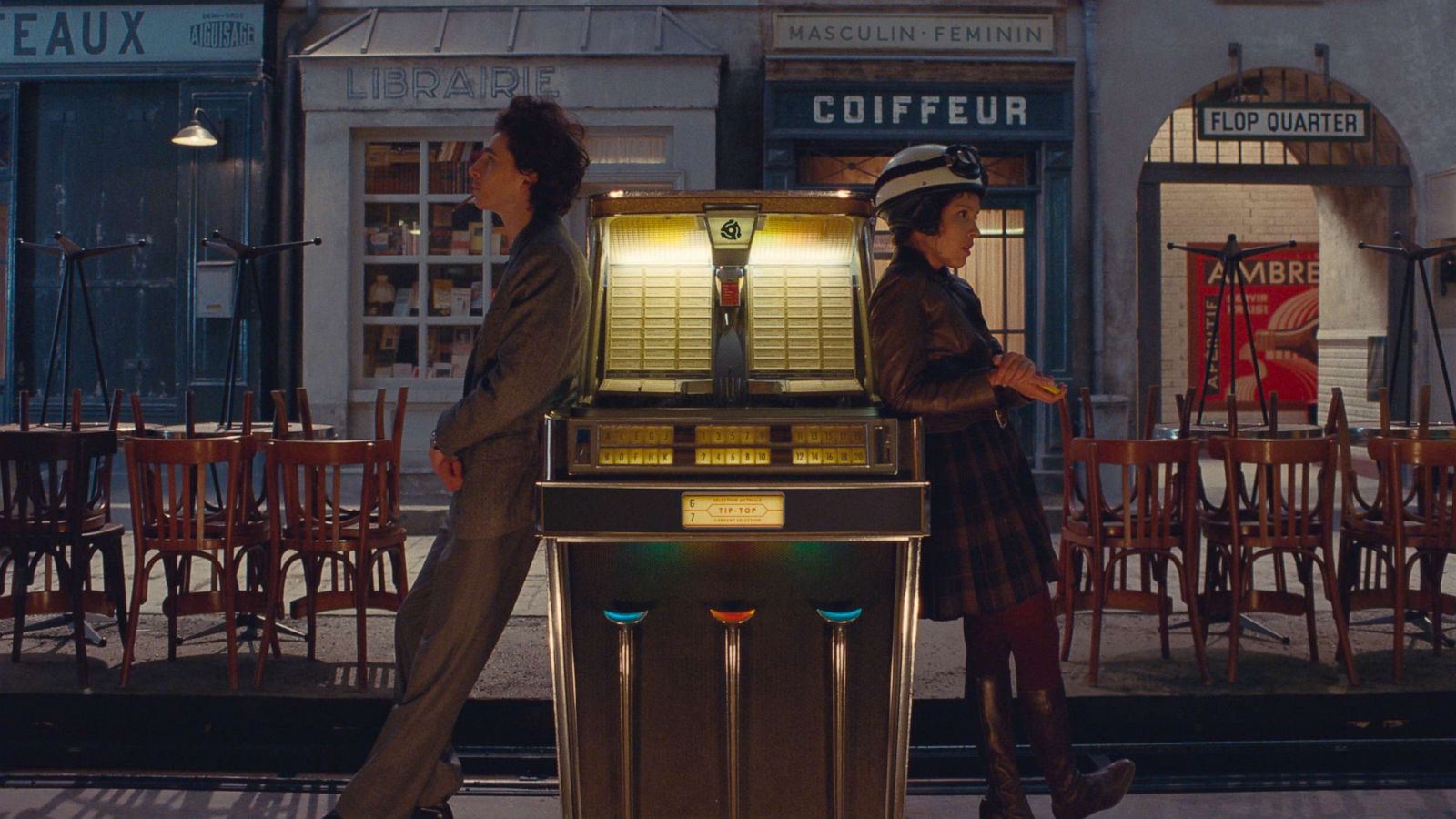
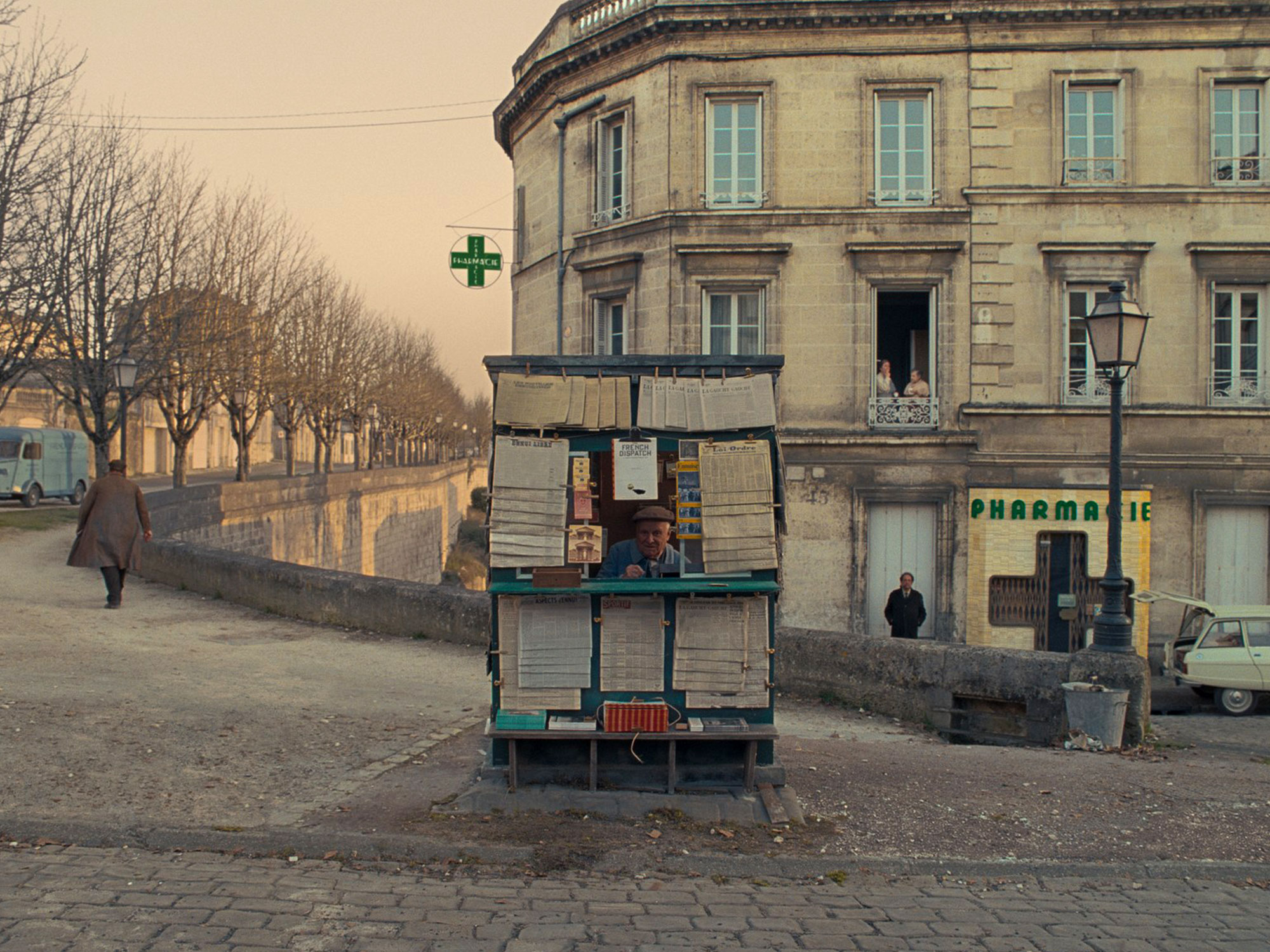
Now here’s the much-delayed The French Dispatch, a portmanteau made up of three short films, linked by a framing device. It probably has a valid claim for being the most Wes Anderson-like film yet as it employs all of the tics and, yes, quirks we associate with him: those bizarre doll house vistas; jarring cuts from colour to monochrome; weird frozen tableaux of action scenes – and characters that are as eccentric as they are amusing. And, of course, there’s also the WA repertory company, a seemingly endless supply of big-name actors, who seem perfectly happy to put their famous mugs in front of the camera, even if they’ve not actually been given much to do.

We begin at the offices of the titular publication, a New Yorker-style literary magazine that is itself an offshoot off a newspaper in Kansas, yet somehow has its headquarters at the top of a ramshackle building in the sleepy French town of Ennui-Sur-Blasé. It’s from here that editor Arthur Howitzer Jnr (Bill Murray) sends his various critics around the country to seek out and document stories of interest – and we are subsequently treated to three of them, all set in the 1960s.

First up we have the tale of convicted murderer, Moses Rosenthaler (Benicio Del Toro), who, inspired by his love for prison warden – and sometime model – Simone (Lea Seydoux), decides to express his love, by creating works of modern art in tribute to her. He inadvertently becomes a cause celebre. Next there’s the story of journalist Lucinda Krementz (Frances McDormand) and her dalliance with dashing young revolutionary, Zefferelli (Timothée Chalamet), whose rebellion against authority is played out as a literal game of chess. Finally, there’s the story of writer Roebuck Wright (Jeffrey Wright), assigned to write a piece about celebrated prison chef, Nescafier (Steve Park), only to find himself caught up in a kidnapping drama involving the adopted son of the prison’s Commisaire (Mathieu Almaric).

The stories are dazzlingly told and the main theme here seems to be one of affection for an age that’s largely gone – a yearning for old-school journalism, when editors cared more about the writing than the money it might generate. Anderson – who co-wrote the story – also has much scorn to heap on the world of art, mocking the ways in which commerce waits greedily in the wings to get its hooks into the next big thing, qualities evidenced by Adrien Brody’s ruthless art dealer, Julien Cadazio. There’s some evident homaging going on here too. The second piece eerily captures the look of French new wave cinema – and did I imagine that little salute to The Twilight Zone’s Rod Serling?

I have to say that I admire The French Dispatch enormously, rather than love it. There’s always an element of grandstanding about Anderson’s work, a celebration of his own uniqueness that can sometimes feel a little too arch – and the parade of characters unleashed here are essentially caricatures rather than people I can believe in. Perhaps that’s entirely the point, but it’s a quality that can polarise audiences.

Suffice to say, if you’re a fan of the director, you certainly won’t be disappointed by what’s on offer here. This is Wes Anderson turned up all the way up to 11. And, in the unlikely event that it’s the first of his films you’ve seen, then enjoy the trip.

4.4 stars

Philip Caveney